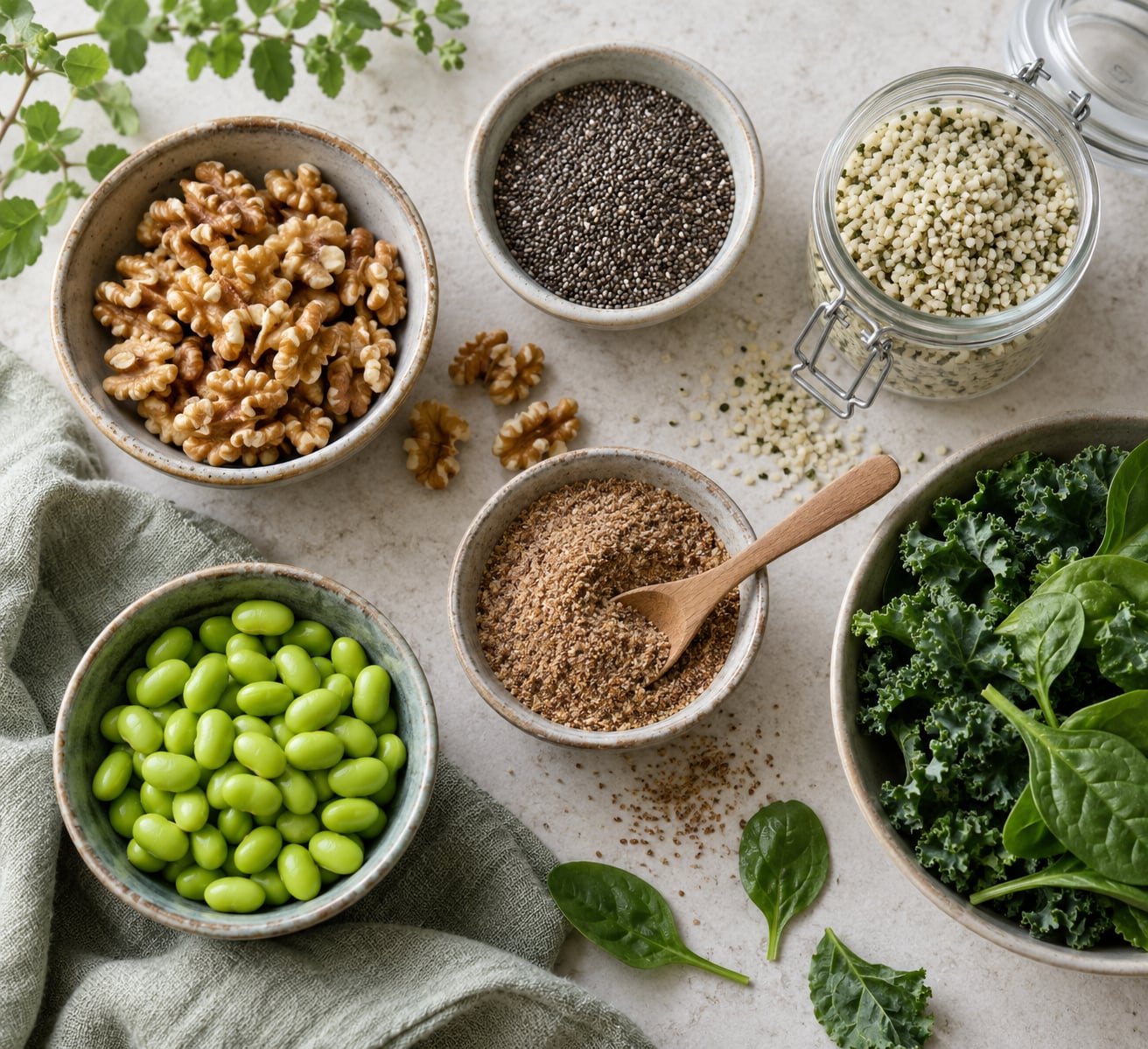
You do not need fish to cover your omega-3 needs. If you eat no fish at all, the best omega 3 foods besides fish are flaxseed, chia seeds, walnuts and hemp hearts for alpha-linolenic acid (ALA), plus algae and algae-derived oils for direct EPA and DHA.
That two-route answer matters more than any single superfood. Plants give you ALA, which your liver converts only partly into EPA and DHA, while algae give you those long-chain omega-3s straight from the original source that fish themselves eat.
I have eaten my way through this list more than once, mostly from a vegetarian kitchen with one picky eater at the table. This is the version I come back to, with real serving amounts rather than vague claims that something is “rich in omega-3.”
Table of Contents
- Omega 3 Foods Besides Fish at a Glance
- 1. Walnuts
- 2. Chia Seeds
- 3. Flaxseed
- 4. Hemp Hearts
- 5. Eggs
- 6. Canola Oil
- Why the omega-6 balance matters more than any single superfood
- 7. Soybeans and Tofu
- 8. Leafy Greens
- 9. Grass-Fed Dairy
- 10. Fortified Foods and Other Sources
- Omega 3 foods besides fish: ALA versus EPA and DHA
- How much omega 3 do you need each day?
- A one-day non-fish omega 3 plan
- Frequently Asked Questions
- What are the best omega 3 foods besides fish?
- Are plant-based omega 3 foods as beneficial as fish?
- How much omega 3 should I get from non-fish foods?
- Do I need supplements if I do not eat fish?
- Can I get enough omega 3s from walnuts and seeds?
- Are eggs and dairy good sources of omega 3?
- Conclusion: Start with One Easy Addition
Omega 3 Foods Besides Fish at a Glance
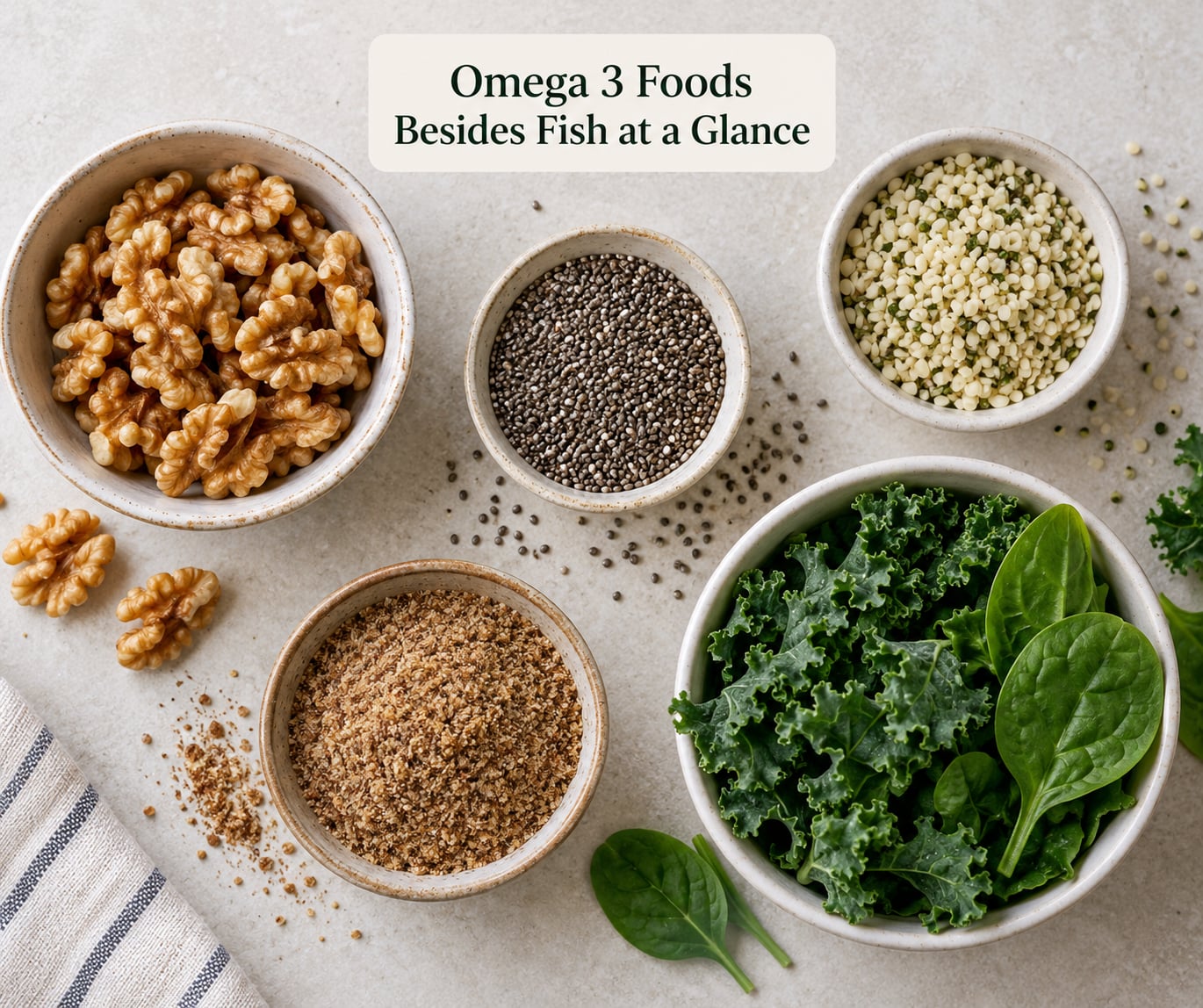
Amounts below are approximate values for a typical serving and will shift a little with brand, crop and freshness. Think of them as planning numbers, not lab results.
| Food | Omega-3 type | Approx. omega-3 per serving | Flavor and texture | Easiest use |
|---|---|---|---|---|
| Ground flaxseed | ALA | About 6 g (2 tbsp) | Nutty, slightly bitter, fine meal | Oatmeal, smoothies, muffins |
| Chia seeds | ALA | About 5 g (1 oz, roughly 2 tbsp) | Mild, forms a gel when wet | Pudding, overnight oats |
| Hemp hearts | ALA plus protein | About 3 g (3 tbsp) | Soft, nutty, no grinding needed | Sprinkle on anything |
| Walnuts | ALA | About 2.5 g (1 oz, about 14 halves) | Warm, buttery, crunchy | Snack, salads, baking |
| Canola oil | ALA | About 0.4 g (1 tbsp) | Neutral, light | Measured cooking and dressings |
| Omega-3-enriched eggs | EPA and DHA from feed | 150 to 700 mg (1 large egg) | No difference in taste or texture | Any egg recipe |
| Firm tofu | ALA | About 0.3 g (1/2 cup) | Neutral, spongy to firm | Stir-fries, bowls, scrambles |
| Edamame | ALA | About 0.2 g (1/2 cup shelled) | Green, buttery, pops from a pod | Salted snack, salads |
| Grass-fed dairy | ALA and small EPA, DHA | Under 100 mg (1 cup milk or yogurt) | Same as conventional dairy | Breakfast, snacks, cooking |
| Brussels sprouts | ALA | About 0.15 g (1/2 cup cooked) | Bitterness depends on how it is cooked | Roasted, shaved into slaws |
| Conventional eggs | Small ALA and DHA | About 30 mg (1 large egg) | No difference in taste | Everyday cooking |
| Spinach and kale | ALA | About 0.1 g (1 cup cooked) | Earthy, green | Salads, sautés, smoothies |
Read the table twice, because the gap between the top four rows and everything below them is enormous. One tablespoon of ground flaxseed delivers more ALA than an entire cup of cooked spinach.
1. Walnuts
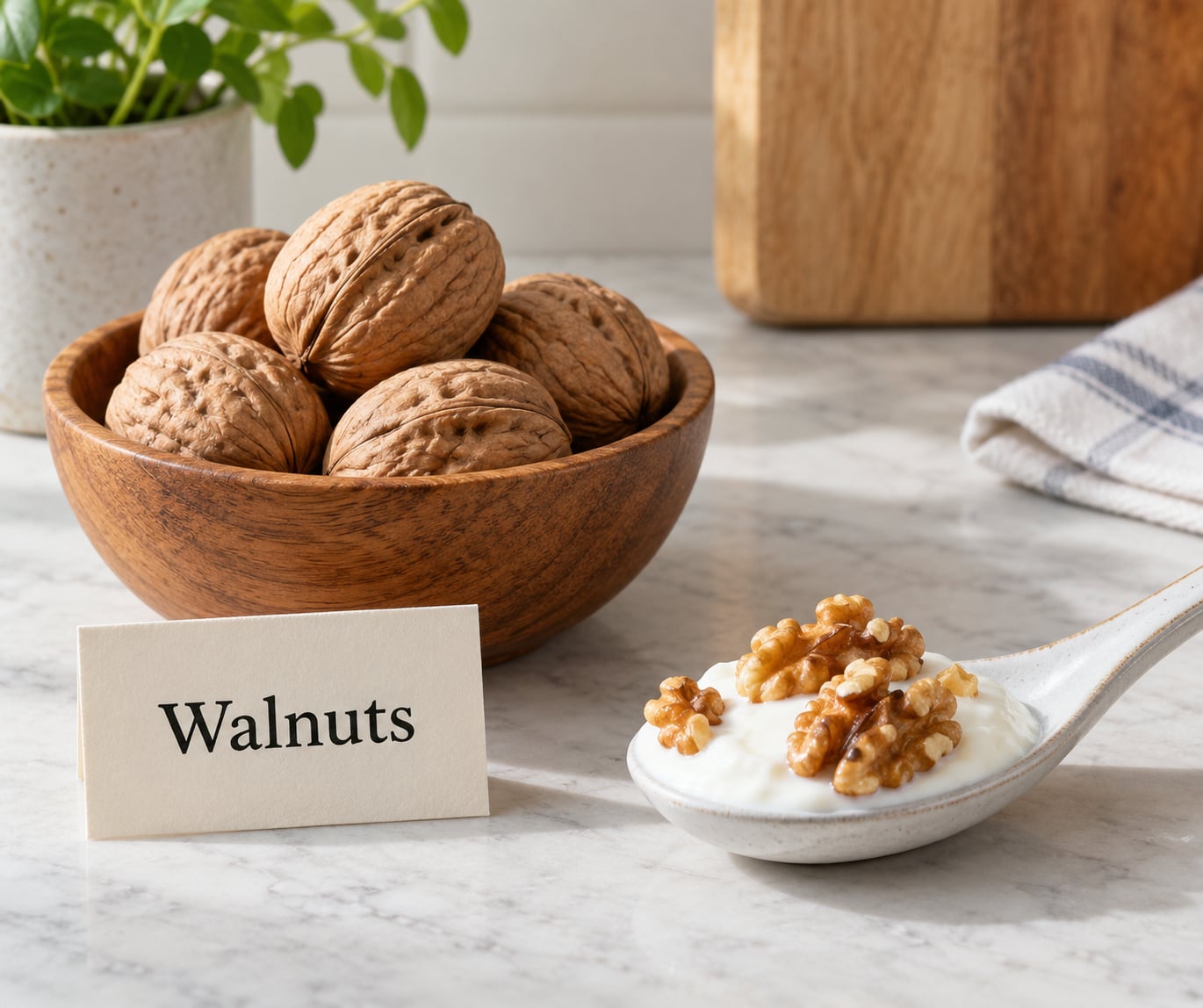
Walnuts are the nut to buy if you want one. They deliver roughly 2.5 g of ALA per ounce, which is about 14 halves, and they are the only common nut with a genuinely favorable omega-6 to omega-3 balance.
The flavor is warm and buttery with a slight bitterness in the skin, and the texture is crunchy enough that they never need hiding. A handful is a snack, but a handful also disappears before you notice it, which is why I measure them.
Ways to use them:
- Stirred into plain oatmeal with cinnamon and a spoon of yogurt
- Scattered over a green salad with pear slices and a lemon dressing
- Mixed into plain yogurt in place of granola
- Folded into banana bread or muffins for texture and fat
- Pounded with greens into a pesto-style sauce
Walnuts are the easiest place for most beginners to start because nothing has to be ground, soaked or measured beyond a rough quarter cup.
2. Chia Seeds
Chia seeds give you about 5 g of ALA per ounce, which is roughly 2 tablespoons, and they come with a fair amount of soluble fiber and minerals such as magnesium and calcium. The seeds are roughly 30 to 33 percent oil by weight, and that oil is unusually concentrated in ALA.
The defining trick is water. Chia absorbs liquid and swells into a loose gel, which is why dry scoops of chia sitting on top of a smoothie disappoint people. Give them ten minutes in liquid first.
Ways to use them:
- Mixed into almond milk or coconut milk and refrigerated overnight for pudding
- Soaked and layered with yogurt and fruit in overnight oats
- Whipped into a smoothie with banana, which hides any texture at all
- Mixed one tablespoon into batter as an egg substitute for baking
- Sprinkled dry over cereal, if you do not mind the crunch
Chia is my pick for breakfast because it does the work while I sleep. The pudding is made the night before and eaten on the way out the door.
3. Flaxseed
Flaxseed is the highest-ALA food on this list by a wide margin. Two tablespoons of ground flaxseed contain roughly 6 g of ALA, which is more than an ounce of chia delivers and about two and a half times an ounce of walnuts.
Grinding is the part people skip. Whole flaxseeds pass through you largely intact, so the oil never gets released. A small coffee grinder or a dedicated blender takes thirty seconds and turns the seeds into a flour you can add to anything.
Ways to use ground flaxseed:
- Stirred into oatmeal or overnight oats
- Blended into smoothies, where it thickens them and adds no flavor
- Mixed into muffin, banana bread or pancake batter
- Sprinkled over yogurt, applesauce or oatmeal cookies
- Whisked into salad dressing as a thickener
One caution: ground flax goes rancid faster than whole seeds because grinding exposes the oil to air. Keep it in an airtight container in the fridge or freezer and buy small bags rather than large ones.
4. Hemp Hearts
Hemp hearts are the underrated option in this list. Three tablespoons give you about 3 g of ALA, and unlike flax they need no grinding at all, which makes them the best choice if grinding seeds is a step you will not stick to.
They also bring roughly 10 g of protein per 3 tablespoons, so you get a small amount of plant protein in the same spoonful. The texture is softer than flax and less crunchy than chia, and the taste is mild and nutty.
Ways to use them:
- Sprinkled over oatmeal, yogurt, cereal and granola
- Scattered on salads at the last second so they keep their texture
- Added to savory grain bowls with roasted vegetables
- Mixed into smoothie bowls and overnight oats
- Folded into energy bites with dates and peanut butter
Hemp hearts also have no fish aftertaste of any kind, which matters for people who have given up on fish oil capsules but still want the long-chain version.
5. Eggs
Eggs sit in a strange middle ground. A large conventional egg contains roughly 30 mg of ALA plus a trace of DHA, which sounds like nothing because it is. Two eggs land around 60 mg, so if your target is a full gram of ALA per day, eggs on their own do not get you there.
Eggs from hens fed an omega-3-enriched diet are a different food. Those eggs commonly carry 150 to 700 mg of EPA and DHA per egg, depending on the feed, and the shell, texture and taste are unchanged. This is the honest answer to the question of whether two eggs are enough: only if they are omega-3-enriched eggs.
Most large grocery chains sell these in the refrigerated section, often near the regular eggs and often labeled with the omega-3 amount per serving. Check the carton rather than assuming, because the shell color and the price tell you nothing.
6. Canola Oil
Canola oil is not a supplement. A tablespoon delivers about 0.4 g of ALA, a small amount, but it lands in a category of its own because it is an everyday cooking fat rather than a topping you have to remember to add.
The value is cumulative. Canola oil is low in omega-6 compared with soybean, corn and sunflower oils, so using it as your default fat changes the balance of your whole diet without changing any meal you already cook.
Why the omega-6 balance matters more than any single superfood
Everything you eat that is high in omega-6 works against the omega-3 you eat. The two fatty acids compete for the same enzymes, so a diet built on soybean, corn, sunflower and cottonseed oils leaves less room for ALA, EPA and DHA to do their work.
This is also the honest answer to the question of what depletes omega-3 status in the body. It is rarely a single missing food. It is the arithmetic of how much omega-6 you eat alongside your omega-3, plus heat damage to oils, plus the fact that ALA converts only partly.
Use canola as a measured swap rather than a free pour. A tablespoon or two in a pan for a family of four is sensible; a bottle sitting next to the stove is how you end up with too much of the wrong fat. If you want oil suited to higher heat, look for one with a high smoke point and check the label for what it actually contains.
7. Soybeans and Tofu
Soy is an everyday ALA source rather than a concentrated one. Half a cup of shelled edamame gives roughly 0.2 g of ALA, and a half cup of firm tofu lands in a similar range, with wide variation between products.
The reason soy is still worth eating is frequency. A modest amount several times a week beats a large amount once, and soy is unusually easy to keep in a rotation because it works at breakfast, lunch and dinner without becoming a separate cooking project.
Ways to serve it regularly:
- Edamame salted and shelled as a snack in place of chips
- Crisp tofu cubes over rice with vegetables and a sesame dressing
- Silken tofu blended into a smoothie for protein and fat
- Edamame folded into a grain bowl or a chopped salad
- Tempeh, which is denser and more savory than tofu, browned alongside vegetables
If you eat soy regularly, pair it with a concentrated source such as ground flaxseed or walnuts in the same week. That combination is what makes soy count as part of an omega-3 pattern rather than a rounding error.
8. Leafy Greens
Leafy greens contribute a small but real amount of ALA. One cup of cooked spinach or kale sits around 0.1 g, and kale carries a little more than spinach. These numbers are modest enough that nobody should build an omega-3 strategy on them.
What makes greens worthwhile is that they come with fiber, folate, vitamin K and a stack of minerals, and they replace something else on the plate. A bowl of greens instead of a bowl of refined grains shifts the whole meal in a useful direction.
Varieties with a bit more to offer include kale, spinach, collards and Swiss chard, along with Brussels sprouts, which land near 0.15 g per half cup cooked. Brussels sprouts improve dramatically when roasted, which is worth doing for reasons unrelated to omega-3 as well.
One honest clarification: spinach is frequently named as an omega-3 food because of an old plant-based omega-3 claim, and in a serving that people actually eat the amount is small. Treat greens as part of a varied pattern, not as a targeted dose.
9. Grass-Fed Dairy
Milk, yogurt and cheese from grass-fed cows typically contain more omega-3 than their conventional counterparts, and some varieties carry a small amount of EPA and DHA rather than only ALA. The differences are real but modest, and they vary by season, breed and feed.
Conventional whole milk usually sits under 100 mg of ALA per cup, and grass-fed versions land modestly above that. The nutrient package is what makes dairy worth keeping for most people: protein, calcium, B12 and vitamin D in a form that is easy to consume.
Worth noting: omega-3 is only part of the fat profile people care about in dairy. Grass-fed products also tend to carry a different fatty acid pattern overall, and for many readers the deciding factors are taste, tolerability and whether they digest dairy well at all.
For readers who avoid dairy, fortified plant milks with added algae oil do something similar. Check for added EPA and DHA on the label, since many oat and almond milks are fortified with vitamins only.
10. Fortified Foods and Other Sources
Algae and algae-derived oil are the only non-fish route to direct EPA and DHA. Algae is the original source of marine omega-3s, since that is what fish accumulate, and algae oil supplements give you the long-chain fats with no fish aftertaste and no fish in the production chain.
Beyond supplements, a small number of everyday foods are clearly labeled with added omega-3. These include omega-3-enriched eggs, breads and muffins containing ground flaxseed or flax oil, and plant milks fortified with algal oil. Read the nutrition panel and look for grams or milligrams per serving.
Two label habits make this easier. First, check whether the label lists ALA, EPA and DHA separately, because a product may show only a total omega-3 figure that hides how much is long-chain. Second, compare per serving against the serving size, since a company can make any number look modest by defining a tiny serving.
Omega 3 foods besides fish: ALA versus EPA and DHA
There are three omega-3s that matter here. ALA is the plant form found in flax, chia, walnuts and hemp. EPA and DHA are the long-chain forms found in fish and algae, and they are the ones most associated with heart, brain and eye health.
Your body can convert ALA into EPA and DHA, but the rate is low, and estimates for how much you get vary widely between individuals. Common estimates put conversion of ALA to EPA at under 15 percent and to DHA under 10 percent, which is why some vegan readers add an algal EPA and DHA supplement on top of a diet rich in flax and walnuts.
The practical consequence is straightforward. If you enjoy oily fish two times a week, food is probably enough. If you never eat fish and you want meaningful EPA and DHA rather than ALA alone, an algae-based supplement is the option most nutrition professionals discuss, particularly during pregnancy and for growing children.
It is also worth naming foods that get mistaken for omega-3 sources. Olive oil is very low in omega-3 and is mainly monounsaturated fat. Avocado is nearly all monounsaturated fat with a trace of ALA. Coconut oil is saturated fat with no meaningful omega-3. Almonds and cashews are high in omega-6 with very little omega-3. Walnuts are the nut that does not fit that pattern.
How much omega 3 do you need each day?
NIH guidance sets an adequate intake for ALA of about 1.1 g per day for adult women and 1.6 g for adult men. There is no official target for EPA and DHA from food, and organizations vary in what they recommend, which is why the number to aim at is ALA first.
Hitting the ALA target with food is very doable. One ounce of walnuts plus two tablespoons of ground flaxseed covers it on their own. Alternatively, a tablespoon of chia in overnight oats, a tablespoon of hemp hearts on lunch and a cup of edamame gets you close across a day without any single meal feeling deliberate.
For EPA and DHA specifically, dietary surveys routinely show low average intakes in people who do not eat fish. That gap is the main argument for a targeted algal supplement rather than an argument against plant foods, which still bring fiber, protein and other nutrients that a capsule does not.
A one-day non-fish omega 3 plan
Here is a day that lands close to the ALA target without a supplement and without much effort.
- Breakfast: oatmeal made with 2 tbsp of ground flaxseed, topped with walnuts and a spoonful of yogurt
- Lunch: a bowl of quinoa and roasted vegetables with 3 tbsp of hemp hearts and an olive oil and lemon dressing
- Snack: a cup of salted edamame
- Dinner: baked salmon is off the menu, so use baked tofu with broccoli and a tablespoon of canola oil in the pan
- Dessert or evening: chia pudding made the night before
That day lands in the right range without a single meal tasting like a health decision. Every one of those items is a normal food, which is the entire point.
Frequently Asked Questions
What are the best omega 3 foods besides fish?
Ground flaxseed is the strongest single option, with about 6 g of ALA per 2 tablespoons. Chia seeds and hemp hearts follow closely, then walnuts at roughly 2.5 g of ALA per ounce. Canola oil adds a smaller amount that accumulates across a week. Algae and algal oil are the only non-fish route to EPA and DHA directly.
Are plant-based omega 3 foods as beneficial as fish?
Partly. Plant foods deliver ALA, which your liver converts to EPA and DHA at a low and highly variable rate, commonly under 15 percent for EPA. Fish and algae deliver EPA and DHA ready to use. ALA-rich foods are still worth eating for the fats, fiber and nutrients they bring, but if you never eat fish and want long-chain omega-3s, algae is the route.
How much omega 3 should I get from non-fish foods?
NIH sets an adequate intake of about 1.1 g of ALA per day for adult women and 1.6 g for adult men. One ounce of walnuts plus two tablespoons of ground flaxseed meets that on its own. There is no official food-based target for EPA and DHA, so track ALA first and discuss long-chain needs with a registered dietitian if you never eat fish.
Do I need supplements if I do not eat fish?
Not always. If you eat ground flaxseed, chia, hemp hearts or walnuts most days and your overall pattern is not dominated by omega-6 oils, food can cover your ALA needs. For direct EPA and DHA, an algae-based supplement is the option many vegan and vegetarian readers choose, especially during pregnancy or for children. Talk it through with a clinician rather than guessing at a dose.
Can I get enough omega 3s from walnuts and seeds?
Yes, for ALA. A single ounce of walnuts plus two tablespoons of ground flaxseed or chia comfortably exceeds the adequate intake for most adults. What nuts and seeds cannot do on their own is supply EPA and DHA, because conversion from ALA is inefficient. Think of them as the foundation and algae as the layer on top if you avoid fish entirely.
Are eggs and dairy good sources of omega 3?
Conventional eggs provide only about 30 mg of ALA plus a trace of DHA each, so two eggs fall well short. Omega-3-enriched eggs from hens fed a supplemented diet can deliver 150 to 700 mg of EPA and DHA per egg with no difference in taste. Grass-fed dairy carries modestly more omega-3 than conventional, usually under 100 mg of ALA per cup.
Conclusion: Start with One Easy Addition
Pick one and make it automatic. Ground flaxseed in the morning oatmeal is the single highest-return change, since two tablespoons cover most of an adult ALA target on their own, and it costs almost nothing to try for a few weeks before deciding it is not for you.
Then add a second thing. Walnuts as a measured snack, hemp hearts on lunch, or chia pudding made the night before all work. If you eat no fish at all, talk with a doctor or registered dietitian about whether an algae-based EPA and DHA supplement fits your situation, particularly if you are pregnant, breastfeeding, taking blood-thinning medication, or dealing with a clotting condition, where omega-3 doses deserve professional advice rather than a general article.
This is educational information, not medical advice. For individual omega-3 targets or supplement decisions, a qualified healthcare professional is the right call.