
If a blood test has ever flagged your vitamin D, you are in a very large club. Vitamin D and why so many people are low comes down to ordinary modern habits: a working day spent indoors, skin that stays covered, and a diet that rarely includes the few foods rich in the vitamin. Low levels also tend to produce no symptoms you can feel, which is why a blood test is the only reliable way to know where you stand.
I wrote this after the same question came up over and over in my own circle: I eat well, I walk every day, so why does the result keep coming back low? The short answer is that vitamin D is unusual. Your body makes most of it on demand, in skin, from a specific kind of sunlight, and almost everything about modern life works against that.
Table of Contents
- What Is Vitamin D, and Why Does It Matter?
- Vitamin D and Why So Many People Are Low
- What Causes Low Vitamin D Levels?
- Limited Intake of Vitamin D-Rich Foods
- Sunlight, Skin and the Big Driver Behind Vitamin D and Why So Many People Are Low
- Factors That Affect Absorption or Storage
- Who Is More Likely to Have Low Vitamin D?
- Can You Tell If You Are Low?
- How Are Vitamin D Levels Tested?
- How Can You Support Adequate Vitamin D?
- What Should You Do First?
- Frequently Asked Questions
- Does everyone need a vitamin D supplement?
- Does low vitamin D cause fatigue and brain fog?
- Is tanning a reliable way to raise vitamin D?
- Can vitamin D deficiency be corrected with food alone?
- When should I talk to a doctor or pharmacist about vitamin D?
- Conclusion
What Is Vitamin D, and Why Does It Matter?
Vitamin D is a fat-soluble vitamin, which means your body stores it in fat and liver tissue rather than excreting the excess in urine the way it does with vitamin C. It comes in two main forms you will see on labels: D2, also called ergocalciferol, and D3, also called cholecalciferol.
The job people care about most is mineral handling. Vitamin D helps your gut absorb calcium and phosphorus, the two minerals that give bone and teeth their hardness. Without enough of it, the body pulls calcium from bone to keep the blood level steady, and bone quietly loses density over time.
It also has roles that have nothing to do with bones: it supports normal muscle contraction, so a shortfall can show up as weakness rather than as pain, and it takes part in immune function and regulation of inflammation. Researchers are still working out how far those effects extend, so treat bold claims about vitamin D curing depression, immunity or weight loss with caution.
There are three routes into the body, and they are worth separating clearly. Sunlight triggers production in your own skin. Food supplies small, occasional amounts. Supplements deliver a set dose you choose, or a clinician chooses for you. Most people who end up low are relying on route one without realising it.
Vitamin D and Why So Many People Are Low
Most people are low because the main source, sunlight, has been quietly reduced, while the backup sources are small. Intake from food is limited and body absorption is imperfect. Age, skin pigmentation, body composition, certain medicines and some health conditions lower how much you make or keep. On top of that, low vitamin D rarely announces itself with symptoms, so it can sit unnoticed for years until a routine test catches it.
That is the whole story in one paragraph, and everything below is a detail of it. The useful mental model: vitamin D is a nutrient with one large factory (your skin) and several small ones (food, supplements). If the factory runs at reduced capacity and the small ones are running too, the balance tips low.
There is a wrinkle worth naming early, because readers raise it constantly. Plenty of people who work outdoors all day still show low levels. Sun exposure is not the same thing as vitamin D status. The intensity of ultraviolet B, your latitude, the season, your clothing, and how much melanin sits in your skin all change how much vitamin D a given hour of daylight actually produces.
What Causes Low Vitamin D Levels?
Causes rarely arrive one at a time. Most people with low levels are stacking two or three together, which is why a single change rarely fixes a result. These are the ones that come up most often.
Limited Intake of Vitamin D-Rich Foods
Vitamin D is unusual in that very few everyday foods contain meaningful amounts. Oily fish, egg yolks, fortified milk and plant milks, and some mushrooms are the main ones. Liver oil is dense but nobody puts it on a toastie.
A varied diet can still come up short. Portion sizes are small, oily fish is out of favour with a lot of people, and plant milks only carry the vitamin if they are fortified. Vegan, vegetarian and restrictive-eating patterns lean on fortified products, so if a label changes or a habit lapses, the intake drops quietly.
Worth saying plainly: food alone rarely corrects an established deficiency. It is a good maintenance base, not a repair tool.
Sunlight, Skin and the Big Driver Behind Vitamin D and Why So Many People Are Low
When ultraviolet B reaches bare skin, it converts a cholesterol precursor called 7-dehydrocholesterol into vitamin D3. Simple as that sounds, half the equation is missing in most modern days.
Window glass blocks the UVB that does this, so sitting by a sunny window does not count. The wavelength that produces vitamin D is not present in early morning or late evening light, so a sunrise walk and a lunch break are not equal. Season and latitude matter as well, as do cloud cover, air pollution, and how much skin is showing. Sunscreen reduces production when it is applied generously over exposed skin, and covering up does the same thing.
I want to be careful here, because the advice to skip sunscreen online is a bad one and I have seen people repeat it as gospel. Skin cancer risk is well established, while the contribution of daily sunscreen to vitamin D status is modest and easily handled with diet or a supplement. Deliberate unprotected sun exposure is not a treatment I would recommend to anyone.
Melanin plays a role too. Higher levels of skin pigmentation slow the conversion of that precursor, which is why people with darker skin tones can show lower levels at the same sun exposure. It is a physics point about pigment, not a statement about anyone’s habits or character.
Factors That Affect Absorption or Storage
Some people make enough vitamin D and still end up low, because it is not being absorbed or kept. Conditions such as coeliac disease, Crohn’s disease and other inflammatory bowel conditions damage the gut lining, where most absorption happens. Cystic fibrosis and some bariatric procedures have the same effect by changing how fat is handled, and vitamin D follows fat.
Age slows the whole chain down. Older skin produces less vitamin D from the same sunlight, and the kidneys convert it less efficiently. Kidney or liver disease interrupts the processing steps that turn what you eat into the form your blood test measures.
Higher body weight also changes the picture, because vitamin D is fat-soluble and gets pulled into adipose tissue, where it is less available for use. That is why weight and vitamin D come up together in clinic conversations.
Medications matter too. Certain anticonvulsants, corticosteroids and some cholesterol and reflux treatments can interfere with how the body handles vitamin D. If you take anything long term, that is a conversation for a doctor or a pharmacist, not a self-adjustment.
Who Is More Likely to Have Low Vitamin D?
Risk groups are well described, and none of them are a diagnosis. They are simply the conditions that show up again and again in clinic data.
- Adults over 50, because skin production and kidney conversion both slow with age
- People with darker skin tones, who need more ultraviolet B exposure for the same output
- Anyone who spends most of the day indoors, including remote workers and shift or warehouse staff
- People living at high latitudes or through long winters with very little daylight
- People with higher body weight
- People with coeliac disease, Crohn’s disease, cystic fibrosis, kidney or liver disease, or a history of bariatric surgery
- People on long-term medicines that affect vitamin D handling
- Pregnant and breastfeeding people, and babies, who have higher requirements
The overlap matters. A remote worker in a northern winter with darker skin tones and a restrictive diet is stacking four factors, and each one alone might have been survivable.
Can You Tell If You Are Low?
Often you cannot, and that is the honest answer. Low vitamin D is frequently silent, and when symptoms do appear they are vague: tiredness that sleep does not fix, aching muscles, a general sense of brain fog, low mood in winter. None of those confirm anything.
This is the part where careful sources earn their keep. Those same symptoms overlap with low iron, thyroid problems, vitamin B12 deficiency, poor sleep and a dozen other causes. Readers on forums like r/VitaminD and r/nutrition describe the relief of a label for their fatigue, and also the months spent treating the wrong thing before anyone checked a blood level. One blood test can rule a whole category out.
Ask a healthcare professional rather than self-diagnosing if you have persistent fatigue, ongoing bone or muscle pain, frequent infections, unexplained mood changes, or symptoms that are not settling. Get prompt medical attention for anything severe or sudden, and never assume a new or sharp symptom is a vitamin problem.
How Are Vitamin D Levels Tested?
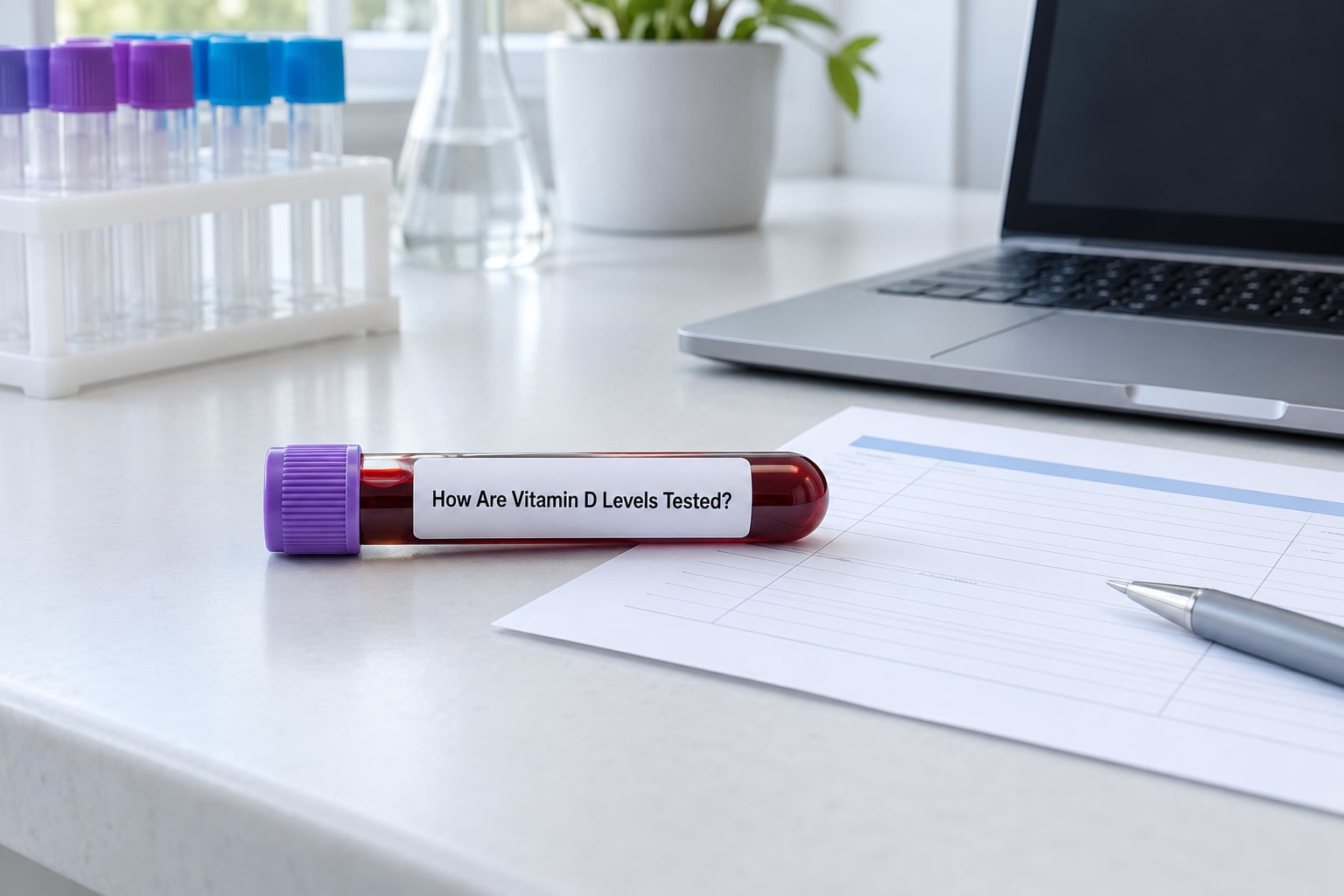
A simple blood test measures 25-hydroxyvitamin D, also called calcidiol or 25 (OH)D. It is the form doctors use because it reflects what your body has available over recent months, rather than what you ate yesterday or absorbed this morning.
Other forms exist, including 1,25-dihydroxyvitamin D, which is used for specific kidney-related questions and is not the right test for checking everyday status. If you have had a panel, the line you want to look at is the 25-hydroxyvitamin D one.
You will find different reference ranges depending on the lab, and clinicians deliberately do not treat the number in isolation. They read it next to your symptoms, your medical history, your medicines and any other results on the same report, which is why two people with identical numbers can get different advice.
Ask your doctor for the 25-hydroxyvitamin D test by name, particularly if you have risk factors or symptoms. If you are already taking a supplement, mention the dose and how long you have been on it, because that changes how the result is read.
How Can You Support Adequate Vitamin D?
There is no single lever. The most reliable approach is usually a combination of food habits, a sensible routine around daylight, and a plan that a clinician agrees to.
Start with food. Fatty fish, egg yolks, and fortified milk or plant milks appear on labels with the amount per serving, so you can compare products rather than guess. People who regularly eat fortified foods report it as one of the easiest habits to keep, which matters more than perfection.
Then look at daylight. A short outdoor break at midday, on days when the season and latitude allow real sunlight, does more than an afternoon under office lighting. It is not a prescription for burning, and sunscreen still makes sense for skin protection.
For supplements, the honest answer is that more is not better. Doses vary widely between individuals, and taking a high dose without checking levels and talking it through carries real risks, including toxicity. A doctor, pharmacist or registered dietitian can look at your results and your history and tell you what is appropriate, which is far more useful than a general internet dose.
Public-health bodies such as the NIH and the NHS publish recommended daily intakes and guidance on supplementation. Those pages are a good starting point for a conversation with a professional.
What Should You Do First?
If you are wondering where you stand, the order that works best is simple.
- Notice your own risk factors: how much daylight you get, your age, your skin tone, your weight, your diet, your health conditions and your medicines.
- Note what has been going on, such as persistent tiredness or muscle aches, and when it started.
- Book a professional conversation and ask for the 25-hydroxyvitamin D blood test by name.
- Wait for the result before starting anything, and certainly before taking a high dose on your own.
Food choices and everyday habits support your health, but they do not replace medical care. If something is wrong, the fastest route is the test, not the guess.
Frequently Asked Questions
Does everyone need a vitamin D supplement?
Not everyone, and that is the point. Needs rise with limited sun exposure, higher latitude, darker skin tone, age over 50, higher body weight, certain health conditions and certain medicines. Some people get enough through diet and daylight alone. A 25-hydroxyvitamin D blood test tells you whether a supplement is actually needed rather than guessing, so it is worth having that conversation with a doctor or pharmacist first.
Does low vitamin D cause fatigue and brain fog?
It can contribute, and that is why it comes up so often in discussions. The honest caveat is that fatigue, poor concentration and memory lapses are also symptoms of low iron, thyroid problems, B12 deficiency, poor sleep and plenty of other things. A low result tells you one contributor exists, not that it is the only one. Testing also rules other causes out.
Is tanning a reliable way to raise vitamin D?
No, and it is not worth the trade. A tan is a sign of skin damage, and the ultraviolet output from a tanning bed is not something anyone should aim for deliberately. Deliberate unprotected sun exposure is also not a treatment, because ultraviolet damage builds up over decades. Food sources and a clinician-guided supplement plan are the safer routes to the same outcome.
Can vitamin D deficiency be corrected with food alone?
Usually not if a deficiency is already established, because the foods that contain meaningful amounts are limited in number and small in serving size. Diet is an excellent maintenance base, and it is the first thing to build on, but correcting a low result commonly needs a supplement plan that a clinician sets after seeing your test. Food-only approaches do work better as prevention than as repair.
When should I talk to a doctor or pharmacist about vitamin D?
Talk to one if you have persistent fatigue, muscle or bone pain, frequent infections or low mood that is not settling, if you have any of the risk factors such as darker skin tones, higher body weight, malabsorption conditions or long-term medicines, or if you are pregnant or breastfeeding. A pharmacist can also check whether your medicines interact with a supplement before you buy anything.
Conclusion
So, vitamin D and why so many people are low: our biggest natural source is sunlight, and modern life hands us very little of it, while the dietary backup is small and easy to miss. On top of that, low levels are quiet, age, skin pigmentation, body weight, medicines and some conditions all stack the deck against you.
The safest first step is not a supplement off the shelf and not a session on a tanning bed. Look at your own risk factors, write down what you have noticed, and arrange a proper 25-hydroxyvitamin D test with a health professional who can read the result alongside everything else about you. Food habits and daylight routines support that result, but they do not replace the conversation or the care that goes with it.