Zinc in food and what it does comes down to this: zinc is an essential trace mineral your body cannot manufacture, and it works as a cofactor for hundreds of enzymes that build proteins and DNA, divide cells, heal wounds and keep immune cells functioning. You need a steady small amount every single day, and oysters, red meat, shellfish, dairy, beans, seeds and fortified cereals all supply it.
Most people get enough without thinking about it. Some do not, particularly people who eat a narrow diet, and the gap between the two is usually about absorption rather than intention. I looked at what mainstream nutrition guidance actually says about zinc, which foods deliver the most per serving, and where the well-meant supplement advice goes wrong.
Table of Contents
- What Is Zinc, and Why Does the Body Need It?
- Zinc in Food and What It Does for Health
- How Much Zinc Do Adults Need?
- Which Foods Are Highest in Zinc?
- Plant-Based Zinc Sources and Absorption
- Can a Diet Be Low in Zinc?
- Do You Need a Zinc Supplement?
- Foods, Absorption, and Common Myths
- Frequently Asked Questions
- What food is highest in zinc?
- Is 2 eggs a day enough zinc?
- Why shouldn’t you take zinc every day?
- Can too much zinc deplete copper?
- What are the signs of low zinc?
- Conclusion: Start With Everyday Food Sources
What Is Zinc, and Why Does the Body Need It?
Zinc is a mineral element, one of a small group of nutrients the body needs in very small amounts but cannot do without. It was first identified as a separate nutrient in the 1920s, and it has no dedicated storage organ, so the body keeps only a trace and relies on a daily supply from food.
That single fact explains most of what follows. There is no reservoir to draw down in January, which is why zinc status reflects your last few days of eating rather than your last few months.
Zinc in Food and What It Does for Health
The functions below are the well-established ones. Each one is doing quiet, unglamorous work that you only notice when it stops.
- Immune function. Zinc is needed for the development and activity of immune cells, including the white blood cells that fight infection.
- Enzyme activity. It acts as a cofactor for more than 300 enzymes, switching on the chemical reactions that run metabolism.
- Protein and DNA synthesis. Cells cannot build new proteins or copy genetic material efficiently without it, which makes it central to repair and growth.
- Cell division and growth. This is why zinc requirements are relatively high during pregnancy, infancy and adolescence.
- Wound healing. Skin repair, collagen formation and tissue regeneration all lean on zinc.
- Taste and smell. Adequate zinc keeps the taste buds and olfactory receptors working; low levels dull both.
- Protection from free radicals. Zinc supports antioxidant enzymes that help shield cells from oxidative damage.
- Hormone regulation. It plays a role in testosterone production, sperm development and normal sexual maturation.
More zinc is not automatically better. The body regulates zinc tightly, and pushing intake well past requirements creates its own problems, which I cover further down.
How Much Zinc Do Adults Need?
US Recommended Dietary Allowances come from the National Institutes of Health. For most adults the number is flat at 11 mg a day, and only a few life stages need more or less.
| Group | Daily zinc (RDA) |
|---|---|
| Infants, birth to 6 months | 2 mg |
| Infants, 7 to 12 months | 3 mg |
| Children, 1 to 3 years | 3 mg |
| Children, 4 to 8 years | 5 mg |
| Children, 9 to 13 years | 8 mg |
| Teenagers, 14 to 18 years | 9 mg (10 mg in pregnancy) |
| Adult men and women, 19 and over | 11 mg |
| Pregnancy, any adult age | 11 mg |
| Breastfeeding | 11 mg |
Adults also have a tolerable upper intake level of 40 mg a day from all sources. That ceiling is not a target, it is the point where long-term intake starts to cause harm, and it exists mainly because high zinc interferes with copper absorption.
Pregnancy, breastfeeding, a diagnosed deficiency and certain conditions such as Crohn’s disease or bariatric surgery can all change what an individual needs. Those are conversations for a doctor or a registered dietitian, not a table on a web page.
Which Foods Are Highest in Zinc?
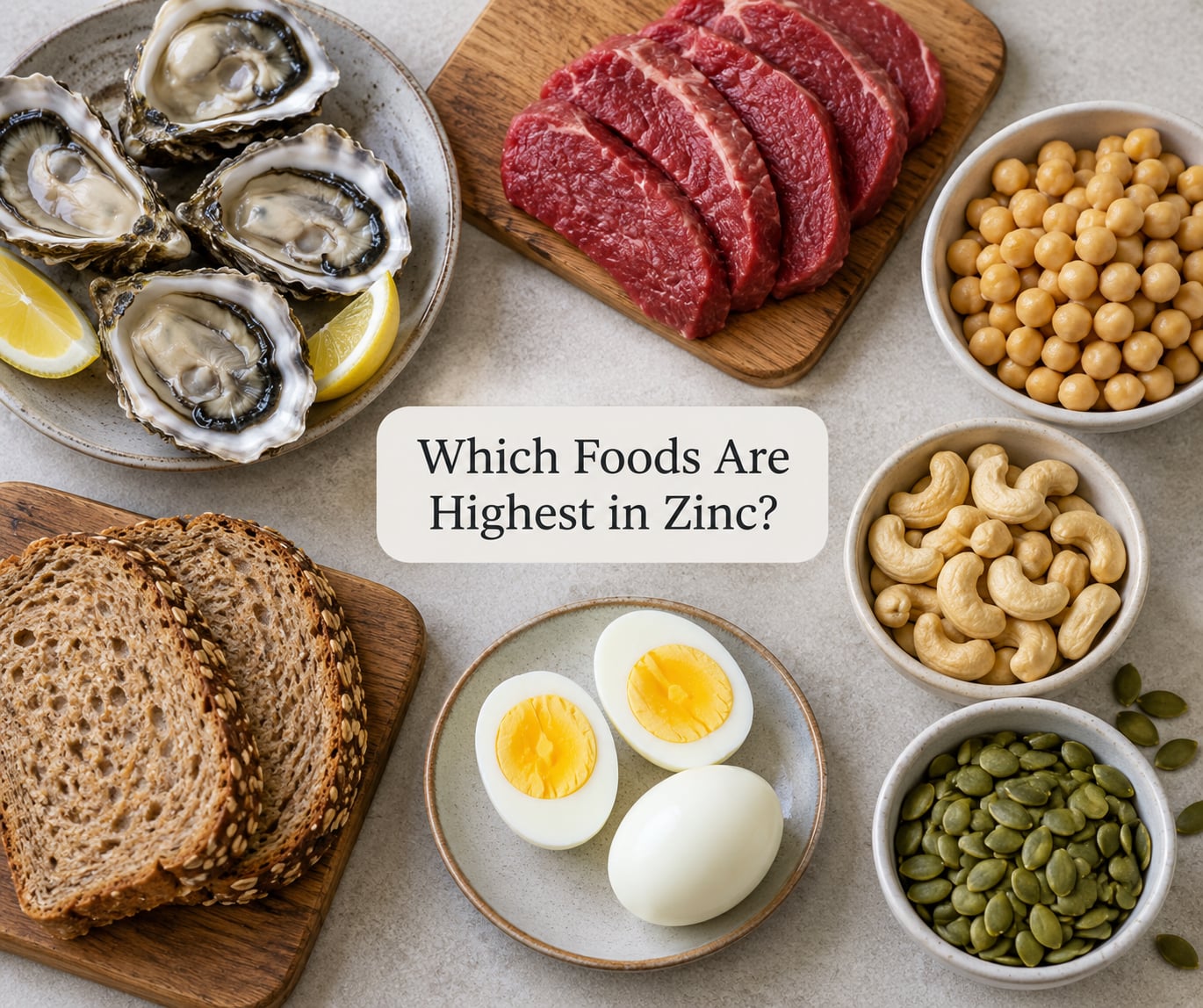
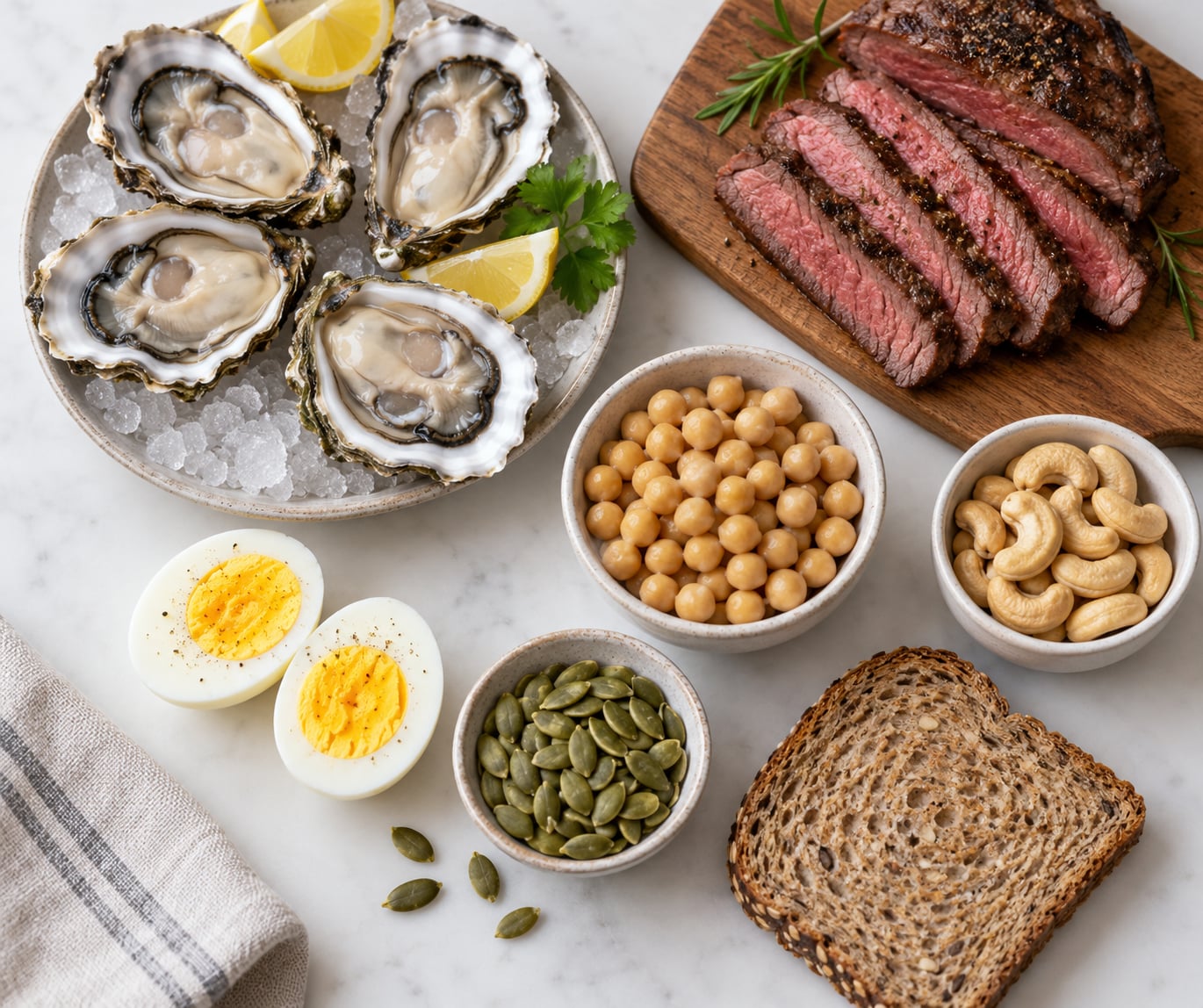
Oysters are the answer to “what food is highest in zinc”, and no contestant comes close. A 3-ounce serving of raw oysters can hold roughly 28 mg, more than twice an adult’s daily allowance. Beef liver follows, then shellfish and red meat, then the plant and dairy sources that most people actually eat.
Ranking by what a normal serving delivers matters more than ranking by weight. A tablespoon of anything is not a serving, and a 100-gram column means very different things for a steak and for a bowl of lentils.
| Food | Typical serving | Approx. zinc | Share of 11 mg |
|---|---|---|---|
| Oysters, raw | 3 oz | about 28 mg | about 250% |
| Beef liver, cooked | 3 oz | about 11 mg | about 100% |
| Beef, cooked | 3 oz | 5 to 7 mg | about 50 to 65% |
| Crab, cooked | 3 oz | about 5 mg | about 45% |
| Fortified breakfast cereal | 1 serving | 2 to 3 mg | about 20 to 27% |
| Cheddar cheese | 1.5 oz | about 2.5 mg | about 22% |
| Chicken breast, cooked | 3 oz | about 2 mg | about 18% |
| Pumpkin seeds | 1 oz | about 2 mg | about 18% |
| Yogurt, plain | 3/4 cup | about 1.7 mg | about 15% |
| Cashews | 1 oz | about 1.6 mg | about 15% |
| Chickpeas or lentils, cooked | 1/2 cup | about 1.3 mg | about 12% |
| Whole wheat bread | 2 slices | about 1.5 mg | about 13% |
| Milk | 1 cup | about 1 mg | about 9% |
| Egg, large | 1 egg | about 0.5 mg | about 4% |
Read the table as a pattern rather than a shopping list. One serving of oysters or liver clears the whole day. Three modest meals built around meat, dairy and seeds clear it comfortably too, which is what a normal mixed diet does without any effort.
Plant zinc carries an important asterisk, covered next.
Plant-Based Zinc Sources and Absorption
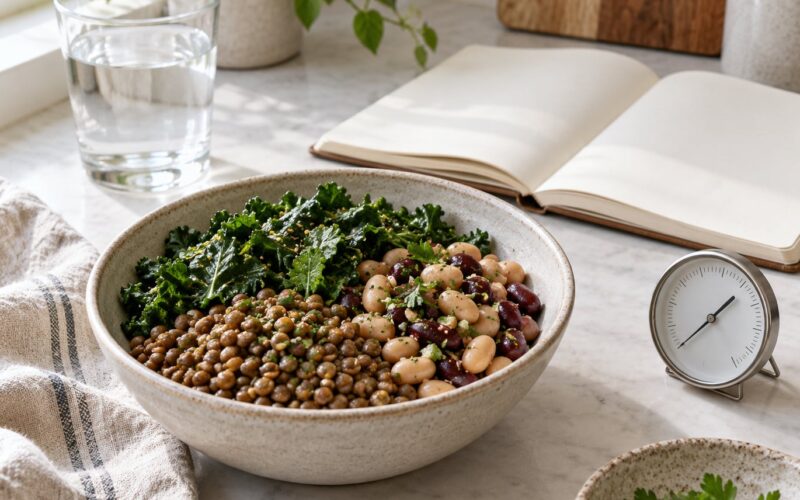
Zinc from animal foods is absorbed more efficiently than zinc from plants. Beans, lentils, tofu, nuts, seeds and whole grains all contain zinc in meaningful amounts, but they also contain phytates, which bind zinc in the gut and form a complex the body cannot easily break apart.
This is not a reason to abandon plants. It is a reason to change a few habits, and the same preparation tricks that soften beans also release more zinc from them.
- Soak. Overnight soaking in water with a squeeze of lemon lowers phytate noticeably. Many people change the soaking water halfway through.
- Sprout. Germinating seeds and pulses activates enzymes that break down phytate.
- Leaven. Sourdough and other long-fermented breads do the same thing through yeast, which is why whole-grain sourdough beats plain whole-grain toast for mineral uptake.
- Cook. Boiling beans, and discarding the cooking water, removes a portion of phytate into the pot.
- Pair. Eating plant zinc with a source of vitamin C, such as tomatoes, bell peppers, citrus or strawberries, improves absorption noticeably.
- Keep drinks separate. Coffee, tea and cocoa contain polyphenols that inhibit zinc uptake, so move them away from iron- and zinc-rich meals.
Vegetarians and vegans who apply a few of these routinely usually clear the RDA without thinking about it. Those who eat a narrow plant diet and drink tea with every meal are the group most likely to fall short.
Can a Diet Be Low in Zinc?
Yes, and the reasons are mostly practical rather than exotic. Certain patterns reliably produce low intake:
- Heavily restrictive diets, including long-term elimination or fasting regimens that cut out whole food groups.
- Diets with few or no animal foods where phytate-rich staples are eaten in large amounts without soaking or fermenting.
- High-phytate habits, such as very high intakes of bran, raw grains, legumes and soy alongside tea or coffee at mealtimes.
- Alcohol use disorder, which increases urinary zinc losses and often comes with poor dietary intake at the same time.
- Conditions that impair absorption, including Crohn’s disease, celiac disease and some forms of bariatric surgery.
- Life stages with higher needs, particularly infants, teenagers, pregnancy and older adults.
Possible deficiency signs include frequent infections, slow wound healing, loss of appetite, taste and smell changes, dry or flaky skin, hair thinning, fatigue and, in severe cases, growth delay in children.
Here is the honest problem: none of those signs point uniquely at zinc. Fatigue and hair thinning have hundreds of ordinary causes, and self-diagnosing from a symptom list is how people end up taking 50 mg a supplement on a hunch. Serum zinc testing through a clinician is the sensible route if you have a reason to suspect low status.
Do You Need a Zinc Supplement?
For most adults eating a varied diet, the answer is no. The interesting cases are people with a restricted pattern, a confirmed low result, a life stage with higher needs, or an absorption problem.
A few things worth checking before you buy anything. Read the label for the actual elemental milligrams, because a capsule that lists 50 mg of “zinc compound” may deliver a much smaller dose of elemental zinc. Add up every source, including the multivitamin you already take, because stacking is how people reach high intakes without realising it.
Then weigh the long-term picture. Sustained intake at or above 40 mg a day can trigger a deficiency of copper, a different essential mineral, and the result can be anemia, numbness and tingling in the hands and feet. That damage often shows up months after the high dose started, which is exactly why people fail to connect it back to the bottle on the shelf. Nausea and stomach upset are the more common early warnings at 30 mg and above.
A clinician may recommend supplementation after testing, and may suggest pairing zinc with copper or spacing the two several hours apart. Do not start either on your own, and do not inject zinc, which has no place outside supervised medical care.
Foods, Absorption, and Common Myths
Myth: zinc prevents every cold. Evidence for zinc lozenges is mixed and the benefit, where it exists, is a modest shortening of cold duration rather than prevention. High-dose lozenges reliably cause nausea instead. This is the single most overclaimed zinc benefit.
Myth: an average adult should supplement daily. People who feel tired or run down often reach for zinc first. Persistent tiredness is a reason to see a doctor, not a reason to start a 50 mg tablet. Food first is also simply cheaper than a bottle that lasts three weeks.
Myth: a colourful, high-protein diet automatically covers zinc. Protein and colour are not zinc markers. A high-protein diet built on refined grains and few legumes or animal foods can still come up short, and a plant-based diet that includes seeds, legumes and fortified cereals can comfortably clear the target.
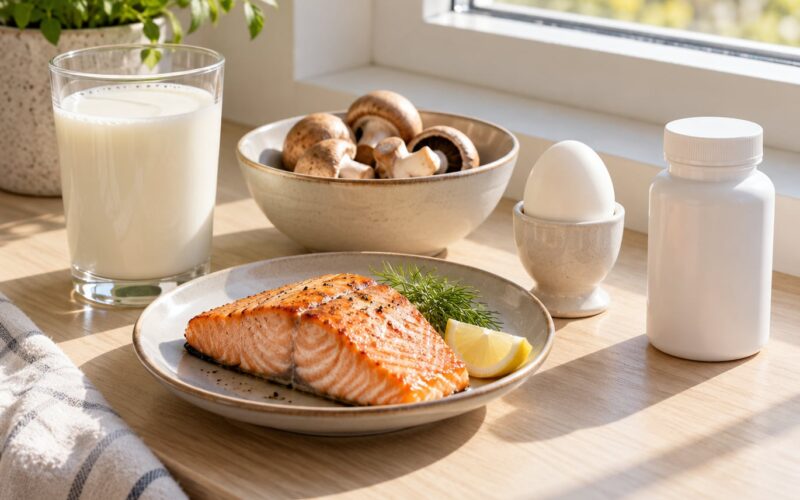
And the egg question. One large egg carries roughly 0.5 mg of zinc, so two eggs give about 1 mg, under 10% of the 11 mg adult target. Eggs are a good food with many reasons to eat them, but they are not a meaningful zinc source, and anyone using two eggs a day as their zinc strategy is a long way short.
Frequently Asked Questions
What food is highest in zinc?
Oysters, by a wide margin. A 3-ounce serving of raw oysters can provide roughly 28 mg of zinc, more than twice the 11 mg an adult needs in a day. Cooked beef liver is the next richest everyday option, followed by crab, lean beef and dairy. No plant food comes close on a per-serving basis, which is why plant eaters reach for seeds, legumes and fortified cereals instead.
Is 2 eggs a day enough zinc?
No. One large egg contains about 0.5 mg of zinc, so two eggs deliver roughly 1 mg, under 10 percent of the 11 mg daily target for adults. Eggs are an easy protein and nutrient-dense food, but they are simply not a meaningful zinc source. If zinc is the goal, add seeds, chickpeas, cashews, yogurt or a fortified cereal to the same day.
Why shouldn’t you take zinc every day?
Because the body regulates zinc closely and extra does not stack into extra benefit. Adults need 11 mg a day and have a tolerable upper limit of 40 mg from all sources. Sustained intake above that level can block copper absorption and cause a second deficiency, with anemia and nerve symptoms. Most people eating a varied diet already meet their needs from food, so a daily pill adds risk without adding value.
Can too much zinc deplete copper?
Yes. Zinc and copper compete for the same intestinal transport pathways, so long-term high intakes of zinc reduce how much copper the gut absorbs. The knock-on deficiency often appears months after the high dose began, typically as anemia and numbness in the hands and feet, which makes the original cause hard to trace back. Anyone supplementing above the 40 mg adult upper limit should have a clinician involved.
What are the signs of low zinc?
Common reported signs include frequent infections, wounds that heal slowly, reduced appetite, changes in taste and smell, dry or flaky skin, hair thinning and fatigue. In children, severe deficiency can slow growth. None of these are specific to zinc, which is exactly the problem: they overlap with iron deficiency, thyroid conditions, stress and ordinary tiredness. A blood test arranged by a doctor is far more reliable than guessing from a checklist.
Conclusion: Start With Everyday Food Sources
Zinc does unglamorous structural work: enzymes, protein and DNA building, cell division, wound repair, immune cells, taste and smell. An adult needs 11 mg a day, and for most people that arrives without planning, through a mix of meat or shellfish, dairy, eggs, legumes, seeds and fortified grains.
Look at your last week of meals rather than one food. If there was a near-total absence of both animal and plant zinc sources, or a lot of tea and coffee alongside grains, that is a conversation worth having. For individual needs, deficiency testing or any supplement decision, talk to a doctor or registered dietitian rather than starting a high-dose tablet on a hunch.