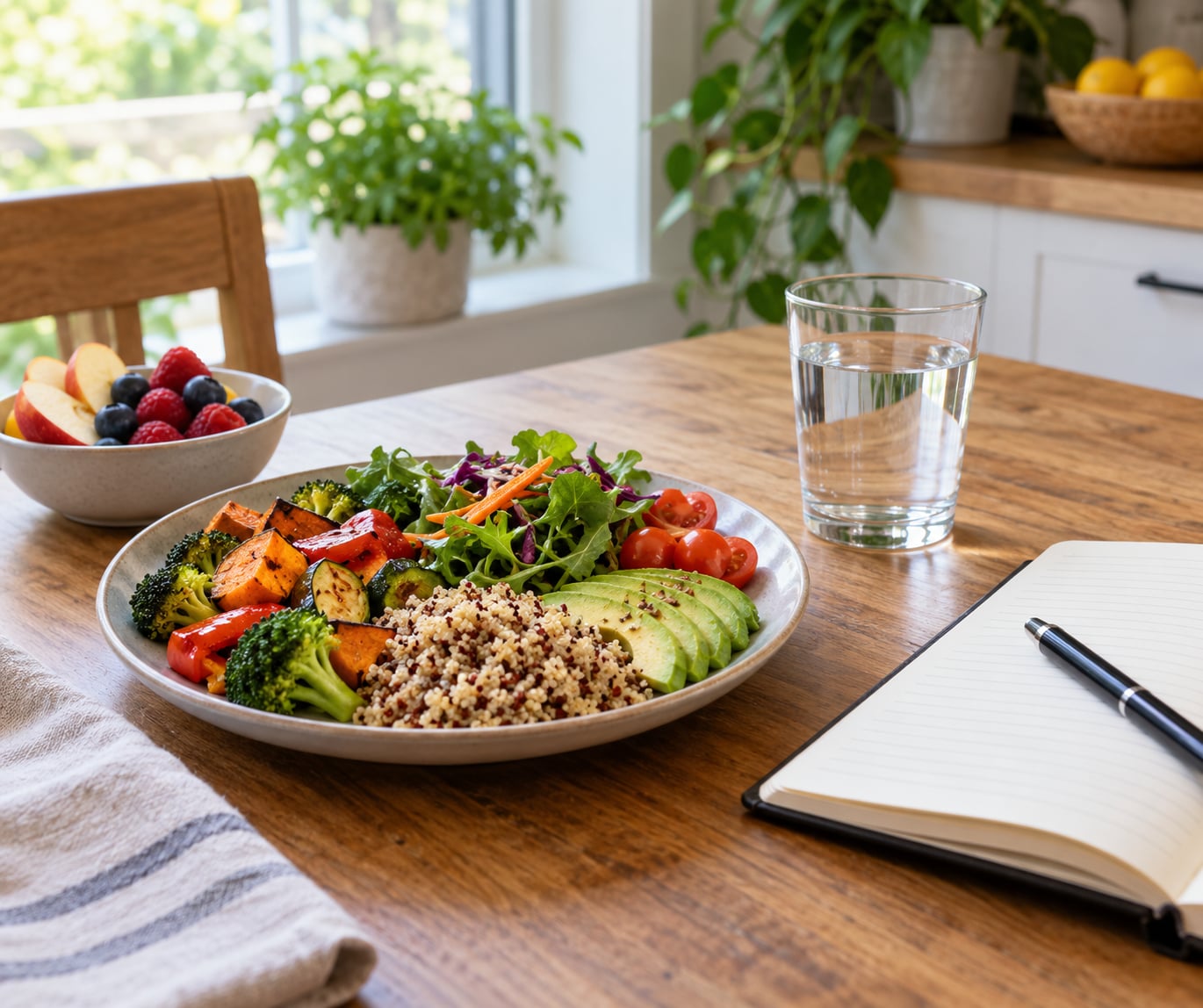
A healthy relationship with food means eating to nourish your body and get real pleasure from it, without guilt, rigid rules, or moral labels about food being good or bad. If you want to know how to build a healthy relationship with food, the work is mostly about removing the judgement and rebuilding trust in your own signals. It takes weeks of steady practice, not a weekend overhaul.
This guide is written for adults who feel guilty, restrictive, or simply disconnected around food. It is general education, not medical advice, and there are situations where self-guided work is not enough. I have flagged those below rather than burying them.
Table of Contents
- What You Need to Build a Healthy Relationship with Food
- Step-by-Step: Seven Moves That Change How You Eat
- Step 1: Drop the labels you gave food
- Step 2: Tune in to hunger and fullness cues
- Step 3: Practise mindful eating at one meal a day
- Step 4: Interrupt the restrict-binge cycle
- Step 5: Use food as fuel and pleasure, never as punishment or reward
- Step 6: Rebuild the social side of eating
- Step 7: Know when intuitive eating is not the right tool
- When to see a doctor or a registered dietitian
- Common Mistakes That Keep People Stuck
- Frequently Asked Questions
- Do I need to stop eating foods I enjoy to have a healthy relationship with food?
- How can I stop feeling guilty about eating?
- What should I do after I binge eat?
- Can I build a healthy relationship with food while trying to lose weight?
- How do I eat when I am emotional or stressed?
- When should I ask a doctor or registered dietitian for help?
- Conclusion
What You Need to Build a Healthy Relationship with Food
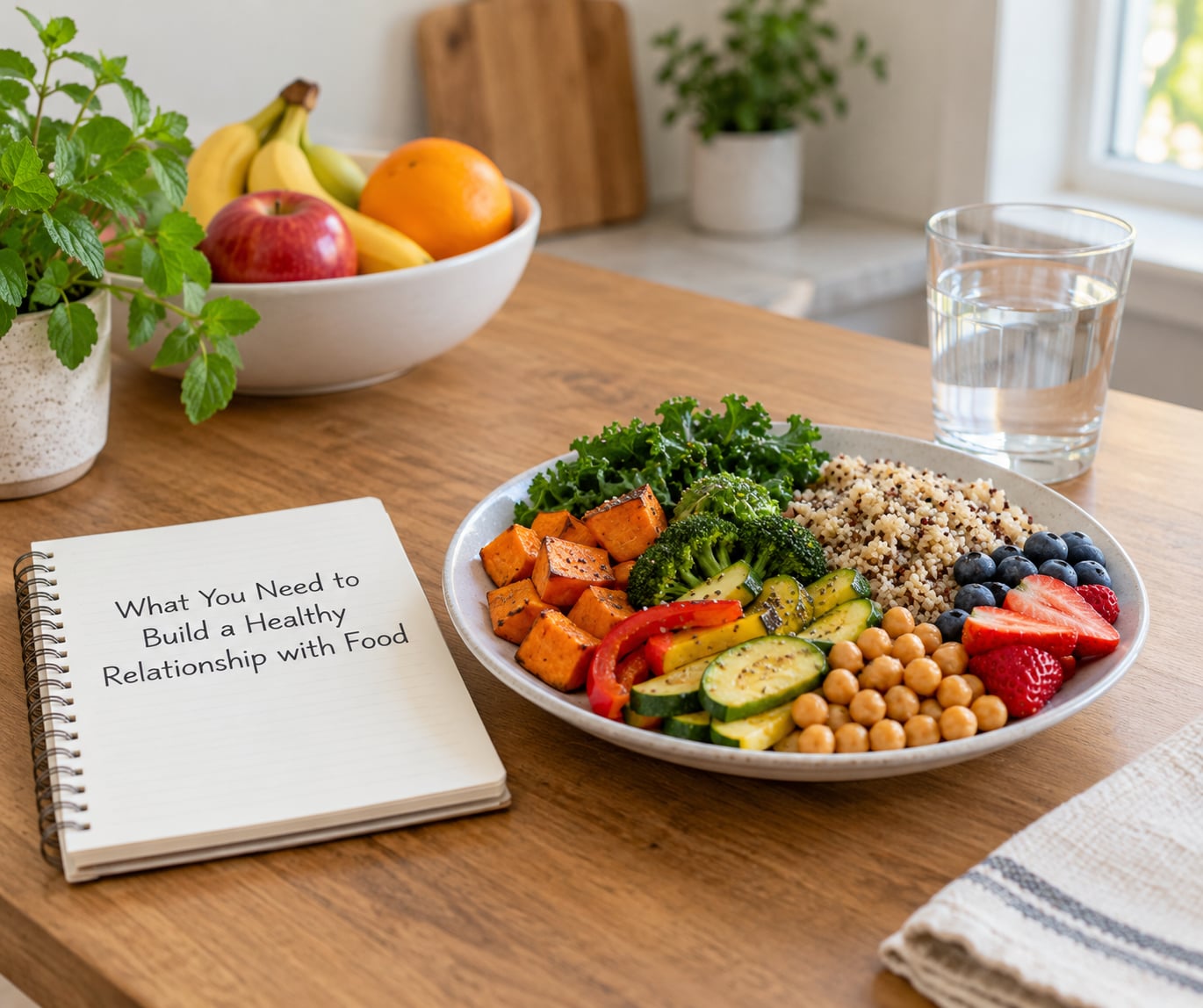
You need very little. Most people arrive with the wrong idea that this requires a specific diet, a tracking app, or a big shopping list of approved food.
- Regular eating opportunities. Three meals or snacks at roughly the same times most days. Skipping meals is the single biggest reason the evening hunger feels uncontrollable.
- A notebook or notes app. One page is enough. You are tracking timing, hunger level, and mood, not calories.
- Access to food you actually enjoy. If the only things in the kitchen are the ones you consider safe, nothing else on this list will work.
- Ten quiet minutes at one meal. That is the whole mindful eating requirement.
- Willingness to change one thing at a time. Doing all seven moves in week one is the fastest route back to the old pattern.
Support helps too, though it is optional. A registered dietitian, a therapist who works with eating, or a doctor who listens will move this along faster than months of guessing alone.
Step-by-Step: Seven Moves That Change How You Eat
Step 1: Drop the labels you gave food
Stop calling food good or bad. Not because the labels are unhelpful, but because a label you attach to a food becomes a label you attach to yourself when you eat it.
Try neutral language for two weeks. Replace indulge with have, cheat meal with a meal I like, and treat with something I chose. The food does not change. What changes is the argument you have with yourself afterwards, which is usually where the guilt comes from.
Most people find this harder than any nutrition change. Forum discussions on intuitive eating describe the same moment as the actual turning point: the day they stopped needing the food to be good in order to be allowed to eat it.
Step 2: Tune in to hunger and fullness cues
Eat when you feel physically hungry, and stop when you feel comfortably satisfied. The problem is that after years of dieting, hunger cues get quiet, so you have to practise noticing them before they vanish entirely.
Use a simple 1 to 10 scale. Check in before you start eating and again when you stop, and write both numbers down.
| Level | What it feels like | What to do |
|---|---|---|
| 1 to 2 | No hunger at all, eating from habit or a rule | Delay if convenient, but eat if the meal is part of your rhythm |
| 3 to 4 | Mild hunger, comfortable | A good time to start a normal meal |
| 5 to 6 | Clearly hungry, thinking about food | Eat now, without waiting for extreme hunger |
| 7 to 8 | Strong hunger, low energy, irritable | Eating something now prevents the rebound that comes later |
| 9 to 10 | Distress, dizziness, obsessive thoughts about food | Eating has become urgent and unpleasant |
Staying out of the 9 to 10 zone most of the time is the practical goal. It is far easier to build a healthy relationship with food when you are not managing constant emergency hunger.
Step 3: Practise mindful eating at one meal a day
Practise mindful eating by removing distractions, slowing the pace, and savouring each bite. You do not need a twenty-minute ritual. Pick the one meal you can manage, usually lunch, and put the phone in another room.
That single change does more than you would expect. Distracted eating is the most common reason people eat past comfortable fullness without noticing, and there is plenty of room to recover the signal once attention comes back.
Take three breaths before you start and notice colour, temperature, and texture on the first few bites. Most people find that slowing down makes the meal more satisfying for the same amount of food, which then reduces how hard the next meal feels.
Step 4: Interrupt the restrict-binge cycle
The restrict-binge cycle is the most reported experience in eating-disorder and intuitive-eating forums, and it runs in four stages.
- Restriction. Rules narrow and eating drops below your needs, sometimes for a week or a long stretch.
- Rebound hunger. Your body responds to under-eating with stronger signals. This is physiology, not a character flaw.
- Overeating. You eat past fullness because the hunger is overwhelming and the rules are broken, so there is no reason to stop.
- Shame. The guilt drives you back to stage one with tighter rules.
The fix is not more willpower at stage three. It is regular eating at stage one, so stages two and three never get the chance to start. If you are already in the cycle, the most useful move is a predictable meal within a few hours, kept small enough that you will actually eat it.
For the 24 hours after overeating, keep it boring and low-drama. Eat your next regular meal at the usual time, drink water, and do not compensate with fasting or extra exercise. Compensation is what turns one hard night into three. Forum users describe recovery as hard and non-linear, and that is the honest version.
Step 5: Use food as fuel and pleasure, never as punishment or reward
Use food as fuel and pleasure. Neither meal should be a test you can fail, and neither should be something you have to earn.
Retraining this takes a while. If you have spent years earning or deserving food, eating an ordinary meal without justifying it can feel strangely wrong at first. That discomfort fades faster than expected when nothing bad happens.
A simple plate anchor helps on days when appetite is unreliable: half vegetables or fruit, a quarter protein, a quarter wholegrain or another carbohydrate. Add a fat if you like. It is a flexible template, not a rule to break.
Step 6: Rebuild the social side of eating
Eating with other people is where many people first notice change, and it is also the hardest setting. Restaurants, family dinners, and work lunches bring judgement you did not invite.
Order something you have enjoyed before rather than auditing the menu. Leaving food on the plate is allowed and says nothing about you.
For comments from other people, short answers work better than explanations. Something like I am just hungry, or I have already eaten plenty, ends most conversations without a debate. Forum posters repeatedly report that permission, not avoidance of trigger foods, was the biggest help they got.
Step 7: Know when intuitive eating is not the right tool
This is where most advice on this topic goes quiet, and it matters more than anything else in the list. Intuitive eating suits many people, but it is the wrong tool for some, and pushing through it can delay real care.
- Medical conditions that need a therapeutic diet. Coeliac disease, inflammatory bowel disease, diabetes, and kidney disease come with genuine constraints. A dietitian who specialises in your condition can build a flexible plan that works with the diagnosis rather than around it.
- An active eating disorder or ARFID. Avoidant restrictive food intake disorder involves fear of food and weight loss, not simply a bad attitude toward pizza. Self-directed intuitive eating is not appropriate and needs specialist support.
- While taking GLP-1 medications. These drugs change appetite and fullness substantially, often without much appetite in between. The internal cues you are trying to trust are being altered chemically, so structure and medical guidance matter more than intuition.
- After bariatric surgery. Dumping syndrome, strict portion requirements, and the risk of low blood sugar are real physiological constraints, not failed willpower.
In each of these cases the goal is still a healthy relationship with food, but the route runs through a professional rather than through self-trust.
When to see a doctor or a registered dietitian
Ask for help if eating is affecting your daily life, or if you notice any of the following. Food preoccupation that takes up most of your thinking, vomiting or using laxatives, feeling faint or cold often, injuries from over-exercising, or a fear of food that makes meals difficult.
A good first step is calling the National Eating Disorders Association helpline, or booking an appointment with a registered dietitian who works with disordered eating. If you can, tell your doctor that your relationship with food is the concern rather than your weight. That single framing changes which kind of referral you get.
Common Mistakes That Keep People Stuck
Mistake 1: Restricting to prove you are taking it seriously. Correction: restriction is what triggers the rebound, not a sign of progress. Next step: eat one meal at a normal time tomorrow, whatever happened today.
Mistake 2: Moralising food. Correction: good and bad are judgements, and judgements about food turn into judgements about you. Next step: swap the word cheat for chosen in your own language this week.
Mistake 3: Skipping meals to control evening hunger. Correction: the evening hunger is a response to an empty afternoon. Next step: set a repeating midday snack you genuinely like.
Mistake 4: Chasing perfection. Correction: all-or-nothing thinking is what makes a missed meal become a ruined day. Next step: aim for repeatable, not optimal. Five good days beats one perfect one.
Mistake 5: Reacting to every piece of weight-focused advice you read. Correction: weight is data, not a verdict, and it swings for reasons that have nothing to do with your effort. Next step: mute two accounts that make you feel worse afterwards.
Mistake 6: Trying to fix everything at once. Correction: a total overhaul lasts about eleven days. Next step: choose one change and keep it for four weeks before adding another.
A few things that help more than expected: eat regularly at similar times, do not weigh yourself daily if it sends you into a spiral, and expect the process to be non-linear. If you support someone else through this, how you talk about your own eating teaches more than advice does.
Frequently Asked Questions
Do I need to stop eating foods I enjoy to have a healthy relationship with food?
No. A healthy relationship with food usually means adding foods you enjoy rather than removing them. Many people who have spent years cutting things out find their strongest cravings are about permission, not taste, and those cravings tend to shrink once the food stops being forbidden. If a specific food is genuinely hard for you right now, work with it gently and consistently rather than adding it to a ban list.
How can I stop feeling guilty about eating?
Guilt usually comes from rules, not from the food. Write down the rule you broke, then ask whether that rule serves you. Over time, replacing words like bad, cheat, and indulge with neutral language changes the thought pattern more reliably than trying to eat perfectly. Guilt that lands every single time regardless of what you ate is worth raising with a doctor or therapist, because it is often a symptom rather than a bad habit.
What should I do after I binge eat?
Do not skip your next meal, do not fast, and do not add punishing exercise. Eat your next regular meal at the usual time, drink water, and let the episode pass without analysis in the moment. Compensating after overeating is what turns one difficult night into several. If this happens most weeks, that is a signal to get professional support rather than to try harder alone.
Can I build a healthy relationship with food while trying to lose weight?
You can, and weight-neutral approaches generally last longer than ones built on restriction. Focus your effort on regular eating, adequate nutrition, sleep, and activity for its own sake, and discuss any weight targets with a registered dietitian or doctor. For some people a structured programme is the right support; the key is that the structure is not something you have to white-knuckle your way through.
How do I eat when I am emotional or stressed?
Naming what you feel first is usually enough to change what happens next. Most people are not hungry for food; they are looking for comfort, rest, or a distraction. Try something that solves the actual problem, such as a ten-minute walk, a shower, a call, or a snack you genuinely enjoy without shame. Regular meals also help, since hunger amplifies emotional eating far more than most people expect.
When should I ask a doctor or registered dietitian for help?
Ask for help when food takes over more of your day than you want it to, or when you have symptoms such as fainting, feeling cold constantly, vomiting, laxative use, injuries from over-exercising, or intense fear of certain foods. Mention your relationship with food rather than your weight when you book, so you are referred to the right kind of support. The National Eating Disorders Association helpline is a good starting point in the US.
Conclusion
A healthy relationship with food is built by removing the moral labels, restoring regular eating, trusting your own cues again, and eating with other people without defending every choice. It is not a diet, and it does not ask you to enjoy every food or never feel hungry.
So pick one small, repeatable step and keep it for four weeks. That might be three meals at similar times, ten minutes of phone-free lunch, or writing your hunger level before and after one meal a day. One change, done consistently, moves you further than a full overhaul that lasts a fortnight.