Building a weekly meal plan from scratch takes about twenty minutes of planning plus one hour of cooking on a Sunday, and it rests on three things: a short list of meals you already like, a calendar that matches the week you are actually going to live, and a grocery list built from what you already own. Most people get stuck on the second one. They plan an ideal week with three home-cooked dinners and then wonder why it collapses by Wednesday.
This guide gives you a repeatable process instead of a template. You will build one plan, then reuse the frame every week with different meals inside it.
Four things make the system hold up:
- You decide before you are hungry, which is when you decide worst.
- You plan around your real schedule, including the two nights you have nothing left in you.
- You shop your refrigerator before the store, not after.
- You cook once and eat twice, so dinner on Tuesday is not another cooking session.
Table of Contents
- What You Need
- Step-by-Step
- Set Your Weekly Food Template
- Choose Your Meals and Save the Ideas
- Build Meals Around Balanced Plates
- Schedule Meals Around Your Real Week
- Make a Shopping List by Food Group
- Prep Ahead Without Overcomplicating It
- Review and Adjust the Plan
- A Simple Example Weekly Meal Plan
- Common Mistakes
- Planning an Ideal Week Instead of Your Real One
- Shopping Before You Check the Pantry
- Buying Ingredients for One Recipe at a Time
- Scheduling All the Cooking in One Night
- Forgetting Portions
- Ignoring Food Safety
- Making Every Day Restrictive
- Forgetting to Plan for Real Life
- Frequently Asked Questions
- What are the 3-3-3 rule and the 5-4-3-2-1 rule for meal planning?
- How many meals should I plan for a week?
- How do I make leftovers stop feeling boring?
- Can ChatGPT create a meal plan for me?
- How long do meal prepped meals last in the fridge?
- How do I keep a meal plan when my schedule changes mid-week?
- Conclusion
What You Need
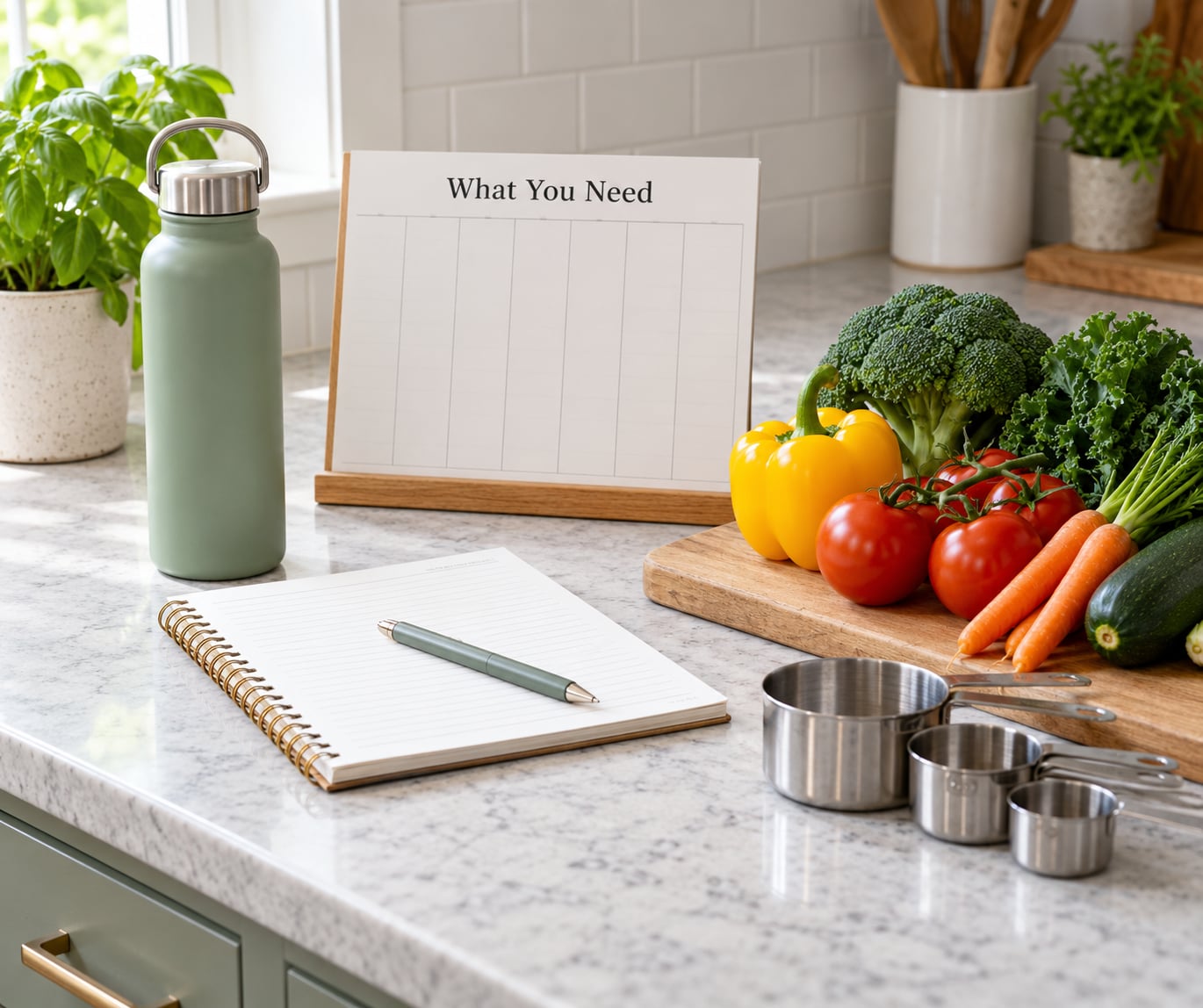
You need six things before you plan a single meal, and five of them take under ten minutes to gather. None of it requires new equipment, and none of it requires giving up the food you like.
- A calendar or planning app. Paper on the fridge works, and a shared calendar works better if more than one person eats from the plan.
- Your go-to meals. Ten to fifteen dishes you already cook without a recipe. These become the spine of the plan.
- Dietary needs, written down. Allergies, intolerances, and the one person who will not eat fish. Note preferences separately from restrictions.
- Your actual schedule. Work hours, school runs, gym times, travel, appointments, and the nights you are out late.
- Serving sizes. The number of people eating each meal, including the lunch you eat alone at your desk.
- A look inside the refrigerator and pantry. This takes five minutes and saves more money than any other step on this list.
- Where you shop. A full grocery store, a discount grocer, or a corner shop changes the plan completely, because what is available decides what is realistic.
If you cook for one person, halve the quantities and choose recipes that scale down without waste. A whole cabbage in a single-person household is a commitment nobody signed up for.
Step-by-Step
The process has seven steps: set a template, collect meals you like, build balanced plates, fit them to your week, turn them into a list by food group, prep the components, then review and adjust. The order matters. Planning meals before checking the refrigerator is how people end up with three bags of spinach and no dinner.
Set Your Weekly Food Template
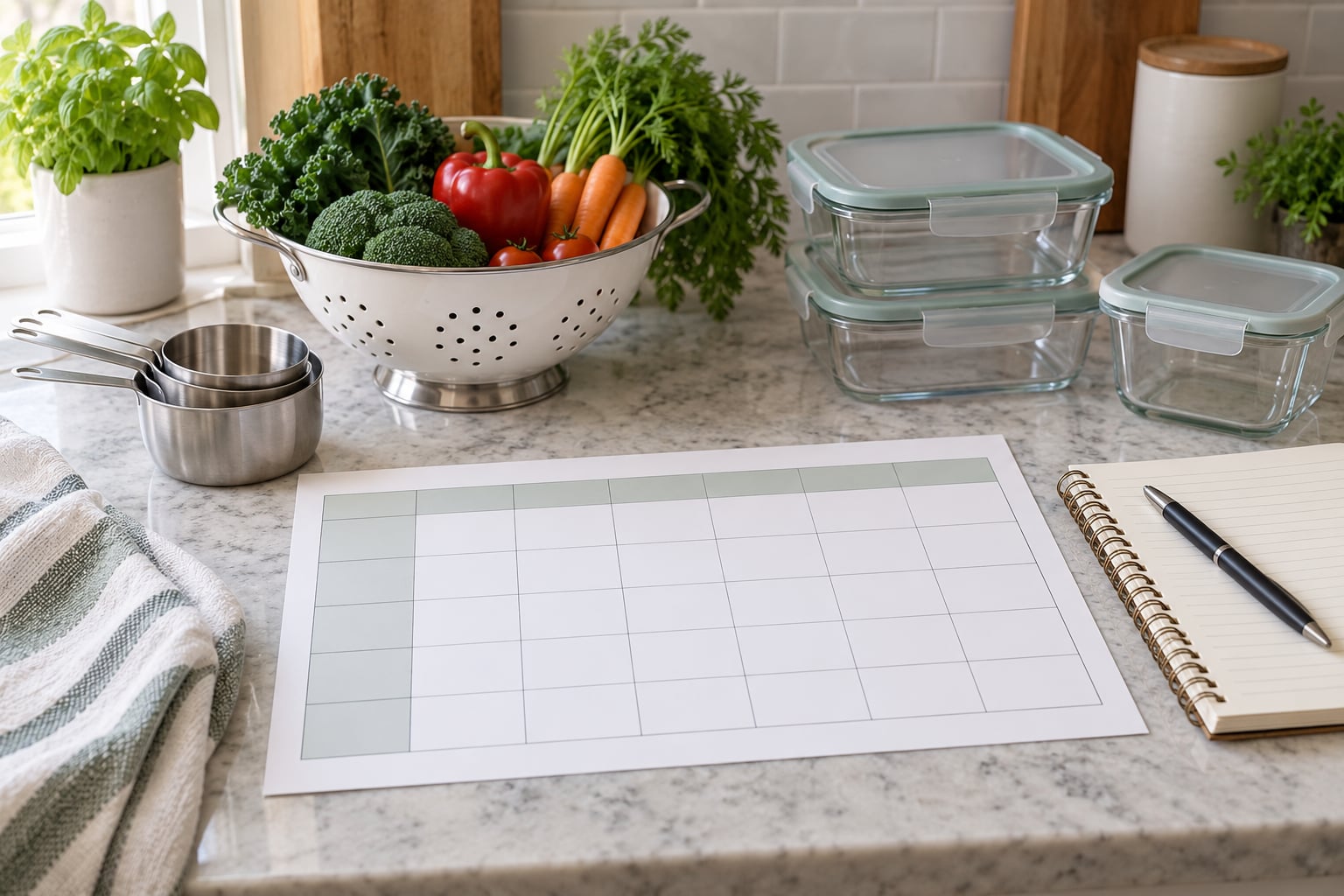
Start with a pattern, not with recipes. Two breakfasts on rotation, two or three lunches, three or four dinners, and one or two snacks gives you a week that already works before you add any food to it.
Choose the pattern from how you actually live rather than how you wish you lived. If mornings are rushed, breakfast is something you can assemble in three minutes or a bowl of fruit you grab on the way out, not a sit-down meal. If you cook one big dinner on Sunday and eat from it, that is a different template from someone who cooks fresh every night.
Keep it flexible on purpose. A template with zero slack is a plan that fails the first time something shifts, and plans that fail are what makes people quit planning.
Choose Your Meals and Save the Ideas
To build a master meal list, write down every meal you genuinely enjoy, not every meal you have bookmarked. Fifteen to twenty is plenty.
Sort them into categories: proteins you like, vegetables you will actually cook, grains and starches, and sauces or seasonings that make the same chicken taste different twice. This categorized list becomes a menu you draw from instead of scrolling for every night.
A good weekly mix is three or four meals you know cold plus one or two new ones. Repeat what works. A rotation of four reliable dinners is better than seven attempts at dishes you have never made, because a failed new recipe on a Tuesday night is when takeout wins.
Save each recipe in one place, even if that place is a note on your phone with a photo attached. When you plan in six months you will not remember the version you liked.
Build Meals Around Balanced Plates
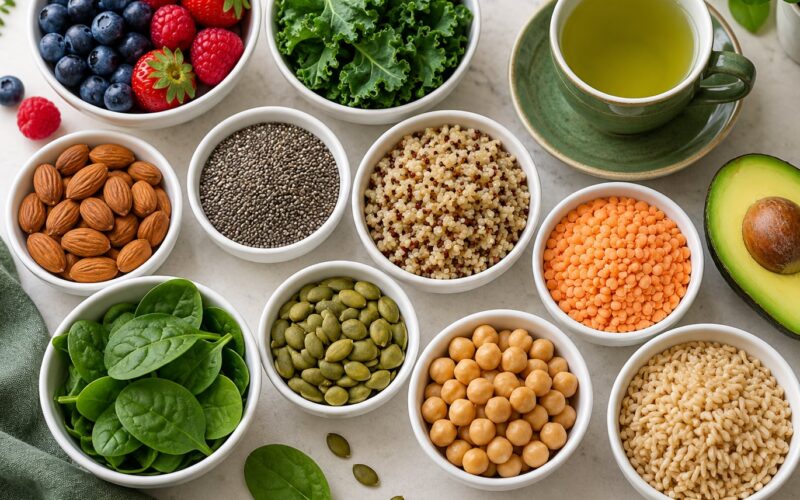
A balanced meal usually includes protein, a vegetable or fruit, a high-fiber carbohydrate, and some fat, with portions that fit your hunger and your culture.
Think in components rather than finished meals. Chicken plus rice plus roasted broccoli plus a sauce you like is four ingredients that become several different dinners. Same for beans, a grain, and whatever vegetables were cheap that week. This is the single habit that keeps a plan from turning into the same seven dinners in a row.
Cook to safe temperatures, not to guesswork. Poultry reaches 165°F, ground meat 160°F, and whole cuts of meat and fish 145°F. If you marinate meat and then cook it, cook it to the same temperature, never to a lower one.
For specific nutrition goals, a registered dietitian is the right person to ask. General planning advice covers structure and variety, not individual medical requirements.
Schedule Meals Around Your Real Week
Put meals on the calendar where they fit your life, then let the calendar decide how ambitious each evening can be.
Mark the nights you are out late, traveling, or feeding people who eat differently. Those become leftovers nights, sandwiches, or freezer meals. Fill the calmer nights with the recipes that take real time. Cooking a forty-minute meal at 8 p.m. on the night you work until six is how plans die quietly.
Leftovers are the mechanism that makes this sustainable. Cook dinner once on a night you are home, portion the rest, and the next night is a ten-minute meal with no decision involved. When one recipe produces four portions, two of them are effectively free meals.
Make a Shopping List by Food Group
Turn your finished week into a list grouped by food group: proteins, produce, grains and starches, dairy or alternatives, pantry staples, and anything extra the recipes need.
Do the subtraction step first. Open the refrigerator and the pantry and remove what you already have, including the half-open bag of rice and the container of spinach someone started last Tuesday. Cross those off before you write anything new. Checking the pantry before the store is the habit regular meal planners say saves them the most money.
Grouping the list by food group means you can shop the store once instead of circling back. Walk produce first, then meat and dairy, then the middle aisles, then pantry staples, so nothing gets forgotten while the fresh items wilt in the cart.
Prep Ahead Without Overcomplicating It
A useful prep session is about an hour of components, not seven finished meals. Wash and cut produce, cook one grain, roast a tray of vegetables, and cook one protein.
What can be stored, and for how long, matters more than most guides admit. Cooked food keeps three to four days in the refrigerator at or below 40°F. Chopped onions, peppers, and carrots hold about a week in a sealed container. Cooked rice and pasta keep three to four days. Anything beyond that gets frozen in portions rather than thawed and refrozen.
Wash greens and store them dry, since trapped water is what turns crisp leaves into a slimy tray by Wednesday. Freeze bread, grated cheese, and cooked grains flat in bags so you can break off what you need.
Prep only what you will actually eat. Extra containers nobody opens are just tomorrow’s leftovers, and unopened leftovers are the most common form of food waste.
Review and Adjust the Plan
Read the finished week once before you shop and check four things: variety, cost, nutrition, and whether it fits your schedule.
Variety means proteins rotate rather than repeating chicken three nights running, and vegetables change across the week. Cost means expensive proteins appear once or twice, not five times. Nutrition means there is produce at most meals and something you genuinely look forward to. Fit means no night asks for something you know you cannot do that day.
Leave one flexible meal per week. When a dinner gets skipped, the invite runs late, or someone is sick, you have a meal with no cooking attached instead of a scramble or a takeout order.
A Simple Example Weekly Meal Plan
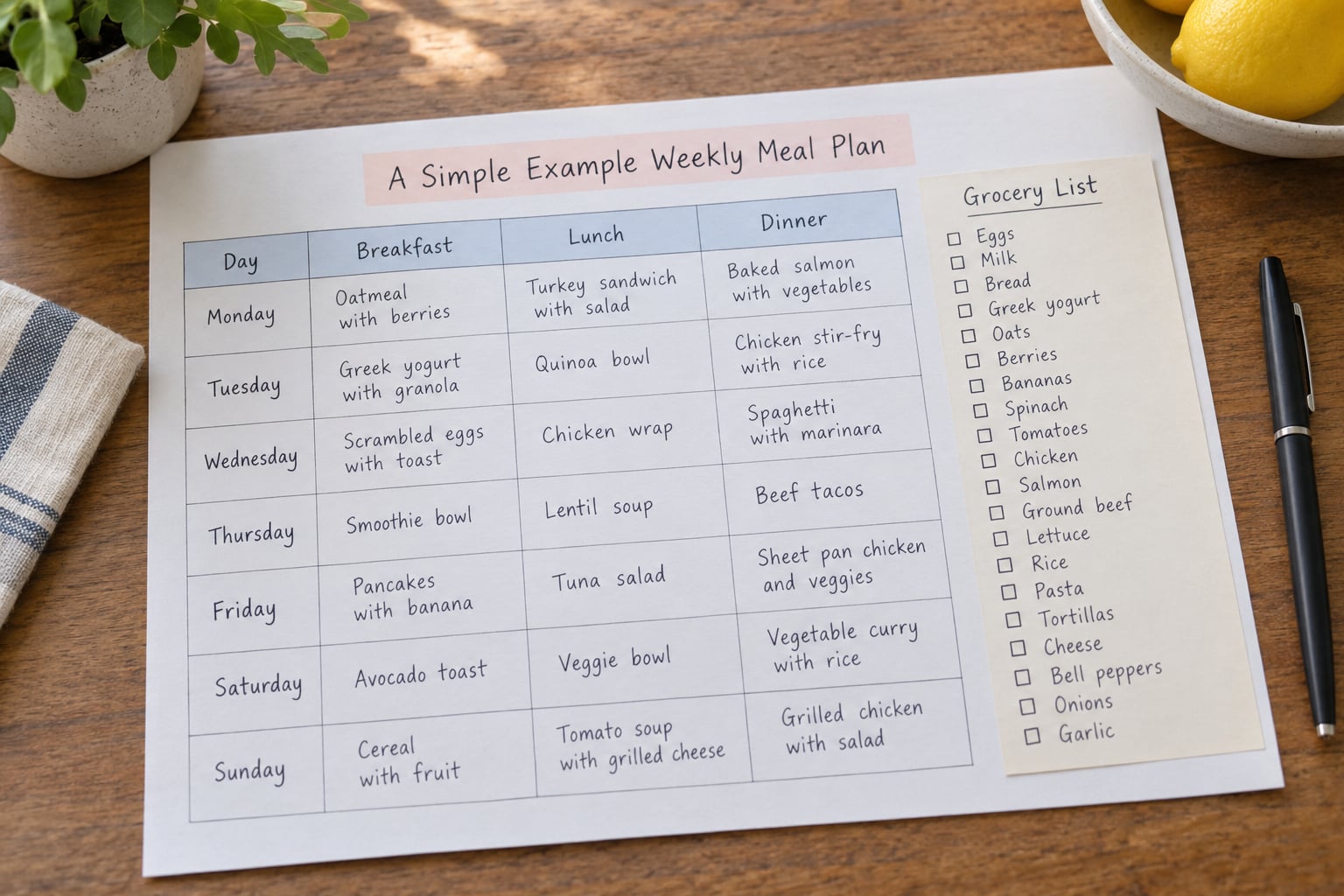
Here is one illustrative week. It is not a prescription; it shows how leftovers, one prep session, and a swap slot fit together.
| Day | Breakfast | Lunch | Dinner |
|---|---|---|---|
| Monday | Overnight oats with fruit | Leftover night from Sunday | Roasted chicken thighs, rice, green beans |
| Tuesday | Overnight oats | Greek yogurt, banana, nuts | Chicken and rice bowls with the rest of the vegetables |
| Wednesday | Eggs and toast | Tomato soup and a sandwich | Bean and vegetable tacos with store-bought tortillas |
| Thursday | Eggs and toast | Leftover tacos | Flexible night or freezer meal |
| Friday | Yogurt and fruit | Tuna or chickpea salad | Pasta with jarred sauce and frozen vegetables |
| Saturday | Whatever takes the least time | Leftover pasta | Takeout night, planned rather than accidental |
| Sunday | Eggs and toast | Sandwiches | One-hour prep session for the week ahead |
Four dinners got cooked across the week, three of them in one session, and three nights were leftovers or assembly. That is the whole trick.
Common Mistakes
Almost every failed meal plan fails the same way. Here are the problems that come up most, and what to do instead.
Planning an Ideal Week Instead of Your Real One
A plan built around a fantasy schedule collapses on the first busy evening. Look at the last two weeks of your calendar and plan around that person. Every week gets two easy nights and one swap slot.
Shopping Before You Check the Pantry
Buying duplicates of what you already have is the most common way a careful plan becomes an expensive one. Take five minutes to inventory the fridge, freezer, and shelves before you make the list, and remove anything you will realistically use this week.
Buying Ingredients for One Recipe at a Time
Recipes that need four specialty items produce a single meal and four leftovers ingredients nobody planned for. Choose meals that share ingredients. If two dinners both use ground beef, tomatoes, and onion, one shopping trip covers both.
Scheduling All the Cooking in One Night
Cooking seven meals on Sunday sounds efficient until Tuesday, when you are tired of food that came out of the same pot. Prep components on Sunday and cook two or three meals fresh during the week. Fresh food tastes better, and a lower commitment survives a hard week better.
Forgetting Portions
A plan that says chicken and rice every night produces either too much or too little depending on the day. Write serving counts next to each meal, and plan one double batch deliberately so leftovers come from a recipe you wanted anyway rather than from overshooting.
Ignoring Food Safety
Cooked food sits three to four days in the refrigerator, and that limit is not a suggestion. Cool food promptly, refrigerate within two hours, and freeze what you will not eat in time. Reheat leftovers to 165°F until steaming hot in the center.
Making Every Day Restrictive
A plan you resent is a plan you abandon. Leave one meal a week that is purely for pleasure, and allow a planned night out. Both keep the rest of the week intact.
Forgetting to Plan for Real Life
Occasional takeout, a frozen backup meal, and one flexible slot remove the sense of failure that ends most plans. Include them in the plan on purpose, so using them feels like following the plan rather than breaking it.
Two habits help more than the rest. Involve whoever eats from the plan, even if it is just asking one question about a meal they would enjoy, since plans built by two people get followed by two people. And keep your plan somewhere visible, because a plan in a phone you never open is not a plan.
Frequently Asked Questions
What are the 3-3-3 rule and the 5-4-3-2-1 rule for meal planning?
The 3-3-3 rule suggests roughly a third protein, a third vegetables or fruit, and a third high-fiber carbohydrate at each main meal. The 5-4-3-2-1 rule is a shopping guideline: aim for five vegetables, four fruits, three proteins, two grains or starches, and one dairy item or alternative each week. Neither is a nutrition requirement. They are simple checklists that stop a plan from becoming seven identical dinners.
How many meals should I plan for a week?
For one person, plan four to five dinners, two breakfasts, and three to four lunches, then repeat what you like. For a family of four, five or six dinners plus lunches usually covers the week, especially if one or two come from the same batch of leftovers. Planning every meal of every day sounds thorough and rarely survives contact with a normal week.
How do I make leftovers stop feeling boring?
Change the form, not just the plate. Cooked chicken becomes a grain bowl with salsa and greens, then soup, then a wrap. Store components separately so grains do not turn to mush and vegetables stay crisp. Season leftovers differently with a different sauce or spice profile, and eat the same meal twice in one week so it feels like a repeat rather than a failure.
Can ChatGPT create a meal plan for me?
It can, and it is useful for a first draft. Give it your servings, schedule, dietary needs, pantry items, and the meals you already like, and ask for a seven-day plan plus a shopping list grouped by food group. Always read the results critically. Check cooking times, ingredient overlap, and food safety guidance against reliable sources before you cook anything.
How long do meal prepped meals last in the fridge?
Cooked food keeps three to four days in the refrigerator at 40°F or below, whether homemade or takeout. Raw chopped vegetables usually hold about a week in a sealed container, while cooked rice and pasta keep three to four days. Freeze anything past that window in single portions so you can thaw only what you need that night.
How do I keep a meal plan when my schedule changes mid-week?
Keep one flexible meal every week and treat it as part of the plan rather than a failure. If two nights collapse, fall back on freezer meals, sandwiches built from leftovers, or a simple pantry meal like pasta with jarred sauce. Reshop for a small top-up rather than re-planning the entire week, which is what makes people give up on the system entirely.
Conclusion
Start with less than you think. Choose three breakfasts, three lunches, and three dinners you already enjoy, and build the rest of the week around those nine familiar meals plus one flexible slot. Check the refrigerator before you make the shopping list, cook components rather than finished meals, and give leftovers a purpose in the plan from the start.
That is the whole system: a template, a master meal list, a calendar that matches your real life, a list grouped by food group, an hour of prep, and one adjustment at the end of the week.