Cooking one meal everyone will eat comes down to a single idea: pick one base dish everybody already tolerates, keep the seasoning mild, and serve every extra component on the side so people can build their own plate. One cook, one set of pans, and nobody ends up eating a separate sad dinner at the counter.
Most people lose this one early, by trying to build a dish that is literally everybody’s favorite. That meal does not exist. What does exist is a base plus three or four optional add-ons, and it takes about the same effort as cooking for one person, just with bigger pans.
A note on what this article is about. Searching this phrase usually returns roundups for people cooking alone. This is the other meaning: one dish, many eaters, at one table. If you are feeding a group with mixed ages, picky eaters, or a dietary restriction in the mix, this is written for you.
Table of Contents
- What You Need
- The four-part meal formula
- Basic kitchen equipment
- Checking preferences before you shop
- Step-by-Step: How to Cook One Meal Everyone Will Eat
- 1. Ask What Everyone Already Likes
- 2. Choose a Flexible Base
- 3. Plan Two Simple Versions of One Dish
- 4. Shop and Prep Before Cooking
- 5. Cook the Shared Parts in One Batch
- 6. Let Everyone Build Their Own Plate
- 7. Save the Leftovers Safely
- Common Mistakes When Trying to Please Everyone
- A few flexible-meal tips that hold up
- Frequently Asked Questions
- What is a good dinner that everyone would like?
- How do you cook one meal for picky eaters and everyone else at the same time?
- How do you feed people with different dietary needs from one meal?
- What food works for a group with very different ages?
- How much food should I cook for 10 people?
- Conclusion
What You Need
Before you shop, you need four things settled, and only the first one involves food.
The four-part meal formula
A meal that survives a mixed group always has the same four parts. A base carries the meal and is not up for debate, usually something like pasta, rice, potatoes, tacos, or baked chicken. Proteins come next, cooked in one batch but kept separate so meat eaters and bean eaters can both be served. Vegetables are roasted or steamed and served plain, with seasoning on the table. Finally, extras like sauces, cheese, and toppings get offered rather than forced onto the plate.
Once you can name those four, you can build a hundred meals. Skip one and something has to compensate, usually by getting heavier and more one-note.
Basic kitchen equipment
You do not need anything special. A large rimmed baking sheet, a deep pot with a lid, a wide skillet, a cutting board, and a set of small bowls for the toppings will carry you through most meals for six to eight people. Two sheet pans beat one small pan every time, because rotating them halfway through is faster than washing in the middle of cooking.
Checking preferences before you shop
Ask two questions and write the answers down: what does each person always eat, and what will nobody in the house touch? The second question matters more. Allergies and medical or religious dietary needs are hard limits and get handled first, before anyone negotiates. After that, note texture preferences, because a child who will not eat wet food is usually fine with the same chicken dry on a plate.
Then check two practical constraints. How much time do you actually have, and how confident are you cooking? A sheet-pan dinner takes about 40 minutes and almost no skill. A lasagna takes longer and needs one pan, not two. Cooking the meal everyone will eat should not also be the night you attempt something ambitious.
Step-by-Step: How to Cook One Meal Everyone Will Eat
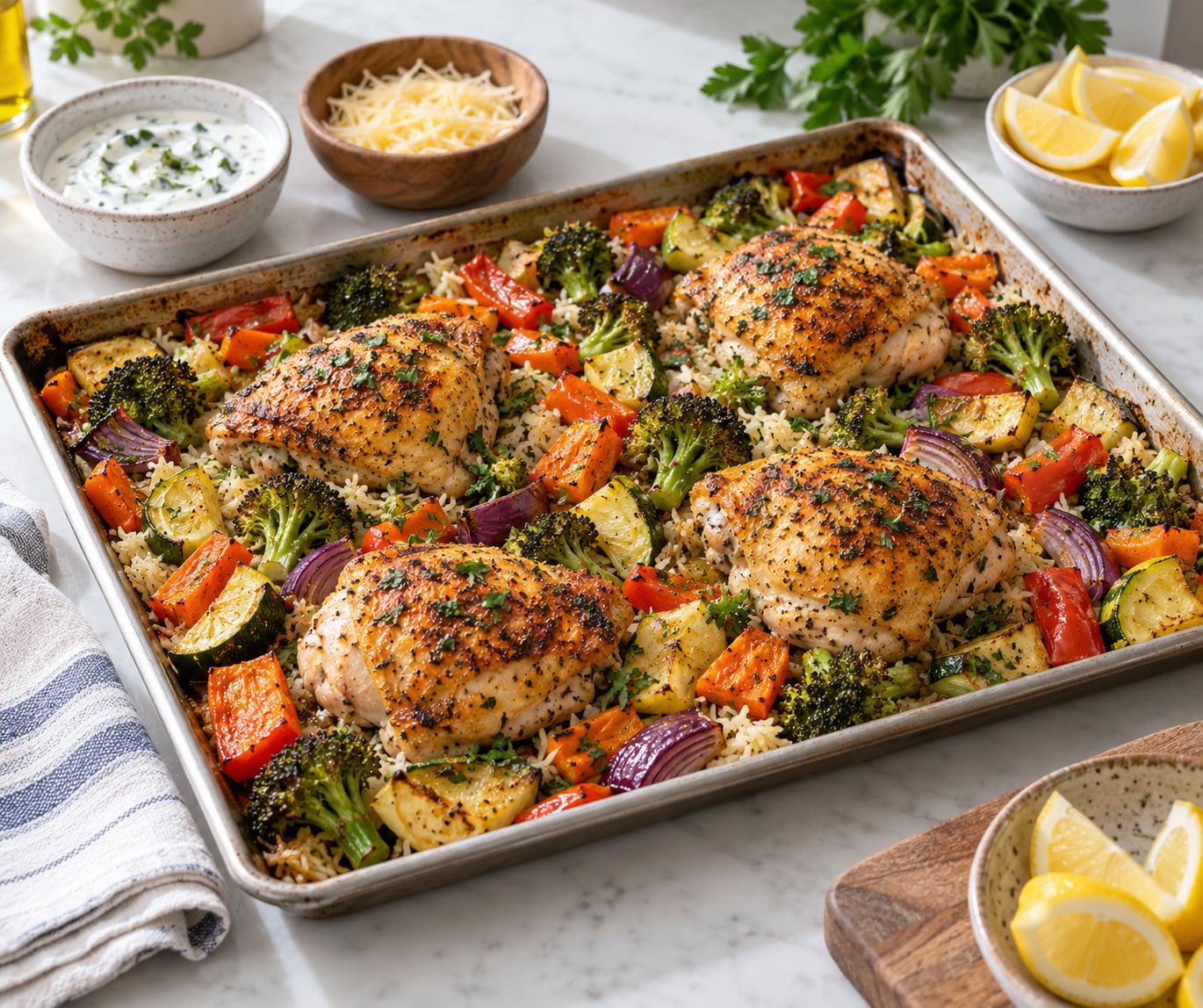
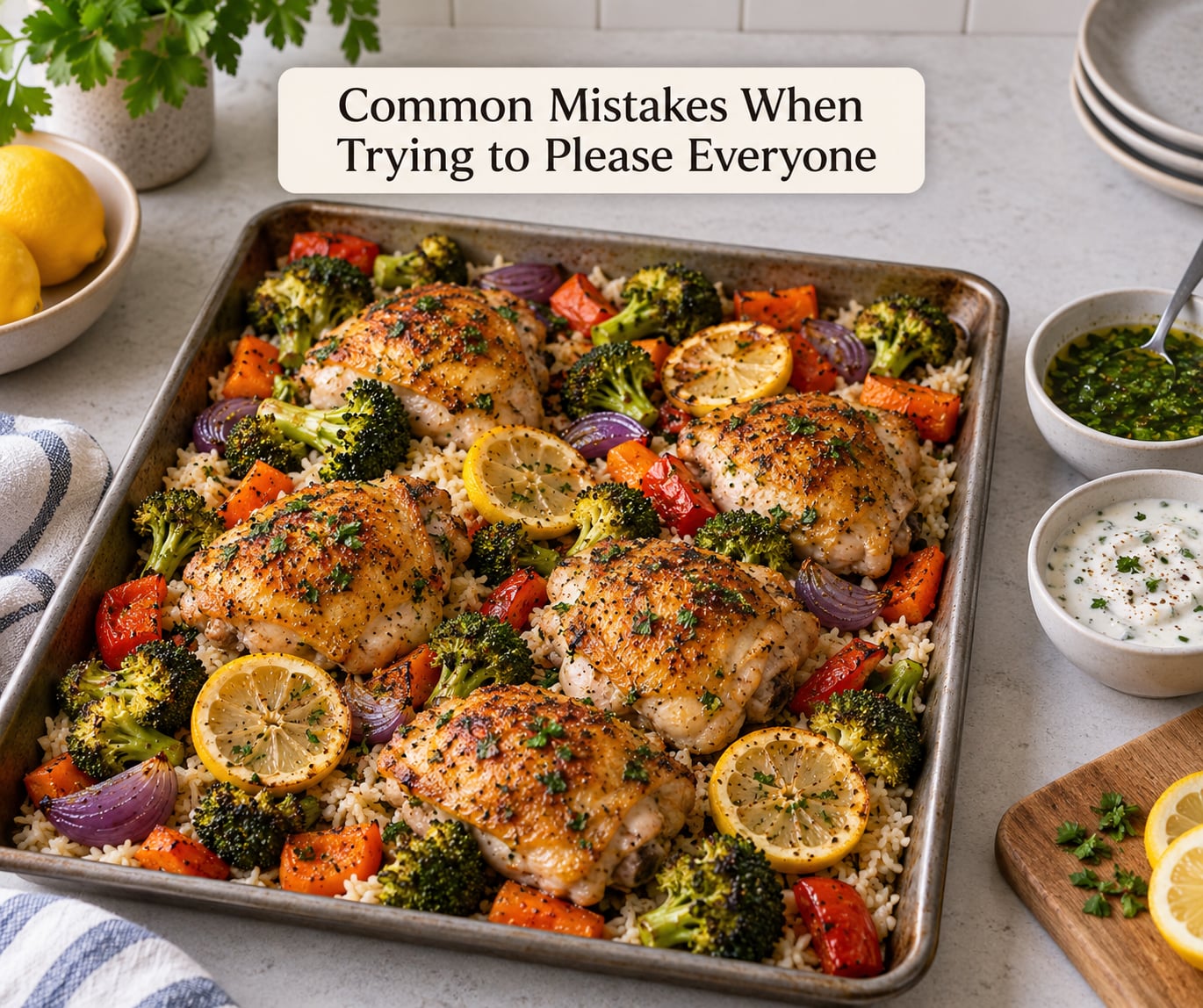
These seven steps are the whole method. The worked example running through them is a sheet-pan chicken dinner with rice and roasted vegetables, which scales cleanly and is easy to modify.
1. Ask What Everyone Already Likes
Start with two or three flavors the group reliably enjoys and ignore everything else for now. The meal you are building is familiar first and clever second. Familiarity is what makes a dish safe, and safe is the entire goal here.
Prioritize in this order: allergies and dietary restrictions first, then dislikes that show up every time, then preferences. You will never satisfy all three equally, and the person with a genuine allergy outranks the person who finds mushrooms slimy.
2. Choose a Flexible Base
The base is the only part everyone must accept, so choose it for tolerance, not novelty. Pasta, rice, roasted potatoes, flour tortillas, and sheet-pan chicken are the reliable options because they are bland enough to be improved and familiar enough to need no explanation.
Check that the base works for the restrictions in the room. Corn tortillas handle a gluten-free table, rice handles a dairy-free one, and a baked potato handles a vegetarian and gluten-free table at the same time. Once the base is agreed, everything else is optional.
3. Plan Two Simple Versions of One Dish
The trick nobody explains clearly is that you can run two versions of the same meal without cooking two dinners. Keep the base and the vegetables identical, and change only one or two components.
Concretely: shred an unseasoned block of chicken and season half of it with paprika and cumin, serving the other half plain. Use ground beef for most people and a pan of seasoned beans or mushrooms for the vegetarian. Cook one batch of rice and put shredded cheese on the table instead of folding it in, so the dairy-free plate stays dairy-free.
The 2-2-2 rule, in one line: two base components, two protein choices, two toppings, all served separately. Six parts, one cook time, and every plate ends up different.
The 2-2-2 rule is worth memorizing because it scales to any group size. Two adults and two kids still get two of each. Twelve people at a holiday table still get two of each, just bigger bowls.
4. Shop and Prep Before Cooking
Buy the agreed base plus the optional ingredients, and buy a little extra of the base. Rice and pasta are cheap insurance against running out, and running out mid-meal is the fastest way to lose the room.
Do the chopping and measuring before anyone sits down. When I cook for a group, everything gets chopped, seasoned, and lined up on the counter first, then the oven goes on. Prep done cold in the first fifteen minutes turns a stressful dinner into a calm one.
Here is roughly how much to cook per person, which is the part most recipes skip. Scale by headcount, not by doubling a family recipe, because doubling pasta and sauce at the same time gives you glue.
| Per person | 4 people | 6 people | 8 people | 10 people |
|---|---|---|---|---|
| Raw pasta or rice | 3 oz / 3/4 cup | 4.5 oz / 1 cup | 6 oz / 1.25 cups | 7.5 oz / 1.5 cups |
| Protein | 4 oz | 5 oz | 6 oz | 7 oz |
| Raw vegetables | 1/2 cup | 3/4 cup | 1 cup | 1.25 cups |
| Sauce or oil | 2 tbsp | 2.5 tbsp | 3 tbsp | 3.5 tbsp |
Buffets need a little more than this, roughly a fifth more food, because people take smaller first servings than you expect and come back.
5. Cook the Shared Parts in One Batch
Everything that is identical for the whole group cooks together. In the worked example, the chicken and the vegetables share two sheet pans seasoned with the same oil and salt, and the rice cooks in one pot on the stove.
Different methods are sometimes unavoidable. A gluten-free guest and a gluten-loving group may need separate pans, and that is fine. What you are avoiding is four separate entrees, not two pans.
Food safety is not optional, especially with a big batch. Cook poultry to 165°F (74°C) at the thickest point, ground meats to 160°F (71°C), and whole cuts of meat or fish to 145°F (63°C). Use a thermometer, not color, because a large batch stays pink in the middle far more often than a small one. Cool leftovers within two hours, and refrigerate them shallow rather than in a deep pile.
6. Let Everyone Build Their Own Plate
Serve the base as the shared plate and put the rest in small bowls on the side. Chicken in one bowl, beans in another, vegetables plain, cheese, hot sauce, and a mild sauce on the table.
This is the move experienced cooks describe over and over, and it is the highest-signal tactic for mixed groups. Asking someone what they want at the table produces a plate they will eat. Putting the hot sauce in the rice and telling a five-year-old to pick it out produces a five-year-old who will not eat the rice.
Keep the extras in plain sight and let people serve themselves where they can. Kids in particular do better with a small plate they built themselves than a big one assembled for them.
7. Save the Leftovers Safely
Refrigerate the base and the protein separately, in shallow containers, and use them within three to four days. Keep the optional components in their own containers so nothing goes soggy overnight.
For the freezer, cool everything first, then freeze flat in a freezer bag with as little air as possible. Label it with the dish and the date. Most cooked rice, pasta, chicken, and roasted vegetables freeze well for two to three months; sauces often do not, so keep those in the refrigerator.
Reheat with a splash of water on pasta and rice, covered, in the microwave or a low pan. Covering matters more than power, and it is the difference between a warm plate and a dry one.
Common Mistakes When Trying to Please Everyone
Cooking three separate dinners. The moment you start a second meal, the first one loses. Decide in advance that there is one meal plus optional components, and hold the line even if somebody asks for something else.
Choosing something nobody has eaten before. Novelty reads as risk at the dinner table. Save the new recipe for a night when you are cooking for one person you can impress.
Hiding disliked ingredients. Finely diced onion in a sauce gets found every time, and being caught hiding food damages trust for months. Cook it in plainly instead, or leave it out and let the person skip it.
Ignoring allergies while negotiating preferences. Treat the allergy list as fixed and the dislike list as flexible. Mixing the two produces a meal that is unsafe for one person and still unappealing to everyone else.
Overcomplicating the customization. Six toppings and four sauces turns dinner into a project. Two of each is enough, and you can always add more later once you see what people actually use.
Serving components that go soggy. A wet base sitting under a lid in the middle of the table gets worse all dinner. Put the sauce on the side and cover the base loosely.
A few flexible-meal tips that hold up
- Ask each person for one must-have and one deal-breaker before you plan anything. Two questions, answered honestly, tell you more than a week of guessing.
- Keep two backup components ready that cost almost nothing to add: a can of beans, a bag of shredded cheese, or a hard-boiled egg.
- When someone still refuses the meal, offer the components separately as a plate of their own rather than cooking anything new. It takes one minute and ends the negotiation.
- Cook more of the base than you need on purpose. Day two becomes fried rice, sheet-pan soup, or a frittata instead of the same dinner again.
- Roast vegetables instead of steaming them. The browning is what makes a side dish acceptable to a picky eater.
- Season in layers and taste before serving. Under-seasoned food is the most common reason a crowd-pleaser fails.
Frequently Asked Questions
What is a good dinner that everyone would like?
A sheet-pan chicken dinner with rice, roasted vegetables, and toppings served on the side is the most reliable answer. Tacos with chicken and beans on soft tortillas, baked potatoes with butter and cheese, or a plain pasta with sauce on the side work just as well. Pick one familiar base everyone tolerates, keep the seasoning mild, and let people add extras themselves rather than trying to make a single plate that satisfies every preference at once.
How do you cook one meal for picky eaters and everyone else at the same time?
Serve the meal deconstructed. Cook the base plain and put every topping in separate bowls, so a picky eater takes only what they already accept while others load their plate. Keep the base mild and put the hot sauce on the table instead of in the recipe. Offer the option of building a plate independently rather than serving a fixed serving, which removes the pressure to eat something unfamiliar.
How do you feed people with different dietary needs from one meal?
Choose a base that already satisfies the strictest need in the room, such as rice, corn tortillas, or baked potatoes, then layer everything else on as optional components. Cook one unseasoned batch of protein and split it, seasoning only the portion for people without restrictions. Keep dairy, gluten, and meat as separate add-ons. You end up with two or three pans from one grocery run rather than three separate dinners.
What food works for a group with very different ages?
Stick to familiar, mild flavors with soft textures, which is why pasta, rice, and roasted vegetables across the board tend to work for toddlers and adults alike. Skip anything sharp, very spicy, or unusual in texture. Let children serve themselves from small bowls and keep one plainly cooked component on the side, such as unseasoned chicken or plain pasta, for the youngest eaters.
How much food should I cook for 10 people?
Plan on about one and a half to two cups of finished food per adult and one cup per child, and add roughly a fifth extra when serving buffet style. For a base like rice or pasta, that means about 1.5 cups of dry rice or 10 ounces of dry pasta for ten adults, plus 6 to 8 ounces of protein per person. When in doubt, cook more of the base than you think, since it keeps better than most sides.
Conclusion
One meal for a whole table works when you stop aiming for a single perfect plate and build a base plus optional components instead. Ask every person for one must-have and one deal-breaker, pick a base that clears the allergy list, cook one batch, and set the extras out in small bowls. That is the whole method, and it scales from four people to ten.