Antioxidants explained in plain language: they are compounds, mostly from food, that help limit the damage caused by unstable molecules called free radicals. Your body makes some of its own antioxidants, and the rest arrive with fruits, vegetables, nuts, seeds, legumes, whole grains, herbs, tea and coffee.
That is the whole idea. Your cells run a constant low-level chemistry show, and free radicals are part of it. Antioxidants are the compounds that keep that show from turning into damage. They support normal processes in the body. They are not a cure, and they are not a substitute for eating a varied diet.
This guide covers what they do, where they come from, how to get more of them without fussing over nutrient labels, and which claims about antioxidants are worth ignoring. I have kept the science honest, including the parts that are genuinely unsettled.
Table of Contents
- What Are Antioxidants?
- Antioxidants explained in plain language, in one sentence
- How to explain antioxidants to kids
- What is not an antioxidant
- How Do Antioxidants Work in the Body?
- Water-soluble and fat-soluble antioxidants work in different places
- Where Do Antioxidants Come From?
- What Foods Are Rich in Antioxidants?
- Does cooking destroy antioxidants?
- Do antioxidants survive digestion?
- Do Antioxidant Supplements Work?
- How to read a supplement label
- When to check with a professional first
- How Can You Add More Antioxidants Without Overcomplicating Meals?
- What Are the Common Myths About Antioxidants?
- Myth 1: More antioxidants are always better
- Myth 2: One superfood solves the problem
- Myth 3: A greens powder replaces vegetables
- Myth 4: ORAC or antioxidant capacity numbers predict health
- Myth 5: Antioxidants prevent disease on their own
- Myth 6: Antioxidants are a weight-loss shortcut
- Frequently Asked Questions
- Are antioxidants the same thing as vitamins?
- Do I need antioxidant supplements if I eat fruit and vegetables?
- Can antioxidants help with weight loss?
- Are antioxidant supplements always safe?
- What is the best way to get more antioxidants in my diet?
- What to Do First
What Are Antioxidants?
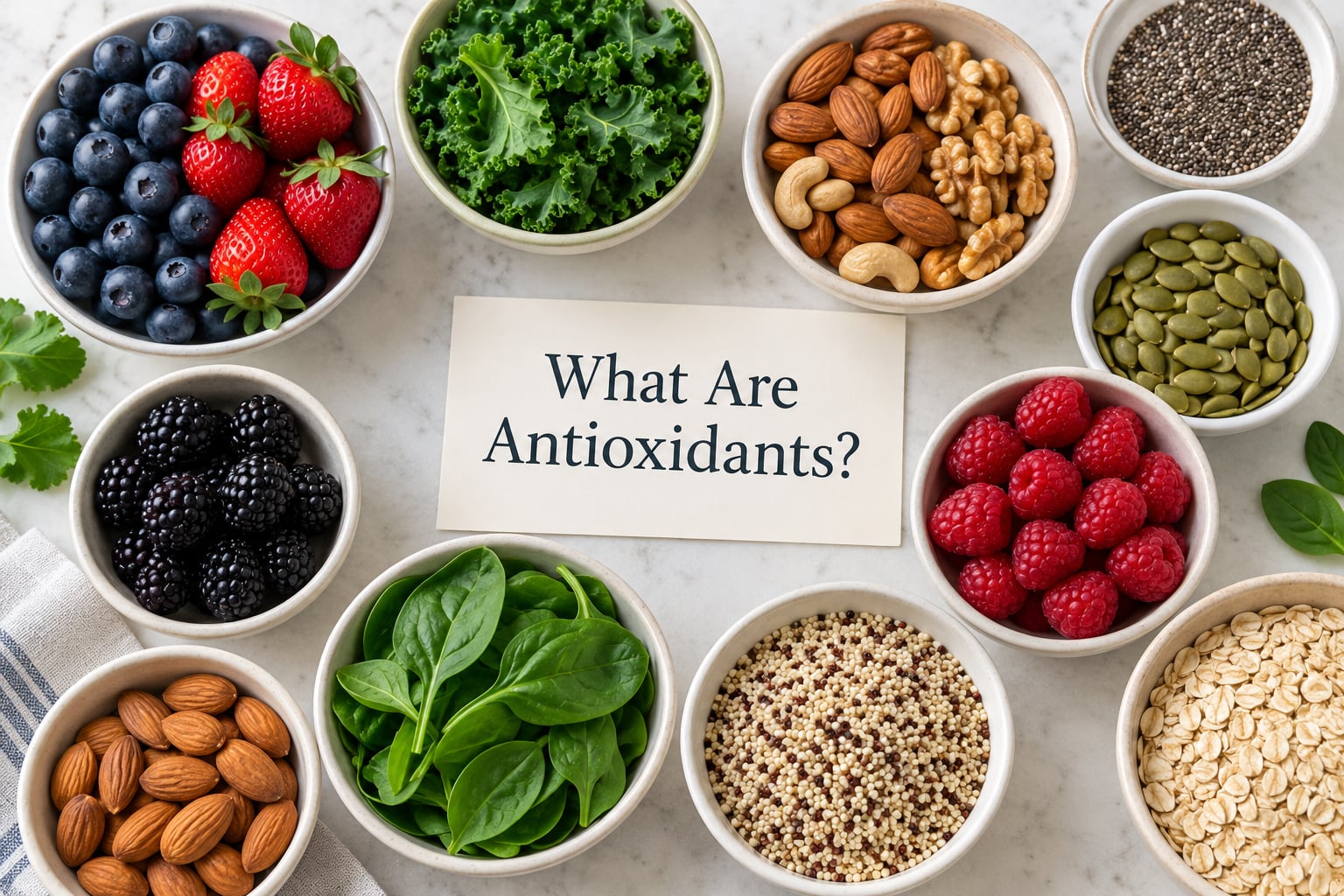
Antioxidants explained in plain language, in one sentence
An antioxidant is a molecule that gives an electron to a free radical without becoming unstable itself, which stops a chain reaction of damage to cells, proteins and DNA.
Oxidation is just chemistry you already recognise. Iron rusts, an apple cut open turns brown, oil in a bottle goes rancid. All of that is oxidation. The same process happens in your body at a much smaller scale.
Free radicals are molecules with an odd, unpaired electron. That extra electron makes them reactive, and they will grab electrons from whatever is nearby, including the lipids in your cell membranes or the DNA in your nucleus. Left alone, one radical can trigger a chain where each new molecule becomes a radical in turn.
An antioxidant steps into that chain and absorbs the spare electron. Once it does, it is spent, which is why the body keeps recycling and replacing them.
How to explain antioxidants to kids
Tell a child that their body is made of tiny cells and that every cell is a small room with a lightbulb. Free radicals are like sparks that jump out and scorch the furniture. Antioxidants are the little helpers that catch the sparks before they land.
For older kids, keep it to one question: what happens if the sparks are never caught? The answer is that the furniture slowly wears out. That is enough, and it is accurate.
What is not an antioxidant
Not every healthy-sounding nutrient is an antioxidant. Vitamin B12 is an essential vitamin, but it is not an antioxidant, and taking extra of it will not add antioxidant protection.
Coconut water contains potassium and some polyphenols, but it is not one of the meaningful dietary antioxidant sources. Listing it as one is marketing shorthand more than nutrition science. The compounds people care about, anthocyanins, carotenoids, flavonoids, tocopherols and the likes, come from plants, herbs and seeds.
How Do Antioxidants Work in the Body?
You run a small antioxidant system already, and it is the part most people never hear about.
Your cells make enzymes that act as antioxidants: superoxide dismutase, catalase and glutathione peroxidase. Glutathione itself is a major intracellular antioxidant. These are endogenous antioxidants, meaning the body builds them, and they work continuously without anything coming from your plate.
Dietary antioxidants are the exogenous ones. They back up the internal system, and many of them also do other jobs. Vitamin C helps with collagen synthesis and iron absorption. Vitamin E sits in cell membranes where it protects fats from oxidation. Polyphenols and flavonoids have their own signalling effects that have nothing to do with free radicals at all.
That last point matters. A compound can be healthy for reasons that have nothing to do with antioxidants, and that is exactly why the antioxidant story is an incomplete explanation of why plants are good for you.
Water-soluble and fat-soluble antioxidants work in different places
Vitamin C and the glutathione family dissolve in water, so they move through blood and the fluid inside and around cells. Vitamin E, carotenoids and tocopherols dissolve in fat, so they settle into cell membranes and fat-rich tissues such as the brain and eyes.
This is the practical reason a meal with a fat source, such as olive oil, avocado or a handful of almonds, helps you absorb the fat-soluble compounds from the vegetables sitting next to it. It is a small detail that food guides rarely mention, and it costs you nothing.
Oxidative stress is the term for when free radical production outpaces the body’s ability to neutralise them. Long-term oxidative stress is associated with inflammation and with higher risk of several chronic conditions. It is a risk factor, not a diagnosis, and the body is normally very good at keeping it in check.
Where Do Antioxidants Come From?
Two places. Your own cells manufacture enzymes and glutathione, and your food supplies the rest. The food side is where most of the variety comes from, and where most people’s intake falls short.
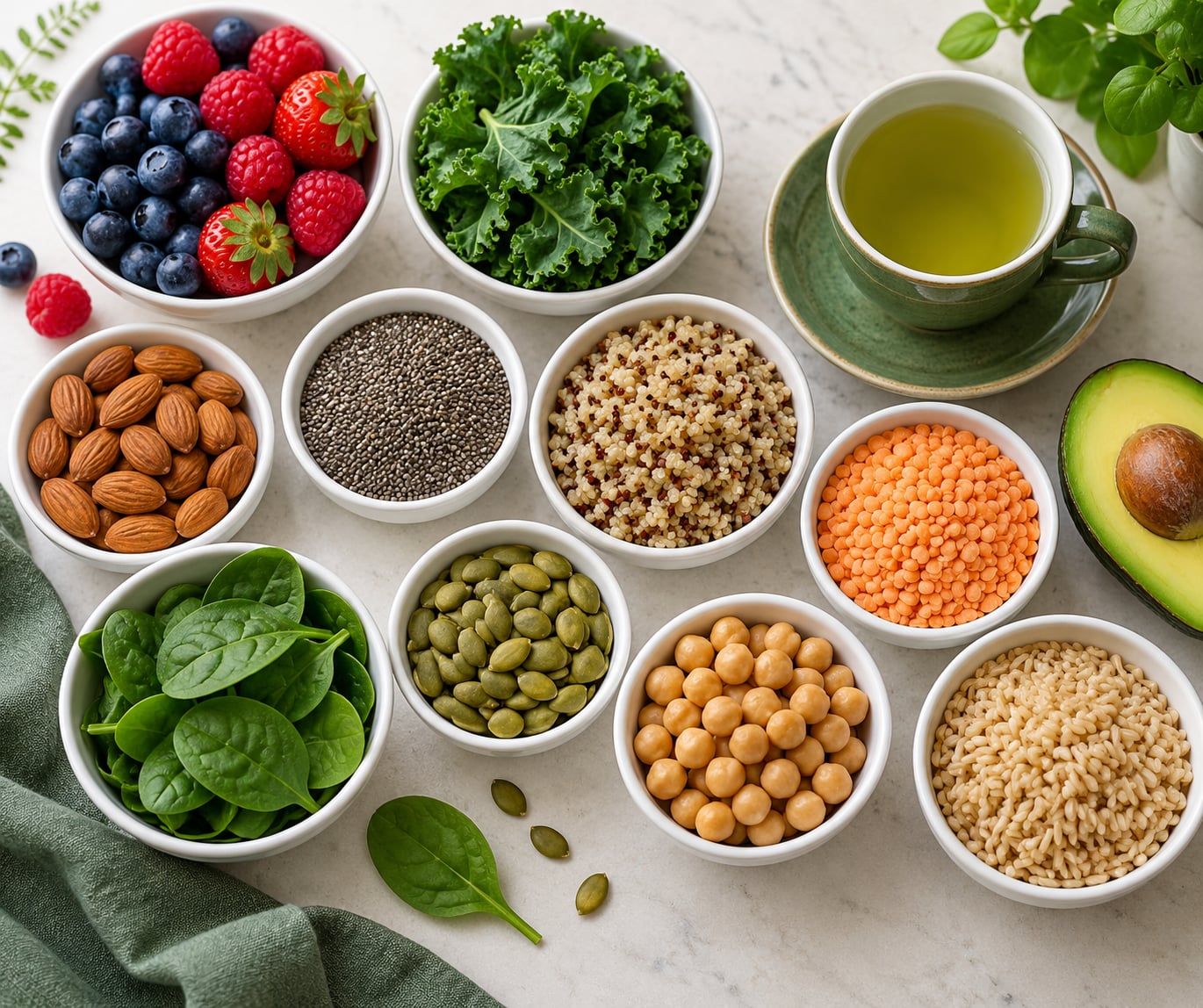
Current dietary guidance, updated for 2026, keeps pointing at the same simple idea: eat a wide range of plant foods rather than hunting for one hero ingredient. Different plant compounds travel through different pathways, so a varied plate beats a single-source diet even when the single source scores well on a label.
| Food group | Examples | Main antioxidant compounds |
|---|---|---|
| Fruits | Berries, apples, pears, citrus, plums | Anthocyanins, flavonoids, vitamin C |
| Vegetables | Leafy greens, broccoli, peppers, tomatoes, sweet potatoes | Carotenoids, lutein, lycopene, vitamin C |
| Herbs and spices | Turmeric, cinnamon, oregano, thyme, rosemary | Curcuminoids, phenolic compounds |
| Nuts and seeds | Walnuts, almonds, sunflower seeds, pumpkin seeds | Vitamin E, polyphenols, selenium |
| Legumes | Black beans, lentils, chickpeas, peas | Flavonoids, polyphenols, minerals |
| Whole grains | Oats, brown rice, barley, whole wheat | Avenanthramides, phenolic acids |
| Beverages | Green tea, black tea, coffee, cocoa | Catechins, polyphenols, theobromins |
One practical serving suggestion per row beats a long list. Half a cup of berries with breakfast, a handful of greens in the morning sandwich, a spoon of ground flax or walnuts in oatmeal, a pot of lentil soup on a Sunday, and a cup of tea instead of a second coffee. That is most of the work done.
What Foods Are Rich in Antioxidants?
No single food tops the list, and the ones marketed hardest are rarely the ones nutritionists rank first. What matters is how often you eat them, not whether one meal is perfect.
Fresh, frozen and canned produce all contribute, and they are not interchangeable in quality. Frozen vegetables and fruit are usually picked and frozen at peak ripeness, so their compound levels often match or beat fresh produce that has sat in a truck for a week. Canned tomatoes, beans and vegetables retain most of their nutrients, and because beans are also inexpensive and store well, they are an easy daily win.
Dried fruit concentrates the sugar along with everything else, so a small handful works better than a bowl. Herbs are the cheapest antioxidant source on the planet by weight, since a pinch of dried oregano delivers a surprising amount per gram.
Real meals, no recipe required. Berries over plain Greek yogurt at breakfast. A soup built from carrots, tomatoes and onions on a weeknight. Nuts stirred into oats or a salad. Frozen spinach folded into eggs. A spoon of ground flax in whatever you already eat. Herbs stirred into a sauce at the end of cooking rather than at the start.
Does cooking destroy antioxidants?
Cooking cuts both ways. Water-soluble vitamin C leaches into cooking liquid and heat breaks it down, so long simmering in an open pot is the worst case for that one vitamin. Boiling vegetables and pouring the water down the sink discards a meaningful amount.
At the same time, cooking can raise bioavailability. Lycopene in tomatoes becomes more available after heat, and lightly cooked spinach and kale retain more usable carotenoid than raw. Practical answer: steam, sauté or roast instead of boiling, eat some of your vegetables raw, and add a fat to leafy dishes. Nobody needs to cook produce with laboratory precision.
Do antioxidants survive digestion?
This one comes up constantly, and the honest answer is: partly. Stomach acid is a harsh environment, and some compounds are broken down before absorption. A meaningful share of the polyphenols you eat is instead used by gut bacteria, and those metabolites are absorbed and do their own work in the body.
So the process is not a straight pour-through. What survives intact, what arrives as metabolites and what is lost all vary by compound, by food matrix and by the rest of the meal. The net effect of eating whole plants is well supported; the effect of isolating one compound and swallowing it in a capsule is a different question.
Do Antioxidant Supplements Work?
Sometimes, for a specific diagnosed reason, and rarely as a general health strategy. The gap between food and concentrates is larger than most labels suggest.
A capsule can deliver hundreds of milligrams of one compound, and it will be absorbed differently than the same compound in a plant. Large trials of high-dose vitamin E and beta-carotene in people hoping to prevent cancer or heart disease produced disappointing or actively harmful results, and the field now talks openly about the antioxidant paradox, where high doses can behave differently in the body than the foods they came from.
ORAC scores, the antioxidant capacity numbers printed on many jars, were retired by the USDA. The lab method did not predict what happens in a human body, and a high number on a label tells you very little.
Some supplements have legitimate medical uses. Vitamin E and zinc have been studied for specific eye conditions, and selenium has a defined role in thyroid function. Those are conversations to have with a doctor, not a self-directed purchase.
How to read a supplement label
Start with the dose per serving, not per capsule, and check whether that serving is one pill or four. Then look at the form, because extract ratios, powder blends and marked-release varieties absorb differently from the plain compound. A serving size that requires six capsules to deliver a modest amount of anything is telling you something.
Check whether the product carries third-party testing from a recognised programme such as USP, NSF or ConsumerLab, and be suspicious of proprietary blends, since they do not disclose individual amounts. Finally, check total intake across everything you take. Two multivitamins plus a fortified drink adds up faster than most people expect.
When to check with a professional first
Ask a doctor, pharmacist or registered dietitian before starting any supplement if you take prescription medication, are pregnant or breastfeeding, are preparing for surgery, or have a diagnosed health condition.
This matters more than it sounds. High-dose vitamin E can interfere with blood-thinning medication, and some supplement ingredients are not well studied alongside specific drugs. If you take warfarin, antiplatelet medication, chemotherapy or immunosuppressants, raise it with your prescriber first rather than assuming a food-derived dose is interchangeable with a capsule.
How Can You Add More Antioxidants Without Overcomplicating Meals?
Build the habit into food you already eat instead of adding new meals. Most people who succeed at this are not cooking more, they are swapping.
Swap white rice for brown rice now and then. Swap butter on toast for nut butter. Swap half the pasta sauce for a jar of tomato sauce with onion and garlic. Add beans to whatever is on the plate on a Tuesday. Drink tea in the afternoon instead of reaching for a snack. Each of these is a one-line decision, not a lifestyle overhaul.
A short checklist to keep in your head:
- Colour at two meals a day, with two different colours at most meals.
- One fruit or vegetable at every meal, fresh, frozen or canned.
- A handful of nuts or seeds most days, unsalted where you can manage it.
- Beans or lentils at least twice a week, in any form.
- A fat alongside vegetables, such as olive oil or avocado.
- Herbs and spices used daily instead of relying only on salt for flavour.
- Labels read for serving size, not just the headline number on the front.
None of this is tied to a particular body size or a specific number on the scale. It supports general nutrition, which is the honest reason to do it, and it is far more durable than any plan built on powders.
What Are the Common Myths About Antioxidants?
Myth 1: More antioxidants are always better
High-dose single-compound supplements have repeatedly failed to deliver the benefits that food patterns deliver, and some have caused harm in large trials. A powder that stacks ten extracts on one label is not a shortcut past a varied diet.
Myth 2: One superfood solves the problem
There is no such thing as the most powerful antioxidant food. Different compounds work on different pathways, which is precisely the argument for eating a range of them throughout the week rather than a hero ingredient every morning.
Myth 3: A greens powder replaces vegetables
A powder supplies a fraction of the volume, the fibre and the variety of a real plate. If you enjoy one, it fits alongside food. It does not stand in for it.
Myth 4: ORAC or antioxidant capacity numbers predict health
The USDA retired the ORAC database because measuring antioxidant capacity in a test tube did not predict what happens in a person. Any product leaning on a big number on the front of the label is using a retired measure.
Myth 5: Antioxidants prevent disease on their own
Patterns of eating that include plenty of plant foods are associated with better health outcomes. No single antioxidant compound, and no antioxidant supplement, has been shown to prevent or treat disease on its own. Anyone making that claim is selling something.
Myth 6: Antioxidants are a weight-loss shortcut
Foods rich in antioxidants overlap with high-fibre, high-volume foods that help with fullness, but that is a side effect of eating whole plants, not an effect of the antioxidants themselves. Treat claims that connect antioxidant supplements to weight loss with open scepticism.
Frequently Asked Questions
Are antioxidants the same thing as vitamins?
No. Vitamins are a category of nutrients the body needs in small amounts, and some of them act as antioxidants, such as vitamins C and E. Antioxidants is a wider category that also includes minerals like selenium, and thousands of plant compounds such as polyphenols, flavonoids and carotenoids. Most dietary antioxidants are not vitamins.
Do I need antioxidant supplements if I eat fruit and vegetables?
Most people who eat a varied diet with several servings of produce, some nuts or seeds, legumes and whole grains do not need antioxidant supplements for general health. Supplements have specific medical uses that a doctor can discuss. Concentrated extracts deliver far more of one compound than food, and high doses have not matched the benefits of whole food patterns in large trials.
Can antioxidants help with weight loss?
Not directly. Foods rich in antioxidants tend to be high in fibre and water, which supports fullness, but the effect comes from the whole food rather than the antioxidant compounds. No good evidence shows antioxidant supplements cause weight loss. Healthy eating patterns can support a healthy weight, and a doctor or registered dietitian can help with a plan that suits you.
Are antioxidant supplements always safe?
No. Higher doses are not automatically safer, and some high-dose supplements have caused harm in large trials. Interactions with medication are a real consideration, particularly with blood-thinning medication, chemotherapy and immunosuppressants. Pregnancy, breastfeeding, surgery and existing health conditions are all reasons to check with a doctor or pharmacist before starting one.
What is the best way to get more antioxidants in my diet?
Eat a wider range of plant foods rather than chasing one ingredient. Aim for colour at two meals a day, include beans or lentils twice a week, add nuts or seeds most days, and use herbs and spices as everyday flavour. Add some fat to vegetable dishes, because fat-soluble compounds absorb better that way. Tea, coffee and cocoa count too, and frozen and canned produce work fine.
What to Do First
Start with one change: add a wider range of colourful fruits and vegetables, nuts, seeds, legumes and whole grains to meals you already eat this week. Frozen and canned produce are fine, and frozen is often better than tired fresh.
You do not need to buy anything. If you are considering a supplement, or you have a medical condition, take medication, or are unsure, ask a doctor, pharmacist or registered dietitian first. They can tell you whether it is useful for you specifically, and what would interact with what you take.