You scroll for twenty minutes, close the app, and catch your reflection in a dark window. The comparison has already run its course. How to stop comparing your body to others online is mostly a matter of changing what your feed shows you and what you do in the first three seconds after a triggering post, not of finding more willpower.
The good news is that comparison is a habit built by repetition, and habits can be rebuilt. The plan below takes about a week to set up and a few minutes a day to keep going.
This is general information about media habits and self-perception, not medical or mental-health advice. If body-image distress is affecting your eating, your mood or your daily life, a doctor or a qualified mental-health professional can help you work through it properly.
Table of Contents
- Step-by-Step: How to Stop Comparing Your Body to Others Online
- 1. Identify your comparison triggers
- 2. Curate your social media feed
- 3. Stop the comparison thought in the moment
- 4. Separate fitness information from appearance content
- 5. Use a personal rule for how to stop comparing your body to others online
- 6. Build daily habits that ground your self-image offline
- Common Mistakes
- Frequently Asked Questions
- Why do I compare my body to people I see online?
- What should I do after seeing a triggering body image or post?
- Is unfollowing accounts a healthy way to stop comparing my body?
- How can I stop discussing my appearance and weight in group chats?
- How do I recover from body comparison without starting a restrictive diet?
- When should I seek professional help for body-image distress?
- Conclusion
Step-by-Step: How to Stop Comparing Your Body to Others Online
1. Identify your comparison triggers
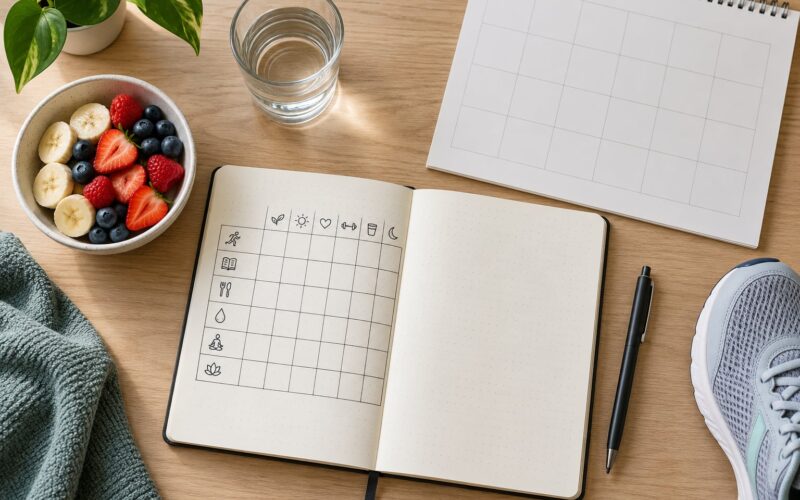
Start by writing down the pattern instead of judging yourself inside it. For one week, note the account, the type of post, the emotion and the time of day each time you notice yourself ranking your body against someone else’s.
Most people find the pattern is narrow. A r/selfimprovement thread described the same thing readers call the mirror moment: the comparison lands before conscious thought, usually late at night or right after a workout. Write it as “Tuesday, 10pm, fitness account, tightness in my chest, closed the app feeling worse” rather than “I am weak for feeling this.”
You are collecting data, not building a case against yourself. Ten lines is enough for the first week.
2. Curate your social media feed
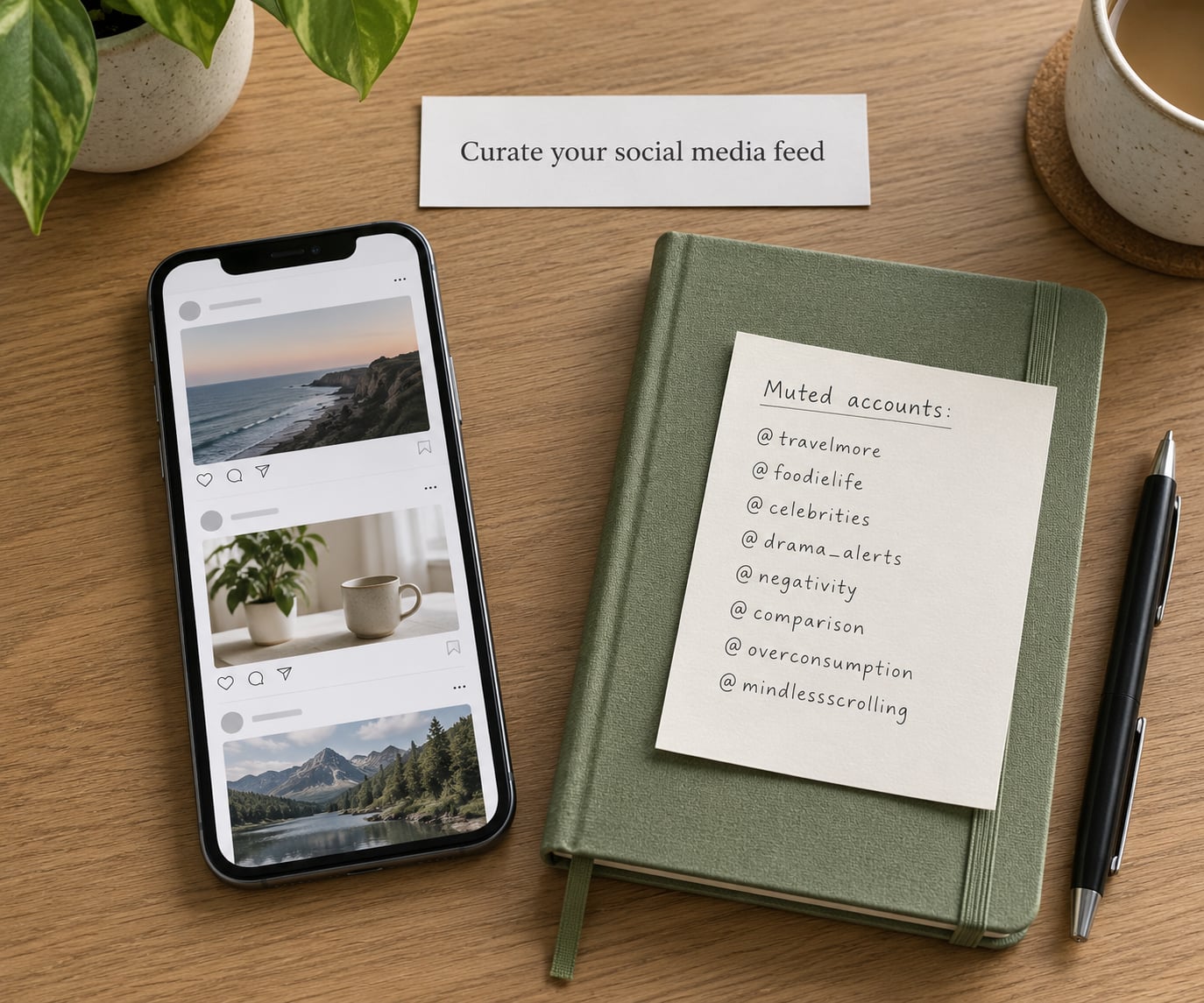
Do a feed audit rather than a purge. Open your following list, and sort every account into one of four buckets: unfollow, mute, restrict or keep.
Unfollow anything that reliably leaves you feeling worse and that you would not miss. Mute the accounts that are genuinely useful for information but whose visuals wreck your evening, since muting hides the posts without cutting a real-life connection. Restrict accounts that make you self-conscious about posting. Keep the rest.
Readers on Reddit describe muting as whack-a-mole, because new triggering accounts keep appearing. That is normal. Re-audit once a month instead of trying to win in one evening. A curated feed is a maintenance habit, not a one-off cleanse.
3. Stop the comparison thought in the moment
Use a four-part interruption: pause, label, breathe, redirect. It takes under ten seconds and it works better than arguing with yourself.
Pause before scrolling further. Label what is happening in plain words: “I am comparing my stomach to a stranger’s photo.” Naming it moves the thought from the feeling part of the brain to the observing part, which is roughly what psychologist Ninoska Peterson, PhD, at Cleveland Clinic describes as neutralising a negative thought rather than fighting it. Then take three slow breaths, and redirect to something physical and specific: stand up, fill a glass of water, step outside for two minutes.
You are not trying to feel fine. You are trying to shorten the gap between the post and the next thing you do.
4. Separate fitness information from appearance content
Some comparison is genuinely useful. Comparing a squat technique to a coaching video is skill learning. Comparing your shape to a filtered photograph is not, because the photograph is not a fair reference point.
Ask one question when a post lands: is this information or is this appearance content? Information posts usually tell you what someone did, for how long, and with what equipment. Appearance posts mostly show a result with the effort removed, plus a filter, an angle and a lighting setup, and sometimes a paid partnership.
Keeping the useful half and muting the rest is a fair trade. Clinical social worker Carolyn Karoll, LCSW-C, writes about applying media-literacy questions to feed content, including who made the post and what the agenda behind it might be.
5. Use a personal rule for how to stop comparing your body to others online
Turn the steps above into one short written policy you can actually follow. Mine reads like this: I check my feed twice a day, ten minutes each. I do not open appearance-based accounts after 8pm. I post a photo only on days I want to, never on days I feel pressured. Anyone who comments on my body gets the same short reply: “Thanks, but I would rather not talk about it.”
Write yours on paper and keep it where you will see it. The point is not the wording. The point is that a rule decided calmly on a good day holds up better in the moment than a decision made while you are already upset.
6. Build daily habits that ground your self-image offline
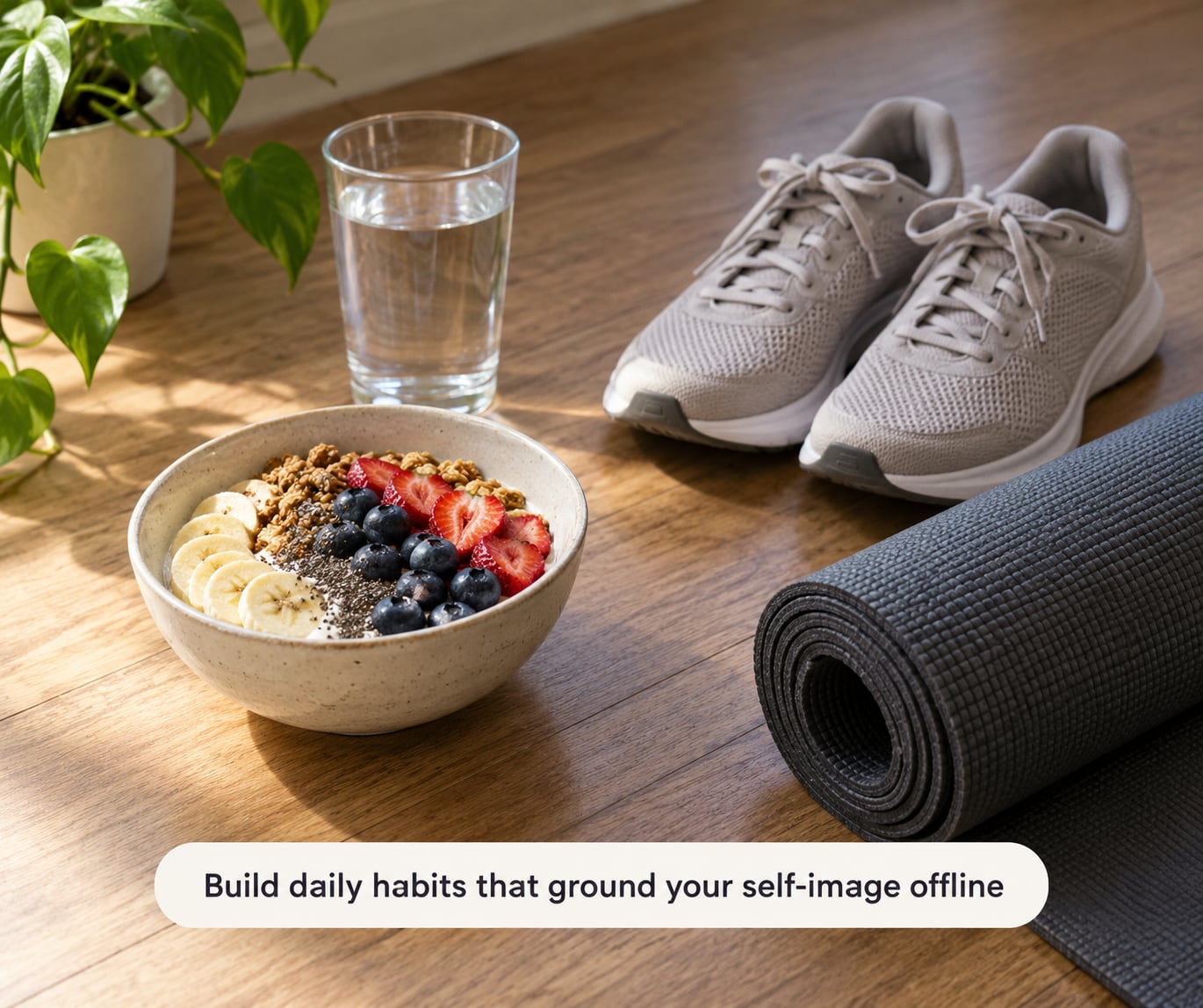
Compare how your body works, not how it looks. Energy through the afternoon, stairs without holding the rail, sleeping through the night, being able to play with a kid or a dog for twenty minutes. These are function-based goals, and unlike appearance goals they do not need an audience.
Add the boring anchors: regular meals you actually enjoy, water, a sleep schedule, movement you do for its own sake rather than for how it looks afterwards, and conversations where nobody comments on anybody’s body.
Many readers told forums that body neutrality landed better than body positivity, because instructions to love your body can feel insulting when you are not in the mood. The neutral version is easier: my body is a body, it works, I am moving on. Cleveland Clinic describes the same distinction between forcing positivity and finding a workable relationship with your appearance.
Keep the habits modest. Walking counts. So does doing nothing for a week, which is its own kind of data.
Common Mistakes
Trying to fix comparison with stricter food rules. This is the most common trap and the most damaging one. Cutting harder usually adds more attention to food and more checking, which is the opposite of what you want. If eating has become stressful, that is a signal to talk to a doctor or a registered dietitian, not to tighten the rules yourself.
Treating a triggering post as evidence about your body. A photo is not a measurement. It is one frame, shot by someone else, usually edited. Arguing with your own reflection using a stranger’s picture is a rigged case.
Relying on willpower alone. Willpower runs out around 9pm after a long day. Change the environment first, since a feed you do not see causes far less trouble than a feed you refuse to look at.
Announcing your progress publicly. Posting a weight-loss streak or a before-and-after invites the exact comments and measurements you are trying to escape. Progress kept private is progress nobody can audit.
Making appearance your only measure of worth. When looks are the scoreboard, every day is a loss you can lose. Adding two or three measures you control, such as sleep, strength or time with people, gives you somewhere else to land.
Changing everything at once. A brand-new feed plus a strict routine plus a new workout plan usually collapses by Thursday. One change per week survives; three changes in one week does not.
Forgetting the people you know offline. Harder than any influencer is the friend, sibling or coworker whose posts you cannot mute without it looking strange. Try moving the conversation offline, reacting to their non-appearance posts, or simply asking yourself whether you want to be closer to them, and adjusting how often you read their feed.
One last thing. If someone close to you compares their body to people online, do not correct them or offer a compliment they did not ask for. Just ask a neutral question, such as how their training is going, and let the conversation move to something they chose.
Frequently Asked Questions
Why do I compare my body to people I see online?
Because social platforms show you an edited, curated highlight reel, and your brain reads a feed as a sample of what normal looks like. Ranking yourself against it is automatic, and the algorithm learns that you paused on bodies, so it serves more. Naming the mechanism is the first step to interrupting it.
What should I do after seeing a triggering body image or post?
Do the pause, label, breathe, redirect sequence straight away: stop scrolling, say plainly what you are doing, take three slow breaths, then move your body with a concrete task like filling a glass of water. Do not try to argue yourself out of it in the same feed. Change the setting and note what triggered you while it is still fresh.
Is unfollowing accounts a healthy way to stop comparing my body?
Unfollowing is a legitimate tool, not a failure of willpower. Most people need a mix: unfollow what you never want to see, mute what is useful but triggering, restrict what makes you self-conscious. Keep the accounts that make you laugh or inform you. Re-auditing monthly works better than one dramatic purge.
How can I stop discussing my appearance and weight in group chats?
Decide your rule in advance and keep it short, for example, I do not discuss weight. Then change the subject without a lecture, since long explanations invite debate. On a one-to-one basis, say it once in person or by message. If the group keeps circling back, stepping out of that chat is a reasonable boundary.
How do I recover from body comparison without starting a restrictive diet?
You recover by dealing with the exposure and the thought, not with food rules. Curate the feed, interrupt the comparison in the first seconds, and shift your goals toward function, sleep and energy. Restrictive dieting tends to add more checking and more distress. If eating has become stressful or restrictive, a doctor or registered dietitian is the right person to talk to.
When should I seek professional help for body-image distress?
Seek help when body checking takes more than a few minutes a day, when you avoid photos, mirrors, swimming or the gym because of it, when it changes how you eat or how you socialise, or when it sits with you for most of the day. Persistent low mood or anxiety alongside it is another reason. A doctor or a qualified therapist can assess what is going on and what support fits.
Conclusion
To stop comparing your body to others online, change what reaches you and what you do next. Curate the feed so triggering accounts stop showing up, interrupt the comparison in the first three seconds after it lands, and measure your body by what it does rather than how it photographs.
Start today with three things. Name one trigger in your trigger log, mute one account, and pick one offline body-neutral activity for this week, such as a walk you take with no photos at all. Small, boring and repeatable beats a dramatic purge every time.
If the distress keeps building despite a good feed, that is worth raising with a doctor or a qualified mental-health professional rather than handling alone.