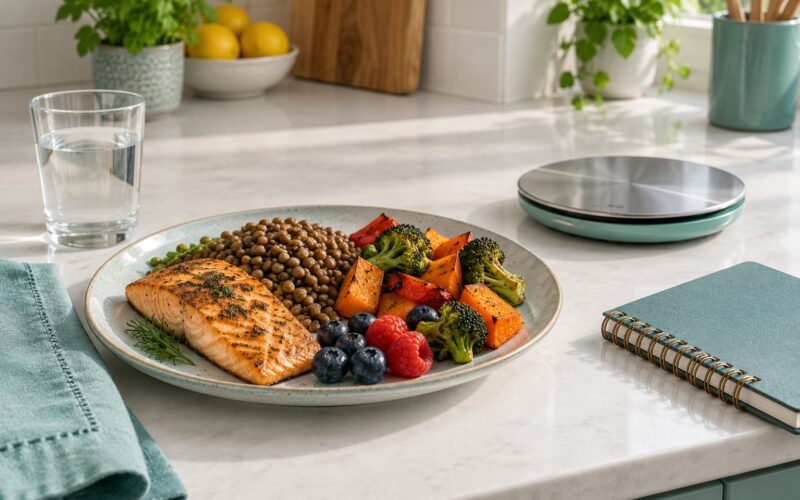
To eat 1,800 calories a day without feeling hungry, anchor every meal around protein, fill the rest of the plate with high-fiber, high-volume foods, and spread the total across three meals and one or two snacks. Most people who get hungry on 1,800 calories are not eating too little overall. They are eating too little protein, too little fiber, and too much of it in a form that does not fill the stomach.
This takes about ten minutes a day once you have a routine. You do not need to weigh everything perfectly, and you do not need to follow a named diet. You need a target, a plate template, and a short list of meals you actually enjoy eating.
Table of Contents
- What You Need
- Step-by-Step
- How to eat 1800 calories a day without feeling hungry: set your baseline
- Divide the day into filling meals and snacks
- Build balanced meals around protein, fiber, and satisfying carbohydrates
- Choose snacks that contribute calories and staying power
- Plan a few meals in advance
- Track totals without letting tracking control eating
- Adjust the plan when hunger, health, or daily needs change
- Common Mistakes
- Frequently Asked Questions
- Is it safe to eat 1800 calories a day?
- Do I need to count calories from drinks and condiments?
- How many meals and snacks should I eat on an 1800-calorie plan?
- Can I exercise while eating 1800 calories a day?
- What should I do if I still feel hungry after eating 1800 calories?
- Conclusion
What You Need
No special diet is required for this. The list is short.
- A tracking app or food labels. MyFitnessPal and MacroFactor both work for most people. Paper works too if apps make you obsessive.
- A kitchen scale, if you like one. Useful for the first two weeks while you calibrate your sense of a portion. After that you can eyeball most things.
- A water bottle. Thirst gets mistaken for hunger surprisingly often, particularly in the afternoon.
- Ordinary groceries. Protein foods, vegetables, fruit, whole grains, potatoes, rice, yogurt, and a few snacks you genuinely like.
That is it. You do not need meal-prep containers for seven days or a spreadsheet. Consistency matters far more than equipment.
Step-by-Step
How to eat 1800 calories a day without feeling hungry: set your baseline
Calorie needs vary a lot. Your total daily energy expenditure depends on your size, sex, age, muscle mass, and how much you move, so 1,800 might be a large deficit for one person and nearly maintenance for another.
Treat 1,800 as your daily working target rather than a rule carved in stone. If you are smaller, sedentary, or older, it may be too low. If you exercise hard, it may be too high.
Talk to a doctor or registered dietitian before tracking if weight loss is medically relevant, if you are pregnant or breastfeeding, if you have diabetes, a thyroid condition, a gastrointestinal condition, or take regular medication, or if you have a history of disordered eating. That is not a formality. It is the fastest way to avoid the two things that cause real harm here: eating too little and eating in a way that fights your own medical treatment.
Divide the day into filling meals and snacks
Three meals plus one or two snacks is the most workable split for most people. It keeps you away from the two-big-meals pattern that turns into a binge at 9pm.
A practical distribution looks like this:
- Breakfast: 400 to 450 calories
- Lunch: 450 to 500 calories
- Snack one: 150 to 200 calories
- Dinner: 500 to 550 calories
- Optional evening snack: 100 to 200 calories
The exact number of feedings matters less than matching your day. If you take medication at 8am and it kills your appetite, shift breakfast later. If you train at 6am, eat something small before and a proper breakfast after.
On r/loseit, people eating 1,700 to 1,800 calories for months described being what one user called being trapped within hunger. The advice that came back most often was not eat less. It was eat more volume, and add starches back in, especially potatoes.
Build balanced meals around protein, fiber, and satisfying carbohydrates
Four components, every time. A protein source. A pile of high-fiber produce. A whole-grain or starchy carbohydrate. A modest amount of healthy fat.
Aim for roughly 130 to 150 grams of protein across the day, which lands you around 30 to 40 grams per feeding. Protein has the highest thermic effect of any macronutrient, so you burn more energy processing it, and it is the single most reliable fullness lever. Fiber should reach about 25 grams, which is close to the general guideline of 14 grams per 1,000 calories. Fat takes up the remaining space, usually 55 to 70 grams.
Carbohydrates are not the enemy here. Potatoes, rice, oats, bread and pasta are cheap, filling and easy to measure, and cutting them out is a fast route to the 9pm cravings that wreck a week of careful eating.
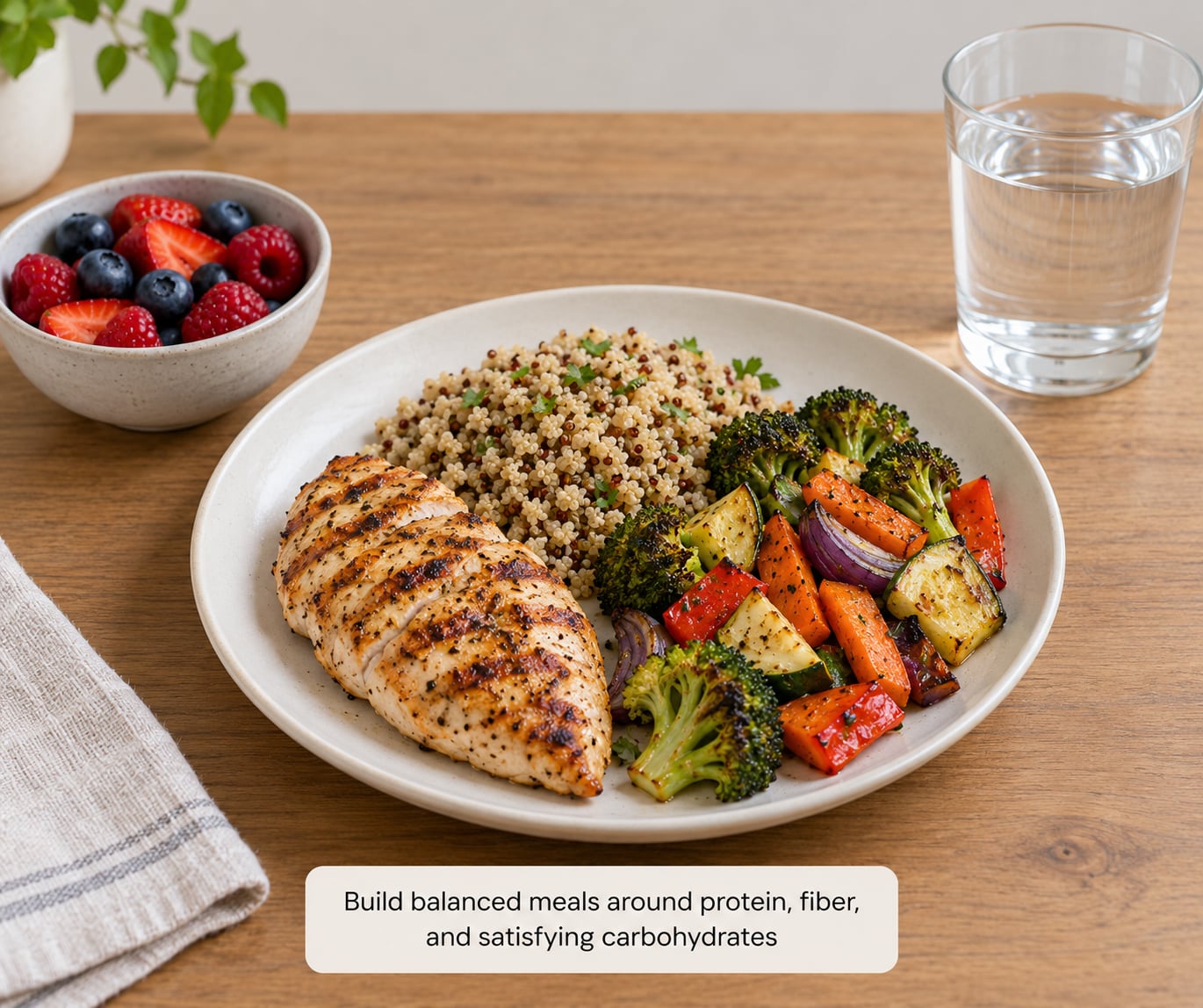
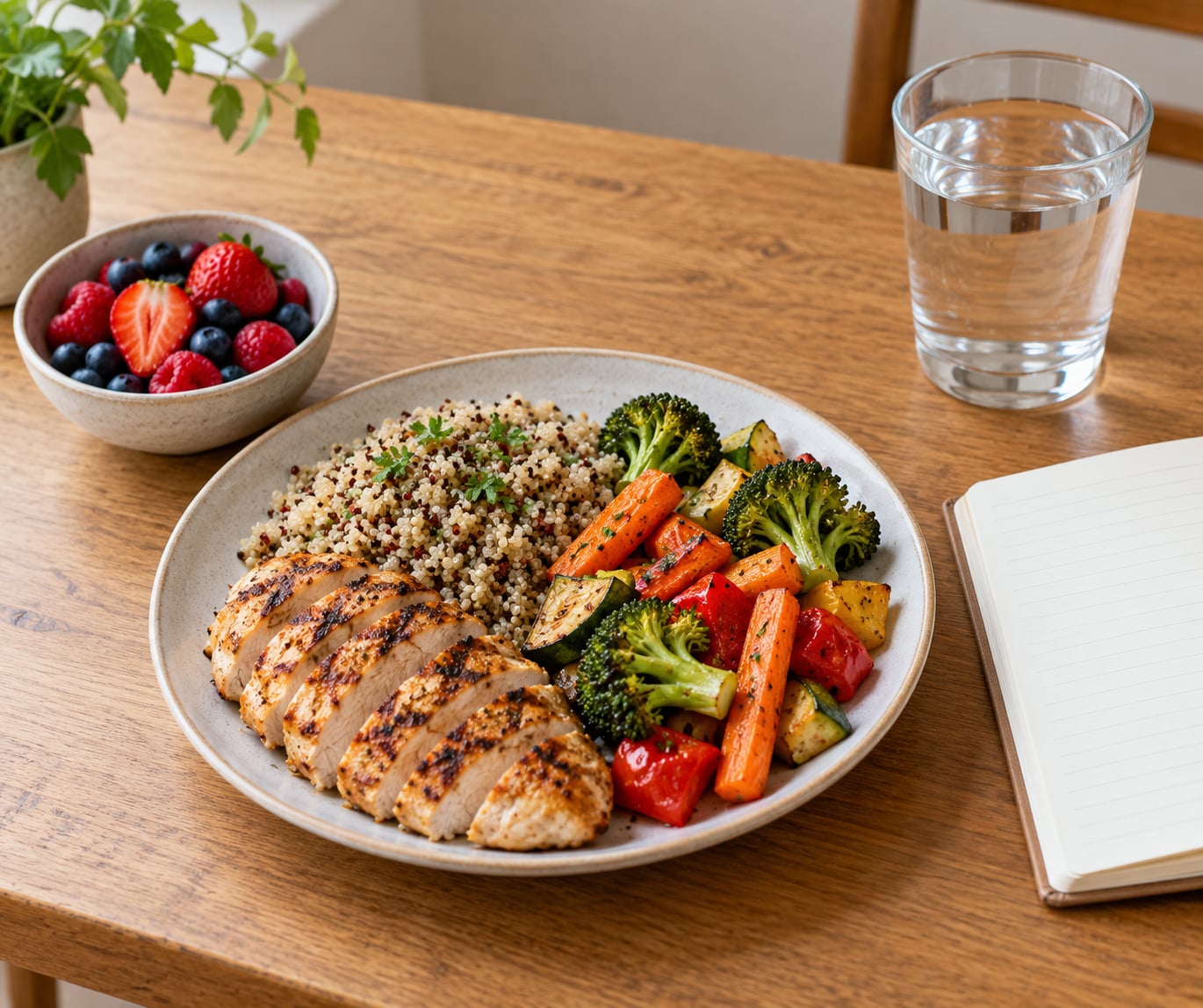
One plate, done right: 170 grams of grilled chicken breast, a cup of cooked quinoa, two cups of roasted vegetables, a tablespoon of olive oil, and a cup of berries. That is about 520 calories, roughly 40 grams of protein, and enough food that you finish the plate.
Want to hit a higher protein target like 200 grams? It is possible inside 1,800 calories but tight, and you need to cut fat and starch down to make room. Lean protein at 120 calories per 100 grams is the lever, not more chicken oil.
Choose snacks that contribute calories and staying power
A snack should do a job. If it does not carry calories, protein or fiber toward the day, it is a habit rather than a snack.
Pairings that hold up for two to three hours:
- Greek yogurt with berries and a spoon of nuts
- An apple with peanut or almond butter
- Boiled eggs with cucumber and cherry tomatoes
- Cottage cheese with pear slices
- Edamame with a small handful of dry roasted soybeans
Portion size is whatever is left in your daily running total. Most people land on 150 to 250 calories per snack, twice a day, and that is plenty. If you find yourself eating a planned snack and then still hunting twenty minutes later, the snack was too small or too low in protein and fiber, and the fix is in the snack, not in more discipline.
Plan a few meals in advance
You do not need to plan seven days. Plan three.
The most useful prep takes about ninety minutes on a Sunday: cook a batch of rice or quinoa, roast a tray of vegetables, and cook a larger portion of whatever protein you eat most. That gives you components rather than identical meals, so you can assemble breakfast-adjacent oats on Monday and a different bowl on Thursday without opening a decision at 6pm when your judgment is worst.
Leftovers are the other half of this. Plan lunch as last night’s dinner plus one raw vegetable and a different sauce. Rotating food is what stops a calorie plan from becoming meal-plan fatigue, which is exactly how a lot of people describe losing momentum.
Track totals without letting tracking control eating
Tracking is a tool for a few days, not a lifestyle. Use it for three to five days, learn what your usual portions actually weigh, then check in once a week.
Packaged-food labels and restaurant portions are estimates. Nobody is exactly right to the calorie. If you are within 100 calories of 1,800 across a week, your results will be identical to a day you hit 1,800 precisely.
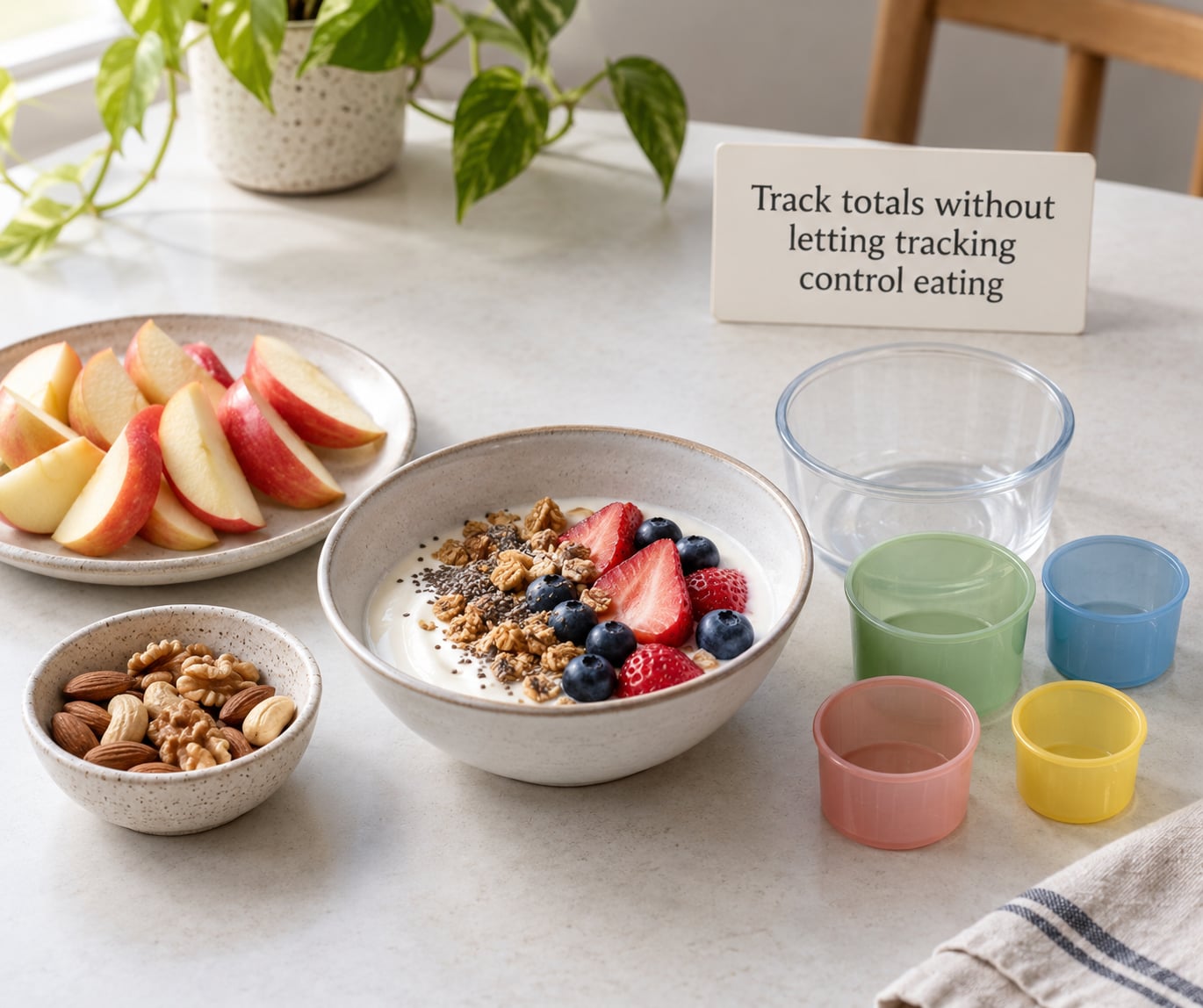
Watch the invisible calories first, because that is where most people drift. A tablespoon of cooking oil is about 120 calories. A sweetened coffee can be 250 before you add anything. Two or three bites of food while cooking is very rarely two or three bites.
You do not need to eat a pasteboard-tasting diet to hit a number. Dinner is dinner, and a calorie count that leaves no room for it is a number you will stop tracking by Friday.
Adjust the plan when hunger, health, or daily needs change
Give the plan two weeks before you judge it. Track energy, hunger between meals, strength in the gym, sleep, and weight trend across the fortnight rather than day to day. Day-to-day weight moves are mostly water and sodium.
Then be honest about the pattern. Constant hunger that follows you into dinner usually means the target is too low, the protein is too low, or the food is too processed. Rising hunger as the weeks go on, with weight still moving, is a normal signal that the deficit is working and your body is adjusting, but it also means it may be time to eat back closer to maintenance for a week or two.
Stop and get professional input if you feel faint, dizzy, constantly cold, or unable to focus. Constant fatigue on a deficit is not a willpower problem. It is usually the plan, not you.
Common Mistakes
Skipping breakfast to save calories for dinner. The saving is real and so is the 9pm cupboard raid. Fix: a 400-calorie breakfast with 30 grams of protein, eaten earlier in the day.
Drinking calories without noticing. Juice, alcohol, and sweetened coffee are easy to skip in the log and add up to 300 or 400 calories across a day. Fix: log drinks first, then everything else.
Eating low-volume food. A large bowl of rice or a couple of pastries fill nobody. Fix: half the plate is vegetables or fruit, always.
Cutting all fat or all carbs. Both make a plan miserable and hard to sustain, and both leave you hungry at exactly the wrong time of day. Fix: keep a moderate amount of each, and add back potatoes if cravings climb.
Reacting to hunger late in the day. By 8pm your choices are worse. Fix: a planned evening snack so the decision is made at 3pm instead of 9pm.
Being perfectly rigid. Rigid plans break at the first dinner out. Fix: aim for an average across a week rather than a perfect number every day.
Assuming hunger means the target is wrong. Some hunger on a deficit is normal. What matters is whether you can function, sleep, train, and live around it.
A short list of habits that carry most of the weight:
- Hit your protein number first, before anything else.
- Make vegetables the biggest thing on the plate.
- Eat the same meal rhythm most days.
- Drink water before deciding you are hungry.
- Sleep seven hours, because short sleep raises hunger the next day.
- Track for a few days, then loosen your grip.
Frequently Asked Questions
Is it safe to eat 1800 calories a day?
For most healthy adults with moderate activity, 1,800 calories is safe as a short-to-medium term working target. Whether it creates a meaningful deficit depends on your maintenance needs, which vary widely by size, age and movement. Talk to a doctor or registered dietitian first if you are pregnant or breastfeeding, under 18, have diabetes or a thyroid or gastrointestinal condition, take regular medication, or have a history of disordered eating.
Do I need to count calories from drinks and condiments?
Yes, because that is where most unlogged calories hide. A tablespoon of cooking oil runs about 120 calories, a sweetened coffee can be 250, and a glass of wine adds roughly 120. Sauces, dressings and nut butter spread quickly too. Logging drinks and oils first, before the rest of the day, usually closes the gap between what you think you ate and what the app says you ate.
How many meals and snacks should I eat on an 1800-calorie plan?
Three meals plus one or two snacks is the most workable split for most adults, which works out to roughly 400 to 450 calories at breakfast, 450 to 500 at lunch, 500 to 550 at dinner, and 150 to 250 per snack. The right number is whichever one fits your medication schedule, training time and usual hunger pattern. The goal is to never arrive at dinner having skipped too much.
Can I exercise while eating 1800 calories a day?
Yes, most people can train on this target, but it depends on your size and training volume. Heavy strength work, long endurance sessions and multiple daily workouts can raise your needs enough that 1,800 stops being a deficit. If strength is dropping, recovery is poor, or you feel wiped out in training, add 100 to 200 calories, usually from carbohydrates around the session. Adjust based on how you actually respond.
What should I do if I still feel hungry after eating 1800 calories?
Check three things in order: how much protein you actually ate, how much of your food was high-fiber and high-volume, and how much of your total came from drinks, oils and sauces. If those check out and hunger is still constant, your maintenance need may simply be higher than 1,800. Eat back closer to maintenance for a week or two, then reassess with a doctor or registered dietitian, especially if you feel faint, dizzy or unusually cold.
Conclusion
Start with the rhythm, not the number. Pick three meals and one or two snack times you can keep for a month, build each one from a protein anchor plus half a plate of vegetables and a normal portion of starch, and track three days to calibrate your portions.
Then let a few weeks of data decide whether 1,800 is right for you, because how you eat those calories matters more than the count on the app. This is general information rather than personal nutrition advice, so if you have a medical condition, are pregnant, or have struggled with eating in the past, get individualized guidance before you start tracking.