A simple 1500 calorie meal plan is a day of eating that adds up to roughly 1,500 calories, spread across breakfast, lunch, dinner and snacks. It works as a starting point for adults whose maintenance needs sit above that number, and it works best when most of those calories come from protein, vegetables and fibre-dense carbs.
Think of it as a flexible starting point rather than a set of rules. You adjust portions based on hunger and energy, you swap foods you dislike, and you check in with how your body responds after a week or two.
Table of Contents
- What Is a Simple 1500 Calorie Meal Plan?
- How to Build a Simple 1500 Calorie Meal Plan
- Simple 1500 Calorie Meal Plan at a Glance
- What Should You Eat During the Day?
- A One-Day 1500 Calorie Meal Example
- Breakfast, about 380 calories
- Lunch, about 430 calories
- Snack, about 150 calories
- Dinner, about 400 calories
- Flexible evening snack, about 140 calories
- How to Portion Food Without Making It Complicated
- Easy Swaps and Foods to Keep in the Plan
- Is a 1500 Calorie Plan Safe and Sustainable?
- Frequently Asked Questions
- Does a 1500-calorie meal plan work for everyone?
- How much weight can I lose on 1500 calories a day?
- Do I need to weigh every gram of food?
- What can I drink on a 1500-calorie plan?
- Should I eat three meals or several small meals?
- When should I ask a doctor or registered dietitian for advice?
- Conclusion
What Is a Simple 1500 Calorie Meal Plan?
It is any eating pattern that keeps your daily total near 1,500 calories. Nothing about it requires a branded programme, a prep service or a specific cooking style. You eat normal food in normal portions, you just size the portions against one number for the day.
The number works because of a gap. Your body burns a certain amount of energy just existing, and more when you move. That total is called your total daily energy expenditure, often shortened to TDEE. Eat below it and weight tends to come down over weeks. Eat at it and weight holds steady.
For many adults who are lightly active, maintenance lands somewhere around 1,900 to 2,400 calories. At 1,500 that gap is real but manageable. Below roughly 1,200 calories most people find hunger, fatigue and irritability hard to manage, which is where plans tend to collapse.
Here is the honest caveat: 1,500 is not a magic number, and no plan can promise a specific result. Someone tall and active might see it as a mild cut, while someone smaller and less active may find it close to maintenance. Check for two weeks before you decide it is not working.
How to Build a Simple 1500 Calorie Meal Plan
Build it in this order, and it stays simple:
- Pick three anchor meals. Choose a breakfast, a lunch and a dinner you already enjoy eating. Repeatable meals are easier to track than exciting ones.
- Divide the number. A workable split is about 350 to 400 for breakfast, 400 to 450 for lunch, 450 to 500 for dinner, and 200 spread across one or two snacks. Drinks other than water count too.
- Put protein and vegetables first. Build each plate around a palm-sized protein and two handfuls of vegetables, then add a starch and a little fat around them.
- Adjust after a week. Note your energy, hunger and how the meals wore in practice. Move 100 calories from dinner to breakfast if you are starving by mid-afternoon.
That last step is the one most guides skip. The first plan should be a rough draft, not a contract.
Simple 1500 Calorie Meal Plan at a Glance
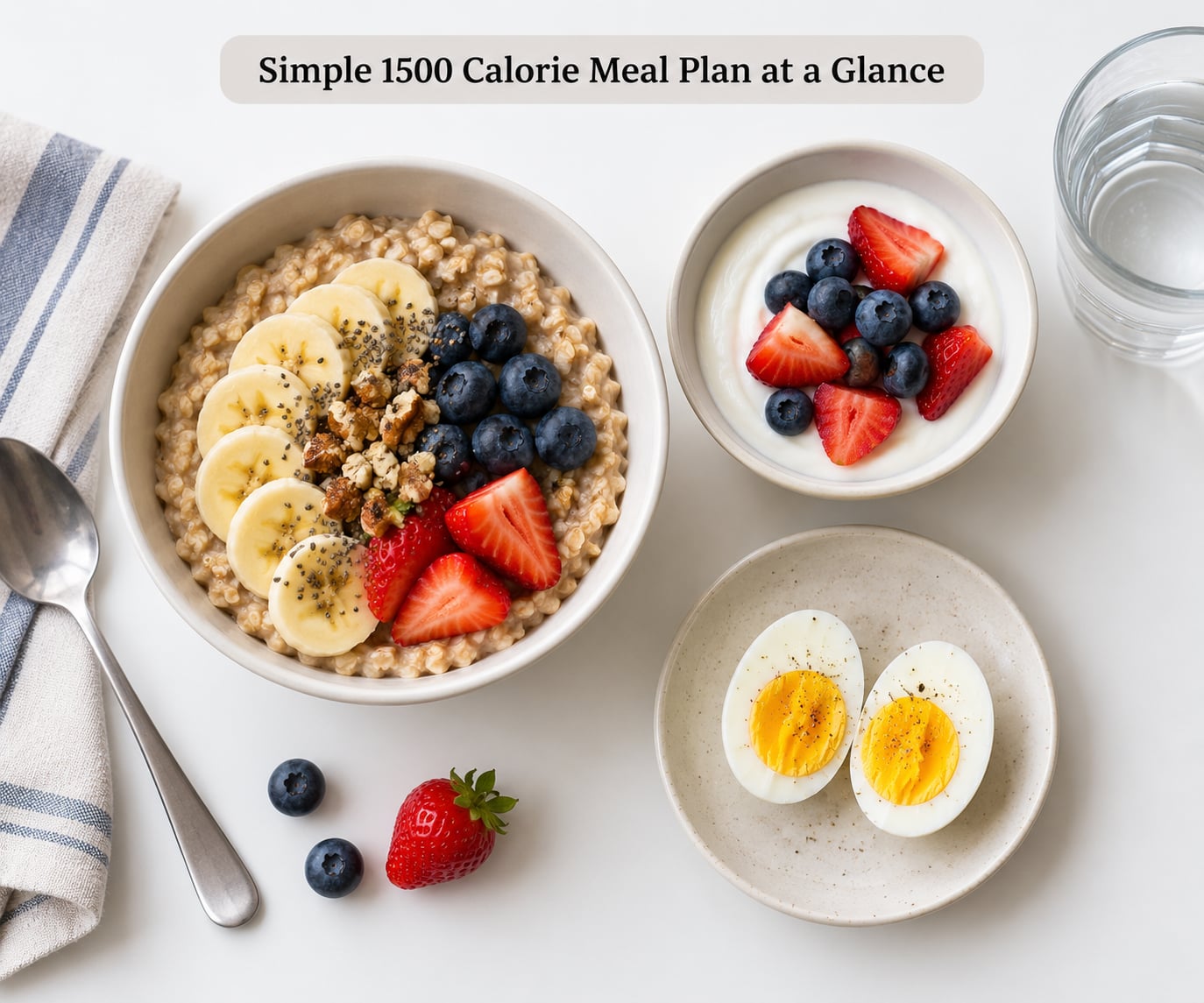
These are estimates. Real values shift with brands, cooking method and portion size, and a rounding difference of 50 calories on one meal is not worth worrying about.
| Part of the day | Approximate calories | Typical choices |
|---|---|---|
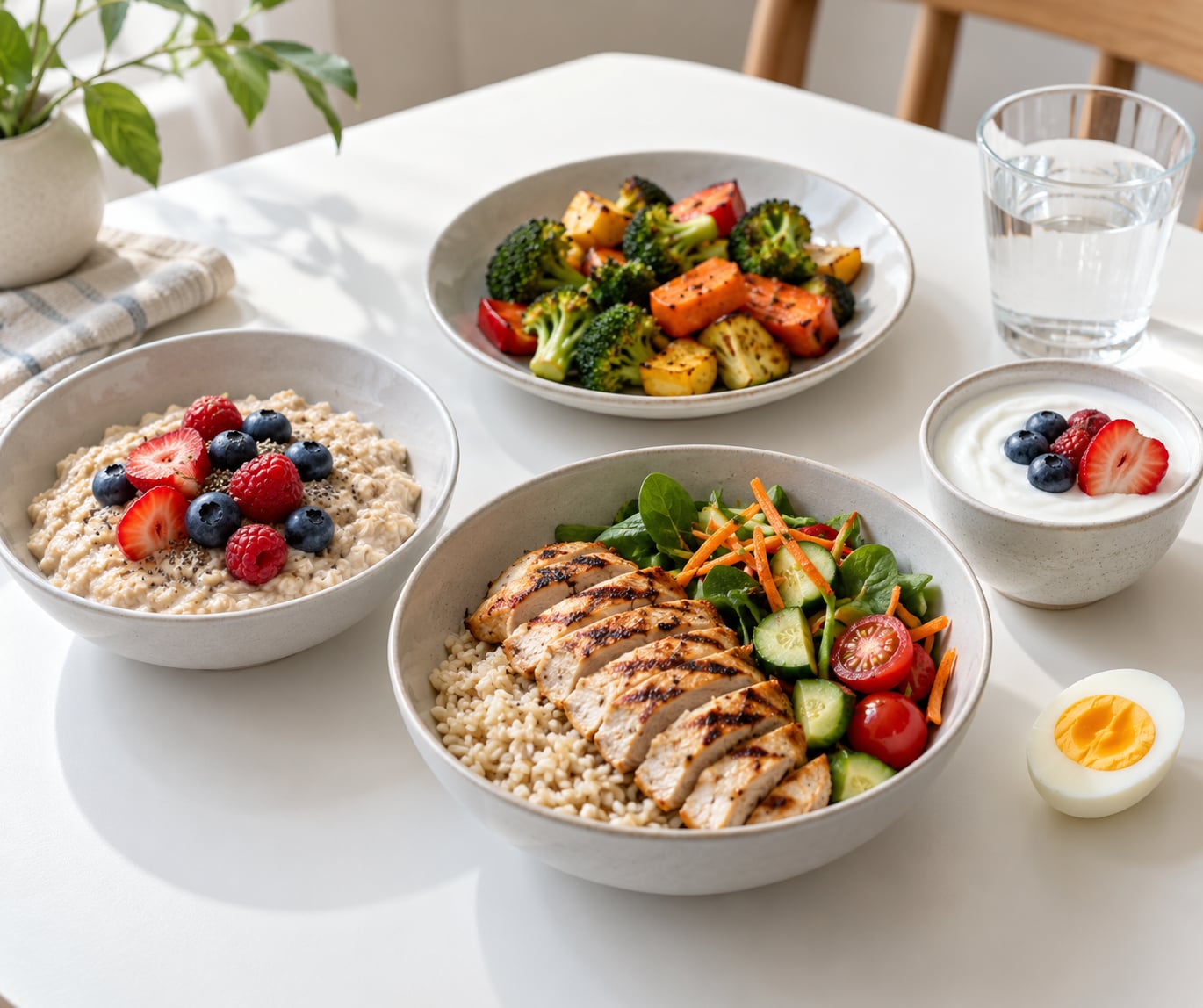
| Breakfast | 350-400 | Oats with fruit and yogurt, eggs with toast, or a protein-focused smoothie with a small breakfast side |
| Lunch | 400-450 | Chicken or bean grain bowl, tuna and salad with crackers, a portion of the previous night’s dinner, slightly smaller |
| Snack | 100-200 | Greek yogurt, a piece of fruit with nuts, carrots and hummus, cottage cheese |
| Dinner | 450-500 | Fish, tofu or lean meat with vegetables and a modest starch, or a bean-based stew with a small grain portion |
| Drinks and extras | 0-100 | Water, sparkling water, unsweetened tea or coffee; small allowances for milk, sugar or dressing |
That table lands you close to 1,450 to 1,600 calories on an average day. The goal is not a perfect tally every single day. Averaging across several days matters far more than any one meal.
What Should You Eat During the Day?
At this calorie level, what you choose decides how hungry you feel by dinner. Four building blocks do most of the work.
Protein at every meal. Chicken, fish, eggs, Greek yogurt, tofu, beans, cottage cheese and lean meat all count. Protein keeps you full longer and matters more during a deficit because it helps protect muscle.
Vegetables and fruit for volume. Most non-starchy vegetables are low in calories and high in water and fibre, so a large serving costs little against your budget. This is the cheapest way to fill a plate.
A controlled starch. Brown rice, oats, wholemeal bread, potatoes, corn and beans give you energy and keep cravings steadier than refined versions. Portion matters more than the type, so measure rice, pasta and oats.
A modest amount of fat. Olive oil, nuts, seeds, avocado and cheese make food taste better and help with satiety, but they are calorie-dense. A thumb-sized portion is plenty.
Lower-calorie combinations that still fill you up: a large salad with beans and grilled chicken, soup with a bean or lentil base, vegetables with egg, or a wholegrain sandwich with lean filling and plenty of raw vegetables.
Liquid calories are the quiet trap here. A sweetened coffee, a juice and a large smoothie can move a third of your daily budget without filling you up at all.
A One-Day 1500 Calorie Meal Example
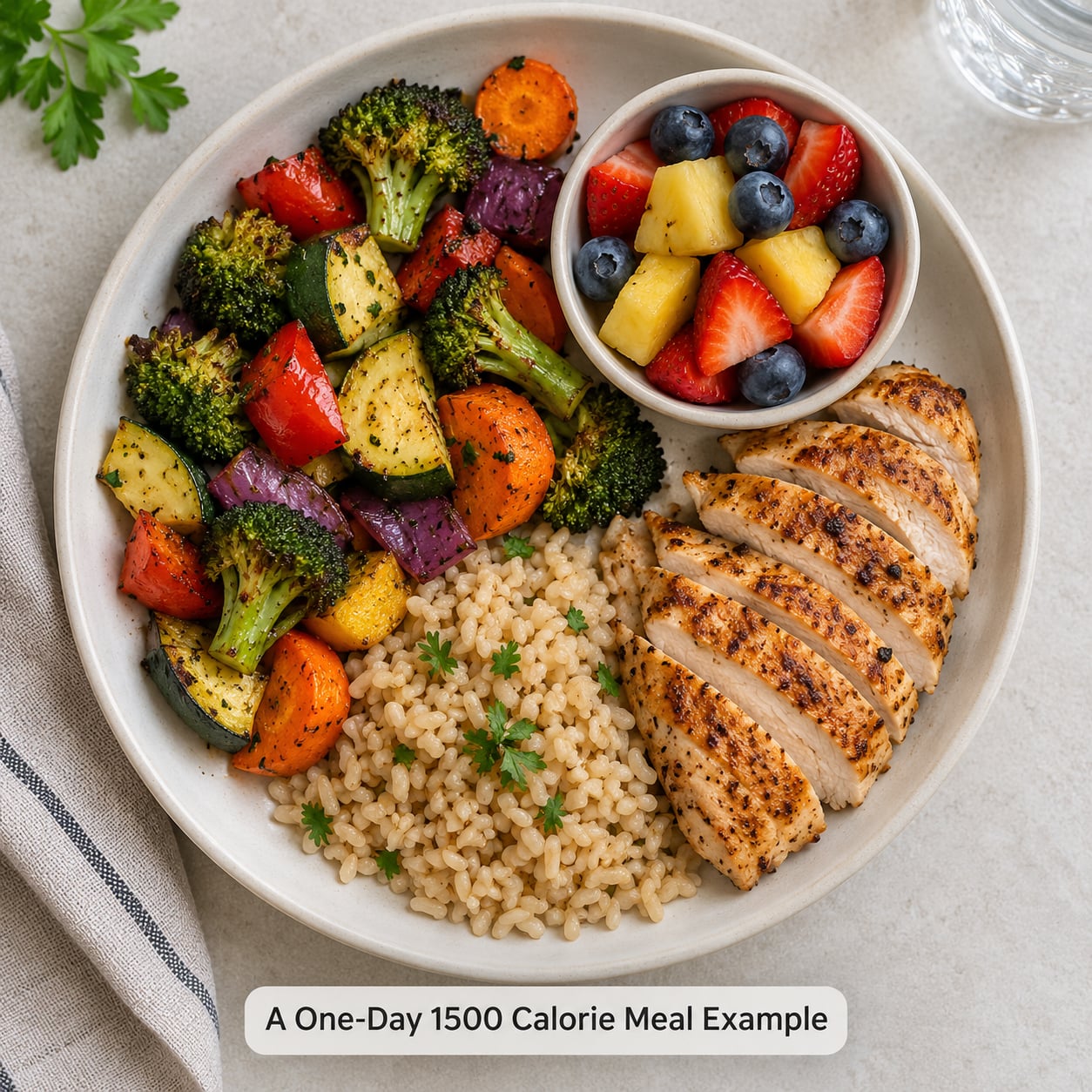
This is a template, not a prescription. Every number below is an estimate.
Breakfast, about 380 calories
Half a cup of oats cooked in water with a sliced apple, a spoonful of peanut butter and a side of plain yogurt. Simmer the oats with the apple for five minutes, then stir in the peanut butter off the heat and spoon over the yogurt.
Lunch, about 430 calories
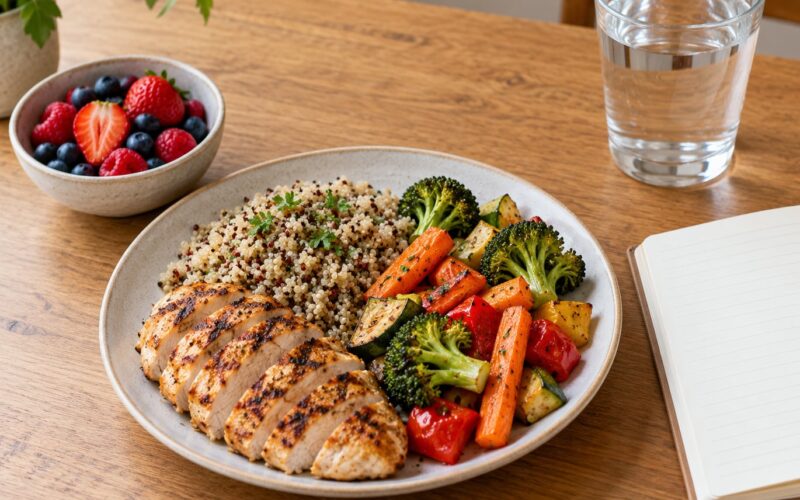
A bowl with a cup of roasted vegetables, three-quarters of a cup of cooked brown rice, and 120 g of grilled chicken breast, plus a small piece of fruit. Roast the vegetables at 200°C until the edges brown, which usually takes 25 to 30 minutes.
Snack, about 150 calories
A cup of plain Greek yogurt with a small handful of blueberries. This is the hunger-management slot; it is not optional for most people starting out.
Dinner, about 400 calories
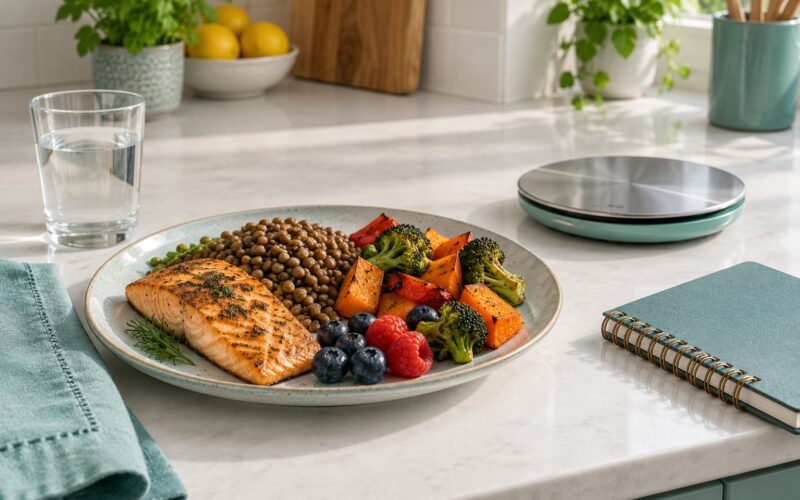
120 g of baked fish or firm tofu, two cups of steamed broccoli and green beans, and a small serving of quinoa. Cook the fish to 63°C in the centre, or the tofu until hot through and golden on the outside.
Flexible evening snack, about 140 calories
Carrot sticks with two tablespoons of hummus, or a small apple with a tablespoon of almond butter. Use this slot when you are genuinely hungry, and skip it when you are not.
Total lands around 1,500 calories. Swap grilled chicken for beans at lunch and you gain a few hundred calories of fibre for very little difference in the day. Swap brown rice for cauliflower rice and you gain a large serving of vegetables for roughly a quarter of the calories.
How to Portion Food Without Making It Complicated
Your hand is the tool most people underuse. It scales to your body size, which is exactly what a printed cup measurement does not do.
- Protein: a palm-sized portion, roughly the size and thickness of your palm without fingers.
- Vegetables: two open handfuls, which is more than you think.
- Starches and fats: a cupped hand each, and a thumb-sized portion of oil, nuts or butter.
Reading a nutrition label matters more than measuring. Turn the carton, find the serving size, and note that a serving may be half of what is in the package. Multiply before you pour.
A kitchen scale is useful for the foods that are easy to overshoot: oil, nuts, cheese, rice and pasta. Everything else can be eyeballed with confidence.
Here is the mindset that makes this last: a 90-calorie misestimate on dinner is noise. The difference between 1,450 and 1,600 has no meaningful effect on weekly progress. What changes results is the pattern across dozens of days.
Easy Swaps and Foods to Keep in the Plan
Plan food fails when it cannot flex. Here are substitutions that keep the total close while matching what you actually want to eat.
- Vegetables: broccoli for cauliflower, spinach for kale, peppers for courgette. Frozen vegetables are usually cheaper and just as nutrient-dense.
- Proteins: chicken for turkey, tofu for chicken, canned tuna for fresh fish, eggs for processed meat, beans for any meat portion.
- Grains: brown rice for couscous, wholemeal bread for white, oats for sugary granola, quinoa for rice at the same portion.
- Snacks: yogurt for a packaged bar, fruit for crackers, vegetables for chips, popcorn for crisps. Volume plus protein beats a small packet of anything.
- Drinks: sparkling water for soda, unsweetened tea for juice, black coffee with a splash of milk for a full-fat latte.
- Eating out: grilled or baked options instead of fried, sauces on the side, a side salad or vegetables in place of chips, and water with the meal.
If you eat vegetarian or vegan, plant protein needs a bit more planning at this calorie level. Beans, lentils, tofu, tempeh, edamame and protein-rich grains cover it well; protein powder is optional, not required.
Is a 1500 Calorie Plan Safe and Sustainable?
For most adults, 1,500 calories sits inside the range mainstream nutrition guidance treats as reasonable for weight loss, and the emphasis in those guidelines is on food quality rather than a single number. Guidelines also stress that individual needs differ by body size, age, activity level, health status and medication.
That is why personal guidance matters for some readers. Anyone pregnant or breastfeeding, anyone with a history of disordered eating, and anyone managing diabetes, kidney disease, thyroid conditions or other medical issues should talk to a doctor or registered dietitian before changing intake on purpose. Registered dietitians can also adjust medication alongside a new eating pattern, which matters for blood sugar management.
Persistent hunger, fatigue, dizziness, hair loss, trouble concentrating or constant preoccupation with food are signals, not inconveniences. The right response is to raise your intake and speak to a professional, not to push harder against a number that was never right for you.
Plan the exit too. When you reach your goal, raise calories gradually, around 100 to 200 more per week, and keep the protein habits you built. Coming straight back up to 2,000 calories after months at 1,500 is how most people regain faster than they lost.
One food-safety note for cooking on this plan: poultry to 74°C, ground meats to 71°C, and whole cuts of meat or fish to 63°C, measured with a thermometer rather than by guesswork.
Frequently Asked Questions
Does a 1500-calorie meal plan work for everyone?
No. It works best for adults whose maintenance needs sit above 1,500 calories, which covers many lightly active people. If you are very active, pregnant, breastfeeding, managing a medical condition, or have a history of disordered eating, the right number is different and worth working out with a doctor or registered dietitian before you start.
How much weight can I lose on 1500 calories a day?
It depends entirely on your maintenance level. People who maintain around 2,000 to 2,400 calories may lose roughly 1 to 2 pounds per week at first, and that rate usually slows as you get lighter. People who already eat near 1,500 may see little change, which tells you the number needs adjusting rather than more effort.
Do I need to weigh every gram of food?
No. Most people do better with hand portions and label reading than with daily weighing. Measure the calorie-dense foods that are easy to overshoot, such as oil, nuts, cheese and rice, and estimate the rest. Tracking consistently for two weeks is far more useful than tracking precisely on day one and giving up on day four.
What can I drink on a 1500-calorie plan?
Water, sparkling water, unsweetened tea and black coffee are the easy choices because they add almost nothing. Milk, juice, alcohol and sweetened coffee all count against your daily total, and liquid calories do not fill you up. Keep them in the budget rather than treating them as free, and you will find the numbers much easier to hold steady.
Should I eat three meals or several small meals?
Either works, and the best structure is the one you will repeat. Three meals plus one or two snacks keeps the day simple and gives each meal a clear calorie target. Some people prefer two larger meals and feel better that way. What matters most is that protein appears at each sitting and the total lands near your target.
When should I ask a doctor or registered dietitian for advice?
Ask before starting if you are pregnant or breastfeeding, have diabetes, kidney disease, thyroid or heart conditions, take regular medication, or have a history of disordered eating. Also ask if you feel persistently hungry, dizzy, unusually tired or fixated on food while following the plan. Those are signals to adjust intake with professional support, not to push harder.
Conclusion
A simple 1500 calorie meal plan is a working number, not a lifestyle. Start by picking a breakfast, a lunch and a dinner that already fit your preferences and your usual schedule, then check your energy and hunger after a week and adjust from there. If 1,500 turns out to be too much or too little, the plan failed to fit you, not the other way around.