The way to use non scale victories to stay motivated is simple: name a change you can actually notice, write it down the day you notice it, and review the list once a week. The scale gives you one noisy reading; a written record of a good week gives you evidence you can trust when motivation dips.
That matters because weight moves in a way that has very little to do with how well you are actually doing. A woman on r/WeightLossAdvice put it plainly: she was losing all her motivation when the scale was not budging, and once she started noticing other changes she was happy and motivated to keep going.
Everything below is general information about habits and wellbeing, not individual medical advice. If you are managing a health condition, taking medication, or have symptoms that worry you, talk to your doctor or a registered dietitian first.
Table of Contents
- What You Need to Track Non Scale Victories
- Step-by-Step
- Step 1: Define progress beyond the scale
- Body and movement
- Energy and sleep
- Health markers your clinician tracks
- Mental and emotional
- Habits and life
- Clothes and appearance
- Step 2: Choose a few signals to track
- Step 3: Record small wins regularly
- Step 4: Review wins on a weekly schedule
- Step 5: Use setbacks without abandoning the plan
- Common Mistakes
- Frequently Asked Questions
- What is a non-scale victory?
- What are some examples of non-scale victories for weight loss?
- How can I tell I have made progress without using a scale?
- Why is my weight stuck even after exercise and diet?
- How often should I track non-scale victories?
- Can non-scale victories replace weighing in?
- Conclusion
What You Need to Track Non Scale Victories
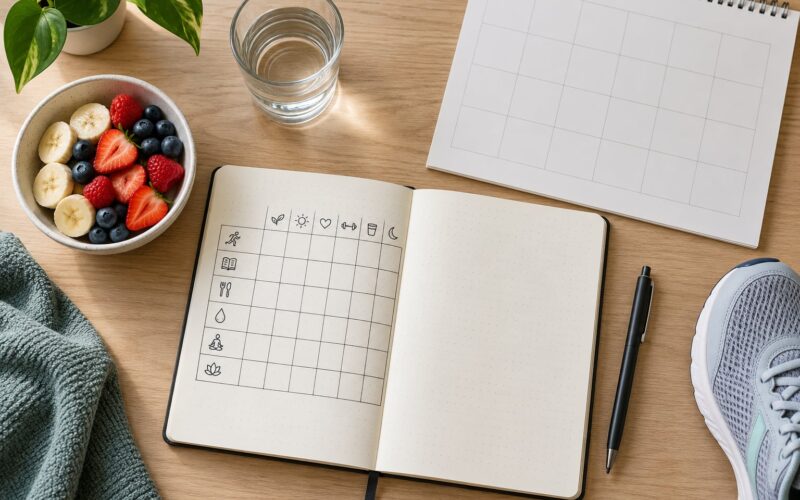
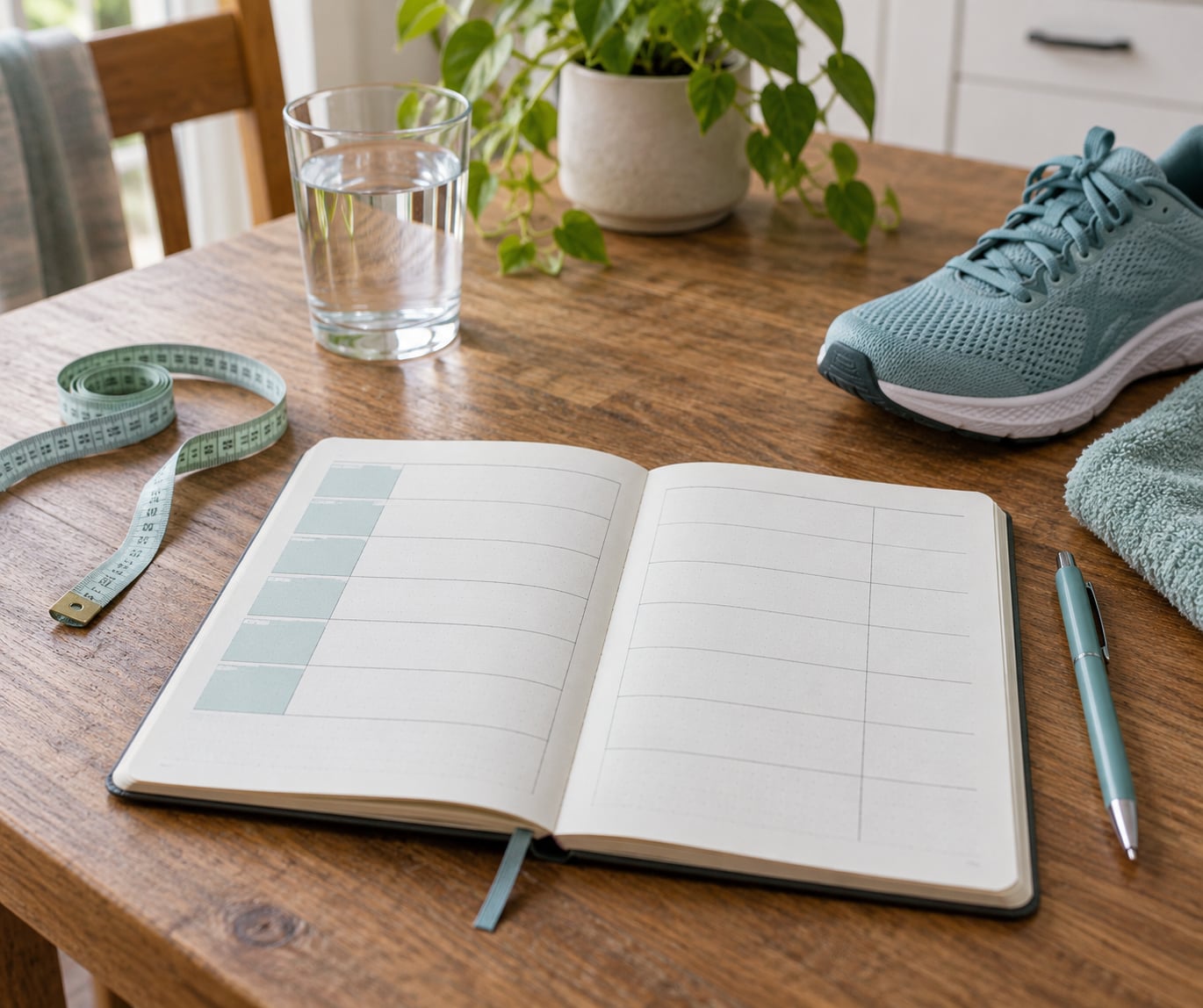
You need almost nothing, and that is the point. Meaningful progress can be tracked with a notebook, a notes app, or the habit tracker you already use.
- Somewhere to write. A paper notebook, a phone notes file, or the notes field in an app. Whatever you will actually open on a bad week.
- A weekly slot. Ten minutes, same time, usually Sunday evening. A calendar reminder is worth more than motivation.
- Two or three signals, not ten. Waist measurement, walking minutes, strength at a set weight, hours of sleep, meals prepared ahead. Pick a few that mean something to you.
- Optional extras. A soft tape measure for waist circumference and monthly progress photos in the same spot and lighting. Helpful, not required.
Most habit apps have no field for this, which people on r/weightwatchers have asked for directly. The workaround: add a custom field called Win, or keep a running note at the bottom of your daily entry. Two taps of friction is better than an idea you abandon.
Step-by-Step
Five steps turn a vague feeling of progress into a system you can repeat. You will know it is working when a flat week on the scale stops being the headline.
Step 1: Define progress beyond the scale
Progress is anything that changed in how you move, feel, or function, independent of the number on the scale. Write your own definition before you start tracking, because the wins you personally care about are the ones you will actually notice.
Here is a long list to pull from, grouped so you can find the ones that fit your life:
Body and movement
- Stairs feel easier or you take them without stopping
- Joints ache less after a normal day
- Shoes or jeans fit differently
- You can carry two grocery bags at once
- Balance improved on a single leg
- A movement that hurt six weeks ago is now unremarkable
- Your watch shows a faster pace at the same effort
- Sitting down and standing up feels smoother
Energy and sleep
- The 3pm slump stopped happening
- You fall asleep faster
- You stopped waking up at night
- Your partner says you snore less
- Morning energy lasts past the first coffee
Health markers your clinician tracks
- Blood pressure reading improved
- Fewer glucose spikes after meals
- Cholesterol or A1C results changed at your lab check
- Digestion is more regular
- Acid reflux symptoms improved
Mental and emotional
- You stopped dreading the workout
- Food no longer controls the whole day
- You took a photo without avoiding the camera
- Fewer anxious spirals about eating
- You set a boundary with a person and kept it
- You feel steadier after a hard day
Habits and life
- You cooked five nights in one week
- You went to bed before midnight three times
- You did not skip the gym during a stressful week
- You walked after dinner instead of scrolling
- You showed up on the days you had no motivation at all
- You kept a promise to yourself, small as it was
Clothes and appearance
- One person told you that you look different
- A belt loop moved a notch
- You wore the jacket you had stopped trying on
One user on r/intermittentfasting named clothing as the clearest signal while the scale stayed slow: comfortable in an XL instead of an XXL. That is a real change in her life, whether or not any particular number moved that week.
Step 2: Choose a few signals to track
Pick two or three signals and leave them alone for eight weeks. Tracking exists to reduce stress, so if you are adding a score, you have added the wrong metric.
- Waist measurement. Measure at the same spot, about level with the navel, at the same time of day and in the same conditions each time. Once a week is plenty. A single measurement tells you very little; a trend over several weeks tells you something real.
- Walking or strength. Fix the distance or the weight on the bar and write the number. Going further at the same effort is a genuine improvement that a scale cannot show you.
- Sleep. Hours, or a simple one to five rating. It is the signal most people notice first and skip first.
- Meals prepared ahead. A count, not a judgment. Four nights with dinner ready is a habit win, full stop.
How do you tell it worked? After eight weeks you can point at a direction rather than a feeling, and you have written proof that the habit happened.
Step 3: Record small wins regularly
Write it down the same day you notice it, while the memory is still clear. A win you record two weeks later has already been absorbed into your baseline, and that is exactly how progress becomes invisible.
Be specific. Clumsy but honest beats polished: climbed three flights without stopping is stronger evidence than feeling better. And record the behaviour you actually did, because effort is progress in its own right even on a week when nothing changed in how you feel.
One line is enough. Water instead of the sugary drink at 3pm. Walked after dinner. Breakfast before noon for the fifth day this month. Small, dated, done.
How do you know this step is working? Open the file at the end of the month and you have thirty lines of evidence instead of a single number.
Step 4: Review wins on a weekly schedule
Do a calm ten-minute review once a week: read back what you wrote, notice the pattern, then choose one process goal for the coming week. A process goal is something you do. An outcome goal is something that happens to you, and you can only control the first kind.
A copyable log format, in a notebook or a notes file:
- Date. The win I noticed. How it felt. What it lets me do now.
- Tuesday. Walked the long way home instead of the shortcut. Felt lighter in the evening. Wore the good jeans on Friday.
- Wednesday. Slept seven hours without waking. Felt sharp at 10am. Handled a hard meeting without snacking through it.
- Thursday. Took the stairs twice. Felt proud, slightly silly about it. Said yes to the weekend trip.
Finish by asking one question: what worked well enough to repeat next week? People on r/orangetheory talk about keeping tracking visible, such as a note on a board you see every morning. Weekly review is the same idea, only quieter.
Step 5: Use setbacks without abandoning the plan
A missed day is a data point, not a verdict. The useful response is the next reasonable action, not an audit of the whole week.
- You skipped a habit. Do the smallest version of it now. Ten minutes of walking, one prepared meal. Then move on.
- A measurement did not improve. Check your technique before your plan. A loose tape, a different time of day, a salty meal the night before all shift the reading.
- Motivation dropped hard. Go back to the log and read your own entries out loud. Written evidence of your own consistency is harder to argue with than memory.
- You ran out of new wins. Track smaller things. Two wins a week counts, and streaks are motivation too.
Get medical input rather than a motivation fix if you feel faint or unwell, have persistent pain, or your symptoms are new. People on GLP-1 medications and after weight loss surgery should raise appetite, protein, and nutrient questions with their prescribing clinician, since the scale becomes unreliable early on.
Common Mistakes
- Treating every win as pass or fail. One bad week reads as failure because the log has no middle ground. Fix: write wins as counts, and a week of two still beats a week of zero.
- Tracking too many signals. Twelve metrics become a spreadsheet nobody opens. Fix: two or three, reviewed weekly.
- Comparing your progress with someone else’s. Comparing your week three to someone else’s week one is the fastest way to lose motivation. Fix: compare this week to your own last week only.
- Celebrating with food that undoes the work. It rarely feels like the win you earned. Fix: pick a non-food reward tied to the win, like the trip or the jacket.
- Believing feeling better is not real. Better energy, sleep, and blood pressure readings show up in labs, not just mood. Fix: keep an appointment and read the result.
- Ignoring warning signs. Motivation tactics are not treatment. Fix: tell a doctor or registered dietitian what changed and why.
One more useful habit: keep the log private or share it with one person who will not turn it into a comparison. Public progress posts in groups can motivate you, or they can show you someone else’s month against your Tuesday.
Frequently Asked Questions
What is a non-scale victory?
A non-scale victory is a positive change in how you feel, move, or function that happens independently of the number on a scale. Examples include sleeping through the night, climbing stairs without stopping, needing less pain medication, and fitting into a smaller size of jeans. The point of tracking them is that you get real evidence of progress on days the scale gives you nothing.
What are some examples of non-scale victories for weight loss?
Common examples include more daytime energy, better sleep, less snoring, easier movement, reduced joint pain, improved blood pressure or blood sugar results, more regular digestion, clothes fitting differently, a better mood, and higher confidence. People also count behaviour they actually performed, such as cooking five nights in a row or showing up to exercise on a day when motivation was low.
How can I tell I have made progress without using a scale?
Look for changes that show up in your week. Walk the same route and notice whether it feels easier or faster. Try the stairs. Pay attention to how your clothes sit, how you sleep, whether you still need an afternoon nap, and what your clinician says at your next blood test. Write each one down the day you notice it, because memory flattens progress fast.
Why is my weight stuck even after exercise and diet?
Weight can hold steady while your habits are working, because water retention shifts with salt, stress, sleep, and hormone cycles, and because muscle gained during strength training can offset fat lost. A plateau of several weeks is common. If your habits feel right, keep logging your non-scale signals and discuss any persistent plateau with your doctor or registered dietitian.
How often should I track non-scale victories?
Write them down as they happen, even if that means once or twice a week, and do one calm ten-minute review every week. Measure things like waist circumference or walking distance on a fixed schedule, no more than weekly. More frequent than that and tracking tends to add anxiety instead of motivation. What matters most is that you can look back and see a record of your own consistency.
Can non-scale victories replace weighing in?
They do not have to replace it, and you can use both. Weight is one useful data point among many, and it is a noisy one on any single day. Non-scale victories are what tell you whether your energy, strength, sleep, and health markers are improving. Many people weigh in less often once they have a log of other signals, which often makes the number easier to handle.
Conclusion
Non-scale victories keep you going because they turn invisible change into written proof. The method is short: name one behaviour-based win, write it down today, and review the list once a week.
Start with the last thing you did that you would not have done three months ago. That line is the whole system. Keep going, and bring any health questions to a doctor or registered dietitian who can see your full picture.