Mostly no. Do fat burner claims hold up when you check them against controlled human research? A few ingredients produce real but small changes in short-term metabolism, while nearly every headline promise — effortless fat loss, melted fat, no diet change needed — has no evidence behind it. What you usually feel on day one is a stimulant effect, not a fat loss effect.
This is general information, not medical advice. If you take prescription medicines, have a heart or blood pressure condition, or are pregnant or breastfeeding, talk to a doctor or pharmacist before adding any supplement to your routine.
Here is the short version, graded on a four-point scale I use throughout this guide:
- Supported: the effect is real, measurable and reasonably well replicated in humans.
- Modest: the effect is real but small enough that diet and activity still decide the outcome.
- Unproven: the mechanism is plausible, but human trials are missing, tiny or industry-funded.
- Contradicted: trials found no effect, or the marketing describes something the ingredient does not do.
Nothing on a typical fat burner label reaches the top of that list with a strong result, and a fair number sit at the bottom.
Table of Contents
- What Are Fat Burners?
- What Does the Evidence Say About Fat Burners?
- How Do Fat Burner Claims Hold Up for Common Ingredients?
- Why Short-Term Scale Changes Are Not Proof
- Can Fat Burners Help With Long-Term Weight Loss?
- How to Evaluate a Fat Burner Supplement
- What Safety Risks Should Readers Know?
- Frequently Asked Questions
- Do any fat burner supplements actually work?
- Are fat burners safe to take every day?
- Can caffeine or green tea burn body fat?
- Will a fat burner help me lose weight without changing my diet?
- How can I tell if a fat burner contains what the label says?
- Bottom Line: What to Do First
What Are Fat Burners?
Fat burners are dietary supplements sold with the promise of raising calorie burn, suppressing appetite or blocking fat absorption. Nearly all of them do one thing: deliver stimulants, chiefly caffeine, in a form that feels immediate.
It helps to separate three categories, because they are regulated very differently.
The first category is what most people picture: a thermogenic supplement, a capsule or powder blend designed to raise thermogenesis, the heat production that comes with digesting and processing food. The word thermogenic is doing honest work there. It describes a mechanism, and the mechanism is real. What is exaggerated is how much thermogenesis a pill can add on top of everything else you are already doing.
The second category is prescription weight-loss medicines, authorized by the FDA after trials showed real reductions in body weight. These are not supplements and they are not sold next to thermogenics on a shelf. That distinction matters, because the evidence supporting that category is far stronger than the evidence supporting anything in the first one.
The third category is the over-the-counter products sold online with words like torch, melt or fire up your metabolism. Before sale, the FDA does not check whether these work. Manufacturers are responsible for their own safety, and studies have repeatedly found products sold this way containing ingredients not on the label at all, including prescription drugs.
What Does the Evidence Say About Fat Burners?
Some ingredients do shift short-term energy expenditure by a small amount. None of them produce meaningful, lasting fat loss on their own, and the honest part of the answer is that no good trial has ever shown a supplement doing that.
The problem is that almost every fat burner study measures the wrong thing. Trials measure resting metabolic rate, energy expenditure in a lab, or a short appetite window, then report the finding as a fat burning benefit. Those are real measurements. They are simply not the same as a change in body fat over months.
It also matters who paid for the research. A large share of published trials on thermogenic ingredients were funded by companies that sell those ingredients. The competitor pages ranking for this query are mostly written by supplement brands, which is worth keeping in mind while you read anything that sounds certain.
How Do Fat Burner Claims Hold Up for Common Ingredients?
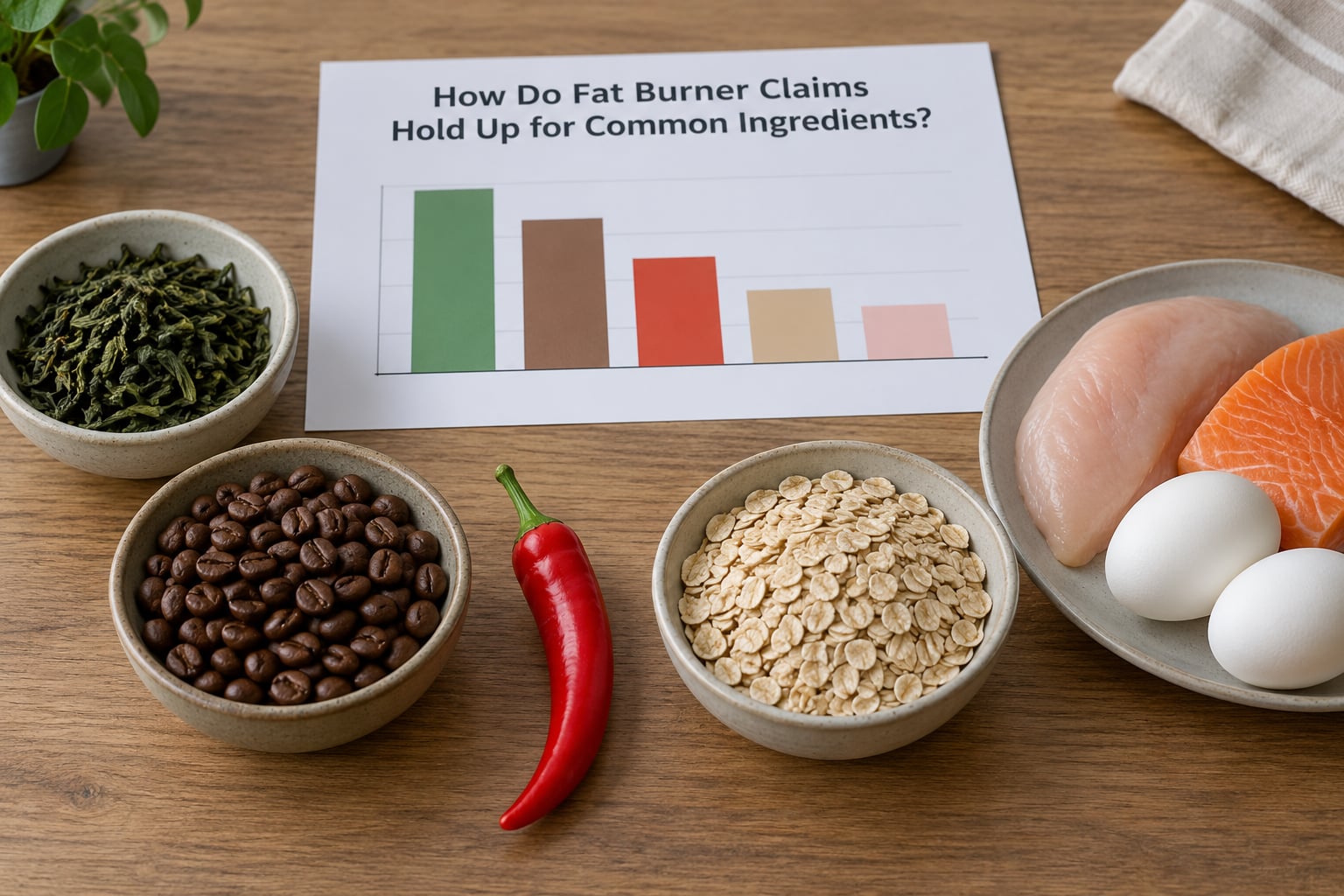
Caffeine is the only ingredient in the category with an effect that is both real and immediate. It raises alertness and, at moderate amounts, thermogenesis. Grade: Modest for fat loss, Supported as a stimulant.
Green tea extract and its catechins, including EGCG, have been tested more than most. Human trials show small increases in energy expenditure, and meta-analyses of capsaicin-type compounds in green tea have averaged roughly half a kilogram of scale weight across participants. That is a real number, and it is also a disappointing one. Grade: Modest.
Capsaicin, the compound behind chili heat, produces a genuine thermogenic response in controlled settings. Average effects across meta-analyses land well under a kilogram. Grade: Modest.
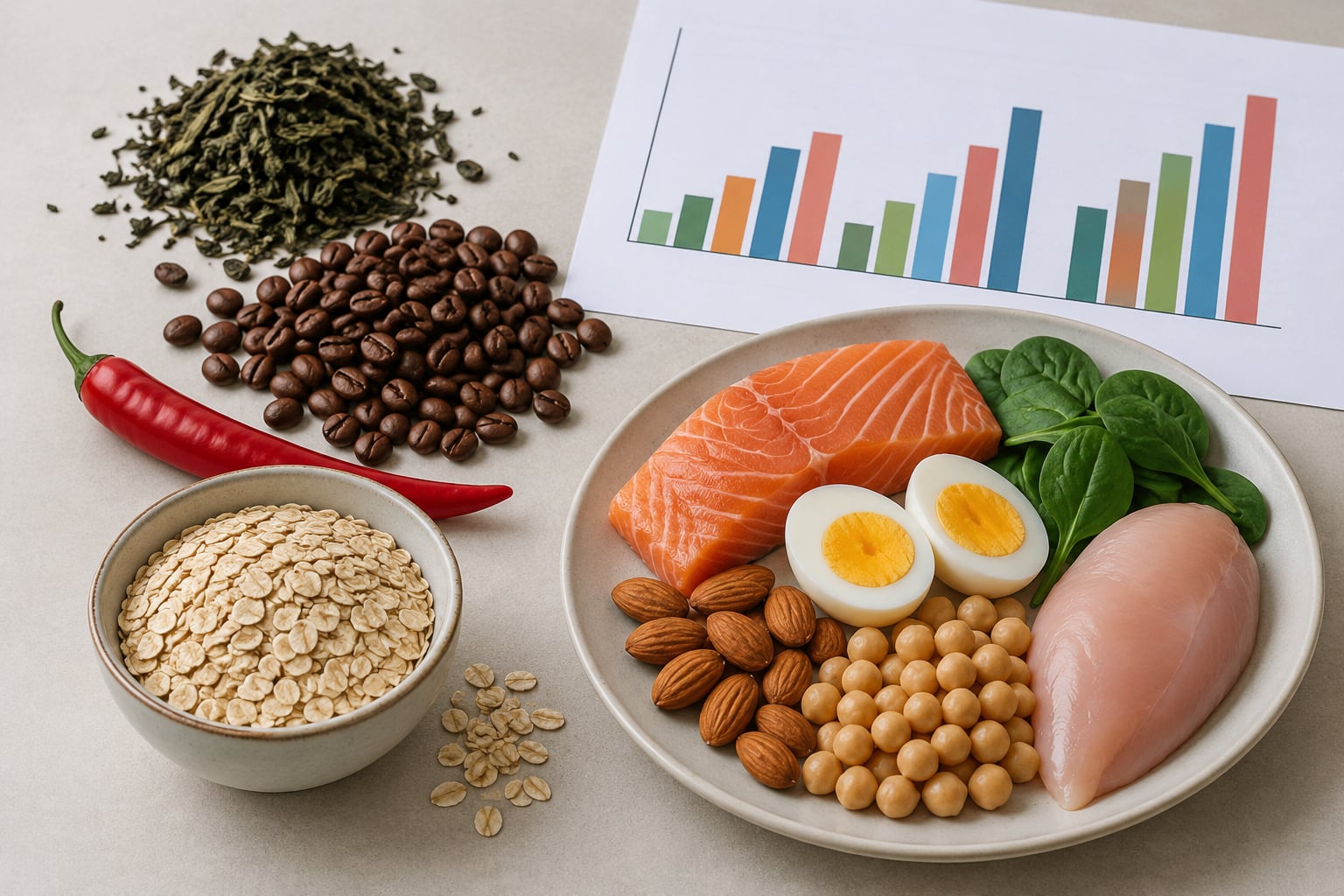
Fibre and protein are not thermogenics at all, and they are the most useful items on the list. Soluble fibre and adequate protein raise satiety through hormones such as GLP-1 and PYY, which reduces how much you eat. They are not fat burners. They are the boring part that actually moves body composition. Grade: Supported for appetite, not for burning.
Garcinia cambogia, raspberry ketones, conjugated linoleic acid, L-carnitine, green coffee bean extract and Hoodia Gordonii are the ones I would treat with suspicion. Much of the support is from animal studies or small trials, and several have produced no measurable effect in humans despite a plausible story. Grade: Unproven or Contradicted.
Proprietary blends deserve their own warning. A label listing a blend of eleven ingredients without individual amounts tells you nothing about whether any of them is present in a meaningful dose. The blend exists so the manufacturer can vary the content of each production run. Grade: Contradicted, because the implied claim that each ingredient is dosed is unverifiable by design.
The same claims you see in ads line up neatly with the five mechanisms these products claim to act on, and the evidence strength varies sharply between them:
| Claim | Proposed mechanism | Human evidence | Verdict |
|---|---|---|---|
| Fire up your metabolism | Raise thermogenesis and resting energy expenditure | Small increases shown in short trials, usually under 100 kcal a day | Modest |
| Melt fat away | Mobilise stored fat and increase fat oxidation | No good trial shows meaningful body fat loss from supplements | Contradicted |
| Kill appetite | Raise satiety hormones, suppress hunger | Real for fibre and protein; mostly caffeine suppressing hunger for a few hours | Modest |
| Block fat storage | Reduce fat absorption in the gut | Weak and inconsistent results in human studies | Unproven |
| Boost workout performance | More energy and intensity in training | Caffeine helps performance; most other ingredients do not | Modest |
One more thing that gets skipped. A long list of fat burner ingredients, including many thermogenics, has been studied mainly in rodents. CLA and raspberry ketones are the standard examples, and forum discussions on r/Fitness consistently raise the same objection: nobody has shown that a rat result transfers to a person.
Why Short-Term Scale Changes Are Not Proof
The first week on any new product is the least reliable week you will ever measure. Weight moves for reasons that have nothing to do with fat, and a stimulant can move it in both directions.
Water is the big one. Higher salt, higher carbs or a new caffeine intake all change how much water your body holds, and that can swing a scale by a kilo or more. So can meal timing, since a kilogram of food and drink passes through you in a day. Bowel contents, a salty meal the night before, a long run, and simple measurement variation between scales all sit in the same bucket.
That is also the trap the marketing exploits. Feeling warm, sweating more, heart rate up and hunger gone for a few hours is a stimulant effect. It is a genuine physiological event, and it gets read as fat leaving the body. Reddit posters in r/bikinitalk and r/xxfitness describe the same disappointment repeatedly: a strong burn on day one, and nothing on the scale a week later.
Three things make a fairer test. Weigh under the same conditions, first thing, after using the toilet. Look at the average over two to four weeks rather than single readings. And judge at twelve weeks, not four, because appetite suppression that comes from caffeine fades as tolerance builds. If the product were doing something durable, it would still be visible at week twelve.
Can Fat Burners Help With Long-Term Weight Loss?
Not reliably. Studies that do show weight change with a thermogenic product rarely separate the product from the calorie deficit people started at the same time, and the most common forum report is no measurable change at all.
There are three reasons the long-term picture is weak. Tolerance arrives, so the stimulant effect shrinks and the appetite suppression fades with it. Appetite suppression driven by caffeine is borrowed, not solved, and the eating that follows tends to cancel it out. And habits get substituted rather than added, which is the subtle one: a person who takes a fat burner often changes less about their food and training, because the pill is carrying the motivation.
So who might reasonably use one? An adult who already eats a controlled diet, trains regularly and sleeps well, and wants a low-dose optional adjunct for a training session. That is the whole list. If the diet and training are not in place, no supplement is going to stand in for them.
How to Evaluate a Fat Burner Supplement
Most labels are designed to be skimmed, so read the back instead of the front. This checklist covers what actually tells you something.
Look for every amount, not a blend list. If the Supplement Facts panel lists individual quantities, you can look each one up. A proprietary blend means you cannot.
Check the serving size and count the servings. A panel that says 200 mg of caffeine is per serving, with three servings suggested, is a 600 mg product. This is the step people skip, and it is the easiest way to end up well past the usual adult guidance of about 400 mg of caffeine a day.
Tally your total caffeine. Add up coffee, tea, energy drinks and any pre-workout. Stacking a fat burner with coffee or a pre-workout is the single most common question in fat burner forums, and the answer is that you are simply adding two stimulant sources together.
Look for third-party certification. NSF Certified for Sport and USP Verified are the marks worth knowing, and USADA maintains a supplement list for drug-tested athletes. Unbranded certification is rare, but a certified product is meaningfully safer than an uncertified one.
Check the evidence against the ingredient, not the brand. If the page cites a single study on one ingredient in a blend of fifteen, that is a marketing page rather than an evidence review.
Ask what happens on day one without it. If the label promises a surge of energy and sharp focus that you feel within thirty minutes, you are buying caffeine with a markup and a story.
Formulas also differ by lane. Stimulant formulas are built around caffeine and similar compounds and are the ones that cause jitteriness and sleep problems. Non-stimulant formulas swap in ingredients with weaker evidence and sell themselves on avoiding that. Hybrids sit in between. None of the three categories has strong evidence behind it.
What Safety Risks Should Readers Know?
The main risk is not that fat burners are gently useless. It is that some of them are genuinely risky, and that you cannot always tell which is which from the front of the bottle.
Stimulant effects are the common ones: jitteriness, a racing heart, anxiety, raised blood pressure and trouble sleeping. Caffeine that would be unremarkable in a morning coffee can be a problem in a capsule taken at 7pm, and sleep disruption quietly works against fat loss. Red flags worth stopping over include a pounding heartbeat, chest tightness, severe headache, or feeling unwell in a way that is new.
Interactions are the part people forget. Stimulants and prescription medicines, including some antidepressants and thyroid medicines, do not always mix well. Green tea extract concentrates have been linked to liver injury in case reports, and the risk is higher in anyone taking other medicines that affect the liver.
Then there is the label problem. Analyses of supplements sold for weight loss have repeatedly found products containing undeclared prescription ingredients, and researchers have described a network of products designed to move in and out of the regulatory space. This is why a third-party mark is worth something: it is the only outside check you have.
Some people should skip this category entirely: anyone pregnant or breastfeeding, anyone with a heart condition, arrhythmia or high blood pressure, anyone with anxiety, glaucoma or reflux, and anyone taking prescription medicines. In perimenopause and menopause, weight shifts are common and hormone therapy decisions belong with your doctor, not a supplement label.
A doctor, pharmacist or registered dietitian can check a specific product against your medication list in a few minutes. That conversation is the cheapest risk reduction available.
Frequently Asked Questions
Do any fat burner supplements actually work?
Partly, but not in the way advertising suggests. Caffeine and green tea catechins produce small, real increases in thermogenesis, and meta-analyses of capsaicin-type compounds average around half a kilogram of scale weight. That is a measurable effect, not a transformation. No strong human trial shows a supplement producing meaningful fat loss on its own, and most people who lose weight on them also changed their eating at the same time.
Are fat burners safe to take every day?
Daily use raises real questions rather than settling them. Most fat burners are stimulant-based, and daily caffeine use can raise blood pressure, disrupt sleep and build tolerance that flattens the appetite effect over time. Anyone with a cardiovascular condition, high blood pressure, anxiety, glaucoma or reflux, or anyone taking prescription medicines, should check with a doctor or pharmacist first. Stop and seek advice if you notice a racing heart, chest tightness or severe headache.
Can caffeine or green tea burn body fat?
Caffeine and green tea extract raise thermogenesis and energy expenditure slightly, and green tea catechins such as EGCG have been studied more than most thermogenic ingredients. The magnitude is small, and the effect varies between people. Some of the value people notice is simply less food eaten over the next few hours, because caffeine suppresses hunger. That is a useful hours-long effect, not a fat-burning one.
Will a fat burner help me lose weight without changing my diet?
Almost certainly not. Fat loss still comes down to a sustained calorie deficit, and no supplement replaces that. The studies where weight drops usually involve people who started eating less at the same time, which makes the product impossible to credit. The most common report from people who tried one is a strong stimulant feeling for a few hours and no change on the scale afterwards. If your eating has not changed, the product is very unlikely to change anything.
How can I tell if a fat burner contains what the label says?
Read the Supplement Facts panel and look for individual amounts for every ingredient. A proprietary blend lists names without quantities, which means the doses are unknown and can vary between production runs. Check the serving size and multiply, because caffeine figures are usually per serving. Look for third-party certification such as NSF Certified for Sport or USP Verified, and consult USADA lists if you are drug tested. If the front of the label promises more than the back can prove, that is your answer.
Bottom Line: What to Do First
So do fat burner claims hold up? Partly, and never in the way the ads describe. A handful of ingredients have small, real metabolic effects; the fat loss promises do not survive contact with controlled trials, and the warmth and sweating you feel are a stimulant effect being mistaken for fat loss.
The first thing to do is name the actual goal. If it is appetite control, protein and fibre do more for less. If it is training performance, caffeine is the honest version. If it is fat loss, the work is a calorie deficit, resistance training, sleep and repeating it for months.
Before buying anything, take the label to a pharmacist or registered dietitian. That single conversation removes most of the risk on this page.