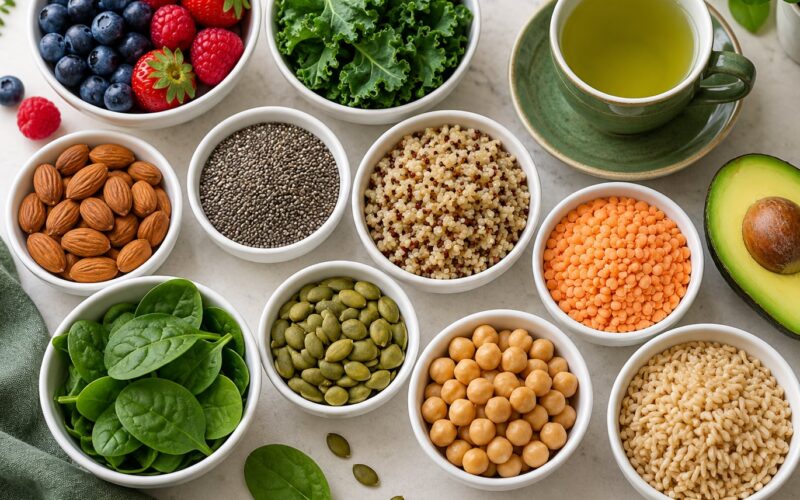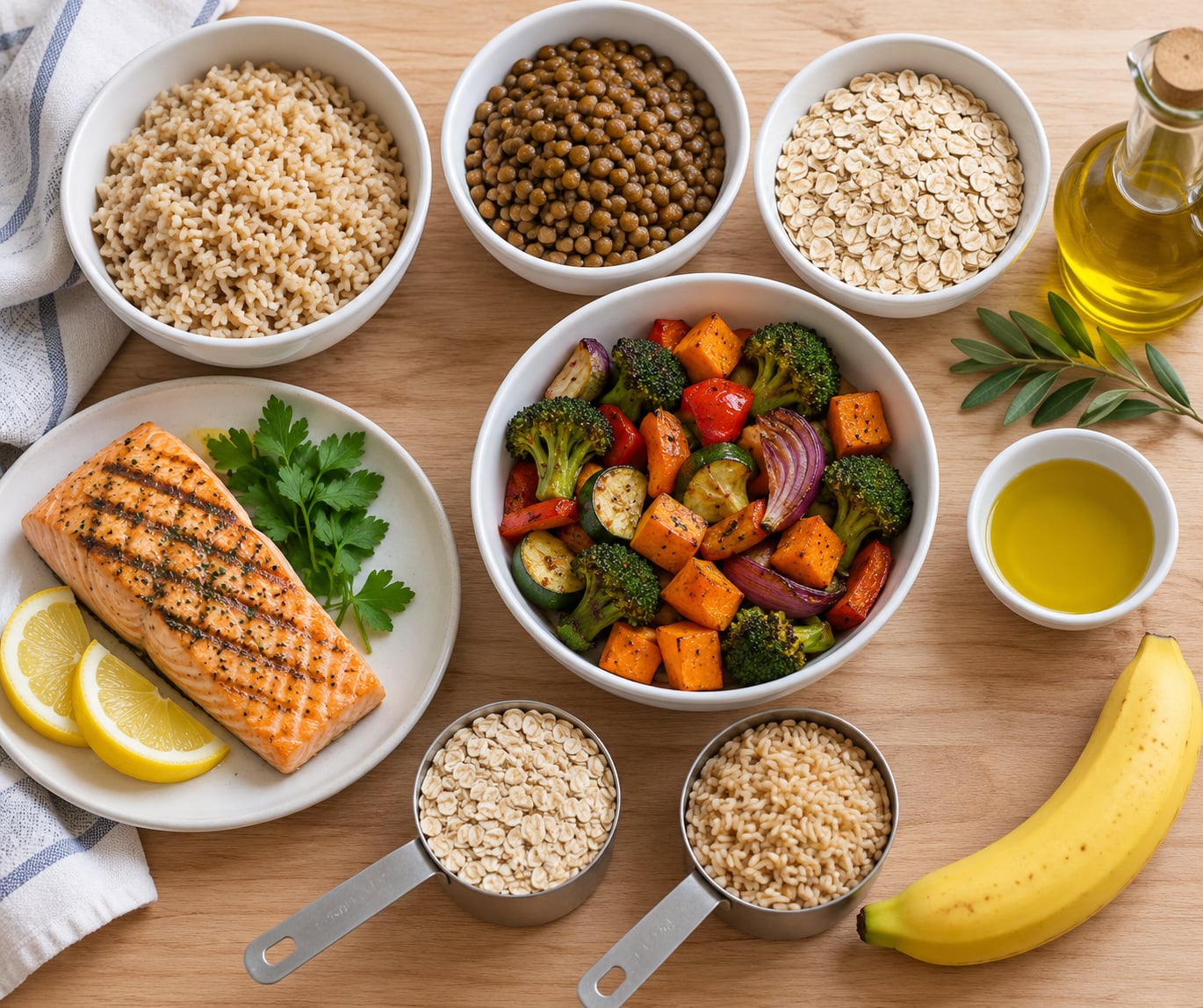
Short answer: yes, most carb myths are false. Carbohydrates are not automatically fattening, unhealthy, or a barrier to weight loss. The evidence does not support treating carbs as a single category to fear, and most of the claims that have made carb fear stick do not hold up once you look at how people actually eat.
Most of the myths about carbs that are not true come down to one confusion: treating a nutrient group as though it were a single food. What follows is a straight look at ten of the most-repeated claims, what the research actually says about each, and what is genuinely useful to change. Nothing here is a prescription. If you have diabetes, are pregnant, or are managing a medical condition, talk to your doctor or a registered dietitian before changing how you eat.
Last updated: October 2026
Table of Contents
- Myths About Carbs That Are Not True at a Glance
- 1. “Carbs Make You Gain Weight” Is a Myth
- What Evidence Says About Carbs and Weight
- 2. “Carbs Are Bad for You” Is a Myth
- 3. “You Need to Cut Carbs to Lose Fat” Is a Myth
- 4. “Carbs Cause Insulin Spikes and Weight Gain” Is a Myth
- How Carbohydrate Quality Changes the Response
- 5. “Fruit Is Full of Carbs, So Avoid It” Is a Myth
- 6. “Potatoes Are Always Unhealthy” Is a Myth
- 7. “White Bread and Brown Bread Are Identical” Is a Myth
- 8. “You Must Eat Carbs Before Exercise” Is a Myth
- 9. “Carbs at Night Automatically Cause Fat Gain” Is a Myth
- 10. “A Low-Carb Diet Is the Only Healthy Diet” Is a Myth
- How to Choose Carbohydrates Without Following a Myth
- Frequently Asked Questions
- Is it a myth that carbs are bad?
- Why are carbs so demonized?
- Do you lose weight quicker if you cut out carbs?
- What happens if I eat no carbs for 2 weeks?
- Is it better to cut carbs or sugar to lose weight?
- Does cutting carbs help with insulin resistance?
- Conclusion: Start with Evidence, Not Carb Fear
Myths About Carbs That Are Not True at a Glance
Here is the short version. Every myth in the table below is followed by the correction and the one thing to actually do about it.
| The claim | Verdict | The correction | What to do |
|---|---|---|---|
| Carbs make you gain weight | False | Sustained energy balance drives weight change, not the word carb | Control portions; keep the foods you enjoy |
| Carbs are bad for you | False | Carbohydrate is a whole nutrient group, not one food | Choose fiber-rich sources most days |
| You must cut carbs to lose fat | False | Lower-carb is an option, not a requirement | Pick the pattern you can maintain |
| Carbs cause insulin spikes and weight gain | Half-true | Insulin does rise; one spike does not equal fat gain | Judge carbs by form, not by category |
| Fruit is full of carbs, so avoid it | False | Whole fruit carries fiber and a food matrix | Eat whole fruit, watch portions |
| Potatoes are always unhealthy | False | Preparation and meal context change everything | Bake, boil or roast rather than deep-fry |
| White bread and brown bread are identical | False | Color is a marketing trick, not a nutrition fact | Read the ingredient list |
| You must eat carbs before exercise | False | Need depends on session length and intensity | Fuel long sessions; keep short ones simple |
| Carbs at night automatically cause fat gain | False | Total intake and sleep matter more than the clock | Size the meal to your hunger |
| A low-carb diet is the only healthy diet | False | Health comes from food quality and sustainability | Judge a diet by nutrients, not carbs |
1. “Carbs Make You Gain Weight” Is a Myth
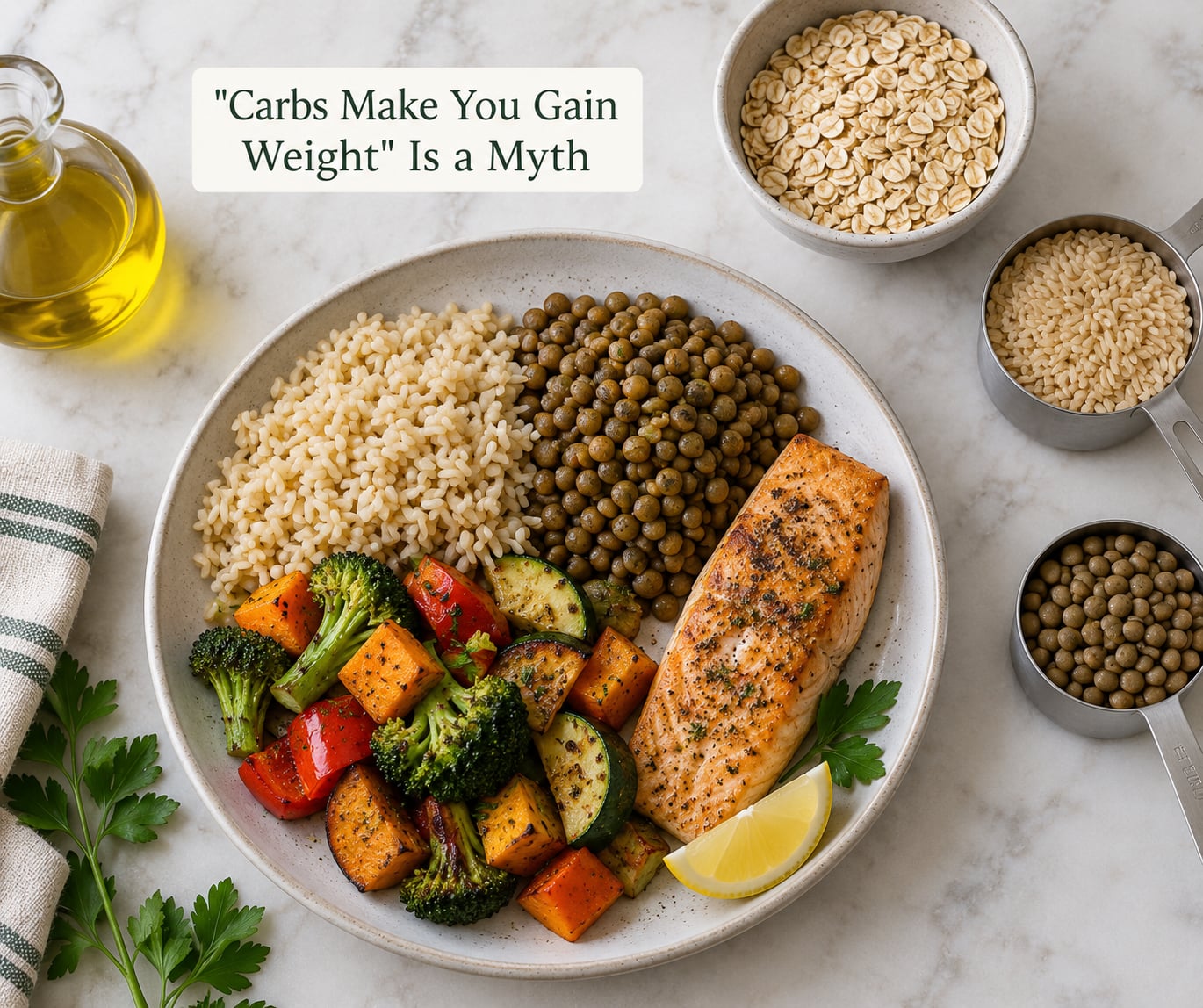
A calorie is a calorie in the sense that matters most: sustained energy balance drives weight change. What changes between diets is how easily people follow them, how filling the food is, and how much they enjoy eating it.
Carbohydrate supplies about 4 calories per gram and fat about 9. That single fact is why portion sizes look different, but it is not a reason one macronutrient makes you fat on its own.
What Evidence Says About Carbs and Weight
Large cohort studies have not found that whole grain intake drives weight gain. In the NIH-AARP Diet and Health study, which tracked 367,442 adults over roughly 14 years, higher whole grain intake was linked to lower rather than higher weight gain, alongside lower risk of several chronic conditions.
Randomized trials comparing low-fat and low-carb approaches at comparable energy levels have generally produced similar weight loss, with the gap closing once the studies run past a few months. The pattern holds in the discussions on r/ketoscience and r/ScientificNutrition too: when energy is matched, the macronutrient split does less work than adherence does.
Being honest about the half of this that is real: some people genuinely lose more weight on a lower-carb pattern. Not because carbs are fattening, but because protein and fat are more filling per calorie, so the same calorie budget is easier to stick to. That is an adherence effect, and whether it works for you depends on what you actually enjoy eating.
2. “Carbs Are Bad for You” Is a Myth
Carbohydrate is a nutrient group, not a single food. It spans monosaccharides like glucose and fructose, disaccharides like sucrose and lactose, and polysaccharides like starch and glycogen. Treating all of that as one villainous thing is like treating all animal protein as one villainous thing.
Carbohydrate does specific jobs. It is the preferred fuel for the brain and for high-intensity exercise, it feeds beneficial gut bacteria, and when it comes from whole foods it arrives bundled with fiber, vitamins and minerals.
The US Dietary Guidelines for Americans set a minimum of 130 grams of carbohydrate per day, which is roughly what the brain alone needs. That is a floor, not a ceiling, and it only applies to adults.
The confusion between naturally occurring and added carbohydrate does real work here. A baked apple carries fiber and water with its sugar. A sweetened soda carries added sugar with nothing else. Both dissolve as glucose and fructose in your body, but they do not behave the same way once they arrive.
3. “You Need to Cut Carbs to Lose Fat” Is a Myth
Cutting carbohydrate is one option among several, not a requirement. Low-fat approaches, low-carb approaches and Mediterranean-style patterns have all produced meaningful weight loss when people follow them for long enough.
What decides the outcome is three things: whether the pattern supplies enough protein, fiber and micronutrients, whether you can afford it and cook it, and whether you can live with it for years rather than six weeks.
The most common complaint in carb-focused forums is not that the diet failed. It is that the weight came back when carbs came back. That rebound is usually a sign that the original plan was never sustainable rather than a sign that carbs broke something, and it is a pattern people describe over and over on r/keto and r/Fitness.
4. “Carbs Cause Insulin Spikes and Weight Gain” Is a Myth
Insulin does rise when you eat carbohydrate. That part is physiology, not myth. What the myth gets wrong is the leap from one hormone response to automatic fat gain.
Insulin helps move glucose into cells, it supports amino acid uptake around resistance training, and a brief rise after a meal is a normal part of digestion. Body composition is shaped by total intake and training over months, not by whether a given meal produced a spike.
What matters is form, portion and what the carb arrives with. A large serving of refined crackers eaten alone behaves very differently from lentils in a soup with vegetables and chicken.
How Carbohydrate Quality Changes the Response
Two related numbers cause most of the confusion here. Glycemic index describes how quickly a food raises blood glucose compared with a reference food. Glycemic load accounts for the amount you actually eat, which is why a low-index food eaten in a large portion can still raise glucose a lot.
| What it means | Glycemic index | Glycemic load |
|---|---|---|
| What it measures | Speed of the glucose response per 50g of carb | Response scaled to the portion actually eaten |
| Ignores | Portion size entirely | Nothing important for everyday eating |
| Best used for | Comparing foods eaten in similar amounts | Choosing realistic portions of real meals |
| Common confusion | Watermelon scores high but you rarely eat 800g of it | Spaghetti has a moderate index and a high load |
Higher-fiber foods like oats, beans, lentils, vegetables and intact whole grains slow digestion and bring their nutrients along for the ride. That is the part of the blood sugar conversation that is worth caring about, and it is a question of fiber, not of carbs as a category.
5. “Fruit Is Full of Carbs, So Avoid It” Is a Myth
Fruit does contain carbohydrate, and it is among the best packaged sources of it: fiber, potassium, vitamin C, polyphenols and water, in a form your body can handle. The reason fruit has been cast as public enemy number one is its sugar content, read as if it were added sugar.
Whole fruit and fruit juice are not the same food. A glass of orange juice delivers the sugars without the fiber that slowed them down in the orange, which is why nutrition guidance consistently recommends whole fruit over juice.
Portion and frequency are the useful levers. Two or three servings across a day is a normal amount for most adults, and swapping a sugary drink for a piece of fruit usually improves a diet rather than damaging it.
6. “Potatoes Are Always Unhealthy” Is a Myth
A medium baked potato with the skin delivers potassium, vitamin C, vitamin B6 and around four grams of fiber, with a carbohydrate load that fills you up. On its own nutritional terms, it is one of the better values in the produce aisle.
Preparation and context are what change the verdict. A boiled potato alongside salmon and greens is a different meal from a portion of chips, which combine refined starch with substantial added fat and salt.
The honest version of this myth is that potatoes on their own rarely cause problems, and potatoes cooked in a hot fat are a different food. If your blood sugar runs high after potatoes, that is a conversation with your clinician, not a reason to never eat one.
7. “White Bread and Brown Bread Are Identical” Is a Myth
This one is closer to a truth than a myth, and the myth is that bread color tells you anything at all. Many brown breads are white flour with caramel coloring, and some white breads carry as much fiber as brown ones.
Turn the package over. If whole wheat, whole grain or a whole grain like oats, quinoa or barley appears first in the ingredient list, it is a whole grain bread. If the list starts with enriched or refined wheat flour, the color came from molasses or caramel coloring.
Fiber content is the number that differs meaningfully, typically around 2 grams per slice for a whole grain loaf against under 1 gram for a refined one. Beyond that, both are bread, and both fit fine in a balanced eating pattern.
8. “You Must Eat Carbs Before Exercise” Is a Myth
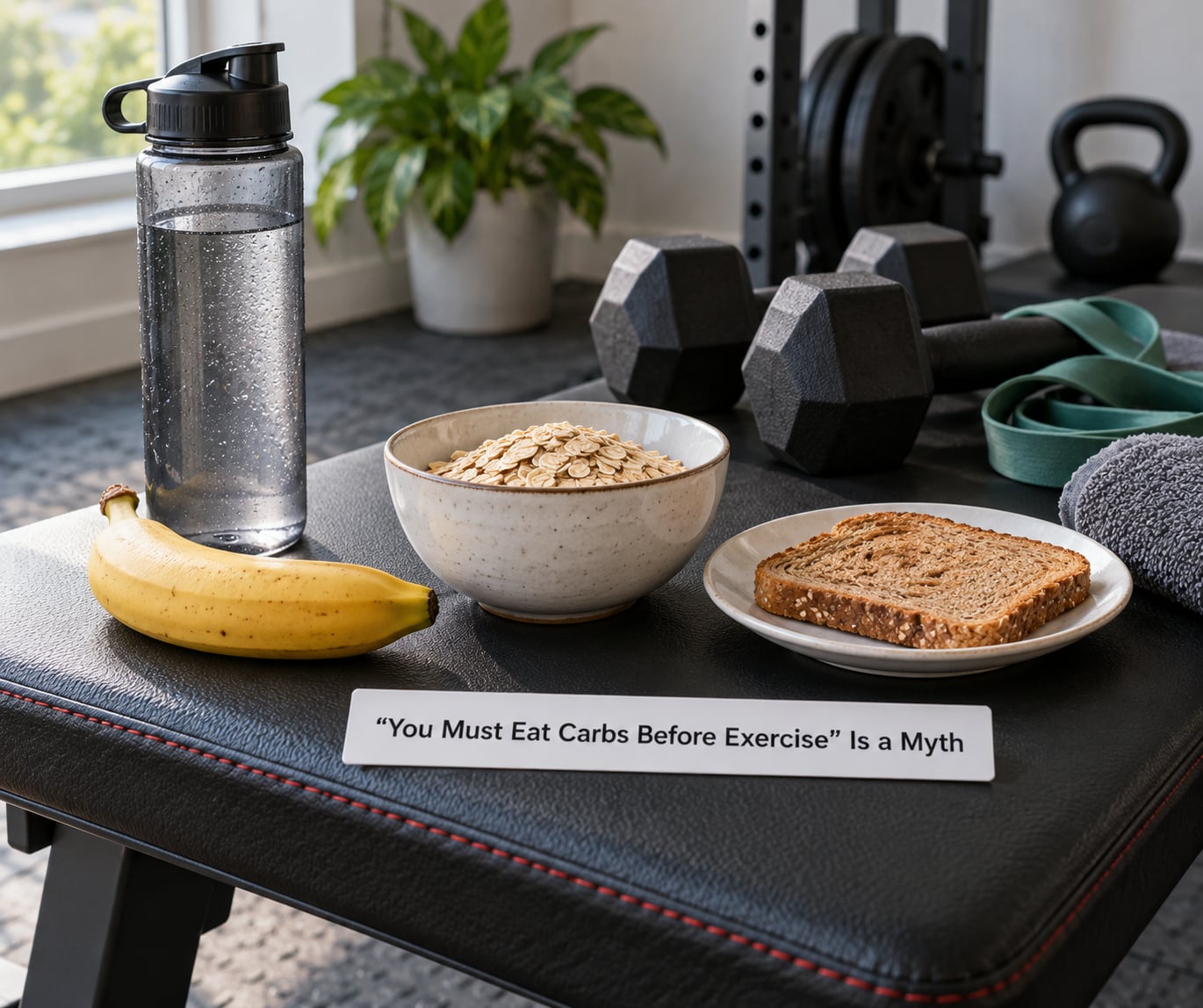
Carbohydrate is the main fuel for high-intensity work and for anything lasting a long time. Whether you need it before a given session depends on the session, not on a rule.
A 30-minute strength session draws far more on stored glycogen and circulating fuel than a two-hour run does. For short sessions, water and a normal meal earlier in the day are usually enough, and some people feel better training fasted.
For long or repeated sessions, carbohydrate during and around training does help performance, and people report low energy and poor training output on very low-carb phases, which is a pattern that comes up often in r/Fitness discussions. The practical middle ground: eat your larger carbohydrate meals earlier in the day, keep a banana or similar before long sessions, and stop worrying about the rest.
9. “Carbs at Night Automatically Cause Fat Gain” Is a Myth
Timing alone does not decide whether you store fat. Total intake across the day and the week is the driver, and sleep quality affects appetite hormones and next-day choices more than the clock does.
A dinner built on potatoes, beans or rice with vegetables and protein is a normal balanced meal, eaten at 8pm or 9pm.
What does tend to matter is going to bed overly full, which disrupts sleep, and adding a large carbohydrate serving on top of an already full day. Two reasonable rules, neither of which is a blanket ban on carbs after dinner.
10. “A Low-Carb Diet Is the Only Healthy Diet” Is a Myth
No single pattern is the only healthy one. A diet earns the label when it supplies enough protein, fiber, fat and micronutrients, when it supports heart and metabolic health over time, and when you can sustain it.
Lower-carb eating has legitimate clinical uses. Modified Atkins-style and ketogenic diets were developed to reduce seizures in epilepsy and can be effective tools under medical supervision for some people with type 2 diabetes. That is not the same claim as keto being the healthiest diet for the general population, and mixing the two up is how the myth spreads.
Long-term very low-carb patterns can also come with issues that get glossed over: LDL cholesterol rises in a meaningful minority of people, constipation shows up when fiber drops, and several dietitians have described irritable bowel symptoms in practice. A diet that leaves you unable to keep eating is not a healthy diet, however good its theory.
How to Choose Carbohydrates Without Following a Myth
You do not need a rule about carbs. You need a rule about fiber, quality and portion. Six things have held up well for most people.
Start with fiber. The targets most people are working toward are 25 to 38 grams a day, depending on sex and age. Most packaged bread and pasta fall well short, and beans, lentils, oats, potatoes, berries and vegetables add up quickly.
Keep the grain intact where you can. Intact grains like oats, barley, brown rice and quinoa, plus legumes and starchy vegetables, behave differently from finely milled and heavily processed versions.
Treat added sugar as the thing to limit. Total carbohydrate stays high in most diets even when added sugar is small, which is why sugar is a more useful target than the carb number on the label.
Pair carbohydrate with protein and vegetables. Protein and fiber slow the digestion of what comes with them, which changes both fullness and the glucose response.
Use the 40 to 60 percent range as a reference, not a rule. That is roughly where the dietary guidance sits for carbohydrate as a share of calories. Athletes moving into the higher end, people eating very low carbohydrate for medical reasons, or people who thrive on the lower end all have legitimate reasons to sit elsewhere.
Read the label for what is actually inside. Total carbohydrate, added sugars, dietary fiber and the first ingredient tell you more than any front-of-package word.
One more note for people coming back from a long low-carb phase. Adding carbohydrates back quickly is a common reason for bloating and cramping, because gut bacteria and fermentation capacity need time to adjust. Increase one grain or legume serving every three to four days, keep fluid up, and start with cooked vegetables and well-cooked legumes before raw salads. Slow reintroduction is boring and it works.
Frequently Asked Questions
Is it a myth that carbs are bad?
Mostly, yes. Carbohydrate is a whole nutrient group spanning sugars, starches and fiber, and the research does not support treating it as a single harmful category. What matters far more is whether you can sustain your intake, how much fiber you eat and how you feel on the pattern you choose.
Why are carbs so demonized?
Carbohydrate fear cycles through marketing regularly, from mid-century packaged diet messaging to the Atkins wave, Grain Brain and keto media. Low-carbohydrate advice travels well because it is simple and gives people rules. The result is that a real but narrow finding, that some people lose more weight low-carb, got generalized to everyone.
Do you lose weight quicker if you cut out carbs?
Some people lose weight faster in the first few weeks, largely because dropping carbohydrate reduces food energy density and cuts water stored with glycogen. Comparisons at matched calorie intake show similar results over time. Speed of loss in week one is not a reliable signal of long-term outcome.
What happens if I eat no carbs for 2 weeks?
Many people feel lighter at first because glycogen stores drop with their attached water. Common later effects include fatigue, poor training performance, constipation, irritability and headaches, especially during the first week. Very low-carbohydrate eating also carries risks for people on certain medications, so talk to your doctor first.
Is it better to cut carbs or sugar to lose weight?
For most people, sugar is the more useful target. Added sugar is a smaller slice of total carbohydrate, so cutting it is a clearer and more achievable change than cutting carbs. Swapping sugary drinks for whole fruit or water usually improves fiber and nutrient intake at the same time.
Does cutting carbs help with insulin resistance?
Reducing refined carbohydrate and added sugar often helps, and weight loss itself improves insulin sensitivity whatever pattern produces it. But insulin resistance is not caused by eating carbohydrates, and both sides of the debate overstate their case. A doctor or registered dietitian can help you work out what suits your numbers.
Conclusion: Start with Evidence, Not Carb Fear
The central correction is straightforward. Carbohydrates are not automatically fattening, unhealthy, or incompatible with weight loss, and the myths about carbs that are not true number far more than most people expect.
Start with one thing this week. Eat more fiber than you did last week: a bowl of oats instead of cereal, beans in a soup, a second serving of vegetables, potatoes instead of crackers. Keep your portions honest and keep the foods you actually enjoy. If you want individualized guidance or you are managing a medical condition, a doctor or registered dietitian is the right person to ask.