Learning how to exercise safely after pregnancy comes down to one rule: your timeline is a floor, not a green light. Most providers clear a vaginal birth at the six-week postnatal check and a cesarean birth somewhere between six and twelve weeks, but clearance only means the basics of healing have happened. The real starting point is how your body responds when you move.
This guide walks through what to gather before your first session, the five stages most postpartum exercise progresses through, how to judge intensity with the talk test, a four-week example plan, and the warning signs that mean stop and call someone. It takes about ten minutes to read and the whole approach fits into fifteen-minute windows between naps.
Updated 2026. This is general fitness information, not medical advice. Clear your exercise plan with your obstetrician, midwife or doctor before you start, particularly after a cesarean birth or if you have pelvic floor symptoms.
Table of Contents
- What You Need
- Step-by-Step: How to Exercise Safely After Pregnancy
- Start With Recovery-Friendly Movement
- Build Strength Gradually
- Progress Toward Cardio and Fitness Workouts
- Use the Talk Test and Recovery Check
- Common Mistakes
- A Sample Four-Week Return-to-Movement Plan
- When to Ask a Healthcare Professional
- Frequently Asked Questions
- How long after a vaginal birth can I start exercising?
- How soon is it safe to exercise after a C-section?
- Is walking enough exercise in the early weeks?
- Should I do pelvic floor exercises after giving birth?
- How much exercise can I do while breastfeeding?
- When should I see a pelvic health physical therapist?
- Conclusion
What You Need
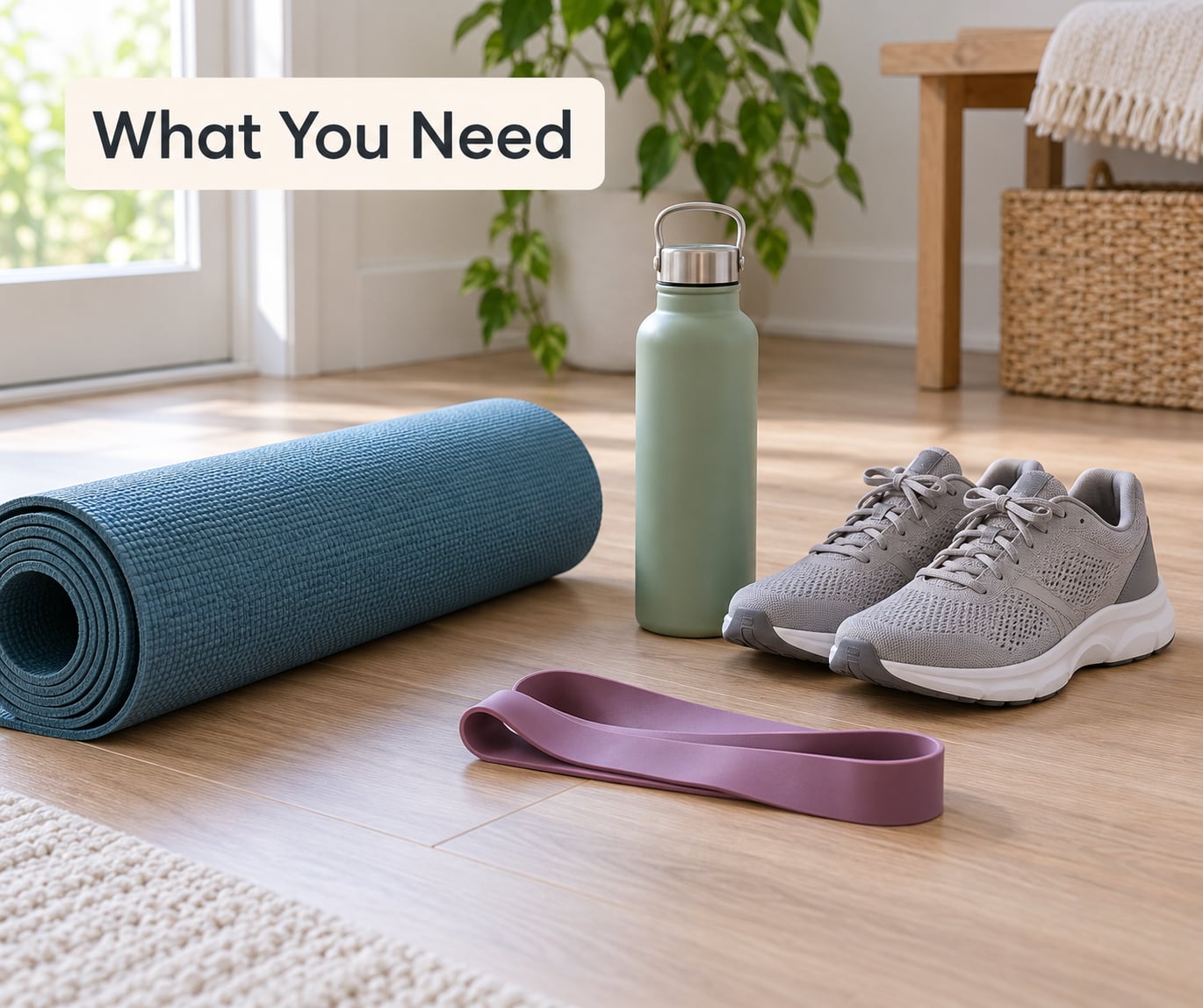
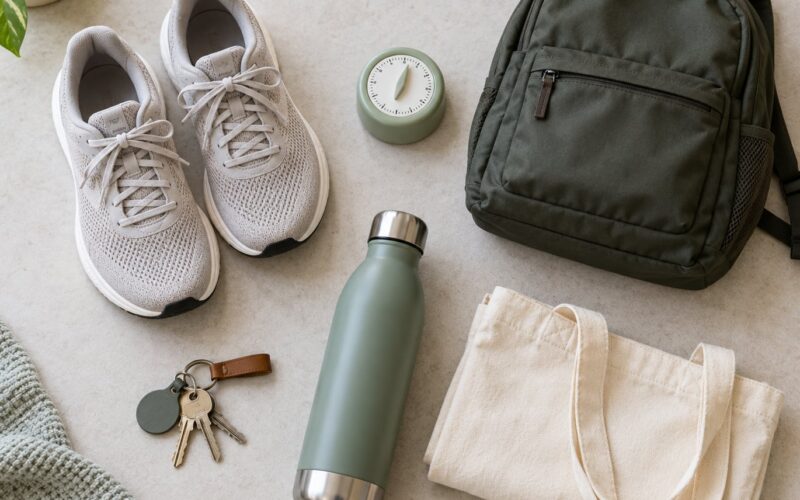
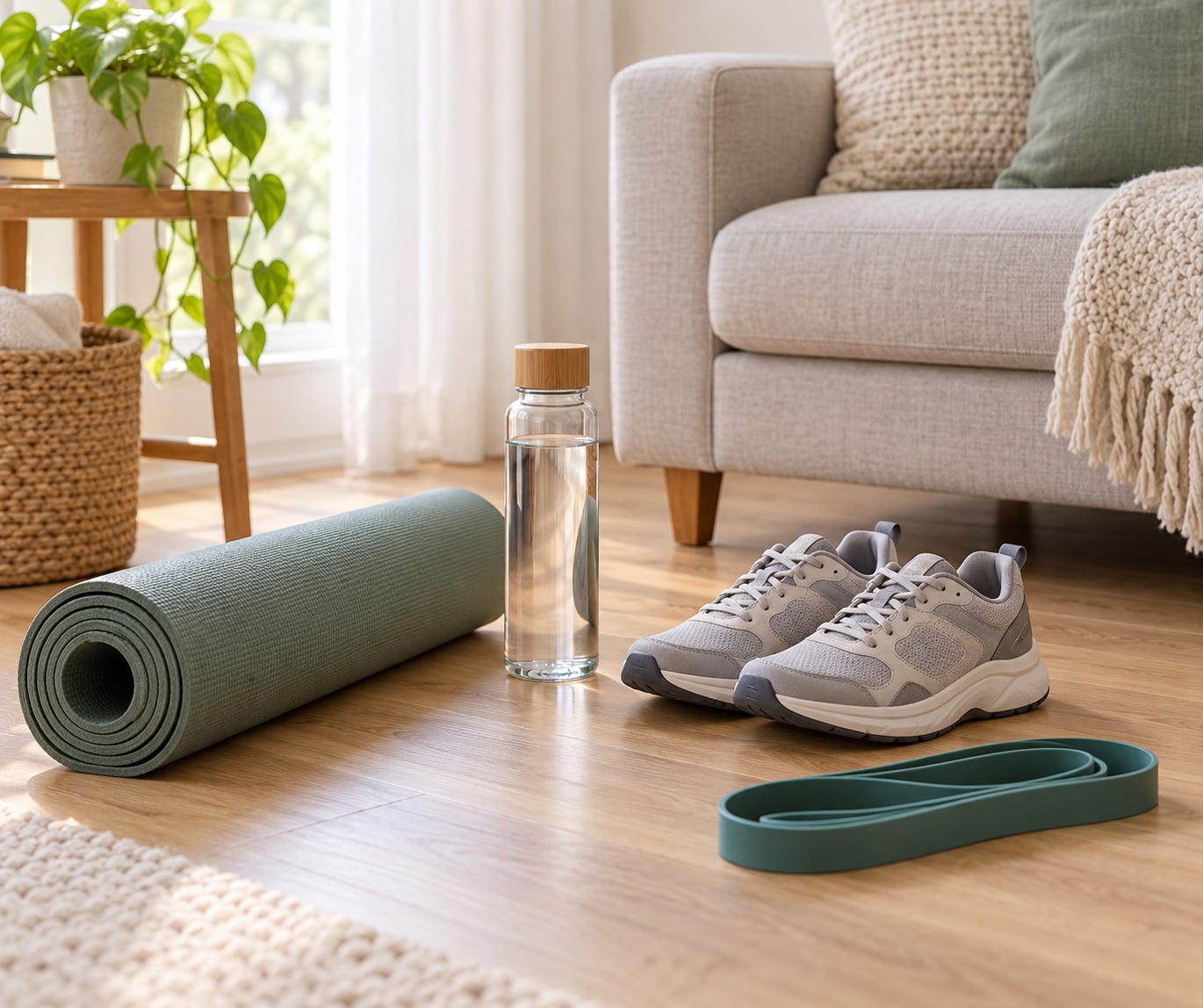
You need very little. Beginners do not require a single piece of gym equipment, and buying anything before the six-week mark is mostly a way to feel prepared rather than a way to get fit.
Start with medical clearance when your provider requires it. After a cesarean birth, after a complicated delivery, or if you had pelvic floor problems during pregnancy, that conversation comes before any exercise conversation.
Next comes clothing that does not rub. You are moving a body that is healing, and a waistband digging into an incision or a perineum will end the session early. Supportive, well-fitting shoes matter more here than in most postpartum conversations, because walking and standing are your earliest and most frequent movement.
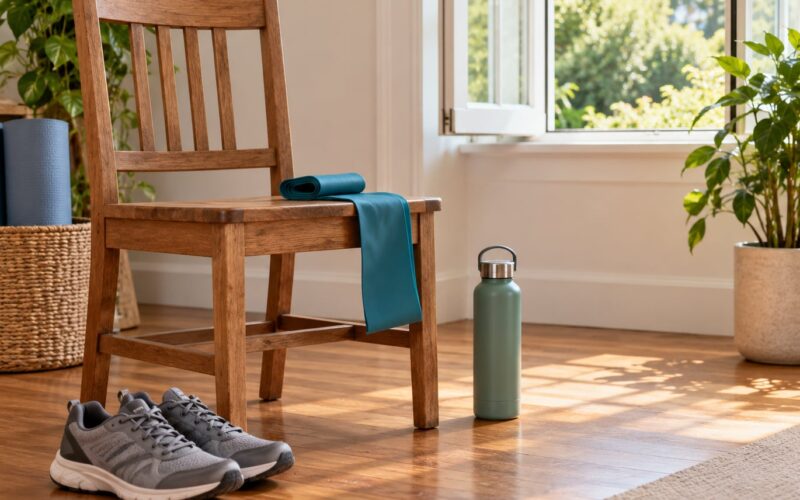
Water sits nearby. It matters more than usual if you are breastfeeding, since dehydration shows up as fatigue long before it shows up as thirst.
Give yourself a safe, flat space where you can get down on the floor and get back up again without furniture in the way. Ten square feet near a sofa is plenty.
Finally, plan your first week honestly. Three ten-minute sessions that you repeat all week beat one heroic hour that wrecks you. If you have a second birth, expect the first plan to need another three to four weeks.
Step-by-Step: How to Exercise Safely After Pregnancy
The order matters more than the effort. Breathe and reconnect to the pelvic floor, restore deep core coordination, add loaded strength, build cardio, and only then consider impact. Skipping ahead is the single most common reason people end up with symptoms months later.
A note on timing first. After a vaginal birth you can generally start gentle movement as soon as you feel ready, which the NHS describes as the first days rather than a fixed date. The six-week check is when most people start structured work. After a cesarean birth, expect six to twelve weeks plus whatever your incision needs, and heavy lifting usually waits for explicit clearance.
Start With Recovery-Friendly Movement
The first stage is almost boring, and that is the point. Diaphragmatic breathing, gentle walking, ankle and hip mobility, and pelvic floor coordination cost little and teach your body to load without bearing down.
Breathe before you move anything. Inhale so the ribs widen sideways and the belly softens, exhale slowly as you gently draw the pelvic floor up and let it go fully. Some pelvic health physical therapists prefer long, slow releases over fast repeated contractions, because over-training an already tired or hypertonic pelvic floor can create more problems than it solves.
On walking, do not assume it is automatically easy. Mothers in r/beyondthebump describe pelvic floor pain and heaviness flaring from nothing more than a long walk months after birth. If a comfortable walk triggers heaviness, leaking or pain, shorten it and go slower rather than pushing through.
Rest days are part of the plan, not a failure of it. Many women in the same communities describe building the habit by walking daily and doing almost nothing else for the first month.
Build Strength Gradually
Once walking and breathing feel uneventful, add body-weight work. Glute bridges, bird dogs, side-lying leg lifts, modified dead bugs, courtesy squats, short side planks on the knees, donkey kicks, and light resistance bands are the movements that come up again and again in postpartum communities as safe progressions.
Technique beats load. Exhale on the effort rather than holding your breath, because bearing down pushes load through exactly the tissues you are trying to protect. Keep reps slow, usually eight to fifteen, and stop each set with control rather than collapse.
Add load only after the movement is clean. Two solid weeks of controlled reps at body weight comes before you pick up anything heavier, and lifting your baby is not the same as training — carrying an awkward weight that suddenly shifts is a different demand entirely.
Keep an eye on the midline. A cone or dome forming along the centre of your abdomen during a plank or a get-up is a stop signal, and it is one of the reasons crunches and full sit-ups are on the list below.
Progress Toward Cardio and Fitness Workouts
Cardio comes back on a conversational ladder. Brisk walking with a purposeful arm swing, then longer or slightly faster walks, then incline walking on a treadmill or hills outdoors, then cycling or swimming, then low-impact classes such as water aerobics, barre, restorative yoga or postnatal Pilates.
Keep sessions short at first. Twenty minutes two or three times a week builds more tolerance than one hour on a good day followed by three terrible ones.
The long-term target from ACOG and WHO is the same 150 minutes of moderate aerobic activity per week that everyone else aims for, plus strength work on at least two days. That is a months-away destination, not a first-month target.
Breastfeeding adds a few practical notes. Feed before rather than during, bring water, and watch your supply rather than assuming a drop means stop. Latch and breast soreness are positioning problems, not exercise problems.
Use the Talk Test and Recovery Check
The talk test beats any heart rate monitor in the early months. If you can speak in full sentences but not sing, you are at moderate intensity. If you are gasping for air mid-session, drop back a level. Rate of perceived exertion, a simple one-to-ten scale, works the same way: aim to sit around four to six early on.
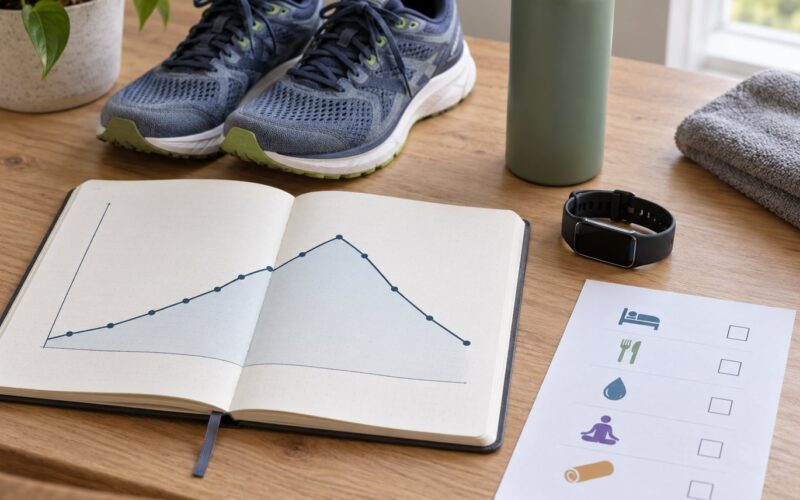
Also check your breathing pattern, your posture at the end of each set, and how you feel roughly an hour later.
The next-day check is the one most people skip and it is the most informative. Waking up more tired than you were before the session, or sore in a way that changes how you carry your baby, means you overreached. Repeat that week instead of progressing through it.
Common Mistakes
Most problems trace back to six habits, and every one of them has a simple fix.
- Starting too intensely. One poster described joining a boot camp class two to three weeks after birth and later regretting the bounding and squat work. Fix: fix a ten-minute ceiling for your first fortnight, whatever your fitness level used to be.
- Chasing your pre-pregnancy routine. Fix: judge every session by symptoms, not by what your old program said.
- Skipping the warm-up. Fix: five minutes of breathing and mobility before anything loaded, ten when you are returning after a gap.
- Holding your breath. Fix: exhale through the effort on every rep, and use it as a rep counter.
- Ignoring pain or bleeding. Fix: stop the session the same day and call your provider rather than booking a phone appointment next week.
- Progressing too quickly. Fix: progress only after a full week with no symptoms during, immediately after, or the day after a session.
This table pairs the movements most people ask about early on with a swap that does the same job without the risk.
| Exercise to hold off on | Why it is not ready yet | Safer swap |
|---|---|---|
| Crunches and full sit-ups | Load the linea alba before the gap has narrowed | Transverse abdominis breathing and modified dead bugs |
| Full planks | High pressure through a healing midline and pelvic floor | Plank on knees, or elevated on a sofa |
| Heavy lifting and loaded carries | Raises intra-abdominal pressure; follows a cesarean clearance | Light bands, light dumbbells, glute bridges |
| Running, jumping and burpees | Impact loads pelvic organs before their support returns | Incline walking, cycling, low-impact swimming |
| Double leg lowers and full extensions | Long lever loads the healing midline hard | Heel slides and small heel taps |
On the other side of that conversation: crunches and planks are not permanently off the table. They return when you can do a full plank with no doming, hold a conversation through a set of ten heel slides, and manage a brisk walk with no heaviness, leaking or pain during or afterwards.
One myth worth retiring early. The “mommy pooch” is usually a combination of stretched skin, changed posture and abdominal separation, and exercise cannot remove skin that has stretched. It can improve strength, posture and how the midline behaves, which is a genuinely worthwhile goal even when the scale stays put.
A Sample Four-Week Return-to-Movement Plan
Treat this as an illustration, not a prescription. Repeat or slow down any week that produces symptoms, and remember that a cesarean recovery usually needs six to twelve weeks before entering at or near the end of this table.
| Week | Sessions | What you do | What you watch for |
|---|---|---|---|
| Week 1 | 5 short sessions | Diaphragmatic breathing, pelvic floor slow releases, two 5-10 minute easy walks | Comfortable walking only, heavy or pelvic floor pressure |
| Week 2 | 5 short sessions | Breathing plus two 15-minute walks, two 10-minute body-weight sets (bridges, bird dogs) | Heaviness or leaking, doming along the midline |
| Week 3 | 4 sessions | One 20-minute walk, two 15-minute strength sessions with bands, one rest day | Low back pain under load, next-day fatigue |
| Week 4 | 4 sessions | Brisk 25-30 minute walk or incline work, one or two strength sessions, first swim or cycle if wanted | Bouncing, pelvic heaviness, slow recovery |
Two practical scheduling notes. Fit strength sessions to the baby’s nap rather than to a theoretical morning routine, and keep sessions under fifteen minutes until your body has proved it can handle the length. Mothers on postpartum forums consistently rate short programmes highly for exactly that reason.
When to Ask a Healthcare Professional
Stop exercising and contact your midwife, doctor or obstetrician promptly if you notice any of the following.
- Bleeding that is heavier than a normal period, increases during or after a session, or returns after it had settled
- Pelvic heaviness, dragging or a bulge in the vagina or perineum, especially during or after movement
- Leaking urine, stool or wind during exercise that was not there beforehand, or pain with sex that persists
- Visible doming or coning along the midline of your abdomen, or a gap that seems to be widening
- Seam pain, pelvic girdle pain or lower back pain that worsens rather than settles within a day
- Feeling as though your insides are about to drop out during exercise
- Shortness of breath out of proportion to effort, chest pain, dizziness or feeling faint
- Leaking fluid, fever, or a hot, red or increasingly painful incision
- Low mood, anxiety or panic that is not lifting alongside the baby blues
A pelvic health physical therapist is the specialist worth knowing about. They assess pelvic floor function, abdominal separation, scar tissue and load management, and they are the right referral for leaking, pain with sex, pelvic heaviness or a diastasis that is not improving on its own. A certified pre/postnatal fitness instructor is a useful second stop for programming, provided your provider has cleared exercise in general.
Frequently Asked Questions
How long after a vaginal birth can I start exercising?
Gentle movement such as breathing, pelvic floor work and short walks can often start as soon as you feel ready in the first days after an uncomplicated vaginal birth. Structured strength work usually waits for your six-week postnatal check. That clearance is a starting point rather than a green light, so progress based on how your body responds during and the day after each session, and speak to your midwife or doctor first if you had stitches, a third or fourth degree tear, or complications.
How soon is it safe to exercise after a C-section?
Most guidance puts a cesarean birth timeline at six to twelve weeks before structured exercise, and your own incision sets the pace rather than the calendar. Walking and gentle breathing are usually fine early on if your provider agrees. Heavy lifting, loaded carries and impact typically wait for explicit clearance at or after your six-week visit, and you should stop any session that increases incision pain, pulls at the scar or brings on bleeding.
Is walking enough exercise in the early weeks?
For the first month or so, yes, and it is genuinely useful rather than a compromise. Walking builds circulation, mood and stamina without much load on healing tissue. Two common cautions. It is not automatically gentle for a healing pelvic floor, so shorten sessions if heaviness, leaking or pelvic pain appears. And if you are cleared for more, walking alone falls short of the 150 minutes of moderate activity plus strength work recommended for adults.
Should I do pelvic floor exercises after giving birth?
Pelvic floor work is useful for most women after birth, since these muscles support the bladder, uterus and bowel and are often weakened or over-tightened by pregnancy and delivery. Slow releases with full relaxation between efforts are widely recommended over fast repetitive contractions. Stop and get assessed if you feel spasm or pain, because over-training an already over-active pelvic floor can worsen symptoms. A pelvic health physical therapist can guide the right approach for you.
How much exercise can I do while breastfeeding?
Moderate exercise is generally compatible with breastfeeding, and the 150 minutes per week target applies as it does to everyone else. Practical adjustments matter more than restrictions: feed before a session rather than during, keep water within reach, and build sessions into the baby’s nap so you are not rushing. Track your milk supply rather than assuming a dip means you have done something harmful, and allow extra recovery time on rest days.
When should I see a pelvic health physical therapist?
See one when symptoms persist rather than resolving on their own, including leaking urine or wind during exercise, pelvic heaviness or dragging, pain with sex, persistent pelvic girdle or lower back pain, and a diastasis recti that is not narrowing on its own. Waiting months is common and unnecessary. A pelvic health physical therapist can assess pelvic floor function, scar tissue and abdominal separation, then build a loading plan that suits your symptoms and your timeline.
Conclusion
The safest first step is almost unremarkable: comfortable daily movement, starting with breathing and short walks, and nothing heavier until your provider clears it. Progress one stage at a time and only after a full week with no symptoms during, right after, or the day after your sessions.
Check your recovery, watch for the warning signs, and follow individualized medical advice whenever your history or your symptoms call for it. Patience now is what gets you back to the training you actually enjoy.