Learning how to handle a weekend of overeating comes down to one decision: whether you punish yourself tomorrow or simply eat your next meal. Two loose days do not erase weeks of good eating, so drink some water, build a normal plate, move gently and get back to your routine. That is the whole reset.
Most of what you feel on Monday morning is not fat. It is fluid, digestion load and the low mood that comes with the story you are telling yourself about the weekend. The scale spike usually fades in two to three days, while the guilt can stick around far longer if you let it drive what you do next.
Table of Contents
- What You Need
- Step-by-Step: How to Handle a Weekend of Overeating
- Step 1: Pause the Guilt and Check What Happened
- Step 2: Return to Normal Eating Without a Detox
- Step 3: Build a Balanced Next Plate
- Step 4: Eat Slowly and Watch Comfort, Not a Calculator
- Step 5: Hydrate and Support Digestion Gently
- Step 6: Move for Comfort, Not Compensation
- Step 7: Plan the Next Weekend Instead of Fixing the Last One
- Common Mistakes
- Tips for a Calmer Recovery After a Weekend of Overeating
- Frequently Asked Questions
- How much weight do I gain after a weekend of overeating?
- Should I fast or skip meals the day after overeating?
- How soon should I return to my normal eating routine?
- Do I need to exercise more to offset weekend overeating?
- Why do I feel bloated after eating a lot, and when should I seek help?
- How can I stop overeating during weekend social events?
- Conclusion
What You Need
Before your next social meal or indulgent weekend, you need four things, and none of them cost money or require a program.
- Ordinary food in the house. Eggs, frozen vegetables, canned beans, plain yogurt, frozen fruit, rice. The ingredients of a normal meal have to be there, or you end up ordering something at 9pm because the cupboard is bare.
- Water within reach. A bottle you fill the night before beats a reminder on your phone you will ignore.
- A meal rhythm. Roughly three meals and one or two snacks, spaced three to five hours apart, so you are never arriving at a party genuinely starving.
- A non-punitive stance. This is the one that actually matters. Weight-loss communities say the same thing over and over: do not restrict the day after, and do not try to erase it with punishing exercise.
What you do not need is a detox, a cleanse, a meal plan that starts on Monday, or a fresh set of food rules. Those are the tools that turn one relaxed weekend into a cycle.
Step-by-Step: How to Handle a Weekend of Overeating
Seven steps, in order. The sequence matters less than the fact that you do steps 1 and 2 before anything else. Most people start at step 5, do an hour of punishing cardio, and end up hungrier by dinner.
Step 1: Pause the Guilt and Check What Happened
Guilt is not information. It is a feeling, and feelings are not good judges of what you should eat next. Give yourself ten minutes to say the whole thing out loud in one sentence, without softening it.
Then get specific about which of four things actually drove it: real hunger arriving too late, a feeling like stress or boredom, social pressure at the table, or pure habit while scrolling. You can usually only change one of those at a time, and the answer is different for each.
All-or-nothing thinking is what turns two days into a ruined week. The rule reads like this: I was perfect Monday to Thursday, I failed on Saturday, therefore the whole month is a loss. Break it by counting the actual days. Six good days out of seven still leaves you well ahead.
Step 2: Return to Normal Eating Without a Detox
Here is the step most people argue with, and it is the one that matters most: eat your next meal the way you always would. Skip the fasting day, the juice thing and the plan to only eat protein until Thursday.
Restricting after overeating reliably makes the next one worse. You arrive at dinner hungrier than usual, you eat faster, and you overshoot again. A steady rhythm of normal meals is what actually ends a big day.
A simple timeline: eat breakfast within two hours of waking, keep your usual snack in the afternoon, and have dinner at your normal hour. If you skipped breakfast, eat it late rather than not at all.
Step 3: Build a Balanced Next Plate
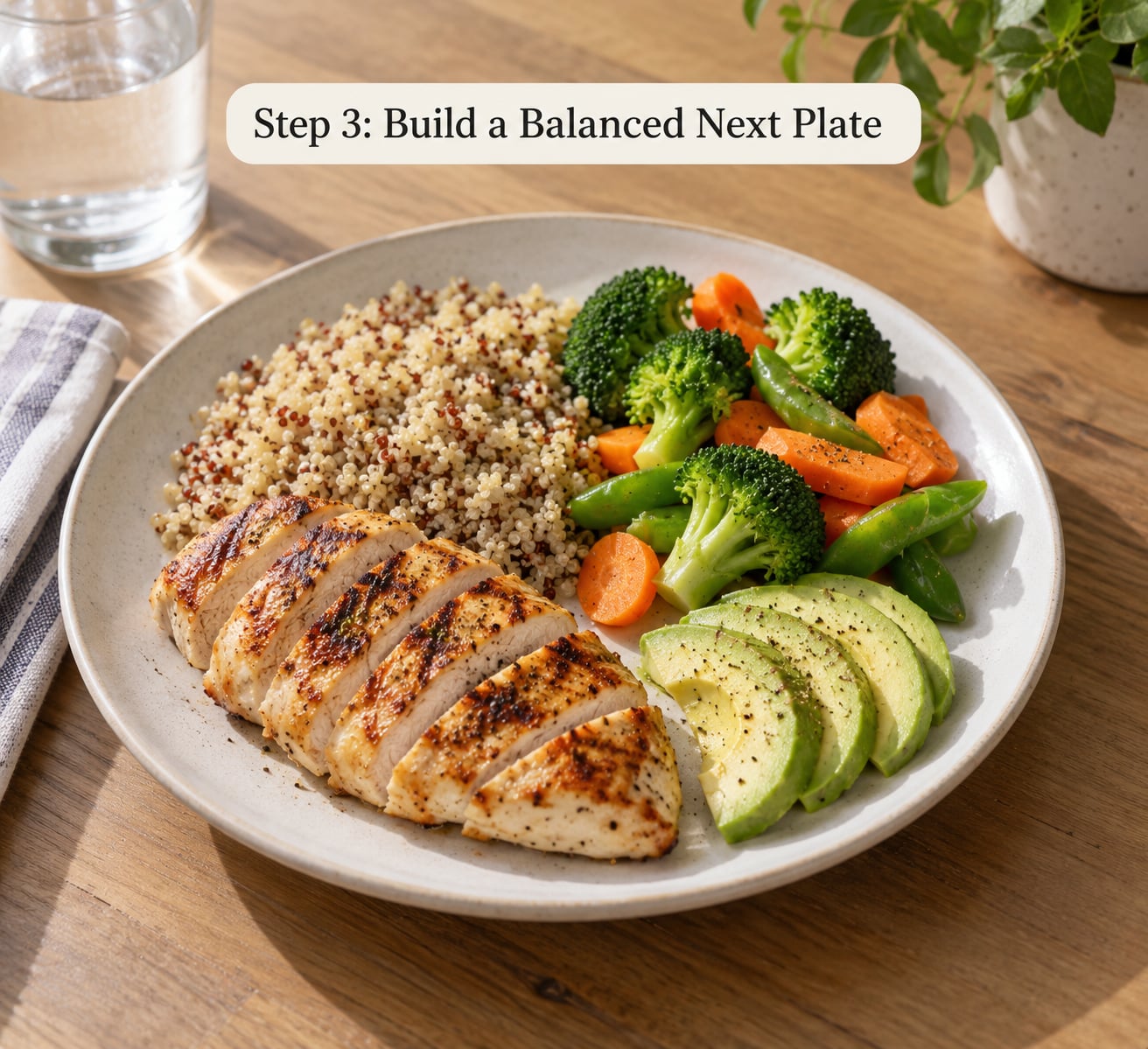
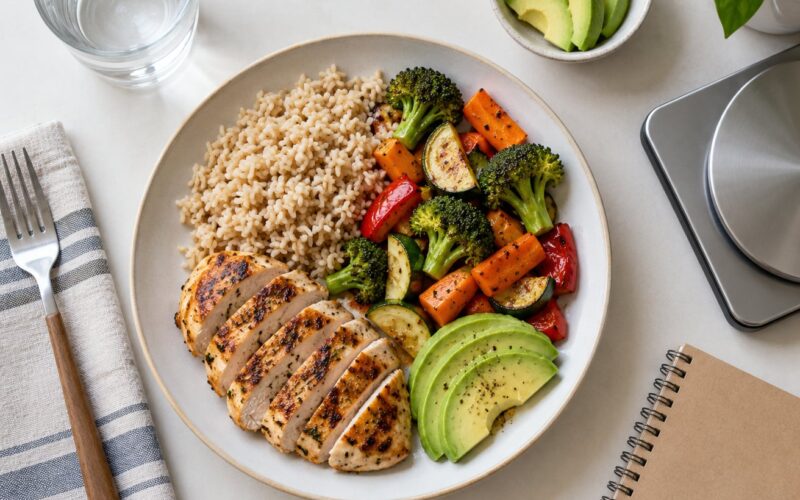
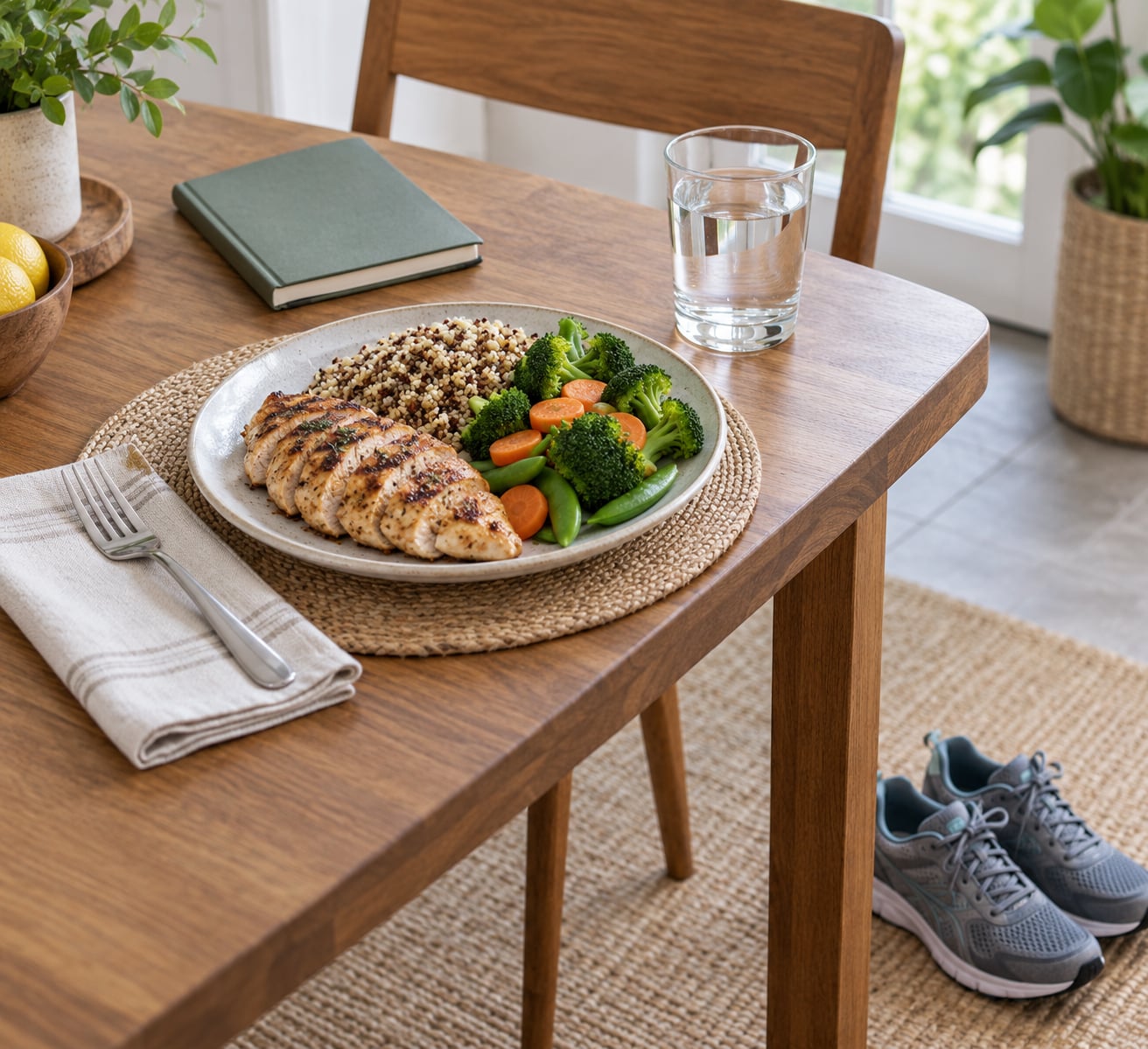
The next meal you eat should look like most of your other meals: protein, a fiber-rich carbohydrate, vegetables or fruit, and a moderate amount of fat. Nothing punitive, nothing extreme, and nothing about it being a penance meal.
Concretely that looks like grilled chicken with quinoa and steamed broccoli, or eggs and toast with a piece of fruit, or lentil soup with a slice of whole-grain bread. The protein and fiber keep you satisfied for a few hours instead of leaving you hunting by three o’clock.
Do not turn your plate into salad and shame. A genuinely satisfying plate is what stops the rebound, and satisfying is a feeling, not a spreadsheet.
Step 4: Eat Slowly and Watch Comfort, Not a Calculator
Satiety cues are slow. Roughly fifteen minutes passes before your body fully registers how much you ate, which is exactly why speed matters so much on a weekend.
A few small changes: put your phone face down, take smaller bites, pause between courses, and start with a portion you can judge rather than one you plan to finish. Not serving seconds is not a rule you have to follow forever, it is just something to try once.
Also cut out the constant calculating. People who track obsessively after a big day tend to keep tallying, hit a scary total and spiral. If tracking is what flips the switch from calm to anxious, stop for a few days.
Step 5: Hydrate and Support Digestion Gently
Drink water steadily through the day. Roughly two litres for most adults, more if you drank alcohol or you are thirsty. Salt and carbohydrate-heavy food pull fluid into the gut, which is a large part of why you feel puffy. Water and time fix that; nothing else does.
Movement helps digestion more than any remedy you can buy. A short walk after a meal, stretching in the morning, comfortable clothing around your stomach for the rest of the day. Most discomfort after a large meal clears within 24 to 72 hours.
Some things are not normal and deserve a phone call rather than a forum post. Get medical help for persistent or severe abdominal pain, vomiting, blood in your stool, difficulty keeping food down, or a heart that feels like it is racing after eating.
Step 6: Move for Comfort, Not Compensation
Walk. Fifteen to thirty minutes, outside if you can. Movement helps mood, digestion and sleep, and it puts you back in a routine that got knocked sideways by two days indoors and on the sofa.
Leave the punishing sessions alone. Long hard workouts after overeating add fatigue and hunger, and fatigue makes the next meal harder to control. If you genuinely love lifting, train as you normally would, but do not add sets because of what you ate.
Sleep matters more than most people expect this week. Two short nights leave you hungrier and less satisfied by food the next day, which is a large part of why Monday feels like a cliff.
Step 7: Plan the Next Weekend Instead of Fixing the Last One
Prevention is easier than recovery, and it works best when it is specific. Find the single trigger that showed up both days and write down one change that would break it.
A few that have good track records:
- Eat a real meal before a party. Arriving hungry to a buffet is the single most avoidable version of this problem. Protein and carbs first, then the social part is easier.
- Drop cheat days and strict food rules. Depriving yourself all week makes the free day feel like an emergency. When a rule feels broken, people tend to give up on the whole plan, which is the part nobody enjoys.
- Keep trigger foods out of the house. Not banned, just not sitting in the cupboard at eye level. Portion snack foods into a bowl rather than eating from the bag.
- Protect Friday and Saturday sleep. Seven to nine hours, same as a weekday.
- Look at alcohol honestly. It lowers inhibition, which is why the snack after three drinks is never just one snack. Two drinks with food and water between them is a different evening from six on an empty stomach.
- Build one non-food weekend habit. A market, a long walk, a project. The craving has to go somewhere, and boredom is a bigger driver than hunger most weekends.
If this happens most weekends and feels out of your control, that is worth raising with a registered dietitian or a doctor. Eating large amounts regularly, eating past discomfort, or feeling unable to stop are all reasons to get professional support rather than another plan.
Common Mistakes
Almost every painful Monday traces back to one of these.
- Shame and moralizing. Calling food good or bad turns eating into a moral test you cannot win. Food is fuel and pleasure, nothing more. The correction: describe what happened without judging yourself, in one neutral sentence.
- Fasting or detoxing the next day. Skipping meals makes you hungrier by dinner and sets up the rebound. The correction: eat your next meal as planned.
- Extreme food rules to compensate. “Nothing carbs until Thursday” is how a big weekend turns into a two-week spiral. The correction: keep your usual meals and portions.
- Overexercising to offset it. Punishing sessions add fatigue and hunger and rarely match the imagined number of calories. The correction: walk, and move because you like moving.
- Not drinking enough, or trying to sweat it out. Dehydration makes bloating and headaches worse. The correction: steady water through the day.
- Changing everything on Monday. A brand-new meal plan, a new gym, a stricter tracking app. New rules make you quit by Wednesday. The correction: change one small thing and keep the rest of your routine exactly as it was.
- Purging or taking laxatives. This is genuinely dangerous, not a shortcut. It can cause electrolyte problems, dehydration, heart rhythm issues and serious dehydration. If purging is part of how you cope, that needs medical help now.
Tips for a Calmer Recovery After a Weekend of Overeating
Four habits worth keeping, none of them a rule to follow perfectly.
- Use a ten-minute pause before food. Drink a glass of water, wait, and ask whether you are hungry, bored, or tired. More often than not it is thirst or a hard afternoon.
- Keep one easy protein within reach. Yogurt, eggs, edamame, string cheese, canned tuna. Having it removes the excuse of there being nothing to eat.
- Schedule normal movement. Put a walk in the calendar like a meeting you would not cancel.
- Judge the week, not the weekend. Look at seven days of habits rather than two days of food. That is where progress actually lives.
Frequently Asked Questions
How much weight do I gain after a weekend of overeating?
Roughly a third of a pound to one pound, and less than most people fear. A surplus of about 3,500 calories adds approximately one pound of fat, so a realistic weekend lands around half a pound. Most of the number on the scale on Monday is water, glycogen and food volume, not fat, and it usually settles within two to three days.
Should I fast or skip meals the day after overeating?
No. Eating your next meal normally is the single most useful thing you can do. Restricting after a big day leaves you hungrier at dinner and makes a second overeat more likely. Have breakfast within a couple of hours of waking, keep your usual snack, and eat dinner at your normal time. Regular meals end the episode; skipping meals extends it.
How soon should I return to my normal eating routine?
At your next meal. There is no recovery window to wait out and no benefit to a restart on Monday. Return to your usual meals, portions and timing as soon as you can, and return to your normal training schedule the same way. What you avoid is starting something brand new, because novelty plus guilt is how a two-day slip turns into a month off track.
Do I need to exercise more to offset weekend overeating?
No, and overdoing it usually backfires. Hard sessions after a big meal add fatigue and hunger, and fatigue makes the next meal harder to control. A 15 to 30 minute walk is plenty: it helps digestion, mood and sleep without leaving you wiped out. Train as you normally would if you enjoy it, but do not add sets to punish yourself.
Why do I feel bloated after eating a lot, and when should I seek help?
Carbohydrate-heavy food and salt draw water into the digestive tract, and a large meal slows gut movement, so swelling and discomfort for a day or two are common. Walk, drink water, wear comfortable clothing and wait it out. Seek medical help for severe or persistent abdominal pain, vomiting, blood in your stool, or trouble keeping food down.
How can I stop overeating during weekend social events?
Eat a real meal with protein and carbohydrates before you leave, so you are not starving when the food arrives. Put serving dishes down between trips, choose a seat away from the buffet, and decide beforehand what you will drink and how much. Keep one drink rule for yourself and alternate with water. Reducing alcohol helps more than most people expect, because it lowers inhibition.
Conclusion
One weekend is a data point, not a verdict. Six good days in a week keep you exactly where you need to be, and the damage from a loose Saturday is usually a pound of water and a bruised feeling, not a ruined month.
So start where the recovery actually starts: at your next meal. Build a normal plate, drink a glass of water, take a walk if you feel like it, and go to bed at a reasonable hour. Then look at the trigger list and pick one change for next weekend. That is how to handle a weekend of overeating without turning it into something you keep repeating.
This article is general information, not medical advice. If overeating is happening most weekends, if you feel unable to stop, or if you are using laxatives, vomiting or punishing exercise to offset food, please talk to a doctor or a registered dietitian.