Postpartum nutrition while breastfeeding comes down to four things: enough energy, protein at every eating occasion, iron-rich foods, and fibre plus fluids. If you are feeding your baby directly, most guidance puts your needs roughly 450 to 500 extra calories a day above your pre-pregnancy baseline. Your individual needs shift with appetite, activity, health and how much you are actually nursing.
I wrote this because the advice you get in week one is usually either a rigid meal plan nobody follows, or vague advice to “just eat well” when you are running on four-hour sleep. Neither is useful. This is the practical version: what to eat, roughly how much, what to leave alone, and when a phone call to your doctor is the right move.
Table of Contents
- Postpartum Nutrition: What to Eat While Breastfeeding
- What makes postpartum nutrition different after a caesarean?
- What Does Postpartum Nutrition Need to Support?
- Postpartum Nutrition While Breastfeeding: What to Eat at Each Meal
- Breakfast ideas that do not need a stove
- Lunch and dinner that survive low energy
- Snacks that do not require two hands
- How Many Calories and How Much Food Do You Need After Birth?
- Is it safe to lose weight while breastfeeding?
- Which Foods Are Especially Useful While Breastfeeding?
- Easy Postpartum Meals and Snacks for Busy Days
- How Can You Stay Hydrated Without Interrupting Feeding?
- What Foods Should You Limit or Avoid?
- When Should You Ask a Doctor or Registered Dietitian?
- Frequently Asked Questions
- What should a breastfeeding mom eat on a postpartum diet?
- How many extra calories do I need while breastfeeding?
- What foods can I eat to increase my breast milk production?
- What foods should I avoid while breastfeeding?
- What is the 3-3-3 rule in breastfeeding?
- Can I lose weight while breastfeeding without affecting milk supply?
- A Simple First Week of Postpartum Eating
Postpartum Nutrition: What to Eat While Breastfeeding
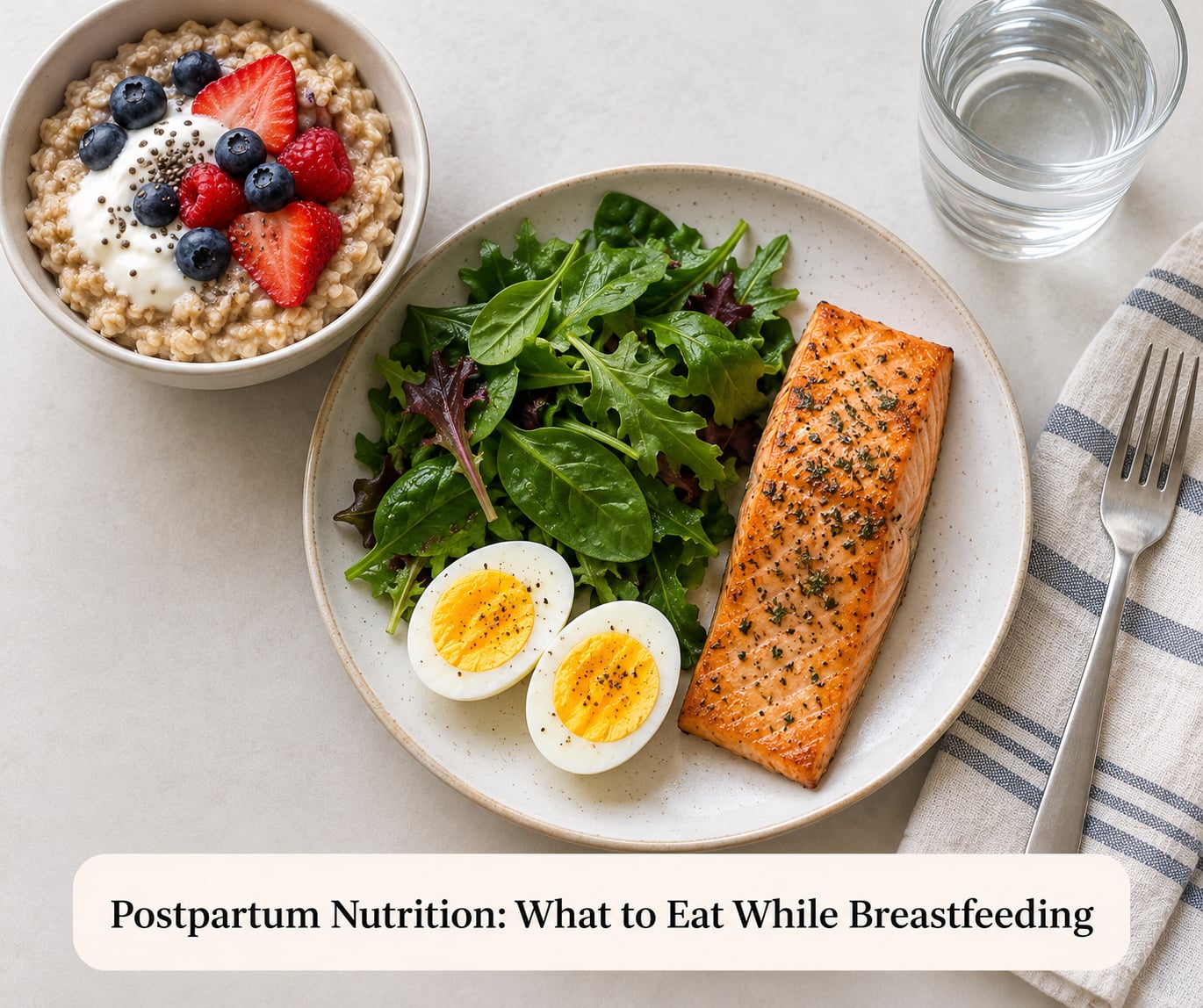
Postpartum nutrition is simply the practice of eating enough of the right things in the weeks and months after birth, when your body is replacing blood loss, healing tissue and rebuilding stores it drew down over pregnancy. Breastfeeding adds one more job on top of that. Milk production runs on your energy and nutrient reserves, which is why under-eating tends to show up as fatigue, low mood and a supply that drops.
Most of the practical value is in the protein-and-iron pairing. Tissue repair needs protein, and blood loss at birth needs iron, and the two together do more for how you feel than any single superfood.
What makes postpartum nutrition different after a caesarean?
A caesarean is abdominal surgery on top of normal recovery, so the first few days tend to favour protein, fluids and fibre over anything heavy or rich. Gentle movement, warm drinks and small frequent meals often sit better than large plates, and anything that helps with constipation is worth having on hand from day one. Vaginal birth recovery is usually faster unless there was significant tearing or heavy blood loss.
Nobody is born knowing what their body will need this week, and guessing wrong is not a character flaw. Hunger is the fastest signal most new parents have, and ignoring it to fit a meal plan is how people end up tired and hungry at 4pm.
What Does Postpartum Nutrition Need to Support?
Three jobs, roughly: replace what you lost, repair what was damaged, and keep producing milk. Each maps to specific nutrients, and most of it comes from ordinary food rather than anything special.
- Energy. Extra calories from a combination of carbs, fat and protein, so no single meal has to do all the work.
- Protein. Roughly 71 grams a day for many breastfeeding women, spread across the day rather than loaded at dinner.
- Iron. Replaces blood lost at birth; red meat, shellfish, fortified cereals, beans and greens, paired with vitamin C for absorption.
- Calcium and vitamin D. Calcium draws on your bone during lactation, and vitamin D affects absorption. Dairy, fortified plant milks, tinned fish with bones and eggs all count.
- Omega-3 fats (DHA). Low-mercury oily fish such as salmon, sardines, trout, herring and mackerel.
- Iodine, zinc, folate, B12 and choline. Iodised salt, eggs, meat, legumes, leafy greens and nuts cover most of this.
- Fibre and fluids. Constipation is extremely common in the early weeks and usually responds to food, not laxatives.
| Nutrient | Why it matters after birth | Food sources | Rough daily target |
|---|---|---|---|
| Protein | Tissue repair, wound healing, steady energy | Eggs, chicken, fish, Greek yogurt, cottage cheese, lentils, tofu | About 71 g |
| Iron | Replaces blood lost at birth; low stores cause exhaustion and breathlessness | Red meat, lamb, shellfish, fortified cereals, beans, lentils, spinach | About 29 mg |
| Calcium | Bone health during milk production | Milk, yogurt, cheese, fortified plant milks, tinned sardines, almonds | About 1,000 mg |
| Vitamin D | Helps calcium absorb; low levels are common | Oily fish, eggs, fortified milk, supplements if advised | About 10 micrograms from food |
| Omega-3 (DHA) | Fatty acids in breast milk | Salmon, sardines, trout, herring, mackerel; walnuts and flaxseed partly | 1 to 2 servings oily fish weekly |
| Iodine | Thyroid and brain development | Iodised salt, eggs, seafood, dairy | About 200 micrograms |
| Fibre | Constipation prevention, steadier blood sugar | Oats, beans, vegetables, whole grains, pears, prunes | About 25 to 30 g |
| Fluid | Milk is mostly water; dehydration worsens fatigue | Water, milk, soup, fruit, herbal tea | Drink to thirst, roughly 2.4 to 3 L across all sources |
These are population figures from bodies like the NIH Office of Dietary Supplements and national health services, not a prescription for you. Individual advice is the job of a doctor or registered dietitian, especially if you had heavy blood loss, are restricting eating, or have a medical condition that affects absorption.
Postpartum Nutrition While Breastfeeding: What to Eat at Each Meal
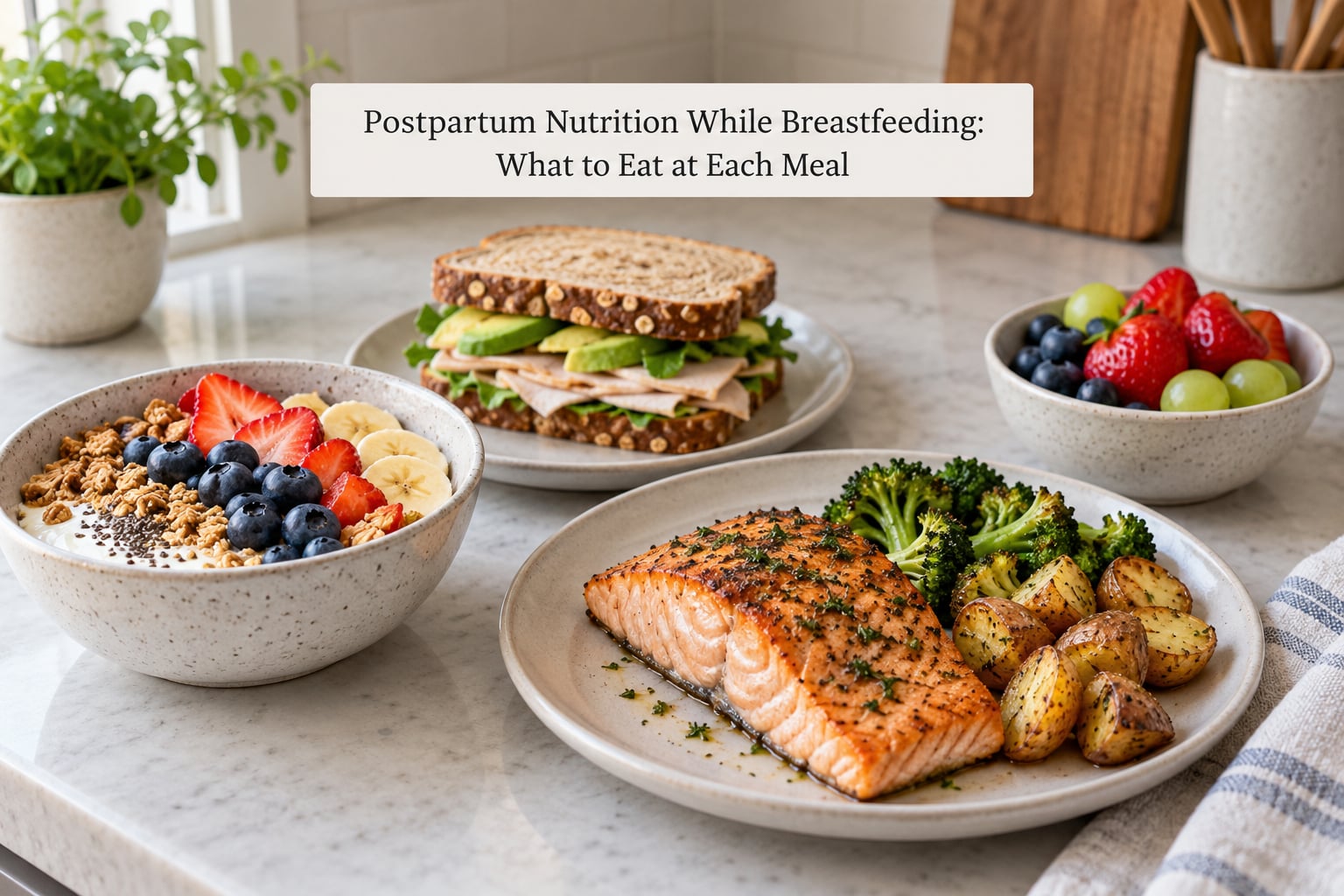
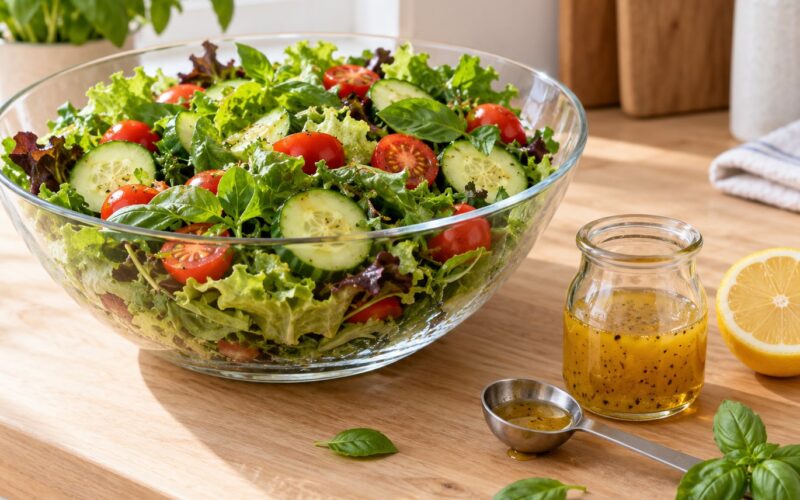
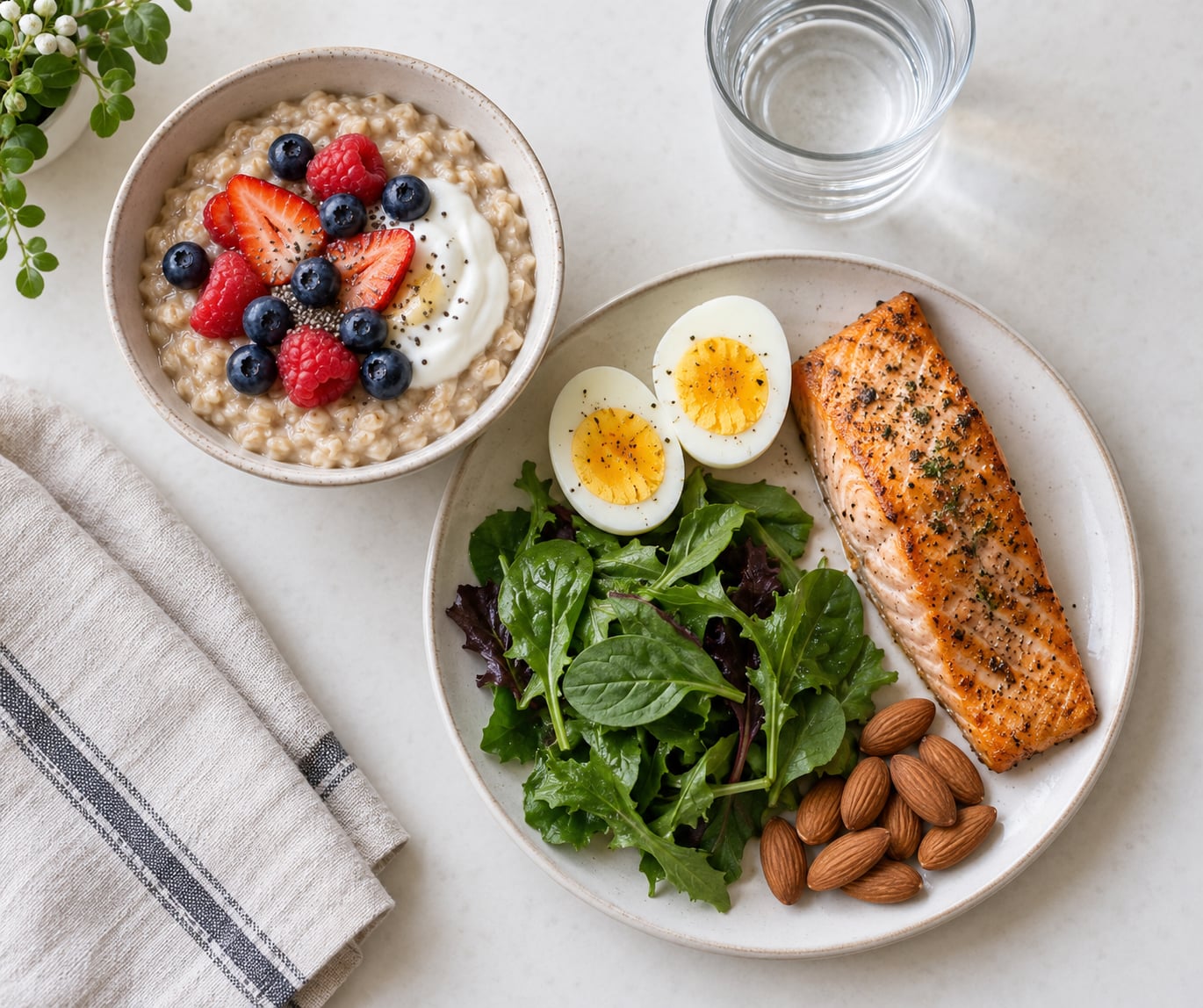
Think of each eating occasion as needing three parts rather than following a menu. A protein, a carbohydrate, and something that is fruit or vegetable. That formula works for breakfast, lunch and dinner, and it is forgiving enough to survive a day when you eat it at 9pm standing up.
Breakfast ideas that do not need a stove
Overnight oats with yogurt and berries, eggs on toast, Greek yogurt with banana and peanut butter, or a cheese and tomato sandwich. If mornings are the worst time, put something at the bedside the night before.
Lunch and dinner that survive low energy
Batch on the days you can: a tray of roasted vegetables and chicken, a big pot of lentil soup, a chilli with more beans than meat, or salmon with potatoes and greens. Leftovers count as lunch, which is the point. Most of the difficulty in the early weeks is logistics rather than knowledge, and nobody cooks in week one.
Snacks that do not require two hands
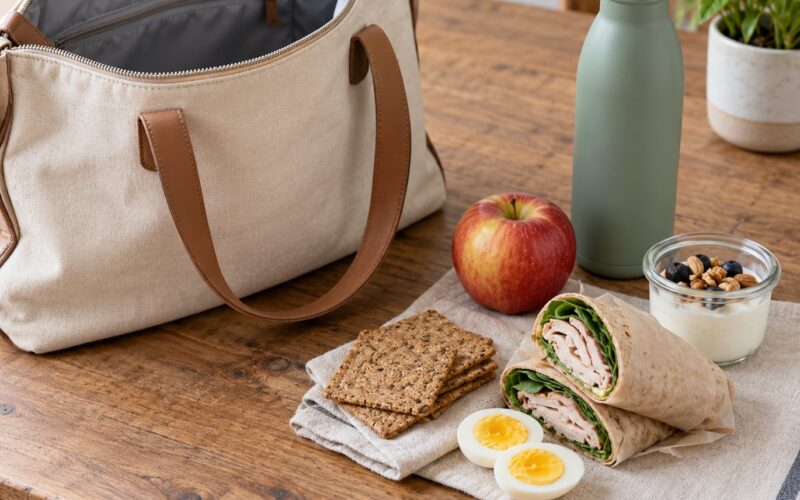
Keep a box next to wherever you feed: nut butter and apple, cheese and crackers, trail mix, boiled eggs, dried fruit, yogurt pots you can eat one-handed, sandwiches cut in triangles. Snacking without a plan usually means crackers over the sink at 2am, which is fine occasionally and not fine daily.
How Many Calories and How Much Food Do You Need After Birth?
There is no single postpartum calorie target that applies to everyone, and anyone selling you one is selling something. The widely cited figure is 450 to 500 extra calories a day for exclusive breastfeeding, dropping when you are feeding from a bottle or combining both.
Users on parenting forums describe the pattern clearly: supply dropped when intake dropped, often around 2,200 calories a day, and recovered when eating went back up. That is a self-reported pattern rather than clinical data, but it matches the physiology. What works better than counting is a portion method:
- At meals: roughly a third protein, a third carbohydrate, a third fruit or vegetables, plus fat you actually enjoy.
- Across the day: three meals and two to three snacks, so no single meal has to be huge.
- By week: add a second or third snack if you are feeding through the night. Night feeding burns energy and nobody plans around it.
Eating more does not automatically increase milk supply. Supply follows demand, effective feeding and time. What eating enough does is protect your energy, mood and recovery, which is what most people actually wanted from the whole thing.
Is it safe to lose weight while breastfeeding?
It can be, but not by restriction in the first weeks. Most guidance suggests no more than about 1.5 pounds a week, and many breastfeeding mothers who diet aggressively end up with a supply dip, exhaustion and a harder recovery. Forum users often describe weight stalling until around 8 to 9 months postpartum, which is far more common than the postpartum pressure suggests.
If weight loss is on your mind, the safer order is: eat enough, build a habit of protein at every meal, move if and when your clinician clears you, and let the scale wait. Speak to your doctor or a registered dietitian before a real deficit, particularly while exclusively breastfeeding.
Which Foods Are Especially Useful While Breastfeeding?
Start with protein and iron, then build around them. Specific numbers for iron differ by birth and body size, so treat these as practical picks rather than a prescription.
- Protein: eggs, Greek yogurt, cottage cheese, tinned tuna, chicken, salmon, lentils, tofu, nut butter. Aim for a portion at every eating occasion.
- Iron: red meat, lamb, shellfish, fortified cereals, beans, lentils and leafy greens. Pair plant sources with vitamin C at the same meal, so peppers, citrus or strawberries help absorption.
- Calcium: milk, yogurt, hard cheese, fortified soya milk, tinned sardines with bones, almonds, tofu set with calcium.
- Omega-3: salmon, sardines, trout, herring, mackerel, anchovies. Two servings a week is the usual suggestion. Plant sources like flaxseed and walnuts help but convert poorly.
- Fibre: oats, beans, lentils, vegetables, whole grains, pears, prunes, figs.
- Quick energy: nut butter, olive oil, avocado, full-fat yogurt, cheese, seeds.
- Gut comfort: live yogurt, kefir, sauerkraut, fermented foods, plus a handful of fibre-rich foods daily.
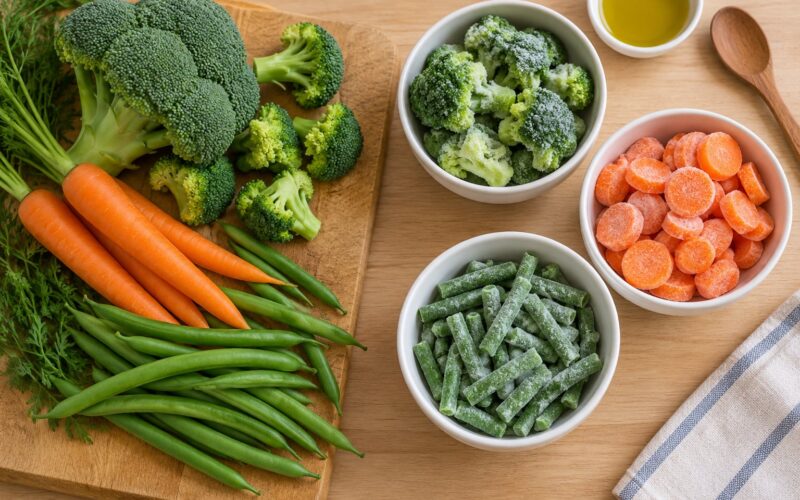
On a tight budget, dried beans, lentils, eggs, frozen fish fillets, tinned sardines, frozen vegetables, oats and fortified cereals cover almost everything on that list cheaply. Plant-based eating works too, but iron and B12 need more planning, and protein at breakfast takes real effort rather than a bowl of cereal.
Supplements fill gaps food cannot close on its own. Most guidance assumes a postnatal multivitamin containing vitamin D, iodine and sometimes DHA, with iron only when a blood test says you need it. Taking iron without evidence of low stores is not a good idea.
Easy Postpartum Meals and Snacks for Busy Days
Cooking during the newborn weeks is usually impossible, and pretending otherwise sets people up to fail. Build meals you assemble rather than cook.
- Overnight oats with yogurt, nut butter and fruit, made the night before.
- Soup: batch a pot of lentil, chicken or vegetable soup and freeze in portions.
- Eggs, in any form, eaten cold.
- Leftovers from someone else’s dinner, which is why visitors bring food rather than flowers.
- Sandwiches with protein and something green, cut into triangles.
- Yogurt, fruit, nuts, cheese, crackers, nut butter, boiled eggs, kept where you feed.
- Freezer portions: dahl, chilli, bolognese, soup, fish pie, pulled pork, vegetable curry. Cooking four portions on a good day and freezing three is the highest-value kitchen task there is.
How Can You Stay Hydrated Without Interrupting Feeding?
Keep water where you feed. A filled bottle or glass that sits within arm’s reach gets drunk without thinking; a kitchen tap does not, because getting up while feeding a newborn is more effort than people admit.
Drink to thirst rather than forcing a fixed number, and expect more than usual when nursing, particularly at night. Roughly 2.4 to 3 litres a day from all sources, including milk, soup, fruit and tea, is a reasonable guide for many people. Your own urine colour is a decent signal: pale yellow usually means you are keeping up, dark and concentrated usually means you are not.
Some women attach a bottle to a pumping bag or keep a cup on a side table, which sounds over-engineered until the first 4am feed. Electrolyte drinks are unnecessary unless a clinician suggests them. If a clinician has given you a fluid limit because of heart or kidney problems, that instruction overrides anything here.
What Foods Should You Limit or Avoid?
Most lists of forbidden postpartum foods are folklore. A handful of things genuinely matter for safety, and everything else is a matter of preference.
- Alcohol. The safest position while breastfeeding is not drinking. If you do drink, plan feeds around it with advice from your midwife or doctor.
- Caffeine. Guidance usually caps intake at about 200 mg a day, roughly two cups of coffee. Cups vary wildly in strength, and high intakes have been linked to babies being unsettled.
- High-mercury fish. Limit swordfish, shark, marlin and tilefish. Tuna is a moderate one: keep large amounts occasional and vary your fish.
- Unpasteurised food. Unpasteurised milk, soft unpasteurised cheeses and unpasteurised sprouts carry a real listeria risk, which matters more while pregnant and postpartum.
- Undercooked food. Cook poultry to 165°F, ground meat to 160°F, and whole cuts and fish to 145°F.
- Herbal blends of unknown composition. Some herbs affect milk supply in either direction, and supplement quality varies.
Common allergens such as dairy, wheat and eggs do not usually need removing from your diet. If your baby reacts, a common response is to keep eating normally and discuss a targeted trial, or to swap to sheep or goat milk products. Anything beyond that belongs with your baby’s clinician, not a comment thread. On milk supply, frequent feeding, a good latch, night feeds and adequate calories are what the evidence supports. Fenugreek, herbal teas and commercial lactation supplements have weak or mixed evidence.
When Should You Ask a Doctor or Registered Dietitian?
General guidance runs out when symptoms are persistent rather than ordinary. Fatigue, light-headedness and difficulty concentrating all overlap with postnatal anaemia, which cannot be told apart by feel alone and needs a blood test. If you noticed light-headedness standing up, a racing heart on stairs, or breathlessness carrying the shopping, that is worth mentioning rather than blaming on broken sleep.
Reach out if you feel faint or unwell, if intake is low for more than a few days, if weight drops quickly, if you cannot keep fluids down, or if you cannot drink enough. The same applies to bleeding that seems heavy, a wound that is red, hot or leaking, or a fever, since food choices are not the issue there.
For milk supply, weight loss plans, restrictive eating, vegetarian or vegan nutrition, vegetarian eating that is narrow, or a baby with poor weight gain or feeding problems, book a conversation with a doctor, a registered dietitian or a lactation consultant rather than relying on general guidance.
Frequently Asked Questions
What should a breastfeeding mom eat on a postpartum diet?
Eat enough, and eat protein at every meal. Most people aim for a plate with a third protein, a third carbohydrate and a third fruit or vegetables, plus fat they enjoy. Alongside that, include iron-rich foods, dairy or fortified plant milks for calcium, oily fish a couple of times a week, and fibre with plenty of fluids to prevent constipation. A postnatal multivitamin usually covers vitamin D and iodine.
How many extra calories do I need while breastfeeding?
The commonly cited figure is 450 to 500 extra calories a day above your pre-pregnancy baseline for exclusive breastfeeding, and less if you are formula feeding or combining. There is no single number that fits everyone, so use hunger as the guide alongside regular meals and snacks. If your supply drops when you cut back, that is a signal to eat more, not to tighten the diet.
What foods can I eat to increase my breast milk production?
No specific food reliably increases milk supply. Supply follows demand, a good latch and frequent feeding, including at night. Eating enough to cover the extra 450 to 500 calories a day protects your energy and recovery, and staying hydrated helps you feel better, but neither replaces effective feeding. Fenugreek, herbal teas and commercial lactation supplements have weak or mixed evidence and are not worth relying on.
What foods should I avoid while breastfeeding?
Keep alcohol to a minimum or avoid it, stay under roughly 200 mg of caffeine a day, and limit high-mercury fish such as swordfish, shark and marlin. Skip unpasteurised milk, soft unpasteurised cheeses and unpasteurised sprouts, and avoid raw or undercooked meat, eggs and fish. Common allergens such as dairy, wheat and eggs do not need removing unless your baby reacts and your clinician advises a trial.
What is the 3-3-3 rule in breastfeeding?
It is a widely shared heuristic, not official guidance. The usual version means roughly three feeds, three hours apart, three times a day, aimed at establishing or maintaining supply in the early weeks. Some versions use different numbers, which is part of why it confuses people. Your midwife or lactation consultant can give you a feeding plan based on your baby rather than a rule of thumb.
Can I lose weight while breastfeeding without affecting milk supply?
Yes, but gently. Guidance suggests no more than about 1.5 pounds a week, and aggressive restriction in the early weeks commonly brings exhaustion, low mood and a supply dip. Many mothers find their weight does not move until roughly 8 to 9 months postpartum. Talk to your doctor or a registered dietitian before starting a real deficit, especially while feeding exclusively.
A Simple First Week of Postpartum Eating
Keep easy protein in the house, eat every few hours according to hunger, keep fluids within reach, and let someone else do the cooking if they offer. Postpartum nutrition in the first week is about eating enough of ordinary food, not about following a postpartum diet plan. If exhaustion goes past ordinary tiredness, or anything about feeding worries you, ask your doctor or a registered dietitian rather than adjusting your plate.