If you want to know how to eat healthy on a road trip, the whole thing comes down to three habits: pack food that survives the drive, know your swaps before hunger hits, and keep water in front of you. Ten hours in a car can add up fast when every meal is a gas station sandwich and every drink is a 20-ounce soda.
The good news is that a decent setup takes about twenty minutes in the kitchen. I do this for every long drive, and the difference on hour six is night and day — you stop thinking about food and get where you’re going.
Table of Contents
- What You Need
- How to Eat Healthy on a Road Trip Step by Step
- Plan your meals and snacks before leaving
- Build a balanced travel meal
- Pack foods that travel well
- Choose a better stop at a service station
- How to Eat Healthy on a Road Trip at a restaurant
- Keep drinks and portions manageable
- Common Mistakes
- Arriving at the stop starving
- Living on processed snacks
- Skipping water
- Choosing only quick food
- Over-ordering at a sit-down restaurant
- Restricting all day, then rebounding
- Frequently Asked Questions
- What are the best healthy snacks for a long car trip?
- Can I eat healthy at a gas station or convenience store?
- How should I keep food safe in a cooler while traveling?
- Should I skip meals on a road trip to lose weight?
- What can I order at a roadside restaurant that is filling and balanced?
- Conclusion
What You Need
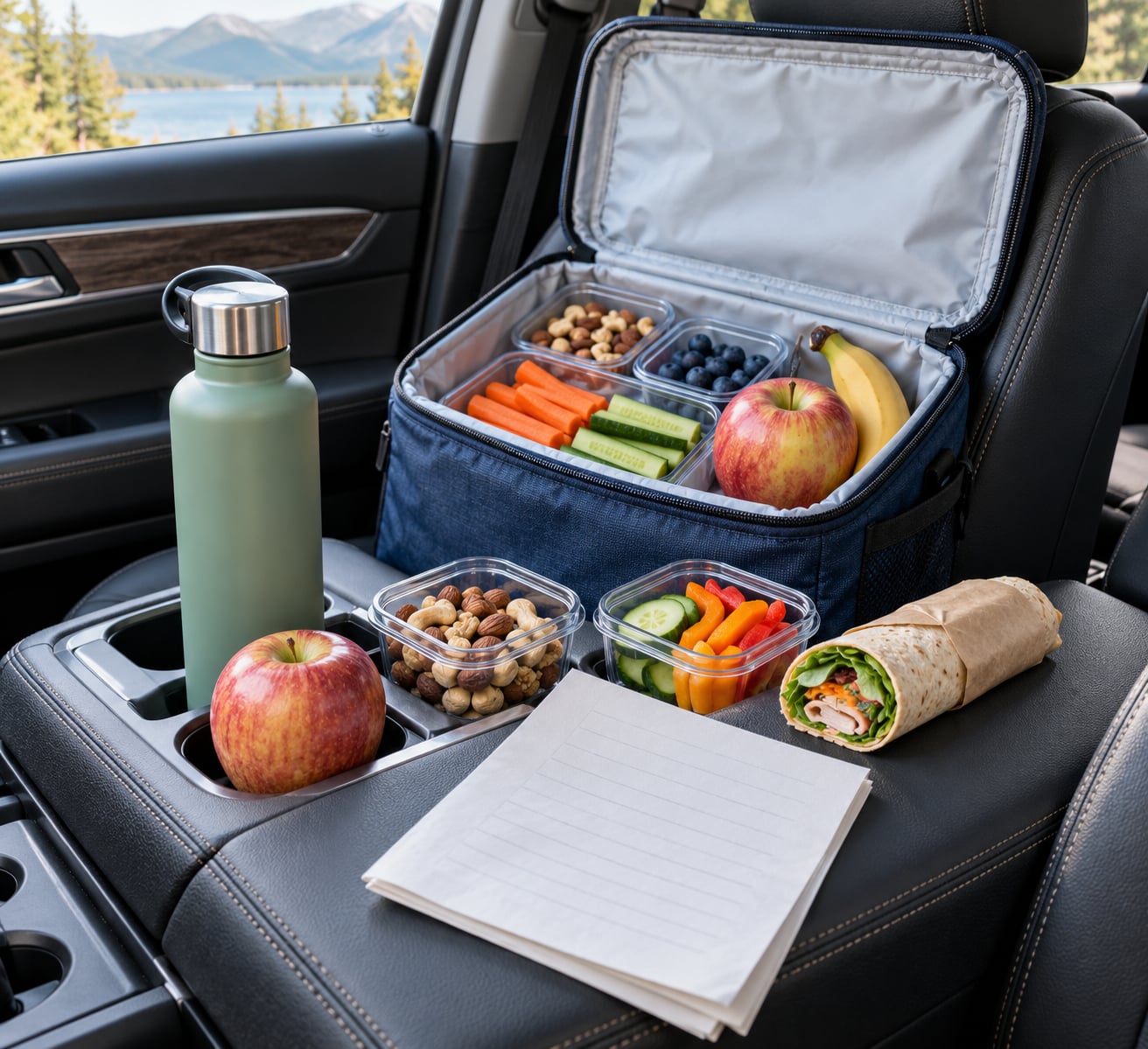
You do not need a camper kitchen or a week of meal prep. Five things cover almost every trip.
- A meal rhythm. Decide in advance when you eat, roughly. “Breakfast at 7, snack at 10, lunch at 1” is enough detail to stop the 3 p.m. vending machine spiral.
- A refillable water bottle. One bottle you fill at every fuel stop solves the thirst problem and most of the “I’m hungry but I’m not” problem.
- An insulated cooler or a soft insulated food bag. A small hard cooler holds temperature best. A soft bag works fine for a single day if you add a couple of frozen gel packs.
- Portable snacks in pre-portioned bags. Assembly happens once, at home, so portion control does not depend on willpower at a rest stop.
- A simple restaurant strategy. One sentence you can repeat when you order: grilled protein, vegetables on the side, dressing and sauce on the side.
A paper shopping list helps more than it sounds. Write it the night before, buy in the morning, pack the cooler by noon.
How to Eat Healthy on a Road Trip Step by Step
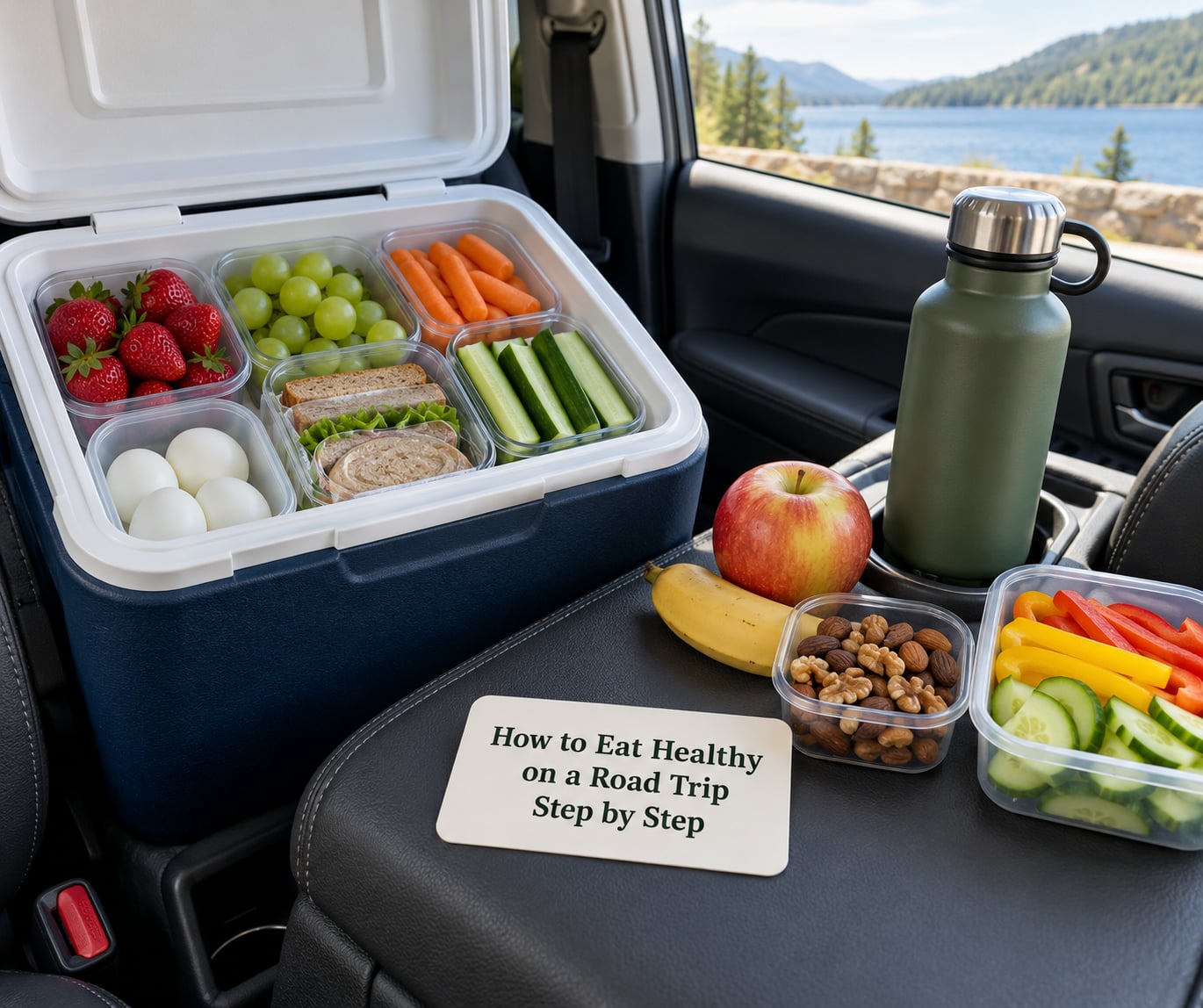
Plan your meals and snacks before leaving
For each block of driving, pick one normal meal and two portable snacks. That is the whole plan, and it should take five minutes on a notepad.
Block them by time rather than by clock time, so delays do not break it. Two hours of driving gets a snack, four hours gets a proper stop, six hours gets a real meal. If a delay pushes everything back an hour, the pattern still works.
Checkpoint: if you can say what you are eating at the next stop without thinking about it, the plan is finished. If you cannot, write it down.
Build a balanced travel meal
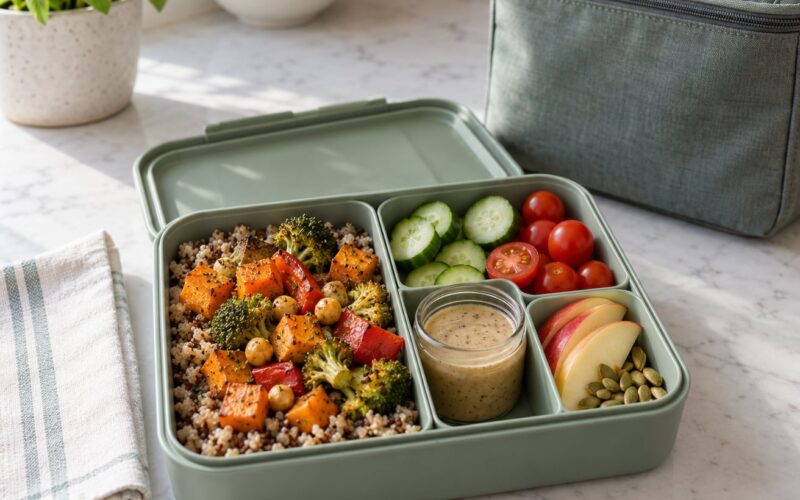
A travel meal needs four parts, and you can build one in under five minutes: a protein, a fiber-rich carbohydrate, vegetables or fruit, and a small amount of fat.
- Protein: sliced deli turkey, a hard-boiled egg, leftover shredded chicken, tuna straight from the packet, or a scoop of chickpea salad.
- Carbohydrate: whole-grain crackers, a pita, a tortilla, a bagel, or a sturdy slice of bread.
- Produce: carrot sticks, cucumber, bell pepper, apple slices, or a handful of grapes.
- Fat: a spoon of hummus, a small handful of nuts, or half an avocado on a wrap.
Wrap it, and you have a meal that survives a back seat better than a stacked sandwich does. A tortilla or wrap is the most forgiving container you own on a trip.
Pack foods that travel well
Sturdy beats fancy. Nothing that crumbles, squashes, leaks, or leaves your hands sticky belongs in the car. Sort what you pack by where it has to live.
Cooler items: hard-boiled eggs, string cheese, yogurt in an ice pack, deli rolls, grape clusters, carrot and cucumber sticks, and frozen grapes that thaw into a soft snack. Keep raw or cooked meat at or below 40°F (4°C).
Room-temperature bag: nut butter packets, whole nuts, seeds, roasted chickpeas, protein bars, dried fruit, apple chips, whole-grain crackers, tuna packets, and beef jerky. These need no ice and survive a long day.
Two-hour rule: perishable food left above 40°F (4°C) for more than two hours — one hour if it is hotter than 90°F (32°C) outside — is not safe to eat. A full cooler keeps everything under 40°F for days, and an open cooler in warm weather does not.
Packing order matters. Put the leakiest, messiest items at the bottom, pack the cooler full with no empty air, and keep the food you want to grab first on top. A cooler packed to the brim stays cold far longer than a half-full one.
Choose a better stop at a service station
Service stations sell real food. You just have to build the meal instead of grabbing the first thing at eye level.
Skip the chip and candy aisles. Instead, combine a protein, something from the produce cooler, and a drink you did not buy by the liter.
A hard-boiled egg plus fruit plus water is a real meal. A tub of yogurt with a spoon, or a cheese-and-cracker pack with apple slices, takes under a minute and keeps you full for another two hours. Most stations also stock nuts, beef jerky, and protein bars near the register.
The one rule: eat it at a table outside, and walk for five minutes before you get back in. That short break does more for the next two hours of driving than the food choice itself.
How to Eat Healthy on a Road Trip at a restaurant
Restaurants are where road trips quietly add 800 calories a meal. The fix is not eating less there — it is ordering differently.
- Sandwich or wrap: grilled or baked, vegetables loaded, dressing on the side, half eaten and the rest boxed.
- Salad bar: build it yourself with a protein, two vegetables, and a light dressing on the side so you control the amount.
- Grilled entrée: take the protein, add a vegetable, and swap the fried side for a salad, a baked potato, or a second vegetable.
- Breakfast stop: an egg with fruit and a wholegrain toast beats a breakfast sandwich with syrup and a hash brown.
- Roadside chain: a plain burger without cheese or sauce, a side salad instead of fries, and water or unsweetened tea to drink.
Ask for sauce on the side every time. It is the single easiest change, and it works whether you are ordering a sandwich, a bowl, or a plate.
Keep drinks and portions manageable
Water first, always. Thirst often disguises itself as hunger, especially after hours in a warm car with no movement.
Fill the bottle at every fuel stop, even when you are not thirsty. For the sugary drink habit, keep one alternative in the door pocket — sparkling water, unsweetened iced tea, or a bottle you like enough to drink instead of a fountain soda.
Portions are easier to control with your own food than with a restaurant. Two snacks planned in advance beat one large unplanned meal at a rest stop, because the planned version has protein in it.
Watch for the mid-afternoon crash. A meal heavy in white bread and sweet drinks raises blood sugar and drops it an hour later, and that is when drivers get drowsy. Pair a carbohydrate with protein or fat, and the dip is much gentler.
Nobody needs to be perfect for ten hours. Pick your one indulgence before you leave, have it deliberately, and keep every other meal simple.
Common Mistakes
Arriving at the stop starving
Skipping snacks so you “save room for lunch” backfires. You end up ordering the largest, fastest thing on the menu.
Fix: eat the planned snack on schedule, even if it is small. Hunger you created is hunger you then have to negotiate with.
Living on processed snacks
Crackers, chips, and candy packs are engineered to be hard to stop eating. You can eat a whole sleeve without noticing.
Fix: put the single-serving items in your bag and leave the multipacks at home. Nuts, fruit, and boiled eggs stop at one portion on their own.
Skipping water
Coffee and soda feel like hydration for about an hour, then leave you more tired and more hungry than when you started.
Fix: water at every fuel stop, and keep the bottle where you can see it. If you are reaching for a snack, drink a full glass first and wait ten minutes.
Choosing only quick food
Fuel and a vending slot are the only two choices at some exits, and a traveler who has packed nothing is stuck with both.
Fix: treat the cooler as a meal, not a garnish. If you packed a real lunch, the stop is fuel and a short walk, not another meal.
Over-ordering at a sit-down restaurant
Road hunger is real, and restaurant portions are usually sized for someone who is not driving.
Fix: order what you want, then box half of it before you start eating. Leftovers travel better than a food coma.
Restricting all day, then rebounding
White-knuckle dieting on a trip produces the guilt-and-binge loop that leaves you feeling worse on day two than the chips ever would have.
Fix: set a floor, not a ceiling. Two balanced meals and one planned treat keeps the trip enjoyable and the pattern steady.
Frequently Asked Questions
What are the best healthy snacks for a long car trip?
Nuts, nut butter packets, hard-boiled eggs, string cheese, apple slices, baby carrots, roasted chickpeas, protein bars, dried fruit, and whole-grain crackers all survive a long drive. Pack two per driving block so hunger never makes the decision for you. Choose foods you can eat one-handed, that do not crumble, and that come in a portion you will not eat twice.
Can I eat healthy at a gas station or convenience store?
Yes, if you build the meal instead of grabbing the first item at eye level. Look for a protein such as a hard-boiled egg, yogurt, string cheese, or beef jerky, add fruit or a vegetable from the produce cooler, and add water or an unsweetened drink. You can stay out of the chip and candy aisles entirely, and that one choice does most of the work.
How should I keep food safe in a cooler while traveling?
Keep perishable food at or below 40°F (4°C). Pack the cooler full so there is little empty air, put leakiest items at the bottom, and keep grab-and-eat food on top. Food left above 40°F for more than two hours is unsafe, or one hour when it is above 90°F (32°C). Refill ice or frozen gel packs at every fuel stop and use a separate cooler for drinks so you open the food less.
Should I skip meals on a road trip to lose weight?
Skipping meals rarely works on the road. It leaves you hungry at the worst possible moment, usually the last stop before you reach a town with real food. A better approach is to plan one balanced meal and two snacks per driving block and to drink water first. For weight goals, talk with a doctor or registered dietitian, who can adjust a plan to your health needs and driving schedule.
What can I order at a roadside restaurant that is filling and balanced?
Build it around a protein and a vegetable, then decide about the rest. A grilled entrée with a salad, a sandwich with dressing on the side, or a breakfast egg with fruit and toast all work. Ask for sauce on the side, swap a fried side for a second vegetable or a baked potato, and drink water or unsweetened tea. Box half the meal before you start, not after.
Conclusion
Start with one action tonight: pack water, one balanced meal, and two portable snacks. Repeat that same pattern at every stop, drink a glass of water before you reach for food, and let one planned treat be the indulgence you actually wanted.
That is enough to make a long drive feel ordinary instead of endless, and it holds whether you are driving two hours or twelve. If a medical condition or a strict diet shapes what you can eat, a registered dietitian can adapt the plan before you leave.