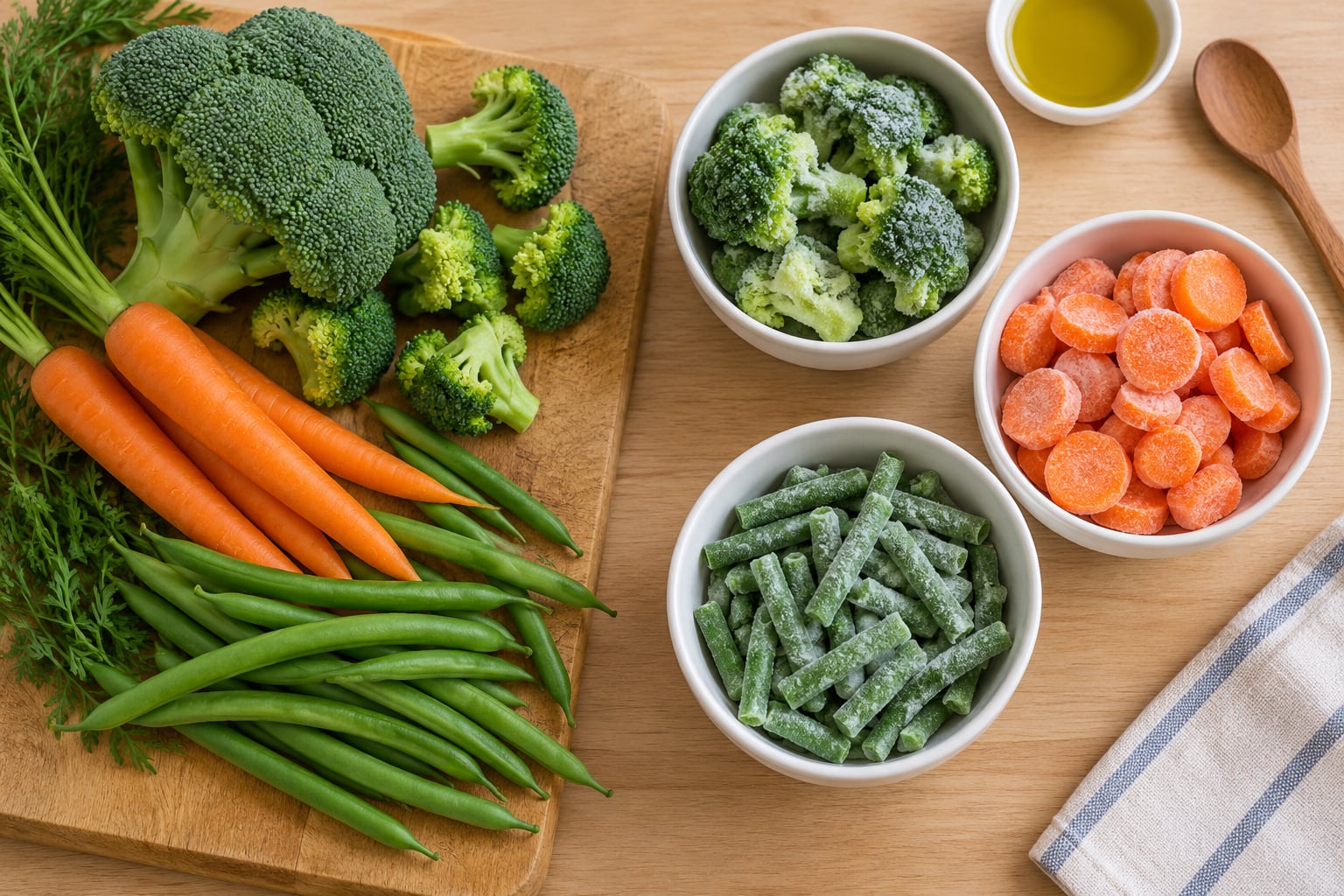
Frozen vs fresh vegetables nutrition compared comes down to a single factor: how long ago the vegetable was picked. Frozen produce is blanched and flash-frozen within hours of harvest, so it locks in the vitamin C, folate and fibre it had in the field. Fresh produce is only the better option when you eat it within a day or two of buying it.
That is the whole argument in one sentence, and it surprises people who assume “fresh” wins by default. Below is the real comparison: what each form holds, what it loses, how they cook, and which one suits your week.
Table of Contents
- Frozen vs Fresh Vegetables Nutrition Compared at a Glance
- Which Has More Nutrients: Frozen or Fresh Vegetables?
- The per-vegetable verdict
- Does Freezing Destroy Vitamins and Fiber?
- Frozen vs Fresh Vegetables for Weight Loss and Healthy Eating
- Taste, Texture, and Cooking Differences
- Five rules for crisp frozen vegetables
- Cost, Storage, and Food Waste
- Are Frozen Vegetables as Nutritious as Fresh Vegetables?
- Four checks when you pick up a bag
- Which Should You Choose?
- Choose fresh when
- Choose frozen when
- Do not freeze these
- The one-week test
- Frequently Asked Questions
- Are frozen vegetables healthier than fresh vegetables?
- Which vegetables retain the most nutrients when frozen?
- Does frozen food have more vitamins than fresh food?
- Are frozen vegetables good for weight loss?
- How should frozen vegetables be cooked to preserve nutrients?
- Are frozen vegetables safe to eat after thawing?
- Conclusion: Start with the Form That Fits Your Life
Frozen vs Fresh Vegetables Nutrition Compared at a Glance
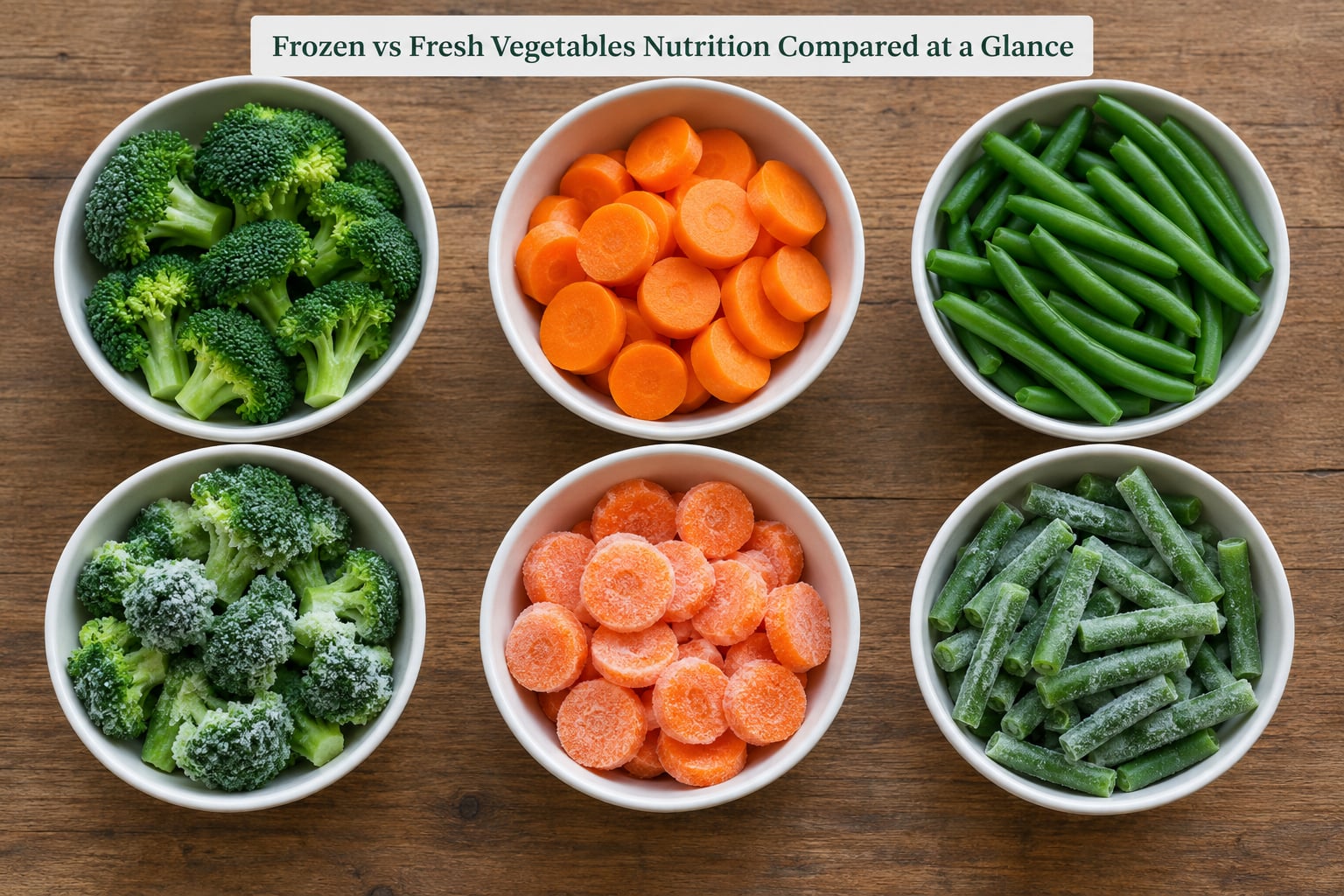
| Factor | Frozen | Fresh |
|---|---|---|
| Vitamin C | Equal or higher, since freezing stops the post-harvest decline | Highest in the first day or two, then falls steadily |
| Folate (vitamin B9) | Well retained; a short blanch loses a small share | Declines quickly in leafy greens, especially in warmth |
| Vitamin A and beta-carotene | Very stable; heat actually makes carotene easier to absorb | Stable, but carotene is harder to absorb from raw food |
| Lycopene | Good retention in tomatoes and peppers | Lower in raw tomatoes, rises when the fruit is cooked |
| Potassium and minerals | Almost unchanged | Almost unchanged |
| Fibre | Intact, though freezing can soften the structure | Intact and crunchier |
| Polyphenols and antioxidants | Mixed results by vegetable; some drop, some concentrate | Highest in the first few days |
| Texture | Softer; can turn watery if thawed first | Crisp, holds its bite |
| Storage life | Months in a freezer | Days to a couple of weeks in a fridge |
| Food waste | Low, you cook what you took out | High, leafy greens often spoil unused |
| Best for | Soups, stir-fries, batch cooking, smoothies | Salads, roasting, snacks eaten the same day |
Which Has More Nutrients: Frozen or Fresh Vegetables?
Frozen usually has more nutrients than the fresh produce sitting in your fridge, and sometimes far more. The reason sits in the clock, not the label.
A vegetable starts losing nutrients the second it is detached from the plant. Enzymes keep working, light and air drive photo-oxidation, and vitamin C is the fastest casualty. In leafy greens, the drop is steep: vitamin C and folate can fall by half or more across a week of warm storage. That is why produce is harvested early, cooled fast and shipped cold.
Frozen veg is usually picked riper than fresh-shipping veg, which has to survive the journey, then blanched briefly to switch off those enzymes and frozen fast. The nutrient content gets locked in within hours instead of days. One widely reported consumer survey found frozen green beans carrying several times the vitamin C of fresh equivalents and slightly more folate, though lab comparisons vary a lot by vegetable, cultivar and how long the fresh side sat in the fridge.
The per-vegetable verdict
| Vegetable | Better fresh | Better or equal frozen | Why |
|---|---|---|---|
| Green beans | Yes | Frozen pods hold vitamin C and folate that fresh pods lose quickly in transit | |
| Sweetcorn | Yes | Sugars convert to starch after harvest, so freezing captures peak sweetness | |
| Peas | Yes | Protein and fibre stable, and no sugar loss to storage | |
| Spinach and other greens | Only if eaten same day | Yes | Folate and vitamin C fall fast in warm storage; freezing stops that |
| Broccoli florets | Crisp texture only | Yes | Vitamin C and glucosinolates close to harvest levels |
| Carrots | Yes | Beta-carotene is heat-stable and absorbs better after cooking | |
| Tomatoes | Flavour and salad use | Cooked use | Lycopene rises with heat, so frozen or canned wins for sauces |
| Cucumber, lettuce, raw tomato | Yes | High water content collapses into mush and looks unappealing |
So the honest answer is not “one is better”. It is that frozen wins on nutrient retention for anything that travels well, and fresh wins on flavour, crunch and anything eaten raw.
Does Freezing Destroy Vitamins and Fiber?
No. Freezing is one of the gentlest preservation methods available, and fibre survives it almost untouched.
Fibre is structural carbohydrate. It is not heat-sensitive and it is not water-soluble in the way vitamins are, so blanching and freezing leave it in place. If you cook either form in a large pot of water and pour the liquid away, you lose some fibre along with everything else, but that is a cooking choice, not a freezing one.
The nutrients that do take a hit are the water-soluble ones, vitamin C and folate, and they take two separate hits. The blanch is a short dip in boiling water, usually under two minutes, and costs a modest share. Storage is the bigger risk: if a bag thaws, warms or sits opened for months, that is when vitamin C really falls and the vegetables go grey and limp.
Fat-soluble vitamins behave differently. Vitamins A, D, E and K are stable through heat, and cooking breaks plant cell walls so carotenoids absorb better. A cooked carrot gives you more usable beta-carotene than a raw one, frozen or fresh.
Thawing is the step most people get wrong. Thaw in a bowl and the water that carries vitamin C and folate goes down the drain. Cook from frozen and much of that water stays in the pan with the nutrients still in it.
Frozen vs Fresh Vegetables for Weight Loss and Healthy Eating
Neither form makes you lose weight. What matters is portion control and whether you actually eat the vegetables.
Most vegetables land in the same ballpark for calories and fibre whether frozen or fresh, roughly 30 to 50 calories per cup with the same amount of bulk. Because portion size is easier to control, frozen is often the practical choice for weight management. A measured cup of frozen broccoli does not shrink to half a cup in the pan, which is the classic reason home portion sizes creep up.
Frozen also solves the two biggest reasons people skip vegetables. No prep time means you cook them on a weeknight when you would have ordered takeaway, and a long shelf life means a bag of mixed peppers sits there for months without turning to slime. Hitting your vegetable target consistently matters more than any argument about vitamin C.
Watch two things. Steamed and roasted plain vegetables are low calorie; a frozen bag with a buttery or cheese sauce is not, so read the label. And frozen is not a shortcut past a balanced diet. Pair it with a protein and a whole grain and it is a meal, on its own it is a side.
For specific diets, frozen is also a good fit. Plain frozen veg usually carries no added salt, which helps with low-sodium eating, and cooks on renal-friendly diets when you control the potassium portion yourself, so check with your dietitian if potassium is restricted.
Taste, Texture, and Cooking Differences
Fresh tastes better raw and in a salad. Frozen tastes better the moment it hits a hot pan, because the vegetables are picked at peak and used at peak.
The soggy complaint is real and it comes down to three things: thawing first, crowding the pan, and using a low heat. Ice crystals puncture plant cells during freezing, so thawed vegetables release water. Put that water in a hot pan and it steams instead of sears, which is why thawed frozen broccoli never browns.
Five rules for crisp frozen vegetables
- Cook from frozen, straight out of the bag, with no thawing.
- Get the pan or oven properly hot before they go in.
- Leave space between the pieces, or use a second tray. A crowded pan drops to steaming temperature.
- Keep it moving and keep the heat high, three to four minutes for most vegetables.
- Season near the end with salt, pepper, garlic and a little oil, so nothing draws out extra water first.
For soups, curries and stews the rules loosen completely. Frozen is better there, because the vegetables break down into the liquid and add body that fresh additions do not.
Fresh does have the edge in a raw salad, roasted on a hot tray, or served straight from the market. The crispness is not something freezing can recreate.
Cost, Storage, and Food Waste
Frozen usually costs less per serving and lasts far longer, and the real saving is the food you stop throwing away.
A bag of frozen vegetables holds for months at a steady temperature. Fresh greens last days, and roughly a third of produce bought in the US is thrown away, much of it because it was bought with good intentions and eaten late. Frozen inverts that logic, since you take out only what you plan to cook that night. People shopping on a budget say the same thing in forum threads: the per-pound number matters less than the cost per serving actually eaten.
Storage works in your favour too. Frozen veg frees up fridge space that greens need, and it holds a supply through the winter when fresh local produce is expensive or unavailable.
Cost per serving reverses in one situation, buying a whole fresh item and eating only half of it. Fresh parsley or a bag of spinach that wilts in the crisper costs more than the frozen bag you would have finished.
Are Frozen Vegetables as Nutritious as Fresh Vegetables?
For most people, yes. The difference between the two is far smaller than the marketing on either side suggests.
Your fresh vegetables are usually already three to fourteen days old when they reach your kitchen, through transport, retail display and then your own fridge. Nutrient decline happens across all of that. Frozen veg is processed within hours, so it captures the harvest peak. Comparing the two, you are often comparing a fresh item that lost something in transit against a frozen item that lost very little.
You also need to separate plain frozen vegetables from frozen meals. A bag of single-ingredient broccoli is minimally processed produce with a cold step. A frozen lasagna is a formulated dish with sodium, fat and refined starch, and it should be judged as a different food entirely. Forum readers often conflate the two, then conclude that frozen produce is “processed”, which is not a fair reading of what is in the bag.
Four checks when you pick up a bag
- The ingredient list should be one item: the vegetable. Nothing else.
- No sauce, butter or seasoning packets, which is where the sodium hides.
- Check the vitamin C and iron on the label, so you know what you are getting.
- Choose “flash frozen” or IQF wording, since slow freezing makes bigger ice crystals and mushier vegetables.
Organic frozen vegetables follow the same rules. They are picked riper, which suits the freezing process well, and the organic label applies to the farming method rather than adding nutrients. Whether that is worth the extra cost is a budget decision, not a nutrition one.
Which Should You Choose?
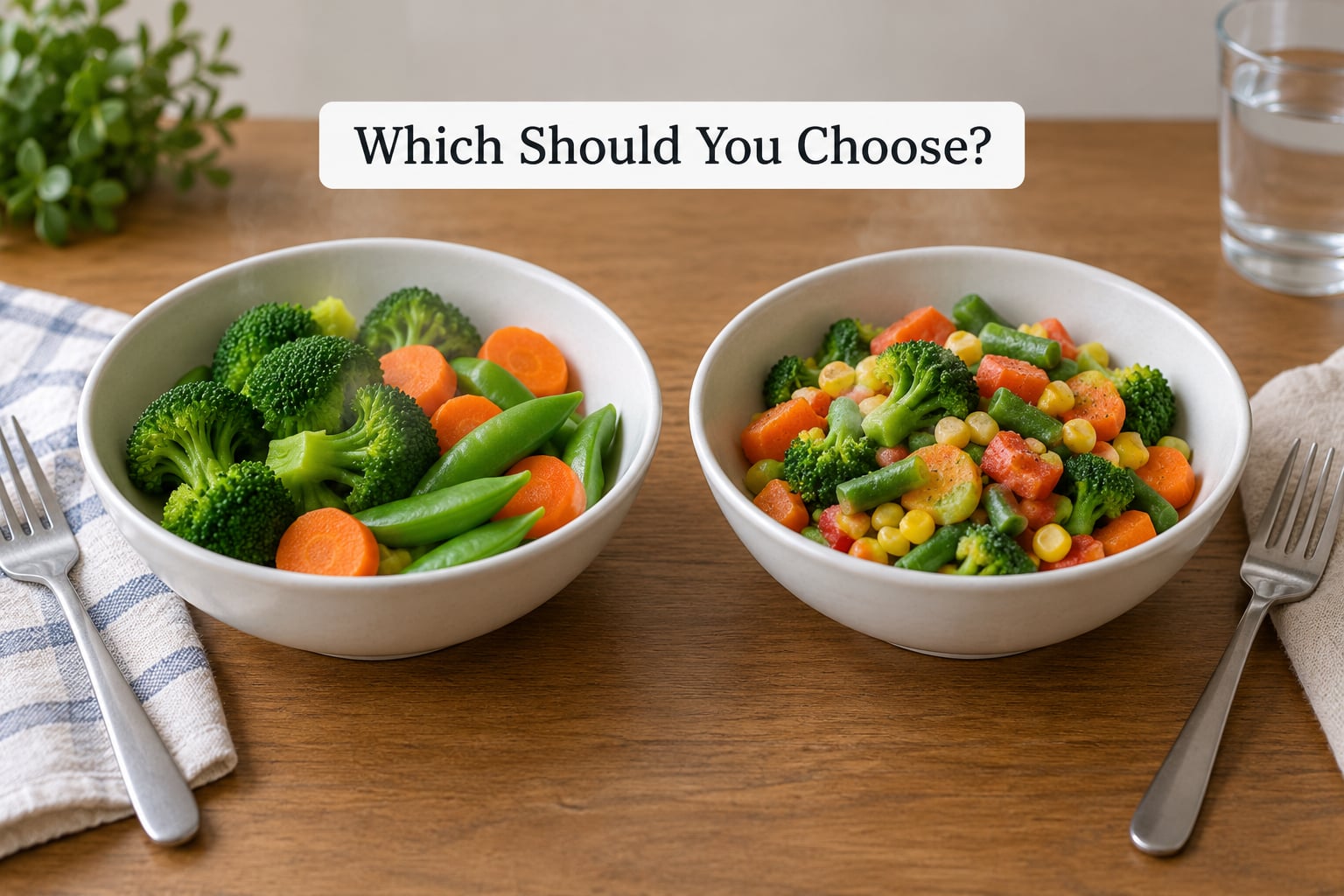
Buy fresh for flavour and crunch, buy frozen for convenience and consistency, and mix the two for everything else.
Choose fresh when
- You are making a salad, or serving the vegetable raw.
- You will cook it the same day you buy it.
- The vegetable does not freeze well, so cucumber, lettuce, celery and fresh herbs belong here.
- Seasonal produce is peaking and cheap right now.
Choose frozen when
- You cook on weeknights and need something in the pan in under ten minutes.
- You meal prep in batches, since frozen holds quality through the week.
- You are feeding a family and want consistent results every time.
- You want to keep a supply of greens, peas and mixed vegetables on hand for soups and stir-fries.
Do not freeze these
- Raw potatoes, which turn gluey and watery once thawed.
- Cucumber, lettuce and other high-water leafy vegetables, which collapse into mush.
- Raw tomatoes for salad use, since the texture never recovers.
- Anything with a dairy or mayonnaise base, which is unsafe to freeze and separates badly.
The one-week test
Buy the same vegetable both ways and cook them side by side. Weigh what you actually eat, not what you threw out. That single comparison settles the argument for your own kitchen faster than any study, because your palate and your family’s are the only ones that matter here.
Frequently Asked Questions
Are frozen vegetables healthier than fresh vegetables?
They are usually equal, and frozen sometimes scores higher. Freezing happens within hours of harvest, which stops the post-harvest loss of vitamin C and folate, while fresh produce often spends days in transit and refrigeration losing those same nutrients. Fresh still wins on flavour, crunch and anything eaten raw.
Which vegetables retain the most nutrients when frozen?
Green beans, sweetcorn, peas, spinach, broccoli florets and carrots all hold up well, because the nutrients readers care most about, vitamin C, folate, carotenoids and fibre, are stable through a short blanch and fast freeze. Leafy greens benefit most, since they lose folate quickly in warm storage.
Does frozen food have more vitamins than fresh food?
Sometimes, but only by comparison. Frozen vegetables score higher than fresh produce that has been sitting for a week, because the freezing process halts an ongoing decline. Against vegetables eaten within a day or two of purchase, fresh is usually equal or slightly better. The gap is about age, not about the freezer.
Are frozen vegetables good for weight loss?
They help more than they hurt. Frozen vegetables are low calorie per cup, portion control is easier because they do not shrink when cooked, and there is no prep time, which makes them realistic on a busy weeknight. Choose plain bags rather than ones with butter or cheese sauce, and pair them with protein and a whole grain.
How should frozen vegetables be cooked to preserve nutrients?
Cook from frozen without thawing, since thawing water carries away vitamin C and folate. Use a hot pan or hot oven, give the pieces space so they sear rather than steam, and keep the heat high for three to four minutes. Boiling for long periods leaches water-soluble vitamins into the cooking water, so steaming, roasting or stir-frying retains more.
Are frozen vegetables safe to eat after thawing?
Yes, as long as you thaw them safely. Thaw in the fridge, in cold water or in the microwave rather than on the counter, and cook vegetables to an internal temperature of 165F, 74C, for food safety. If a thawed bag smells off, feels slimy or has been at room temperature for more than two hours, throw it out.
Conclusion: Start with the Form That Fits Your Life
Both forms belong in a healthy diet, and the choice is about the vegetable and your week rather than about fresh being automatically better.
If you want one first step, buy a single bag of frozen broccoli this week and cook it from frozen in a hot pan, and see whether you eat more vegetables than you did before. Nutrition only counts if the food actually gets eaten.