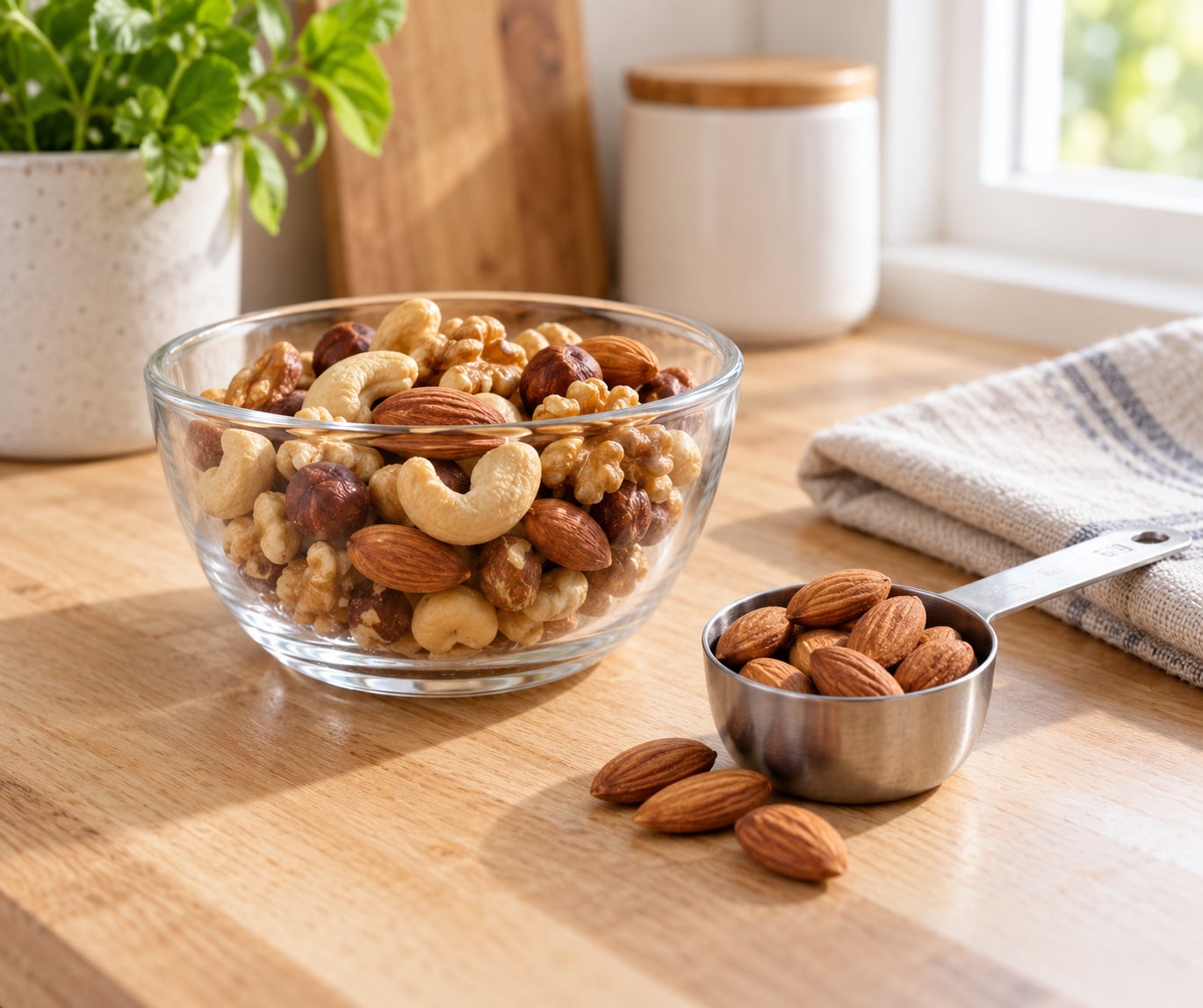
Nuts can support weight loss when you eat them in measured portions, and most adults do well with about 30 grams, or one ounce, a day. Because they are calorie dense, the serving size matters more than the food itself. Here is what the research says and how to portion nuts without a food scale.
The short version on the full question, are nuts good for weight loss and how many to eat: yes, when they replace higher-calorie snacks rather than sit on top of your usual intake, and no benefit comes from eating them straight from the bag. Weight change still comes down to your total calorie balance over weeks, and nuts simply make that balance easier to hold.
Table of Contents
- Are Nuts Good for Weight Loss?
- How Many Nuts Should You Eat per Day?
- How to measure 30 grams without a scale
- Which Nuts Are Best for Weight Loss?
- Best picks for fullness and calorie control
- Per-ounce nutrition at a glance
- Plain, roasted or flavored?
- Do Nuts Help with Fullness or Make Weight Loss Harder?
- How to Eat Nuts Without Adding Too Many Calories
- Simple ways to fit nuts into a day
- Are Nuts Good for Weight Loss if You Eat Them Every Day?
- Frequently Asked Questions
- Are nuts good for weight loss or do they cause weight gain?
- How many calories are in a serving of nuts?
- What is a healthy portion of nuts for adults?
- Are almonds or walnuts better for weight loss?
- Can I eat nuts every day while trying to lose weight?
- Are salted or flavored nuts bad for weight loss?
- Conclusion
Are Nuts Good for Weight Loss?
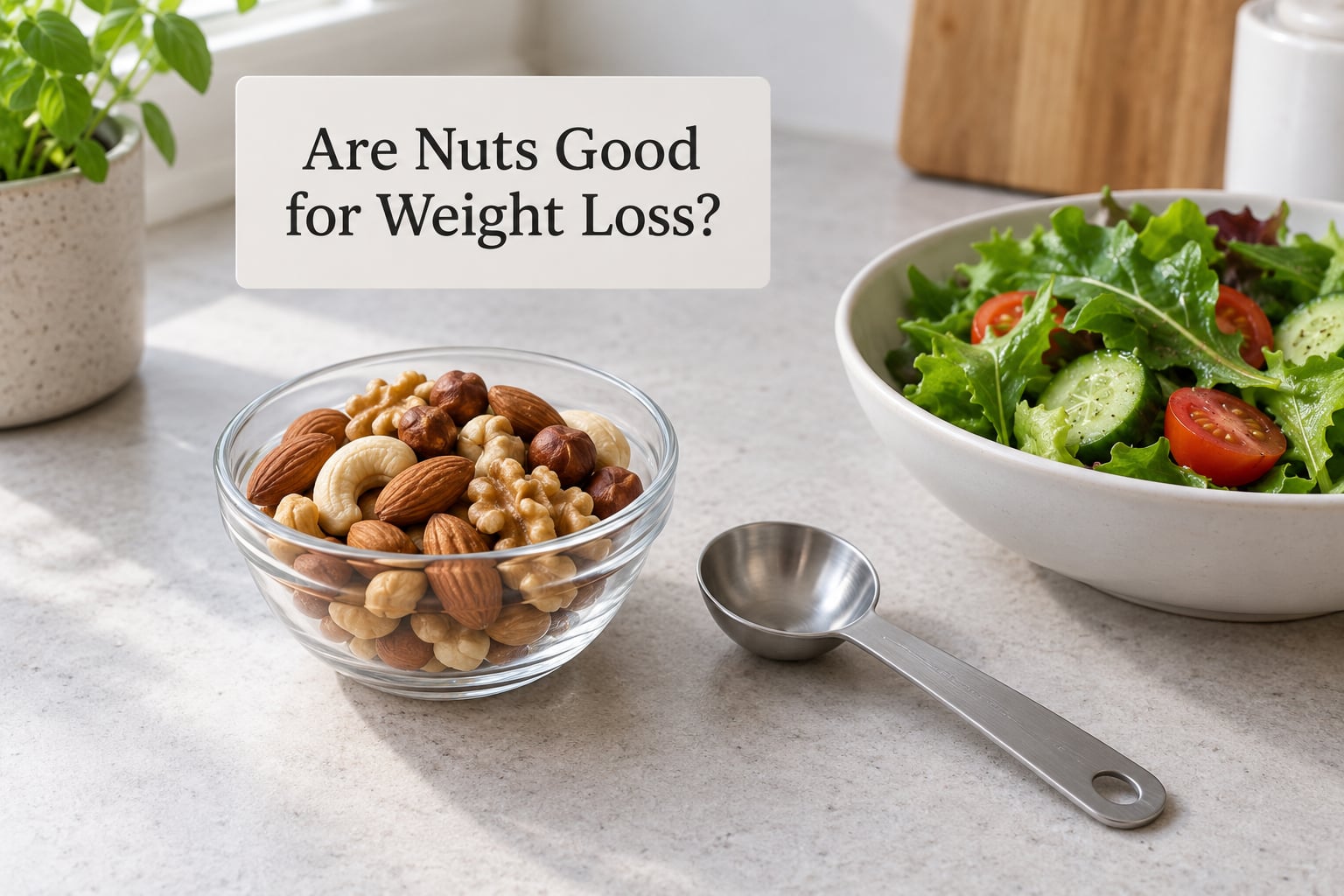
Nuts are good for weight loss in a practical sense. They are whole foods rich in unsaturated fat, protein and fiber, which is a combination that keeps you satisfied longer than a cracker or a cookie of the same calorie size.
They are also calorie dense. One ounce of almonds is roughly 170 calories, and a cupped handful from an open bag can be three or four times that without you noticing. The food is not the problem. The portion is.
Three things make nuts useful in a weight loss eating pattern:
- Protein and fiber together. Both slow digestion, which helps you feel full for longer after a snack that would normally leave you hungry by mid-afternoon.
- Mostly unsaturated fat. Almonds, walnuts, cashews and pistachios are high in monounsaturated and polyunsaturated fats rather than saturated fat.
- Easy substitution. A one-ounce serving of nuts swaps cleanly for a handful of chips or a cookie, so calories stay roughly level while nutrient density goes up.
There is also a digestion detail worth knowing. Whole nuts are hard to break down, and depending on the nut and how well you chew it, a meaningful share of the fat passes through without being absorbed. Some reviews of the research put that figure as high as 30 percent, which is a partial explanation for why nut calories on a label are not identical to calories your body takes in.
That is a real effect, but it is not a free pass. It works as a modest bonus on top of controlled portions, not as a reason to double your serving.
How Many Nuts Should You Eat per Day?
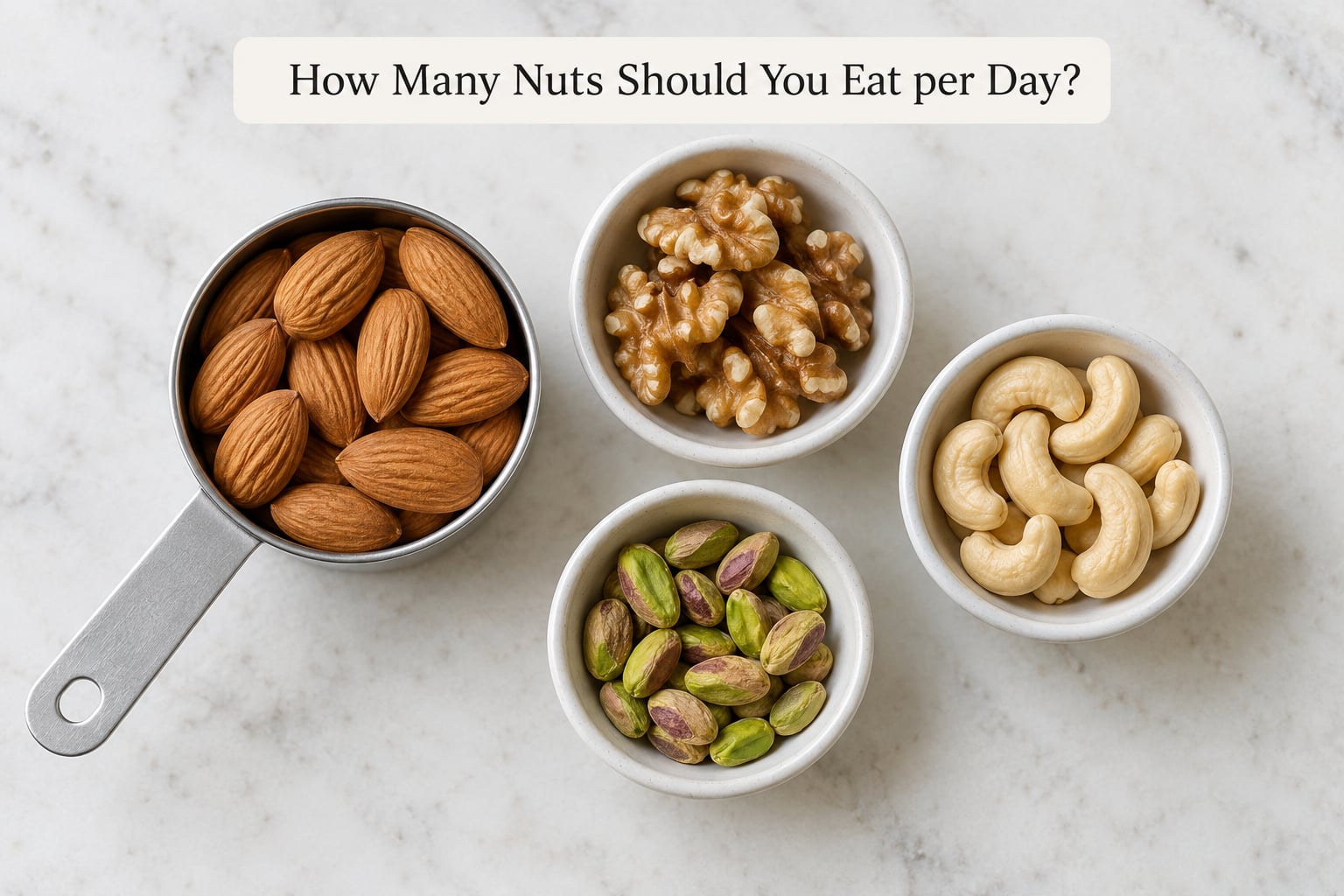
For most adults, a good starting point is 30 grams a day, which is about one ounce. That is a small portion, and it is deliberately small. Your actual number depends on your total calorie intake, how much fat and protein already comes from the rest of your meals, and whether nuts are a planned snack or an extra one.
If you eat a low-calorie diet around 1500 calories, one ounce of nuts fits comfortably. If you are eating closer to 2200 calories and already getting plenty of fat from olive oil and avocado, you may be better served with a smaller serving or eating nuts a few days a week instead of daily.
| Measure | Almonds | Walnuts | Cashews | Pistachios |
|---|---|---|---|---|
| Grams | 28 g | 28 g | 28 g | 28 g |
| Ounces | 1 oz | 1 oz | 1 oz | 1 oz |
| Calories | about 170 | about 185 | about 157 | about 160 |
| Approximate pieces | 23 nuts | 14 halves | 18 nuts | 49 nuts |
| Protein | 6 g | 4 g | 5 g | 6 g |
| Fiber | 3.5 g | 2 g | 1 g | 3 g |
The piece counts matter more than people expect. A serving of pistachios looks like a snack because it is roughly 49 nuts, while 23 almonds is a small heap. Serving yourself by volume rather than weight is the most common reason nut calories creep up.
How to measure 30 grams without a scale
Most people do not own a food scale and never will. A few household references get you close enough:
- A golf ball. About a golf ball volume of nuts is roughly one ounce.
- One tablespoon of whole nuts weighs somewhere between 10 and 14 grams, so two tablespoons lands near a proper serving for denser nuts.
- A quarter cup of chopped nuts is close to an ounce, since chopped pieces pack tighter than whole ones.
- Pre-portion once. Fill small containers or bags with what you intend to eat and put the rest away. This is the single most effective habit for people who mindlessly overeat nuts.
One ounce is a serving for most people. Two ounces is still reasonable for an active adult who has room in the day, and beyond that you are eating a snack that needs to be planned as one.
Which Nuts Are Best for Weight Loss?
No nut burns belly fat on its own. What varies is calorie density per nut, how much protein and fiber you get, and how filling the portion feels before you stop. These are the details that matter for weight loss.
Best picks for fullness and calorie control
Almonds are the easy default. At about 170 calories and 6 grams of protein per ounce, they have more fiber than most nuts, which is the main reason they keep you full.
Pistachios win on volume. Forty-nine nuts per ounce means a serving looks and feels substantial, and that visual size does real work on appetite. If you tend to feel deprived while dieting, pistachios are the nut most dietitians point to first.
Peanuts are technically a legume but nutritionally sit with nuts, with the highest protein of the group at about 8 grams per ounce and a low glycemic response. Watch for the roasted and honey-roasted versions, which add sugar.
Walnuts are the best plant source of omega-3 ALA, at about 2.5 grams per ounce, and they pair well with leafy salads. Their shells slow you down, which is a feature if you are a fast eater.
Cashews are lower in calories than walnuts or pecans at about 157 per ounce, with more protein and iron than most nuts. Their creamy texture means they are easier to overeat, so portion them out.
Pecans and macadamia nuts are the highest calorie density per ounce, at roughly 200 calories, so a serving is smaller. Macadamias are low in carbs, which makes them a common choice on a keto or low-carb eating pattern.
Per-ounce nutrition at a glance
| Nut | Calories | Protein | Fat | Fiber |
|---|---|---|---|---|
| Almonds | 170 | 6 g | 15 g | 3.5 g |
| Peanuts | 170 | 8 g | 14 g | 3 g |
| Cashews | 157 | 5 g | 13 g | 1 g |
| Pistachios | 160 | 6 g | 13 g | 3 g |
| Walnuts | 185 | 4 g | 18 g | 2 g |
| Pecans | 200 | 3 g | 20 g | 3 g |
| Macadamia | 205 | 2 g | 21 g | 2.6 g |
Plain, roasted or flavored?
Plain and dry roasted are the two versions worth eating regularly. Honey roasted, chocolate covered, heavily salted, candied and coated varieties stack extra sugar or fat onto an already dense snack, and it is very easy to eat double a serving.
Salt matters too. A lightly salted nut is still a nut. A heavily salted one encourages you to keep going, and sodium works against you if you are watching blood pressure. Dry roasted, unsalted, or seasoned with herbs and spices is the practical middle ground.
Do Nuts Help with Fullness or Make Weight Loss Harder?
Both, depending entirely on the portion. Nuts are one of the more filling snacks available per calorie, and that is the reason researchers keep finding them in diets that work.
Four things are going on when you eat them:
- Protein. Six grams or so per ounce signals fullness and supports muscle maintenance while you eat less overall.
- Fiber. Almonds and pistachios give you 3 grams or more per ounce, which slows gastric emptying and blunts the blood sugar response to a carb-heavy meal.
- Unsaturated fat. Fat itself slows stomach emptying, which is part of why a fat-containing snack holds you longer than an equivalent-calorie starch snack.
- Chewing. Whole nuts require more work than a processed snack, and that slower pace gives your body time to register that you are full.
Here is the part that works against weight loss. Nuts are easy to eat in large amounts because they are dry, salty and portable. There is no plate, no satiety pause, and no obvious signal that the serving has doubled. A large bowl of mixed nuts on the coffee table can run to 400 or 500 calories with no memory of eating them.
So the honest answer is that nuts help with fullness and they make weight loss harder when they are unmeasured. Once you count them, they usually sit comfortably inside a calorie-controlled pattern, because a full ounce of nuts plus a piece of fruit is a genuinely satisfying afternoon snack for under 250 calories.
How to Eat Nuts Without Adding Too Many Calories
The mechanics of portion control matter more here than picking a superfood. A few habits do most of the work.
Measure before you sit down. Put the serving in a bowl and put the container back in the cupboard. People who report mindless nut overeating on Reddit and other forums tend to have the same story, they reach into the bag while doing something else and the bag empties without any decision being made.
Log it. Nuts appear in tracking apps with their full calorie count, and they are one of the foods people most often forget to log because they feel too small to matter. They are not too small to matter. One ounce at 170 calories is the same as a small apple and a hard-boiled egg combined.
Swap, do not add. If you are replacing afternoon crackers or a cookie, you have your answer. If you are adding nuts to oatmeal you already eat every morning, you have raised that meal by 170 calories and need to adjust something else.
Choose volume over density. Pistachios and almonds give you more pieces and more fiber for the same calories. Pecans and macadamias are delicious, and two or three is a serving, not a handful.
Watch nut butter closely. Two tablespoons of any nut butter runs 180 to 200 calories and it is far easier to spoon out four. If you like it, measure with a tablespoon and keep it on the counter rather than next to your keys.
Buy the boring version. Pre-portioned single-serve packs remove the decision entirely. Plain dry roasted is the option with nothing to compensate for.
Compare before you swap. Nuts are not automatically the lower-calorie choice. Roughly 100 calories is a small handful of potato chips, a cookie, or about a third of a small candy bar. The swap works when it is a swap.
Simple ways to fit nuts into a day
- Top a salad with one tablespoon of walnuts or chopped almonds instead of a heavier dressing.
- Stir a tablespoon into plain Greek yogurt or overnight oats for protein and staying power.
- Blend a tablespoon into a smoothie in place of a sweetened syrup.
- Carry a small container to work so the afternoon snack is already decided.
- Use a tablespoon of chopped walnuts in a pasta sauce in place of breadcrumbs.
Are Nuts Good for Weight Loss if You Eat Them Every Day?
Daily nut eating is fine for most adults, and plenty of people doing well on a calorie-controlled diet eat 30 to 60 grams daily. The reason people worry is calorie density, and that worry is reasonable. A daily ounce is a planned snack. A daily handful that grows all week is not.
Two other factors deserve attention.
Allergies come first. Tree nut and peanut allergies are among the most common serious food allergies, and in sensitive people even small airborne particles from roasting or grinding can trigger a reaction. If you have any history of reactions, hives, swelling or digestive distress after eating nuts, get tested before you make them a habit.
Individual health conditions come second. People managing diabetes benefit from the low glycemic response of nuts, while people on warfarin need consistent vitamin K intake from greens rather than large swings in leafy vegetables, and large amounts of Brazil nuts can push selenium intake high because a single nut can contain a large share of the daily requirement. If you take medication or manage a condition, a registered dietitian can work the nuts into your plan properly.
Talk to a doctor or registered dietitian for individual advice, especially if you have kidney disease, a nut allergy, or are following a very low calorie or very low carbohydrate plan.
One more practical note on tracking. Some people on forums say they never log nuts and still lose weight, which is the absorption effect doing some work. It is real but modest. Log the full calories, eat the portion you planned, and let the difference be small rather than imaginary.
Frequently Asked Questions
Are nuts good for weight loss or do they cause weight gain?
Nuts are good for weight loss when you eat a measured portion, usually about 30 grams or one ounce a day. They are calorie dense, so weight gain happens when portions grow rather than when nuts appear in the diet. Most people do well when nuts replace a snack like chips or a cookie instead of being added on top of everything else they already eat.
How many calories are in a serving of nuts?
One ounce, which is a standard serving, runs about 157 calories for cashews, 160 for pistachios, 170 for almonds and peanuts, 185 for walnuts and about 200 for pecans and macadamias. A large bowl can easily reach 400 or 500 calories, which is why measuring the portion before eating matters more than memorizing a single number.
What is a healthy portion of nuts for adults?
Most adults do well with 30 grams, or about one ounce, a day. That is roughly 23 almonds, 18 cashews, 14 walnut halves or 49 pistachios. Active adults with more room in their calorie budget can handle two ounces. Beyond that, treat nuts as a substantial snack and adjust your meals to fit them in.
Are almonds or walnuts better for weight loss?
Both fit a weight loss eating pattern at a one-ounce serving. Almonds have more protein and fiber, at about 6 grams of protein and 3.5 grams of fiber per ounce, so they tend to keep you full longer. Walnuts have more omega-3 ALA and more fat, at about 18 grams per ounce, so use a slightly smaller portion.
Can I eat nuts every day while trying to lose weight?
Yes, as long as the daily serving is planned and counted. Around 30 to 60 grams a day works for many people whose total calorie intake leaves room for it. The problem is never the daily habit, it is the slow creep from one tablespoon to a full bowl over several weeks.
Are salted or flavored nuts bad for weight loss?
Salted and flavored nuts are not off limits, but they make overeating easier. Honey roasted, chocolate covered, candied and heavily salted varieties add sugar or fat to something already calorie dense, and salt can leave you wanting more. Dry roasted or plain unsalted nuts are the easiest choice for regular weight loss eating.
Conclusion
Nuts fit well into a calorie-controlled diet for weight loss, and most adults do well with a one-ounce serving daily as long as it replaces something rather than adding to it. Start by measuring a single serving this week, picking plain or dry roasted, and putting the container back in the cupboard before you start eating.