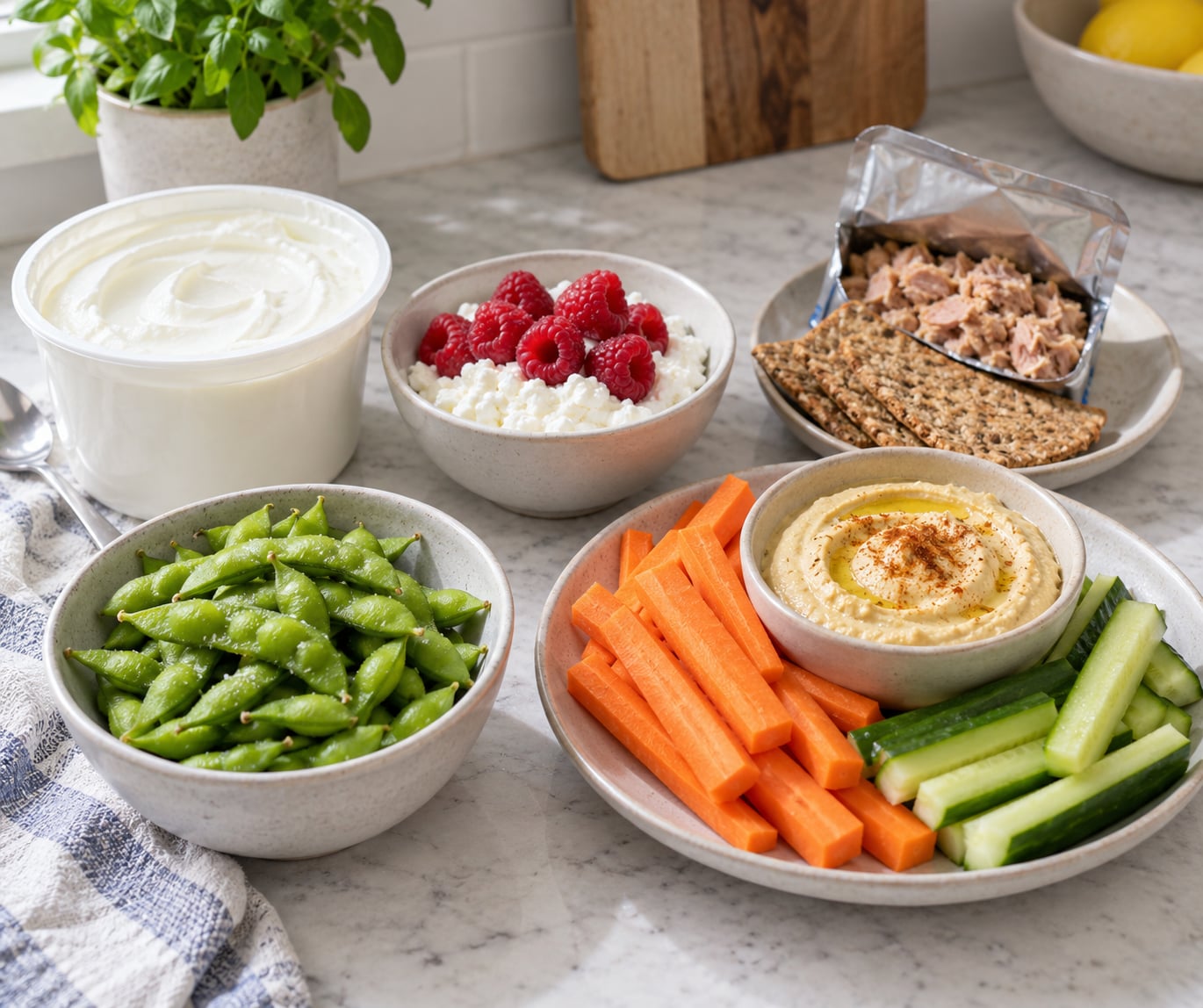
A no-cook high protein snack is any snack that delivers roughly 15 to 30g of protein per serving and is eaten as bought or after simple assembly, with no baking, roasting, air-frying, microwaving or boiling. Greek yogurt, cottage cheese, tinned tuna, deli roll-ups, edamame and nut butter all qualify.
That strict no-heat filter is the whole point. Most lists titled high protein snacks quietly sneak in baked protein balls, air-fried tofu and roasted chickpeas, which is useless if you have ten minutes and no intention of turning the oven on.
One honest caveat before we start. A few items here, like hard-boiled eggs, were cooked once in advance. The heat is not part of the snack. Once they are in the fridge, eating them takes ten seconds. Readers on low-appetite medication say this in every forum thread about no-cook snacks, and it is the single most common reason prepacked protein food gets recommended in the first place.
The figures below are typical values for standard portions. Brands and portion sizes vary, so read the label on what you actually buy, and treat the numbers as a guide rather than a promise.
Table of Contents
- High Protein Snacks You Do Not Have to Cook at a Glance
- 1. Greek Yogurt with Nuts and Fruit
- 2. Cottage Cheese with Fruit
- 3. Hard-Boiled Eggs with Vegetable Sticks
- 4. Tuna in a Packet with Whole-Grain Crackers
- 5. String Cheese with Nuts or Whole-Grain Crackers
- 6. Turkey or Chicken Roll-Ups
- 7. Canned Salmon on Crackers or Cucumber
- 8. Edamame with Sea Salt
- 9. Protein-Powdered Oats Made Overnight
- 10. Hummus with Vegetables, Pretzels, or Whole-Grain Crackers
- How to Choose High Protein Snacks You Do Not Have to Cook
- Frequently Asked Questions
- How much protein should I aim for in a snack?
- Are protein shakes necessary when choosing no-cook snacks?
- What are the best high protein snacks for weight loss?
- How can I keep no-cook snacks fresh and safe?
- Are there high protein snack ideas for vegetarians?
- Can I eat these snacks without preparing anything in advance?
High Protein Snacks You Do Not Have to Cook at a Glance
| Snack | Main protein source | Protein per serving | Best used for | Fridge needed | Dietary notes |
|---|---|---|---|---|---|
| Greek yogurt with nuts and fruit | Plain Greek yogurt | 15 to 20g | Afternoon slump, breakfast top-up | Yes | Vegetarian, gluten free |
| Cottage cheese with fruit | Cottage cheese | 14 to 28g | Late snack without heaviness | Yes | Vegetarian, gluten free |
| Hard-boiled eggs with veggie sticks | Eggs | 12 to 18g (2 eggs) | Travel, desk, gym bag | Yes | Vegetarian, gluten free, dairy free |
| Tuna in a packet with crackers | Tinned tuna | 20 to 25g | Post-workout, no pantry time | No, unopened pouch | Gluten free if crackers are |
| String cheese with nuts | Mozzarella string cheese | 7 to 10g per stick | Kids’ bags, quick grazing | Yes | Vegetarian, kid friendly |
| Turkey or chicken roll-ups | Sliced deli poultry | 10 to 16g | Desk lunch substitute, parties | Yes | Gluten free, low carb option |
| Canned salmon on cucumber | Canned salmon | 17 to 20g | Omega-3 top-up, light supper | No, unopened tin | Dairy free, gluten free |
| Chilled edamame with sea salt | Edamame | 11 to 17g per half cup | Plant-based pick, small portion | Yes once opened | Vegan, vegetarian, gluten free |
| Overnight protein oats | Protein powder plus oats | 20 to 30g | Meal prep, early mornings | Yes | Adaptable, vegan if plant milk |
| Hummus with veg and crackers | Chickpeas | 4 to 8g, more when loaded | Sharing, dip-heavy snack boards | Yes | Vegan, gluten free options exist |
1. Greek Yogurt with Nuts and Fruit
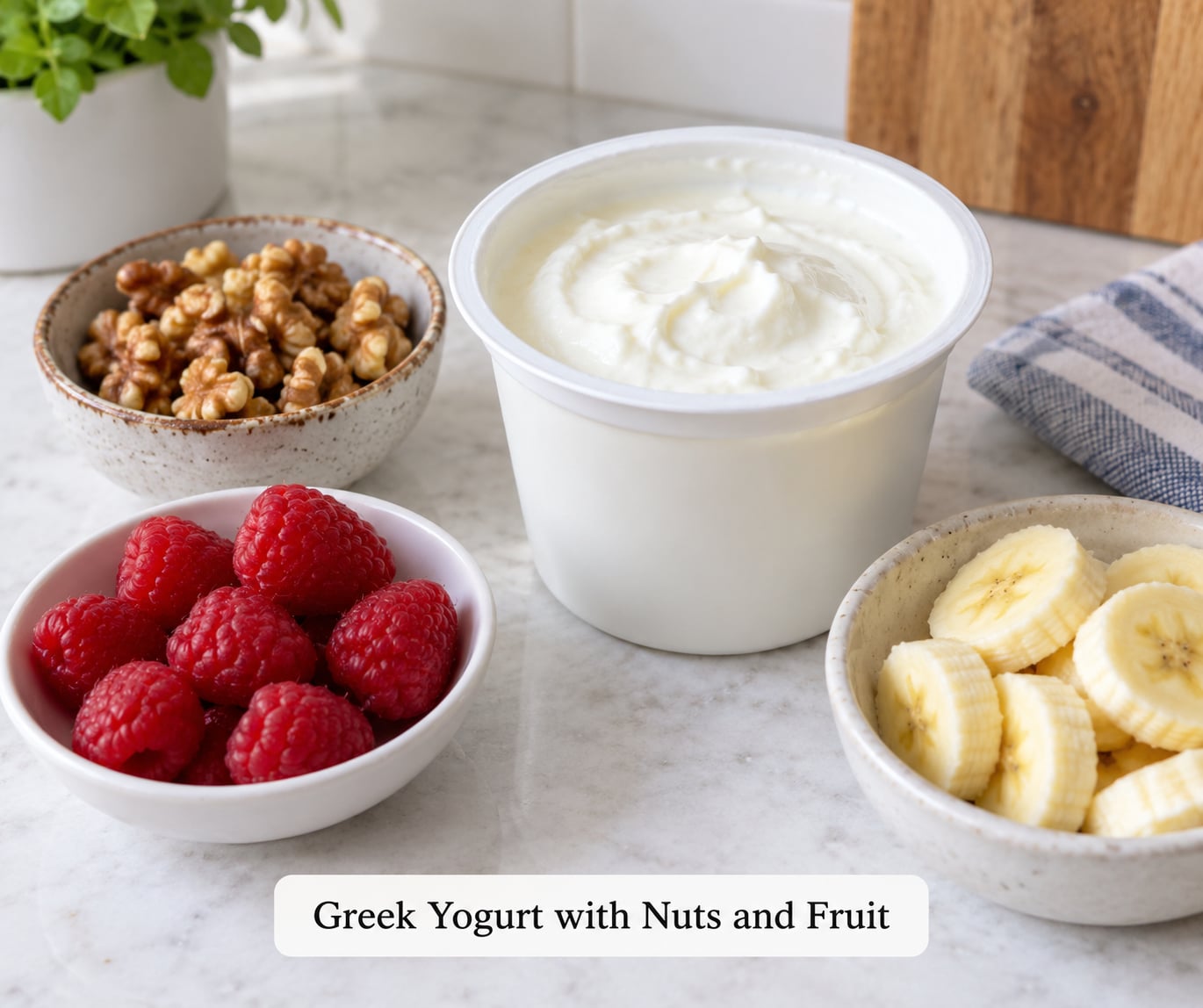
Plain Greek yogurt is the easiest place to start. A 170g pot of the plain, unsweetened kind usually carries 15 to 20g of protein on its own, and the thick texture means you do not need anything underneath it.
How I build it: two thirds of a pot of plain Greek yogurt, a small handful of chopped walnuts, and a few raspberries or a sliced banana dropped on top. Total time is about 30 seconds, which is roughly the same as opening a protein bar.
The catch is sugar. Flavored and fruit-on-the-bottom varieties can carry 10g or more of added sugar, which works against the fullness you are chasing. Check the label for added sugar and pick the plain tub, then get sweetness from actual fruit.
If dairy is not for you, soy yogurt is the closest swap in texture and protein. Almond yogurt works too, but check the protein number, because many versions sit near 1g per serving and will not get you to 15g.
2. Cottage Cheese with Fruit
Cottage cheese gets recommended so often that plenty of readers have a strong opinion about it. It also happens to be one of the best protein-per-calorie options available with no cooking at all.
A small 100g serving of cottage cheese typically lands somewhere between 12 and 14g of protein, so a 200g pot gets you to the 25g range without a single extra ingredient. Berries, sliced peaches or a few chunks of pineapple work well because they add water and volume rather than calories.
Serve it straight from the pot, or spoon it over a rice cake if you want something with a bit more substance. Full-fat and low-fat versions both work, and the fat version tends to keep you fuller for longer when your goal is to stop picking at the cupboard twenty minutes later.
If you genuinely cannot stand the texture, blend cottage cheese with frozen fruit and a spoon of nut butter in a blender, and it turns into a thick smoothie-style bowl. That is still no cooking.
3. Hard-Boiled Eggs with Vegetable Sticks
These need boiling once, at the start of the week, and then nothing. Batch a dozen eggs, store them in the fridge in their shells, and you have the default protein for the next five days.
Two large eggs give you roughly 12 to 18g of protein. Pair them with carrot and cucumber sticks, a few bell pepper slices or celery, and you have a snack that travels in a container without turning to mush.
On storage: cooked eggs keep in the fridge for about a week. Peel them only when you plan to eat them, because the shell is what keeps them from drying out and picking up fridge smells. Cut produce belongs in the fridge too, and I would not pack a bag of carrot sticks on a warm desk for the whole afternoon.
Whole food rules stop here. USDA guidance is to keep refrigerated at 40F or below, and to throw eggs out if they have been at room temperature for more than two hours.
4. Tuna in a Packet with Whole-Grain Crackers
A single-serve tuna pouch is the least effort high protein option on this list. Tear the corner, squeeze the pouch, put it on crackers or straight into your mouth.
Most pouches hold 20 to 25g of protein, which puts it at the top of the range without needing a second food. Add a few wholegrain crackers, a squeeze of mustard, or a handful of baby spinach if you want to call it a plate rather than a snack.
Two practical points. First, check the sodium content and go for the no-added-salt or low-sodium pouch if that matters to you. Second, once a pouch is open, treat it like any opened tinned fish: eat it from a bowl, refrigerate the remainder, and use it within a day or two. Eating straight from a foil pouch that has sat at a desk all afternoon is how people get unlucky.
Peanut butter packets on the crackers add a few more grams and make the snack stick together properly. That pairing turns up constantly in forum threads about high protein snacks you do not have to cook, which is a decent signal that it works.
5. String Cheese with Nuts or Whole-Grain Crackers
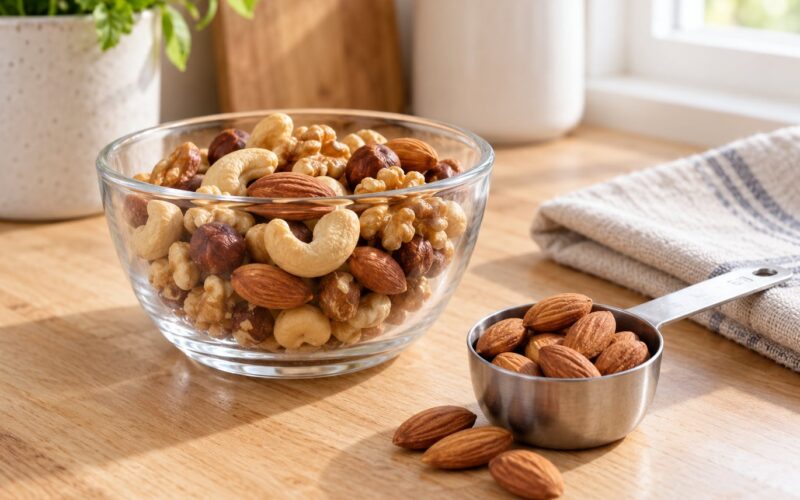
String cheese is the snack people forget to count as real protein. One stick usually carries 7 to 10g, and two sticks with a small handful of almonds will land you near 15g.
It is also the most portable dairy option in the fridge, because nothing leaks and it does not need a spoon. That is why it keeps appearing in lists of no-cook snacks for kids and for anyone with low appetite, where a big portion feels like too much.
The catch: a single serving is not automatically the right serving for you. Read the label, count sticks, and adjust. Pairing it with almonds or pistachios adds healthy fat and a little more protein, and it slows digestion compared with eating the cheese on its own.
For an adult who wants more protein without much dairy, add a hard-boiled egg or a few edamame alongside it rather than doubling the cheese.
6. Turkey or Chicken Roll-Ups
A roll-up is the answer when you want a snack that feels like a small meal. Lay a slice of deli turkey or chicken on a plate, spread cream cheese or hummus over it, add a cucumber stick, a strip of bell pepper or a spinach leaf, roll it, and eat it in two bites.
Three or four slices of poultry gets you to roughly 10 to 16g of protein, before the spread and vegetables. It is one of the few snacks here that genuinely fills you up, which makes it useful on days when you are trying not to raid the cupboard an hour later.
Deli meat can carry a lot of sodium, so the lower-sodium roasted varieties are the ones to buy if that is a concern for you. Check the serving size on the pack too, since sliced turkey packs vary widely in weight per slice.
For a lower-carb version, skip the crackers and use cucumber or pepper strips as the wrap. The same roll-up works for a child’s lunchbox or a party plate, which is handy when you need something that travels.
7. Canned Salmon on Crackers or Cucumber
Canned salmon works the same way canned tuna does, with one difference: it brings a decent amount of omega-3 fats along with the protein. A drained half-tin of pink salmon sits around 17 to 20g of protein.
Drain the tin, check the ingredients, and spoon the salmon onto wholegrain crackers, cucumber slices or a piece of wholegrain toast. Add capers, a squeeze of lemon, a bit of dill or some sliced red onion if you have them, and it stops tasting like a tin.
Look for salmon packed in water or olive oil rather than in a sweet sauce, and check for added salt. Once you have opened it, move the remainder to a sealed container in the fridge and eat it within a day or two rather than leaving it in the tin.
Smoked salmon works too, though it is saltier and usually pricier per serving. It pairs with cucumber and cream cheese on a cracker for a snack that looks like it belongs at a party.
8. Edamame with Sea Salt
Edamame is the plant-based sleeper hit here. Half a cup of the shelled kind delivers about 11 to 17g of protein, and it is complete, meaning it carries all the essential amino acids your body cannot make itself.
Bought ready-boiled and chilled, it needs nothing done to it. Squeeze the beans out of the pod into a bowl, add a pinch of sea salt, and eat them with your fingers while you read something.
Sodium varies a lot between products, so if yours is heavily salted, go for unsalted edamame and season it yourself with salt, pepper, paprika or a little lime. The pods also slow you down, and a bowl of salted pods is a much better snack than a bag of chips.
For a bigger hit, mix in a little olive oil and lemon, or serve it alongside another protein. Edamame is also sold dried in some places, which makes it a genuinely shelf-stable option, though the dried version usually needs rehydrating first.
9. Protein-Powdered Oats Made Overnight
This one is the only item here that needs a container and some planning, but it does not need heat. Stir together half a cup of rolled oats, a scoop of protein powder, and enough milk or yogurt to make it thick, then leave it in the fridge overnight.
In the morning you have a cold, spoonable pot of protein oats that works as a snack or a rushed breakfast. Depending on the powder and how much you add, a serving lands anywhere from 20 to 30g of protein.
Choosing the powder is the only real decision. Whey or casein for a dairy-based mix, pea or soy for a plant-based one, and check what else is in the blend. Some powders are 80% protein and some are closer to 60%, and the difference shows up in the bowl.
Keep it refrigerated and eat it within about four days, or make single portions on Sunday so you have breakfast or a snack ready for a few mornings without any morning decisions.
If the flavor of protein powder is a problem, many people mix cocoa powder and a little banana in, which covers a chalky taste far better than trying to eat it straight.
10. Hummus with Vegetables, Pretzels, or Whole-Grain Crackers
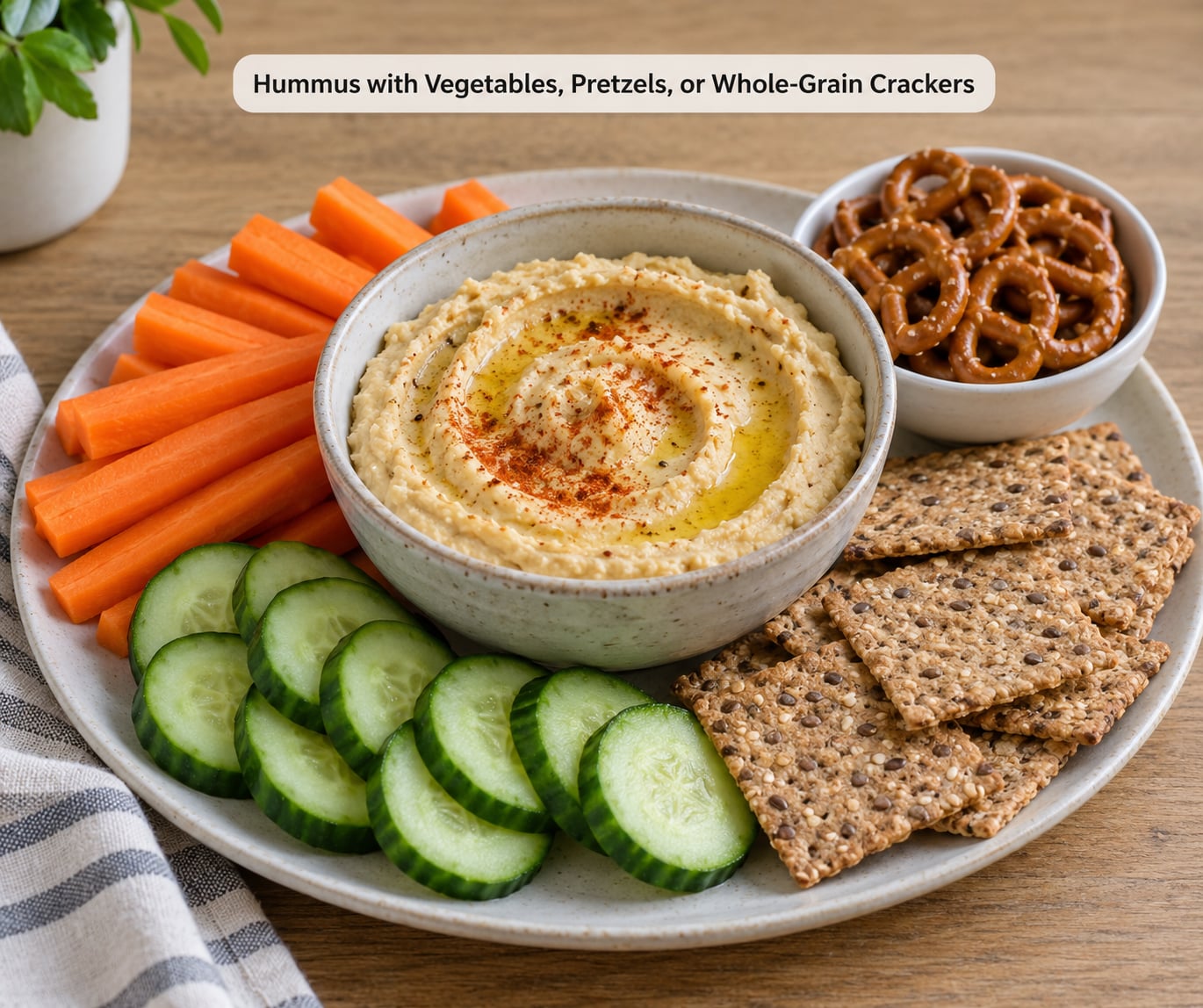
Hummus on its own is more of a vehicle than a protein hit. A 30g serving of standard hummus carries roughly 3 to 4g of protein, so it helps, but it will not get you to 30g by itself.
What makes it work is what you dip. Three good combinations: hummus with carrot and cucumber sticks, hummus with a handful of pretzels for a bit of salt, and hummus with wholegrain crackers plus a few slices of turkey or a hard-boiled egg on the side.
Loaded hummus, which is hummus stirred through with chickpeas, roasted pepper or tuna, carries noticeably more protein than the plain kind. Check the label if a higher protein snack is the priority, and be honest about it. Hummus is one of the best high protein snacks for fiber and for sharing, but it is not the highest protein item on this list.
It is also the easiest to make yours. Blitz a drained tin of chickpeas with tahini, lemon juice, garlic and olive oil in a blender and you have a week of snacks that keeps in the fridge for about four days.
How to Choose High Protein Snacks You Do Not Have to Cook
Compare the label, not the front of the pack. Eight numbers and one question decide whether a snack works for you.
- Protein per serving. Look for 15 to 30g for a proper snack. Under 10g and you will be hungry again in twenty minutes, so eat a larger portion or pair it with something else.
- Protein per calorie. A 200 calorie snack with 20g of protein is doing far more for you than a 90 calorie snack with 4g, even though the second one looks better on paper.
- Added sugar. Flavored yogurt, fruit bars and granola-style snacks often add 8 to 15g. Choose versions with under 5g added sugar and get sweetness from real fruit.
- Sodium. Tinned fish, deli meat, olives and salted edamame are all high-sodium options. If that matters for your health, the no-added-salt tuna pouch and unsalted edamame exist for a reason.
- Fiber. Fiber is what makes the snack filling. Wholegrain crackers, fruit, oats and vegetables add it, which is why those pairings are all over this list.
- Ingredients. Short lists are easier to check for allergens and for things you do not eat. A label you cannot pronounce is a label you cannot scan at 3pm.
- Allergens and dietary fit. Dairy, eggs, fish, soy and nuts are the usual suspects here. Plenty of the ideas swap cleanly, and there is a vegetarian route through almost all of them.
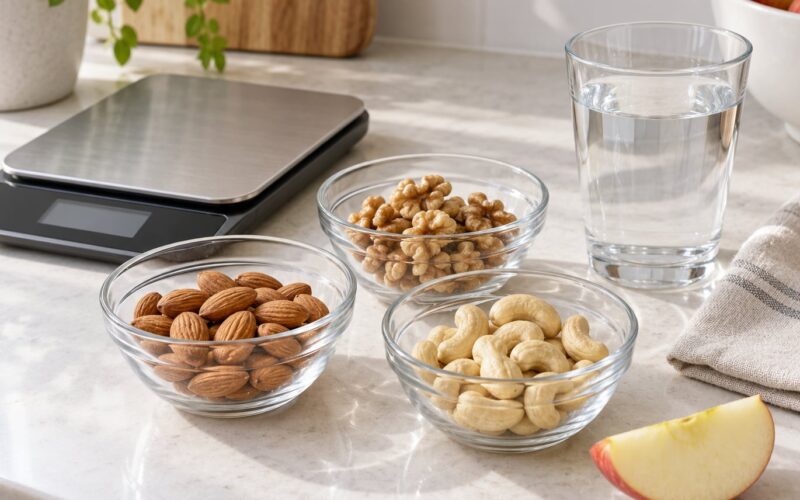
- Portion size. A serving is whatever the label says it is, and that is often not what you would naturally pour. Weigh it once with a kitchen scale and you stop guessing forever.
A snack does not need to be high in everything. Pick the one that fits your goal, your allergies and your schedule, then eat it without overthinking it. If you are comparing high protein snacks you do not have to cook for the first time, these eight numbers will tell you more than any front-of-pack claim.
Frequently Asked Questions
How much protein should I aim for in a snack?
Most adults do better spreading protein across the day than loading it all into dinner. A snack carrying 15 to 30g is a good target because it is enough to take the edge off hunger without weighing you down, and it pairs well with a full breakfast and lunch. A small snack of 5 to 10g is fine when you are topping up, just do not expect it to hold you until the next meal.
Are protein shakes necessary when choosing no-cook snacks?
No. Powder is one convenient way to add protein, not the only one. Plain Greek yogurt, tinned tuna, edamame, deli roll-ups, eggs and nut butter all deliver meaningful protein with no blender and no cleanup. Powder earns its place when you want 25 to 30g in one small portion, such as in overnight oats, or when you have been told your intake needs a boost.
What are the best high protein snacks for weight loss?
Look for the highest protein per calorie rather than the lowest calorie count. Cottage cheese, plain Greek yogurt, eggs, edamame, tuna in a pouch and smoked salmon all carry a strong protein-to-calorie ratio and enough fat or volume to keep you satisfied. A snack you are still hungry after is a snack that gets replaced by something worse twenty minutes later. Individual calorie targets vary, so a registered dietitian can help you size portions.
How can I keep no-cook snacks fresh and safe?
Refrigerate cooked eggs, opened tuna and salmon, cut fruit and vegetables, and anything made with yogurt or hummus, and keep the fridge at 40F or below. Do not leave perishable food at room temperature for more than two hours. Wash whole produce before you cut it, keep deli meat in its own sealed container, and use small portions you can finish in one sitting rather than picking at a big bowl.
Are there high protein snack ideas for vegetarians?
Most of the list works without changing a thing. Eggs, plain Greek yogurt, cottage cheese, string cheese, hummus, edamame and the overnight oats with milk all count as vegetarian, and that is seven of the ten. For a fully plant-based version, swap in soy yogurt and a pea or soy protein powder, and add extra edamame, hummus or nut butter where the protein number matters most to you.
Can I eat these snacks without preparing anything in advance?
Yes for most of them. Plain yogurt, tinned tuna in a pouch, canned salmon, nuts, nut butter packets and shelf-stable protein bars need no preparation at all, and edamame is edible straight from the chilled pack. The only real prep is boiling eggs or mixing oats the night before, which is optional batch work rather than cooking, and you can skip it entirely if you are short on time.
If you only change one thing this week, buy a tub of plain Greek yogurt, a pouch of tuna and a bag of edamame. Those three cover the sweet, the savory and the plant-based, and every one of them is ready the moment you open the fridge. Start there, then work through the rest of these high protein snacks you do not have to cook at your own pace. If you want a plan built around your own goals, a registered dietitian can help more than any list, including this one.