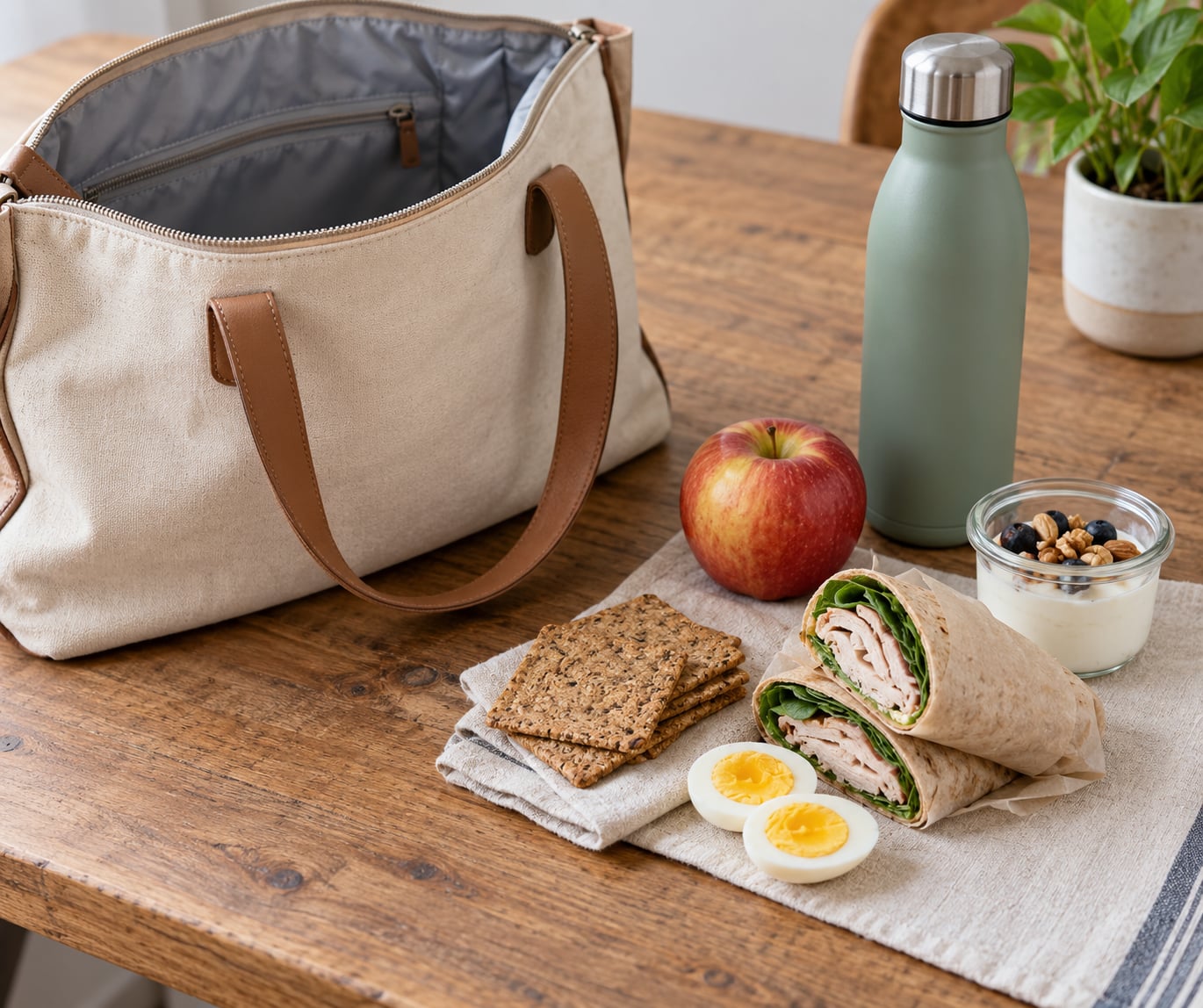
Eating healthy while traveling comes down to three habits: pack shelf-stable snacks so you are never dependent on a convenience store, keep water in front of you, and ask for sauces on the side when you eat out. That is genuinely all it takes to eat healthy when you travel, and this guide turns it into seven steps plus a packing list for each travel mode.
Travel trips up ordinary eating in predictable ways. Meals get later, water gets forgotten, and food choices narrow down to whatever is open at the moment. The result is usually not disaster, just a few days of bloating, low energy and heavier dinners than you planned.
Table of Contents
- What You Need Before You Go
- Step-by-Step: How to Eat Healthy When You Travel
- 1. Plan Your Meals Before You Leave
- 2. Build a Balanced Travel Plate
- 3. Choose Airport and Station Food Wisely
- 4. Keep Snacks Portion-Controlled: How to Eat Healthy When You Travel Between Meals
- 5. Stay Hydrated and Limit Alcohol
- 6. Handle Long Car, Bus, or Train Journeys
- 7. Eat Safely While Away
- Common Mistakes That Undo Good Intentions
- Frequently Asked Questions
- What should I eat on a long flight?
- Is airport food healthy enough for travel?
- What are good snacks to pack in my carry-on?
- How do I maintain healthy eating at a travel buffet?
- How do I get back to my normal eating routine after a trip?
What You Need Before You Go
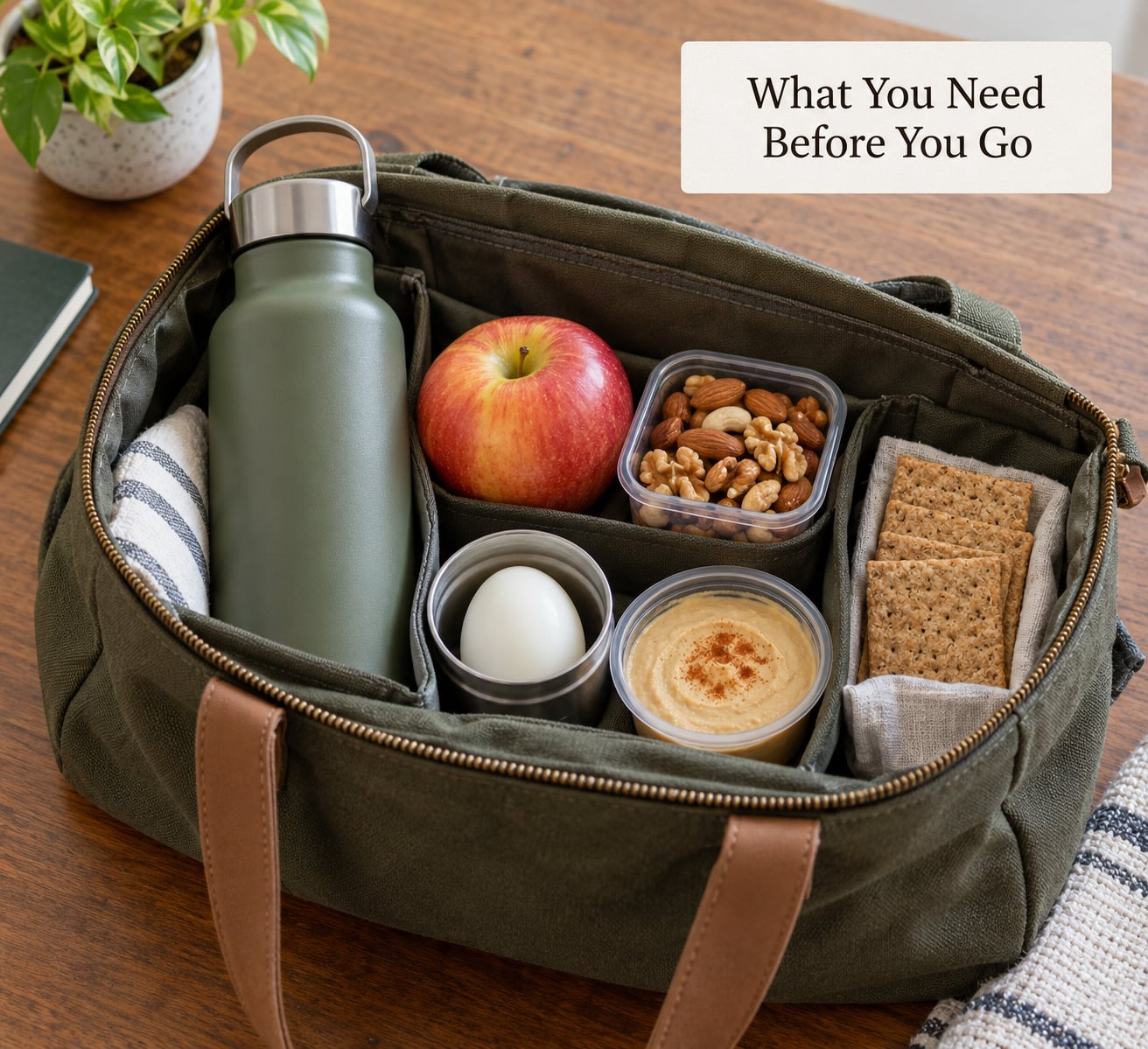
You need very little. Most people who eat well on a trip carry the same short list, and none of it requires a special diet or a big shopping run.
- A reusable water bottle. It is the cheapest habit change you can make, and refilling stations exist in most airport terminals, train stations and hotel lobbies.
- Three or four shelf-stable snacks. Good options that survive a warm car or a security line include nuts, pumpkin seeds, protein bars, dried fruit, roasted chickpeas, whole-grain crackers and single-serve nut butter packets.
- Two or three real meals for the first day. Sandwiches, wraps, pasta or grain bowls hold up well for the first 24 hours. Most trips fall apart in the opening hours, not the last.
- Collapsible containers or a small insulated bag. If you pack anything that needs chilling, this is what keeps it edible past lunchtime.
- A one-line meal strategy. Decide where you will eat breakfast and where you will eat dinner. Everything else can happen around those two anchors.
- A rough sense of food-safety basics. Two hours is the number to remember: perishable food should not sit unrefrigerated longer than that.
Pack light. A bag of food you are willing to carry for eight hours gets eaten; a bag of aspirational salads usually does not.
Step-by-Step: How to Eat Healthy When You Travel
The order matters more than the details. Plan first, then build each meal the same way, then pick sensible options wherever you end up eating.
1. Plan Your Meals Before You Leave
Look at your flight, train or drive times before you pack anything. A six-hour flight with a five-hour layover is a different problem from a three-hour hop, and both are easy once you know which one you are solving.
Decide in advance what you will eat at the airport or station rather than deciding while staring at a lit-up menu board with a stomach growl. Pack enough snacks that you can cover the longest gap between meals, roughly one per four hours of travel.
The single biggest mistake is leaving home hungry and then boarding. You will overeat at the first opportunity, and it will be the least interesting option available.
You know this worked when you reach your first destination without the shaky, foggy feeling that comes from skipping food for too long.
2. Build a Balanced Travel Plate
You do not need to cook. Almost every restaurant, cafe and food-court order can be assembled into the same shape: protein, vegetables or fruit, a high-fiber carbohydrate, and sauces or fats in modest amounts.
Think grilled chicken or beans as the protein, a salad or roasted vegetables as the produce, and brown rice, a whole-grain wrap or a baked potato as the carbohydrate. Dressing, butter and creamy sauces add up faster than most people expect, so ask for them on the side and add them yourself.
One practical rule from frequent travelers: start with a vegetable or salad, then choose the rest. Ordering vegetables first is what stops a dinner from turning into an all-carbohydrate meal.
You know this worked when you finish a meal satisfied rather than stuffed, and you are not thinking about food an hour later.
3. Choose Airport and Station Food Wisely
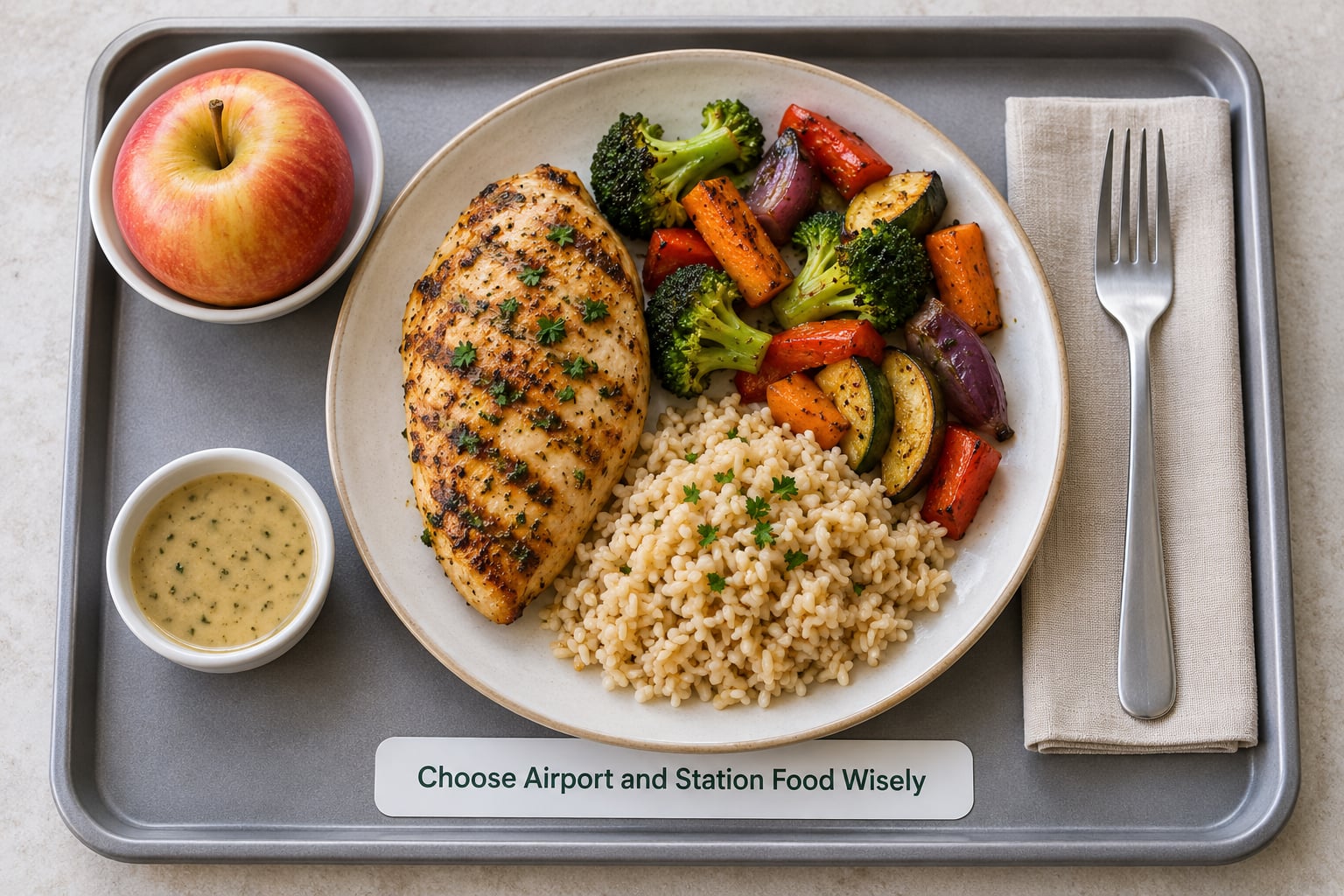
Airport and station food is not hopeless, it is just heavy on sodium and low on fiber. Most of the problem is default choices: pastries, chips and sugary drinks, eaten because they are the fastest thing to grab.
What works better:
- Yogurt with fruit, if you can find a full-size cup rather than a tiny one.
- Fresh fruit, or a cut fruit cup.
- A vegetable sandwich or wrap with chicken, hummus or beans.
- Whole-grain crackers with cheese or nut butter.
- Hard-boiled eggs or roasted nuts for something with protein and no fries involved.
- Soup, especially tomato or chicken-based, if the line is short.
- Water or sparkling water instead of soda or an energy drink.
What to pass on: anything deep-fried, a pretzel loaded with cheese sauce, and a long transit delay spent on nothing but snacks. One indulgent choice is fine. Three in a row is how a good day of eating turns into a bloated night.
You know this worked when you land able to eat a proper dinner rather than grazing at the gate because nothing sensible ever came up.
4. Keep Snacks Portion-Controlled: How to Eat Healthy When You Travel Between Meals
Snacks are meant to take the edge off hunger, not to become meals you did not plan. A reasonable rhythm is one snack every three to four hours of travel, eaten before you get properly hungry rather than after.
Portion control in practice is simple: put the day’s snack allowance in a small container or two single-serve bags at the start of the trip and stop when it runs out. Out of sight, out of mind, and it takes about ten seconds to set up.
Fiber and protein keep you level. Fruit, nuts, yogurt and jerky travel well and hold hunger down for longer than a cookie does. If you know you will be walking all afternoon, go slightly bigger on protein and skip the sugary option that will bounce right back.
You know this worked when you arrive at mealtime hungry enough to enjoy a meal rather than so tired of snacking that anything tastes the same.
5. Stay Hydrated and Limit Alcohol
Travel dehydrates you quietly. Airports and planes are dry, you walk more than usual, and you often replace water with coffee. Mild dehydration shows up as headache, tiredness and hunger that looks a lot like a snack craving.
Keep the bottle in sight rather than in a bag. Refill at any station, restaurant or tap you pass, and drink a glass of water after the boarding call rather than during boarding. On long flights, aim for water roughly every hour and skip the third or fourth coffee.
Alcohol is worth moderating because of what it does to everything else: it disrupts sleep, which is already the thing travel messes up most, and it pairs with salty travel food in a way that leaves you puffy the next morning. Choose one or two drinks, alternate with water, and expect an earlier night.
Lower-sugar swaps are unglamorous and effective: sparkling water with a slice of lemon, cold brew without syrup, or tomato juice if you like the taste. You do not have to give up the fun drinks, just stop making them the default.
6. Handle Long Car, Bus, or Train Journeys
Long surface journeys spread out the same meal across eight hours, which is what makes them hard. Your body wants normal timing even when nothing convenient is available, so give it something every three or four hours instead of one enormous meal at the destination.
Plan food around the stops rather than the drive. Pack a cooler bag with anything that needs chilling and put it in the order you will need it, so the first items come out first. Save the crumbly and sticky things for later, when dropping them will not matter.
Use rest stops for more than fuel. A ten-minute walk, some water and a proper sit-down meal usually beats a drive-through and a 90-minute stretch of not moving. Trains give you more freedom, since you can walk to a station cafe or bring food to your seat. This is where how to eat healthy when you travel on the road mostly happens, in a rest stop parking lot rather than at a table.
You know this worked when the journey ends and you feel normal rather than hollow.
7. Eat Safely While Away
Most food illness while traveling comes from food sitting at the wrong temperature, or from water you could not verify. The standard guidance is short enough to remember.
- Poultry: 165°F (74°C) internal temperature.
- Ground meat: 160°F (71°C) internal temperature.
- Whole cuts of meat and fish: 145°F (63°C) internal temperature, with a three-minute rest.
- Danger zone: 40°F to 140°F (4°C to 60°C), where bacteria multiply fastest.
- Storage: refrigerate or freeze within two hours, or within one hour when it is above 90°F (32°C) outside.
- Reheating: bring leftovers to 165°F (74°C) and reheat food only once.
In restaurants, skip food that sits lukewarm at a buffet or salad bar, cut fruit from a display, and anything that has been sitting out in the sun. Eat at busy places where food turns over fast.
For water, use sealed or factory-bottled water when you are unsure of the tap, and be careful with ice. Travelers who follow local advice note that cubed ice is generally safer than shaved or crushed ice. Boiling water for one full minute kills most organisms, and UV purifiers work where the water is clear. See your destination’s current travel health guidance before you go.
If any warning sign shows up, such as persistent vomiting, high fever or signs of dehydration, get medical advice rather than trying to ride it out.
Common Mistakes That Undo Good Intentions
Most failed travel eating plans share the same handful of causes, and each one has a simple correction.
- Skipping meals, then overeating. Correction: eat something every three to four hours, even if it is small. A handful of nuts at the airport beats a huge dinner at 10pm.
- Overpacking snacks. Correction: pack two or three kinds, not fifteen. Food you did not want to carry gets eaten out of boredom, and the good stuff gets crushed at the bottom of the bag.
- Choosing only low-calorie foods. Correction: a plate of plain lettuce will not stop you ordering fries two hours later. Build a normal plate with protein, produce and a carbohydrate.
- Living on sugary drinks. Correction: keep water visible and pick one sweet drink per day on purpose instead of by accident.
- Treating every meal as a special occasion. Correction: decide in advance which one meal per day is the treat. Trying to eat perfectly at every meal is a losing game.
- Going all-or-nothing. Correction: aim for roughly 80% of your meals matching your usual habits. Nobody eats perfectly on a trip, and the people who feel best afterward did not try to.
- Forgetting water entirely. Correction: refill at every stop you make anyway, and drink a glass before you board rather than during.
A few flexible tips for keeping all this simple: pick restaurants with a varied menu rather than the first chain you see, keep one meal a day completely unprocessed, and eat a vegetable at every sitting even if it is just the side salad you asked for. None of it needs a rigid plan, because how to eat healthy when you travel is mostly repeating these small choices until they stop feeling like effort.
If you are packing for a trip where refrigeration is impossible, remember that string cheese, whole nuts, jerky, dried fruit and shelf-stable nut butter hold up unrefrigerated for a full day of travel. Celiac and other special-diet travelers pack their own snacks from home for good reason: reliable options abroad get thin fast, and cross-contamination in unfamiliar kitchens is a real question to ask about rather than assume away.
Frequently Asked Questions
What should I eat on a long flight?
Eat a real meal or a substantial snack before you board, then choose foods that travel well: a sandwich, a wrap, yogurt with fruit, or nuts. Sip water every hour rather than chugging it at once, and skip the heavy meal and extra alcohol before landing, because both tend to leave you bloated and tired on arrival. Pack a snack for the arrival too, because airport food at 11pm is rarely balanced.
Is airport food healthy enough for travel?
Some of it is. You can find yogurt, fresh fruit, vegetable wraps, soup, whole-grain crackers with cheese, and hard-boiled eggs in most terminals, and those options are genuinely fine. What tends to be heavy on salt and low on fiber is the fried and pastry category that dominates the center of the concourse. Pick one sensible item before you fly and let the rest of the terminal be an option rather than a default.
What are good snacks to pack in my carry-on?
Choose snacks with protein and fiber that do not need refrigeration: nuts, pumpkin seeds, roasted chickpeas, protein bars, dried fruit, whole-grain crackers, single-serve nut butter, and vacuum-packed tuna or cheese. Portion them into small bags or a container before you leave so the whole day’s allowance is visible and finite. Put flat, sturdy items in your personal bag rather than a checked one, in case you need them mid-flight.
How do I maintain healthy eating at a travel buffet?
Pass the buffet once first. Look for the grilled items, the salad bar with fresh toppings, and the legumes before deciding anything. Take vegetables first, then a protein, then one carbohydrate, and skip creamy salads and fried sides that are sitting at room temperature. If the hot food is not steaming when you reach it, skip it, and eat later rather than filling a plate out of habit.
How do I get back to my normal eating routine after a trip?
Start with the next two meals, not the whole week. Eat something with protein and fiber to rehydrate and settle your appetite, drink plenty of water for a day or two, and go back to your normal meals from there. Do not compensate for the trip by restricting heavily. Most travel eating settles within a few days once your meal timing and hydration return to normal.
Start with the one thing that changes the most: tonight, put three or four shelf-stable snacks in a bag and fill a water bottle. Everything else in this guide, from the balanced plate to the airport choices, is easier once you are not dependent on whatever is open at the time.