If you have typed do detox teas actually work into a search box, the short answer is no: detox teas do not pull toxins out of your body and they do not burn fat. The weight that disappears in the first few days is water, stool and gut content, pushed along by stimulant laxatives and mild diuretics. Your liver and kidneys already clear waste continuously, so the blend adds strain rather than cleaning.
If that sounds obvious, you are probably in the majority. One of the most-searched threads on r/nutrition is literally titled “Dumb question but are detoxes real?” — the embarrassment people feel about asking is itself a small part of how this market works.
Table of Contents
- What Are Detox Teas and What Do They Claim to Do?
- Do Detox Teas Actually Work for Weight Loss?
- Water weight is not fat loss
- Why detox teas make you poop so much
- How Does Your Body Detoxify Waste Naturally?
- What Evidence Exists for Herbal Detox Ingredients?
- What Risks and Side Effects Should You Know About?
- Who should skip these blends entirely
- What happens when you stop
- What to Look for in Tea Marketing Claims
- Safer Alternatives for Bloating and Weight Management
- Frequently Asked Questions
- Can drinking detox tea make you lose weight overnight?
- Are detox teas safe if they contain herbs, fruit, or tea leaves?
- Does a detox tea help with bloating or digestion?
- Can detox teas cause diarrhea or interact with medications?
- What is a safer approach to losing weight and reducing bloating?
What Are Detox Teas and What Do They Claim to Do?

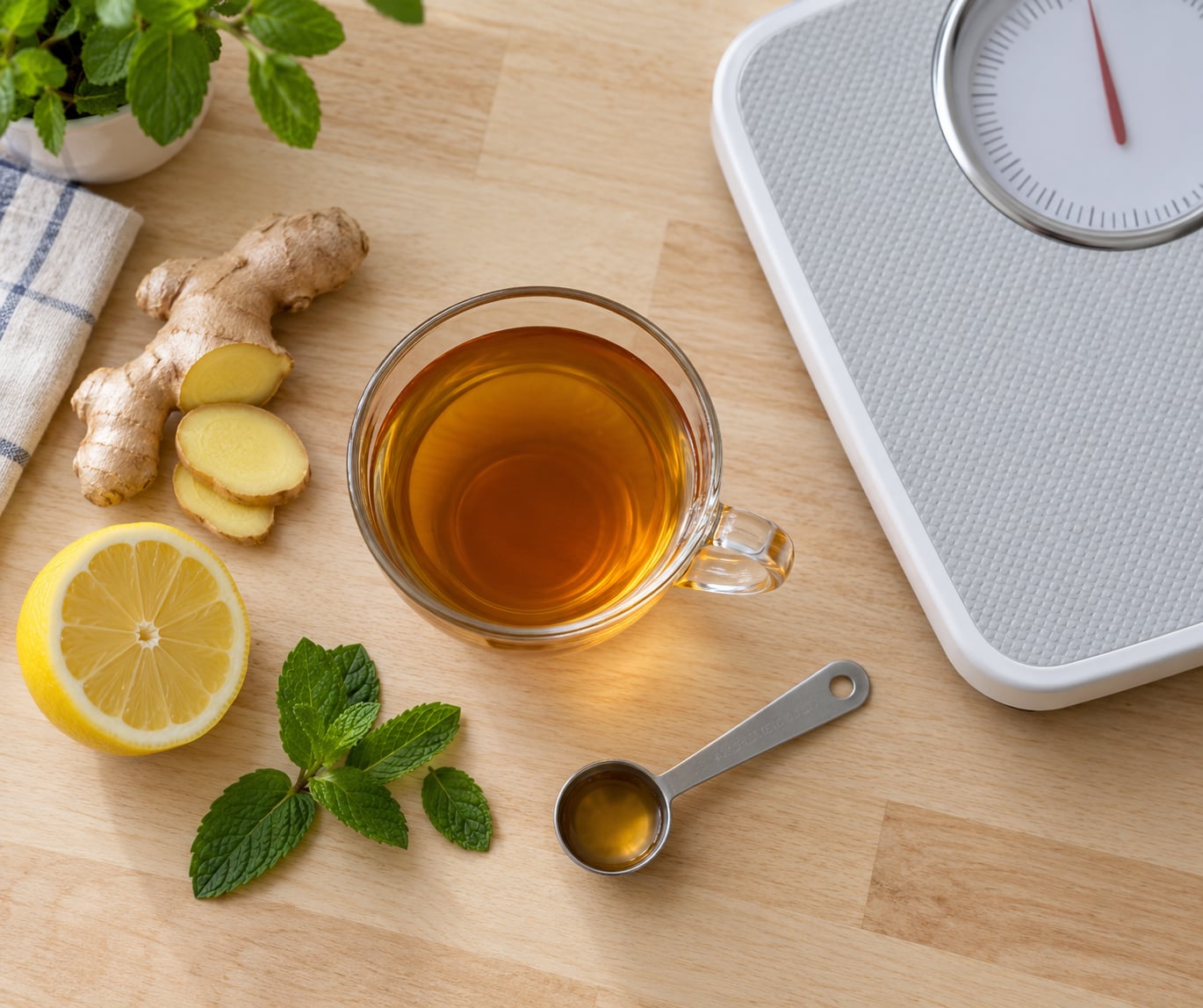
A detox tea is a herbal blend built on a tea base — green, black or oolong — with botanicals added for effect. The most important of those botanicals is senna leaf, sometimes listed under its species names Cassia acutifolia, Cassia angustifolia or Cassia chamaecrista. Blends also commonly carry dandelion root, peppermint, lemongrass, ginger, yerba mate or guarana for a diuretic, stimulating punch.
You will see these drinks sold as tea cleanses, teatoxes, skinny teas or flat tummy teas. The marketing usually makes four promises, and it is worth naming all four because each one fails differently:
- Toxin removal — the claim that accumulated waste, chemicals or metabolic byproducts are being flushed out.
- Fast weight loss — pounds lost within days, often before a wedding, holiday or photo shoot.
- A flatter stomach — a reduced waist measurement within hours.
- A “boosted” metabolism — a faster calorie burn that supposedly continues after the last cup.
None of those promises is supported by good human evidence. The fourth one, metabolism, is the sneakiest, because caffeine and tea polyphenols have small, real effects on metabolic rate that marketers inflate into something they are not.
Do Detox Teas Actually Work for Weight Loss?
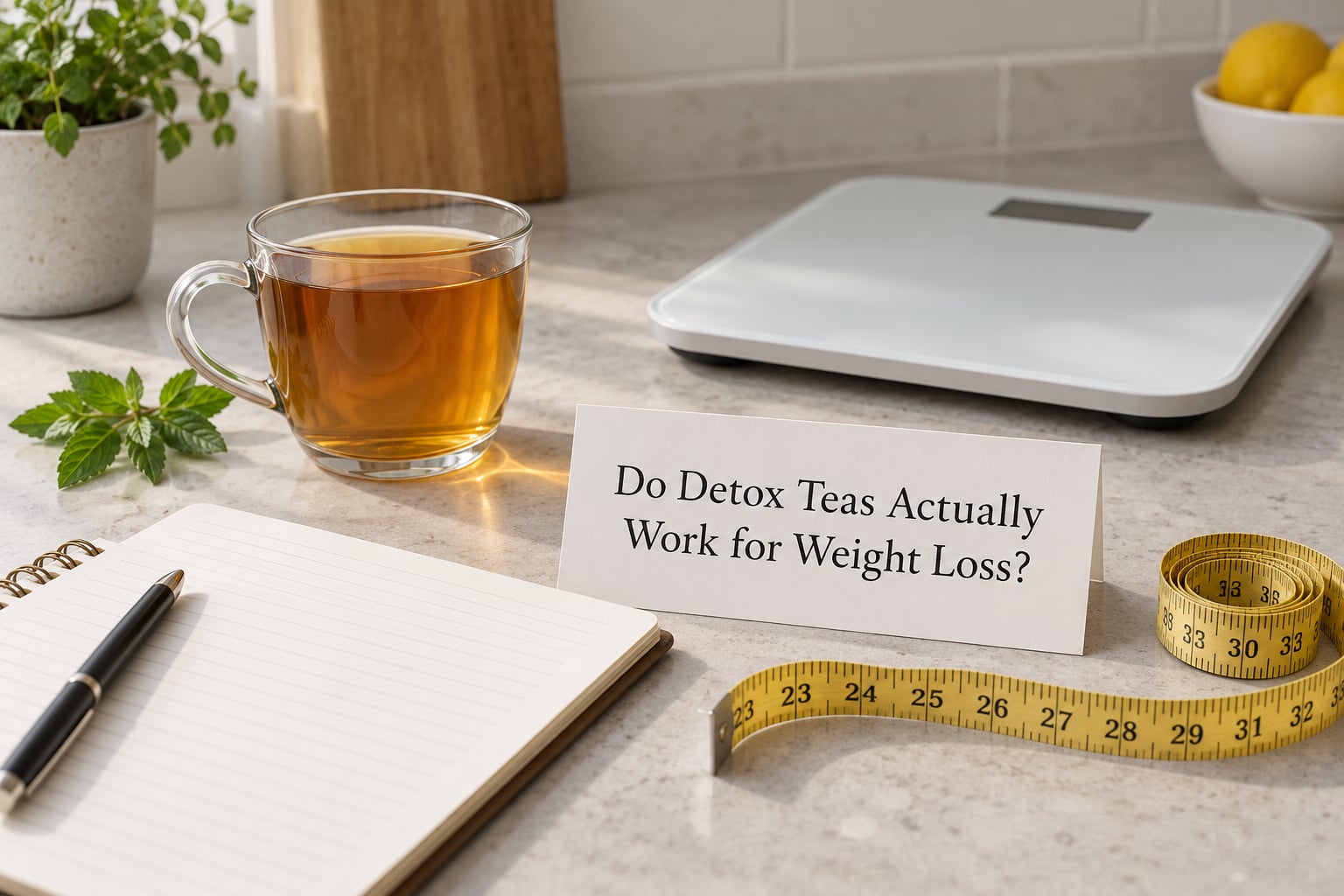
Do detox teas actually work for weight loss? Only in the sense that water weighs something, and only temporarily. Here is the direct breakdown, and it is worth reading carefully because the two kinds of weight loss look identical on a scale and behave nothing alike.
- “Cleanses toxins” — nothing is being cleansed; the liver and kidneys already do this. Evidence: none.
- “Burns belly fat fast” — water and bowel content leave the body, while fat tissue is unchanged. Evidence: none.
- “Flattens the stomach” — a short-lived reduction in gut contents and bloating. Evidence: none.
- “Speeds up metabolism” — caffeine gives a small, brief metabolic bump, similar to coffee. Evidence: modest, short-lived.
- “Relieves bloating” — moving stool along can reduce pressure temporarily. Evidence: plausible, symptomatic only.
Water weight is not fat loss
Senna and its relatives are stimulant laxatives. The active compounds, sennosides, are not absorbed into the bloodstream; instead, gut bacteria break them down and they irritate the lining of the colon, which triggers a bowel movement usually within 6 to 12 hours. Everything in that path — water, electrolytes, stool — leaves with it.
Dandelion, peppermint and the caffeine in yerba mate or guarana add a mild diuretic effect, meaning more urination and more fluid leaving the body. Two mechanisms, one result: a lower number on the scale that reverses within a day or two of stopping.
A five-pound drop overnight sounds dramatic. Brown University Health has described exactly that figure as the water-loss pattern these products deliver, and forum users describe the same thing — rapid bathroom trips, a lighter scale, and a total absence of lasting change.
Why detox teas make you poop so much
Because the blend is engineered to do it. Labels rarely print the senna amount, so the dose is whatever the brand decided, and users reviewing products on Reddit frequently describe effects they call “minimal at best” alongside intense cramping they compare to being grabbed internally.
That is the honest contradiction at the centre of this market: the thing people buy the product for is the thing that makes it risky.
How Does Your Body Detoxify Waste Naturally?
Your body runs a continuous waste-processing system, and every part of it is already online. No tea is required to switch it on.
- Liver — chemically processes everything you eat and drink, packaging compounds for removal and breaking others down.
- Kidneys — filter the blood continuously and regulate water, sodium and potassium balance.
- Colon — moves waste out on its own schedule, while hosting a large share of your gut bacteria.
- Lungs — exhale carbon dioxide and other gaseous byproducts every breath.
- Digestive tract — moves food along, absorbs what you need and eliminates the rest.
When these organs work normally, there is nothing stored to flush. The idea that waste builds up in the gut waiting for a cleanse is not a medical finding, and a doctor who told you to clean your liver would be describing a disease state, not a wellness practice.
What Evidence Exists for Herbal Detox Ingredients?
Ingredients in these blends fall into two very different groups: ones with modest, well-studied effects, and ones with essentially no evidence for the purpose being sold.
Green and oolong tea contain catechins, mainly EGCG, with small effects on thermogenesis and fat oxidation. The size of that effect is modest, and the studies assume regular drinking over months, not a three-day cleanse. Ginger has genuine data behind it for nausea and for speeding gastric emptying, which can ease the feeling of being overfull. Peppermint relaxes smooth muscle in the gut and is a reasonable, low-risk answer to post-meal bloating.
Dandelion root is used as a mild diuretic. That is a real pharmacological effect, and it is also precisely why it does not equal fat loss. Senna, by contrast, has an unambiguous effect on bowel movement and no demonstrated effect on toxins, fat tissue or long-term weight. One of these ingredients has a legitimate medical use for short-term constipation. None of them cleanses.
The honest summary, as the Academy of Nutrition and Dietetics frames it: a blend’s dose is usually undisclosed, so even a modest active ingredient delivers an unknown amount, attached to a claim the ingredient cannot support.
What Risks and Side Effects Should You Know About?
The side effects are not theoretical. They show up in clinic conversations and in Reddit threads with equal frequency.
- Dehydration and electrolyte loss — repeated fluid loss depletes sodium and potassium, which can cause headache, weakness, jitteriness and, in severe cases, heart rhythm problems.
- Laxative dependence — used habitually, stimulant laxatives can blunt the colon’s own response. Constipation that was not there before often appears when you stop.
- Gut microbiome disruption — scouring the colon interferes with the bacteria that live there, which affects digestion beyond the cleanse window.
- Stimulant effects — caffeine, yerba mate and guarana can raise heart rate and blood pressure, worsen anxiety and disrupt sleep.
- Medication interference — rapid transit and heavy fluid loss can reduce how much of a pill, including an oral contraceptive, is absorbed. A pharmacist or clinician can check your specific medication.
- Weak regulation — under the Federal Food, Drug, and Cosmetic Act, the FDA does not pre-approve dietary supplements before sale. A JAMA review found roughly 750 supplements adulterated with prescription appetite suppressants, laxatives or steroids between 2007 and 2016.
The finding that stopped me most in the research is from a 2020 cohort study of more than 10,000 women, reported through Healthline. Women who had used laxatives for weight control were about six times likelier to later be diagnosed with an eating disorder than those who had not. That is a correlation rather than proof of cause, but it is large, and it deserves to weigh heavily in the decision.
Who should skip these blends entirely
Anyone pregnant or breastfeeding, or living with heart disease, arrhythmia or high blood pressure, should not use stimulant-containing teas. The same goes for inflammatory bowel disease, liver or kidney disease, a history of laxative dependence or an eating disorder, and anyone taking prescription medication or hormonal contraception — ask a pharmacist first.
What happens when you stop
If you have already been drinking one, expect the effect to fade within a day or two of your last cup. Some people notice constipation for several days afterwards while the colon resets, which is uncomfortable and temporary, but worth mentioning to a doctor if it does not settle. Drink water steadily and eat normally; there is no special protocol needed beyond that. Seek medical care for severe cramps, fainting, confusion or chest symptoms.
What to Look for in Tea Marketing Claims
Read the ingredient panel, not the front of the pouch. The marketing copy is nearly interchangeable; the label tells you what you are actually drinking.
Search the ingredients for senna, sennosides, or any Cassia species name. If any of those appear, the drink is a laxative product wearing a teacup costume, and the weight it moves is not fat. Next, check for proprietary blend on the panel, which means the amounts of every herb inside are undisclosed. Then look for yerba mate or guarana, which add caffeine the label may not quantify, and note any added sugar or syrup, which quietly works against the goal the tea is sold for.
On the packaging, treat these claims as warnings rather than evidence: guaranteed pounds lost in days, toxins, heavy metals or chemicals being drawn out, before-and-after photos, unnamed “studies” or a celebrity holding the cup. A transformation image taken the morning after a cleanse is a photo of an empty colon and a full bladder, not of a changed body.
And note who profits. A friend selling you a bag with a QR code on their commission link is running a referral, not advising you. That pattern shows up repeatedly in weight-loss communities and it is worth naming out loud before you buy.
Safer Alternatives for Bloating and Weight Management
Most of what people want from a detox tea is available without one. Bloating usually responds to everyday mechanics rather than to a blend.
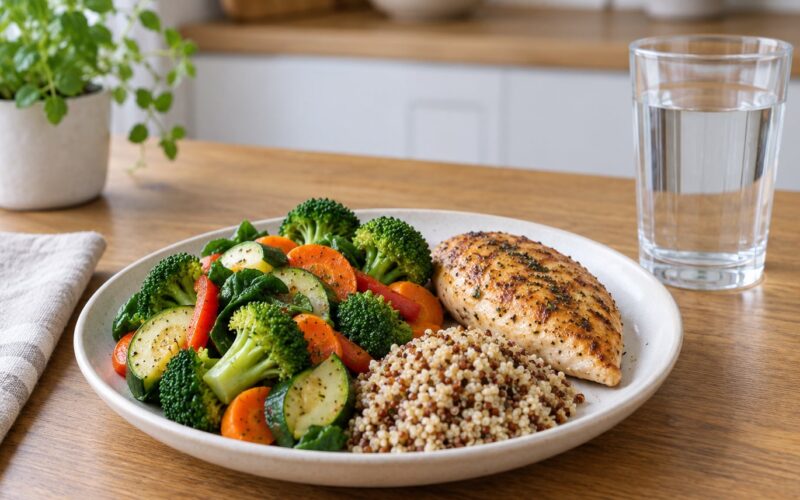
Start with fluid intake across the day rather than a sudden flood, and add soluble fibre — oats, beans, psyllium — alongside more vegetables, since fibre plus water is what keeps digestion moving without a stimulant. Eat at regular hours instead of skipping meals, and look at sodium and heavily processed foods if water retention is the complaint, because both raise fluid holding. Movement, even walking, supports both digestion and a modest calorie deficit.
For weight specifically, the honest mechanism is a sustained calorie deficit plus strength and cardio work, and it is slower than any before-and-after photo. Sleep matters more than most people expect; short sleep raises appetite and makes consistent choices harder.
Green tea, peppermint or ginger tea after meals are perfectly reasonable everyday drinks, and replacing a sugary soda or latte with unsweetened tea is a real calorie saving. That is the legitimate version of the idea these products are selling.
If bloating is persistent, painful, or comes with a change in bowel habits that lasts more than a few weeks, book an appointment rather than escalating to a stronger blend. Your doctor or a registered dietitian can find the cause. So can a pharmacist, if the question is simply whether a product is safe alongside your medication.
Frequently Asked Questions
Can drinking detox tea make you lose weight overnight?
You can lose weight on the scale overnight, but it is water, stool and gut content rather than fat. Senna and related botanicals act as stimulant laxatives, while caffeine and dandelion increase urination. The change typically reverses within a day or two of your last cup, so it says nothing about progress toward fat loss.
Are detox teas safe if they contain herbs, fruit, or tea leaves?
The tea leaf and fruit pieces are usually not the concern. The risks sit in what is added: senna and other stimulant laxatives, undisclosed caffeine from yerba mate or guarana, proprietary blends with no stated amounts, and supplement products that are not pre-approved by the FDA before sale. A warm cup of plain herbal tea is a different category of drink entirely.
Does a detox tea help with bloating or digestion?
Some people report feeling less bloated, and the reason is straightforward: the laxative action empties the bowel, which reduces pressure temporarily. That is symptomatic relief that stops when you stop drinking it, and it can be followed by constipation as the colon resets. Peppermint or ginger tea, more fibre and steady hydration address bloating with fewer risks.
Can detox teas cause diarrhea or interact with medications?
Yes to both. Diarrhea, cramping and urgent bathroom trips are the most common complaints, and heavy fluid loss can deplete sodium and potassium. Rapid gut transit and fluid loss can also reduce how much of a medication, including an oral contraceptive, is absorbed. Anyone on prescription medication should ask a pharmacist before trying one.
What is a safer approach to losing weight and reducing bloating?
Build a modest calorie deficit you can hold, add vegetables, beans and oats for fibre, drink water steadily through the day, move most days, and protect your sleep. These changes take weeks, which is exactly why the quick results from a cleanse feel appealing. If bloating persists or your weight shifts suddenly, see a doctor or registered dietitian instead of escalating to a stronger product.
If you take one thing from this: the number on the scale after a detox tea is not progress. So, do detox teas actually work? Not in any way that lasts. Read the ingredient panel for senna or Cassia, keep your hydration steady, and put the effort into food and movement that keeps the results after you stop drinking the tea.