How to cook rice to lower the calories comes down to two things: cook a measured, modest portion, and chill the cooked rice before you eat it. Cooling converts part of the digestible starch into resistant starch, which your body digests less efficiently. Ten minutes of work plus one night in the fridge is enough.
There is a second technique floating around, draining and rinsing the cooking water, and I will get to it below. Honestly, it barely moves the calorie number. The chill does most of the work.
One more thing worth saying early: the headline claims about rice losing half its calories refer to the calories your body absorbs, not to what a food label says. The label stays the same. What changes is how much of that starch you actually digest, and how your blood sugar responds after the meal.
Table of Contents
- What You Need to Cook Rice to Lower the Calories
- Step-by-Step: How to Cook Rice to Lower the Calories
- Step 1: Choose a Sensible Portion Before You Cook Rice to Lower the Calories
- Step 2: Rinse the Rice
- Step 3: Add Flavor Without Excess Calories
- Step 4: Cook the Rice
- Step 5: Let It Rest, Cool It, and Serve the Right Amount
- Common Mistakes to Avoid
- Frequently Asked Questions
- Does cooling rice really reduce its calories?
- What are the benefits of eating refrigerated rice?
- How much rice should I eat if I am cutting?
- What is the 123 rule for rice?
- What are the benefits of freezing rice for people with diabetes?
- A Simple Rice-Starting Plan
What You Need to Cook Rice to Lower the Calories
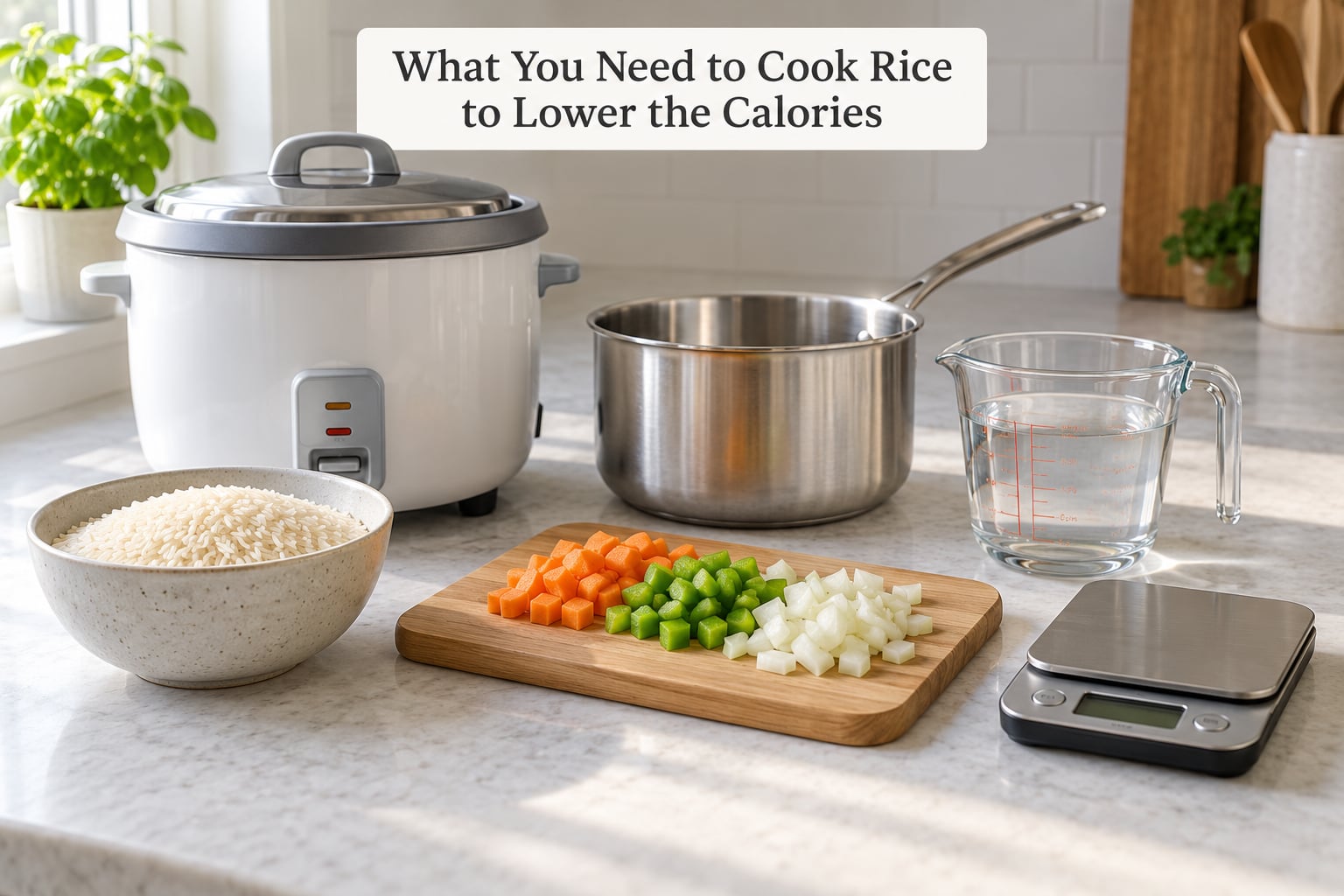
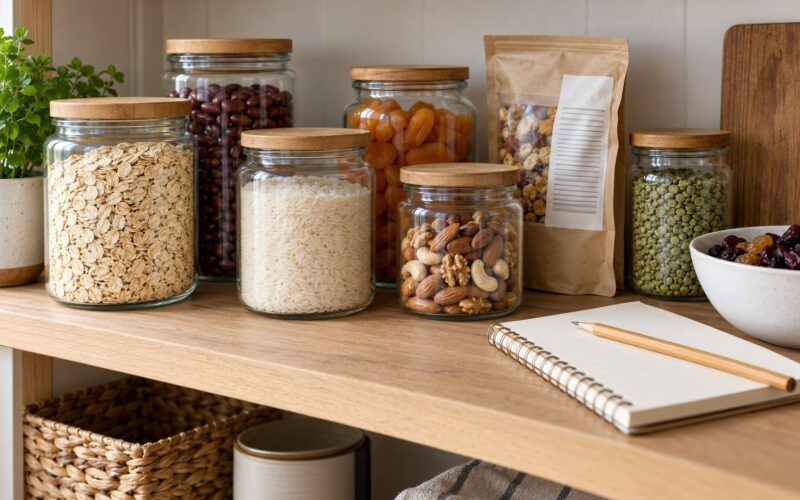
You do not need special equipment. Everything below is either a tool most kitchens already have or a technique that costs nothing extra.
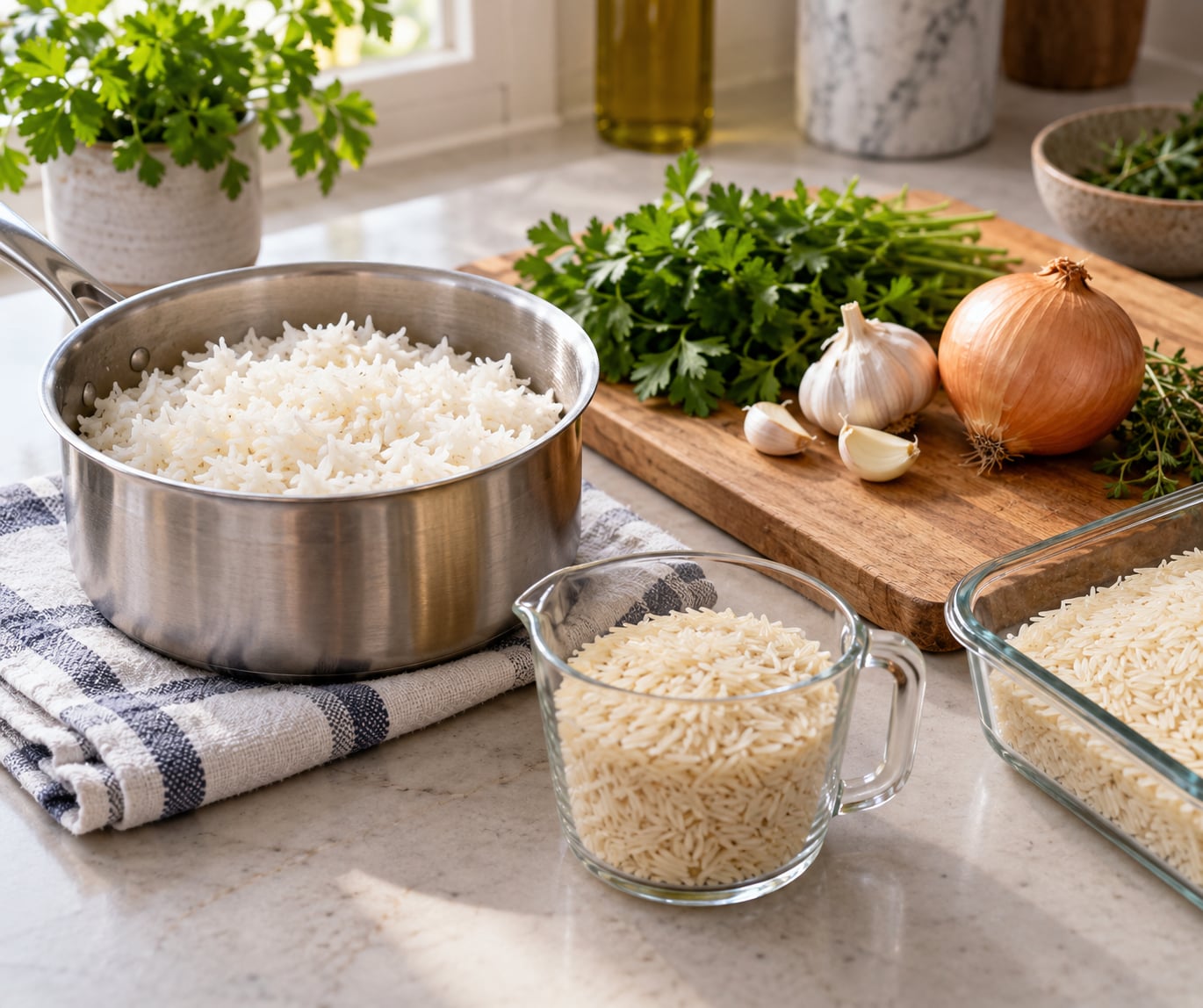
- A saucepan with a tight lid, or a rice cooker. Both work, and the rice cooker is the easier option for weeknight cooking.
- A measuring cup, ideally a 1-cup dry measure you can level off. Portion control matters more here than any gadget.
- A kitchen scale, optional but useful if you cook rice often. Volume measures wobble; grams do not.
- Long-grain white rice or basmati. Long-grain varieties cool and reheat with the best texture, and they are the ones people use this technique on.
- Fresh herbs, garlic, onion, citrus, vinegar and spices for flavor that carries no meaningful calories.
- A shallow container and fridge space. A wide, shallow tub cools faster and more evenly than a deep bowl.
If you plan to cook rice often, a rice cooker with a keep-warm function is the single most useful purchase. It removes the babysitting, and the cooling step happens either way.
Step-by-Step: How to Cook Rice to Lower the Calories
Step 1: Choose a Sensible Portion Before You Cook Rice to Lower the Calories
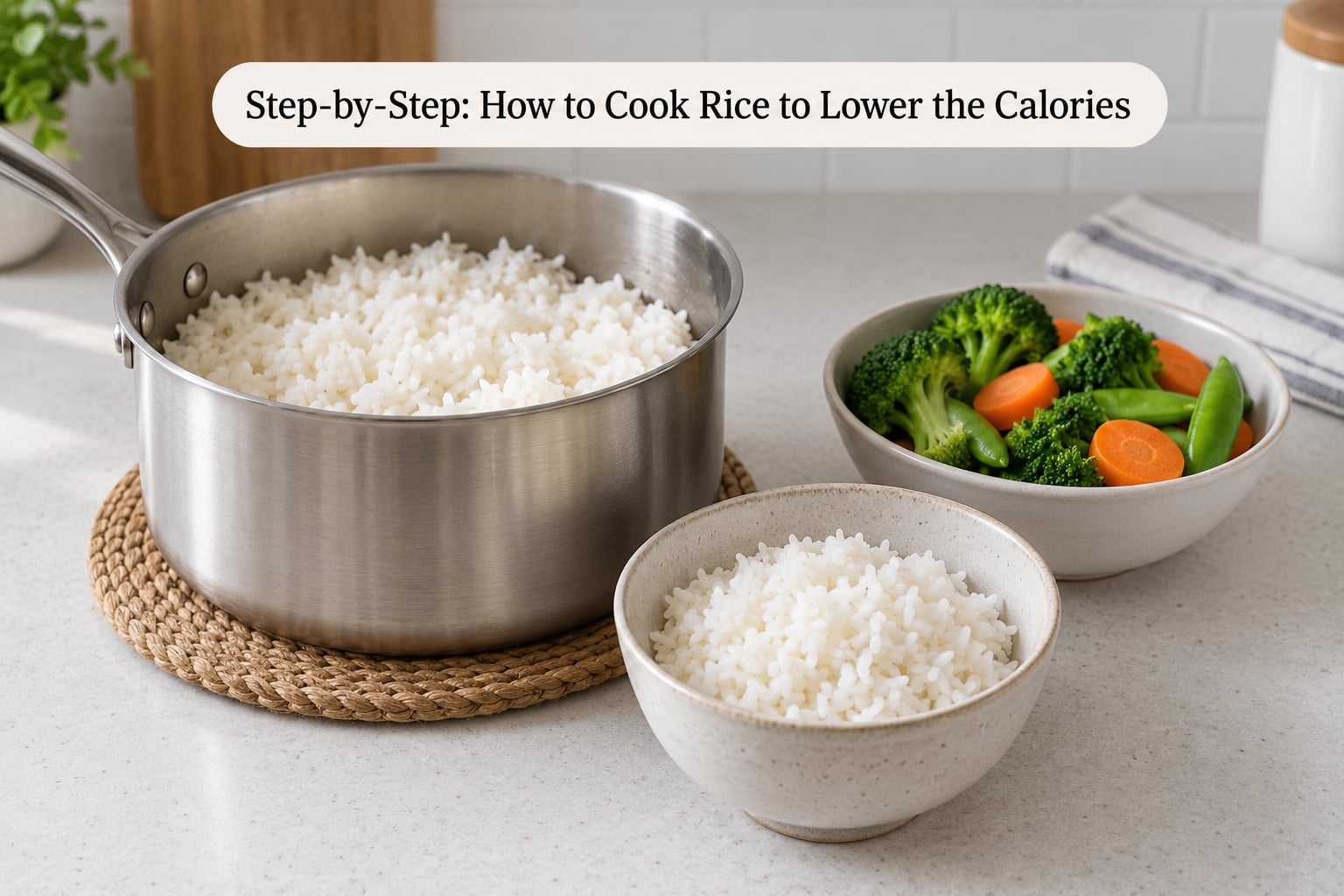
Decide the serving size before the pot goes on the stove, not after the bowl is full. A half cup of cooked white rice lands around 100 calories, and one cooked cup runs roughly 200.
Cook dry rice in multiples that divide into your servings. If you plan two half-cup servings, measure half a cup of dry rice. Nothing else in this guide changes the calorie total as much as this step does.
Step 2: Rinse the Rice
Rinsing white rice in a fine sieve under cold water for 30 to 60 seconds washes off surface starch and reduces clumping. That helps texture, and it is a good habit regardless of calories.
Skip the rinse for brown rice or any short-grain variety where the surface nutrients matter and the grains are meant to stick. Pouring away starchy water from brown rice costs you some of the fiber and B vitamins that made it worth eating.
Step 3: Add Flavor Without Excess Calories
Build flavor before the rice cooks. A halved onion, a crushed garlic clove, a bay leaf, a spoonful of vinegar, a strip of lemon peel or a handful of chopped herbs adds a lot of aroma for a very small number of calories.
Salt and pepper, paprika, cumin, curry powder, dried herbs and a squeeze of lime at the table all count as practically free. Hold the oil bottle until after you have weighed everything else, because a tablespoon of oil adds about 120 calories and one tablespoon is easy to pour without thinking.
Soy sauce, sweet chili sauce, butter and creamy dressings are where bowls quietly gain calories. A tablespoon of soy sauce is small, but the pattern of pouring from the bottle at every meal adds up over a week.
Step 4: Cook the Rice
Use a ratio of roughly 1 cup of dry long-grain rice to 2 cups of water, or follow your rice cooker. Bring the water to a boil, add the rice, stir once, cover, and turn the heat to the lowest setting.
Let it cook for about 18 minutes, then remove it from the heat without lifting the lid. Let it sit another 8 to 10 minutes on the warm burner. That resting time is what separates fluffy grains from mushy ones.
Older write-ups of the rice hack add about 3 percent of the rice weight in coconut oil before cooking, on the theory that oil slows gelatinization and gives you more retrograded starch to work with. The addition is small, but so is the effect, and it raises the calories in the pot as served. Leave it out unless you enjoy the flavor.
Step 5: Let It Rest, Cool It, and Serve the Right Amount
Spread the cooked rice in a shallow container and refrigerate for 8 to 12 hours. The people who stick with it most often describe it as the easiest new habit they kept, more for fullness and steadier blood sugar than for strict calorie math.
Reheat only what you are about to eat, with a splash of water so it does not dry out. Food safety matters here, and it is the piece most posts leave out.
- Get rice into the fridge within two hours of finishing cooking, and no later than one hour in a hot room.
- Keep it at or below 40F (4C) and use it within three to four days. Do not leave cooked rice sitting at room temperature overnight.
- Reheat to steaming, about 165F (74C). Reheat only the portion you will eat, once.
- Bacillus cereus spores survive the cooking step and grow on cooked rice left warm, which is why the cool-down has to be fast.
Freezing works too. Rice frozen right after cooking and reheated from frozen develops a similar amount of resistant starch, and freezing is a good option when you cook rice in bulk. Refrigerating is enough for the effect and easier on your schedule.
Common Mistakes to Avoid
Several popular versions of this method do not do what their headlines promise. These are the ones I see most often.
Believing drained rice water cuts calories. The foam that rises while rice boils is surface starch, but the bulk of the starch is inside the grain. Draining can move a small amount of starch out of the pot, and it makes rice cook non-sticky, but the calorie difference on a normal serving is small enough to ignore. The honest version: if you want fewer calories, cook less rice or eat less of it.
Confusing cooked and dry weights. Rice expands to roughly three times its dry weight in water. A cup of dry white rice is around 350 calories; a cup of cooked white rice is about 200. People who log the dry number because that is what the bag shows end up under-reporting by a wide margin, and people who log the cooked number correctly often panic about a number they were always eating.
Replacing a portion with a bigger scoop of everything else. Cooling rice and then loading the bowl with oil-based dressing, fried toppings and a second ladle of rice cancels out the work in one sitting.
Treating water as the lever. Using a little less water means firmer rice, not fewer calories. Every gram of grain carries roughly the same energy whether it is soupy or dry.
Expecting the effect to be identical across varieties. Long-grain white and basmati respond most reliably. Short-grain and sticky varieties hold onto more digestible starch, and brown rice already carries more fiber, so the upside is smaller.
Here is roughly where the numbers land per cooked cup, based on standard USDA-style values. Treat them as estimates rather than a nutrition label for your specific bag.
| How the rice was prepared | Calories per cooked cup | Carbohydrates per cooked cup |
|---|---|---|
| Long-grain white rice, cooked | about 200 | about 45 g |
| Long-grain white rice, cooked with coconut oil and cooled overnight | about 200 plus the oil you added | about 45 g |
| Brown rice, long-grain, cooked | about 215 | about 45 g |
| Drained and rinsed rice | roughly the same as plain cooked rice | roughly the same |
Read that table carefully and the whole picture becomes clear. The calorie label does not move. What improves is the share of starch you digest, how full you feel afterward, and how quickly your blood sugar climbs and settles.
Frequently Asked Questions
Does cooling rice really reduce its calories?
It reduces the calories your body absorbs, not the calories on the label. When cooked rice cools, part of its starch recrystallizes into resistant starch, which digestive enzymes cannot break down as easily. That starch yields about 2.5 calories per gram instead of 4 if it is digested. The label number stays the same, so track portion size rather than assuming a calorie-free bowl.
What are the benefits of eating refrigerated rice?
Cooled and reheated rice tends to have a flatter effect on post-meal blood sugar than rice eaten straight from the pot, and the resistant starch it forms resists digestion. Many people find it stays filling longer, which helps with portion control. Refrigerate within two hours, keep it cold, use it within three to four days, and reheat only what you will eat.
How much rice should I eat if I am cutting?
A half cup of cooked long-grain white rice is roughly 100 calories, and a full cup is close to 200. Most people use half a cup to one cup as a side dish, alongside a protein and vegetables. Measure it after cooking rather than scooping, because rice is easy to serve generously. Your own needs and any advice from a registered dietitian should set the final number.
What is the 123 rule for rice?
The 1-2-3 rule is a traditional Chinese habit of sorting cooked rice into three portions: one to eat right away, one to cool, and one to refrigerate for later. It is a serving and storage habit, not a laboratory method. Chilled rice does form resistant starch, but the amounts involved are small, so treat it as a good leftover habit rather than a calorie-cutting trick.
What are the benefits of freezing rice for people with diabetes?
Freezing rice soon after cooking and reheating it from frozen produces a similar rise in resistant starch to refrigerating, which can mean a gentler blood sugar response after the meal. It is also convenient for people who batch cook. Portion frozen rice into single servings, cool it before freezing, and reheat from frozen to steaming, about 165F (74C).
A Simple Rice-Starting Plan
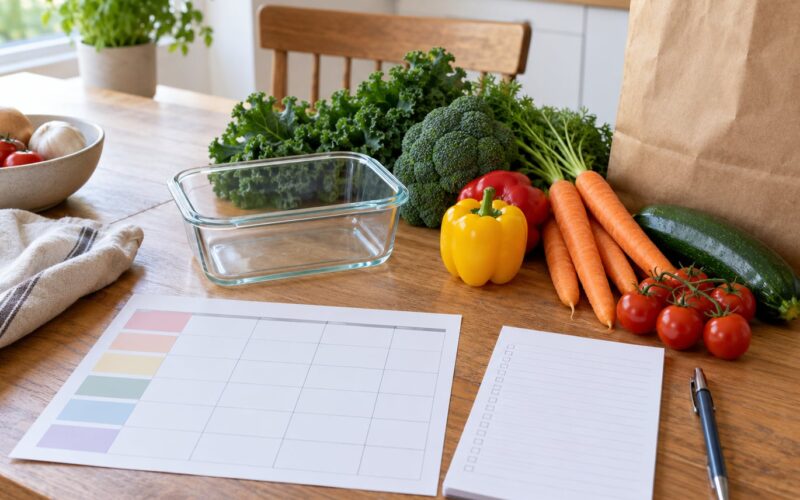
Start with the part that works on every plate: measure a half cup of cooked rice instead of scooping. Cook it with an onion, a garlic clove and a bay leaf, and pair it with vegetables and a lean protein so the meal still holds together.
Then add the chill on the next try. Cook a batch, spread it thin in a shallow container, refrigerate it overnight, and reheat with a splash of water when you eat. Do it twice a week before you decide whether it is a habit worth keeping.
Skip the coconut oil, skip the coconut-oil-plus-cooling combination posts promise, and do not expect the label numbers to change. If you are managing diabetes, pregnant, or working around a medical condition, ask your doctor or a registered dietitian how this fits into your plan.