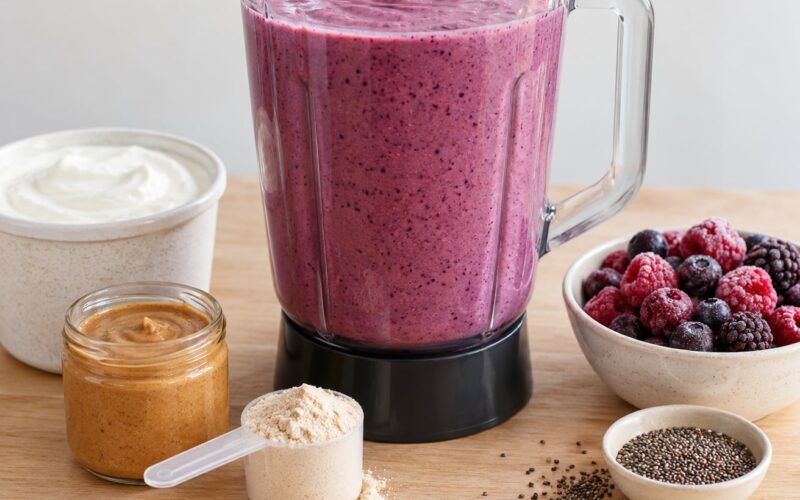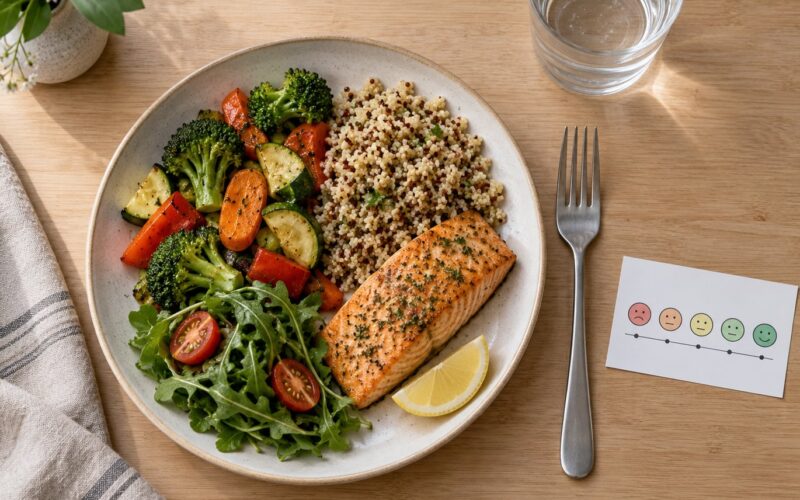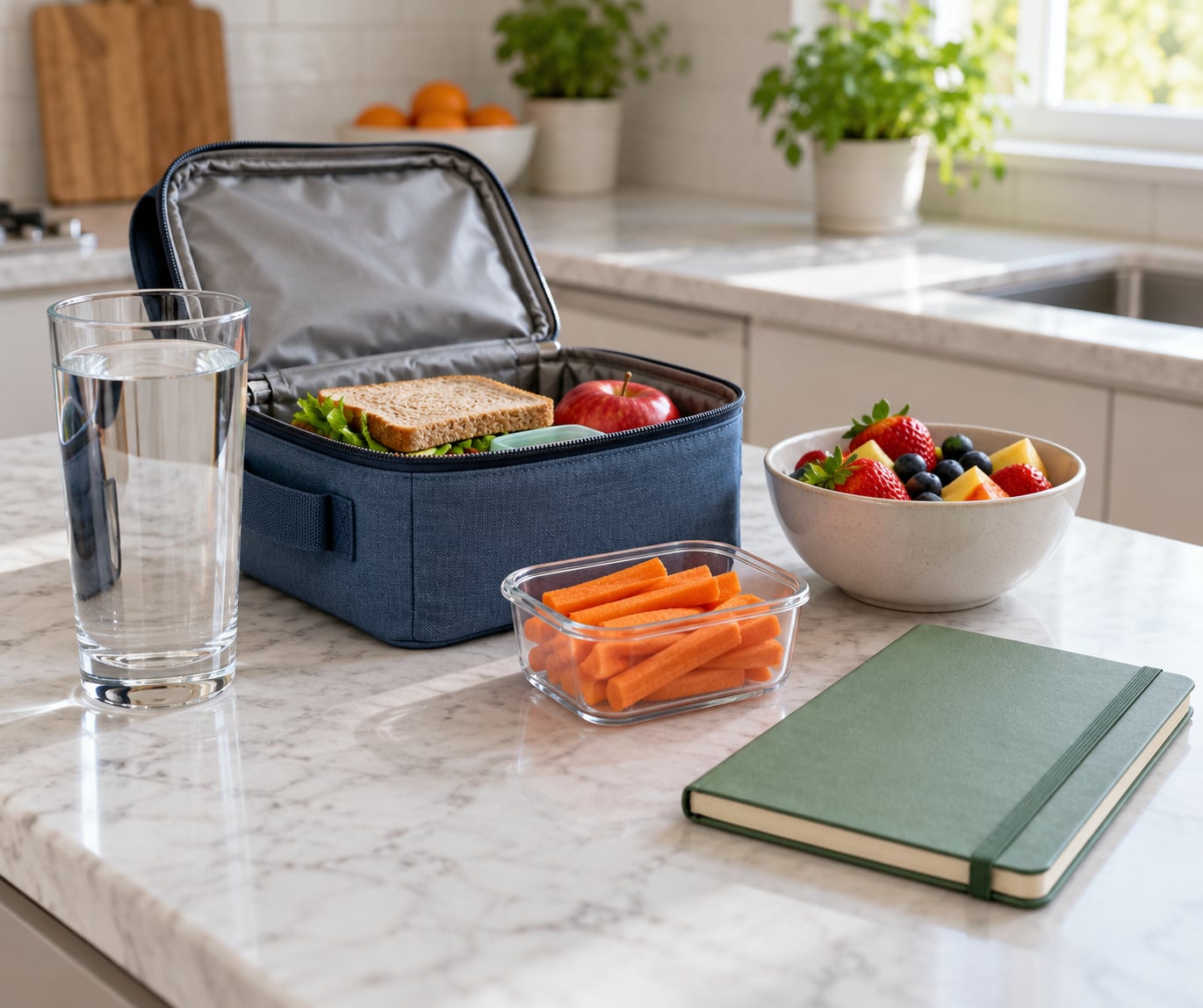
Habit stacking for healthy eating means attaching a new eating behaviour to something you already do every day, like drinking a glass of water right after you start your morning coffee, or prepping tomorrow’s snack once you clear the dinner plates. Instead of relying on willpower at each meal, you borrow the momentum of an existing routine and let it pull the new habit along.
That is the whole idea, and it works because the hard part of eating well is rarely knowledge. It is the 6pm decision, again, on a tired Tuesday. The method below is a beginner’s system: one cue, one small action, repeated until it stops needing thought.
Below is the direct definition, the anchor habits that hold up best, a five-step way to build your first stack, and what to do when it falls apart.
Table of Contents
- What Is Habit Stacking for Healthy Eating?
- How Does Habit Stacking Improve Everyday Eating Habits?
- Which Existing Habits Can Support Healthy Eating Changes?
- How Do You Build Your First Habit Stack?
- Habit Stacking for Healthy Eating Examples
- What Are the Best Habits to Stack First?
- How Can You Keep a Healthy Eating Habit Going?
- What Should You Do When Your Habit Stack Fails?
- When Should You Ask a Health Professional for Advice?
- Frequently Asked Questions
- How long does it take to build a habit through habit stacking?
- Can I use habit stacking to eat more vegetables?
- Should I track every food choice when building a new habit?
- What if I miss the habit for several days?
- How is habit stacking different from following a diet plan?
- Can two or more new eating habits be built at the same time?
- Conclusion
What Is Habit Stacking for Healthy Eating?
Habit stacking is a behaviour change technique where a new action is chained onto the end of a habit you already do on autopilot. In eating terms, the existing habit is your anchor, and the new action is what you attach to it.
The formula is deliberately plain: After I [existing habit], I will [new eating action]. “After I pour my morning coffee, I will drink a full glass of water.” “After I close the fridge at night, I will cut tomorrow’s carrot sticks.” Write it in that shape and there is nothing left to interpret on a busy morning.
It is not meal planning. A meal plan decides what goes on a table in advance; habit stacking decides the moment you will do something about it. A plan you wrote on Sunday can collapse on a Wednesday shift, while a stack attached to coffee still fires at 7am whether or not you planned it.
It is also not a diet rule. Diets tend to work by removing foods or setting limits, which needs a fresh burst of motivation each time. Stacking works by adding small actions onto cues that already happen, so the behaviour has a schedule you did not have to maintain by hand.
How Does Habit Stacking Improve Everyday Eating Habits?
It removes the decision. Most eating plans fail at the point of choice, not the point of intention, so a stack replaces an open question with a pre-set sequence. You no longer ask whether you’ll drink water, because the water appears when the coffee maker finishes.
Small actions also lower resistance. “Eat more vegetables” is enormous and vague, but “add one frozen bag of peas to the dinner pan” is a thing you can do with one hand while the rice is still cooking. Repeating a small version repeatedly is what moves behaviour toward automaticity, where the brain spends less effort on it.
There is a clear limit to what this method can do. Stacking does not change what is in your fridge, it does not make a family eat differently, and it cannot outrun a schedule that has no anchor in it. It works on behaviour in an existing routine, so it is worth pairing with the environment changes below.
And it is not medical treatment. Habit stacking is a general self-management technique, not a nutrition plan, a weight loss program or a treatment for any condition.
Which Existing Habits Can Support Healthy Eating Changes?
The best anchors are things that happen daily, at a similar time, in the same place, without any willpower. If your anchor needs motivation, it is not an anchor yet.
| Anchor habit | Stacked eating action | Time of day |
|---|---|---|
| Making the first coffee of the day | Drink a full glass of water before the first sip | Morning |
| Brushing teeth after waking | Eat a planned breakfast, even a small one | Morning |
| Starting the car for work | Pack tomorrow’s snack box in the bag on the passenger seat | Commute |
| Opening the fridge to get milk | Take one piece of fruit each time, not zero | Any time |
| Sitting down at the table | Put the phone in another room for the first five minutes | Meals |
| Unloading the grocery bags | Put visible snacks on the counter, buried items in the back | Shopping day |
| Finishing the evening meal | Brush teeth straight after, so late snacking has a closed door | Evening |
| Sitting down at the desk | Fill the water bottle at the same moment | Work hours |
Notice that none of these need a new time slot. A post-it on the coffee machine, a fruit bowl on the counter where you walk in, and snacks stored above eye level in the back of a cupboard are visual cues that cost nothing and work even on the days your motivation is flat.
How Do You Build Your First Habit Stack?
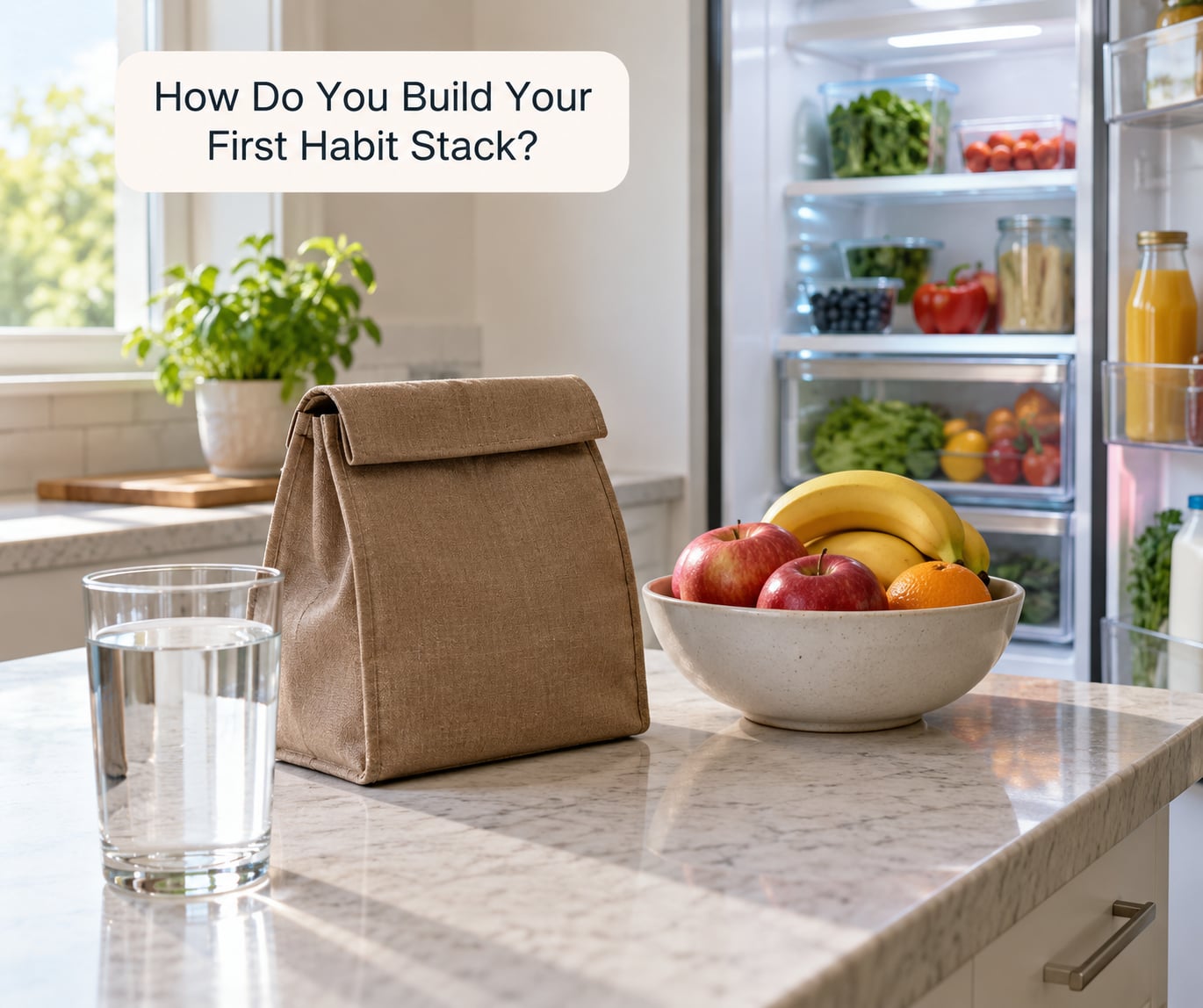
Five steps, done in this order. Rushing straight to the list of stacks skips the part that actually decides whether it works.
1. Pick one eating goal. One. Not five. If you try to fix breakfast, snacks, hydration and vegetables at the same time, a single bad day can knock out all four, and that is the fastest way to abandon the system. Choose the one change that would help most, such as eating a vegetable at dinner.
2. Choose a cue that already happens. Look for something with a fixed place or time. “After I sit down at the table” is stronger than “sometime in the evening”, because it has a moment your brain already recognises.
3. Shrink the action until it feels too easy. If the goal is more vegetables, the first version might be putting frozen chopped veg in the pan before you sit down. You are allowed to feel slightly ridiculous about it. That is the correct size.
4. Cut the friction in front of the habit. Keep water where the coffee is, not in the fridge. Keep the fruit visible. Park the car so the walk from it is short. Anything you have to hunt for is a chance to skip.
5. Track it in the smallest way that works. A paper calendar with a dot or a check mark, kept somewhere you already go, is enough. You are measuring whether the cue fired, not judging your food choices.
After roughly three weeks of consistent reps, the stack is stable enough to hold a second one. Adding the second too early is the most common reason stacks stall.
Habit Stacking for Healthy Eating Examples
Here are stacks that fit real mornings, evenings and weeks where nothing goes to plan.
Morning. After I start the coffee maker, I will drink a glass of water. After I take my first bite of breakfast, I will eat a piece of fruit. The fruit goes on the plate the night before, so nothing needs deciding at 7am.
Meal prep. After I put dinner in the oven, I will chop a second onion or carrot for tomorrow’s lunch. People doing this on r/loseit report that the same base lunch every weekday, changed with different sauces and vegetables, is what finally made prep stick for them. One carbohydrate, one protein, two or three vegetables, cooked in the same two pans, is a template that survives a Tuesday.
Shopping. After I park the car at the supermarket, I will write the list. A list written in the car is a list you actually have when the trolley gets heavy and the decision-making gets lazy.
Snacking. After I clear the dinner table, I will put two portions of fruit or nuts in a container for tomorrow. End-of-meal is one of the most reliable anchors there is, because you are already standing up and in cleanup mode.
Evening. After I brush my teeth at night, I will do nothing food-related until morning. Stacking a closing cue onto the last one of the day helps with the late-night snacking that tends to follow a long, underfed day.
When the schedule moves. Shift workers report the same problem: anchors tied to a clock time break. The fix is to attach to a sequence rather than an hour. “After I get home” and “after I start my first break” travel better than “at 7am”.
When motivation is low. Keeping the action visible matters more on bad days. Someone who wrote VITAMINS on a toothbrush in marker reported it working twice a day for the simple reason that it was impossible to miss. Slightly absurd cues outperform elegant ones.
What Are the Best Habits to Stack First?
Start with something you can do on your worst day, then add weight. These five tend to be forgiving.
Drink water. Best cue: the coffee maker or the kettle. Outcome: better hydration without tracking a single meal. It also works for people who skip breakfast entirely, since it needs no appetite.
Add one vegetable. Best cue: putting the pan on the hob. Outcome: a higher fibre and micronutrient load, built one addition at a time. Frozen and tinned veg count, and the convenience version is usually the one that survives week three.
Plan the snack. Best cue: clearing the dinner table. Outcome: you stop making a tired, hungry decision at 4pm and end the day less depleted. A planned snack is a small, deliberate meal, not a rule about how often you eat.
Check the list before shopping. Best cue: parking the car. Outcome: fewer impulse buys and fewer wasted food items going off in the drawer, which quietly shapes what you can cook for the rest of the week.
Eat more slowly. Best cue: sitting down at the table. Outcome: more awareness of portion and fullness, without counting anything. If the cue is the first bite rather than the seat, use a smaller plate as a visual reminder instead.
How Can You Keep a Healthy Eating Habit Going?
Track the behaviour, not the outcome. Days of ticks tell you whether the system is running, which is the part you control. Weight, energy and digestion move on their own schedule and are a poor daily scoreboard.
Design the environment instead of relying on the moment. Store the food you want to eat more of where you see it first, and move the food you reach for out of sight. People describe environment design as doing the work before willpower is needed at all.
Use the never-miss-twice rule. Missing once is noise. A second miss turns a slip into a pattern, and patterns are what you are trying to break. Resume at the next cue, not tomorrow morning.
Progress in size, not in frequency. Once the small version is boringly reliable, make it slightly bigger: a whole portion of veg instead of a handful, four glasses of water instead of two. Frequency should stay at once a day.
Stack related actions together when they share a cue. If you are already prepping lunch, filling the water bottle in the same trip is free. That is a chain, and it is the cheapest habit there is.
What Should You Do When Your Habit Stack Fails?
Stacks usually break for one of four reasons, and each has a specific fix.
The cue is vague. “Sometime in the evening” will not fire. Fix it by naming a place or a sequence: after I close the fridge, after I sit down, after I log off. If the cue changed, so did the stack, so rebuild it around what actually happens now.
The action is too big. If you skipped it four times in a row, the version you chose was too heavy. Cut it in half and keep the same cue. A habit that survives is worth more than an ambitious one that quietly ends.
The environment keeps working against you. If the water is upstairs and the biscuits are in the cupboard you open first, you have set yourself up to fail every evening. Move the cue and the obstacle, not your character.
You turned a slip into a verdict. All-or-nothing thinking is what people on r/getdisciplined and r/DecidingToBeBetter describe most often when eating routines collapse. One missed breakfast is data, not a character flaw. Fix: the next cue is a clean restart, and you do not owe anyone a make-up effort.
If the same stack fails repeatedly after two honest adjustments, the problem is usually that the goal is not a habit problem at all. A budget, a cooking-for-others constraint, or a schedule with no room in it will outlast any cue you attach to it.
When Should You Ask a Health Professional for Advice?
This guide is general information, not personal nutrition advice. A registered dietitian or your doctor is the right call when you are managing a medical condition, taking medication that interacts with food, pregnant or breastfeeding, or recovering from an illness or surgery.
Speak to a professional sooner rather than later if you feel faint, unwell or unusually tired after changing what you eat, or if cutting back has turned into fear or distress around food. If you are under 18, a parent or guardian and a qualified professional should be involved in any change to your eating.
Nothing here replaces that conversation. It gives you a way to build a few repeatable behaviours while you have one.
Frequently Asked Questions
How long does it take to build a habit through habit stacking?
Most people find a small stacked action becomes noticeably easier after two to three weeks of consistent repetitions, and stops requiring conscious thought somewhere around two months. The speed depends on how small the action is and how fixed the cue is. A habit that feels automatic on day five is usually one you built small enough to survive.
Can I use habit stacking to eat more vegetables?
Yes, and it is one of the easier ones to start, because a vegetable can be added to food you already cook. Stack it after a step you never skip, such as the oil hitting the pan or the lids coming off the stock. Start with a portion you would not notice missing if it went wrong, then increase it once the smaller version is routine.
Should I track every food choice when building a new habit?
No. Tracking every choice turns the experiment into a full day of accounting, which most people abandon by week two. Track the behaviour in your stack, and only that, with a check mark on a calendar or a note on your phone. If you want more detail later, keep a food diary for three or four days, not indefinitely.
What if I miss the habit for several days?
Go back to the last cue you actually hit, not to a fresh start on Monday. Shrink the action slightly, make it easier to do, and run it for a few days before adding anything back. A gap is normal with shift work, illness and travel. What matters is not missing today twice in a row, which is the point of the never-miss-twice rule.
How is habit stacking different from following a diet plan?
A diet plan sets rules about what you may and may not eat, and its results depend on you following those rules accurately. Habit stacking adds small actions onto cues you already have, so it is about the moment the behaviour happens rather than the content of the diet. The two can work together, but only a professional should help you follow a diet with medical aims.
Can two or more new eating habits be built at the same time?
You can, but only if they share the same cue or are genuinely tiny. Two habits attached to the same moment, like drinking water and eating fruit with breakfast, work well together. A new stack in a different part of the day should wait roughly three weeks, because stacking unrelated changes is the most common reason people give up on the whole system.
Conclusion
Habit stacking for healthy eating is less about discipline and more about timing. Pick one eating goal, attach it to a cue that already happens every day, make the action small enough that a bad day does not break it, and clear the friction out of its way.
So do one thing today. Fill a glass, put it next to the coffee maker, and drink it after the first cup. Tick the calendar. That is a habit stack, and it costs you nothing to start.