A freezer meal reheats well when it is built from moist ingredients and held together by a sauce or broth rather than by a cream, mayonnaise or starch-thickened emulsion. Freezing forms ice crystals that puncture plant cells and push water outward, so on reheating that water either escapes as steam and you get dry, rubbery meat, or it pools in the dish and you get watery, mushy vegetables. The meals below are portioned before freezing, protein-forward, and forgiving enough to survive a weeknight microwave.
This list is aimed at busy adults who want the portion-control part of a weight-loss plan handled for them. Portion size gets locked in at freeze time, and reheating from frozen takes minutes rather than 45. Pick two or three that you actually like, cook them once, and freeze four single portions each. That alone gets you through most of a work week without a takeout decision at 7 p.m.
Table of Contents
- Freezer Meals for Weight Loss That Reheat Well at a Glance
- 1. Chicken, Vegetable and Brown Rice Bowls
- 2. Turkey and Black Bean Chili
- 3. Baked Salmon with Steamed Vegetables
- 4. Lentil and Vegetable Curry
- 5. Lean Beef and Bell Pepper Stir-Fry
- 6. Turkey Meatballs with Marinara and Zucchini
- 7. Tuna and White Bean Salad
- 8. Chicken and Black Bean Stuffed Peppers
- 9. Vegetable and White Bean Soup
- 10. Shrimp and Vegetable Rice Bowls
- How to Choose Meals That Stay Satisfying and Reheat Well
- Frequently Asked Questions
- What are the best freezer meals for weight loss?
- How should I thaw a freezer meal before reheating?
- Can frozen meals be reheated more than once?
- How do I keep frozen chicken from becoming dry?
- Are frozen vegetables good for weight loss?
- How long can a homemade freezer meal stay frozen?
- Conclusion
Freezer Meals for Weight Loss That Reheat Well at a Glance
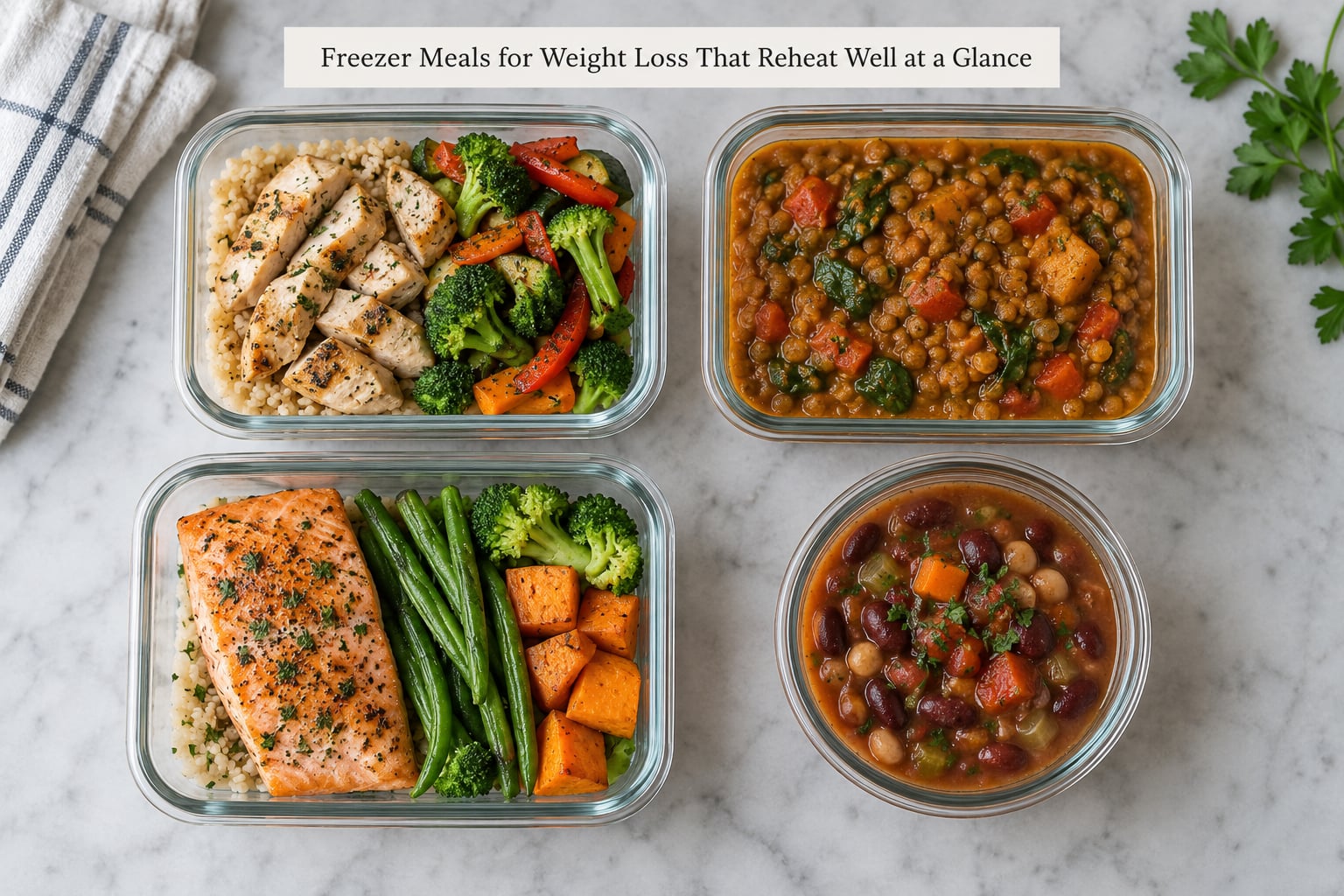
| Meal | Main protein or filling component | Why it works for a calorie-controlled plan | Best way to reheat |
|---|---|---|---|
| Chicken, vegetable and brown rice bowl | Chicken breast | Built-in portion, high protein, plenty of fibre | Microwave from frozen with a splash of water |
| Turkey and black bean chili | Ground turkey and black beans | Beans add fibre and bulk without much fat | Microwave, stirring halfway |
| Baked salmon with steamed vegetables | Salmon fillet | Omega-3 fats and a lean, filling protein | Oven or skillet after a fridge thaw |
| Lentil and vegetable curry | Red lentils | Plant protein and fibre, very filling | Stovetop with a splash of broth |
| Lean beef and bell pepper stir-fry | Lean flank steak | Lean protein with low-fat cooking method | Skillet or microwave, vegetables last |
| Turkey meatballs with marinara and zucchini | Turkey meatballs | Counts as two servings of vegetables | Covered skillet or microwave |
| Tuna and white bean salad | Tuna and cannellini beans | Light but protein-rich, no cooking | Serve chilled or at room temperature |
| Chicken and black bean stuffed pepper | Chicken and beans | Single portion, high volume | Microwave or oven, covered |
| Vegetable and white bean soup | White beans | Low calorie per bowl, very high volume | Stovetop with broth, not water |
| Shrimp and vegetable rice bowl | Shrimp | Very lean protein, low fat | Stovetop from frozen, brief |
1. Chicken, Vegetable and Brown Rice Bowls
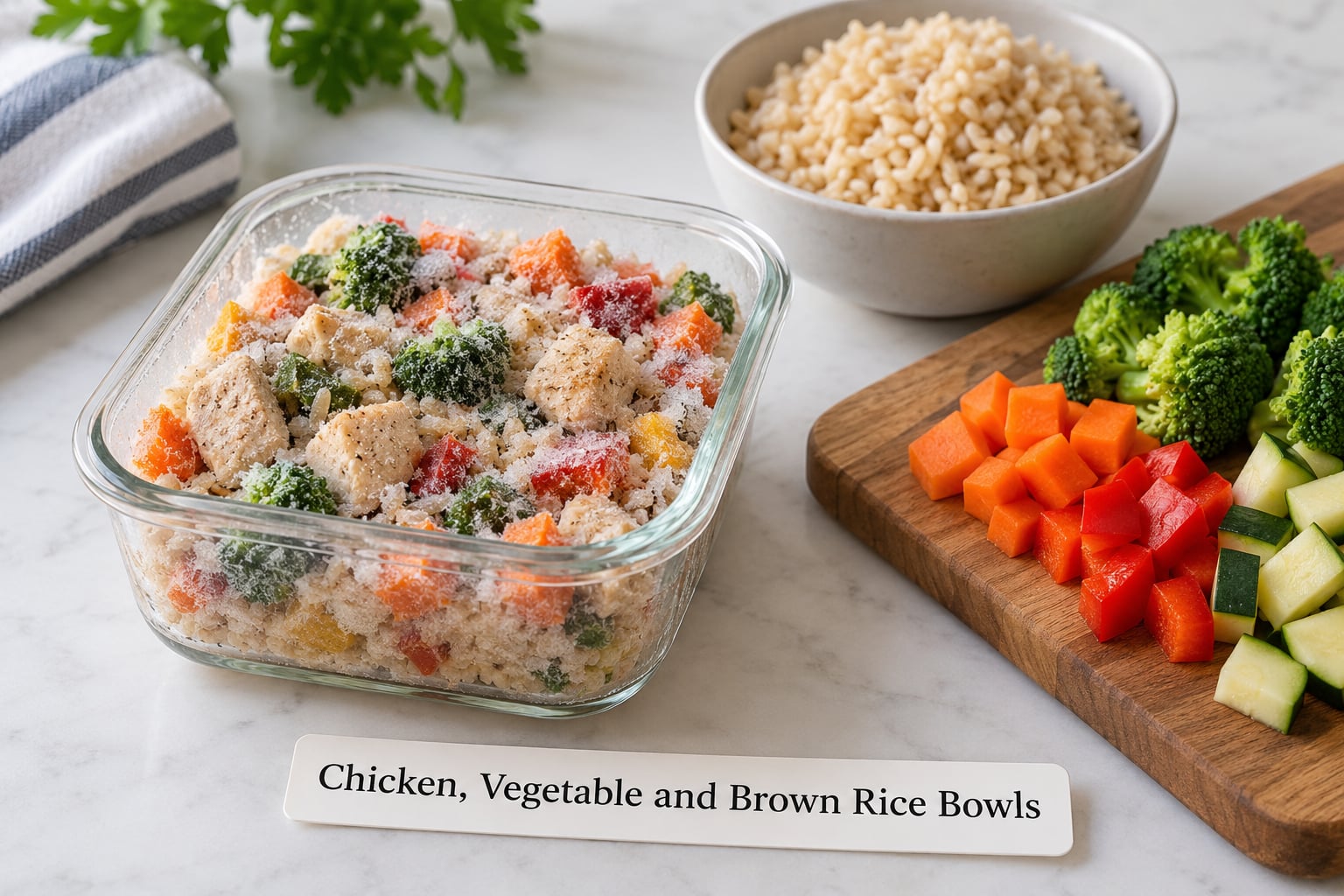
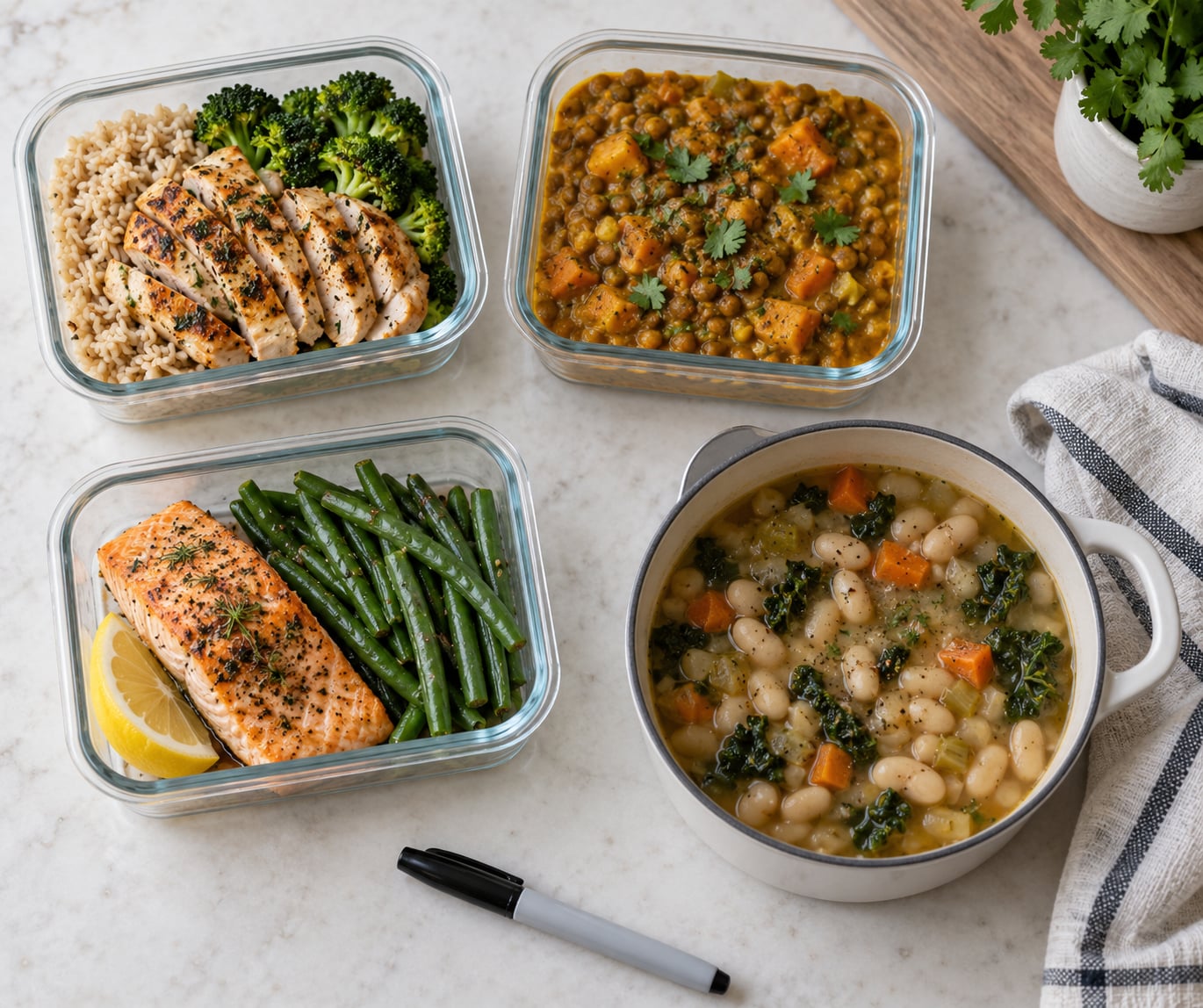
This is the workhorse. Chicken breast cooked to 165°F (74°C), cooled, and frozen with its own portion of rice and vegetables in a two-cup container keeps a calorie target locked in without any weighing later.
The trick to moisture is a light sauce. A spoonful of teriyaki or a drizzle of olive oil and lemon keeps the chicken from turning chalky, and it stops the rice from drying out in the freezer. Roast the chicken rather than boiling it, and let it cool uncovered for 20 minutes before the lid goes on so condensation does not form.
Reheat from frozen at full power for 4 to 5 minutes, adding a tablespoon of water, then stir and give it another minute. My usual serving is 4 ounces of chicken, half a cup of brown rice and a cup of vegetables, which lands around 450 calories and 40 grams of protein. To skip the microwave, put the container in a skillet with a quarter cup of water and cover it for 8 minutes.
2. Turkey and Black Bean Chili
Chili is close to perfect for this because the liquid is part of the dish. Ground turkey, black beans, diced tomatoes, peppers and a modest hand of chili powder produce a bowl that reheats better than almost anything else you can freeze.
Use 93 percent lean ground turkey and drain it well after browning. Excess fat solidifies in the freezer and turns the reheated chili greasy, which is the exact complaint you will read about on any freezer-meal forum. Freeze the cream, sour cream or shredded cheese on the side if you use it, and stir it in after reheating. That single change keeps a dairy-based chili from splitting and separating.
Microwave on high for 4 minutes, stir, then 2 more minutes, making sure the centre reaches 165°F (74°C). A slow cooker works too: put the frozen portion in with a quarter cup of water on low for an hour.
3. Baked Salmon with Steamed Vegetables
Salmon freezes well, but it turns dry when reheated at high heat for too long. Freeze the fillet in a single layer on a tray first, then bag it, so the pieces do not fuse into one solid block. Keep the vegetables in a separate container.
Thaw overnight in the refrigerator rather than in the microwave. Heat a nonstick skillet over medium-low, add the salmon skin-side down, and cook for 4 to 6 minutes until it flakes. Salmon reaches 145°F (63°C), so there is no reason to push it further. Serving it over a cup of green beans, broccoli or roasted squash adds the fibre that keeps the plate filling.
If reheating in the oven, cover the fillet with foil at 325°F (163°C) for 15 to 18 minutes. Foil is the difference between a moist piece of fish and one you could use as a hockey puck.
4. Lentil and Vegetable Curry
Lentils work for weight loss freezer meals for a simple reason: they carry a lot of fibre and protein for very few calories, and they stay satisfying in a portion that is half the size of a meat dish. Red or green lentils cook down into a sauce that holds moisture through freezing.
Add sturdy vegetables rather than delicate ones. Carrots, cauliflower, green beans, zucchini and bell peppers hold their shape. Skip spinach and leafy greens, or add them fresh at reheating, because they collapse into slime in the freezer.
Stovetop from frozen works well: 3 tablespoons of broth or water, medium heat, lid on for 6 to 8 minutes, stirring twice. Broth instead of water is the trick people miss, because plain water washes out the spice and leaves the curry tasting flat.
5. Lean Beef and Bell Pepper Stir-Fry
Stir-fries get a bad reputation in the freezer because most home versions are overcooked twice. The fix is to freeze the beef already cooked and keep the sauce thin, then add the vegetables fresh or from frozen only during the reheating.
Slice lean flank steak thinly across the grain, sear it hard for 2 minutes, and toss it with a low-sodium soy and ginger sauce. Freeze the beef and sauce together in one cup portions.
To reheat from frozen, warm 2 tablespoons of water in a skillet over medium heat, add the frozen beef and sauce, cover and cook 5 to 6 minutes. Then push the beef aside, add sliced peppers, broccoli or snap peas, and cook 2 to 3 minutes more with the lid off. Doing the vegetables last is what keeps them from going soft.
6. Turkey Meatballs with Marinara and Zucchini
Turkey meatballs pair with vegetables without feeling like a compromise. Make them with ground turkey, egg, garlic, oregano and grated Parmesan, and skip the breadcrumbs that add calories without adding much.
Freeze the meatballs on a tray, then transfer them to a bag. Sauce goes in a separate container so the meatballs do not sit in liquid and go spongy.
For reheating, either microwave the meatballs for 3 to 4 minutes, or warm 1 cup of marinara and 1 cup of diced zucchini in a covered skillet for 5 minutes, drop the meatballs in, and cook until everything reaches 165°F (74°C). A 4-meatball serving with zucchini and sauce is a full plate for roughly 350 calories.
7. Tuna and White Bean Salad
Not everything in the freezer needs heat. A tuna and white bean salad is a good option for packed lunches, because you take it out of the fridge 15 minutes before eating rather than cooking it.
Drain the tuna, rinse the white beans, and fold everything together with chopped celery, red onion, cherry tomato, a little olive oil and lemon juice. Dress it just before eating, since a mayonnaise-based dressing turns grainy and watery once it has been frozen.
Keep it in the fridge rather than the freezer if you can. If you do freeze it, use a short thaw in the refrigerator and expect a softer texture on the beans and tomato, which is why those go in after thawing if you can manage it.
8. Chicken and Black Bean Stuffed Peppers
Stuffed peppers are one of the easiest meals to portion for weight loss because each pepper is a single serving. Halve them so you get two halves per pepper, or leave them whole for a larger portion.
Fill them with lean ground chicken or diced chicken breast, black beans, brown rice, chopped spinach and tomato. Skip the raw egg binder entirely; it binds just fine without it and keeps the filling lighter.
Freeze upright in a muffin tin, then move them to bags once solid so they hold their shape. Cover with foil and bake from frozen at 350°F (177°C) for 30 to 35 minutes, or microwave on high for 6 to 8 minutes with a lid. Both work, and the oven version keeps the pepper skin from going slack.
9. Vegetable and White Bean Soup
Soup is the lowest-calorie dinner on this list and the one most people waste by freezing in large containers. Freeze it in one-cup portions instead. Two cups is a main meal, one cup is a light lunch, and you stop throwing away half a container three months later.
Use white beans or cannellini for body, carrots, celery, onions, cabbage or kale for volume, and vegetable broth for the base. Salt at the end, since broth concentrates as liquid evaporates during reheating.
Reheat on the stovetop with a quarter cup of broth over medium heat for 5 to 6 minutes, stirring until the broth is absorbed and the soup has thickened again. Adding broth rather than water is what keeps the flavour. Add a handful of fresh spinach after it comes off the heat if you want greens.
10. Shrimp and Vegetable Rice Bowls
Shrimp is very lean and cooks in under two minutes, which makes it a poor fit for a slow microwave. The approach that works is to freeze the rice and vegetables together, and keep the shrimp in a separate bag, then add them at the end.
Cook the shrimp just until they turn pink, about 90 seconds per pound in a hot skillet, cool them quickly under cold water, and freeze them on a tray before bagging. Overcooked shrimp turns to rubber quickly, and reheating from frozen is the step where that happens.
Heat the rice and vegetables from frozen in a skillet with a tablespoon of water for 4 minutes, then push them aside, add the frozen shrimp, cover and cook 90 seconds more. The shrimp only needs to be heated through, which is 145°F (63°C).
How to Choose Meals That Stay Satisfying and Reheat Well
Pick dishes with three things in them: a protein of 25 grams or more per serving, a vegetable component, and enough fibre to slow digestion. Portion control is handled when the container is filled, not at the table.
Then check what holds it together. Soups, chili, curries, braised meats and pulled pork all survive freezing because moisture is trapped in the dish. Cream sauces, mayonnaise dressings, custards and cheese-heavy casseroles are the ones that split. If a meal is built on those, expect a watery reheated result no matter what method you use.
A few foods reliably turn bad in a freezer, and knowing them saves a lot of disappointment. Plain salad greens and fresh tomatoes go watery. Cooked rice gets hard and dry. Raw eggs and mayonnaise-based salads are poor candidates. Fried food loses its coating. Potatoes become grainy after thawing. Pasta sauces split into oil and liquid unless they are heavily tomato-based and cooked down first.
Two habits fix most failures. Push out the air and leave about half an inch of headspace in each container, since food expands as the water freezes. And thaw in the refrigerator overnight, never on the counter, when you have the planning time. If you forgot to thaw, microwave on a defrost setting rather than full power, or plan for meals that genuinely can go from frozen to hot.
Label everything. Write the dish name, the date it went in and the reheat instruction on the lid with a marker. When someone in your household goes looking for dinner at 6 p.m., that label is the difference between cooking and ordering food.
Frequently Asked Questions
What are the best freezer meals for weight loss?
The best freezer meals for weight loss combine a lean protein of 25 grams or more per serving, a vegetable component and fibre, held together by sauce or broth rather than cream. Chili, lentil curry, turkey and black bean soup, lean beef and vegetable stews, and stuffed peppers are strong choices because the portion is fixed when you freeze it and reheating takes minutes.
How should I thaw a freezer meal before reheating?
Thaw it in the refrigerator overnight on a plate or tray, at or below 40°F (4°C). Never thaw on the counter, where the outer layer enters the food safety danger zone while the centre is still frozen. If you have no planning time, use the microwave defrost setting and cook immediately, or choose a dish designed to go from frozen to hot.
Can frozen meals be reheated more than once?
Reheating a cooked freezer meal more than once is not recommended. Each cycle through the food safety danger zone between 40°F and 140°F (4°C to 60°C) gives bacteria another chance to multiply. Reheat only the portion you plan to eat, bring it to 165°F (74°C), and leave the rest in the freezer or the refrigerator.
How do I keep frozen chicken from becoming dry?
Cook chicken only to 165°F (74°C) and no further, then cool it uncovered before sealing so condensation does not form. Freeze it in a sauce or with a splash of liquid in the container to trap moisture, and reheat gently, covered, with a tablespoon of water added. Microwaves cook the edges dry, so a covered skillet or a low oven gives better results.
Are frozen vegetables good for weight loss?
Frozen vegetables are a practical choice because they are picked and frozen quickly, often within hours of harvest, so they keep more nutrients than produce that has sat in storage. They also cost less and waste less. Watch for bags that are cooked in oil or butter rather than steamed or plain, which raises the calorie count considerably.
How long can a homemade freezer meal stay frozen?
Homemade cooked freezer meals keep their best quality for about 3 to 4 months at 0°F (-18°C) and remain safe to eat for around 4 months when sealed well. Date every container and rotate oldest to newest. Once thawed, refrigerate within two hours and use cooked leftovers within 3 to 4 days.
Conclusion
Start with the chili and the vegetable and white bean soup. Both tolerate freezing, both reheat well from the pot, and both teach you the freezing rhythm without any technique to learn. Cook a double batch, freeze it in single portions, and label the lids with the dish and the date.
Once that is in the freezer, the chicken and rice bowls and the turkey meatballs give you two higher-protein options for the nights you want something closer to a real dinner plate. Pick meals with protein and fibre, freeze them in measured portions, and reheat only what you need, either from the refrigerator overnight or straight from the freezer.