How to spot ultra processed food in your pantry boils down to one habit: turn the box over and read the ingredient list. If the list leans on substances you would never own in a kitchen cupboard, such as maltodextrin, soy lecithin, xanthan gum or "natural flavouring," you are looking at NOVA Group 4, the ultra-processed tier. A full audit of one shelf takes roughly 30 minutes and costs nothing but a phone for notes.
I do this once every few months, and honestly the first pass is more emotional than educational. Nobody wants to bin a cupboard full of food because a label disappointed them. So this guide is built around sorting and swapping rather than dumping, and it keeps the science light enough that you can actually apply it between the school run and dinner.
Table of Contents
- What You Need
- Step-by-Step: How to Spot Ultra Processed Food in Your Pantry
- 1. Read the Ingredient List First: How to Spot Ultra Processed Food
- 2. Look for Signs of Heavy Industrial Processing
- 3. Compare the Product with a Familiar Whole-Food Version
- 4. Use the Nutrition Label as Supporting Evidence
- 5. Separate Everyday Staples from Occasional Treats
- 6. Make Simple Pantry Swaps
- Common Mistakes
- Frequently Asked Questions
- Do frozen and canned foods count as ultra processed?
- Does an organic label tell me anything about processing?
- How long should an ingredient list be before I get suspicious?
- Is bread ultra processed?
- What do I do with a convenience food I do not want to give up?
- Can I use an app to check my pantry food?
- Conclusion
What You Need
You need very little. The whole point is that you are auditing what you already own, not buying a new toolkit.
- The pantry itself, shelf by shelf. Clear one shelf at a time rather than the whole cupboard at once. You will keep better focus and the job stays under an hour.
- A phone or a notebook for jotting down what you find. Most people find more red flags than expected and lose track fast without notes.
- Optional access to the manufacturer’s website or a nutrition database such as Open Food Facts when a label is unreadable, in tiny print, or printed in a colour that disappears under the light.
- Time: 5 minutes per shelf for a quick pass, 30 minutes for a proper look at the sauces, cereals and snack drawer.
Step-by-Step: How to Spot Ultra Processed Food in Your Pantry
The NOVA classification, developed by researchers at the University of Sao Paulo, sorts foods into four groups by how much they were changed from their source. Group 1 is unprocessed food such as a carrot. Group 2 is processed culinary ingredients such as olive oil or dried pasta. Group 3 is processed food such as canned beans, cheese or plain yogurt. Group 4 is ultra-processed food: industrial formulations built mostly from extracted ingredients plus additives whose job is texture, colour, shelf life or flavour intensity.
Group 4 is the one people misjudge most, because it hides behind packets that look wholesome. The six steps below are the repeatable part of the audit.
1. Read the Ingredient List First: How to Spot Ultra Processed Food
Skip the front of the package entirely. Marketing copy tells you what the product wants to be, not what it is.
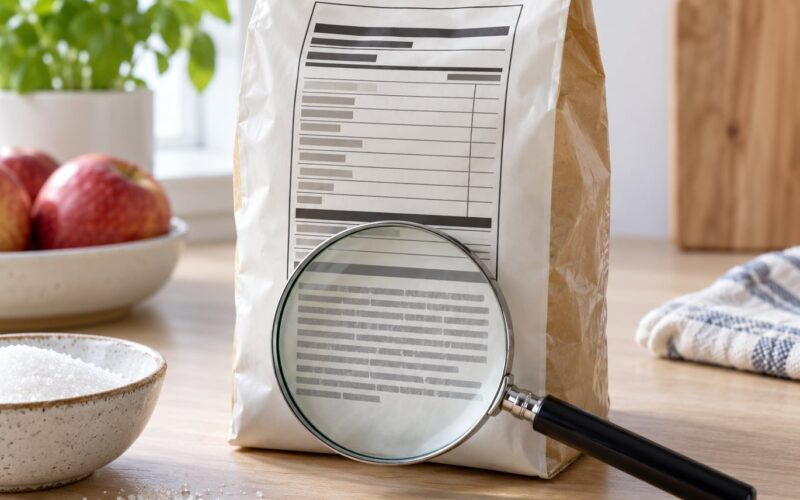
Read the ingredient list top to bottom. Ingredients are listed in order of weight, so the first few tell you what the food mostly is. A long list where most items you cannot buy in a shop and would not have in a cupboard is the strongest single clue.
Look specifically for added sugars and syrups (high fructose corn syrup, invert sugar syrup, dextrose, maltodextrin), emulsifiers and gums (soy lecithin, polysorbate 80, mono- and diglycerides, carrageenan, xanthan gum, guar gum), colour and flavour additives (artificial colours such as FD&C Red 40, "natural flavouring," artificial flavours), and preservatives (sorbic acid, sodium benzoate, BHA, BHT, sodium nitrite).
Now run the kitchen cupboard test people in the r/ultraprocessedfood community use: if you cannot buy that ingredient separately in a shop, or would never cook with it at home, it points to Group 4. That test flags obvious offenders, but it is a clue rather than a proof, which is why the next steps add context.
You have it right when: you can name at least two items on the list that you would not have in your own kitchen, and the product needs no cooking or very little.
2. Look for Signs of Heavy Industrial Processing
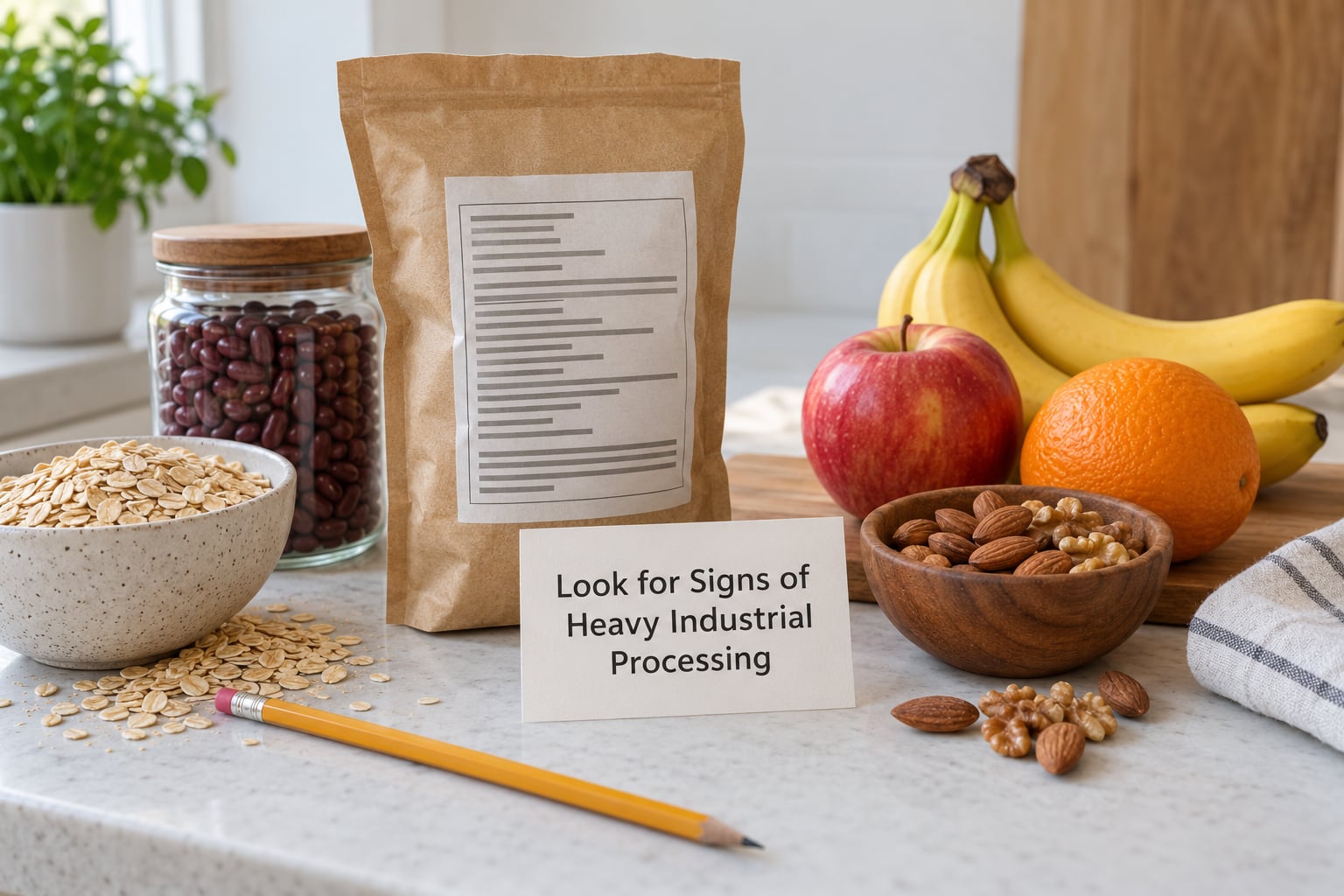
Formulation and manufacturing clues usually travel together, so read them as a group rather than one at a time.
- Long ingredient lists, often 15 or more items, for something conceptually simple like a soup or a cookie.
- Modified starches such as modified corn starch, which replace flour and dilute fibre.
- Hydrogenated or interesterified oils, which give a product a long shelf life and a texture that stays identical in the pan.
- Protein isolates (soy protein isolate, whey protein isolate, milk protein concentrate) used as bulking agents rather than as protein you would naturally eat.
- Shelf life measured in months for something with fresh ingredients in it.
- Flavour variety clues: a sauce or seasoning blend that exists in sweet, smoky, spicy, garlic and herb versions is usually rebuilt from flavour compounds rather than herbs.
None of these prove anything alone. Peanut butter can be perfectly minimal, and whole-grain bread can sit right on the line between Group 3 and Group 4. Read them together, then move on.
You have it right when: several of these clues show up on the same product.
3. Compare the Product with a Familiar Whole-Food Version
This is the step most people skip and the one that makes the abstract concrete. Take the item and ask what the homemade or minimally processed version looks like.
Instant noodles are flour, salt, and usually a powdered seasoning packet with monosodium glutamate, hydrolyzed vegetable protein and artificial flavour. Noodles plus frozen vegetables and a spoonful of miso or soy sauce is roughly the same dinner with a fraction of the ingredients.
Sweetened breakfast cereal is refined grain plus sugar or corn syrup. Plain rolled oats with fruit and a spoon of yogurt is the same bowl. Packaged salad dressing is often water, refined oil, an emulsifier and an acid; oil plus lemon plus salt takes fifteen seconds. Packaged granola bars frequently list maltodextrin and syrup as the first two ingredients; rolled oats toasted with nut butter do the same job.
Do not limit yourself to these examples. Run your own pantry through the comparison and write down what the whole-food version would be.
You have it right when: you can write a two- or three-ingredient homemade version of the product and it genuinely satisfies you.
4. Use the Nutrition Label as Supporting Evidence
The label does not decide the question, but it gives context that the ingredient list alone cannot.
Check added sugars first. Anything above roughly 10 percent of the daily value in a small serving is worth noticing, and many cereals aimed at children sit far higher. Then look at sodium: broths, seasoning packets, crackers and instant ramen often carry a large share of the daily value per serving.
Look at fibre and protein next. A product with very little fibre and a lot of refined starch usually offers less satiety than its volume suggests. Check saturated fat in anything fried or biscuit-based.
Read serving size carefully. It is the most manipulated number on the package. A serving can be half the bag, and "per serving" figures then look reasonable when the bowl in front of you is two servings.
You have it right when: the nutrition panel reinforces what the ingredient list already told you rather than surprising you.
5. Separate Everyday Staples from Occasional Treats
Knowing what is ultra-processed does not mean it must leave your pantry. Distinction matters more than deletion here.
A useful split has two piles. Convenience staples are items you use occasionally and for a specific job: frozen vegetables, canned beans, plain tomato passata, tinned fish, stock cubes used sparingly. Default replacements are items that quietly take over a category, so that you end up eating processed food several times a week without deciding to. Flavoured yogurt eaten daily, crackers as the default snack, cereal as the default breakfast.
The honest question is frequency. A packaged sauce twice a week in a household that otherwise cooks from scratch is not the same thing as a packaged diet that leaves almost nothing else.
Be careful with black-and-white thinking here. Forum threads on reducing ultra-processed food often turn into all-or-nothing rules, and that backfires. If a strict rule ends in binges and guilt, it is not a plan.
You have it right when: you can point to the two items in your pantry that quietly replace something more nourishing.
6. Make Simple Pantry Swaps
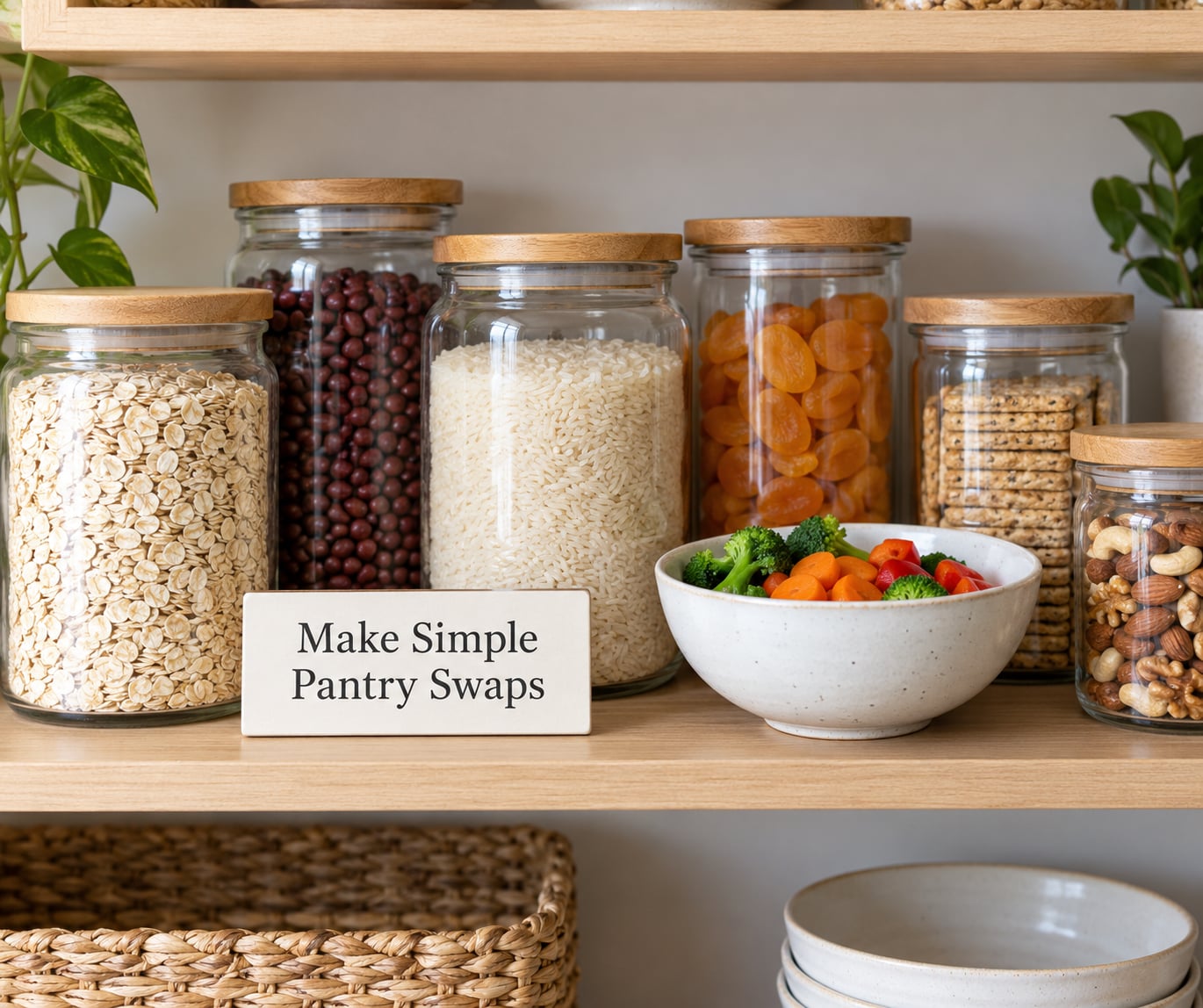
Swap by category, not item by item. One swap per category replaces a whole habit.
- Instant noodles to plain noodles plus frozen vegetables, with a small tin of coconut milk or a spoonful of miso for depth.
- Flavoured oatmeal sachets to plain rolled oats or steel-cut oats, with cinnamon and sliced fruit.
- Packaged pasta sauces to passata, canned tomatoes, garlic and herbs. A jar of sauce costs the same as a pouch and lasts longer.
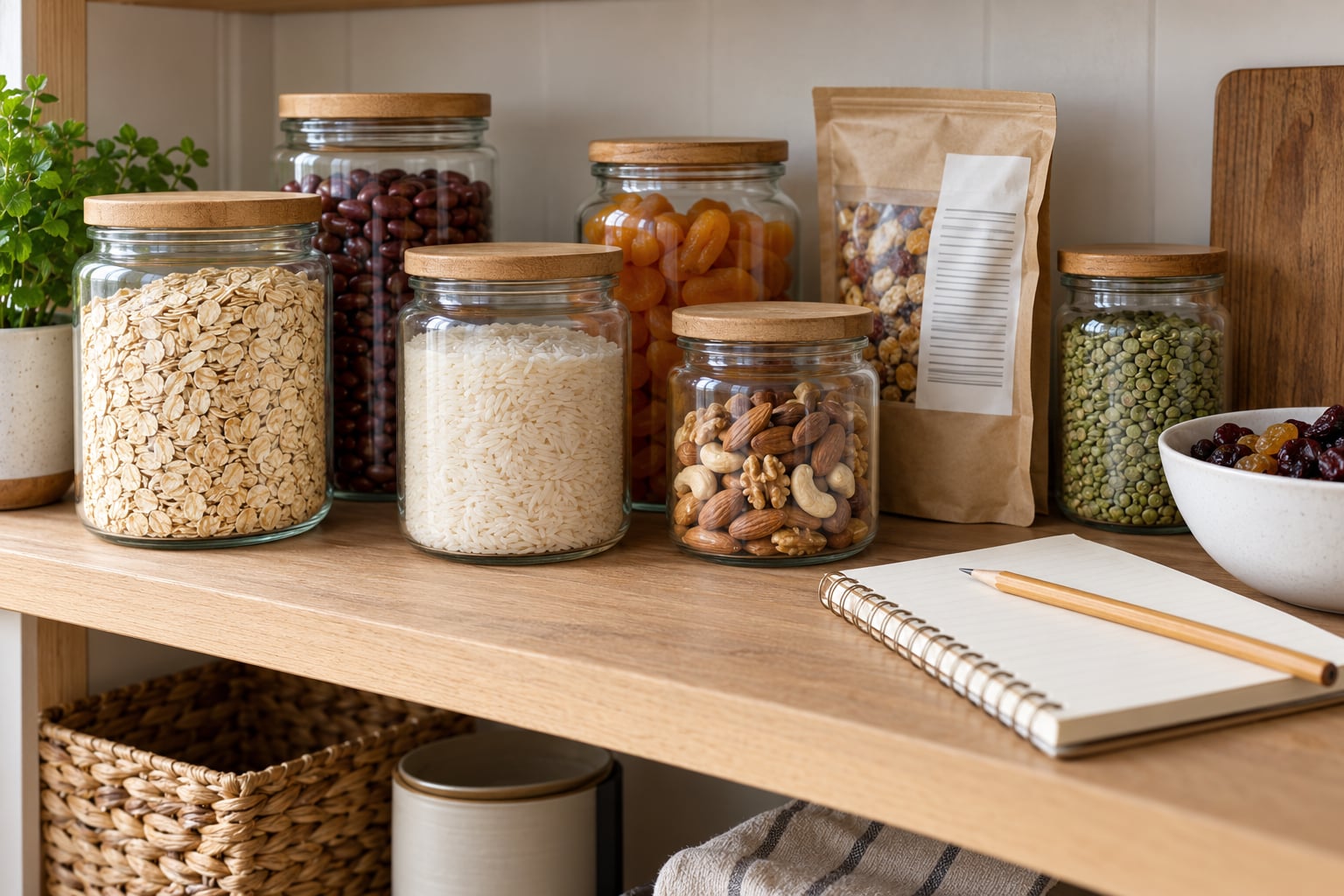
- Snack mixes to plain nuts, seeds, dried fruit or roasted chickpeas you portion yourself.
- Crackers to plain water crackers, wholegrain crackers or sliced cheese and apple.
- Frozen meals to frozen vegetables plus a protein you chose, cooked in a pan. Not every night, just most of them.
Season blended spices from ground cinnamon, cumin or smoked paprika instead of multi-spice seasoning blends. It is cheap, it lasts, and the cupboard does the work.
You have it right when: the replacement is something you will actually eat on a normal weeknight, not a dish reserved for special occasions.
Common Mistakes
Judging by the front of the package. "Natural," "whole grain," "organic," "high protein," "no artificial anything" are legal and mostly meaningless on their own. A product can be organic and still be Group 4, because organic describes farming methods, not processing level. Read the ingredient list anyway.
Assuming all packaged food is the same. Frozen vegetables, canned beans, plain yogurt, dried lentils and salted cod are packaged and Group 3 or lower. Treating packaging as the signal throws away useful information.
Misreading the serving size. The panel is accurate about what it measures and often misleading about how much you eat. Double the serving before you decide anything.
Treating additives as inherently dangerous. Every additive is regulated, and safety is dose-dependent. The useful framing is cumulative pattern: a daily diet made almost entirely of Group 4 foods is a different question from an additive in a weekly treat.
Trying to replace everything at once. Bin the whole cupboard, feel deprived on day three, order delivery, and end up worse off. Pick two categories, swap them, live with it for a month.
Two more practical tips. Buy the boring versions on purpose, because plain versions do not get rejected and then eaten at 9pm. And buy small quantities of things you eat emotionally, so finishing them is realistic.
Frequently Asked Questions
Do frozen and canned foods count as ultra processed?
Usually not. Frozen vegetables and plain canned beans are minimally processed at worst, and NOVA places them in Group 3. Watch for the additions instead: canned vegetables in a heavy sauce, fruit in syrup, or a frozen dinner that lists emulsifiers and modified starches. Canned tomatoes, plain fish in water, frozen berries and frozen vegetable mixes are all useful staples.
Does an organic label tell me anything about processing?
Only about farming. Organic certification covers how crops were grown and prohibits synthetic pesticides, but it says nothing about industrial processing. Organic cookies, organic cereal and organic granola bars are still ultra-processed. Check the ingredient list the same way you would on any other package and treat organic as a separate decision.
How long should an ingredient list be before I get suspicious?
There is no hard cutoff, and length alone proves nothing. A long list is a signal when it is padded with additives rather than real foods. Check for syrups, starches, isolates, emulsifiers, gums, colours and flavours. A short list of recognisable ingredients such as chickpeas, olive oil and salt tells a very different story.
Is bread ultra processed?
It depends on the loaf. A simple loaf of flour, water, salt, yeast and yeast extract is Group 3, processed but not ultra-processed. Sliced supermarket bread that lists calcium propionate, dough conditioners, modified starch and a long additive tail leans Group 4. Sourdough and stone-milled loaves with short ingredient lists are the easiest swap.
What do I do with a convenience food I do not want to give up?
Keep it, and give it a job. Decide that a packaged item is a deliberate choice once a week rather than an automatic default, then buy the small version so the decision stays in your hands. People report this framing works better than a ban because it survives a busy week, and the frequency question is the one that actually changes health outcomes.
Can I use an app to check my pantry food?
Barcode-scanning apps exist, including Open Food Facts, and they pull the manufacturer ingredient list for you. That helps with unreadable labels, though they do not judge the product for you. Reading the panel yourself teaches you a skill that keeps working, and community identification threads are useful when a new product leaves you unsure.
Conclusion
Start with one shelf, not the whole cupboard. Pick a single category, read its ingredient lists, write down the two items with the most Group 4 signals, and replace only those with versions that suit your budget and your weeknight schedule. If a swap does not survive contact with a busy Tuesday, it was the wrong swap.
This is general nutrition information, not medical advice. If you are managing a condition, pregnant, or making changes for a child, talk to a doctor or registered dietitian about what fits your situation.