Shopping for a week of healthy meals comes down to four moves: pick three to five dinners you will actually cook, list every ingredient they need, walk the store in a fixed order, and put the perishables away the moment you get home. If you follow that order, you spend about 45 minutes planning, 30 to 40 minutes in the store, and 20 minutes putting food away, and you end up with seven days of meals instead of seven nights of deciding what to eat.
That is the whole system, and it is how to grocery shop for a week of healthy meals without turning the week into a project. The rest of this guide is the detail that keeps it from falling apart on a Wednesday, when the spinach has already turned and nobody knows what to do with the leftover rice.
The version below assumes one person for seven days. For a household of two, multiply the quantities by two; for a family of four, most staples scale by roughly three rather than four, because nobody eats four full adult portions every day.
Table of Contents
- What You Need
- Step-by-Step: How to Grocery Shop for a Week of Healthy Meals
- 1. Plan Your Meals Before You Shop
- 2. Check the Pantry and Make a Shopping List
- 3. Shop for Balanced, Flexible Staples
- Produce
- Protein
- Dairy and alternatives
- Pantry
- Frozen
- 4. Choose Foods That Store Well
- 5. Keep the Shopping Trip Organized
- 6. Store and Prep the Groceries at Home
- Common Mistakes
- Shopping without a plan
- Buying too many perishables
- Buying only salad ingredients
- Skipping freezer backups
- Over-buying bulk items
- Ignoring portions
- Storing everything wrong
- Forgetting the mid-week gap
- Frequently Asked Questions
- What is the 5 4 3 2 1 rule for grocery shopping?
- What is the 3-3-3 rule for groceries?
- How much should I budget for groceries for one person per week?
- What should I include on a healthy grocery list for one week?
- What produce keeps longest in the fridge?
- How do I plan meals so I do not waste food?
- Conclusion
What You Need
Four things, and none of them are expensive. You can start this week with whatever you already have in the house.
- A meal plan with three to five dinners. Not seven. Beginners over-plan, cook two dinners and end up eating the same chicken three nights running.
- A written list. Paper, a note app, or a shared document. People who shop from memory pick up three unplanned items every trip, and impulse buys are where the budget quietly goes.
- Four to six containers. A mix of glass and plastic that fits your freezer. They are what make leftovers a plan rather than an accident.
- A number to stay under. Even a rough ceiling changes how you shop. Pick an amount for the week before you go.
Give yourself one uninterrupted block, ideally Saturday or Sunday morning, before the week fills up. Shopping midweek with no plan is the single biggest reason people eat takeout four nights out of seven.
While you are at it, take five minutes to check what you already own. Half the “pantry staples” most guides list are things you bought last month and have sitting behind the cereal.
Step-by-Step: How to Grocery Shop for a Week of Healthy Meals
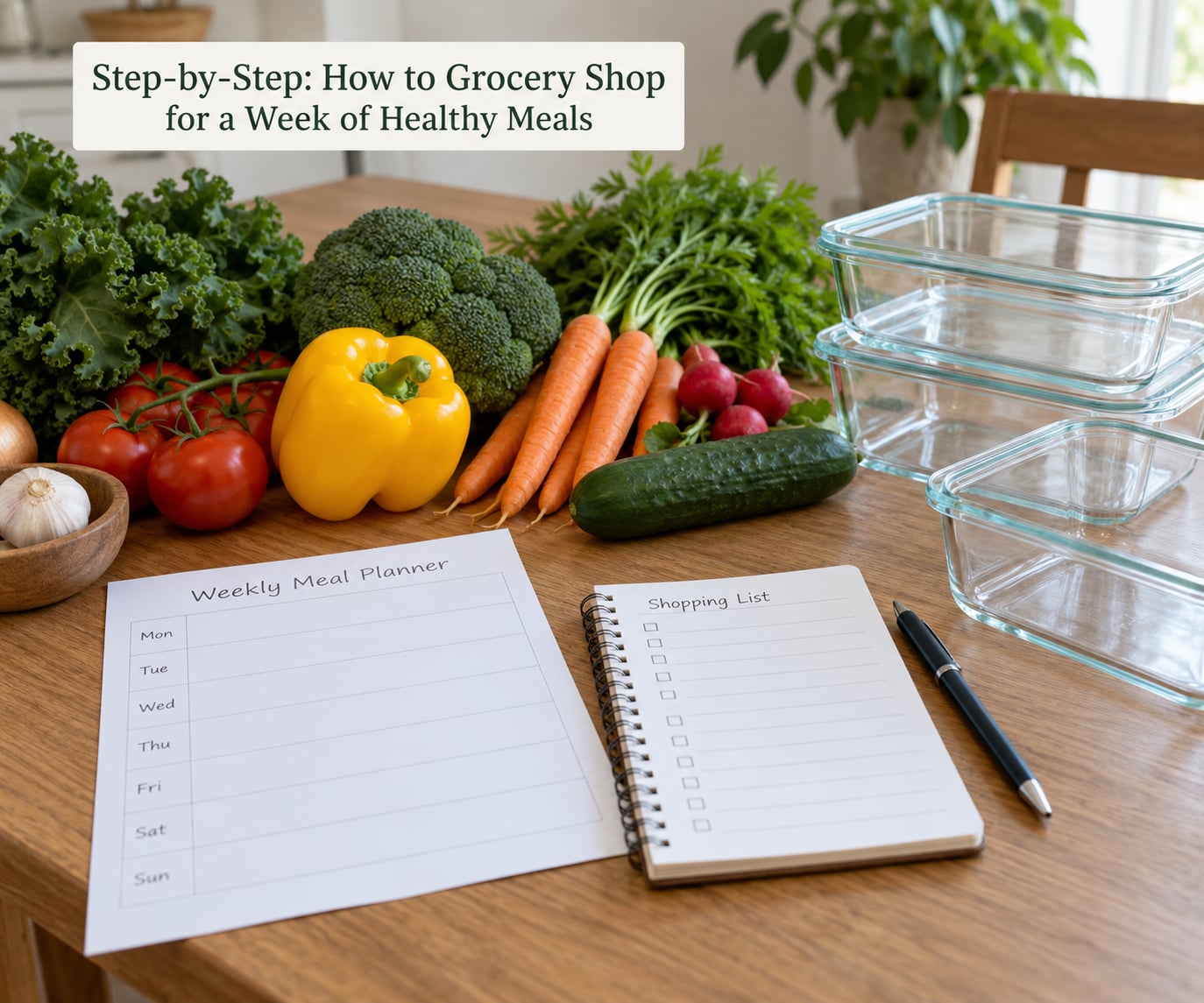
Work through these six steps in order. The order matters more than the perfection of any single step, because each one saves work from the next.
1. Plan Your Meals Before You Shop
Start by writing down three to five dinners. Anchor them to ingredients you are willing to buy every week, like chicken, beans, eggs or tofu, rather than to whatever recipe looked good that morning.
Then repeat two or three of those dinners in a different form. A pot of chili becomes Tuesday night’s chili, Thursday’s burrito bowls and Friday’s soup, which means one cook and three meals. This is the part that makes a weekly shop affordable: you buy ingredients once and use them four times.
Build breakfasts and snacks the same way. Most people over-plan dinner and under-plan breakfast, then buy a box of cereal and a bag of chips that have no role in any meal they wrote down.
Allow two flexible slots. Something will change during the week: a leftover invitation, a late night, a kid who will not eat the planned dinner. A rigid seven-day grid breaks on the first surprise. A plan with two blanks survives contact with a real week.
2. Check the Pantry and Make a Shopping List
Walk the kitchen before you walk the store. Open the pantry, the freezer and the fridge, and write down what is nearly gone and what you already have in quantity. Oil, spices, rice, canned tomatoes and frozen basics usually fall into the second group.
Then list ingredients by the meals you chose, not by aisle instinct. Every item on that list should trace back to a specific dinner, breakfast or snack. Anything that does not goes on a “maybe” list, and most of that list stays home.
Write quantities. “Vegetables” produces a bag of spinach nobody finishes; “2 bags spinach, 1 bunch kale, 4 carrots” produces a week’s worth that gets eaten. You can write quantities without counting portions first, then scale the whole list once you know your household.
Then add the flexibility most lists miss: name the two or three meals you could make without buying anything else. Those are your emergency dinners, and having them decided in advance is what stops a bad night from becoming a takeout night.
Group the list by store section in the order you will walk. Produce first, then protein, dairy and alternatives, then pantry, then frozen. A list organized the way the store is laid out turns your trip into a loop instead of a hunt.
Finally, read the list once before you leave the house. Anything on it that you cannot name a meal for should be crossed out. A shorter list that you actually cook from beats a complete one you abandon in the cereal aisle.
Scaling is simple arithmetic, and it does not need to be exact. One adult eating every meal at home needs roughly seven breakfasts, seven lunches and seven dinners. Two adults need about three times that quantity, not four, because leftovers get shared. A family of four sits somewhere between three and four times the single-adult list, with more produce and more variety and less risk of food sitting untouched.
Two categories break the pattern. Staples like rice, pasta, oats, canned beans and cooking oil scale almost linearly, because you buy them in packages anyway. Fresh produce and fresh protein scale less predictably, so buy those by counting meals rather than by multiplying. If you plan seven dinners and three of them use chicken, buy chicken for three meals.
3. Shop for Balanced, Flexible Staples
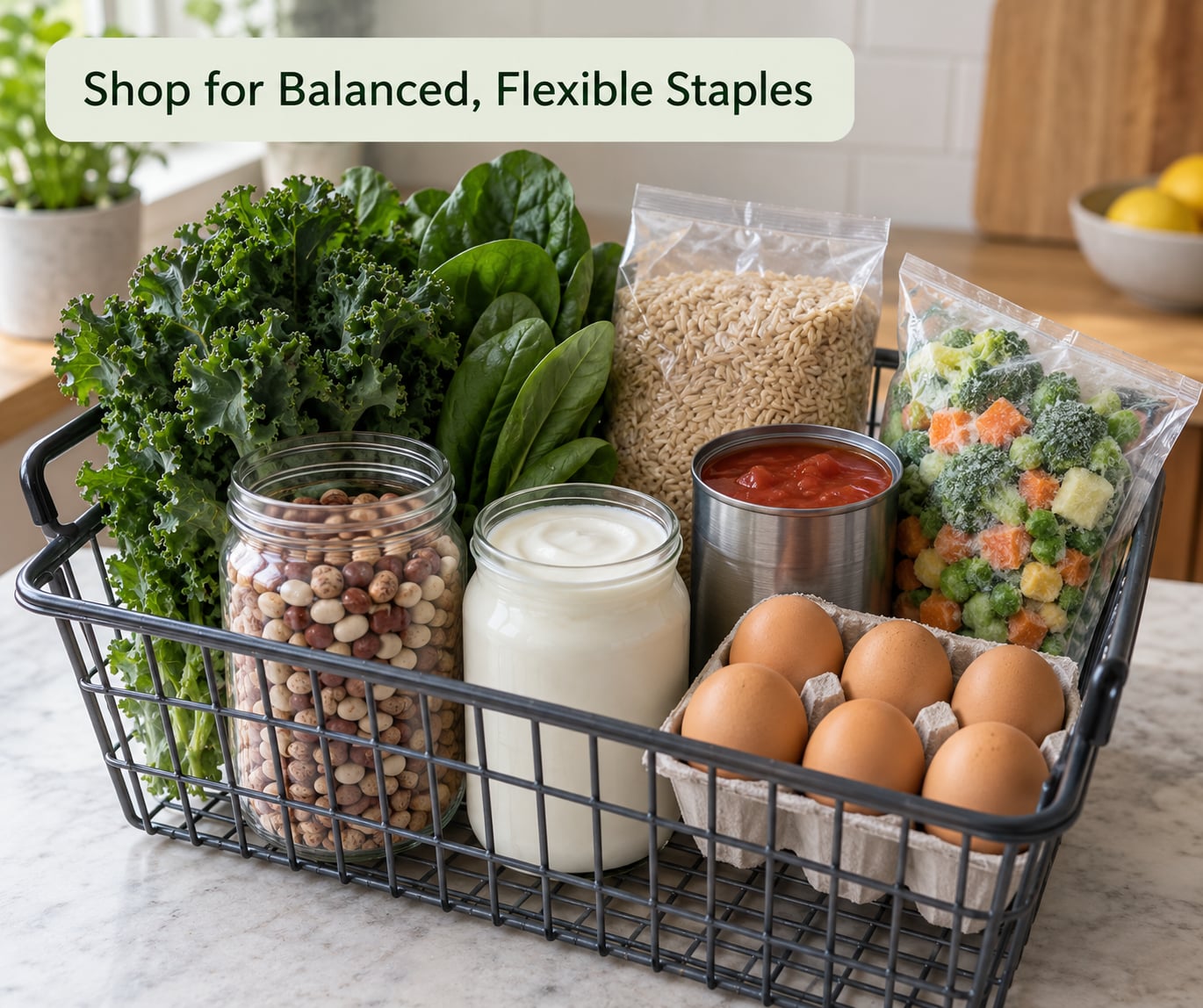
Shop the categories below, choosing the numbers that fit your household and your week. Every meal you planned can be built from these groups.
Produce
- Leafy greens: 2 large heads or 2 bags. Romaine, kale and chard all hold up a week in the fridge.
- Quick-ripeners to eat first: bananas, apples, berries, tomatoes, avocados, or whatever you actually reach for.
- Hardier vegetables: carrots, cabbage, onions, peppers, celery, broccoli. These tolerate a slower week.
- Alliums and flavor: garlic, onions, lemons or limes. These turn plain protein into a meal.
Protein
- Chicken breast or thighs, about 1.5 pounds per person per week if you eat meat daily, less if you rotate in beans.
- Eggs, usually one dozen per person per week as the fast, cheap backup breakfast.
- One plant protein: dry beans and lentils, canned beans, tofu, or frozen fish fillets.
- Canned tuna or salmon for a no-cook lunch that needs no reheat.
Dairy and alternatives
- Plain yogurt, milk or fortified plant milk for breakfast.
- A block of cheese or a tub of cottage cheese for snacks that are not chips.
- Eggs if you are not already counting them under protein.
Pantry
- Whole grains: brown rice, oats, whole wheat pasta or tortillas.
- Two canned goods: tomatoes, beans, coconut milk, broth.
- Cooking basics: olive oil, garlic powder, paprika, cumin, black pepper, soy sauce or tamari.
- Breakfast backing: nut butter, honey, or whatever you eat every morning without thinking.
Frozen
- Two bags of frozen vegetables. Frozen is picked at peak ripeness, costs less per serving than fresh, and lasts months, which makes it the best hedge in the whole shop.
- Frozen berries or fruit if you want smoothies or yogurt bowls.
- One ready backup meal for the night when the plan collapses. This is not cheating; it is the reason people keep the plan.
Store brands are fine here and nobody will notice in the chili. Buying the plain version of a pantry item and flavoring it yourself costs a fraction of the packaged version and cuts the sodium.
4. Choose Foods That Store Well
Perishables are the thing that ruins a weekly shop, so choose them by shelf life, not by what looks best at the display. Buy produce that will still be usable on day seven, and treat anything fragile as a day-one and day-two item.
Eat these first, days one to three: berries, ripe peaches, bananas, deli sliced meat, fresh fish, salad greens, cut fruit, anything already prepped.
These hold the week comfortably: apples, oranges, carrots, cabbage, onions, sweet potatoes, winter squash, avocados if they are still firm, eggs, and most cheeses.
Buy and freeze: raw meat, extra bread, cooked rice and grains, and surplus vegetables you will not reach before the weekend. Cool leftovers before freezing, and label with the date so you eat them first.
Two habits do most of the work here. Buy produce with a use-by question in mind rather than a color question, and freeze on shopping day anything that will not get eaten in the first four days.
5. Keep the Shopping Trip Organized
Walk the store in one fixed loop: produce, protein, dairy and alternatives, bakery, pantry, frozen, then the checkout line. Reaching the last section first means you walk the whole store once with nothing in your cart to buy on impulse.
Skipping the perimeter display is the other habit that pays. The endcaps and the cheese table are where the impulse damage happens, and they are also where the good deals sit. Pick your deal, then get out of that aisle.
When you compare labels, compare per-serving cost rather than sticker price. A larger package of something you cannot finish before it turns is not cheaper. Comparing store brands against national brands on staples you actually consume weekly is where the savings are real.
Do not trade nutrition for the price, either. Frozen vegetables, canned beans with no salt added, and store-brand canned goods are frequently the better nutrition buy, not the compromise. What is worth skipping is the packaged snack that duplicates something already in your pantry.
If your week has no room for a store trip, grocery pickup and delivery work, but use the same list. Ordering from the app without a list is how delivery becomes more expensive than the shop you replaced.
6. Store and Prep the Groceries at Home
Refrigerate first, unpack second. Bags sit on the counter for far too long while people sort things out, and that is where spoilage and safety problems start.
- Keep meat, poultry, seafood and dairy on the bottom shelf, in a tray or sealed container so nothing drips onto produce below.
- Wash berries and greens before storing them. Rinse, dry thoroughly and line containers with a towel; damp greens are the fastest way to lose a bag.
- Separate fruit from vegetables if you store them side by side. Ethylene from apples, bananas and pears speeds up spoilage in leafy greens and broccoli.
- Cut fruit and cut vegetables count as perishable. Store them covered and use them early in the week.
- Freeze the second half of the meat and any surplus bread or rice while you are still unloading.
Then do a 20-minute prep. Cook a pot of grains, roast a tray of vegetables, boil six eggs, wash and chop what you plan to use midweek. That work turns a Wednesday dinner into a 15-minute job, which is the only version of this plan that survives a busy week.
Cook to USDA safe minimum internal temperatures and use a thermometer: 165°F (74°C) for poultry, 160°F (71°C) for ground meat, and 145°F (63°C) for whole cuts of meat and fish. Refrigerate leftovers within two hours, and use refrigerated cooked food within three to four days; freeze anything later than that.
Common Mistakes
Nearly every wasted grocery run comes down to one of these. Each has a fix you can apply to the next trip.
Shopping without a plan
A list built in the aisle is a list of whatever caught your eye. Fix it by writing three dinners before you leave the house, even if they are the same three dinners you ate last week. Consistency is not a failure of planning; it is the plan working.
Buying too many perishables
The bag of spinach that turned to slime on Thursday is the most common single loss in a weekly shop. Fix it by splitting produce into an eat-first pile and a lasts-the-week pile, and shopping the second pile more heavily than feels normal.
Buying only salad ingredients
A cart full of raw vegetables and nothing cooked is a week of disappointing lunches. Fix it by buying one cooked component: rotisserie chicken, canned beans, frozen edamame, cooked pasta or a microwave grain. Now the vegetables have somewhere to go.
Skipping freezer backups
Fresh-only shopping leaves you with nothing when the plan breaks. Fix it by keeping two frozen vegetables and one frozen protein in the house at all times. Frozen produce is picked ripe, costs less per serving and will not expire.
Over-buying bulk items
The ten-pound bag of rice that sits in the pantry for a year is not a bargain. Fix it by buying bulk only for things you can realistically finish, and by portioning dry beans and rice into smaller containers so one jar is one meal instead of one commitment.
Ignoring portions
Buying by habit rather than by servings is how a family of two ends up with a week of food and a fridge of leftovers. Fix it by picking a number of servings per item for your household before the shop, not after.
Storing everything wrong
Washing greens and sealing them wet, or leaving raw poultry on the top shelf, ruins good food and creates safety problems. Fix it by dry-washing produce, using the bottom shelf for raw meat, and doing the freezer transfer on the day you shop.
Forgetting the mid-week gap
The most common reason people abandon a plan is dinner three, when nothing is planned and nothing is left over. Fix it by deliberately cooking one extra portion for that night. It costs nothing extra and it is the difference between finishing the week and ordering food.
Frequently Asked Questions
What is the 5 4 3 2 1 rule for grocery shopping?
The 5-4-3-2-1 rule is a planning shortcut for building a week’s food supply: aim for 5 servings of vegetables, 4 servings of fruit, 3 servings of protein, 2 servings of dairy or a fortified alternative, and 1 serving of whole grains per day. Some versions count it per week instead. It works as a checklist when you are unsure whether your list is balanced, but treat it as a guide rather than a quota, and scale it to your own needs and any guidance from your own clinician.
What is the 3-3-3 rule for groceries?
The 3-3-3 name is not an official rule; it is shorthand people use for a simple weekly habit: three dinners decided before you shop, three days of meals covered by food already in the house, and produce or protein used in the first three days of the week. The point is to plan ahead and eat the most perishable food early. Check the source you found the phrase in, since it means slightly different things in different guides.
How much should I budget for groceries for one person per week?
A single adult who cooks most meals at home generally needs somewhere in the range of 55 to 90 dollars per week for a balanced diet, depending on your region, store prices and how much you eat out. A family of four often lands between 250 and 400 dollars for the same week. Figures vary by state and change over time, so treat these as planning ranges rather than quotes, and check the current local prices for the foods you actually buy.
What should I include on a healthy grocery list for one week?
For one person, a solid week usually includes two leafy greens, two hardier vegetables, a few pieces of fruit, two proteins such as chicken and eggs plus one plant protein, plain yogurt, two whole grains, two canned goods, cooking basics, and two bags of frozen vegetables. Add breakfast items you eat every day. The full version of this list, laid out by store section, is in the steps above.
What produce keeps longest in the fridge?
Apples, oranges, carrots, cabbage, onions and sweet potatoes are the longest keepers in a home fridge. Keep them away from ethylene-producing fruit like bananas and apples if you want to slow ripening. Berries, leafy greens, cut fruit and ripe avocados are the shortest and belong at the front of your week.
How do I plan meals so I do not waste food?
Plan three to five dinners built around shared ingredients, buy produce by shelf life, and schedule the shortest-lived items in the first three days. Cook one extra portion on day one for a mid-week gap, and freeze what you will not reach before the weekend. If you want templates, the USDA MyPlate resources and the free planners offered by public health departments are the most widely recommended starting points.
Conclusion
Pick three to five dinners tonight and write them down. Tomorrow, check the pantry, build your list in store order, and walk the loop without the endcaps. Then refrigerate first and prep 20 minutes before you unpack. Repeat that on the same day each week and knowing how to grocery shop for a week of healthy meals stops being a task and turns into a habit.
Keep the two flexible slots in the plan. They are the reason the system still works when your week does not go the way you drew it.