Stress hormones, mainly cortisol, make losing weight harder by turning up hunger, pushing fat toward the belly, blunting insulin, and wrecking sleep. The catch is that stress is a modifier, not a gatekeeper. You can still lose weight while stressed, it just takes steadier habits and usually more time. Here is what is actually happening in the body, and what tends to help.
I want to be upfront about one thing before we go further. “Cortisol belly” is half a useful phrase and half a marketing invention. The hormone part is real and well studied. The idea that you can spot one specific fat type and blame a single cause is not, and articles that promise a hormone reset for belly fat are selling something.
Table of Contents
- What Is the Connection Between Stress and Weight Loss?
- How Do Stress Hormones Make It Harder to Lose Weight?
- Visceral fat versus subcutaneous fat: why the location matters
- How Do Cortisol, Insulin, and Other Hormones Respond to Stress?
- How Much Does Stress Usually Affect Weight?
- Why Does Stress Sometimes Lead to Weight Gain?
- Why Does Stress Sometimes Make Weight Loss Easier?
- What Are Common Signs That Stress May Be Affecting Your Weight?
- Which Everyday Habits Can Support Both Stress and Weight Loss?
- Can Exercise Help Reduce Stress and Support Weight Loss?
- When Should You Talk With a Healthcare Professional?
- Frequently Asked Questions
- Can high cortisol levels stop me from losing weight?
- Can stress make you gain weight without eating more?
- Can stress reduction actually help me lose weight?
- Can cortisol levels contribute to weight gain during menopause?
- Do supplements that block cortisol help with weight loss?
- How long does it take for stress hormones to settle down?
- What to Do First
What Is the Connection Between Stress and Weight Loss?
The connection is real but narrow. Short-term stress, the kind that lasts an hour or a day, usually has almost no effect on weight. It can kill your appetite for a while or make you skip a meal, and then life goes back to normal.
Chronic stress is different. Weeks or months of ongoing pressure keep cortisol elevated instead of letting it return to baseline. That changes appetite, energy use, fat storage, blood sugar handling and sleep, all at once. Each change is modest on its own. Stacked together across months, they are enough to explain a lot of plateaus.
Think of it as friction rather than a wall. Your calorie deficit still does something, your training still burns energy, but the system gets noisier. Hunger signals get louder, recovery gets worse, and the food you reach for becomes more rewarding. Weight moves, just slower and less predictably.
How Do Stress Hormones Make It Harder to Lose Weight?
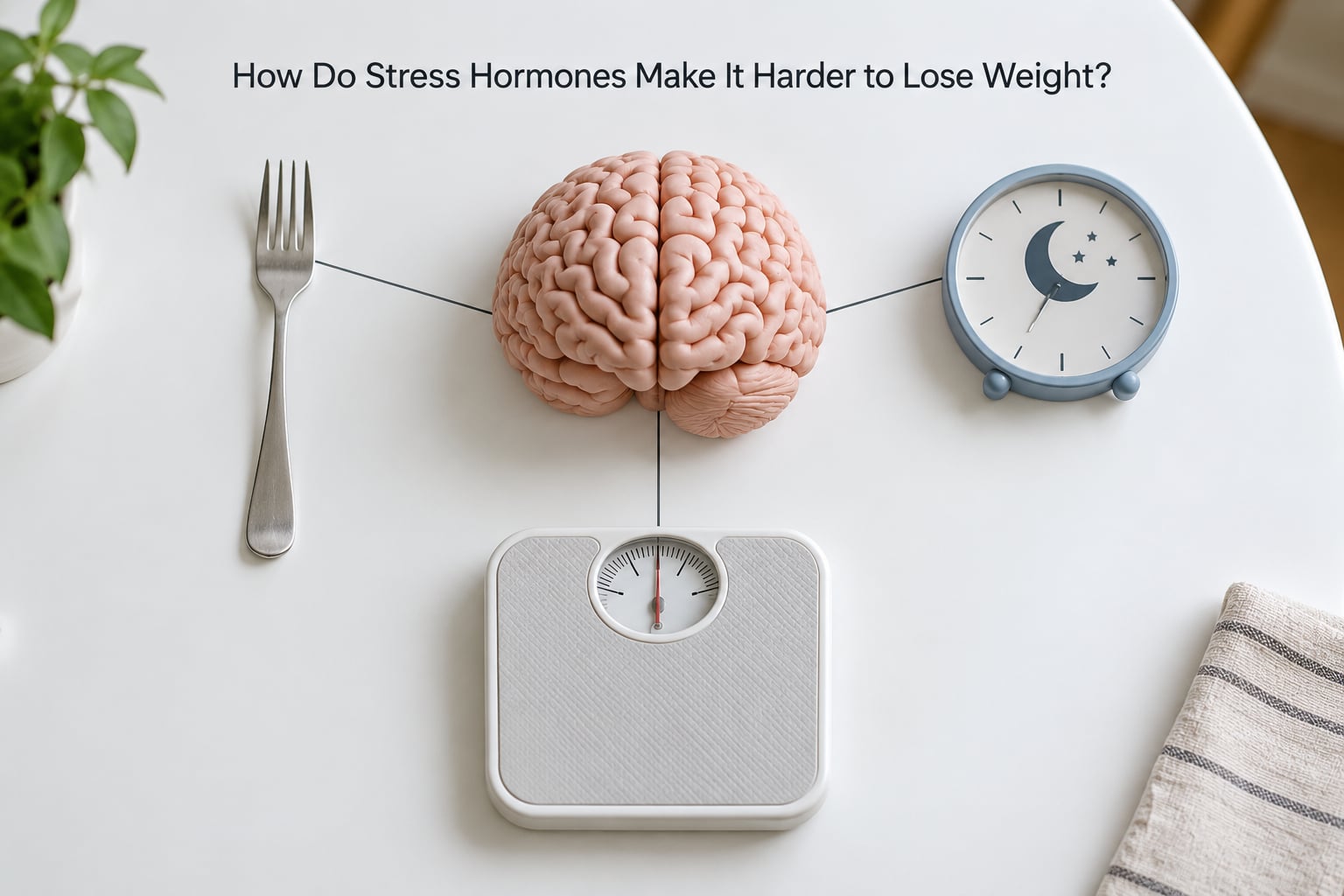
There are five main paths, and they feed into each other. Here is how stress hormones make it harder to lose weight, mechanism by mechanism.
- Appetite and cravings rise. Cortisol tells the body to top up energy quickly, which biases you toward high-calorie comfort foods: sweet, salty, fatty, whatever is fastest. On r/loseit, people describe this pattern in plain terms, eating more on the same calories and not understanding why.
- Fat storage shifts to the center. Visceral fat, the deep layer around your abdominal organs, is metabolically active and highly responsive to cortisol. Subcutaneous fat, the layer under your skin that you can pinch, is comparatively quiet.
- Energy use and fat burning slow. Sustained cortisol produces betatrophin, a stress-response protein that inhibits adipocyte triglyceride lipase, the enzyme needed to break down stored fat. Work out of University of Florida researchers published on this mechanism.
- Insulin response worsens. Cortisol raises glucose to fuel the fight-or-flight response. Keep that pattern running and cells become less sensitive to insulin, so the same meal produces a bigger blood sugar rise and a stronger urge to eat again soon.
- Sleep breaks down, and hunger hormones follow. Cortisol follows a daily rhythm, highest on waking and lowest near midnight. Short sleep and late nights push it off that rhythm, lower leptin (the satiety signal) and raise ghrelin (the hunger signal). You wake up hungry rather than rested.
Visceral fat versus subcutaneous fat: why the location matters
| Feature | Visceral fat | Subcutaneous fat |
|---|---|---|
| Location | Deep, around the liver, kidneys and intestines | Under the skin of hips, thighs, arms, abdomen |
| How it feels | Cannot be pinched, firm waist | Soft, pinchable |
| Metabolic activity | High, releases fatty acids and inflammatory signals into the blood | Lower, mostly energy storage |
| Response to cortisol | Strong, grows with sustained high cortisol | Less directly linked |
| Health risk | Higher, tied to blood pressure, blood sugar and cholesterol problems | Lower at typical levels |
Here is the part most posts skip. Fat is not a passive store. Visceral fat has its own receptors for stress hormones and its own signaling back to the brain, which nudges you toward eating and toward storing more. That makes for a loop: stress adds central fat, central fat makes stress response more reactive, and the loop feeds itself.
How Do Cortisol, Insulin, and Other Hormones Respond to Stress?
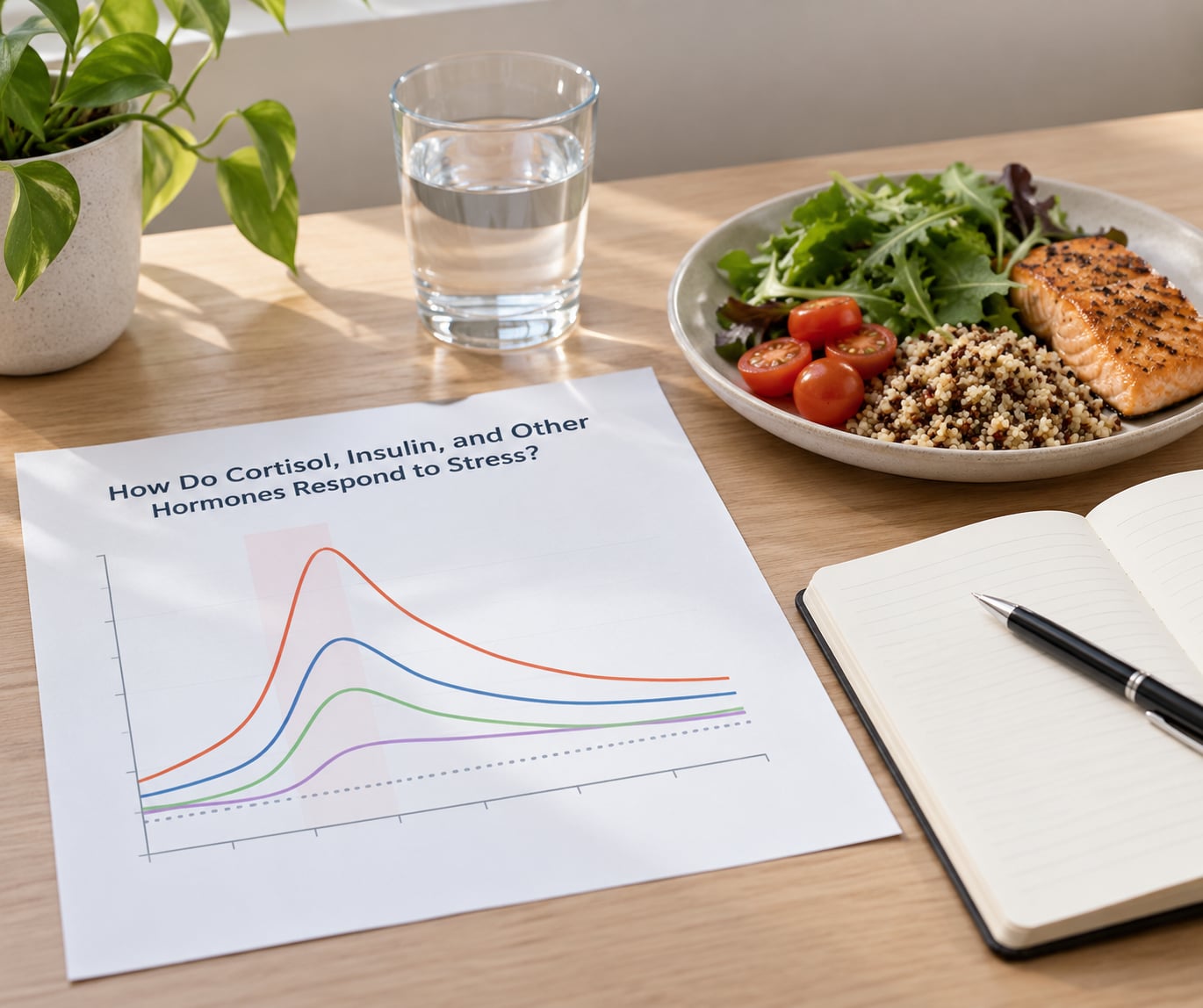
Cortisol is a glucocorticoid made by the adrenal glands, released by the HPA axis, the hypothalamus-pituitary-adrenal circuit that runs your stress response. Adrenaline and noradrenaline come alongside it during the acute response. Insulin handles glucose. Leptin and ghrelin signal fullness and hunger. They are not separate systems; they talk to each other constantly.
| Situation | What happens | Effect on weight |
|---|---|---|
| Minutes of acute stress | Heart rate rises, glucose released, insulin goes up briefly | Usually none, resolves on its own |
| Days of intense stress | Appetite suppressed, meals skipped, caffeine up | Either direction, usually a small change |
| Months of chronic stress | Cortisol stays elevated, appetite rises, sleep worsens, insulin sensitivity falls | Gradual gain, most often around the abdomen |
| Menopause transition | Sleep disruption and shifting estrogen add another layer | Often central gain, harder to shift than before |
Two honest caveats. First, single-day cortisol readings mean very little, which is why anyone selling you a saliva cortisol test as a weight-loss tool should make you suspicious. Second, the popular idea that a few bad habits “reset your hormones” overstates what the evidence supports. What you can change is your sleep, your food pattern and how often your nervous system gets pulled into fight-or-flight.
Men and women also handle this differently. Cortisol rises and clears on a different curve for women, and hormonal birth control alters cortisol binding in the blood, so levels can read higher without the picture being different. During perimenopause and menopause, sleep disruption and appetite changes stack on top of each other, and central fat gain tends to be one of the earlier complaints.
How Much Does Stress Usually Affect Weight?
Enough to notice, rarely enough to explain on its own. Studies of cortisol and abdominal fat, including well-known work out of Yale, link higher cortisol to more central fat over time, but they show an association, not a switch someone can flip.
Common patterns look like this:
| Pattern | Possible influences |
|---|---|
| Steady gain concentrated at the waist | Chronic stress, sleep debt, eating pattern, strength training, menopause transition |
| Rapid up and down over a few days | Water retention, salt, cycle-related fluid changes, bowel habits |
| Weight frozen despite strict eating | Chronic stress, under-eating, insufficient sleep, low movement |
| Weight loss during a stressful month | Suppressed appetite, skipped meals, less snacking, disruption of routine |
Bloating after meals is worth separating out. Cortisol and poor sleep both affect gut motility and can make food sit badly, which feels different from fat gain. People often describe exactly that on weight-loss forums, and it is a common reason the scale and the mirror disagree.
Why Does Stress Sometimes Lead to Weight Gain?
Mostly through behavior that the hormones make more likely, not through some fat-building trick.
Frequent eating is the big one. Stress arrives and you graze without deciding to. On r/WeightLossAdvice, a poster working two jobs plus school described guilt-driven evening pantry snacking after a long shift, eating well under target by day and then making up for it at 9pm.
Comfort food choices come next. Sweet, salty and fatty foods are rewarding when you are wired for threat, and they are easier to eat when you are tired and not thinking clearly.
Reduced spontaneous activity sneaks in. Nobody plans to stop walking, but a stressful month fills every gap with work, admin and recovery, and sitting quietly adds up without a single dramatic decision.
Sleep loss adds its own weight. Fewer than six hours a night raises hunger hormones and lowers insulin sensitivity, and most people eat more on short sleep without noticing the change.
Cycle changes matter too. Cortisol responds differently across the month, and during perimenopause many women report both stress sensitivity and central gain rising at the same time.
Why Does Stress Sometimes Make Weight Loss Easier?
Sometimes it does. Stress kills appetite. If a stressful stretch means you forget meals, skip the evening snack and stop mindlessly eating while scrolling, a deficit can appear without anyone trying.
Some people also move more under stress rather than less, especially when the stress comes with a project deadline or a new job that keeps them on their feet. If your stress happens to break a sedentary routine, weight can drop during a bad month.
This is not a method. Deliberately creating chronic stress to lose weight is a route to worse sleep, worse mood and eventually worse health. But it explains why two people with identical habits and identical stress levels get different results on the scale.
What Are Common Signs That Stress May Be Affecting Your Weight?
These are observations, not a diagnosis. Only a clinician can tell you what is causing them.
- You eat while stressed rather than because you are hungry, and you do not remember much of it.
- Cravings hit hardest at night, after dinner, when you are alone and tired.
- You are hungry again soon after eating, and blood sugar feels like it swings more than it used to.
- Your sleep is shorter or more broken than a few years ago, and you wake up unrested even after enough hours in bed.
- You feel low energy during the day and restless at night.
- You bloat after meals more often than you used to.
- Your waist changes faster than your weight, especially around the middle.
- Menstrual timing shifts, or flow changes, alongside stress and sleep changes.
- You start workouts and stop them, or you skip the gym entirely during heavy weeks.
- You drink more alcohol or caffeine than usual, which adds calories and worsens sleep quality.
If several of those landed, stress is a reasonable suspect. It is not the only suspect, and it is not a diagnosis.
Which Everyday Habits Can Support Both Stress and Weight Loss?
These are foundations, not shortcuts. They reduce the stress load on purpose, and they make weight loss steadier once your circumstances allow it.
| Habit | Why it helps | A realistic version |
|---|---|---|
| Regular meal timing | Stops the long gaps that end in overeating | Three meals at roughly the same times, no perfection |
| Protein at each meal | Keeps you full and steadier between meals | A palm-sized portion, including at breakfast |
| Fiber from vegetables, fruit and beans | Slower digestion, fewer sharp hunger swings | Add one source a day rather than overhaul the diet |
| Hydration | Often mistaken for hunger, helps digestion | A glass of water before meals and between them |
| Consistent sleep and wake time | Anchors cortisol to its normal rhythm | Same wake time daily, even after a bad night |
| Movement you enjoy | Drains tension and protects muscle | Two 30-minute walks on a workweek |
| A short daily decompression habit | Gives the nervous system a clear downshift | Ten minutes of walking, breathing or stretching |
| Social contact | Loneliness and isolation keep the stress response switched on | Two conversations a week that are not work |
| Simple tracking | Shows whether the week followed your plan or your mood did | Weight, sleep and one habit, three notes |
On supplements, be skeptical. Products promising to block cortisol or melt stress fat have a poor record, and regulators have acted against a number of them for unsupported weight-loss claims. Some supplements genuinely help people sleep, which helps stress, but none of them replace eating and sleeping properly.
Can Exercise Help Reduce Stress and Support Weight Loss?
Yes, and it is one of the more reliable levers available. Movement lowers tension, improves sleep quality and preserves muscle while you lose fat.
Intensity matters more than most articles admit. Higher intensity efforts and long hard sessions raise cortisol for a while, which is fine occasionally. Done repeatedly on poor sleep, they can leave you more depleted rather than less. Steady walking, cycling, strength work with reasonable rest, and mobility sessions tend to settle people down afterwards.
So start where you actually are. If you do nothing now, two 30-minute walks most days is a real program, not a compromise. Add one or two strength sessions a week and your body composition keeps improving even while your weight stalls.
And leave the punishment framing out of it. Training hard to offset a meal that went sideways tends to make the next meal worse. A missed session is a missed session, not a deficit you owe.
When Should You Talk With a Healthcare Professional?
Because the causes of stalled weight loss overlap, and stress is only one of them, some symptoms deserve a proper look.
Book an appointment if you have persistent fatigue that rest does not fix, ongoing sleep problems, mood changes that affect daily life, or a pattern of restrictive or binge eating. Also get checked if your periods change substantially, if you gain or lose weight rapidly without trying, or if you notice easy bruising, purple stretch marks on the trunk, significant muscle weakness, or high blood pressure alongside rapid central weight gain.
That last cluster matters. Excess cortisol from a medical cause, Cushing syndrome, looks nothing like ordinary work stress and needs specific testing. Thyroid problems, PCOS, medications and sleep apnea all produce plateaus too, and each one needs its own approach rather than a stress-management plan.
A primary care clinician or a registered dietitian is the right starting point. Bring a two-week log of sleep, eating times and weight if you can. It answers more questions in ten minutes than a month of guessing.
Frequently Asked Questions
Can high cortisol levels stop me from losing weight?
No. High cortisol makes weight loss slower and less efficient, not impossible. It raises appetite, shifts fat storage toward the abdomen, blunts insulin sensitivity and disrupts sleep. People do lose weight while dealing with significant stress, usually by keeping meals regular and protecting sleep rather than tightening the rules further.
Can stress make you gain weight without eating more?
Partly, yes. Extra visceral fat, some fluid retention and small changes in energy use all happen with sustained stress. The largest driver is still eating behavior, though, and most weight gain attributed to stress comes from meals and snacks that would not have happened otherwise.
Can stress reduction actually help me lose weight?
On its own, usually only modestly. Lowering stress tends to improve sleep, reduce late-night eating and make training easier to recover from, which supports weight loss indirectly. Reviewing stress management and weight outcomes together has found small but real effects. It works best alongside steady eating and movement.
Can cortisol levels contribute to weight gain during menopause?
Yes, and several things stack up. Shifting estrogen changes fat distribution toward the center, poor sleep raises hunger hormones, and the menopause transition itself is stressful. Cortisol also behaves differently in women during this stage. Many people notice waist gain and stress sensitivity shift at the same time.
Do supplements that block cortisol help with weight loss?
There is no good evidence for that. Regulators have taken action against several products marketed this way for unsupported weight-loss claims. Some supplements do help with sleep, which helps stress, but none replace regular meals, movement and sleep. A clinician can advise on anything you are considering.
How long does it take for stress hormones to settle down?
It varies with how long the stress lasted and how your health is generally. Acute responses settle within hours, while habit patterns can take weeks to change after your circumstances improve. Sleep is usually the first thing to shift, appetite next, and weight follows those rather than leading them. Expect months, not days.
What to Do First
Pick the one eating pattern that stress ruins for you. Late-night snacking, grazing during work, skipped meals that end in a binge. Name it, then build one protection for it, like a planned ten-minute walk before the vulnerable hour or a meal you actually sit down for.
Next, set a fixed wake time. It is the cheapest lever here and it anchors everything else, including appetite.
Then add movement you would still do on a bad day. Thirty minutes, most days, counts. And if weight has been stuck for months alongside fatigue, sleep problems or cycle changes, book the appointment rather than tightening the rules again.
Stress slows this down. It does not stop it.