Hunger is usually the reason a calorie deficit collapses on day nine. The fix is not more willpower, it is better picking: large-volume foods that are low in energy density and high in protein, fiber, water or air. Those are the best filling foods for a calorie deficit, and every number below is an approximate reference value you can check on the label rather than a promise.
I have grouped them by how they fill you. Yogurt, eggs, cottage cheese and tuna carry the protein. Beans, lentils, chickpeas and oats carry the fiber. Cucumber, carrot, cabbage, greens and broth-based soups carry sheer volume. A handful of fat, mostly from peanut butter and avocado, slows digestion so the fullness lasts.
No single food burns fat. A deficit has to come from eating less energy than you burn, and how well you tolerate that depends on your own body, activity and health. For a target you can actually sustain, talk to a doctor or a registered dietitian.
Last reviewed and updated in 2026. All calorie, protein and fiber figures are approximate.
Table of Contents
- 10 Best Filling Foods for a Calorie Deficit at a Glance
- 1. Greek Yogurt
- 2. Eggs
- 3. Canned Chickpeas
- 4. Black Beans
- 5. Lentils
- 6. Apples with Peanut Butter
- 7. Carrots with Hummus
- 8. Cottage Cheese
- 9. Tuna with Vegetables
- 10. Whole-Grain Toast with Avocado
- Frequently Asked Questions
- What to eat to feel full on a calorie deficit?
- Can you feel full on 1,200 calories a day?
- Are the 10 most filling foods always low in calories?
- Why am I still hungry on a calorie deficit?
- Do cucumbers and vegetables actually fill you up?
- How to Use These Filling Foods
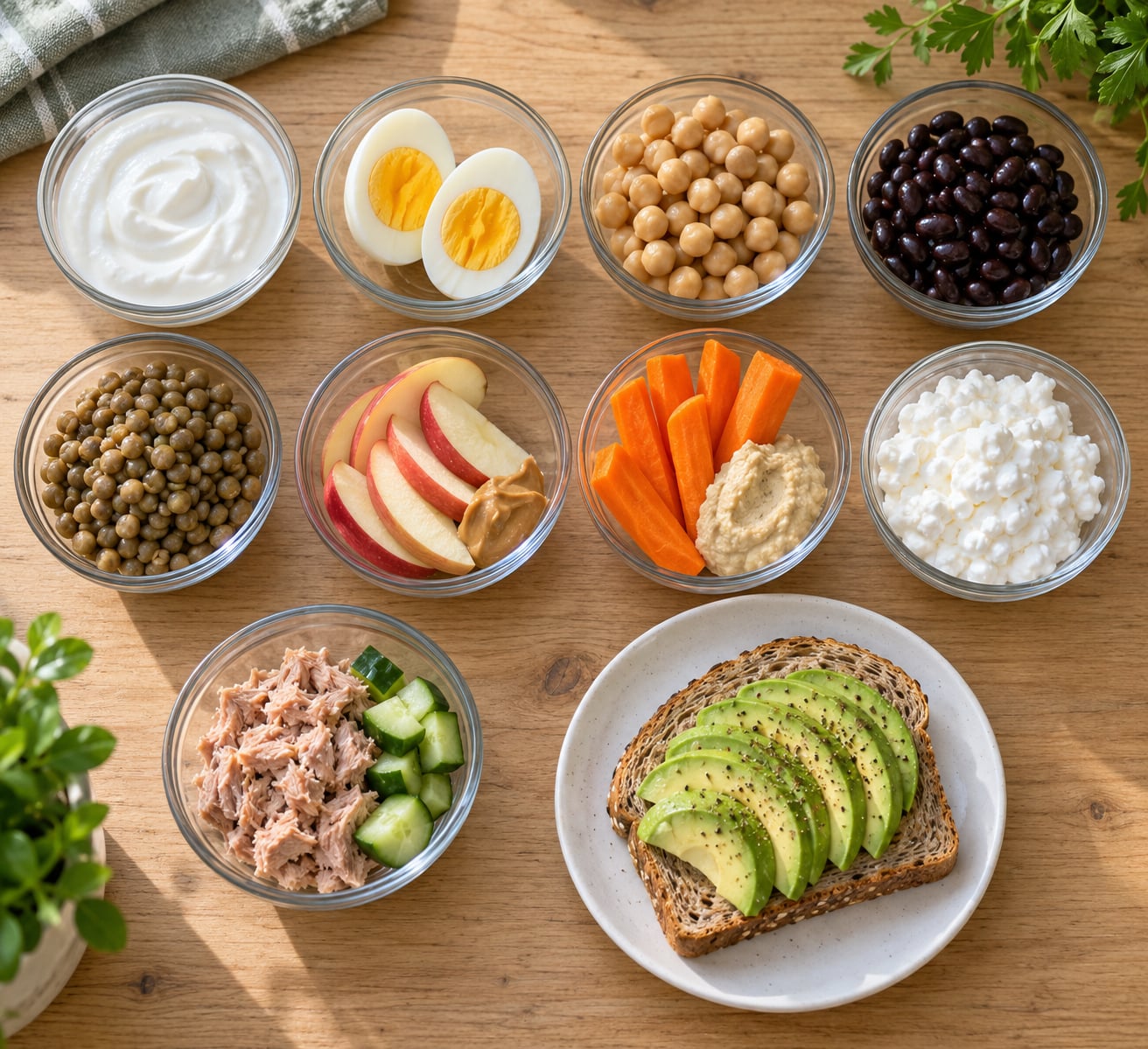
10 Best Filling Foods for a Calorie Deficit at a Glance
| Food | Typical serving | Approx. calories | Protein | Fiber | Why it fills you |
|---|---|---|---|---|---|
| Plain Greek yogurt | 3/4 cup | 130 | 20 g | 0 g | Very high protein, thick texture, low calorie density |
| Eggs | 2 large | 150 | 12 g | 0 g | Protein plus fat slows stomach emptying |
| Canned chickpeas | 1/2 cup | 135 | 7 g | 6 g | Plant protein plus slow-digesting fiber |
| Black beans | 1/2 cup | 115 | 8 g | 7 g | Cheap fiber that bulks out any dish |
| Lentils | 1/2 cup cooked | 115 | 9 g | 8 g | High protein-to-calorie ratio of any legume |
| Apple with peanut butter | 1 medium + 1 tbsp | 190 | 4 g | 4.5 g | Water-rich fruit with fat slowing the sugar rise |
| Carrots with hummus | 1 cup + 1/4 cup | 120 | 3 g | 6 g | Chewy volume plus fiber and plant fat |
| Cottage cheese | 1/2 cup low-fat | 90 | 14 g | 0 g | Slow-digesting casein keeps you full for hours |
| Tuna with vegetables | 3/4 cup flaked | 100 | 25 g | 0 g | Very lean protein, close to zero fat |
| Whole-grain toast with avocado | 1 slice + 1/4 avocado | 190 | 5 g | 6 g | Bread fiber plus monounsaturated fat |
Read the table as a pattern, not a shopping list. Every row pairs a protein source with either a fiber source or a big volume of water-rich food. That combination is the whole idea behind high volume low calorie eating, and it is why a bowl of lentils can hold you longer than the same calories of something fried.
1. Greek Yogurt
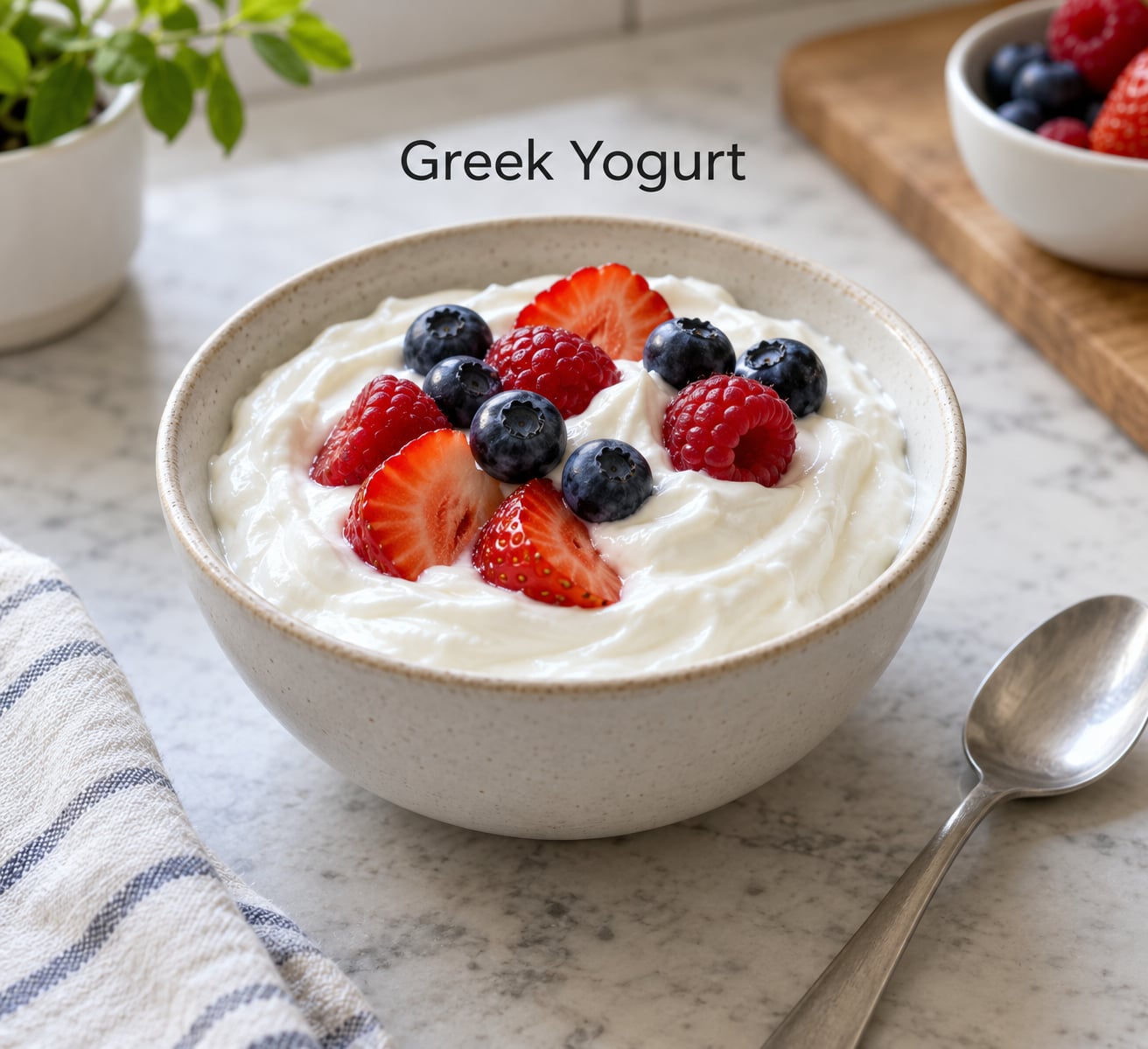
Greek yogurt is the easiest protein swap on this list, and the reason is simple: most of the whey is strained out, so you get roughly twice the protein of regular yogurt for a similar calorie count. A 3/4 cup of plain non-fat Greek yogurt lands near 130 calories with about 20 grams of protein, which is a lot of fullness for so little energy.
Thickness matters more than most people expect. Strained yogurt sits heavier in the stomach than drinkable yogurt, so it registers as a meal rather than a topping. Compare it cup for cup with a fruit-flavored low-fat yogurt, where much of the sugar comes with the flavor.
Use it three ways: as breakfast with berries and a spoon of chia, as an afternoon snack with sliced cucumber, or as a thick base that replaces sour cream on baked potatoes. Plain and unsweetened is the version to buy if you want the numbers to stay honest.
2. Eggs
Two large eggs come to about 150 calories and 12 grams of protein, and the fat in the yolk matters as much as the protein. Fat slows how quickly the stomach empties, which is why a two-egg breakfast regularly holds someone until lunch while toast alone does not.
Preparation changes the calorie count more than the egg does. Boiled and poached eggs keep it near zero extra. One tablespoon of butter or oil added to a three-egg scramble adds roughly 100 calories on its own, so cook in a nonstick pan and skip the cooking fat.
Build the plate with two eggs, a cup of any roasted vegetable, and one slice of whole-grain toast. Cook whole eggs to 160 degrees Fahrenheit, and any poultry you add to the same pan to 165, as the USDA recommends.
3. Canned Chickpeas
Half a cup of chickpeas delivers about 135 calories, 7 grams of protein and 6 grams of fiber, which makes it one of the few foods that is genuinely filling on a plant-only plate. Rinse the can and the sodium drops by a meaningful chunk, and low-sodium varieties exist for people who need the extra help.
Portion control here is about the bowl you use. Half a cup is a side; a full cup is closer to a main dish, and by the time you have eaten a cup of chickpeas you have also eaten roughly 270 calories and 12 grams of fiber, which is a lot of volume to have not planned for.
Quick uses: tossed into a salad with cucumber and tomato, mashed with lemon and olive oil instead of mayonnaise, warmed through with spinach and cumin, or roasted at high heat for ten minutes until they crisp at the edges.
4. Black Beans
Black beans are the legume to buy if fiber per calorie is the number you are tracking. Half a cup sits around 115 calories with about 8 grams of protein and 7 grams of fiber, and the soluble fraction of that fiber keeps you full well past the meal itself.
They are also the cheapest item on this list, which matters more than most nutrition writing admits. Beans you can buy by the can need no planning, no soaking and no refrigeration to store, so they are the fallback dinner when nothing else happened.
Three things I go back to: bean tacos with shredded cabbage and salsa, black bean soup with a handful of greens stirred in at the end, and a mixed bowl of beans, brown rice, salsa and shredded lettuce where the beans supply the protein and the bulk.
5. Lentils
Lentils pack about 9 grams of protein into 115 calories per half cup, the best protein-to-calorie ratio of any legume in common use, with roughly 8 grams of fiber alongside. Unlike many plant proteins, they do not need soaking, and a pot of red lentils cooks in about fifteen minutes.
They disappear into whatever you are already making. Stir them into a soup that seemed too thin, fold them through cooked rice with cumin and a spoonful of plain yogurt, or chill them and dress them with lemon, olive oil and diced cucumber for a cold salad that keeps for three days.
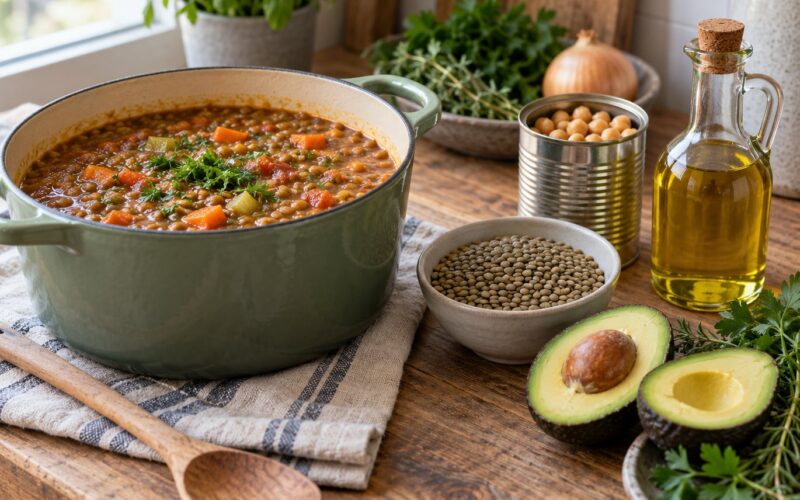
One honest note: the classic lentil soup recipe is not a deficit meal. Skip the cream, use broth rather than a cream base, and season with cumin, smoked paprika, garlic and lemon. The seasoning is doing the work, not the fat.
6. Apples with Peanut Butter
A medium apple is about 95 calories with 4.5 grams of fiber and a water content that gives it real bulk. Spreading a tablespoon of peanut butter adds roughly 95 calories and 3.5 grams of protein, and those extra fat and protein grams flatten the blood sugar curve that a plain apple produces on its own.
Measure the peanut butter with the tablespoon in the jar, not by dipping. It is an easy 200 calories of difference and it happens every single time, usually at 8pm when nobody is paying attention.
If peanuts are not for you, the same structure works with almond butter, cashew butter, or sunflower seed butter for a nut-free version. Pumpkin and seed butters carry the same fat and roughly a third more fiber per tablespoon.
7. Carrots with Hummus
A cup of raw carrots is about 50 calories with 4 grams of fiber, and a quarter cup of hummus adds around 70 calories and 2 grams of fiber for a combined 120. Nothing in that bowl is heavy, and it still fills the gap between lunch and dinner.
Crunch does part of the work here, and the mechanism is boring but real. Solid, water-rich foods take time to chew and swallow, which slows the meal and reduces how fast you take it in. People routinely underestimate a plate of raw vegetables compared with the same plate breaded and fried.
Vary the dip rather than the amount. Hummus for fat, salsa for volume, guacamole for fat and fiber, or a small bowl of plain yogurt with garlic and dill for a low-fat option. Keep a bag of baby carrots in the fridge and the decision stops happening at 4pm.
8. Cottage Cheese
Half a cup of low-fat cottage cheese is about 90 calories and 14 grams of protein, and it is unusually satisfying for that figure. Most of the protein is casein, which digests slowly, so the fullness tends to arrive gradually and stay put rather than spike and drop.
The texture divides people more than any food on this list, and no argument will fix it. Blending it smooth with a little water changes the experience completely, and it is the same food by every measure that matters.
Serve it with diced tomato and black pepper, with a cup of pineapple chunks, with four wholegrain crackers for something that reads as a meal, or spread on cucumber slices. Full-fat versions are higher in calories, and people who are dairy-sensitive or lactose intolerant should check labels or talk to their doctor rather than pushing through.
9. Tuna with Vegetables
Three quarters of a cup of tuna flaked in water is close to 100 calories with about 25 grams of protein, which is the highest protein figure on this entire list per calorie. Canned in water rather than oil keeps the fat content down, and it is one of the few foods you can keep on a shelf indefinitely.
On its own, 100 calories of tuna will not fill anybody. Pair it with a large volume of low-calorie vegetables and it becomes an actual meal. A tuna salad with cucumber, tomato, celery, red onion and a lemon and olive oil dressing lands around 250 calories and eats like lunch.
Two things to watch: added salt in the brine and creamy salad dressings, which is where a tuna salad quietly turns into a 600-calorie salad. Check the label for sodium per serving, and be cautious about routine large amounts of fish if you are pregnant or managing a health condition.
10. Whole-Grain Toast with Avocado
One slice of wholegrain bread runs about 100 calories with 3 grams of fiber, and a quarter of a medium avocado adds roughly 80 calories and 3 more grams of fiber plus monounsaturated fat. That fat is what makes the pair satisfying, and it is also where the calories hide.
Half a whole avocado is fine occasionally, but it is a normal 240 calories and it adds up across a week faster than most people track. Buy the small ones, and buy slightly firm ones so half an avocado is a portion rather than an accident.
Make it a meal by adding a protein source on top: two poached eggs, a spoonful of cottage cheese, or smoked salmon. The bread supplies fiber, the avocado supplies fat, and the protein is what stops the plate from being a snack at 10am.
Frequently Asked Questions
What to eat to feel full on a calorie deficit?
Eat foods that are low in energy density and high in protein, fiber, water or air. Build each meal around a protein source plus a high-volume food, such as Greek yogurt with berries, lentils with a big salad, or tuna with cucumber and tomato. Adding a modest amount of fat slows digestion further. No single food burns fat; a deficit still requires eating less energy than you use.
Can you feel full on 1,200 calories a day?
It is possible for some adults, but 1,200 calories is a low intake and many people find it hard to sustain. Choose protein at every meal, eat vegetables first, and treat fruit and yogurt as the volume you allow yourself. Many people do better around 1,400 to 1,800. A registered dietitian can help you work out an appropriate target for your body and activity level.
Are the 10 most filling foods always low in calories?
No. Fullness and calories are different things. Peanut butter and avocado are very filling per bite and very calorie dense, which is why they work as small additions rather than meals. The foods that deliver the most volume for the fewest calories are the water-rich and air-filled ones, such as cucumber, cabbage, broth-based soup, berries and air-popped popcorn.
Why am I still hungry on a calorie deficit?
Most often the meals are low in protein and fiber, or the calories are coming from dressings, oils, cheese, nuts and sauces rather than from the base foods. Another common cause is eating a large volume of very low-calorie food and misreading it as a full meal. Track a few real days before changing your target, and speak to a professional if hunger is persistent.
Do cucumbers and vegetables actually fill you up?
On their own, moderately. Cucumber is about 16 calories a cup but almost no protein and almost no fiber, so it is a volume food rather than a filling one. Vegetables become genuinely filling when paired with protein and fiber, such as cucumber with cottage cheese or broccoli with lentils and quinoa. That pairing is the difference between a side dish and a meal that holds you.
How to Use These Filling Foods
Do not try to eat all ten at once. Pick one protein source you already like, one fiber-rich food, and one fruit or vegetable, and build the next three meals from just those. Canned chickpeas, frozen broccoli, eggs and plain Greek yogurt will carry a week on their own with almost no planning.
Eat the vegetable first, then the protein, then the carbohydrate. It costs nothing, needs no equipment, and it slows the meal down at exactly the point where people tend to eat fastest.
Check in honestly after two weeks. If you are managing hunger well, the plan is working. If you are not, the most likely fix is more protein and more non-starchy vegetables rather than a lower number, and a doctor or registered dietitian can help you decide which.
If you have a history of disordered eating, or if restricting food starts to affect how you feel about yourself, please talk to a qualified professional or a support organisation in your country. A deficit is a tool, and it is not worth keeping at the cost of your wellbeing.