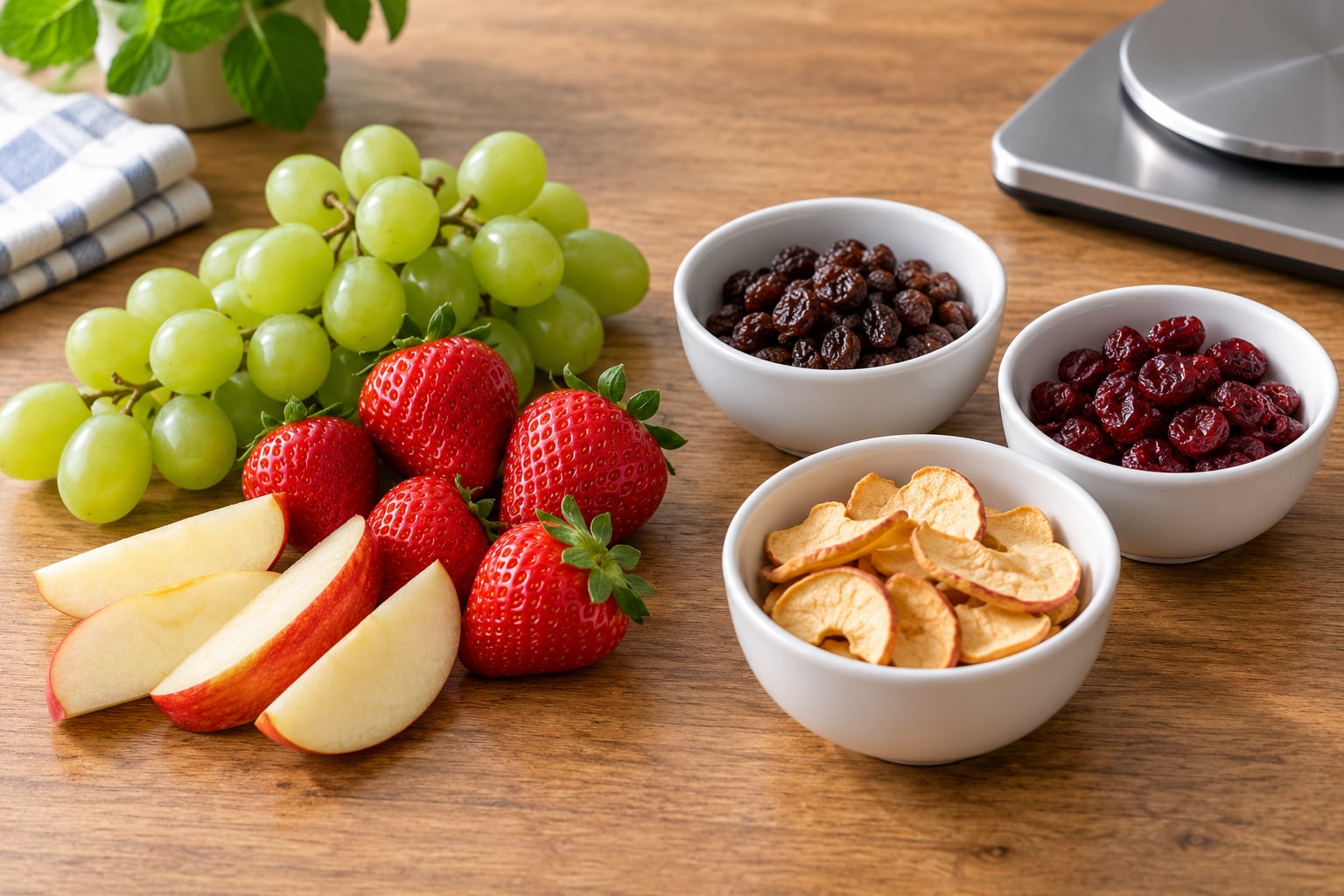
No, dried fruit is not automatically bad for weight loss. A measured 1-ounce portion of unsweetened raisins or apricots lands somewhere around 80 to 100 calories, which fits comfortably inside almost any daily budget. The trouble starts when the portion quietly grows, or when the bag was sweetened at the factory. Water removal is the whole story: it compresses a mango into a few dense chewy strips and takes away the volume that normally slows you down.
Table of Contents
- Is Dried Fruit Bad for Weight Loss? Calories, Sugar, and Fiber
- Why Does Drying Fruit Change Its Nutritional Balance?
- How Many Calories Are in Common Dried Fruits?
- Is Dried Fruit Bad for Weight Loss If Eaten in Small Portions?
- How to read a serving size without guessing
- Pair it with protein or fat and it lasts longer
- Which Dried Fruit Is the Best Choice for Weight Loss?
- How to Eat Dried Fruit Without Overdoing It
- Dried Fruit vs Fresh Fruit for Weight Loss
- Frequently Asked Questions
- How much dry fruit should I eat a day to lose weight?
- How much dried fruit is one portion?
- Is it healthy to eat dried fruit every day?
- Is dried fruit bad for bloating?
- Why do dried apricots give me gas?
- Which dried fruit has the least amount of sugar?
- The Bottom Line
Is Dried Fruit Bad for Weight Loss? Calories, Sugar, and Fiber
Dried fruit fits a weight-loss eating plan when the portion is measured and the fruit is unsweetened. What undermines progress is not dried fruit itself but the packaging density that makes overeating easy, plus the added sugar in candied cranberries, yogurt raisins, and juice-infused apricots.
The table below uses approximate USDA FoodData Central values. Fresh figures are per 100 grams; the dried column shows the same fruit after drying, then the calories in a 40-gram portion, which is roughly a quarter cup or a small handful.
| Fruit | Fresh, per 100 g | Dried, per 100 g | 40 g dried portion |
|---|---|---|---|
| Grapes to raisins | 69 kcal | 299 kcal | about 120 kcal |
| Plums to prunes | 46 kcal | 240 kcal | about 96 kcal |
| Fresh apricots to dried | 48 kcal | 241 kcal | about 96 kcal |
| Mango to dried strips | 60 kcal | 320 kcal | about 128 kcal |
| Apples to apple chips | 52 kcal | 349 kcal | about 140 kcal |
| Bananas to banana chips | 89 kcal | 486 kcal | about 195 kcal |
Banana chips show the pattern most clearly. A medium banana is about 105 calories; a 40-gram serving of banana chips is close to 195, and nobody stops at 40 grams when the bowl is in front of them.
Why Does Drying Fruit Change Its Nutritional Balance?
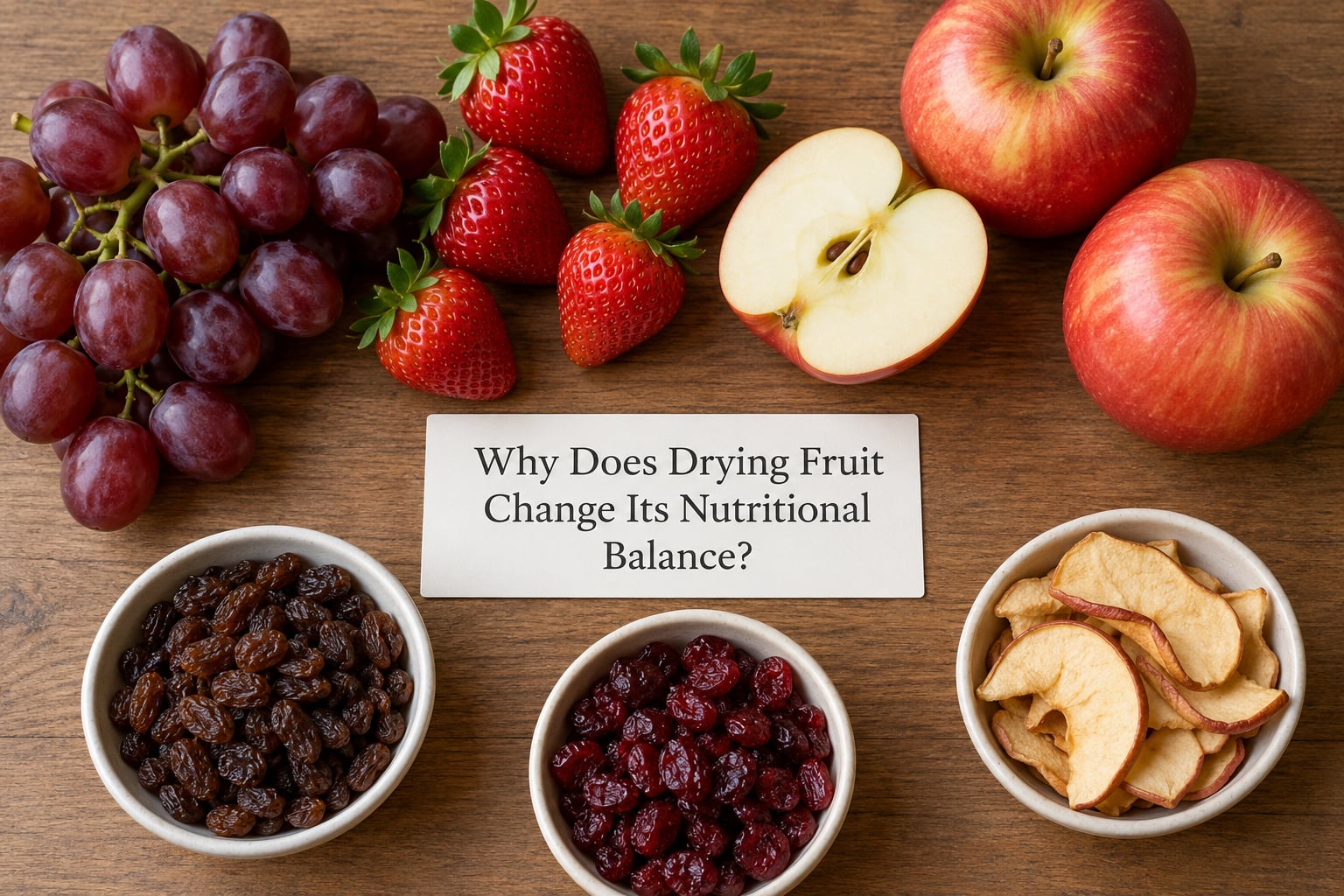
Water is the ingredient that dilutes fruit, and drying removes most of it. A fresh grape is around 81 percent water, so 100 grams is a large, bulky handful of 69 calories. Drying that same grape into a raisin leaves a much lighter, much denser piece with nearly 300 calories per 100 grams. Nothing added calories. The same sugar and fiber simply occupy a fraction of the space.
Fiber is the part that works in your favor, and it concentrates too. Per gram of fruit, dried versions carry roughly three to four times the fiber and potassium of the fresh version, and the smaller pieces mean you can eat a full fiber serving in a handful. Apricots and figs hold up particularly well here, with dried figs supplying around 3 grams of fiber in a 40-gram portion.
Vitamin C is the loser in the process. Heat and air exposure destroy it during drying, so dried fruit is not a substitute for fresh fruit if vitamin C is what you are after. Potassium, iron, and the polyphenol compounds concentrate instead.
Natural sugar is not the same as added sugar, and this is where labels earn their keep. A “no added sugar” bag means nothing was added, not that there is no sugar. Sweetened dried cranberries carry roughly 20 grams of added sugar in a 40-gram portion, which is more added sugar than a medium apple contains in total. That is a candy, sold next to the trail mix.
Chewing does not rescue a large portion. Dried fruit takes longer to eat than a fresh apple, which is one of its genuine advantages, but a portion is decided by how far your hand reaches, not by how long chewing takes.
How Many Calories Are in Common Dried Fruits?
Here is what a standard 40-gram portion looks like across the fruits most people buy. Values are approximate and shift with brand, since sweetened and unsweetened versions of the same fruit are different products.
| Dried fruit, 40 g | Calories | Fiber | Added sugar | Weight-loss read |
|---|---|---|---|---|
| Pineapple | about 72 kcal | about 2 g | none | Lowest calorie in the group |
| Prunes | about 96 kcal | about 1 g | none | Portion is easy to eyeball wrongly |
| Dried apricots | about 96 kcal | about 2.5 g | none | Good fiber-to-calorie balance |
| Dried figs | about 96 kcal | about 3 g | none | Among the highest fiber per portion |
| Raisins | about 120 kcal | about 1 g | none | Tiny pieces make counting hard |
| Dried mango | about 128 kcal | about 2.5 g | none | Sweetest option, treat as a treat |
| Cranberries, sweetened | about 130 kcal | about 0.5 g | about 20 g | Closer to candy than fruit |
Dates sit outside this table because a single Medjool date is already around 66 calories with about 16 grams of sugar. Two dates is a reasonable snack. Six is a small meal of sugar, and nobody measures it that way.
Is Dried Fruit Bad for Weight Loss If Eaten in Small Portions?
A small measured portion is not bad for weight loss at all. Here is roughly what 28 grams, or 1 ounce, looks like for common fruits, all near 70 to 100 calories.
- Raisins: about 9 raisins
- Prunes: about 3 whole prunes
- Dried apricots: 3 to 4 halves
- Dried figs: about 4 small halves
- Dates: 1 large date, or 2 smaller ones
- Dried cranberries, sweetened: a small handful, roughly a quarter cup
Two habits make this work. The first is pairing. Dried fruit eaten alone sends a concentrated sugar load into your bloodstream quickly, and hunger tends to return sooner than you expect. Add a small handful of almonds, a spoon of peanut butter, or a few cubes of cheese, and fat plus protein slow the response and stretch the time before you feel hungry again. Forum users report the same pairing rule more often than any other piece of advice on this topic.
How to read a serving size without guessing
Label serving sizes are chosen to look reasonable, and they usually are far smaller than what lands in the bowl. If a bag says 14 grams equals 60 calories, then a scooped cup that looks like a sensible handful might be six times that. The fix is boring and effective: weigh one portion on a kitchen scale once, note what it looks like, then use that same container every time. My kitchen has a small glass jar that holds exactly one serving of raisins, and it ends the guessing entirely.
Read two lines only: total calories per serving, and added sugars. If added sugars is 15 grams or more in a single serving, you are looking at confectionery with fruit in the ingredient list.
Pair it with protein or fat and it lasts longer
The same 120 calories of raisins eaten with almonds and cottage cheese at lunch will carry you to dinner. Eaten straight from the bag at 4 pm, it will not. Portion and pairing together decide whether dried fruit helps or hurts, not the fruit category.
Which Dried Fruit Is the Best Choice for Weight Loss?
No single dried fruit wins for everyone, but the pattern is clear enough to be useful. Dried pineapple is the lowest-calorie option in this group, around 72 calories for a 40-gram portion. Prunes, apricots, and figs cluster around 96 calories and deliver more fiber per serving than raisins do, which makes them easier to keep to a portion size.
Some dried fruits carry a reputation they have not earned. Prunes get singled out constantly, and most of that comes from their mild laxative effect rather than any weight-loss property. Raisins score well on iron and potassium, and they are fine in a portion, but they are tiny, which makes accurate counting genuinely difficult.
The ones to be careful with are the ones nobody counts as fruit. Sweetened cranberries are the clearest example, with roughly 20 grams of added sugar in a small portion. Yogurt raisins, juice-infused apricots, and fruit-and-yogurt snack packs add sugar and often fat, and they are marketed as the healthy choice. Trail mix, granola, and muesli are where most untracked dried-fruit calories actually come from, not the fruit itself.
So check the label rather than trusting the front of the bag. If you like a fruit enough to eat it most days, that matters more than any ranking.
How to Eat Dried Fruit Without Overdoing It
Measure instead of pouring. Put the portion in a bowl and put the bag back in the cupboard, out of reach and out of sight. If you are genuinely hungry after fifteen minutes, take a second serving; if not, you did the hard part already.
Use it inside food rather than beside it. Spoon raisins into oatmeal, scatter chopped dried apricots over plain Greek yogurt with walnuts, or fold chopped dried figs into a salad with a sharp dressing. Mixed into something, the portion self-limits and the sweetness lasts longer because the fruit takes more time to pick out.
Pick the flavors you actually enjoy eating every day. Cinnamon on pumpkin seeds, unsweetened cocoa on dried apple slices, or a few drops of lemon on dates make a measured portion satisfying enough that you stop looking forward to the next one.
If you are managing diabetes, blood sugar issues, IBS, or fructose intolerance, or if you react to sulfites that some dried fruit is treated with, do not take portion advice from a general article. Ask a doctor or registered dietitian for limits that fit your own situation. This page is general information, not individualised medical advice.
Dried Fruit vs Fresh Fruit for Weight Loss
Both forms fit a weight-loss plan. Fresh fruit wins on volume and on how hard it is to overeat; dried fruit wins on portability, shelf life, and how easy it is to control a portion of.
Fresh fruit is mostly water, and water is what creates fullness. A whole apple is about 95 calories and takes several minutes to eat. A cup of apple chips is roughly 150 calories and disappears in two. That difference, repeated daily, is usually what decides whether someone loses weight, not the fruit group itself.
Dried fruit brings three real advantages. It travels, it keeps for months, and it concentrates fiber and potassium per gram, which matters if your fiber intake is low. For anyone who struggles to buy fresh fruit regularly or who wants a portable snack, dried fruit is the practical pick rather than the compromise.
Fresh options that fill more space for the same calories include grapes, strawberries, raspberries, grapefruit, melon, apples, and pears. If you are someone who eats dried fruit straight from the bag, that swap alone often solves the problem. If you pre-portion, you do not need to give dried fruit up at all.
Frequently Asked Questions
How much dry fruit should I eat a day to lose weight?
Most adults doing well on a weight loss plan can include one to two small portions of dried fruit a day, roughly 28 to 40 grams each, or about 70 to 200 calories total. That fits a 1,200 to 1,500 calorie day without trouble. The portion matters far more than the fruit, so weigh it, keep it unsweetened, and pair it with protein or fat. Skip it if the day is already heavy in carbohydrates.
How much dried fruit is one portion?
One standard portion is about 40 grams, roughly a quarter cup, or about 120 calories for raisins. In pieces that is around 14 raisins, 4 prunes, 4 to 5 apricot halves, or 5 small dried figs. Labels often list a much smaller serving than people actually eat, so weigh a portion on a kitchen scale once and reuse the same container.
Is it healthy to eat dried fruit every day?
For most adults, yes, as long as it is unsweetened and the portion stays measured. Dried fruit supplies fiber, potassium, iron, and polyphenol compounds in a small, portable package. Vitamin C drops during drying, so keep some fresh fruit in the mix too. Anyone with diabetes, IBS, or fructose intolerance should get individual guidance from a doctor or dietitian first.
Is dried fruit bad for bloating?
It can be, and the reason is volume and fiber rather than the fruit itself. Fresh fruit arrives with water that stretches the gut, while a large dried portion delivers a concentrated fiber and fructose load in very little physical bulk. Increase dried fruit gradually, drink enough water through the day, and keep the portion small if bloating is a regular problem for you.
Why do dried apricots give me gas?
Dried apricots are high in sorbitol, a sugar alcohol, and they deliver a dense fiber load in a small portion. Both produce gas and bloating when they reach the gut in a concentrated amount, especially if you are not used to that level of fiber. Four or five halves at a time is plenty for most people. People with IBS or fructose intolerance often need to limit them entirely.
Which dried fruit has the least amount of sugar?
In a 40-gram portion, unsweetened dried pineapple is the lowest at roughly 19 grams of total sugar, with prunes, apricots, and figs close behind at around 15 to 16 grams. Sweetened dried cranberries are the opposite case, carrying roughly 20 grams of added sugar in the same portion. Compare the label’s added sugars line, not the total sugar line, when choosing.
The Bottom Line
Dried fruit is not the villain in a weight-loss diet. Remove the water and you get more fiber, potassium, and antioxidants per gram, which is a good trade when the portion is measured.
Start by turning the bag around and reading two lines: calories per serving and added sugars. Then weigh one portion on a scale, keep it in a container you actually use, and pair it with something containing protein or fat. If you regularly eat straight from the bag, try fresh grapes or strawberries in the same slot for a few weeks and see whether the difference shows up on the scale.
Calorie and fiber figures here are approximate USDA values, and brands vary. For diabetes, blood sugar, digestive, or sulfite concerns, get advice tailored to you from a doctor or registered dietitian.