You do not cut flavor when you cut calories, you replace the expensive parts of flavor with the free ones. Butter, cream, cheese, sugar and deep frying are what a dish leans on for richness, and those are the calories you give up. What you build in their place is acid, herbs, toasted spices, garlic, chili and umami, which add almost nothing to a calorie count. That is the whole method behind how to make low-calorie meals that still taste good: swap the calorie-dense flavor carriers for near-free ones, add crunch, and finish with acid.
It takes about the same time as cooking the original. Most of it happens before the pan gets hot.
Here is why most lower-calorie food disappoints people. Flavor arrives through fat, salt, sugar, acid, bitter notes and savory umami. Fat at nine calories per gram and sugar at four are the two heaviest carriers in the pantry, so they are the first things cut. But acid, dried spices, fresh herbs, garlic, chili and fermented soy add real flavor for under a handful of calories each. Remove only the expensive carriers and the dish reads as flat and watery rather than light.
Blandness, then, is a seasoning problem, not a portion problem. Fix it at the counter and the plate can stay generous.
Table of Contents
- What You Need
- Step-by-Step: How to Make Low-Calorie Meals That Still Taste Good
- How to Make Low-Calorie Meals That Still Taste Good by Building Flavor
- How to Make Low-Calorie Meals That Still Taste Good by Adding Texture
- How to Make Low-Calorie Meals That Still Taste Good with Satisfying Swaps
- Common Mistakes
- Frequently Asked Questions
- How can I make low-calorie food taste better without adding lots of fat?
- What is the best way to reduce calories in a meal without making it too small?
- Are air-fried foods always lower in calories than deep-fried foods?
- Which flavorings can I use instead of butter, heavy sauces, or creamy dressings?
- Can low-calorie meals still be filling enough for weight loss?
- How should I store leftover low-calorie meals to keep them safe and fresh?
What You Need
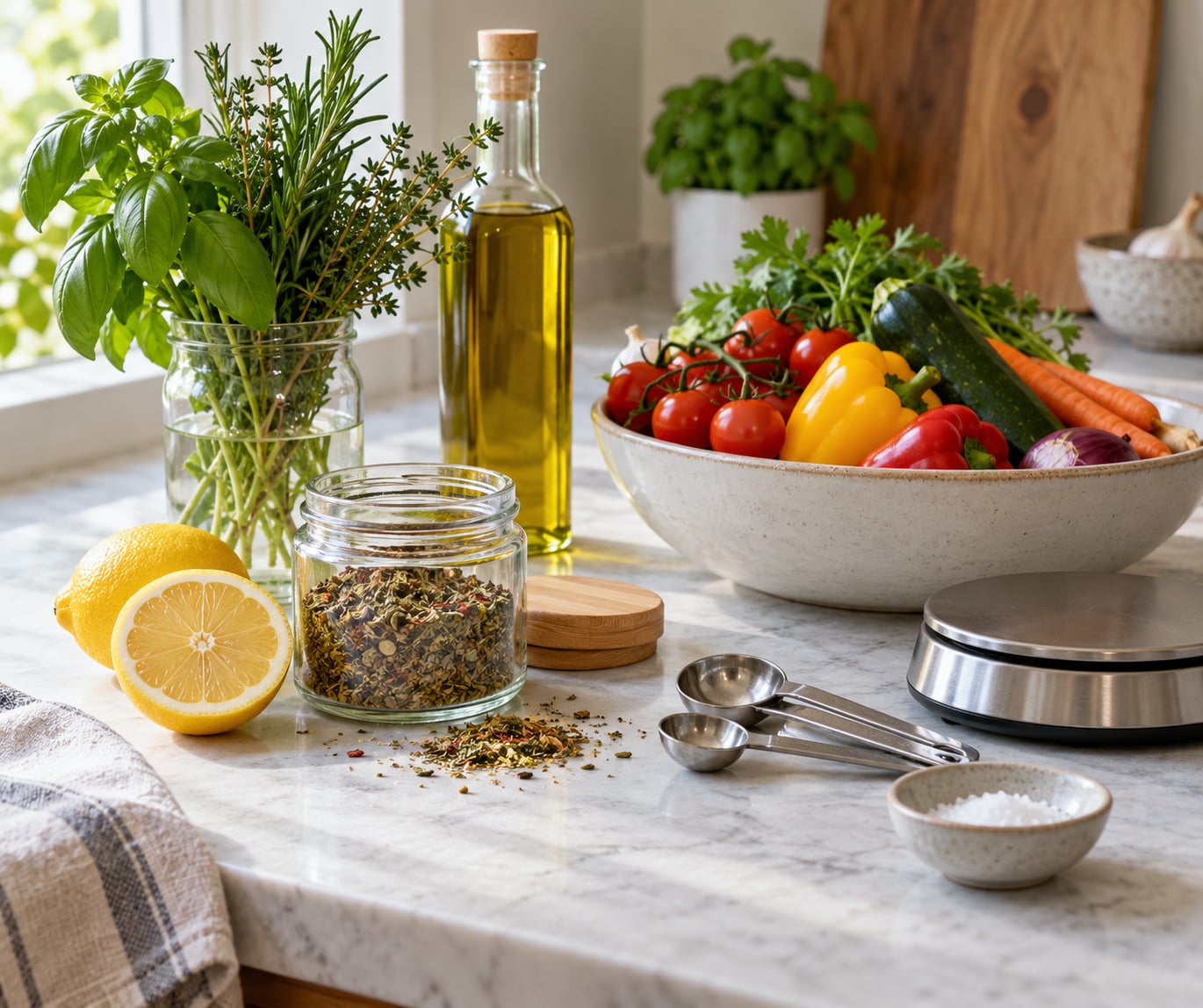
A few tools make the measuring part honest, because most home cooks eyeball oil and sauces and consistently underestimate both.
- A kitchen scale. Weigh oils, nut butters and dressings. A tablespoon of oil is about 120 calories and nobody pours that accurately by eye.
- Measuring spoons. The difference between a tablespoon and a generous pour is often a full serving of fat.
- A nonstick skillet or sheet pan. You need less oil for browning, and browning is where flavor starts.
- A hot oven, at least 425°F / 220°C. High-heat roasting dries vegetables instead of steaming them, and that dry, browned edge is flavor you did not have to buy.
- A sharp knife and a microplane or box grater. Zesting citrus is quick and it is the single cheapest flavor move in the kitchen.
Then build a free flavor kit. Keep these on hand and you can rescue almost any vegetable, any protein, any bowl of leftovers.
| Flavor lever | Flavor problem it fixes | Approximate calories | How to use it |
|---|---|---|---|
| Fresh herbs | Tastes flat and green | 0 to 2 per tablespoon | Chop and add off the heat, at the end of cooking |
| Lemon, lime or orange zest and juice | Rich food with no lift, dull sauces | about 4 per tablespoon of juice | Zest before juicing, add acid after cooking |
| Vinegar | Dullness, sweetness that needs balancing | about 2 per tablespoon | Apple cider, rice, balsamic, or red wine vinegar |
| Dried spices | No aroma, no depth | under 5 per teaspoon | Toast in a dry pan first, then grind |
| Garlic and onion powder | Missing savoriness | about 5 per teaspoon | Powder carries flavor with no browning step |
| Chili flakes or fresh chili | Food that tastes complete but dull | under 5 per teaspoon | Add early for round heat, late for sharp heat |
| Low sodium broth | Watery sauces and soups | about 10 per cup | Use instead of water when cooking grains or vegetables |
| Mustard | Creams and mayo that need replacing | about 10 per teaspoon | Dijon works in dressings, marinades and pan sauces |
| Soy sauce, miso, tomato paste | Missing umami depth | about 10 to 20 per tablespoon | The savory fifth taste, in concentrated form |
| Nutritional yeast | Dishes that need a nutty, cheesy note | about 30 per tablespoon | Sprinkle on pasta, popcorn and roasted vegetables |
Three preparation habits do most of the work. Toast your spices in a dry skillet for a minute before they go anywhere near liquid, and keep them in a jar with the lid on. Make a mixed dressing once, a blend of lemon juice, rice vinegar, olive oil, Dijon and whatever herb you are using, and it becomes something you can pull together in fifteen seconds all week. And salt in layers, a pinch at the start of cooking and a pinch at the end, instead of one measurement at the beginning.
Step-by-Step: How to Make Low-Calorie Meals That Still Taste Good
How to Make Low-Calorie Meals That Still Taste Good by Building Flavor
Two steps handle about eighty percent of the problem. Everything after this is refinement.
Step 1: Brown something. Heat a nonstick skillet until a drop of water skitters, add a measured teaspoon of oil, and let the vegetables or protein sit untouched for two or three minutes before moving them. That contact is the Maillard reaction, and it produces hundreds of flavor compounds that simmering never will. If you skip the oil entirely and use a nonstick pan, nothing browns. You will know it worked when the edges are visibly golden, not just softened.
Step 2: Layer all five flavor notes. Most flat lower-calorie dishes are missing two of them. Savory comes from garlic, onion, soy, miso, tomato paste and mushrooms. Sweetness comes from a small amount of anything, including a splash of a sweet vinegar or a single date. Acidity comes from citrus or vinegar. Heat comes from chili, pepper or mustard. Freshness comes from herbs added at the end. Aim for three or more notes in every dish and taste it before it leaves the pan.
The acid note is the one people skip, and it is the one that matters most. A stew that tastes heavy usually tastes flat, not rich, and a tablespoon of lemon or vinegar fixes that in seconds without adding fat. If a dish is missing two notes, it is usually acid and fresh herbs, and both are close to free.
How to Make Low-Calorie Meals That Still Taste Good by Adding Texture
Fat carries flavor, but it also carries mouthfeel. Remove it and the same food feels thinner. Crunch and temperature contrast put that feeling back.
Step 3: Add something crisp on top. Toasted nuts or seeds, toasted breadcrumbs fried in a spray of oil, raw shredded cabbage or carrot, crispy chickpeas from the can, or a spoon of salsa. This is not a garnish for looks. A crunchy layer on a soft dish is the difference between a plate that satisfies and a plate you keep picking at. You can tell it worked when you look forward to the last bite.
Keep the crisp element out of the heat. Herbs, toasted nuts and raw crunch go on after the pan comes off the heat, or they go soft and the point is lost. A tablespoon of toasted pumpkin seeds adds more crunch than any low-calorie sauce ever will.
Step 4: Keep the plate full instead of the portion small. Volume is the cheapest satisfaction there is. Vegetables, broth-based soups and salads with beans or lentils let you eat a large plate for a modest number of calories. A useful ratio is half vegetables, a quarter protein, a quarter whole grain or starch. The same plate at the same portion size, built this way, usually lands under 500 calories and still looks like dinner.
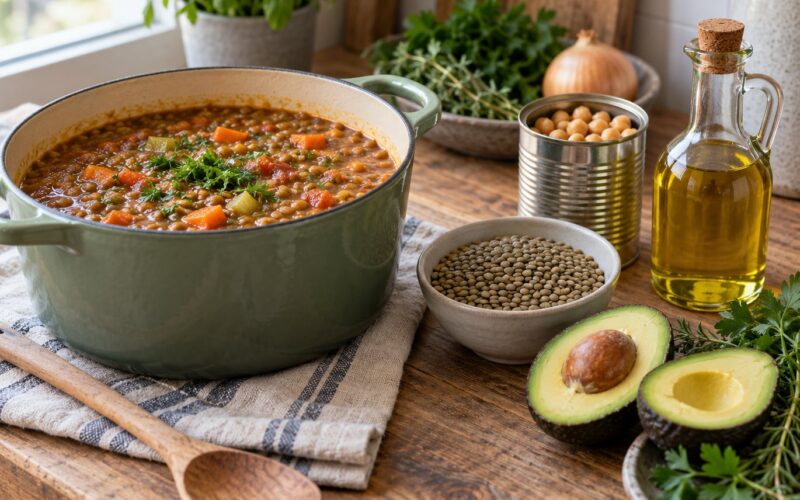
Broth-based soups are the clearest example of volume eating. Lentil and bean soups get praised in cooking forums for the same reason: fiber and protein together, a lot of liquid, and a small calorie number. Add a handful of greens, a spoonful of yogurt, and chili flakes, and you have a full bowl that costs almost nothing per serving.
How to Make Low-Calorie Meals That Still Taste Good with Satisfying Swaps
Swaps only work when the replacement brings something the original brought. Greek yogurt works in place of mayo because it brings fat and tang. Broth works in place of water and adds its own flavor while doing nothing to push the numbers.
Step 5: Swap the sauces and heavy ingredients. This is where the hidden calories actually live. A dressing or sauce can carry more calories than the food it goes on, and most of that comes straight from oil and dairy.
| Instead of | Use | Approximate difference |
|---|---|---|
| Ranch dressing (about 145 calories per 2 tablespoons) | Greek yogurt with vinegar, garlic and herbs | roughly 35 calories per 2 tablespoons |
| Heavy cream in a pasta sauce | Greek yogurt stirred in off the heat, plus stock | about 60 calories less per quarter cup |
| Sour cream on a baked potato or taco | Greek yogurt with lime and chili | about 40 calories less per quarter cup |
| Mayonnaise in a sandwich or salad | Mashed avocado or Greek yogurt with lemon | about 50 calories less per tablespoon |
| Sugar in a sauce or drink | Monk fruit or allulose sweetener | 0 to 10 calories, depending on the product |
| Breadcrumbs fried in oil | Breadcrumbs toasted on a dry sheet pan with a spray of oil | about 60 calories less per quarter cup |
| Coconut milk in a curry | Extra broth with a spoon of Greek yogurt | about 100 calories less per quarter cup |
On sweeteners, they are not interchangeable in baking. Monk fruit and stevia carry no calories at all but lose their structure, so they will not crisp a cookie or thicken a sauce. Allulose behaves more like sugar, browns and adds body, and most brands list about 2 calories per tablespoon. Use the sugar-like one for texture and the intense one for drinks and sauces.
Step 6: Taste, adjust with acid and salt, then stop. Taste the food before it leaves the pan and ask two questions. Is it flat? Add a squeeze of lemon or a spoon of vinegar, then taste again. Is it missing something you cannot name? Add a pinch of salt, a clove of garlic, or a spoonful of umami booster, then taste again. Add one thing at a time, because adding three at once is how a dish gets muddy instead of better.
You will know it worked when you eat the second helping without feeling like you lost the plot. If you need more, add volume, not richness: more vegetables, more broth, another ladle of beans.
Common Mistakes
Mistake one: going fat free. The most common mistake, and the source of the cardboard texture people complain about in low-calorie communities. Fat is a flavor carrier, so removing it entirely removes flavor with it. Keep a measured teaspoon of olive oil, keep some nuts or avocado in the week, and keep enough fat in the meal that it tastes like food. The posts that complain about fat-free dressings and cauliflower rice are complaining about exactly this, and the same people usually come back to a small portion of real rice and a real oil vinaigrette.
Mistake two: replacing fat with sugar. Low-fat versions of snack foods frequently replace the fat with sugar, and you get the same calories with none of the staying power. If a light product lists added sugar, it has been traded, not saved.
Mistake three: buying diet products instead of adjusting real food. Fat-free salad dressing, light ice cream and low-sugar granola bars all tend to leave you hungry twenty minutes later. Start with a normal grocery item and use the acid, herb and spice levers. Real food you seasoned properly beats a specialty product most days.
Mistake four: skipping the acid. If you changed one habit this month, make it this one. A squeeze of lemon or a spoon of vinegar at the end does more for a flat dish than another twenty minutes of simmering.
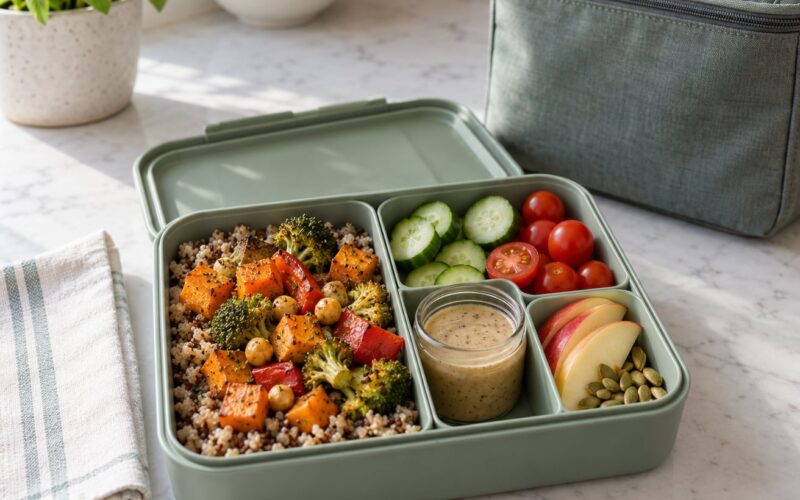
Mistake five: prepping everything the same way. This is the flavor fatigue problem, and it is what ends most plans. Cooking five containers of the same chicken and rice is a recipe for quitting by week three. Cook one base, then change the finish: one week lemon and oregano, next week curry powder and yogurt, the week after smoked paprika and cumin. Different spice profiles on the same base keep the week from tasting identical without extra cooking time.
Mistake six: prepping seven days at once. Meal prep beginners usually burn out on the Sunday block. Two or three days of prep is enough to survive the week, and the last meal or two can be cooked fresh in under fifteen minutes.
Two more habits help. Store fresh herbs as a bouquet in a glass of water in the fridge, which buys you several extra days over a damp paper towel. And measure oil at the start of the week, not at the start of each meal. One extra tablespoon per day is around 120 calories that never appears in a label.
Frequently Asked Questions
How can I make low-calorie food taste better without adding lots of fat?
Build the dish around the free flavor carriers: citrus zest and juice, vinegar, dried spices toasted in a dry pan, garlic and onion powder, chili, fresh herbs added off the heat, and umami boosters like soy sauce, miso or tomato paste. Combine at least three of them in one dish, brown the ingredients in a measured teaspoon of oil, and finish with a squeeze of acid. A tablespoon of lemon juice adds about 4 calories and lifts a dish that a splash of cream would have fixed.
What is the best way to reduce calories in a meal without making it too small?
Keep the volume and cut the density. Add vegetables, broth-based soup, beans or salad to fill the plate, then reduce oil, butter, cheese and creamy sauces rather than reducing the amount of food. A useful ratio is half vegetables, a quarter protein and a quarter whole grain or starch. Most people who struggle with hunger on a calorie target are cutting portion size when they should be cutting fat.
Are air-fried foods always lower in calories than deep-fried foods?
Usually, but not always. Air frying needs far less oil than deep frying, so the saving comes mostly from that oil. If you soak food in batter before air frying, or spray the basket generously, the difference shrinks fast. Weigh the food before and after cooking if the number matters to you. The air fryer is a tool for browning with less fat, not a guarantee, and it does nothing for the sodium in heavily breaded frozen items.
Which flavorings can I use instead of butter, heavy sauces, or creamy dressings?
Greek yogurt replaces mayonnaise, sour cream and cream sauce with roughly half the calories per serving, and a spoon of lemon or vinegar restores the tang that makes those taste good. Dijon mustard adds the sharpness cream provides in small amounts. Salsa, kimchi, vinegar-based dressings and yogurt-based dips all bring flavor with a fraction of the fat, and none of them need cooking.
Can low-calorie meals still be filling enough for weight loss?
Yes, if you build for satiety. Protein and fiber do most of that work, and both are cheap and low in calories: beans, lentils, eggs, Greek yogurt, fish, chicken, tofu and vegetables. Volume matters just as much, so soups and salads with beans or a large pile of roasted vegetables let you eat a full plate for a modest number of calories. If you are consistently hungry, the meal is usually short on protein or fiber rather than long on calories.
How should I store leftover low-calorie meals to keep them safe and fresh?
Cool food in shallow containers and refrigerate it within two hours of cooking. Use refrigerated leftovers within three to four days and reheat them to 165°F / 74°C. Freeze portions of soup, stew and curry for up to three months, and thaw them in the fridge rather than on the counter. Store dressings and grains separately so nothing goes soggy, and keep cut herbs and cut citrus in a sealed container or a glass of water.
Cooking low-calorie meals that people actually enjoy is a seasoning problem, and the first fix costs nothing. Buy the lemon, keep the spice rack stocked, and finish the next dish you make with acid instead of cream. Everything else, the browning, the crunch and the volume, follows from there.
If your calories are coming down for medical reasons or you are managing a health condition, a registered dietitian can help you set a target that suits you, and any warning signs should go to a doctor rather than to a meal plan.