Soup keeps you full when every bowl carries protein, fiber, fat and volume together, in a texture thick enough to slow you down. Most thin, broth-based vegetable soups deliver the volume and none of the other three, which is exactly why an hour later you are still reaching for something. The fix takes about ten extra minutes and costs nothing but a few pantry staples.
Last updated October 2026.
Table of Contents
- What You Need
- Step-by-Step
- 1. Choose a Filling Base
- 2. Add Fiber-Rich Ingredients
- 3. Build Flavor and Healthy Fat
- 4. Simmer Until the Ingredients Merge
- 5. Portion for Lasting Satisfaction
- Common Mistakes
- Frequently Asked Questions
- What ingredients make soup most filling?
- Should I avoid cream if I want soup to help with weight loss?
- How can I thicken soup without cream or excess calories?
- How long does homemade filling soup keep in the refrigerator?
- How can I make soup that keeps me full for weight loss?
- Conclusion
What You Need
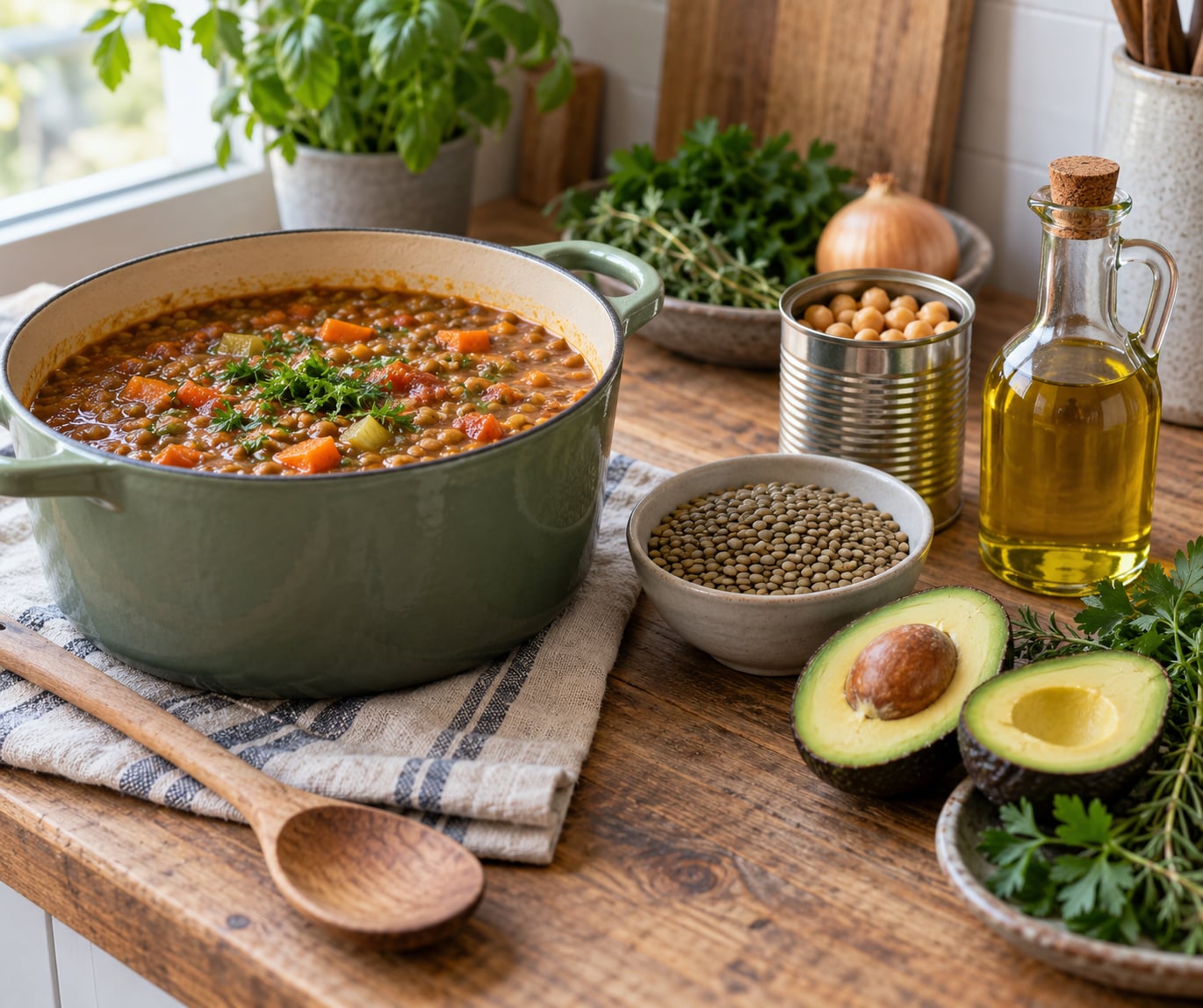
Think of a filling soup as five parts, and you can build one from almost anything. The formula is: liquid, protein, a fiber-rich thickener, a fat finish and seasoning. Miss any two and you end up with a nice bowl of warm broth that wears out before your appetite does.
- Liquid — low-sodium chicken, beef or vegetable broth, bone broth, or water with a bouillon cube. Roughly 6 cups for a pot that serves four.
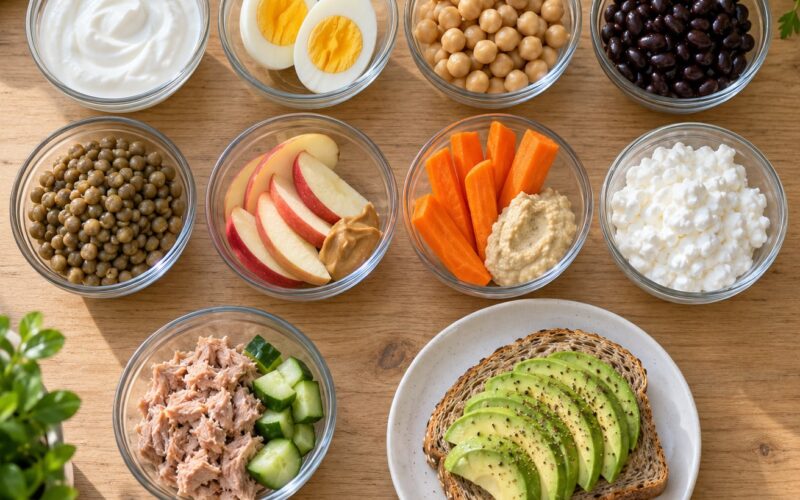
- Protein — canned beans or lentils, shredded chicken, cubed tofu, eggs, cooked meat, or Greek yogurt stirred in at the end. Aim for 20 to 30 grams per serving.
- Fiber — lentils, white beans, chickpeas, split peas, rolled oats, barley, quinoa, or a big batch of puréed vegetables. Target 8 to 10 grams per serving.
- Healthy fat — olive oil, tahini, avocado, Greek yogurt, chopped walnuts, pumpkin seeds, or a Parmesan rind simmered into the broth.
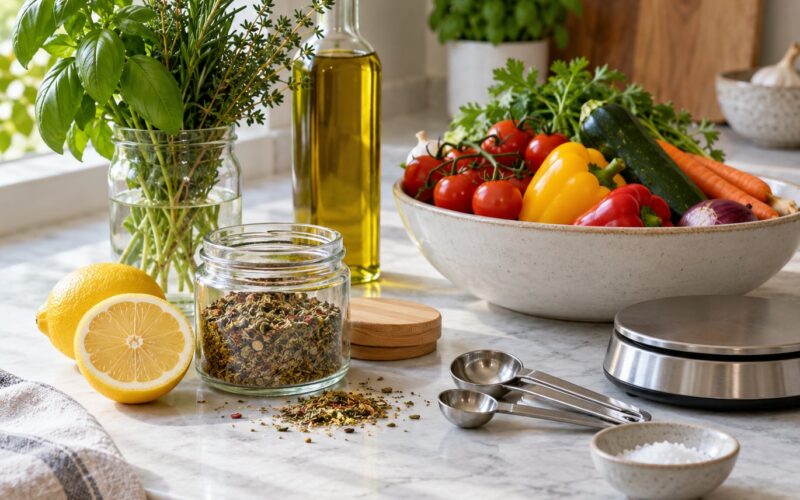
- Seasoning — onion, garlic, celery, a little acid at the end, salt, pepper, smoked paprika, cumin, or a spoon of miso.
From that list, keep the shelf-stable stuff on hand: dried lentils and split peas, canned beans and chickpeas, rolled oats, a jar of tahini, canned tomatoes, frozen vegetables, and broth. Treat fresh chicken, fish, yogurt, avocado and good olive oil as the shopping part. You do not need all of it to make a good pot.
Equipment is basic. A 4-quart pot with a lid, a knife, a wooden spoon, and a blender or immersion blender for the thickening step. An immersion blender is easier than a countertop one because you never have to move hot liquid, and that is the whole job.
Step-by-Step
1. Choose a Filling Base
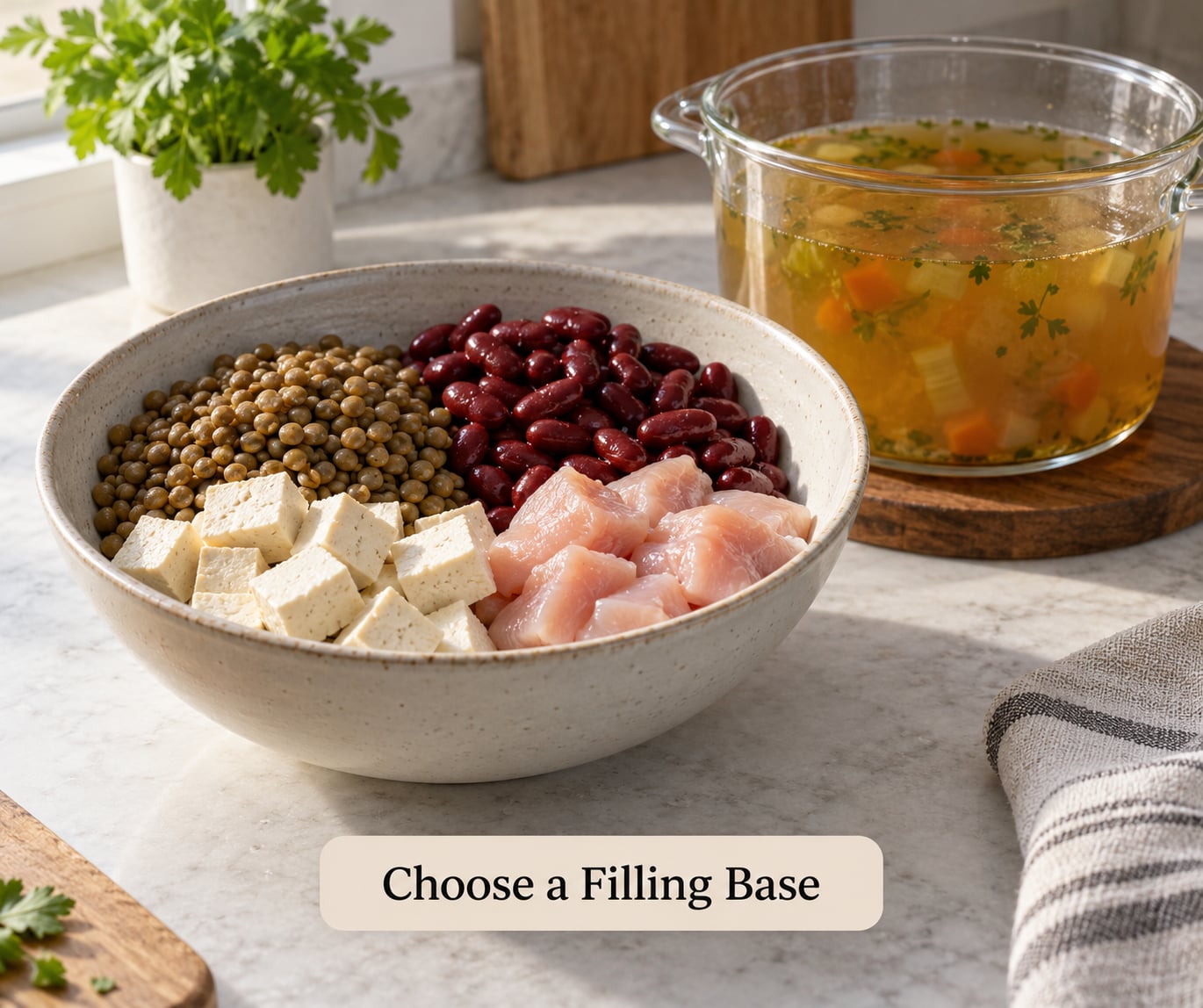
Start with the part most recipes skip: the protein. For a pot that serves four, use one 15-ounce can of beans (drained, about 1.5 cups), or 3/4 cup dry lentils, or 1 cup dry chickpeas, or 10 to 12 ounces of shredded or diced chicken, or about 8 ounces of firm tofu pressed and cubed.
Rinsing canned beans is not optional if you want the cleanest-tasting result. Drain, rinse twice, and use them. The success cue at this step is simple: the liquid in your pot already looks like it has body, not like colored water.
Bone broth is the traditional choice for a reason — collagen and gelatin give the bowl a slippery, slow-eating texture. Stock works. Water with a bouillon cube works. What does not work is a thin broth with nothing suspended in it.
2. Add Fiber-Rich Ingredients
Fiber does two jobs in soup: it thickens the broth and it slows digestion. Lentils, white beans and chickpeas are the strongest all-rounders because the starch breaks down as they simmer and the finished bowl coats the spoon. Red lentils collapse in about 20 minutes, green lentils hold their shape for 30 to 40, and split peas need 45 to 60 with a good simmer.
For a vegetable soup that feels thin, puree half of it. Put two ladlefuls of cooked vegetables and a little broth in the blender, blitz, and stir it back. Instant mashed potato works too, blended smooth with cold water, and adds almost no fat. Two tablespoons of rolled oats stirred in during the last ten minutes thickens without changing the flavor at all.
Add dried grains with enough time to cook through: 3/4 cup of barley or quinoa for four servings. Whole wheat pasta adds protein and fiber, but it turns gluey on reheats, so add it only if you are eating the pot in one sitting.
Success cue: the soup should fall off a spoon slowly, not run off like a smoothie. If it is thin, blend before you season, because stirring in broth to thin it takes away the fullness you just built.
3. Build Flavor and Healthy Fat
Flavor is what makes a modest portion feel like a finished meal rather than a side dish. Cook onion, garlic and celery in a tablespoon of olive oil for 4 or 5 minutes until soft, then add your spices and let them toast for 30 seconds in the pan. Smoked paprika, cumin, coriander, curry powder and a bay leaf do a lot of work with no extra calories.
Finish every bowl with something fatty. A tablespoon of olive oil drizzled over, half an avocado, a spoonful of Greek yogurt stirred through the hot soup, a tablespoon of tahini, or a scatter of toasted pumpkin seeds. Fat is the part most people drop when they are trying to eat lighter, and it is the part that makes the meal taste complete.
Add acid last. A squeeze of lemon, a splash of sherry vinegar or a spoon of miso at the end wakes up a pot that tastes flat from simmering. If you are using canned beans, a Parmesan rind thrown in for the last 20 minutes is a cheap way to add savory depth.
4. Simmer Until the Ingredients Merge
Simmer, uncovered, so the liquid reduces and the flavor concentrates. Red lentils need 20 minutes, green lentils and chickpeas about 30, dried beans or beef 60 to 90, and a bone-broth chicken soup 45 minutes. Season with salt near the end, since beans and broth both bring salt along.
If you are adding meat, poultry or fish, use the safe minimum internal temperatures: 165 degrees Fahrenheit (74 degrees C) for poultry, 160 degrees Fahrenheit (71 degrees C) for ground meat, and 145 degrees Fahrenheit (63 degrees C) for whole cuts and fish. Pull chicken out of the pot to shred it rather than boiling it to shreddable, and add delicate fish in the last 5 minutes so it does not fall apart.
When reheating, bring the soup to a rolling boil and heat it to 165 degrees Fahrenheit (74 degrees C) before serving, stirring so the middle catches up with the edges. If the soup has thickened overnight, loosen it with a splash of broth or water and warm it through.
Success cue: the broth tastes less watery and more unified, and the vegetables give with a spoon instead of snapping.
5. Portion for Lasting Satisfaction
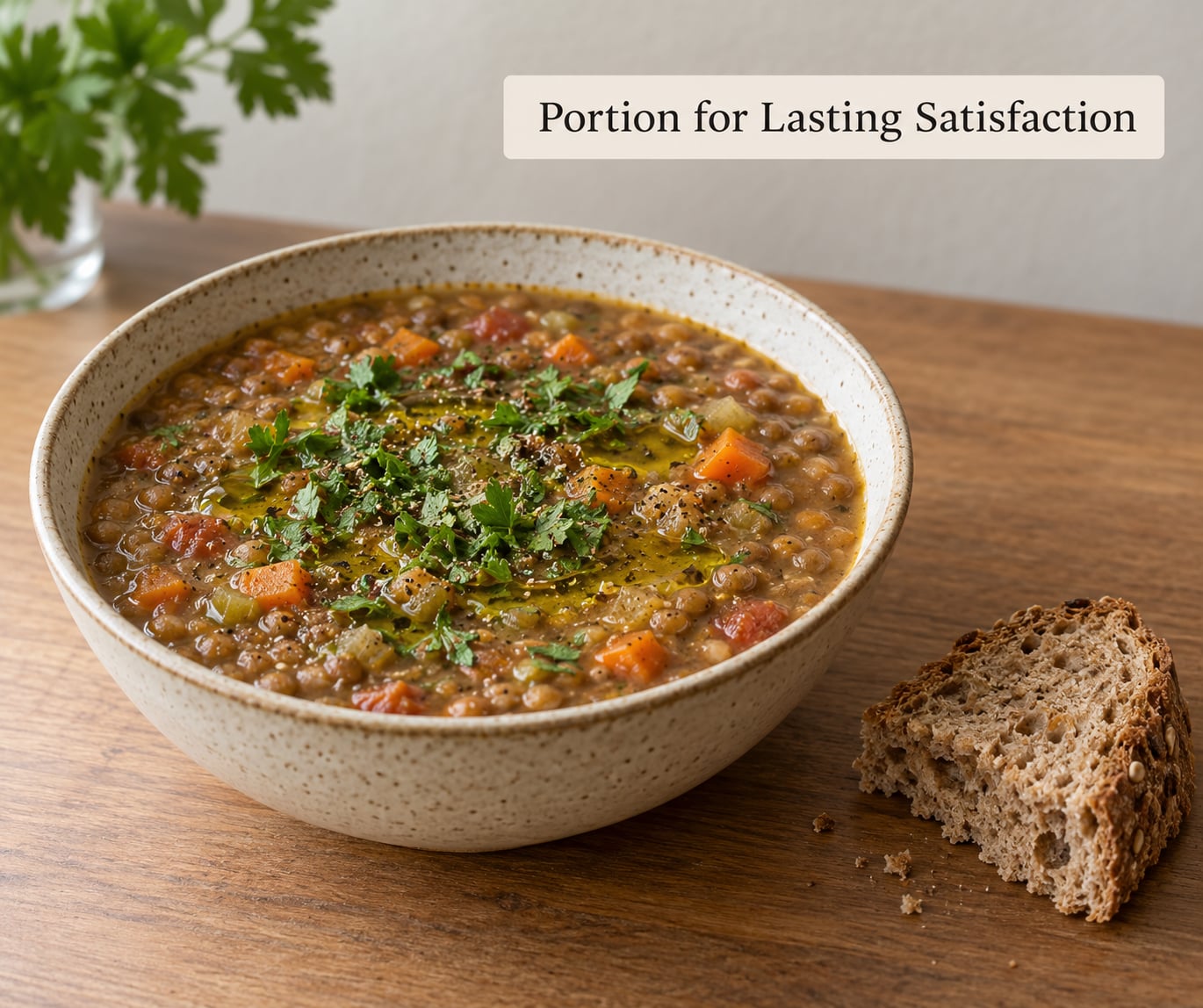
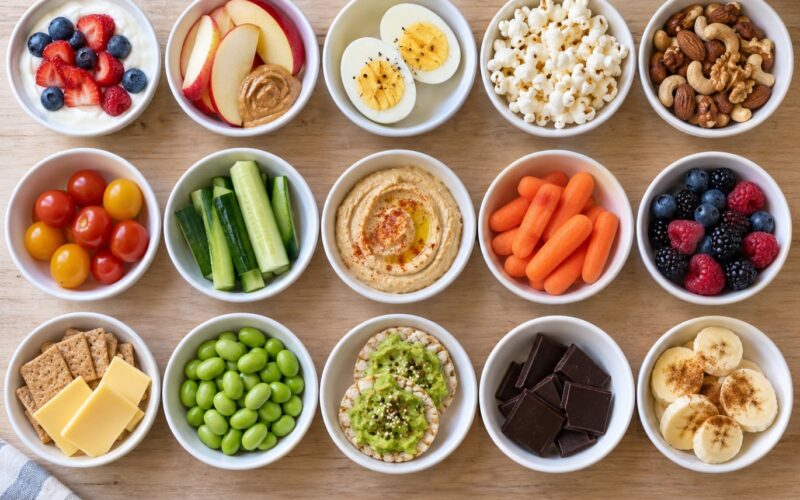
A filling bowl has four components: the soup itself, extra vegetables built into it, a protein, and one side with some fiber of its own. A slice of whole-grain bread, a small handful of roasted chickpeas, a boiled egg, or a few pieces of fruit all add staying power. Skip the buttered white roll if you are trying to get more out of the bowl.
Portion by hunger, not by habit. Most adults do well with about 2 cups of thick soup as a full meal, and a larger mug is a snack unless the soup is broth-level thin. If you are hungry again within an hour, the bowl was missing protein or fat, or it was too thin to slow you down.
For most people a daily intake of protein in the range of 50 to 100 grams, adjusted for body size and activity, is a reasonable target to aim a bowl toward. If you are managing a medical condition, are pregnant, or have a history of disordered eating, a registered dietitian can help you set numbers that suit you.
Common Mistakes
- Treating soup as a starter. A cup of broth before dinner is a warm-up, not a meal. Fix: double the protein in the pot so two cups is the serving size.
- Reaching for cream for thickness. Heavy cream adds fat and calories fast, and reheating can split it. Fix: blend half the pot, add oats, or whisk in a spoon of white bean puree.
- Stacking starches. Potato, rice, pasta and bread in the same meal add a lot of carbohydrate and little extra satiety. Fix: pick one starch and let the beans or lentils do the filling work.
- Skipping the protein. A big pot of broth, carrots and celery is mostly water, and it sloshes through the stomach. Fix: add beans, chicken, tofu or eggs, and check the label for grams of protein per serving.
- Under-seasoning, then blaming the recipe. Salty beans plus unsalted broth can leave a bowl flat and dull, which reads as hunger. Fix: season in layers and taste before serving.
- Storing soup warm on the counter for hours. The safety zone is 40 degrees Fahrenheit (4 degrees C) or below. Fix: cool it quickly, refrigerate within two hours, and use it within 3 to 4 days.
- Reheating the same pot all week. Even the best soup gets tiring by day four. Fix: cook two base batches and vary them with different beans, greens and spice profiles.
A few serving habits help. Eat soup slowly, with the bowl on the table rather than over the stove, because a bowl finished in eight minutes signals fullness far better than one eaten standing up. Freeze flat in single or double portions for up to 2 to 3 months, and add fresh greens, yogurt or seeds only after reheating, since they go soft and dull in the freezer.
If you are building this around a health condition, take a conversation with your doctor or a registered dietitian rather than following a generic plan. Seek medical advice promptly if hunger is persistent, extreme or paired with unexplained weight change.
Frequently Asked Questions
What ingredients make soup most filling?
Lentils, white beans, chickpeas and split peas are the strongest all-rounders because they add protein and fiber while thickening the broth. Chicken, tofu, eggs and Greek yogurt add protein. Olive oil, avocado, tahini and seeds add the fat that makes a modest portion feel like a meal, and a final squeeze of acid or spoonful of miso makes the flavor work harder. Aim for 20 to 30 grams of protein and 8 to 10 grams of fiber per serving.
Should I avoid cream if I want soup to help with weight loss?
You do not have to ban it, but it is not the most efficient way to add body. A cup of heavy cream brings around 50 grams of fat, and that is easy to swap for blended vegetables, white bean puree, rolled oats or Greek yogurt. Use a splash of cream for flavor if you like it, and get the thickness and staying power from legumes and pureed vegetables instead.
How can I thicken soup without cream or excess calories?
Blend two ladlefuls of the cooked soup and stir them back into the pot, which thickens the whole bowl with nothing added. Rolled oats stirred in during the last 10 minutes, instant mashed potato mixed with cold water, or a few tablespoons of white bean puree all work well. A Parmesan rind simmered in the broth for 20 minutes adds body and savory depth with minimal fat.
How long does homemade filling soup keep in the refrigerator?
Homemade soup keeps 3 to 4 days in the refrigerator at 40 degrees Fahrenheit (4 degrees C) or below, as long as you refrigerate it within two hours of cooking. Cool it in shallow containers so heat leaves quickly. For longer storage, freeze it in portions for 2 to 3 months, and reheat on the stove until steaming and piping hot throughout, which means 165 degrees Fahrenheit (74 degrees C).
How can I make soup that keeps me full for weight loss?
Build a two-cup serving with a protein and a legume in it, thicken it by blending part of the pot, and finish with a small amount of healthy fat rather than a large one. Skip the bread and add a boiled egg, roasted chickpeas or fruit instead. Most importantly, eat slowly and seated. If you are still hungry an hour later, add protein and fiber to the next batch instead of cutting the portion further.
Conclusion
To make soup that keeps you full, build every bowl the same way: a substantial liquid, a real protein, a fiber-rich ingredient that thickens it, and a small amount of healthy fat finished in at the end. Start with a pot of broth, a can of beans or a cup of lentils, more vegetables than you think you need, and a protein on the counter. Simmer it until the spoon comes back slowly, and that bowl will hold you until the next meal.