If your calendar is wall-to-wall with calls, the fix is not a longer workout you will never schedule. To learn how to walk more during a busy workday, split movement into short, unscheduled blocks: pair walks with phone calls and one-to-ones, walk your transitions and errands, turn lunch or a short break into a loop around the block, and add one or two purposeful rounds after sitting. Ten focused minutes scattered across nine hours beats one long walk you skip every week.
That is the whole method. No equipment, no membership, no hour carved out of the evening. What takes a little thought is choosing blocks that already exist in your day instead of inventing new ones.
Table of Contents
- What You Need
- Step-by-Step: How to Walk More During a Busy Workday
- Set a Baseline and Choose a Short Route
- How to Walk More During a Busy Workday: Pair Walks With Calls
- Replace Small Transitions With Walks
- Take a Walking Lunch or Split Break
- Use Desk Breaks to Reset, Then Walk
- Review the Week and Increase Gradually
- Common Mistakes
- Frequently Asked Questions
- How much walking do I need if I sit most of the day?
- How can I walk more when the weather is bad?
- Are walking meetings an effective way to get exercise?
- What is the easiest way to stay consistent with a workday walking routine?
- When should I check with a doctor before increasing daily activity?
- Start This Week With One Guaranteed Walk
What You Need
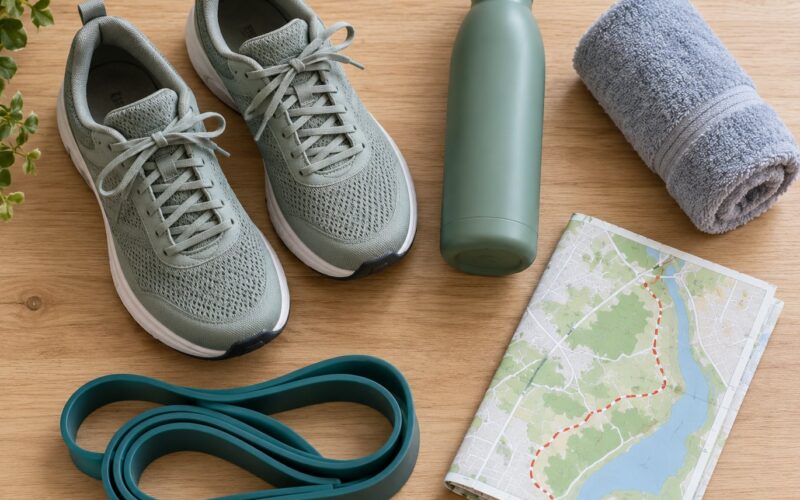
Walking is the easiest movement to add because it needs almost nothing. A pair of shoes you can walk a street in, a route you already know, and a willingness to start smaller than feels impressive.
Comfortable shoes matter more than any gadget. If your day includes concrete floors and carpet, cushioned soles that do not rub your heel will save you from blisters by week two. Wear layers you can strip off when you get warm, because the point is to actually go.
Step tracking is optional. A watch, a phone in your pocket, or a cheap pedometer app will do the job, and phone accuracy holds up reasonably well as long as the phone stays with you. Track walking minutes if you find step numbers discouraging, especially early on.
One note before you start. This is general fitness guidance, not a treatment plan. If you have a heart condition, diabetes, significant joint problems, are pregnant, recovering from surgery or an injury, or have been told to limit physical activity, talk to a doctor or physiotherapist first. A five-minute walk around the block may be fine, but they are the ones who can tell you.
Step-by-Step: How to Walk More During a Busy Workday
The routine has six parts. You do not need all of them on day one. Pick two that fit your week, keep them for a fortnight, then add another.
Set a Baseline and Choose a Short Route
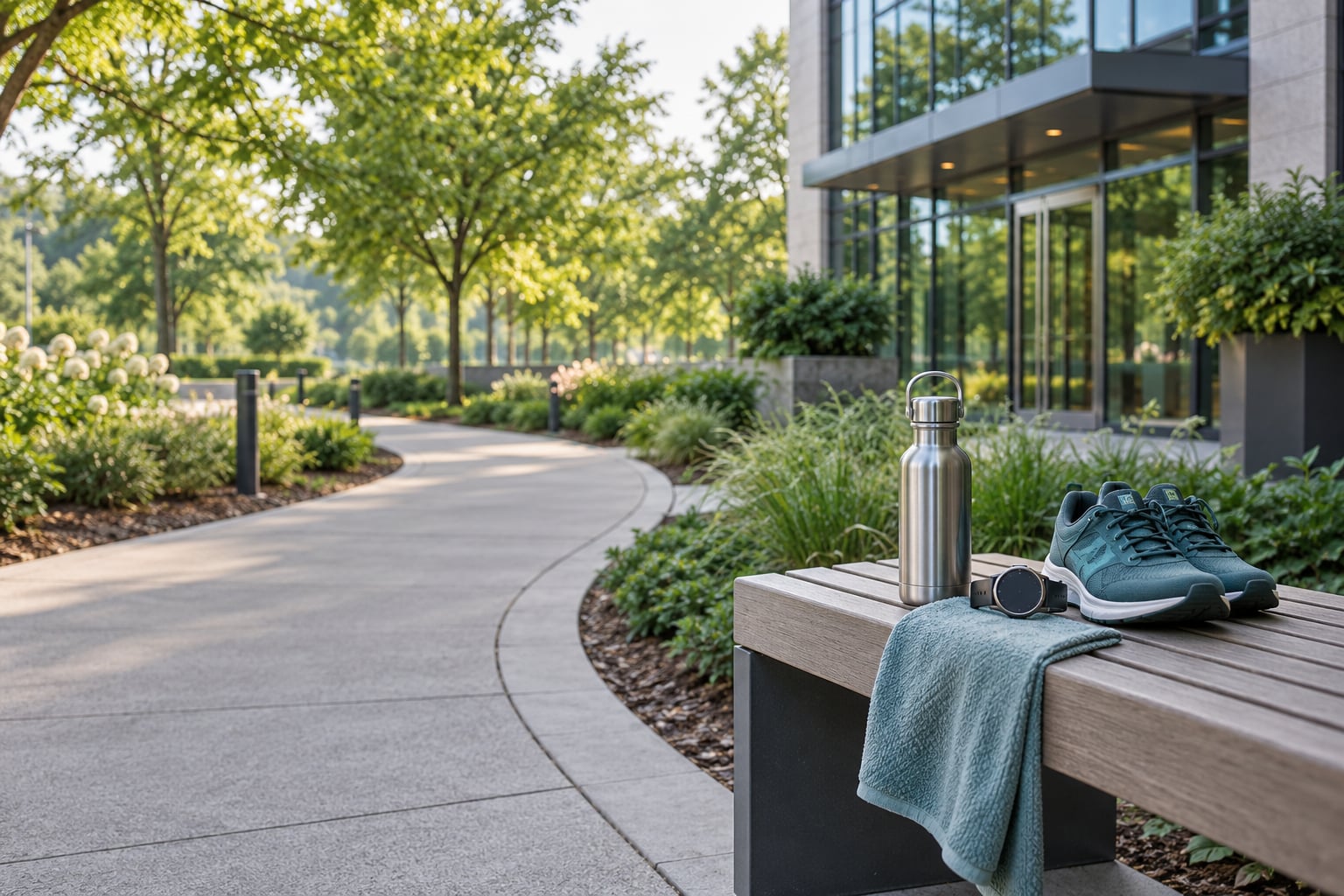
Find one loop you can walk without crossing a major road: five minutes from your desk, ten minutes from home, a lap around the block at lunch. Know where the water fountains, benches and crossings are before you start.
Walk the loop once and notice the conditions. Is the pavement uneven? Is there a safe place to cross? Is it dark by the time you finish at six in winter? Once you know, the route stops being a question.
Then set a starting target that feels almost too easy. Five minutes twice a day is a legitimate starting point, not a failure. You can build from a baseline you actually hit.
How to Walk More During a Busy Workday: Pair Walks With Calls
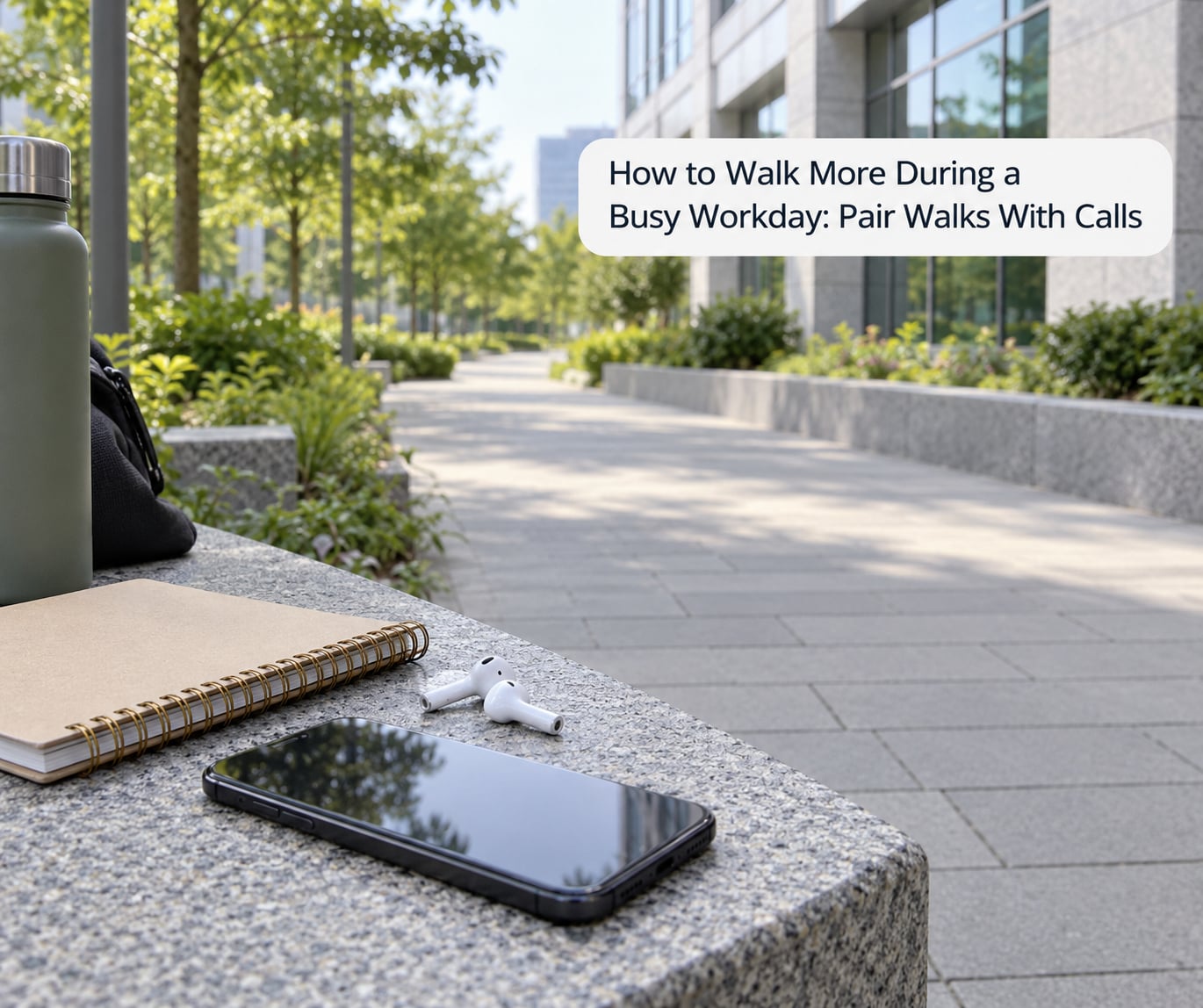
Some calls you take on foot. Stand-up calls with a colleague who is not a client. Vendor check-ins where nobody needs to look at a screen. Recruiter screens. One-to-ones that are a conversation rather than a slide review.
Protect confidentiality before you start. Check what can be said in public, take the call outside or in a quiet room if you cannot be sure, and never walk into a space where you might overhear or be overheard. If a topic is sensitive, decline the walk and say why: “I would rather stay at my desk for this one.”
Use earbuds and a phone call rather than a video call. Nobody wants to watch a colleague’s bobbing camera on a phone screen.
One office worker described walking every daily stand-up call around the block. It is the kind of rule that stops requiring a decision each morning.
Replace Small Transitions With Walks
Transitions are dead time that most people fill with a phone. Walk them instead: the trip from the car, the wait for a colleague, the walk from your desk to the printer on another floor, the walk to a meeting in a different building.
Parking a few minutes further away and walking the rest is the least effortful change on this list. Office workers report it adding a couple of thousand steps a day without anyone deciding to walk.
Set a timer or an alarm for short gaps. A ten-minute gap is not too small to use, and a timer makes the block real rather than something you keep meaning to fill.
Take a Walking Lunch or Split Break
You do not need a full hour. Fifteen minutes out of a thirty-minute lunch is enough for a comfortable loop and still leaves you time to eat at your desk, which makes it an easy sell to yourself on a hard day.
A few practical variants. If you eat a packed lunch at your desk, take the walk first, then eat. If your schedule swings, treat a 15-minute break the same as lunch: go, come back, eat. If there is no outdoor route, walk a long hallway loop, a large car park perimeter, or a mall concourse before it opens to foot traffic.
Rain is not a reason to skip it. A covered walkway, a shopping centre, or ten brisk minutes in the rain gets the job done. Most people report that a walk they were not expecting to enjoy turns out fine.
Use Desk Breaks to Reset, Then Walk
Sitting breaks do not have to involve a screen. Stand up, let your shoulders drop, look out the window for ten seconds, then go for one short round instead of returning to the chair.
Pick a trigger you can repeat every hour without thinking. The top of the hour. Whenever you get up for water. After every second meeting. Whatever it is, the important part is that it fires whether or not you feel motivated.
Two rounds a day is plenty to start. Remote workers do the same thing indoors: laps of the room, the length of the hallway, a walk around the block to fetch something they did not need yet.
Review the Week and Increase Gradually
On Friday, look at what you actually did. Total walking minutes, or steps if you tracked them. Then make one adjustment, not five. If lunch walks worked, add a second one. If mornings failed repeatedly, move them to the afternoon rather than forcing them.
Increase slowly. A jump from nothing to an hour a day tends to end with sore feet and a broken habit. Adding five minutes every week or so is boring and it works.
Most importantly, treat a missed day as a missed day. Skipping Tuesday is not a reason to compensate on Wednesday with punishing exercise, and one bad day does not erase the week. Resume at the next opportunity.
Common Mistakes
Waiting for the perfect long walk. You will not find the free hour. Ten minutes now counts more than fifty minutes you keep postponing.
Carrying desk work onto the walk. Answering email while walking adds step count without adding much else. Leave the laptop, or at least the typing, behind.
Starting too hard. The first week should look almost unimpressive. That is what makes week six possible.
Picking a route you have not checked. Dark paths, uneven pavement and nowhere to cross turn a good habit into a one-time thing.
Quitting after a missed day. The habit dies at the first gap, not the fifth. Pick the version of the routine easy enough that a bad day does not end it.
Frequently Asked Questions
How much walking do I need if I sit most of the day?
There is no single magic number. Large studies have linked noticeably lower risks of cardiovascular problems and early death to daily step counts well below 10,000, with much of the benefit appearing in the first few thousand steps of the day. Pick a modest, non-negotiable minimum you can hit on your worst day, treat it as your floor rather than your goal, and build from there.
How can I walk more when the weather is bad?
Swap the outdoor loop for an indoor one: a shopping centre concourse, a large car park, a long hallway in your building, or the indoor track at a nearby gym. Rain itself is rarely a reason to skip a short walk, since a ten-minute walk in light rain beats nothing at all. In winter, aim for the middle of the day when it is warmest, and dress in layers you can remove.
Are walking meetings an effective way to get exercise?
They are effective for movement, and the movement part is genuinely useful for breaking up sitting. Expect modest energy expenditure rather than a workout, since you cannot go very fast and take notes at the same time. They work best as one-to-ones, stand-ups and calls where nobody needs a screen. They are less suitable for anything sensitive or anything requiring a shared document.
What is the easiest way to stay consistent with a workday walking routine?
Attach walking to something that already happens rather than scheduling it as its own event: every phone call, every water break, every transition between meetings. Keep the route short and known, keep the shoes ready, and set a floor you can hit on your worst day. Consistency comes from the routine being too easy to argue with, not from more motivation.
When should I check with a doctor before increasing daily activity?
Check first if you have a heart condition, high blood pressure that is not controlled, diabetes, a history of falls or fractures, an ongoing injury, or have been given advice to limit physical activity. Pregnancy is also worth a quick word, since guidance differs between people. Walking is low impact and generally safe, but adding activity with a known condition is a conversation worth having before, not after.
Start This Week With One Guaranteed Walk
If you do one thing, pick the loop nearest your desk, walk it for ten minutes on your lunch, and put it in your calendar as a recurring appointment for five days. That is the routine that makes the rest possible.
Then add the second habit when the first feels automatic: walk your calls, walk your transitions, and add five minutes to whatever you are already doing. How to walk more during a busy workday is not a question of finding time you do not have. It is a question of attaching a few minutes of walking to the time you already spend on hold, on the way to a meeting, and on your lunch break.