Start with Hatha yoga, or with a beginner-level Vinyasa class if you want movement and a workout. That answers the question beginners ask most: yoga for beginners which style to start with. Hatha holds each posture for roughly five breaths, so you can learn the shape, the breath and the alignment instead of chasing the next transition.
Getting this first choice right matters more than any other decision you will make. Most people who walk away from yoga in the first few weeks did not find it too hard, they found it too fast to follow, in a room full of people who already knew the names of everything.
Below I break down eight styles you will see on any studio schedule, what a first month in each one actually looks like, and how to pick the one that matches your goal. Style guidance reviewed for 2026. This is general information, not medical advice; if you have an injury, a pregnancy or a health condition, talk to your doctor before starting, and tell your instructor on day one.
Table of Contents
- Yoga for Beginners Which Style to Start With at a Glance
- Hatha Yoga: The Best Starting Point for Most Beginners
- Beginner Hatha Yoga: A Clear Way to Learn the Basics
- Vinyasa Yoga: Flowing Practice for Active Beginners
- Yin Yoga: A Gentle Option for Stillness and Flexibility
- Restorative Yoga: The Easiest Style When You Want Less Effort
- Iyengar Yoga: Structured Practice for Detail-Oriented Beginners
- Power Yoga: When It Is Too Advanced for a First Class
- Kundalini Yoga: A Focused Style That May Not Suit Every Beginner
- Prenatal Yoga: A Specialized Choice for Expectant Beginners
- Which Yoga Style Should You Choose?
- Yoga for beginners which style to start with depends on your goal
- How to read a studio class schedule
- How to Start a Beginner Yoga Practice Safely
- Frequently Asked Questions
- What type of yoga should a beginner start with?
- Can I do yoga if I’m not flexible?
- Is 20 minutes of yoga a day enough?
- How do I choose a yoga class?
- Is hot yoga safe for beginners?
- Can I lose belly fat by yoga?
- Conclusion: Begin Slowly and Choose Comfort First
Yoga for Beginners Which Style to Start With at a Glance
| Style | Pace | Typical hold time | Props | Intensity | Best for |
|---|---|---|---|---|---|
| Hatha | Slow, one pose at a time | About 5 breaths | Optional, common | Low to moderate | Learning the basics |
| Vinyasa (flow) | Continuous, breath-linked | 1 to 5 breaths | Occasional | Moderate to high | Cardio, stamina, sweating |
| Yin | Very slow, mostly seated | 2 to 5 minutes | Common | Low effort, high sensation | Flexibility and stillness |
| Restorative | Almost no movement | 5 to 10 minutes or longer | Essential | Very low | Stress, sleep, recovery |
| Iyengar | Slow, deliberate | Long, several breaths to minutes | Heavy use | Low to moderate | Alignment and detail |
| Power yoga | Fast, strength-focused | 1 to 3 breaths | Occasional | High | Fitness and endurance |
| Kundalini | Steady with breathwork and chanting | Several breaths, plus seated breathing | Minimal | Low physically, intense internally | Focus and breathwork |
| Prenatal | Gentle and adapted | Comfort-led | Heavy use | Low | Pregnancy only |
Read the pace column first. If you are unsure, pick something in the left half of that table, because a slow class gives you room to ask questions and a fast class does not.
Hatha Yoga: The Best Starting Point for Most Beginners
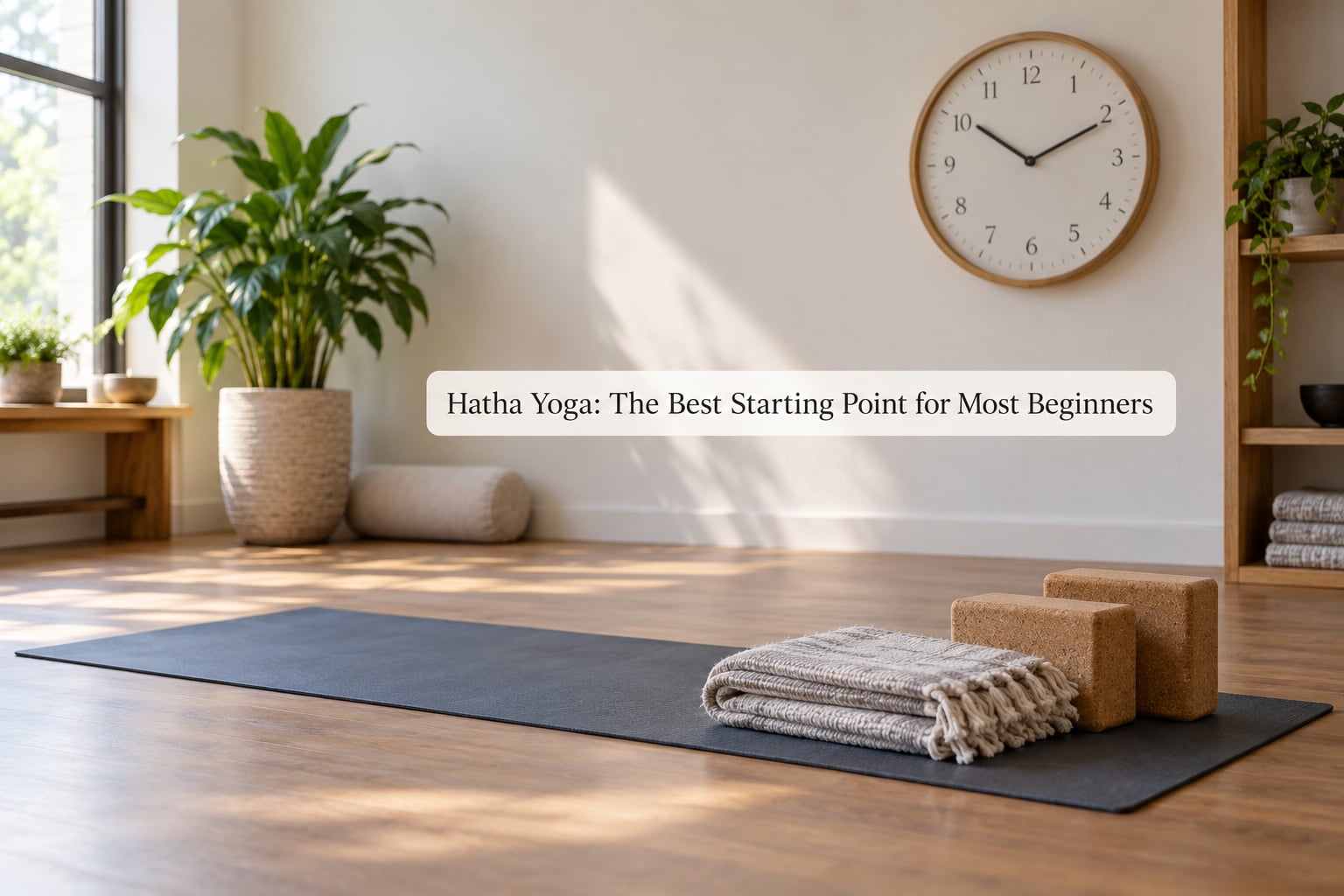
Hatha is the style most beginner recommendations land on, and for a plain reason: nothing is fast. The teacher demonstrates a posture, talks through the feet and hands, and everyone holds it while breathing, usually for about five breaths. Then you move on. There is no rush to keep up, because the class is not built on transitions.
Hatha also works as an umbrella term, which is why you will see it used loosely. Many flow classes are technically hatha-based, so two classes with the same label can feel completely different. If you are booking a first class, ask whether it is a beginner or hatha class rather than trusting the word alone.
On yoga forums, beginners repeatedly report the same experience: they expected hatha to be too easy to count as yoga, and it was the style they stayed with.
Beginner Hatha Yoga: A Clear Way to Learn the Basics
A beginner hatha class teaches the handful of shapes everything else is built from. You will meet Mountain Pose (Tadasana), Cat-Cow, Child’s Pose (Balasana), Downward-Facing Dog, a Warrior or two, and a long Savasana at the end. That is genuinely enough for your first few months.
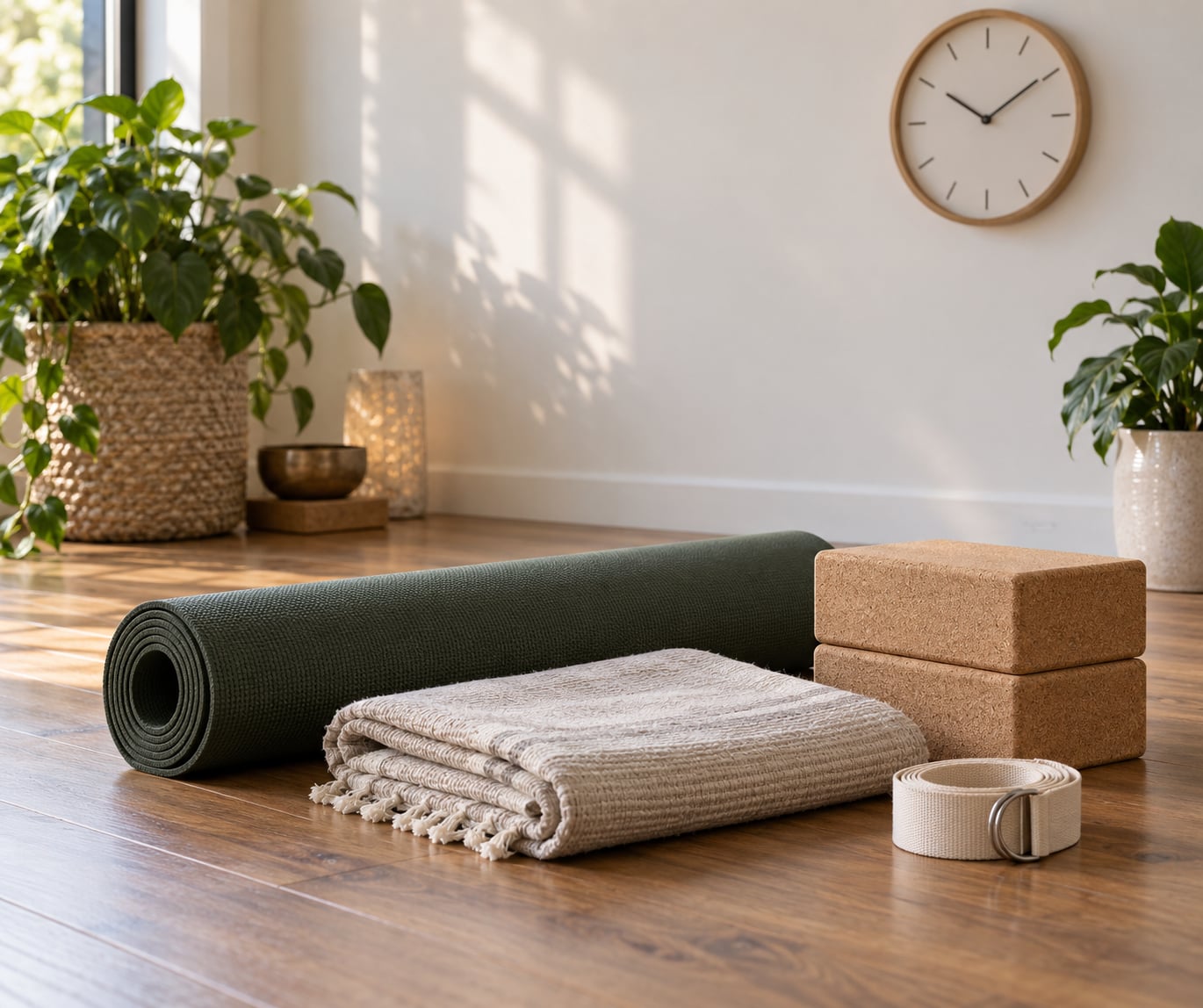
Two things make it forgiving. First, alignment is explained rather than assumed, so you spend time in poses instead of rushing through them. Second, blocks, straps and blankets are treated as normal equipment, not as signs that you cannot do the pose. Most studios have them stacked at the front of the room.
You do not need flexibility to be in a beginner class. You need a body and a mat.
Vinyasa Yoga: Flowing Practice for Active Beginners
Vinyasa links movement to breath in one continuous sequence, usually built around Sun Salutations. You flow from Downward-Facing Dog into a lunge, into Warrior, back down and around again. It is the yoga most people picture when they think of a workout, and it is a good fit if you like heat, sweat and a pace that keeps you awake.
How hard is vinyasa? Considerably harder than hatha, mostly because you have to remember what comes next while your heart rate climbs. A standard 60-minute flow can burn several hundred calories, and beginners who are not used to sustained effort usually feel that in their wrists, shoulders and lower back first.
Give it a month of hatha before you walk into an open flow. If you want to start sooner, book something labelled beginner vinyasa, level 1 flow or slow flow, and take the option to skip the more demanding transitions. Tell the teacher it is your first class; that single sentence changes how they teach it.
Yin Yoga: A Gentle Option for Stillness and Flexibility
Yin looks still from the outside. Poses are held for two to five minutes, usually seated or on the floor, while the rest of you relaxes into the shape. The aim is to reach connective tissue and fascia rather than muscles, which is why it feels different from a long hamstring stretch.
Beginners can absolutely do yin, and many do. It looks intimidating only because of the clock. Props make it more comfortable: blocks under the knees, a bolster under the spine, a folded blanket behind the knees in a wide-angle pose.
One rule matters more than the rest. If something pulls or burns, that is signal, not the pose working. Yin is not a stretching competition, and the standard for a good class is that you should feel settled by the end of a hold, never braced.
Restorative Yoga: The Easiest Style When You Want Less Effort
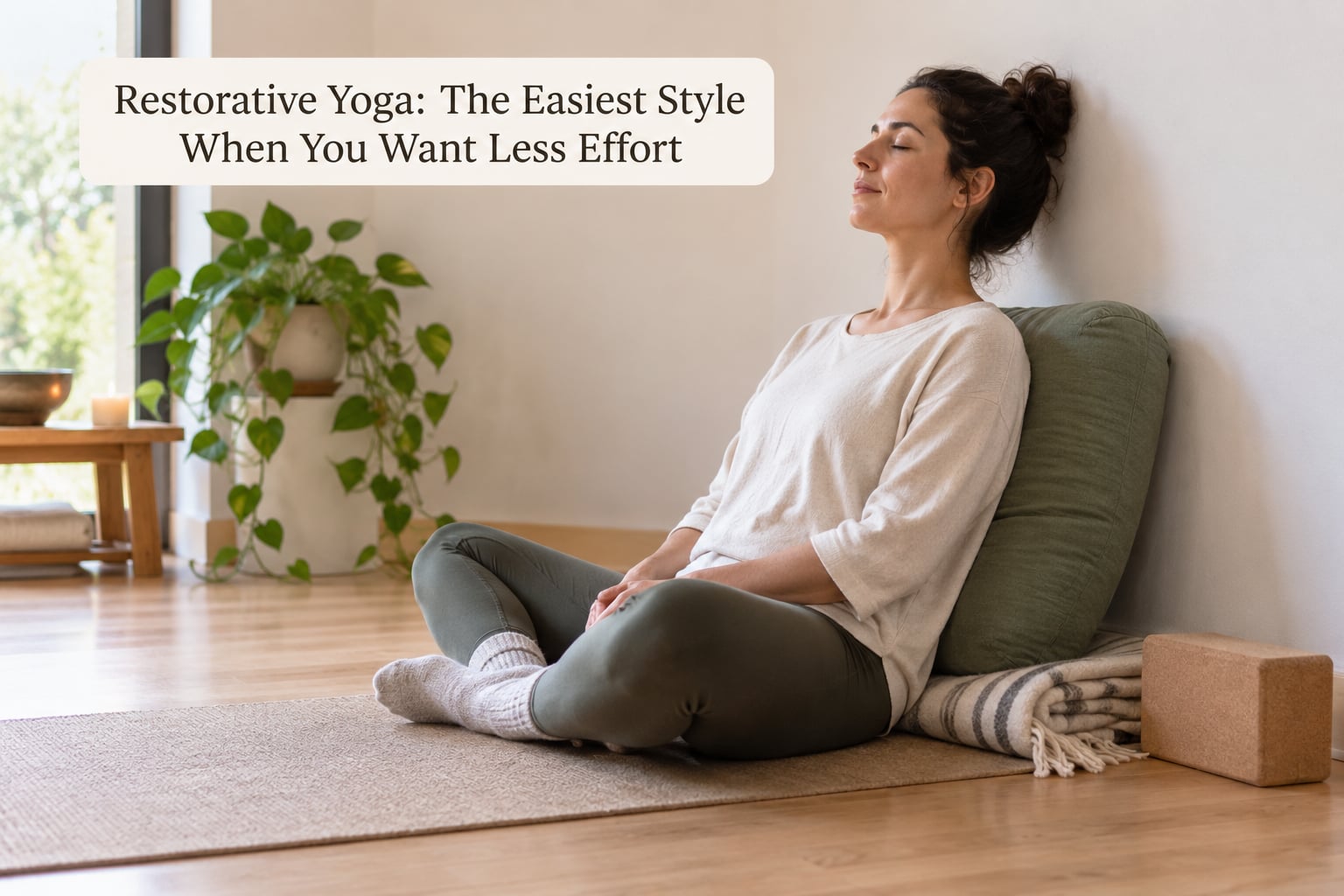
Restorative is the least demanding style on this list, and often the one beginners pick when stress or poor sleep is the reason they showed up. The body is placed in a supported shape using bolsters, blankets, blocks and walls, then left there for five to ten minutes while breathing does the work.
Nothing here builds strength, and that is the point. Beginner yoga teachers describe it as the nervous system equivalent of putting the brakes on, and beginners consistently report better sleep and a calmer head after a few weeks of regular restorative classes.
If you are recovering from illness, working long hours, or simply not sure you want sweat on your mat, start here.
Iyengar Yoga: Structured Practice for Detail-Oriented Beginners
B. K. S. Iyengar built a system around precision. Postures are held longer than in hatha, often for several minutes, the teacher corrects alignment verbally in detail, and props are treated as part of the method rather than an optional extra.
That makes it more demanding in a quiet way. You will spend more time standing still in one shape than you expect, and the focus on precision asks for attention rather than effort. In exchange, it is a very good way to build an accurate understanding of what your body is doing in a pose.
Beginner Iyengar classes exist and are taught more slowly than general hatha classes. Ask the studio whether the class follows the Iyengar method, and expect to be asked about your practice history.
Power Yoga: When It Is Too Advanced for a First Class
Power yoga is fitness-oriented: strength work, longer holds in arm balances and core poses, quicker transitions, and often a heated room. It borrows heavily from ashtanga-style sequencing and is genuinely hard work.
It is not wrong for a beginner to take one, but it is rarely the best first booking. The pace leaves no room to learn alignment, and the heat plus sustained exertion is more than a brand-new body needs on day one. Come back to it after a few months of hatha or beginner vinyasa, when the core shapes are familiar.
Kundalini Yoga: A Focused Style That May Not Suit Every Beginner
Kundalini classes mix asana with heavy breathwork, chanting and repeated spinal movements. The physical demand is often low, but the internal one is not: students report tingling, heat, strong emotion or a racing mind during or after class, especially at the start.
None of that is dangerous on its own, but it is a lot to ask of someone who has never sat through a class. Practical advice: ask the studio what the teacher does at the start of a beginner class, read reviews for anyone who felt pushed, and skip it if you are not comfortable with guided breathing on day one.
Hatha or restorative are better starting points for the same benefits without the intensity.
Prenatal Yoga: A Specialized Choice for Expectant Beginners
Prenatal yoga is built for pregnancy and adapts postures for each trimester, with props to keep the body supported as the centre of gravity changes. It is not a general beginner class, and taking one before you are pregnant means learning material you do not yet need.
If you are pregnant, check that the teacher holds a prenatal-specific qualification, tell them how far along you are before class, and get medical clearance if your provider recommends it. If you have ever had a difficult pregnancy, pelvic floor surgery or placenta-related concerns, your doctor should weigh in first.
Which Yoga Style Should You Choose?
Yoga for beginners which style to start with depends on your goal
- Stress, anxiety or racing thoughts: restorative, or yin once or twice a week. Both give the nervous system a clear signal to slow down.
- Poor sleep or burnout: restorative, with a longer Savasana at the end. Keep the practice in the evening and consistent, rather than long.
- Stiff lower back or hips from desk work: slow hatha with a focus on Cat-Cow, Downward Dog, Pigeon with support and gentle twists.
- Flexibility: yin two or three times a week alongside one hatha class. Yin alone will not build the strength to hold the shapes it stretches into.
- Strength, stamina or wanting to sweat: hatha first for a month, then beginner vinyasa or a level 1 flow.
- Joint pain or limited mobility: restorative and chair yoga. Both can be done seated or fully supported, and neither demands balance.
- Digestive discomfort such as IBS: gentle hatha or restorative, avoiding long holds after eating, deep twists and strong abdominal work. If symptoms are persistent, talk to a doctor first; yoga complements care, it does not replace it.
- A busy schedule at home: free video sessions are a fine start. Studio classes beat them for feedback and pacing, so upgrade once the shape names are familiar.
How to read a studio class schedule
Studio schedules are cryptic, and it is the single most common complaint from people starting out. A quick decoder:
- Beginner, Level 1, Introduction, Basics – the one to book first.
- All Levels – mixed experience, usually a flow. Fine after a month or two, not on day one.
- Hatha, Slow Flow, Gentle – slow, prop-friendly, usually welcoming.
- Vinyasa, Flow, Power, Hot – faster, warmer, sweatier. Come later.
- Yin, Restore, Restore and Breathe – floor-based, quiet, low effort.
- Ashtanga-led – a fixed advanced sequence. Not a beginner class, whatever the studio says.
When in doubt, ask the front desk one question: which class on today’s schedule has the least movement in it. That is a better test than any label.
How to Start a Beginner Yoga Practice Safely
Tell the instructor about injuries, pain or pregnancy before you start, not halfway through. Good teachers adjust the class for you, and most beginners say this one sentence removed most of their pre-class anxiety.
Use the props that are sitting right there. Blocks shorten the gap between your hands and the floor so you can hold a shape without straining, and a folded blanket makes sitting poses bearable. Nobody in a beginner class is watching how you use them.
Keep it comfortable. Stretching sensation is fine, sharp pain is not. Stop if you feel sharp joint pain, numbness, dizziness, or anything you would describe as wrong, and tell the teacher before you leave.
Stay hydrated, especially in a heated class, and drink water before you arrive rather than during the practice. Skip hot yoga as a first class if you can: heat plus unfamiliar effort is a bad combination when you do not yet know how to read your own signals.
On frequency, two or three classes a week beats six in one week and then nothing. Twenty or thirty minutes at home most days is a real practice, not a compromise.
If you have a chronic condition, an injury, are pregnant, or are returning after surgery, check with a doctor or a qualified physical therapist before starting, and ask your instructor about modifications in advance.
Frequently Asked Questions
What type of yoga should a beginner start with?
Hatha yoga is the standard recommendation because it holds each posture for about five breaths, giving you time to learn alignment and breathing rather than transitions. If you prefer movement and want to sweat, choose a beginner or level 1 Vinyasa flow instead, and plan to do it after a month of slower classes.
Can I do yoga if I’m not flexible?
Yes. Flexibility is not a prerequisite and it is not something you need at the start. Most beginner classes use blocks, straps and blankets precisely so people with tight hamstrings, hips or shoulders can hold a correct shape. The styles that ask for long passive holds, such as deep yin, are the ones to be careful with early on.
Is 20 minutes of yoga a day enough?
Twenty minutes a day is enough to build a habit, build familiarity with the shapes and notice early changes in mobility and sleep within two to four weeks. It will not replace a class where a teacher can correct you. Beginners who combine short daily home practice with two studio classes a week tend to progress fastest.
How do I choose a yoga class?
Look for beginner, level 1, introduction or basics on the schedule first. Hatha, slow flow and gentle classes are slow and prop-friendly. Treat all-levels flow, power and hot classes as later additions. If the labels tell you nothing, phone or message the studio and ask which class has the least movement in it.
Is hot yoga safe for beginners?
It carries more risk for a first class than a normal one. The heat, combined with unfamiliar effort and a fast pace, raises your risk of overheating and dehydration, and you cannot read your own signals as well when you are new. Plenty of people do it safely later, once they know how a regular class feels. Bring water and leave if you feel overheated.
Can I lose belly fat by yoga?
Yoga is not a primary tool for losing body fat, and it burns fewer calories than cardio or strength training. What it does help with is posture, core engagement, sleep and stress eating, which often matters more than the number on the scale. If weight loss is your goal, pair yoga with a nutrition plan and talk to a registered dietitian.
Conclusion: Begin Slowly and Choose Comfort First
Hatha is the safest answer to the question beginners actually ask, and restorative is the gentlest. Both teach you something real without asking you to keep up with a room full of people who have been doing this for years. Vinyasa, yin, Iyengar and chair yoga all work as second and third styles once the basics feel ordinary.
So pick one beginner or hatha class this week, tell the instructor you have never done it before, and let the first month be about learning names and breathing rather than flexibility. If you want the least effort and the most relaxation, book restorative instead. That is the whole decision, and the rest is just practice.