Learning how to make time for exercise with kids at home comes down to one thing: stop waiting for an hour and build 10- to 20-minute movement blocks into windows that are already guaranteed. Mornings before the house wakes, nap time, and the first stretch after bedtime work because a young child cannot interrupt them. Most parents who stick with it long enough say the schedule matters more than the length of any single workout.
The honest reason most parents skip exercise is not a lack of hours. It is that they are exhausted by the time the day ends, and any plan that depends on a spare evening collapses within a week. A plan that depends on three short sessions a day is much easier to keep.
Here is how to build one, whether you have a baby on the floor, a teenager who thinks exercise is embarrassing, or a partner whose schedule makes evenings impossible. Nothing here needs a gym membership or a garage.
Table of Contents
- What You Need
- Step-by-Step
- How to Make Time for Exercise With Kids at Home When the Day Is Full
- Choose an Activity Both You and Your Kids Can Tolerate
- Use Short Movement Breaks Instead of One Long Workout
- Build a Repeatable Weekly Movement Routine
- Lower the Pressure and Make the First Step Easy
- Common Mistakes
- Frequently Asked Questions
- How much exercise do parents need when they have kids at home?
- What can toddlers do for exercise at home?
- How can I exercise while taking care of my kids?
- What if my child does not want to exercise with me?
- When should I stop exercising and contact a health professional?
- Conclusion
What You Need
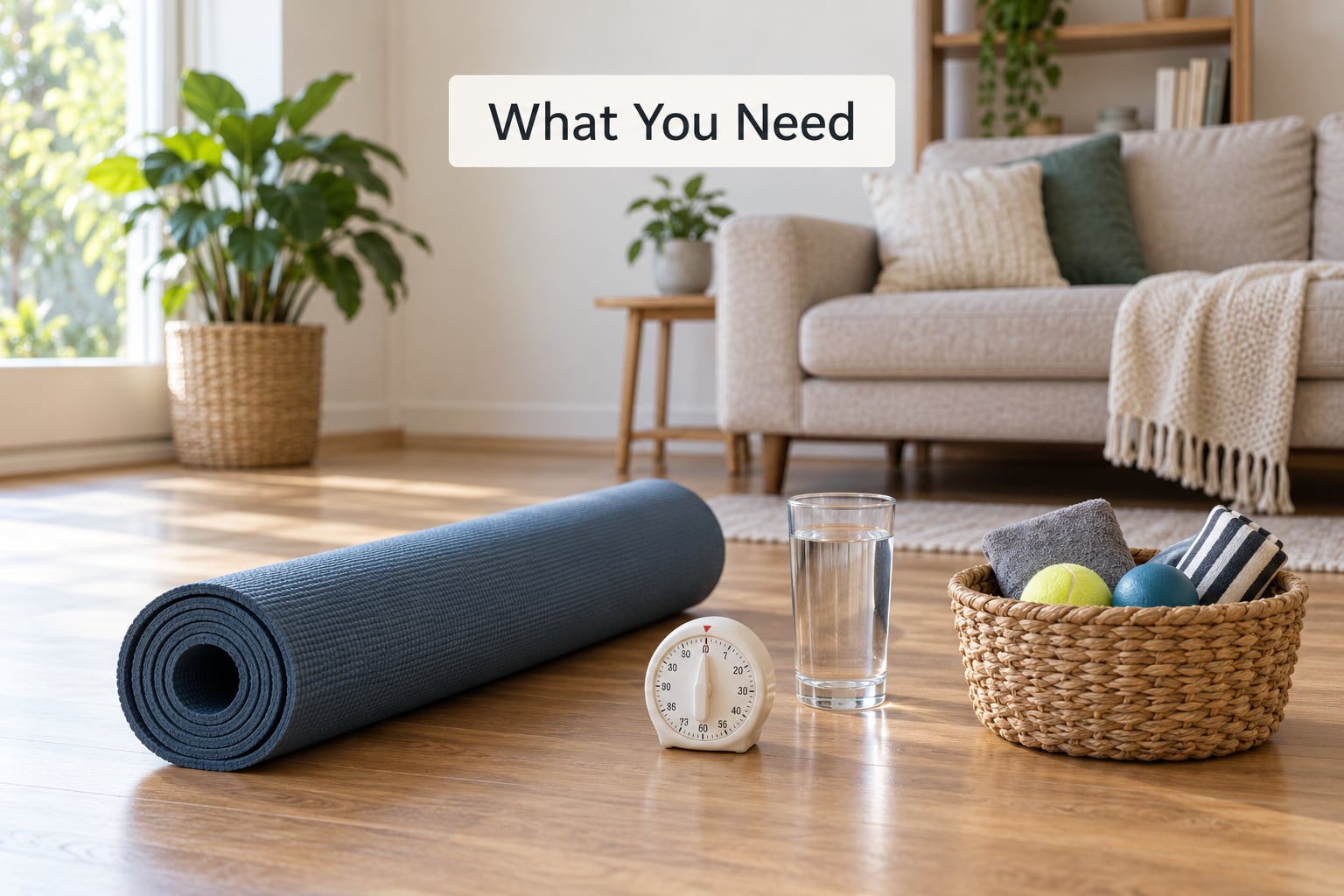
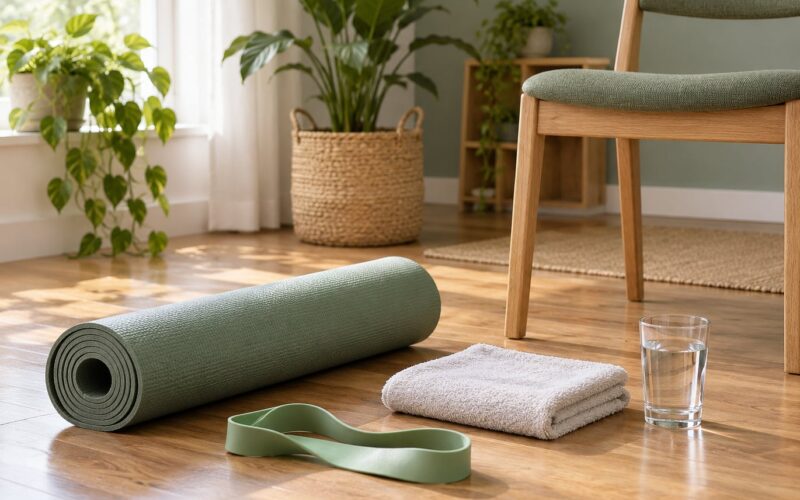
You need about 15 minutes and a patch of floor. That is genuinely the whole shopping list.
First, a clear area. Push the coffee table against a wall, move sharp corners and low table edges out of the way, and check for any gap a small child could get a finger caught in. If you are on the second floor or above a busy road, keep the session indoors and away from open windows.
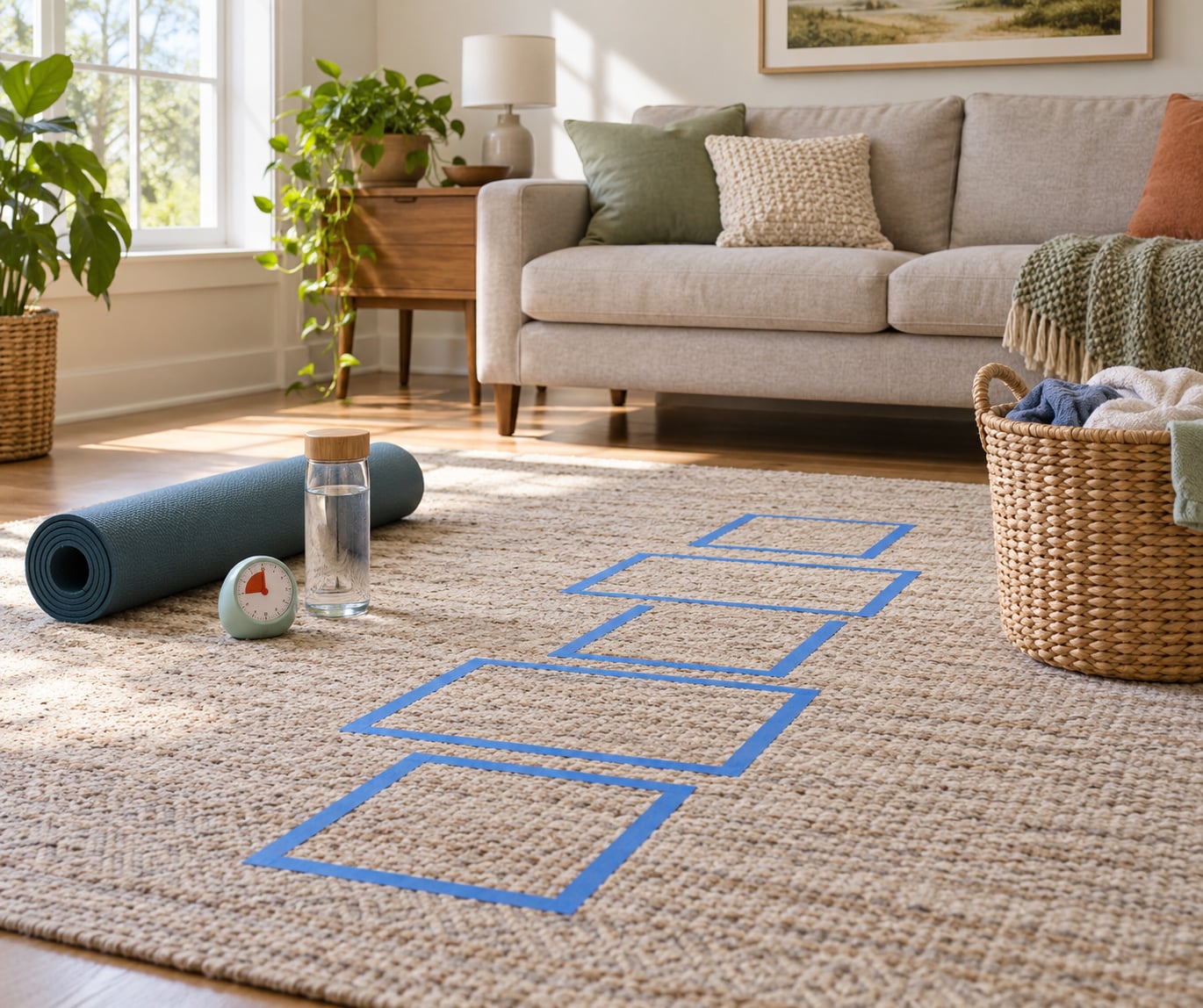
Second, a timer. Your phone works fine. A kitchen timer is better, because it frees your hands and both kids can watch the dial together, which turns the countdown into something they want to reach rather than a stopwatch you are ignoring.
Third, water within reach and clothes that bend. Shoes are optional on carpet; trainers help on concrete or if you are doing anything jumpy outside.
Fourth, a few household objects. Sofa cushions make balance stations and sit-up targets. Painter’s tape on the floor marks a hop grid. A laundry basket becomes a ball to pass or throw. A pillow makes a soft landing for a frog jump.
Fifth, nothing that needs storing, charging, or assembling. If a piece of equipment has to live in the garage and you have to carry it out, it will stay in the garage.
Adjust for age and energy. A session for a walking toddler is 5 minutes and involves hiding things. A session for two teens is 20 minutes and involves music they chose. Same floor, different plan.
Step-by-Step
Five steps, in this order. Skipping to step three before the schedule works is why most attempts fail.
How to Make Time for Exercise With Kids at Home When the Day Is Full
Audit your real windows before you plan anything. For three days, write down when you are physically free and uninterrupted, even for ten minutes. Most parents find exactly three: early morning, nap or quiet time, and the hour after bedtime.
Then look for help or a schedule shift. Options are worth more than motivation here. Ask for one covered nap a week, swap a weekend walk with a co-parent, use a lunch break at work, or take a shift on a weekend morning so your partner gets a block too. One 30-minute covered window per week is often the single biggest change you can make.
Aim for two or three short movement periods a day rather than one long one. Three 12-minute blocks is 36 minutes. That is realistic, and it survives a fussy evening in a way that a 45-minute gym session never does.
Here is how to make time for exercise with kids at home when nothing is free: pick one of your audited windows, decide before you go to bed what you will do in it, and set the timer for a length you have done before. Familiarity reduces the effort of starting, which is the part people skip.
Finally, check whether the plan worked. Did the three chosen windows actually happen? Which one failed, and why? If morning always failed because you slept badly, move it to the nap window instead of trying harder at mornings. A real schedule gets adjusted weekly, not defended daily.
Choose an Activity Both You and Your Kids Can Tolerate
There are three workable arrangements, and honest families use all three across a single week.
Move with them. Dance parties, animal walks, a laps race down the hallway, or a circuit of squats to the sofa and back work well for toddlers and school-age kids. The payoff is quality time plus your own session in one slot.
Let them join, sort of. Follow-along streaming sessions suit kids roughly three and up. A growing list of free channels does guided movement with characters rather than a shouting instructor, and Cosmic Kids Yoga is the one that comes up most often in parent communities.
Let them play nearby while you move. This is the arrangement most working parents actually have. A baby on a mat with a few toys, a toddler with a basket of blocks within sight, and you doing intervals within earshot. Stay close enough to hear them, but accept that you will pause.
Match intensity to the youngest person in the room and the shortest attention span, not to your own fitness level. A four-minute circuit that gets completed beats a twenty-minute one that gets abandoned at minute six.
Use the timer to set a finish line you can promise. Kids tolerate a bounded task far better than an open-ended one. “Twenty minutes, then pancakes” ends the negotiation.
Judge success by energy, mood, and how often the session actually happens. Did you feel more awake afterwards? Did the kids go down without a fight? Did you get three out of seven days? If yes, it worked, even if nothing about it looks impressive.
Use Short Movement Breaks Instead of One Long Workout
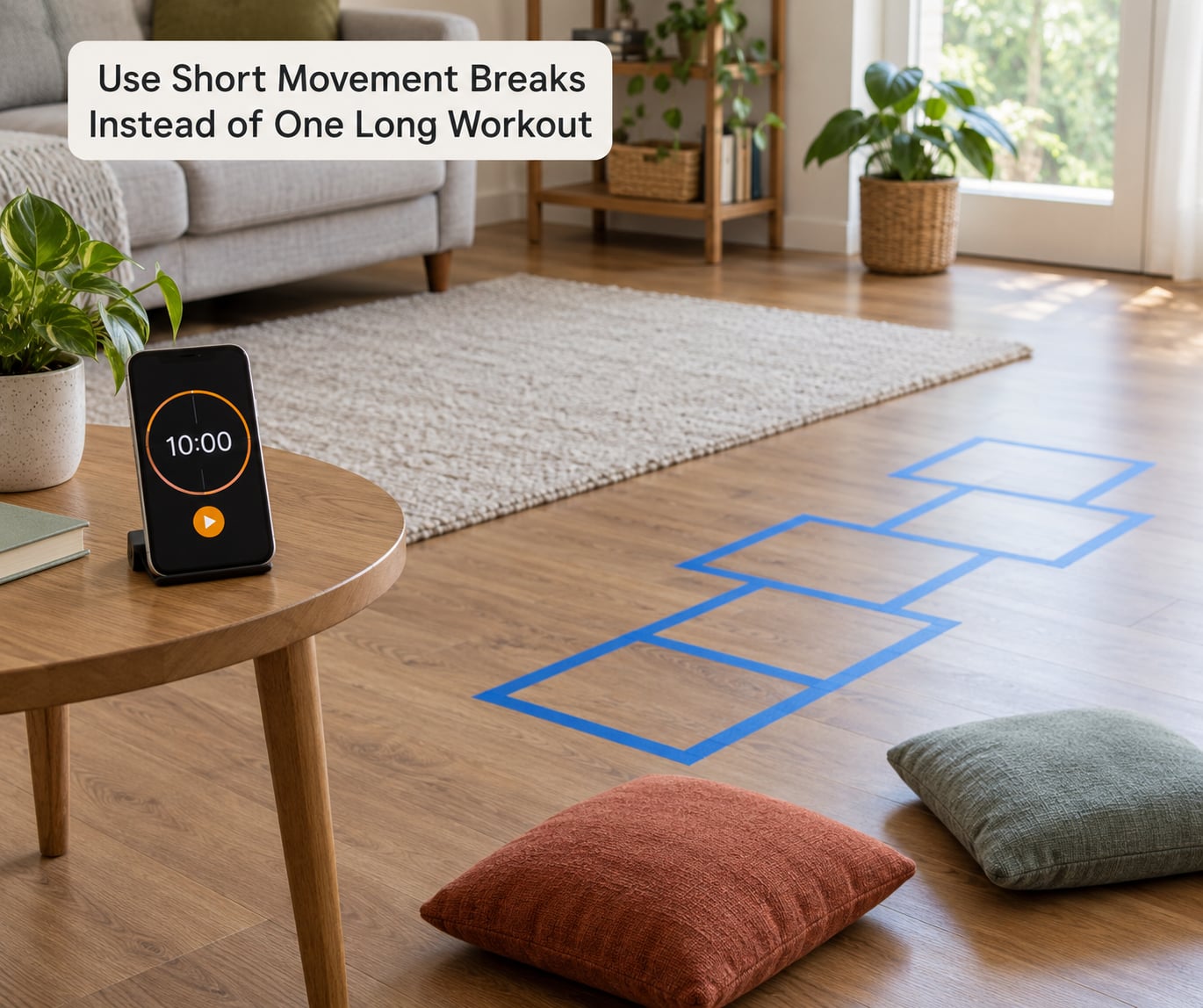
Five minutes is enough to shake off a long sitting block. Ten is a real workout. Fifteen is a good day. Knowing which one you are doing removes most of the argument.
Five minutes: five squats holding a counter, five wall push-ups, ten calf raises, a slow shoulder roll, and a plank while a song plays. Do it before the school run, after a long drive, or between sitting blocks of your own work.
Ten minutes: a three-minute warm-up of marching, arm circles, and gentle side bends. Then two minutes each of squats, incline push-ups on a counter, reverse lunges holding a chair, a plank, and fast feet in place. Then two minutes of stretching, breathing slowly. This is the session most adults should aim for on a weeknight.
Fifteen minutes: the same shape, run as four rounds of three exercises with a 30-second rest between each, then a two-minute cool-down. Longer, still no equipment.
Keep the shape the same every time: warm-up, main activity, cool-down. The warm-up is not optional if anyone is jumping, and skipping it is one of the most common ways a good habit turns into a pulled muscle.
Slot sessions around the day rather than the clock. A ten-minute block right after dinner often goes down better than one in the evening, when everyone is past their energy peak. Naps, after-school snack, and the walk back from the school bus are all reliable slots.
Check whether the length felt manageable. The test is whether you would do it again tomorrow. If you finished feeling like you needed another five minutes, that is the right size. If you spent the whole session wishing it was over, cut it in half next time rather than skipping.
Build a Repeatable Weekly Movement Routine
New sessions need new decisions, and decisions are what kill routines. Two or three familiar formats you never have to think about will beat a rotating plan of twelve.
Put the sessions on a calendar you actually look at. Mark them the same way you mark swimming lessons or the bin collection, with a real time attached. A session with no time on the calendar is a wish.
Here is a workable week for a household with school-age kids and one nap still in the afternoon.
| Day | Time | Session | Who |
|---|---|---|---|
| Monday | 7:00 am | 10-minute no-equipment circuit | Parent alone |
| Tuesday | After snack | Dance party, 15 minutes | Everyone |
| Wednesday | 7:00 am | 10-minute no-equipment circuit | Parent alone |
| Thursday | After dinner | 20-minute family obstacle course | Everyone |
| Friday | After snack | Streaming session or free play outdoors | Kids, parent joins if free |
| Saturday | Morning | Stroller or walk, 30 minutes | Everyone |
| Sunday | Before bed | Stretch and breathing, 10 minutes | Everyone |
Rotate three familiar activities: a body-weight circuit for you alone, a dance party for the house, and one longer weekend outing. Rotate nothing more.
Keep backups for hard days. A ten-minute walk with the dog, a trampoline session on the driveway, or an indoor hop grid taped to the floor keeps the streak alive when everyone is ill or the mood is flat. A backup that takes under two minutes to start matters more than an ambitious session you skip.
How do you know the routine worked? It is realistic for several weeks running, and you still would describe it as normal rather than as a thing you are forcing yourself through. If you are dreading it by week three, the sessions are too long or too ambitious.
Lower the Pressure and Make the First Step Easy
The hardest part is starting, and starting gets easier when the first step is tiny. Lying on the floor counts. Putting on shoes counts. Ten seconds counts.
Set a deliberately small target for the first fortnight. Two sessions a week. Five minutes. If you exceed it, that is a good week. Aim for the version of yourself on your worst day, not your best one, because the worst day is the one that decides whether the habit survives.
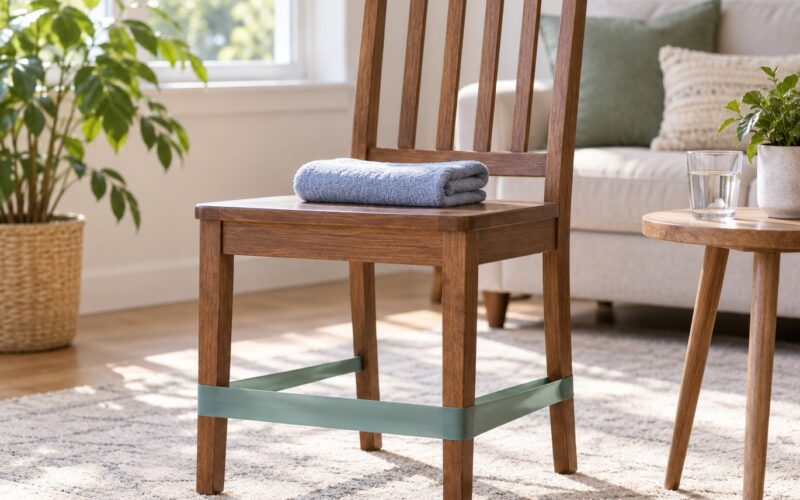
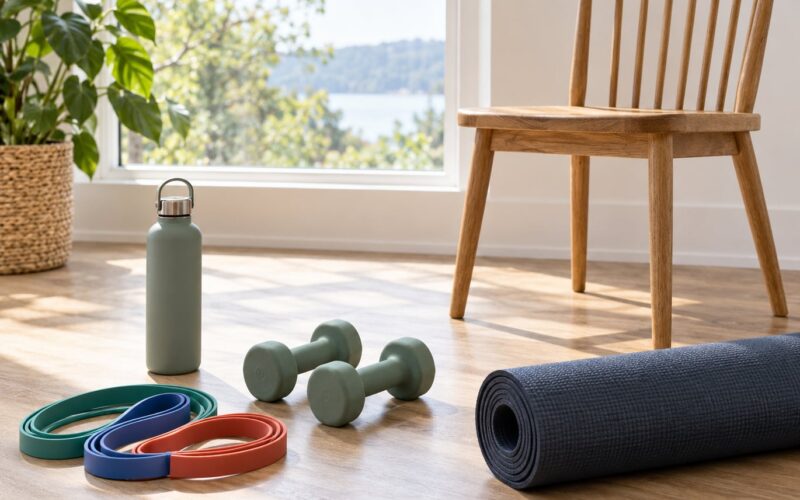
Use visible cues. Shoes by the door, a resistance band on the back of the door, the mat already rolled out. Reducing the distance between the cue and the action removes the chance to talk yourself out of it.
Invite, do not instruct. Tell the kids what you are doing and let them join. A child who refused to do a circuit at age four will often join unprompted at seven, and being asked feels like homework while being invited feels like play.
Track consistency, not perfection. A row of marks on a calendar for each session tells the true story. Days you missed are data about an over-ambitious plan, not a moral failing.
Check the first-step habit once a week: does starting feel easier than it did three weeks ago? If it does, the plan is working even if the minutes are small. If it does not, your first step is still too big. Shrink it until it feels almost too easy, then let it grow.
Common Mistakes
Setting a time goal that a child cannot accommodate. The classic version is an hour on the calendar. Kids do not read calendars. Fix: two or three short blocks a day, each one short enough that a fussy afternoon does not cancel it.
Treating exercise as punishment or as a trade. If moving is the price of screen time, kids learn that movement is punishment, and the habit never sticks. Fix: move alongside them, make it the fun part of the day, and keep screen time as its own conversation.
Competing with your kids. Race games are fun until a parent wins every time, and a toddler who always loses stops asking. Fix: let them set the terms. They choose the game, they set the rules, you keep score at their level.
Skipping the warm-up to save time. Ten seconds of marching, arm circles, and gentle side bends is the cheapest injury prevention in the article. Fix: make it the first thing on the timer, so it never feels optional.
Using an unsafe space. Clear the floor, push furniture back, keep the timer and water out of walking routes. Fix: a two-minute reset of the room at the start of the session.
Abandoning everything after one bad day. A missed Tuesday is a missed Tuesday. Fix: restart at the next scheduled slot, and keep a two-minute backup so a “bad day” never becomes a missed week.
Two habits keep the rest of it standing. Move at the same time daily so it attaches to something you already do, and track it visually on a calendar. Both are small. That is why they hold.
Frequently Asked Questions
How much exercise do parents need when they have kids at home?
Adults are generally advised to get 150 to 300 minutes of moderate activity a week, which sounds impossible until you spread it out. Three 15-minute sessions across the week covers part of it, and the rest can come from walks you already take. Ten minutes of bodyweight movement counts as a session. The point of how to make time for exercise with kids at home is not hitting a number on a good week, it is having something small you can repeat on an ordinary one.
What can toddlers do for exercise at home?
Toddlers need plenty of free movement, and almost none of it needs to be structured. Walking, climbing stairs, crawling through a tunnel of chairs, throwing a soft ball, and chasing a bubble all count as activity for a child this age. Keep the space soft, remove anything small enough to swallow, and never leave a toddler unattended on climbing equipment or moving furniture. Let them lead, and join in if you want your own session at the same time.
How can I exercise while taking care of my kids?
You cannot take your eyes off a young child, so put your session where you can see and hear them. Lay out a mat with a basket of toys, a few cushions and a board book within arm’s reach, then do intervals where you pause whenever needed. A five-minute session with three pauses still counts. Baby on the floor with you, toddler building towers within sight, school-age kids out playing, and the fifteen minutes you get is a real result rather than a failure.
What if my child does not want to exercise with me?
Do not force the join. Tell them what you are doing, keep going, and let them come to it. A child who refused a circuit at four will often join at seven without any prompting. In the meantime, movement does not have to be shared: a walk to the shop, dancing in the kitchen while dinner cooks, or an obstacle course through the hallway counts for you even if the kids are watching from the sofa. Model it rather than negotiating it.
When should I stop exercising and contact a health professional?
Stop and speak to a doctor or physiotherapist if you feel pain, dizziness, chest pain, unusual shortness of breath, or anything sharp during or after a session. Pregnancy, recent birth, surgery, an injury, or ongoing joint problems mean you should check what is safe with a professional before starting or progressing anything. The same applies to a child with an existing heart or joint condition, who should get exercise advice from their own paediatrician. General movement is safe for most families, but individual histories are a clinician’s call.
Conclusion
To make time for exercise with kids at home, find the windows that are already guaranteed, keep each session short enough that a bad afternoon cannot cancel it, and repeat a small number of formats you never have to think about. Consistency over intensity is the whole trick, and ten real minutes beats an hour that never happens.
Start tonight: pick one window, clear a safe spot on the floor, and put a ten-minute session on the calendar for tomorrow. Do it three times this week and adjust next week from what actually happened.
Children ages five to 17 are generally recommended to get about 60 minutes of moderate-to-vigorous activity a day, and your own weekly target is 150 to 300 minutes of moderate activity. You will rarely hit either perfectly while parenting. Repetition and a few good minutes a day, with the right start, will still move you toward both.