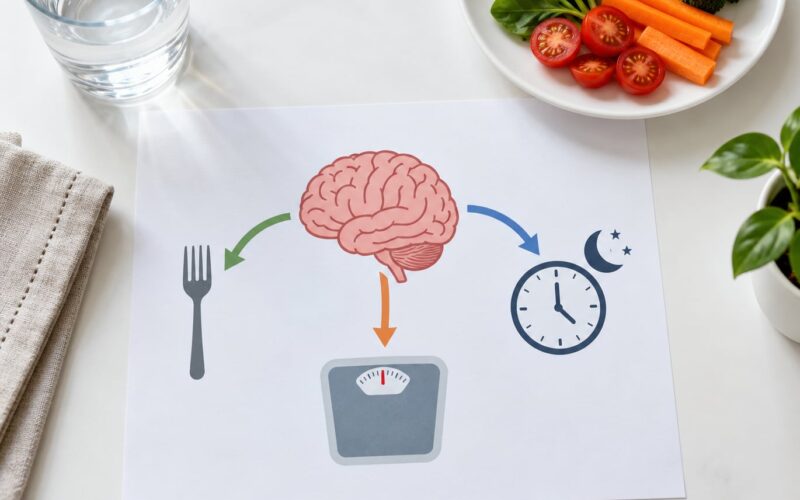
If you have lost weight easily in the past and now feel stuck, you are probably not doing anything wrong. Perimenopause changes body composition, energy use, appetite and sleep at the same time, and a deficit that worked in your thirties often stops producing fat loss in your forties and fifties.
That is why weight loss is harder during perimenopause for so many women. The physiology is real, and it is also only part of the picture, which matters, because it means there is more than one lever to pull. Below I break down what changes, what the research generally shows, and which habits have the best odds of working without turning your life into a punishment.
This is general health information, not medical advice. If your weight is shifting quickly in either direction, talk with your doctor or a registered dietitian rather than trying to out-run it on your own.
Table of Contents
- What Happens During Perimenopause?
- Why Weight Loss Is Harder During Perimenopause
- How Do Hormonal Changes Affect Weight Loss?
- Does Metabolism Really Slow During Perimenopause?
- How Do Sleep and Stress Make Losing Weight Harder?
- What Other Changes Can Interfere With Weight Loss?
- How Can You Support Weight Loss Safely During Perimenopause?
- How Much Weight Loss Is Realistic During Perimenopause?
- When Should You Talk With a Healthcare Professional?
- Frequently Asked Questions
- Is it normal to gain weight during perimenopause?
- Why is my belly getting bigger even when my weight is stable?
- How long does perimenopause last, and when does weight loss get harder?
- Should I try a restrictive diet during perimenopause?
- Can hormone therapy help with perimenopause weight loss?
- What Should You Do First?
What Happens During Perimenopause?
Perimenopause is the menopausal transition, the stretch of years before menopause when ovarian estrogen and progesterone production stops being predictable. Cycles get irregular, periods get heavier or lighter, and hormone levels swing up and down rather than drifting smoothly downward. For many women it starts in the mid-forties, though it can begin earlier or later.
Perimenopause is not the same as menopause. Menopause is officially diagnosed once twelve consecutive menstrual periods have been missed, and it marks the end of the transition rather than a phase of it. Most people stay in perimenopause for somewhere between four and seven years, and the final stretch is often the least predictable, with the longest gaps between periods.
Common symptoms during this window include hot flashes, night sweats, disrupted sleep, brain fog, mood swings, changing breast tenderness and shifts in libido. Not everyone gets vasomotor symptoms, and the intensity varies a lot. What many people notice first is not a hot flash but a change in how their clothes fit, particularly around the middle.
Why Weight Loss Is Harder During Perimenopause
Weight loss gets harder during perimenopause because five things shift at once: hormone levels change, body composition moves away from muscle, sleep breaks down, stress and mood fluctuate, and everyday activity or medications change. Each one works on its own. Together, they reduce how much fat you lose per calorie cut and how well you can stick to it.
Here is the short version of the five factors, with the rest of this article unpacking each one.
- Hormonal shifts. Fluctuating estrogen changes where fat is stored, how appetite is signalled and how insulin works.
- Changes in body composition. Muscle mass declines gradually and faster after menopause, and muscle is the tissue that burns most of your energy at rest.
- Sleep disruption. Night sweats and fragmented sleep raise hunger cues the next day and make training and meal planning harder.
- Stress and mood. Cortisol, caregiving load, work pressure and the sheer frustration of a plateau all push toward stress eating and less movement.
- Activity and medication changes. A desk-heavy stretch of life, an injury, or a medication that increases appetite can quietly erase a deficit.
How Do Hormonal Changes Affect Weight Loss?
Estrogen does more than control the reproductive cycle. It helps regulate fat distribution, insulin sensitivity, appetite signalling and energy expenditure, so a hormone that swings unpredictably for years touches all four at once.
One of the clearest effects is where fat settles. Falling estrogen tends to move storage away from the hips and thighs and toward the abdomen, which is the change most people describe as the worry waist. Visceral fat around the organs behaves differently from fat under the skin: it responds to insulin and stress hormones more readily and releases inflammatory signals, so it is worth tracking with a tape measure rather than only a scale.
Progesterone matters too. It rises and falls on its own cycle during the transition, and higher levels in the luteal phase can increase water retention and appetite, which shows up as a few pounds of fluctuation that comes and goes across a month.
Insulin is the piece most people have heard of. When insulin resistance rises, meals send blood sugar up faster and it comes back down less efficiently, so hunger arrives sooner and energy dips harder after lunch. None of this makes fat loss impossible. It does mean the same approach that worked before may produce a smaller result for the same effort.
Does Metabolism Really Slow During Perimenopause?
Metabolism does not switch off in one dramatic step. It drifts, and part of that drift is body composition rather than a broken engine.
Muscle burns far more energy at rest than fat does. When muscle mass declines and fat mass replaces some of it, resting energy expenditure falls even if you have not changed anything at all. Sarcopenia is the clinical name for that muscle loss, and sarcopenic obesity describes having lost muscle while carrying more fat, which is a common pattern midlife and one that a scale cannot show you.
Energy expenditure has three parts: your basal or resting rate, the thermogenic effect of food you eat, and the energy you burn through movement and exercise. Movement is the piece that shrinks quietly. Spontaneous activity, the walking, carrying, standing and housework you do without planning, often drops with a desk job, a demanding caring role or low energy. That decline needs no diagnosis to show up on a monthly trend.
Two honest caveats. Popular metabolism tests are noisy, and no single number from a wearable or a clinic can tell you what will happen on a plan. And the effect size for individuals is smaller than the internet suggests. Research summaries commonly put average midlife gain at roughly 1.5 pounds a year between ages 45 and 65, which is meaningful over a decade but far from the sudden transformation some headlines imply.
How Do Sleep and Stress Make Losing Weight Harder?

Sleep is the quiet one. A single short night barely registers, but repeated short nights do, and perimenopause delivers them through night sweats, restless legs and early waking. Poor sleep raises ghrelin, the hormone that makes you hungry, and blunts leptin, the one that tells you you are full. It also makes cravings more attractive, and it makes a hard session in the gym feel like a chore.
Stress sits on top of that. Cortisol promotes central fat storage and, when it stays high, it drives comfort eating. This is not a character flaw. A week of poor sleep, a demanding project and four nights of broken sleep is a physiological setup for eating more, and telling someone to simply stop doing it is not a plan.
You do not need a perfect routine. A consistent wake time, a cooler bedroom, alcohol and late meals pulled back, and a ten-minute wind-down are small things that compound. Stress support can be just as ordinary: a walk with no podcast, one scheduled hour that belongs only to you, or a chat with someone who is not going to comment on your plate.
What Other Changes Can Interfere With Weight Loss?
Some of the biggest obstacles in this decade have nothing to do with hormones.
- Reduced everyday movement. Routines change, joints get grumpy and recovery takes longer, so activity drops before you notice.
- Caregiving and work load. Interrupted sleep and unpredictable meals are common and hard to plan around.
- Medications. Some antidepressants, antipsychotics, steroids, beta-blockers, epilepsy medicines, diabetes drugs and certain antihistamines are known to affect weight or appetite. Never stop or change a prescription on your own; bring the list to an appointment.
- Underlying conditions. Thyroid dysfunction, anemia, sleep apnea and other health issues can overlap with or mimic menopausal symptoms.
- Social support and mood. Depression, anxiety and loneliness change motivation long before they change a nutrition plan.
It is also worth naming the reverse pattern. Some people lose weight without trying during perimenopause, often alongside poor appetite, low mood or digestive changes, and it frightens them. Unexplained weight loss deserves a medical appointment rather than a self-diagnosis.
How Can You Support Weight Loss Safely During Perimenopause?
Nothing below is a prescription, and your own clinician may have specific advice for you. These are the priorities that tend to hold up when the plan is built for a body in transition rather than for a 25-year-old.
- Eat regularly and include protein at each meal. Protein holds satiety and protects muscle during a deficit. Mainstream guidance for midlife adults commonly lands around 1.0 to 1.2 grams per kilogram of body weight per day, and your clinician may adjust it for kidney health or other conditions.
- Pair carbs with protein, fat or fibre. This flattens the blood sugar swings that drive mid-afternoon snacking, without cutting out a whole food group.
- Strength train two or three times a week. Loads that challenge you, controlled reps, and enough recovery. Muscle is what keeps your resting energy expenditure from sliding further.
- Keep easy movement daily. Walking counts. The aim is offsetting the spontaneous activity you have lost, not chasing a number on a watch.
- Protect sleep as a health goal, not a reward. Treat night sweats as a symptom worth discussing with a clinician rather than something to white-knuckle through.
- Track trends, not daily readings. Weight, waist circumference, how your clothes fit and your strength on a fixed movement tell a better story than one morning on the scale.
What to skip: crash diets, very low calorie targets, fasting windows that leave you lightheaded at your desk, and any plan you cannot keep up in week six. Restriction is the most common route to the plateaus people describe online, and it usually costs muscle, which makes the next attempt harder. If you want structure, a registered dietitian can build one around food you actually like.
How Much Weight Loss Is Realistic During Perimenopause?
There is no universal perimenopause weight loss target, and any source promising one is selling something. What matters is whether the direction of travel is sensible and whether the way you lose it protects muscle.
| What you track | Healthy progress looks like | A reason to check in with a clinician |
|---|---|---|
| Scale weight | A slow downward trend over several weeks, around 0.25 to 0.75 kg a week | Rapid change of several kilograms in weeks without trying |
| Waist circumference | Waist shrinking even when weight holds steady, meaning recomposition | Waist rising steadily while weight is flat |
| Waist-to-height ratio | Aiming below roughly half your height in centimetres | Any sustained rise during a period you are not expecting it |
| Strength and energy | Stable or improving, meals steady, sleep improving | Fatigue, dizziness, falling strength alongside weight loss |
| Cycles and symptoms | Periods becoming less frequent, hot flashes easing | Bleeding that is heavy, irregular or between periods |
Slower progress is often the normal shape of this stage. Weight can sit stubbornly still while fat leaves and muscle stays, which is exactly why a waist measurement and a strength test belong next to the scale. Judge a plan over eight to twelve weeks, not eight days.
When Should You Talk With a Healthcare Professional?
Book an appointment rather than waiting it out if you notice any of the following, and say plainly that you are in the menopausal transition and something has changed.
- Weight changing quickly in either direction without trying.
- Bleeding that is heavy enough to soak through protection hourly, bleeding between periods, or bleeding long after your periods have stopped.
- Difficulty eating, a persistent drop in appetite, or food feeling impossible to tolerate.
- Severe or frequent hot flashes and night sweats that disrupt your days.
- Mood symptoms such as persistent low mood, anxiety or loss of interest in things you used to enjoy.
- Dizziness, fainting, palpitations, or unusual shortness of breath when you exert yourself.
- Brain fog or exhaustion bad enough to affect work or driving.
- Symptoms that overlap with a possible thyroid problem, where a clinician may want to look beyond a single TSH test to include T3 and T4.
A visit is also the right place to ask about menopause hormone therapy, about GLP-1 medications and their side effects, and to review everything you take for weight effects. Bring a written list. None of these conversations is something to do from an article, however careful the article is.
Frequently Asked Questions
Is it normal to gain weight during perimenopause?
Yes, some weight gain is common during the menopausal transition, particularly around the abdomen, and average gain across midlife is modest at roughly 1.5 pounds a year. What varies widely is how noticeable it feels and where it shows. Muscle loss, insulin resistance, sleep disruption and lower everyday activity all play a part, so a plateau here is usually not a failure of effort.
Why is my belly getting bigger even when my weight is stable?
That pattern usually means fat is redistributing while muscle is slowly declining. Falling estrogen shifts storage toward the abdomen, and less muscle means less energy burned at rest, so total weight can stay level while your waist grows. A tape measure taken at the same point each month is more informative than the scale here, and worth mentioning at your next appointment.
How long does perimenopause last, and when does weight loss get harder?
Perimenopause lasts roughly four to seven years for most people, ending once twelve consecutive periods have been missed. Many notice weight becoming harder to lose in the later years, when estrogen has been lowest for the longest and hormone swings are widest, though some feel it from the start. Timing varies a lot, so use your own pattern of cycles and symptoms as the guide.
Should I try a restrictive diet during perimenopause?
Usually not. Aggressive restriction tends to cost muscle rather than fat in this stage, and muscle is what protects your metabolism long term. Steady meals with protein at each meal, fibre, and movement you enjoy are more durable and easier to sustain. If you have already tried strict approaches and they keep ending the same way, a registered dietitian can help you build a plan without deprivation.
Can hormone therapy help with perimenopause weight loss?
Menopause hormone therapy is not a weight loss treatment and is not offered as one. Its strongest evidence is for symptom relief, especially hot flashes and night sweats, and better sleep often makes appetite and energy easier to manage. Whether it is right for you depends on your history and risk profile, so discuss it with a clinician rather than starting or stopping it based on weight alone.
What Should You Do First?
Start by watching, not by cutting. Track your weight weekly, your waist monthly, and your sleep and cycle pattern alongside them, so you can see a trend rather than a bad morning.
Then keep meals steady with protein at each meal, add two or three strength sessions a week plus daily walking, and protect sleep as seriously as you would any other goal. If a symptom on the warning list shows up, or your weight shifts quickly in either direction, make the appointment. That is why weight loss is harder during perimenopause for so many women, and it is also why the right approach still works when the punishing one stops.