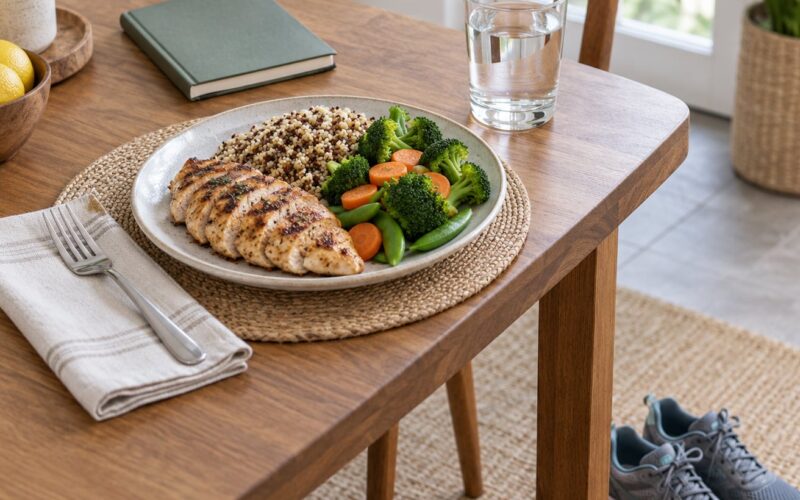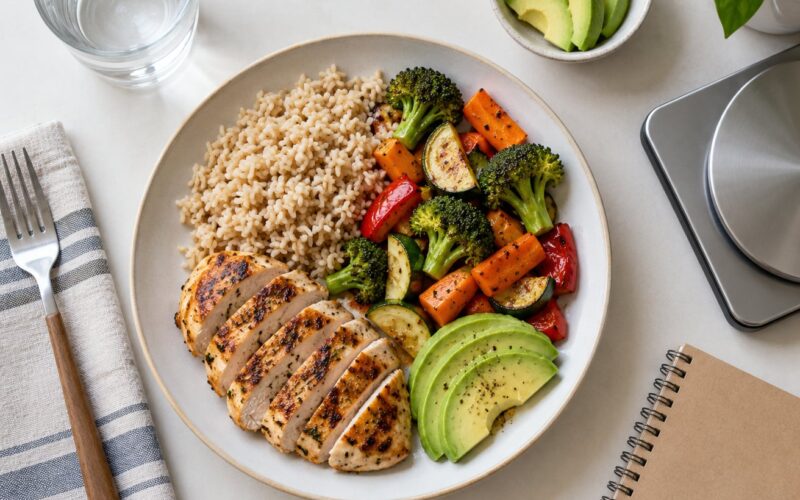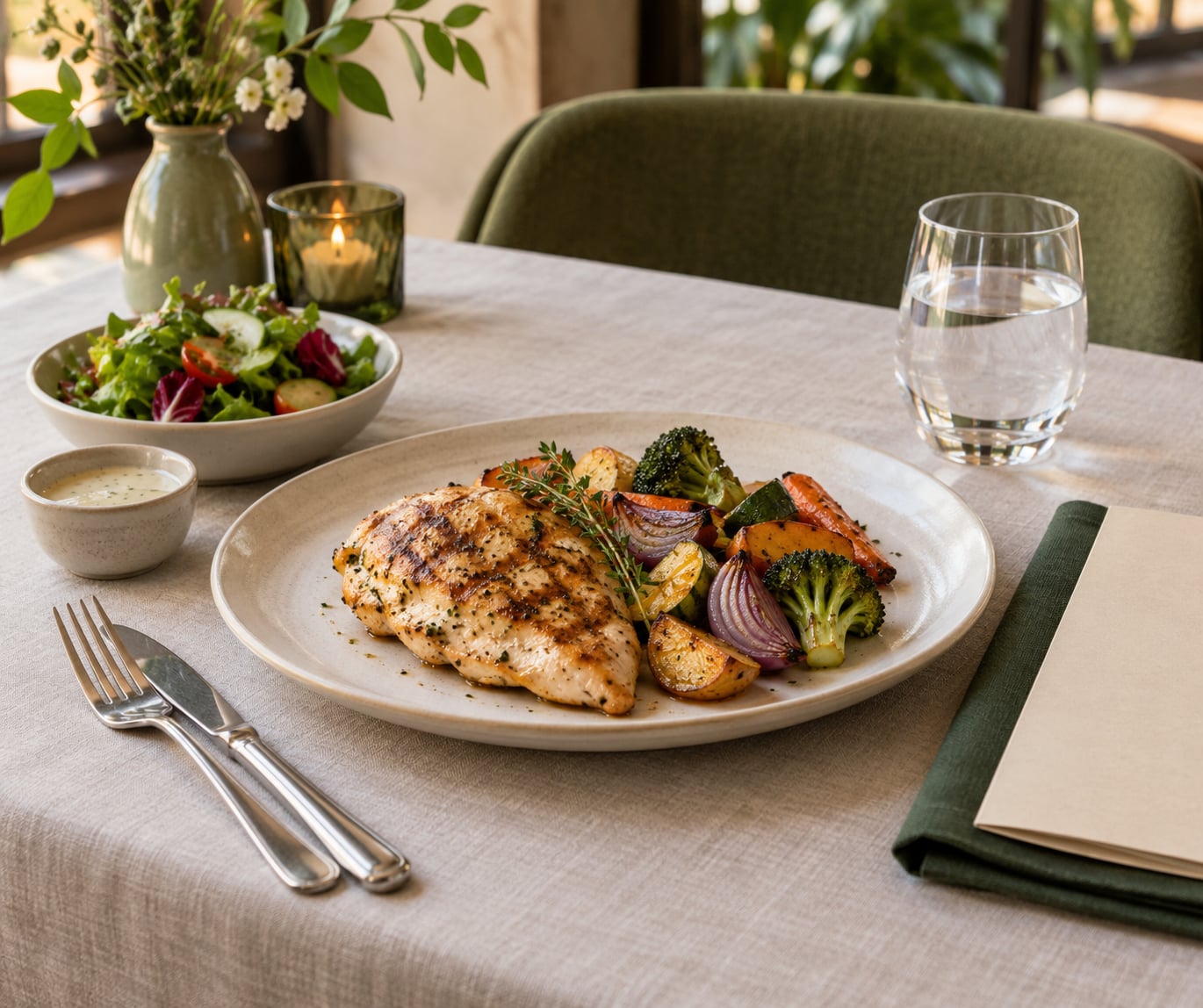
How to eat out and stay in a calorie deficit is mostly a handful of repeatable habits, not a test of willpower. The method is unglamorous: judge your week rather than your Tuesday, decide the order before you leave home, and hold the meal to about six habits that anyone can remember.
The habit that trips most people up is skipping lunch so dinner feels free. It backfires almost every time, because arriving hungry makes the appetizer, the bread basket and the side you did not plan for look far better than they are. Eat normally beforehand instead, keep the earlier meals slightly lighter and higher in protein, and let the restaurant meal be one meal instead of the whole story. Everything below is updated for 2026 and written for adults who are already tracking roughly what they eat.
Table of Contents
- What You Need
- Step-by-Step: How to Eat Out and Stay in a Calorie Deficit
- Plan the Meal Before You Leave
- Choose a Lighter Main Course
- Control Portions Without Skipping the Meal
- Choose Sauces, Dressings, and High-Calorie Extras Carefully
- Eat Slowly and Mindfully
- Record the Meal Without Guessing Too Much
- Common Mistakes
- Frequently Asked Questions
- Can I stay in a calorie deficit when I eat at restaurants?
- How do restaurants affect a calorie deficit?
- Which restaurant meals are easiest to estimate in calories?
- How can I reduce calories when ordering takeout?
- What should I do after eating a high-calorie meal?
- Should I exercise before or after eating out?
- Conclusion: Start With One Easy Change
What You Need
Nothing special. No meal kit, no supplement and no forbidden food list. Five ordinary things are enough, and most of them you already have.
- Your usual target. The calorie number you already work with day to day, or an estimate of your maintenance calories. This guide does not set a number for you, because a target depends on your size, sex, activity and health history.
- A personal ceiling for the meal. Pick a figure you want the restaurant meal to land near before you leave, so ordering has a reference point.
- Menu access. Most places publish menus online, and the online version is often longer than the printed one in the room, which is exactly where the grilled options hide.
- A way to log. Whatever you already use: an app, a notes file, a paper diary. The medium does not matter.
- One protein snack, optionally. Greek yogurt, eggs, cottage cheese or a protein bar, eaten one to two hours beforehand if you tend to arrive starving.
If you have no idea what your target should be, that is a good question for a registered dietitian rather than a forum. Anyone with a medical condition, a history of disordered eating, or who is pregnant should get individual advice from a doctor or a registered dietitian before making big changes.
Step-by-Step: How to Eat Out and Stay in a Calorie Deficit
Six steps, in the order you actually perform them. The whole routine takes about ten minutes of attention spread across an afternoon and an evening.
Plan the Meal Before You Leave
Open the menu on your phone and choose the dish before hunger makes the decision for you. Pick a cuisine and a main course, then decide whether tonight is a light meal or a substantial one, and set a rough ceiling for what you will order.
Planning also lets you pick the restaurant when you have a choice. Somewhere you can see vegetables, grilled items and straightforward protein is easier to stay on track than a place where every dish arrives fried and swimming in sauce.
Do not try to bank calories for this meal. The common reflex is eating 200 calories or nothing at lunch so dinner feels earned, and it is the single most counterproductive thing in this whole guide. You arrive ravenous, the first basket of bread is gone before your drink arrives, and hunger plus an unfamiliar setting is a bad combination for portion control.
A better version: eat your normal meals that day, keep them a little lighter and higher in protein, and drink water through the afternoon. If you usually eat breakfast and lunch, keep them. If a small protein snack fits an hour or two before, have it.
Choose a Lighter Main Course
Scan the menu for a dish built around a component you can identify: a piece of protein, a pile of vegetables, beans or lentils, a starch, or a salad with something substantial on it. Lentil soup with a side salad, grilled chicken with vegetables, a fish taco with a couple of toppings, or sushi with a lean piece and a little rice are all easy to reason about.
Preparation matters more than ingredients. Grilled, roasted, baked, steamed and poached usually mean less added fat than fried, battered or creamed. A dish described as simply grilled, with a sauce on the side, gives you control that a dish described as delicious tells you nothing about.
Restaurant portions run roughly two to three times a home portion, and an analysis published in the Journal of the Academy of Nutrition and Dietetics put the average restaurant meal near 1,200 calories. Treat every number you see as an estimate rather than a fact, because portions and recipes vary so much between kitchens.
Control Portions Without Skipping the Meal
The cleanest move is to order less rather than to eat and then feel bad about it. Ask for a side instead of a large entree, order a smaller portion, or split a dish with the person across the table. Two people sharing a pizza and a salad often end up with less each than one person ordering both.
If you order the entree, decide before your first bite whether you want the whole plate. If not, box half immediately, before you start, and put the container out of sight. Once it is on your plate, you have already decided to eat it.
Another approach is the one-indulgent-item rule. Order the thing you actually want, then fill the rest of the plate with vegetables or a salad. That keeps the meal social and normal, which matters more than the calories.
Leaving food behind is allowed. Nobody at that table is grading your leftovers, and pushing a plate to get rid of it is how a moderate meal turns into a heavy one.
Choose Sauces, Dressings, and High-Calorie Extras Carefully
Added fat is where restaurant calories hide. Creamy sauces, butter-based preparations, fried items, large pours of cheese, croutons, and sugary drinks can add several hundred calories to a dish that looks perfectly sensible.
Ask for sauce or dressing on the side and use only what you need. That one request regularly saves 200 to 400 calories on a typical entree. Swap a fried side for vegetables or a salad, add vegetables to a dish that arrived bare, and choose water or sparkling water instead of soda or a sweetened drink.
None of this requires pretending you know a restaurant recipe. You are not calculating anything, you are just removing the things you would not add at home.
Eat Slowly and Mindfully
Fullness signals take about twenty minutes to register, so speed matters more than willpower. Pause before ordering rather than ordering the moment the menu lands, put the phone down where you can, and take a glass of water between courses.
Check in halfway through the main course. If you are satisfied, stop there and box the rest before you start picking at it. If you are still hungry, that is useful information: order a side salad or a second piece of protein rather than more of the same.
This part feels slower than it sounds, and it is the difference between eating to a target and eating to a mood.
Record the Meal Without Guessing Too Much
Log the meal even when it feels untrackable, because an approximate entry you can see is worth far more than a skipped day. Note what you ordered, roughly how much of it you ate, the preparation method, the sauces, the drinks, and how much stayed on the plate.
Use the restaurant nutrition information when the chain publishes it. Chain menus are standardized and are the most reliable numbers you will find, which is why fast food is often the easiest place to stay on track, not the hardest.
For an independent restaurant, estimate instead. Use hand portions: a palm of protein is roughly 4 ounces, a fist of starch or vegetables is about a cup, and a thumb of fat or oil is about a tablespoon. Then add 10 to 20 percent, because restaurant portions and added oil run above your honest guess far more often than below it.
Judging the entry honestly matters more than nailing it. A generous estimate you trust is far more useful than a precise number you invented.
Common Mistakes
Most restaurant meals that blow a week did not happen because someone ordered dessert. They happened because of a handful of predictable moves.
Saving the whole day for one meal. Skipping lunch to bank calories leaves you starving, and a starved person orders more, eats faster and clears the basket. The correction is simple: eat your usual meals, keep them slightly lighter and higher in protein, and treat the dinner as one meal rather than the entire budget.
Ordering every side on the menu. Two or three shared starters plus a basket of bread can add 500 calories before the entree arrives. Ask for no bread, or one appetizer to share, and order the sides you would actually eat at home.
Trusting restaurant calorie figures exactly. Published numbers describe a standardized recipe, while your plate came from one kitchen on one evening with one cook. Add the 10 to 20 percent cushion, and remember that the sauce and oil are often counted separately or not at all.
Trying to earn the meal back with exercise. A long punishing session after dinner burns a few hundred calories at most and often ends the night hungrier than it started. Walking for fifteen or twenty minutes is pleasant and useful; punishment is not compensation.
Expecting every bite to be perfect. All-or-nothing thinking is what turns one restaurant meal into a ruined month. Progress is measured over weeks, and a single meal has almost no effect on that total.
Counting only the food and forgetting the drinks. Alcohol runs about 7 calories per gram, and sugary drinks are usually more calories than a whole side salad. Have water alongside, or choose a lower-calorie option, and you have already done the easy part.
Two habits worth keeping from all of this: decide the order before you leave the house, and box half the plate before your first bite. Those two decisions do more work than any food rule.
Frequently Asked Questions
Can I stay in a calorie deficit when I eat at restaurants?
Yes, as long as your deficit is judged across a week rather than a single evening. Keep your usual meals on the day, order a dish you can reason about, control the portion, and log it approximately. A restaurant meal of roughly 1,000 to 1,500 calories changes the weekly average far less than people fear. For a target built around your own body and history, ask a registered dietitian.
How do restaurants affect a calorie deficit?
Restaurant meals tend to run two to three times the calories of the same dish at home, because portions are larger and more oil, butter, cream and sugar get added. You also lose the nutrition information that usually makes tracking easy, and social pressure pushes sides and drinks onto the table. None of that ruins a deficit, but each one adds to a single evening that is already larger than a normal meal.
Which restaurant meals are easiest to estimate in calories?
Chain restaurants are usually easiest because the recipes are standardized and the nutrition information is published, which makes fast food counterintuitively predictable. Sushi is the other reliable exception, because pieces are countable. Grilled protein with vegetables is easy to eyeball with hand portions. Creamy pasta dishes, fried platters and anything with a pour of sauce on it are the hardest to estimate.
How can I reduce calories when ordering takeout?
Split the order into components you control: a protein, a vegetable and a starch rather than one combined dish. Ask for sauce on the side, swap fried sides for vegetables, choose a salad with dressing on the side and no croutons, and pick water or an unsweetened drink instead of soda. Box half before you start, since takeout portions are usually sized for more than one person.
What should I do after eating a high-calorie meal?
Go back to your normal meals the next day. Do not skip food, restrict heavily or add punishing exercise, because that pattern tends to lead to rebound eating and all-or-nothing thinking. Log the meal roughly rather than abandoning the log for the day, and look at your weekly total instead of one number. If you are unsure how to respond to a pattern of large meals, a registered dietitian can help.
Should I exercise before or after eating out?
Neither is required, and you do not need to earn a restaurant meal with activity. If you enjoy walking, a fifteen to twenty minute walk afterwards is comfortable and useful for digestion and blood sugar. Long sessions right after a large meal can leave you tired and hungry later in the evening. Keep your regular training schedule and treat the walk as a pleasant habit rather than a penalty.
Conclusion: Start With One Easy Change
Start with the menu. Open it before you leave, pick a protein or bean dish with vegetables on the side, ask for sauce on the side, and box half before your first bite. Then write down roughly what you ate and get on with your week.
That is the whole method, and it is repeatable. One restaurant meal does not undo months of work, because your calorie balance is measured in weeks and you control what happens on the other six days. Get a personalized target or help with a medical condition from a registered dietitian or your doctor.