To build a balanced plate for weight loss, fill half an 8- or 9-inch plate with non-starchy vegetables, one quarter with lean protein and one quarter with a high-fiber carbohydrate, then finish with a small serving of healthy fat. No scale, no app, no food diary.
That is the whole idea. Instead of measuring, you divide one plate into visible sections and let the sections do the counting. It works because most weight-change problems are portion problems, not food-choice problems, and a visual rule is far easier to keep up than a running total.
The method has been promoted by dietitians and health systems for years, and The Nutrition Source at Harvard T.H. Chan School of Public Health points to the same broad logic: modest, sustained changes beat dramatic ones that collapse in a month. If you have ever abandoned a plan because it needed a spreadsheet, this is the plan that does not.
Table of Contents
- What You Need to Build a Balanced Plate for Weight Loss
- Step-by-Step: How to Build the Plate in Five Moves
- Start With Half Non-Starchy Vegetables
- Add a Lean Protein
- Choose a Smart Carbohydrate
- Finish With a Small Amount of Healthy Fat
- Check the Finished Plate Before You Eat
- Common Mistakes When Building a Balanced Plate for Weight Loss
- Frequently Asked Questions
- Do I need to weigh my food to build a balanced plate for weight loss?
- How much food should I put on each part of my plate?
- Can a balanced plate include rice, pasta or bread?
- What if I am still hungry after eating a balanced plate?
- How do I use the balanced plate method when eating out?
- Is the balanced plate method suitable for diabetes or another medical condition?
- Conclusion: Start With One Plate Change
What You Need to Build a Balanced Plate for Weight Loss
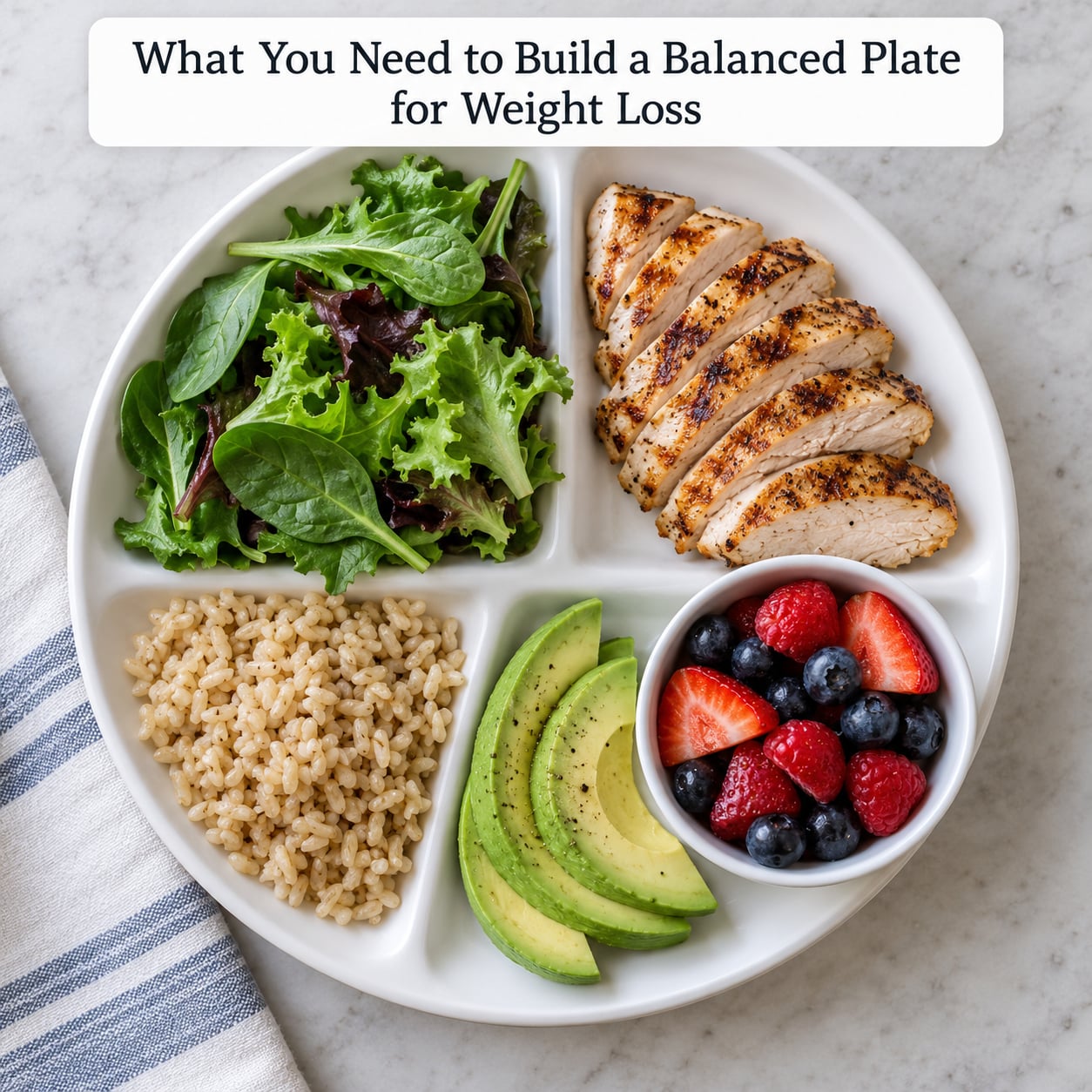
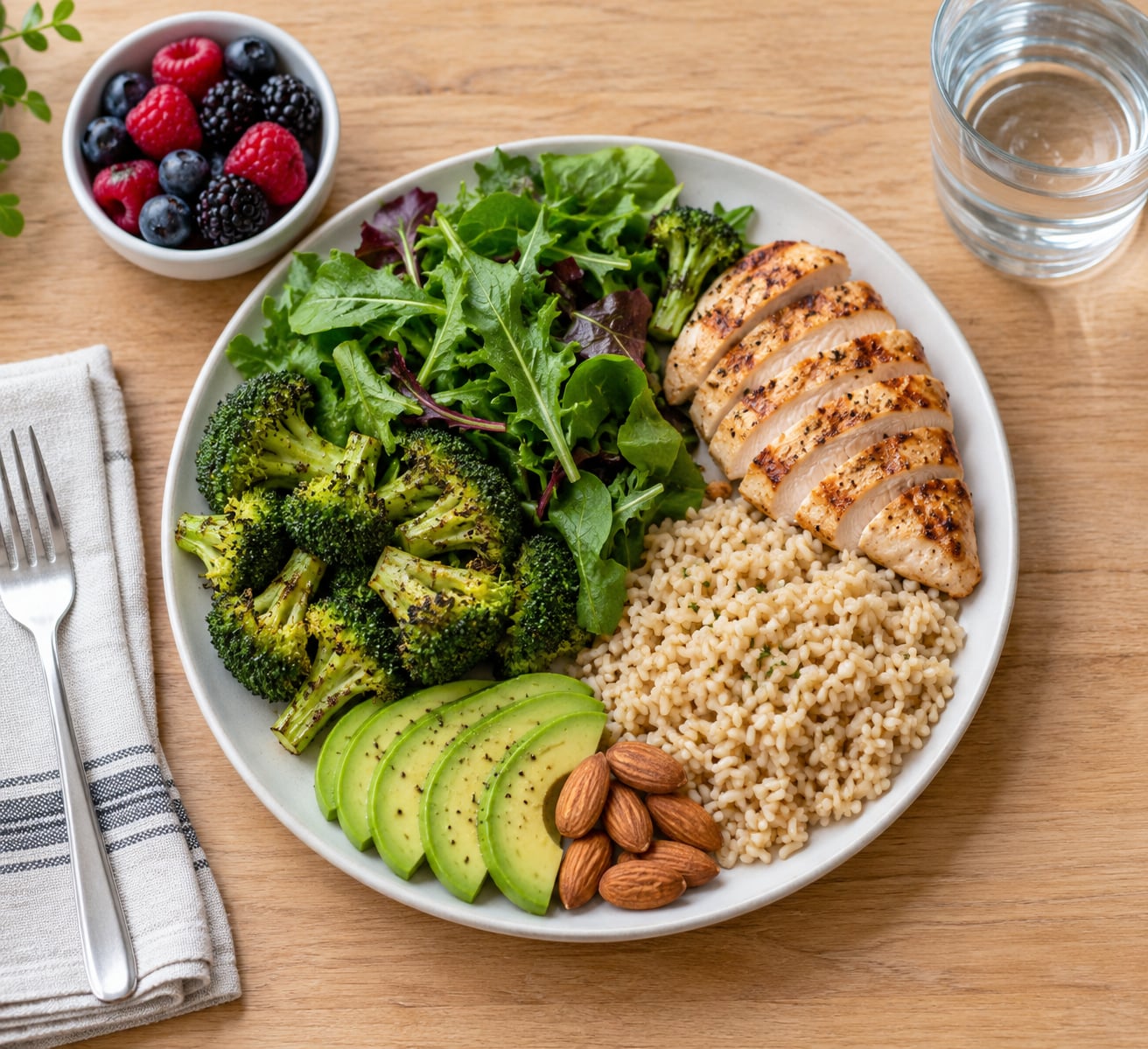
The balanced plate method is a portion-control guide that divides an 8- to 9-inch meal plate into visual sections rather than weighing individual foods. Half goes to non-starchy vegetables, one quarter to lean protein, one quarter to a quality carbohydrate, and a small amount of unsaturated fat gets added on top.
The ratio is the entire method. Fifty percent vegetables, twenty-five percent protein, twenty-five percent carbohydrates. Everything below just fills those three zones with foods you actually like eating.
| Plate section | Share of plate | Rough serving on a 9-inch plate | Foods that fit |
|---|---|---|---|
| Non-starchy vegetables | 50% | Two cupped handfuls, about 2 cups cooked | Broccoli, spinach, kale, zucchini, green beans, cauliflower, cabbage, bell peppers, mushrooms, asparagus, cucumber, Brussels sprouts, tomatoes, radishes, okra, eggplant, turnips |
| Lean protein | 25% | One palm-sized portion, roughly 3-4 ounces cooked | Chicken breast, turkey, lean ground beef, salmon, cod, tuna, eggs, shrimp, cottage cheese, Greek yogurt, tofu, tempeh, lentils, black beans |
| Quality carbohydrate | 25% | One fist-sized portion, about 1 cup cooked | Brown rice, quinoa, barley, farro, oats, whole-grain bread, whole-wheat pasta, sweet potato, white potato, corn, chickpeas, butternut squash |
| Healthy fat | Added on top, not a section | One thumb-sized portion | Olive oil, avocado, almonds, walnuts, cashews, chia seeds, flaxseed, tahini, a drizzle of nut butter |
What you actually need is thinner than most people expect. A dinner plate around 9 inches across is the one tool that helps, and a 10-inch plate works fine too. Anything larger than about 11 or 12 inches quietly works against you, because the same portion looks small on a big plate and people serve themselves from what they see.
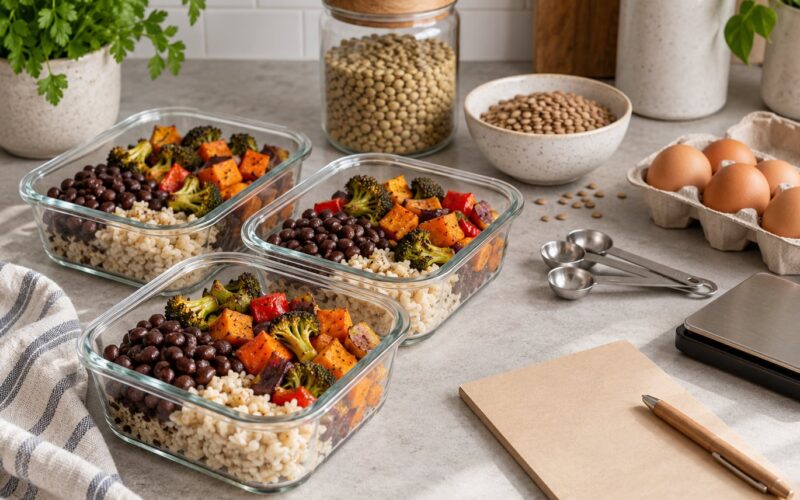
Beyond the plate, a colander or a big salad bowl for vegetables keeps the half-plate easy, a small pot of rice or a rice cooker makes the carb quarter automatic, and a bottle of olive oil you can pour a teaspoon of beats the family jug that appears on the table. Frozen vegetables count, too. Nothing about the method depends on produce being fresh.
Water or an unsweetened drink rounds out the plate. Harvard’s Nutrition Source and other health systems commonly put weight change at roughly 1 to 2 pounds a week, and note that losing about 5% of body weight tends to bring measurable benefits for blood pressure, blood sugar and cholesterol. Progress on the scale is not the only signal worth watching.
Step-by-Step: How to Build the Plate in Five Moves
The build takes five moves, and you can do them in any order. Vegetables first is the habit that works best, because it sets the volume for everything else. From there, adjust the sizes to your hunger, your activity level, your dietary needs and your goal. A 500-pound person moving regularly and a sedentary person sitting at a desk all at rest do not need identical quarters.
Start With Half Non-Starchy Vegetables
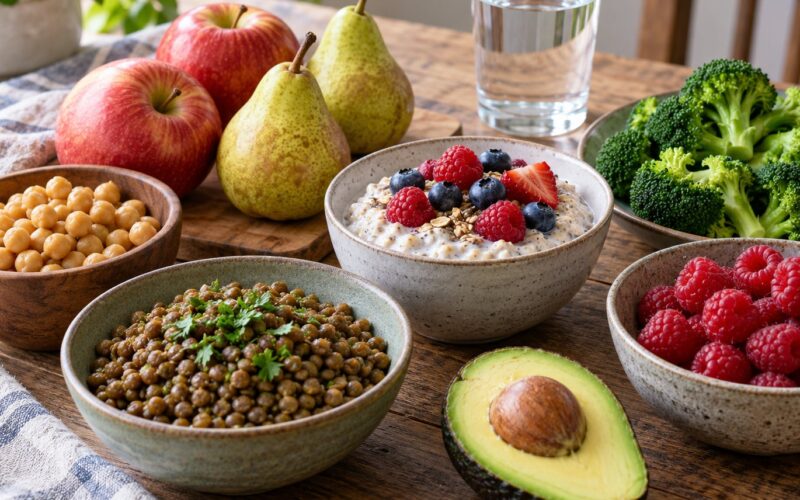
Fill half the plate with vegetables that are not starchy. These carry a great deal of water and fiber for very few calories, which is why they do the heavy lifting on volume. The list is long enough that you should not run out of options: broccoli, cauliflower, Brussels sprouts, kale, spinach, chard, romaine, green beans, asparagus, zucchini, yellow squash, cucumber, bell peppers, mushrooms, onions, cabbage, tomatoes, radishes, okra, turnips and eggplant all count.
Two cupped handfuls of cooked vegetables fills that half on a standard plate. That is roughly two cups, and it is enough to feel like a real meal even before anything else goes on the plate.
Mix colors where you can. Different vegetables carry different fiber, folate and vitamin C, and rotating them keeps meals from getting boring, which is where most plans quietly end. A week of broccoli every night is a plan nobody keeps.
There are two ways to get this step wrong. The first is a plate that is nothing but vegetables, which leaves out the protein and carbohydrate that keep you full for more than an hour. The second is a plate that is too small overall, which turns a balanced approach into a restriction approach. If you are genuinely hungry twenty minutes after finishing, the plate was too small, not too virtuous.
Add a Lean Protein
Protein gets one quarter of the plate, and a palm-sized piece is the easiest measure. Most adults land somewhere around 20 to 30 grams of protein per meal, which spreads a daily total across breakfast, lunch and dinner without any of it feeling like a target.
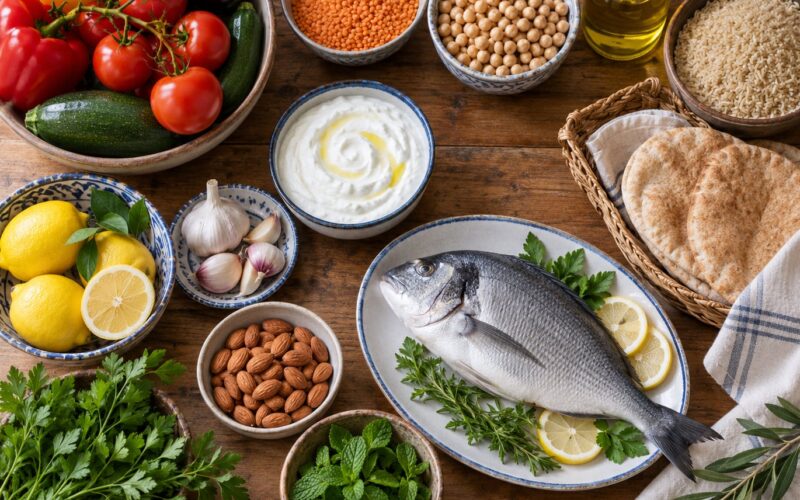
Chicken breast, turkey mince, lean beef steak, pork loin, salmon, cod, sardines, shrimp, eggs, cottage cheese and plain Greek yogurt are the straightforward picks. On the plant side, tofu, tempeh, lentils, chickpeas and black beans do the same job, and a serving of firm tofu can rival chicken for how satisfied you feel afterward.
Preparation is where the calorie creep hides. Grilling, baking, roasting, poaching and stir-frying with a measured teaspoon of oil all behave. Frying in a pan you keep topping off, or coating protein in a thick batter, changes the quarter of your plate without looking like it did.
On food safety, cook poultry to 165°F (74°C), ground meat to 160°F (71°C), and fish and other whole cuts to 145°F (63°C). A meat thermometer removes the guessing from this entirely.
People who feel hungry an hour after eating have usually under-filled this section. Protein is the component that stays with you longest, so if hunger is the recurring theme in your notes, add protein before you cut anything else.
Choose a Smart Carbohydrate
The last quarter goes to carbohydrate, and yes, it stays. Bread, rice and pasta are not the problem people think they are. Portion creep is, and the smarter versions of these foods make the quarter easier to fill and easier to leave.
Brown rice, quinoa, barley, farro, bulgur, oats and whole-grain bread are the everyday choices. Starchy vegetables count in the same quarter too, so sweet potato, white potato, corn, butternut squash and parsnips all belong there rather than being counted as the vegetable half.
What separates one of these from another is fiber and processing. A whole grain keeps more of its structure than a refined version, that structure slows digestion, and slower digestion means steadier energy through the afternoon. A large bowl of white pasta delivers the same volume and leaves you searching the cupboard an hour later.
Portion size is a fist, not a guess. If you are training hard in the evening, filling the whole quarter matters more than which grain you pick. If you are mostly sitting, a slightly smaller portion with extra vegetables on the other half keeps the same rules and the same result.
Finish With a Small Amount of Healthy Fat
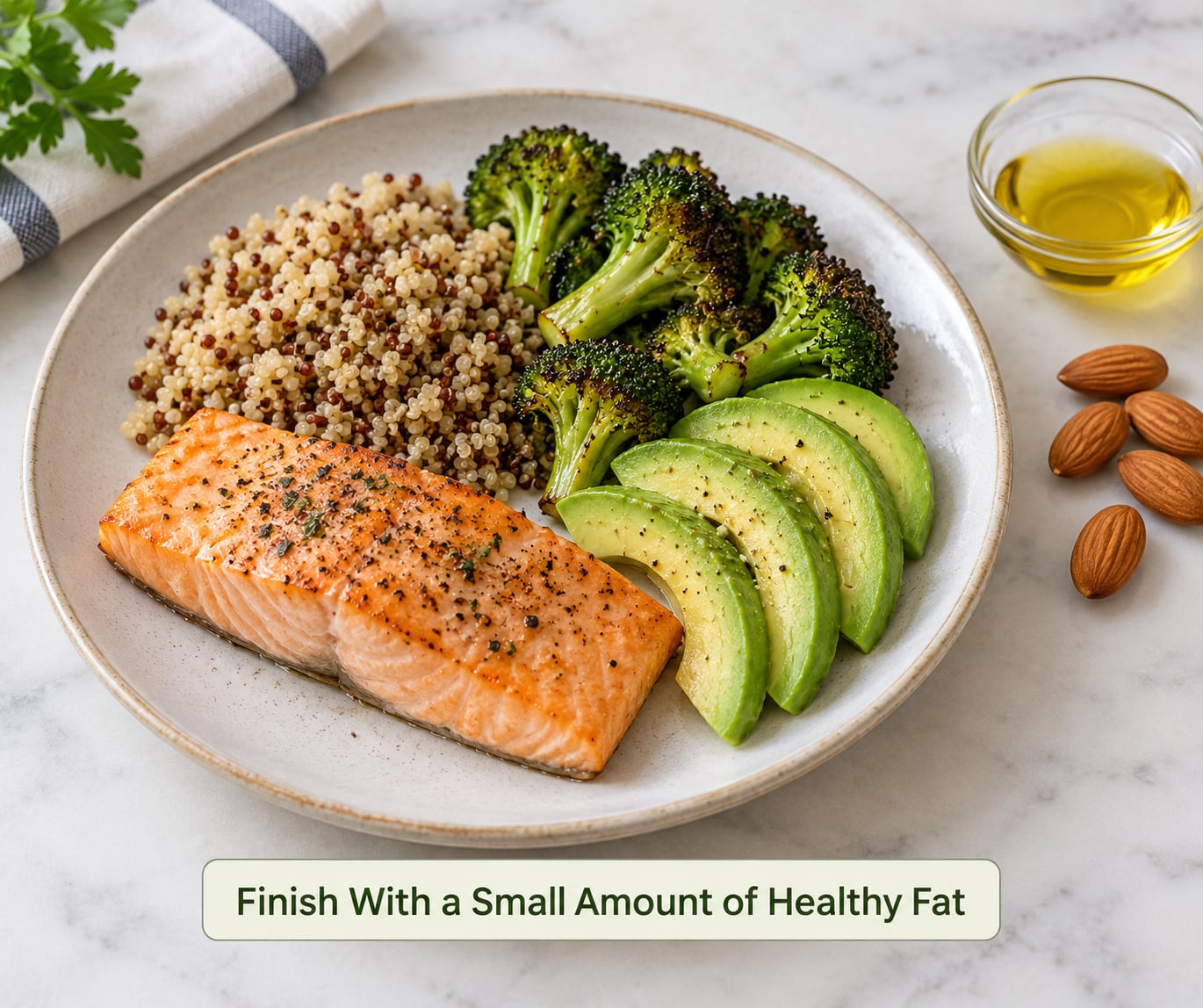
Fat is a garnish-sized addition rather than a fourth section of the plate. A thumb-sized portion covers it: a drizzle of olive oil, a few slices of avocado, a small handful of nuts, two tablespoons of nut butter, or a spoonful of seeds. Unsaturated fats like these come with fiber or protein attached, which is part of why they do not crowd out the rest of the meal.
The trap is measurement. A tablespoon of oil is roughly 120 calories, so a free-pouring bottle at the table can quietly move a plate from balanced to heavy-handed while nobody notices. The same goes for a few “just a sprinkle” of grated cheese, a heavy salad dressing, sweet sauces on a stir-fry, and croutons that arrived with the salad.
Flavor does not have to come from fat. Vinegar, lemon, mustard, salsa, salsa verde, herbs, garlic, ginger, chili and spices add a lot of character for almost nothing. Most people who say they cannot stick to this method are actually describing a plate with no seasoning on it.
Check the Finished Plate Before You Eat
Before you pick up a fork, take three seconds. Is there more than one color? Is there a clear palm-sized portion of protein? Does the carbohydrate quarter look like fiber rather than white starch? Is the food spread across the plate rather than piled in the middle? And does the total amount look like a meal you would happily finish?
That last question matters most. A technically perfect plate that leaves you raiding the cupboard at 9pm is a failed plate. The method is a template for satisfying meals, and portion sizes are meant to flex with appetite, activity and the time of day.
Most imbalance has a simple swap. A plate dominated by starch gets its starch cut by a third and the space filled with vegetables. A plate that feels too small gets a bigger plate or a second helping of the protein and vegetable sections. A dry plate gets acid, herbs and spices. A plate with no protein gets the palm filled in.
Meals that do not look like divided plates fit the method too, with a slight translation. Pasta is a vegetable-heavy bowl with a modest portion of noodles and a protein such as beans or shrimp. A sandwich is two slices of whole-grain bread with the fillings dominated by vegetables and lean protein. A curry is a large ladle of vegetables and protein with a smaller scoop of rice. A burger is a bun held to half its usual thickness, with the rest of the plate filled with salad or vegetables.
Common Mistakes When Building a Balanced Plate for Weight Loss
Oversized carbohydrate portions. The quarter looks restrained next to a heaped bowl. Measure the first few times with a fist or a measuring cup until your eye calibrates, and the portion stops drifting.
Choosing low-fiber carbohydrates. White bread, white pasta and sugary cereal fill the quarter but leave you hungry. Swapping to a whole-grain version adds bulk and slows digestion for the same volume.
Skipping protein entirely. A plate of vegetables and rice is not balanced, it is a side dish with extra steps. Add the palm and hunger usually settles within the hour.
Going vegetables-only. Very large vegetable meals can feel satisfying for twenty minutes and then collapse. Add protein and a measured carbohydrate quarter.
Using a 12-inch dinner plate. The sectioning stops working because the sections are enormous. Use a smaller plate and the visual cue comes back.
Letting dressings and sauces pile up. Creamy dressings, pourable oil, sugary marinades and croutons add a lot of energy and very little fullness. Measure them into a small dish instead of pouring straight onto the plate.
Treating one meal as a test of character. One off-plan lunch does not undo a week of balanced plates, and treating it that way is how people quit. The people who get results are the ones who build the plate again at the next meal.
Frequently Asked Questions
Do I need to weigh my food to build a balanced plate for weight loss?
No. The whole point of the plate method is that the sections are the measurement, not the scale. Use an 8- to 9-inch plate, fill it by eye, and check proportions with your hand: a palm for protein, a fist for carbohydrate, two cupped handfuls for vegetables. Weighing food is entirely optional, and for most people the visual rule alone is enough to fix the portion sizes that cause trouble.
How much food should I put on each part of my plate?
Half the plate goes to non-starchy vegetables, about two cupped handfuls or roughly two cups cooked. One quarter gets lean protein, about a palm-sized serving or three to four ounces cooked. The remaining quarter takes a carbohydrate, around a fist-sized serving. A thumb-sized portion of healthy fat goes on top rather than taking its own section. Adjust these amounts to your hunger, your activity and your goal rather than treating them as fixed.
Can a balanced plate include rice, pasta or bread?
Yes. Rice, pasta and bread belong in the carbohydrate quarter, and removing them entirely is a common reason people feel hungry an hour later. The quarter of the plate is the portion that matters. Choose whole-grain or high-fiber versions when you can, keep the serving around a fist, and fill the other half of the plate with vegetables so the meal still has volume and fiber.
What if I am still hungry after eating a balanced plate?
Hunger after a balanced plate usually points to an under-filled section rather than a flawed method. Add more vegetables for volume, a second palm-sized portion of protein for staying power, or a slightly larger carbohydrate quarter. Very active people often need a bigger carb portion at the end of the day. If hunger is persistent and extreme, talk with a doctor or registered dietitian rather than shrinking the plate further.
How do I use the balanced plate method when eating out?
Apply the same ratio to a restaurant plate. Ask for half the side to be vegetables and swap a starchy side for salad or a second vegetable when the menu allows. Choose grilled or baked protein with sauces on the side, and treat dressings as a measured addition rather than a free pour. At a buffet, take one trip, plate the vegetables and protein first, then add a modest serving of the starch you actually want.
Is the balanced plate method suitable for diabetes or another medical condition?
The plate method is often recommended by health systems, including UCSF Health and Kaiser Permanente, as a simple way to steady blood sugar, because the carbohydrate portion is fixed and paired with protein and fiber. That said, it is general information, not personal medical advice. If you have diabetes, kidney disease, a heart condition, are pregnant, or take medication affected by diet, ask your doctor or registered dietitian before changing how you eat.
Conclusion: Start With One Plate Change
The balanced plate comes down to one repeatable rule: half non-starchy vegetables, one quarter lean protein, one quarter quality carbohydrate, plus a thumb-sized portion of healthy fat on an 8- to 9-inch plate. It needs no scale, no app and no calorie log, which is exactly why people keep using it when fancier plans fail.
Do not try to fix everything at once. The easiest first change is adding vegetables to the half you were already serving, because it takes almost no extra effort. If you would rather change one thing instead, make it the protein, since that is the section most often missing and the one that most affects how long you stay full.
Give it a few weeks before you judge it, and build the plate again at the next meal after a bad one. People managing diabetes, kidney disease, heart conditions, or eating during pregnancy or recovery should talk with a doctor or registered dietitian first, since their needs sit outside a general guide.