
An evening routine to stop late night snacking is a fixed, repeated sequence: a balanced dinner at a realistic hour, a small planned snack, a set kitchen cutoff, a screen-free wind-down, then bed. Most people lose the 9pm fight because they try to win it with willpower, when the eating is usually driven by under-eating during the day, boredom, or a couch-and-TV cue.
Build the sequence once, then run it the same way every evening. It takes about a week to feel automatic, and the first three evenings are the awkward ones.
Table of Contents
- What You Need
- Step-by-Step
- Set a Consistent Dinner and Snack Plan
- Create a Ten-Minute Wind-Down Transition
- Identify What Triggers Your Evening Snacking
- Make the Food Decision Easier
- Plan a Small Evening Comfort Routine
- Use a Planned Snack Decision
- Review the Routine and Adjust One Thing
- Common Mistakes
- Frequently Asked Questions
- What should I do if I am genuinely hungry at night?
- Is eating a small evening snack bad for weight loss?
- How long should I try a new evening routine before it works?
- Can poor sleep contribute to late night snacking?
- When should I ask a doctor or registered dietitian for help?
- Conclusion
What You Need
Nothing to buy. You need four things, and it is worth spending ten minutes setting them up before you start.
A realistic dinner time. Pick a time you can actually hit on a work night, not your ideal one. If dinner lands at 8:30pm most evenings, 6pm is not going to happen and planning around it will set you up to fail.
Your three most common evening triggers. Think about the last seven nights. Was it boredom on the sofa, stress after a hard call, low energy after skipping lunch, or the kids eating biscuits beside you?
A dinner you actually find satisfying. Protein, something high in fibre, some carbohydrate, and a finish that feels like an event rather than a chore.
Two or three replacement activities you genuinely enjoy. Not things you should enjoy. The ones you will actually reach for at 9pm on a flat Tuesday.
Step-by-Step
Set a Consistent Dinner and Snack Plan
Most evening snacking starts with a hunger hole, which is just a name for the energy deficit you create by under-eating earlier. Skip lunch, eat a light dinner, go to bed at 11, and your body arrives at 9pm genuinely empty.
A regular, balanced dinner closes that gap before it opens. Build it around protein (eggs, beans, fish, chicken, tofu), a fibre-rich food (vegetables, beans, whole grains), a carbohydrate for energy, and something satisfying at the end. The protein and fibre combination is what holds your fullness steady for the next three or four hours.
Plan a small snack too, when your day calls for it. Around 100 to 200 calories of something you chose in advance, eaten deliberately at a table. The goal is not a perfect evening. It is having a decided answer ready before the undecided moment arrives, so your evening routine to stop late night snacking has a place for hunger that does not involve improvising at the fridge.
How to tell it is working: the 9pm urge either does not appear, or it arrives mild enough that you can wait it out.
Create a Ten-Minute Wind-Down Transition
Dinner ending does not stop your evening on its own. Without a ritual, the kitchen stays open in your head for hours and any crumb becomes a decision point.
Give yourself a fixed ten-minute closing sequence and repeat it in the same order every night: clear the table, wash up, wipe the counter, close the kitchen, brush your teeth, then lay out what you need for tomorrow morning. Fifteen to twenty minutes total, no longer.
Toothbrushing is the strongest single step here because it works on two levels at once. It marks the end of eating physically, and the minty aftertaste makes a kitchen raid feel unappealing rather than merely discouraged.
How to tell it is working: you notice yourself reaching for a snack and then realise you already did this sequence three hours ago.
Identify What Triggers Your Evening Snacking
Most people treat every evening craving as hunger. It usually is not, and treating a boredom craving as hunger is why so many attempts fail.
For one week, note what happened in the 30 minutes before you ate. Just three columns: the time, what you were doing and feeling, and what you ate. Patterns show up fast. Most people find one of five triggers:
- Genuine hunger from a light or skipped meal earlier
- Boredom, usually with a screen and nothing to do
- Stress or the tail end of a difficult day
- Low energy in the early evening, often mistaken for hunger
- Habit anchored to a place and posture: sofa, blanket, remote
Then pair each trigger with a replacement. Boredom gets a hobby, stress gets ten minutes of something physical, low energy gets a walk or a shower, habit gets a change of room.
How to tell it is working: by week two you can name your trigger before you eat, not after.
Make the Food Decision Easier
Willpower is a terrible guard on an open packet at eye level in a dim room. Environment design does the work instead.
Put your trigger foods somewhere inconvenient: a high cupboard, an opaque container on the top shelf, or a box in the back of the freezer. Leave out the things you reach for blindly. If a food is only ever eaten sitting down at a table, it stops being a sofa snack.
Move the TV, laptop and phone charging point away from the kitchen and out of the bedroom. The single most effective change for habitual snackers is switching where you sit, because the cue is the sofa itself and not the food.
Then keep one alternative visible and prepared: a small portion in a covered dish in the fridge, or a measured serving of nuts in a jar. Visible does not mean constantly tempting. One known option is not a problem; an open bag is.
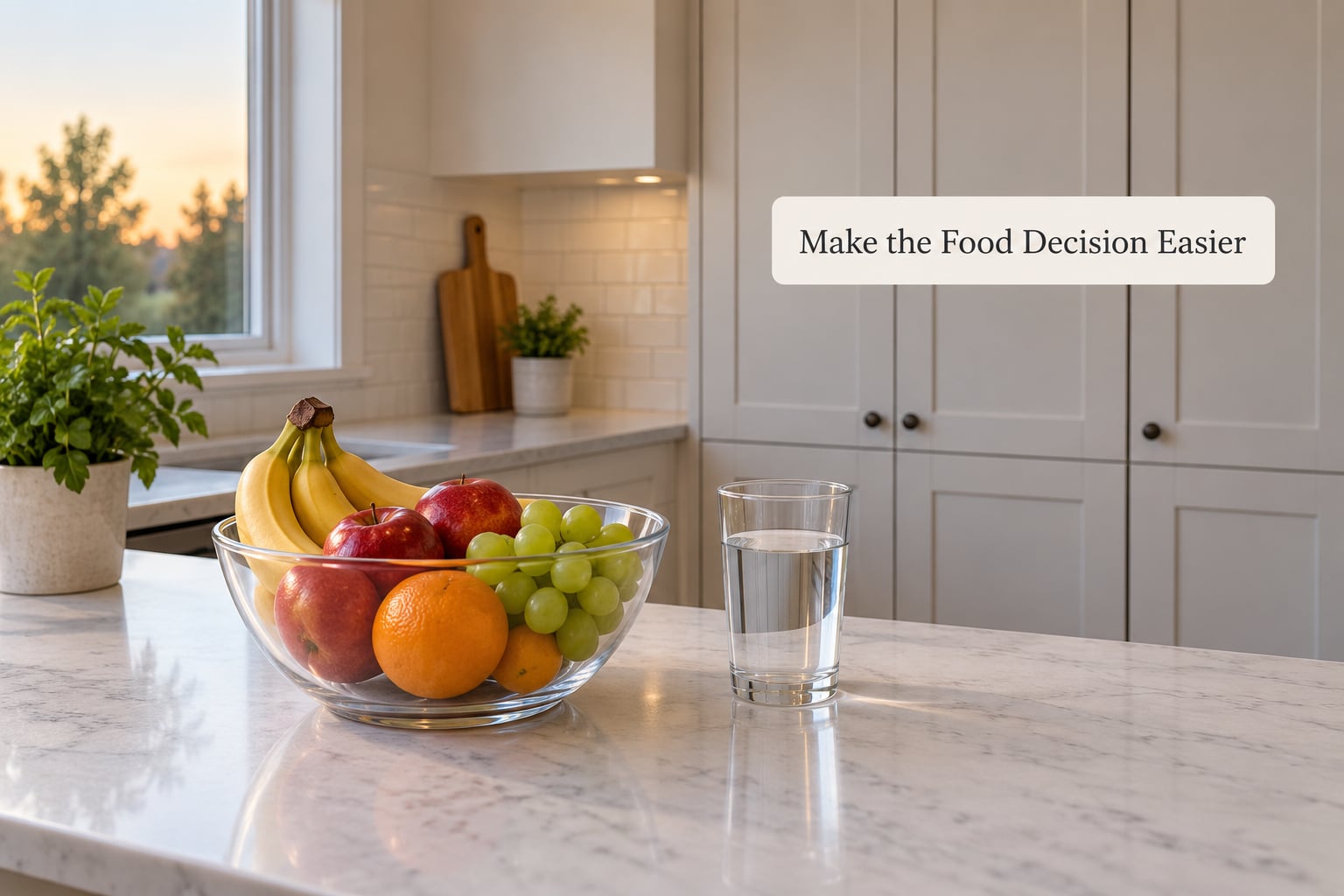
How to tell it is working: the first thing you see when you walk into the kitchen at 9pm is a closed cupboard, not a snack.
Plan a Small Evening Comfort Routine
Snacking at night is often a request for comfort or unwinding that food has been asked to do. Something else has to do it, and it should be matched to the trigger rather than generic.
- For stress: five minutes of progressive muscle relaxation, or a shower
- For boredom: a hobby with your hands involved, like reading, jigsaws, drawing or a podcast you like
- For low energy: a short walk, even around the block, or ten minutes of an audio exercise routine
- For transition: a playlist for the washing up and the winding down
- For restlessness: stretching or mobility work while the kettle boils
These support your habits. They are not treatments for any underlying health condition, and they are not a substitute for advice from a doctor or registered dietitian.
How to tell it is working: you get to the end of the evening without feeling like you skipped something.
Use a Planned Snack Decision
When the urge lands, run the same three-part decision every time. Pause. Ask whether this is physical hunger, a craving, or low energy. Then choose one of three options.
Water first, then wait ten minutes. Thirst is often mistaken for hunger, especially in the evening when water intake drops.
A planned portion of your decided snack, eaten sitting at the table, not from the packet. Small, protein and fibre based, and included in the day’s plan rather than treated as a failure.
Another activity if it was not hunger. Ride out the urge for 20 minutes and it usually fades. Set a timer so you are not relying on the feeling to pass.
There is no universal rule about whether a small evening snack is allowed. People training for a morning race, managing blood sugar with medication, pregnant, or recovering from an illness all have different needs, and rigid food rules are a common reason a routine collapses by week three.
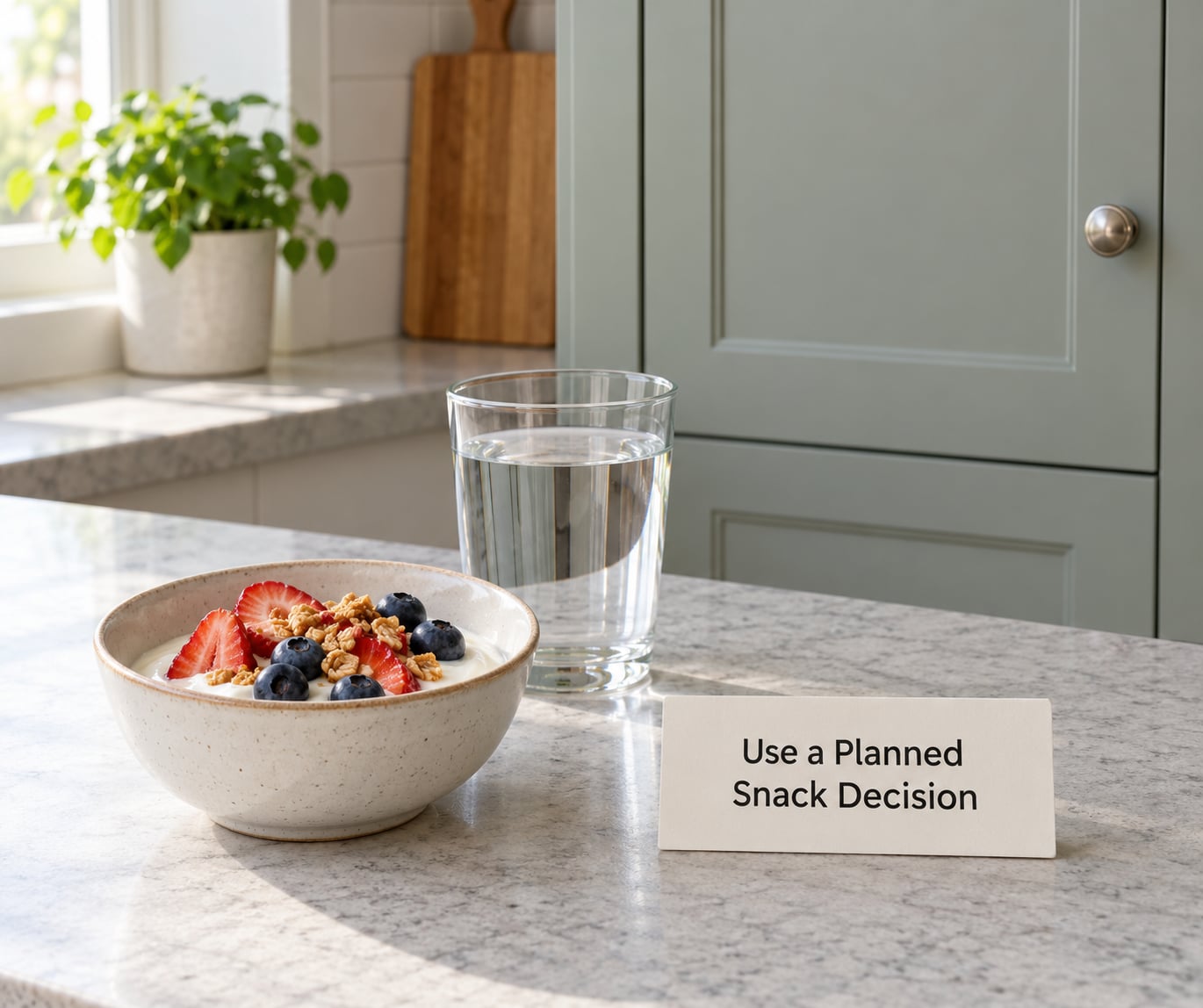
How to tell it is working: the decision takes under a minute and stops feeling like a negotiation.
Review the Routine and Adjust One Thing
Once a week, look at three things: the times you ended up eating in the evening, whether you slept at a consistent hour, and which single change felt manageable rather than punishing.
Adjust one variable at a time. Change the dinner time and the cutoff on the same week and you will not know which one worked. If you still find yourself at the fridge at 9:30pm, move the cutoff earlier by fifteen minutes rather than adding three new rules.
And if hunger stays extreme or persistent despite a well-built routine, that is worth raising with a doctor or registered dietitian, along with any history of loss of control, very large amounts eaten quickly, or waking to eat without remembering.
How to tell it is working: each week needs one small adjustment, not a rebuild.
Common Mistakes
Rigid dieting. A strict no-food-after-six rule produces a binge by 8pm almost every time. Fix: keep a planned snack and count it as part of the day.
Skipping dinner to save calories. This creates the hunger hole that causes the 9pm cliff. Fix: eat dinner earlier and slightly larger rather than skipping it.
Keeping trigger foods in view. Fix: out of sight, closed container, out of the sitting room entirely.
Using busy distractions only. A loud television covers the urge without removing the cue. Fix: keep the TV out of the evening, then replace the cue properly.
Expecting perfection. One unplanned snack is not a failed routine. Fix: do not restrict the next day. Compensating is how a slip becomes a cycle, and the fix is simply the next normal meal.
Confusing thirst, fatigue or restlessness with a personal failure. Fix: drink water, move for five minutes, then reassess.
Two maintenance tips worth keeping. Do the trigger record for the first three weeks only, then let it go once the patterns are obvious. And protect your sleep, because short or broken sleep raises hunger and cravings for energy-dense food, which makes the whole routine harder to hold.
Frequently Asked Questions
What should I do if I am genuinely hungry at night?
Eat a small, decided portion rather than fighting it, ideally something with protein and fibre such as yogurt with fruit, a boiled egg, or a small bowl of cereal. Eat it sitting down, not from the packet, and then run the closing routine as normal. If you wake hungry at 3am repeatedly, mention it to your doctor rather than adjusting on your own, especially if you take medication that affects blood sugar.
Is eating a small evening snack bad for weight loss?
A planned 100 to 200 calorie snack is not what derails weight loss. The pattern that matters is repeated unplanned eating on top of a full day of calories, often driven by an under-eaten afternoon. Judge your evening by whether it was decided in advance and eaten at a table, not by whether food existed after dinner. Whole-day intake is what counts, not a single evening.
How long should I try a new evening routine before it works?
Most people notice the first difference in seven to ten days, when the closing sequence starts to feel automatic. Full settling usually takes three to four weeks, because you are replacing a long-established cue as well as changing your meals. Judge it on effort rather than perfection. If you are still fighting the urge every night after a month, change one variable rather than starting the whole routine again.
Can poor sleep contribute to late night snacking?
Yes, and it runs both ways. Short or broken sleep raises hunger and shifts cravings toward energy-dense food, and eating late makes the next night’s sleep worse. An evening routine to stop late night snacking therefore works best when it includes a consistent bedtime rather than only food changes. If you regularly sleep poorly, that is a conversation to have with your doctor as well.
When should I ask a doctor or registered dietitian for help?
Ask when eating at night regularly feels outside your control, when you eat large amounts quickly, when you wake to eat and remember little, or when you restrict heavily during the day and lose control at night. Binge eating disorder and night eating syndrome are recognised conditions that overlap with these behaviours and benefit from treatment. A registered dietitian can also help you build a meal pattern that does not leave you hungry overnight.
Conclusion
Start tonight with three changes rather than all eight steps: eat dinner at the time you will genuinely manage, put the one food that derails you somewhere out of reach, and pick the replacement activity you will actually do.
Run the closing sequence, log what happened before the first three evenings of snacking, and adjust one thing at the end of the week. Most people find the urge was never hunger, and the routine stops being about food.
If eating at night feels out of your control, involves large amounts eaten quickly, or you wake to eat with no memory of it, talk to a doctor or registered dietitian. Support exists, and an evening routine to stop late night snacking works best as one part of a plan built with someone who can see your whole picture.