If you are wondering whether does drinking water before meals help you eat less, the short version is: sometimes, a little. Drinking about two cups of water roughly 20 to 30 minutes before a meal can make some people feel full sooner, and studies report 13% to 22% fewer calories at that meal. It is a helpful portion tool, not a weight-loss method on its own.
I want to be straight with you about what that means, because most pages covering this topic blur the line. Water does not create a calorie deficit. It might make the deficit you are already eating easier to hold, and that is a genuinely useful thing for a portion-conscious person.
This is general information, not medical advice. If you have a heart, kidney or liver condition, take medication that affects fluid balance, or deal with regular reflux, talk to your doctor before you change how much you drink.
Table of Contents
- Does Drinking Water Before Meals Help You Eat Less?
- What Does the Research Say?
- Why Might Water Reduce Appetite?
- Can Drinking Water Before Meals Help You Eat Less?
- How Much Should You Drink Before a Meal?
- How to Test Whether It Works for You
- Simple Ways to Make Pre-Meal Water Easier
- Who Should Not Force Extra Water?
- Other Strategies That May Help With Fullness
- Frequently Asked Questions
- Does drinking water before meals cause you to eat fewer calories?
- Is cold or room-temperature water better for reducing appetite?
- How long before eating should I drink water?
- Can lemon, vinegar, or flavored water suppress appetite?
- Will drinking water before meals cause weight loss?
- Can I drink a large amount of water if I feel thirsty?
- Conclusion
Does Drinking Water Before Meals Help You Eat Less?
Yes, it can help some people eat less, and the effect shows up in small controlled studies. The honest summary: a glass of water before a meal may reduce how much you eat at that meal, but results are not consistent and the size of the effect is modest.
Across gastrointestinal “preload” research, the pattern is that people who drink roughly 500 mL of water before eating tend to take in 13% to 22% fewer calories during that meal. Not everyone feels it. And a lower number at one meal is not the same thing as steady weight loss, which takes weeks of a calorie deficit you are actually holding.
If your reason for asking is that meals keep running away from you, the habit is cheap to test. If your reason is that you want a way to lose weight without changing what you eat, it will disappoint you.
What Does the Research Say?
The three findings you will see repeated online come from a small, fairly narrow body of work. Knowing which is which saves you from taking a lab result as a promise.
- Jeong and colleagues, 2018, published in Obesity. Adults on a low-calorie diet drank 500 mL of water before each main meal for 12 weeks. The group that drank the water lost about 44% more weight than the group following the same low-calorie meals without it.
- Virginia Tech, 2010. People aiming to limit calories drank 16 oz of water before meals and went on to take in fewer calories at the table. It was a short, practical demonstration rather than a long weight trial.
- University of Birmingham, 2015, also in Obesity. Two cups of water 30 minutes before eating reduced energy intake at the following meal. BBC News covered the finding, which is why it circulates so widely.
Here is how to read that list without over-reading it. These were mostly small samples, mostly short durations, and in the 2018 trial every participant was already on a calorie-restricted diet. The water worked as an addition to a deficit, not as a replacement for one.
Harvard Health has covered the 2018 result and phrases it carefully: more weight loss, but only among people already following a low-calorie diet. That wording is the most accurate version of the claim, and it is worth noticing how far it sits from the idea that water alone melts fat.
Older work on gastric emptying also tends to use healthy young volunteers in a lab. Everyday eating is messier, so treat the percentages as a reasonable expectation rather than a promise for your kitchen table.
Why Might Water Reduce Appetite?
Four things plausibly happen at once, and none of them requires a special metabolism boost.
It occupies physical space. The stomach has stretch receptors that send a fullness signal when it distends. Half a litre of water gives those receptors something to respond to before the food arrives.
It often settles mild thirst first. Thirst and hunger overlap, and plenty of people mistake one for the other. Dr. Melina Jampolis, a physician nutrition specialist, has made the same point in interviews: drink first, then wait a few minutes and check whether you are actually hungry.
It slows the meal down. Sipping and then sitting for a couple of minutes is a small pause most skipped meals never get. Eating faster is one of the more reliable ways to overshoot.
It gives your brain time to catch up. There is a lag of roughly 20 minutes between food leaving your mouth and the strongest fullness signals registering. A glass of water spent during that window is effectively free time to notice you are done.
Can Drinking Water Before Meals Help You Eat Less?
For many people, yes, and the effect is short-term rather than dramatic. A study might show you eating less at that meal, which is genuinely useful, but it is not a suppression that lasts four hours. People who report it working best describe drinking 20 to 30 minutes ahead, not gulping a glass while already sitting down with a plate.
The distinction worth holding onto: water can reduce intake at a meal. It cannot reduce intake across a day on its own, and it cannot turn a diet into a weight-loss plan.
If you have seen the objection that water leaves the stomach too fast to fill you, here is the honest answer. That is largely correct. The effect is transient gastric distension, and it is measured in tens of minutes. The research supports a short window of reduced eating, not a stomach that stays stretched.
How Much Should You Drink Before a Meal?
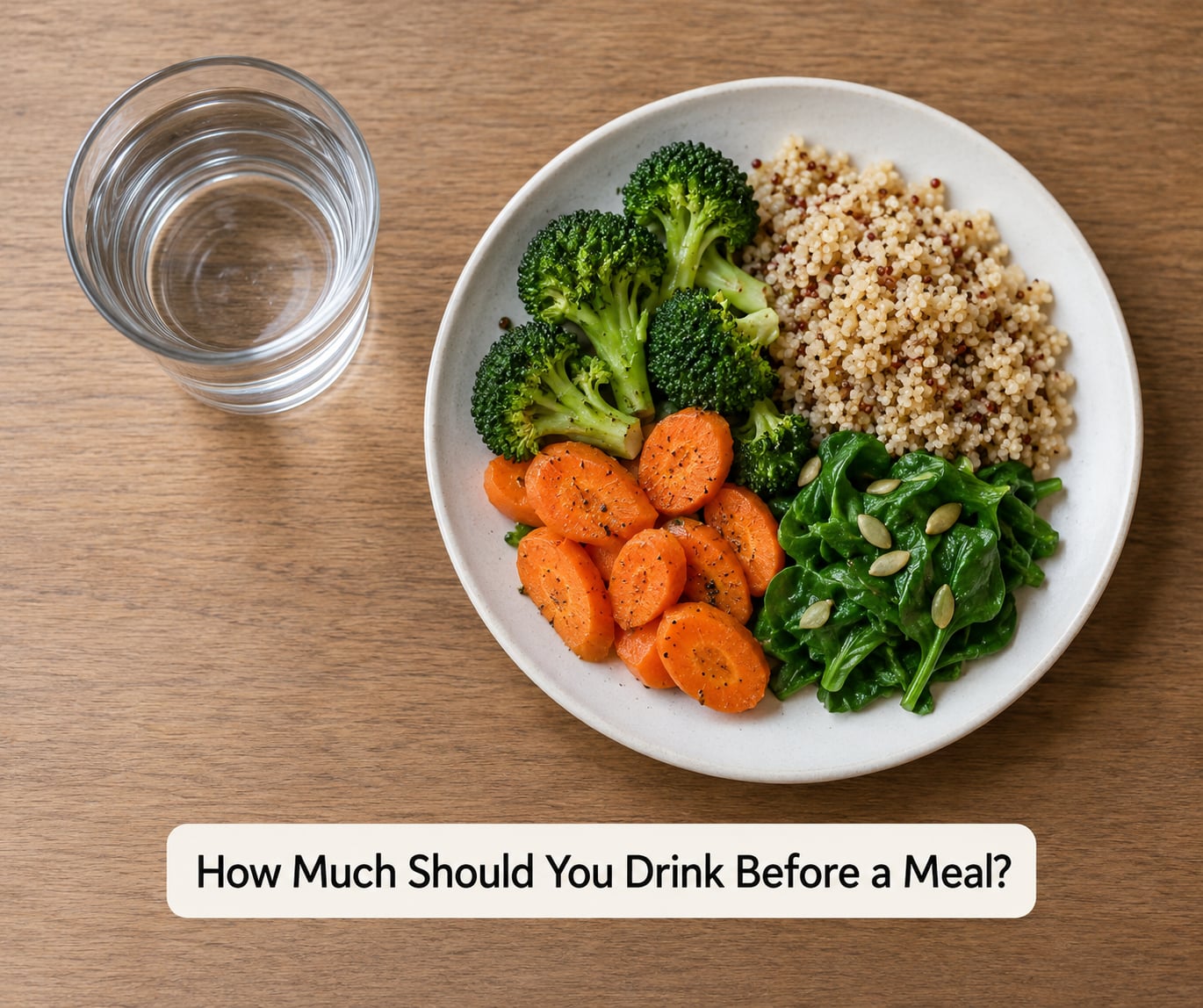
About two cups, which is 500 mL or roughly 16 to 17 ounces, is the figure tied to most of the research, and it is the number to start with. The apparent disagreement between sources is just unit conversion: two cups, 500 mL, 16 ounces and 17 ounces all describe the same glass of water.
A practical routine that follows the studies rather than drifting from them:
- Finish most of your water for that stretch about 20 to 30 minutes before you intend to eat.
- Use the wait to do something else, like setting out ingredients, so the time is not spent thinking about the glass.
- At the 20-minute mark, honestly rate your hunger from 1 to 10 before you start serving.
- Eat normally, without compensating by skipping food or forcing down a second glass.
- Keep drinking through the rest of the day to thirst, which is a separate job.
Half a glass is fine if that is all you want. More than about a cup in a sitting is where people most often report discomfort, sloshing and the kind of fullness that makes eating unappealing rather than smaller.
Anyone on a fluid restriction, or who has been told to manage fluid because of heart, kidney or liver problems, should follow their clinician’s limit instead of any number on a web page.
How to Test Whether It Works for You
Give it a week, and judge it on hunger rather than on the scale. The scale is a poor instrument here, because changing how much you drink changes your water weight and fat loss at the same time.
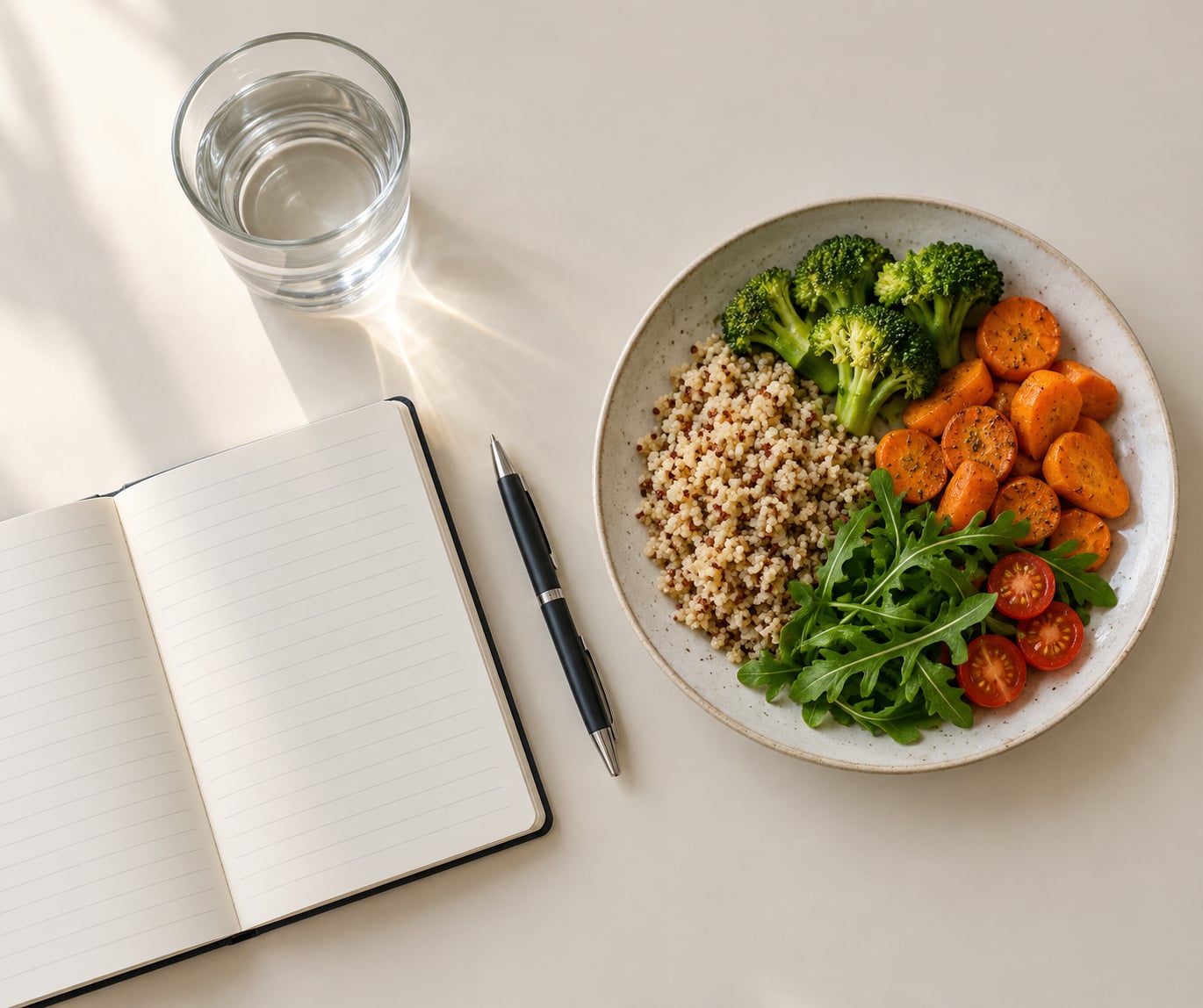
Pick one meal, dinner is usually the easiest, and use it for seven days. Before each one, write down the time and your hunger from 1 to 10. Drink the water 20 to 30 minutes ahead, then write your hunger rating again right before you start eating.
Compare the second rating to the first across the week. A consistent drop of a point or two is a real personal result. No change after a week is a real result too, and it means the habit is not earning its place unless you enjoy it for other reasons.
Two things to avoid. Do not slash other meals to compensate, because you will end up tired and hungry within days and you will not learn anything about the water. Do not deliberately under-drink on the days you skip it either, since dehydration makes you hungrier and confuses the whole exercise.
One honest note from people who have kept this habit past the novelty: most of them report smaller portions, not dramatic weight change, and many say the bigger effect was that they stopped reaching for a mid-afternoon snack.
Simple Ways to Make Pre-Meal Water Easier
Habits that survive contact with a busy week are unglamorous. These are the ones people report sticking with.
- Keep the glass where the meal happens. A tumbler on the table at the start of dinner gets used. A bottle in a bag does not.
- Pair it with something you already do. Tying the water to putting the kettle on, or to setting out a plate, gives it a trigger that already exists.
- Make it warm or iced, whatever you prefer. Temperature has no meaningful effect on satiety. Drinkability is the only variable that matters.
- Keep it unsweetened. Sweetened drinks bring calories with the volume, which cancels out the reason you are doing it. A slice of lemon or cucumber is fine.
- Replace rather than add. If you were going to have a second glass of juice or a fizzy drink before dinner, swap it for water instead of adding another glass on top.
Give it two weeks before you judge the habit, because most people report the first week feels pointless. Forum threads on this question are full of people who quit at ten days and assumed the method failed.
Who Should Not Force Extra Water?
Some people should skip the extra glass entirely, and they should not feel talked into it.
Ask a doctor first if you have heart failure, kidney disease, liver disease, or any condition where fluid intake is limited. The same goes for anyone on medication that affects fluid balance, including certain diuretics.
Skip it or cut the volume if drinking before meals reliably triggers heartburn, acid reflux, nausea, or that heavy bloated feeling. The 20 to 30 minute lead time is exactly what reduces these complaints, so if you feel them anyway, the water is not for you right now.
Warning signs of taking in too much fluid over a short period include swelling in the hands, feet or ankles, a persistent headache, nausea, confusion, and very frequent clear urination. Water toxicity, or hyponatremia, is uncommon outside extreme circumstances, but it is real and it is serious. Get medical care rather than trying to flush it out with more water.
Pregnancy, recent surgery, and endurance exercise on a hot day are also situations where fluid advice should come from a professional rather than from a habit article.
Other Strategies That May Help With Fullness
Water is the least effortful appetite lever you have, and the least powerful. A short list of things with more evidence behind them, which stack with a glass of water rather than competing against it.
- Fiber-rich foods. Vegetables, legumes, oats and whole fruit hold fullness signals in the gut for longer than a glass of water does.
- Protein at every meal. Protein is the macronutrient with the strongest satiety effect per calorie.
- Vegetables first. Starting a meal with a salad or cooked vegetables fills space before the calorie-dense part of the plate.
- Portion awareness. Serving food onto a smaller plate changes intake more reliably than any beverage trick.
- Regular meals. Long gaps between meals produce the intense hunger that ends in overeating, and the water trick is much harder to use when you are that hungry.
- Enough sleep. Short sleep raises hunger the next day. It is not a hydration tip, but it affects the same appetite outcome.
- Eating slowly. Putting the fork down between bites gives the 20-minute signal time to arrive.
Think of it as the free one. Protein, fiber and sleep do the heavy lifting, and if you are already doing those, pre-meal water is a small top-up rather than your strategy.
Frequently Asked Questions
Does drinking water before meals cause you to eat fewer calories?
In controlled studies, yes, usually by a modest margin. People who drank about 500 mL of water 20 to 30 minutes before eating took in roughly 13% to 22% fewer calories at that meal. The effect varies between individuals and depends on the person already being a little hungry rather than ravenous. Water reduces intake at a meal; it does not reduce intake across a whole day on its own.
Is cold or room-temperature water better for reducing appetite?
Temperature makes no meaningful difference to satiety. Cold water is pleasant and easy to drink in hot weather, room-temperature water is easier to sip slowly in the winter, and both work the same way through stomach stretch receptors. The variable that actually matters is whether you find the drink pleasant enough to finish about 20 to 30 minutes before eating.
How long before eating should I drink water?
Aim for 20 to 30 minutes beforehand, which is the window used in most of the research. Drinking immediately before sitting down to eat is where people most often report feeling uncomfortably full, and it removes the useful pause. Drinking an hour or more ahead lets the water move on before the meal, so the timing window is fairly narrow.
Can lemon, vinegar, or flavored water suppress appetite?
Flavoring changes nothing physiologically. A squeeze of lemon or a slice of cucumber makes plain water easier to drink, and that is a fine reason to use it. Vinegar is different in character and is acidic, so it can irritate the stomach or worsen reflux in some people. There is no good evidence that any of these suppress appetite more than plain water.
Will drinking water before meals cause weight loss?
Only in combination with a calorie deficit. In a 12-week trial, people who were already on a low-calorie diet and drank 500 mL before each main meal lost about 44% more weight than the diet-only group, but nobody in the study relied on water alone. If you are not controlling calories elsewhere, the extra glass will make you feel fuller and will not move the scale much.
Can I drink a large amount of water if I feel thirsty?
Drink to thirst, and do not force extra volume on top of it. Most healthy adults can safely handle a couple of cups over a short period, but large amounts in a short window can cause nausea, swelling and headache, and extreme intake can lead to water toxicity. If you have heart, kidney or liver conditions or a fluid restriction, follow your clinician’s advice rather than a general recommendation.
Conclusion
Start with your thirst. Drink normally through the day, then pick one meal and try a modest glass of water about 20 to 30 minutes ahead of it for a week.
Rate your hunger before and after the wait and see what your own number says. If it drops and nothing feels uncomfortable, keep it. If it changes nothing, you have lost nothing by dropping it.
And if you are managing a medical condition, get your water target from your doctor or a registered dietitian rather than from a web page, including this one. Last reviewed for 2026.