If you’re asking how many protein shakes a day is too many, the honest answer is that shake count is the wrong thing to count. What matters is total protein across the day, how much of it already comes from meals, and how your stomach feels on it.
For most adults, one shake a day is plenty. Two fits high-need days, three is the practical ceiling for anyone using supplements seriously, and four or more rarely adds anything except cost and digestive trouble. Let me show you how to work out where you actually sit.
Table of Contents
- How Many Protein Shakes a Day Is Too Many?
- What Does “Too Many” Actually Mean?
- How to Check Your Total Protein Intake
- Food Protein and Protein Shakes: What Should Replace What?
- Who May Need Extra Caution With Protein Shakes?
- Frequently Asked Questions
- Is 2 protein shakes a day too many?
- Is 3 protein shakes a day too many?
- Is it safe to drink 4 protein shakes a day?
- What happens if you drink two protein shakes a day?
- What are the first signs of too much protein?
- Is it okay to drink protein shakes every day?
- What to Do First
How Many Protein Shakes a Day Is Too Many?
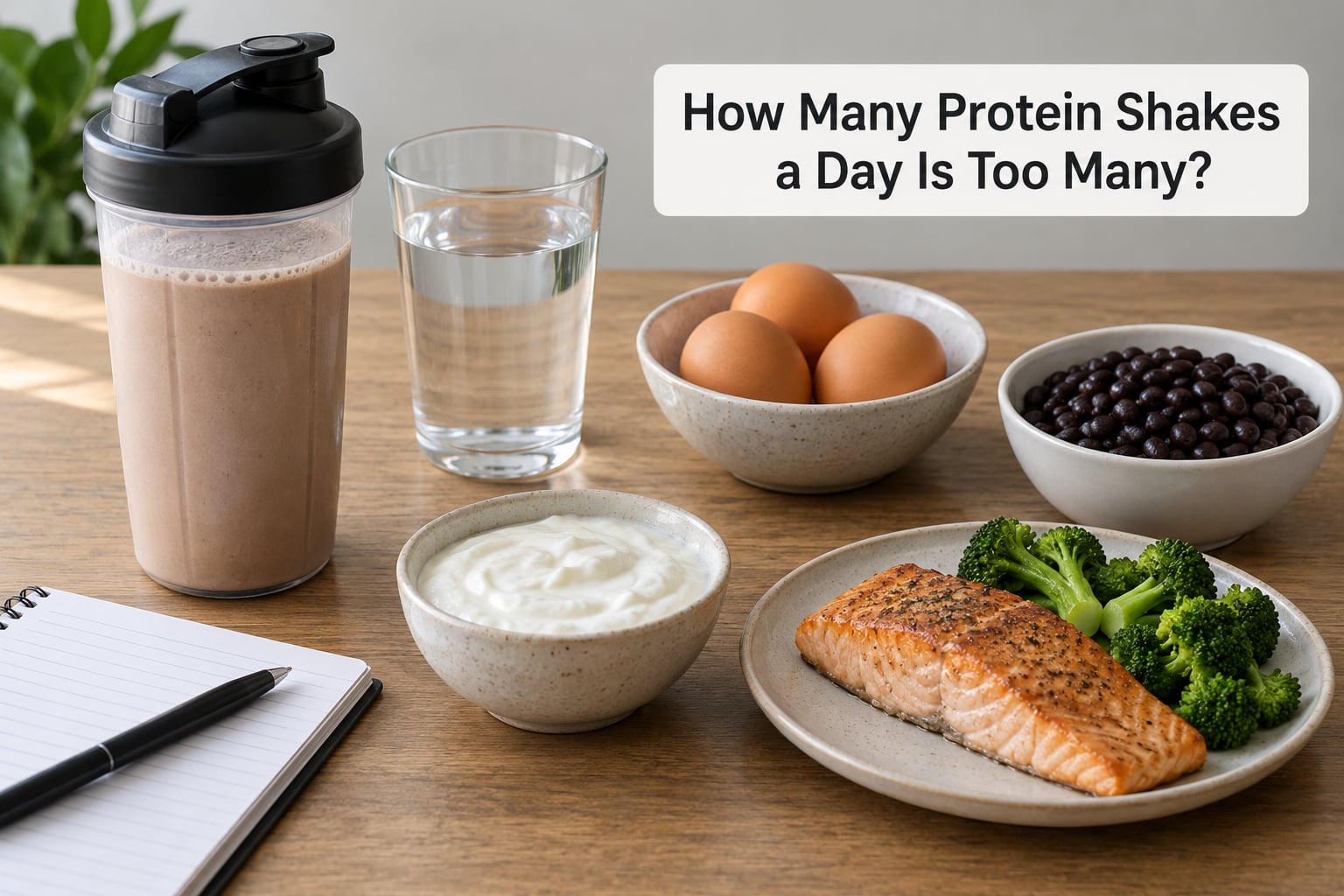
There is no single number for everyone. One shake a day is plenty for most adults, two suits higher-protein days, three is about as far as supplements need to go, and four or more is usually more powder than the diet needs. Total protein from food, your body size, your training, and how much protein each scoop contains all shift that line.
The quickest way to see where you fall is a shake-count table:
| Shakes per day | Protein it adds | Who it suits | What to watch |
|---|---|---|---|
| 0-1 | 0-30g | Anyone hitting protein needs from meals | Nothing, this is a normal top-up |
| 2 | 40-60g | Training days, plant-based eaters, people short on protein at breakfast | Total daily total creeping past what meals already provide |
| 3 | 60-90g | Strength athletes working toward higher protein targets with light food intake | Space them out; skip meals starting to lose fibre and micronutrients |
| 4+ | 80g+ | Very few people, usually when food volume is restricted | Bloating, gas, constipation, wasted powder, displaced whole foods |
Read that as a map, not a prescription. Someone eating eggs, beans and chicken at every meal may need zero shakes, while someone whose workouts are hard and whose meals are small may genuinely use two. Working out how many protein shakes a day is too many for you comes down to that single calculation, not to a rule of thumb.
What Does “Too Many” Actually Mean?
Too many means the shakes are pushing your total protein past what your body can use usefully, or pushing them past what your digestion is happy with. It rarely means the number of drinks by itself.
Two things make shake count a poor limit. The first is that a “shake” has no fixed size: one scoop of a lighter powder and a double-scooped blend can differ by 40g of protein in one glass. The second is that your body handles roughly 20-30g of protein efficiently in a single sitting, so three back-to-back shakes are not three useful feedings.
Fitness forum threads tend to land in the same place. The pattern people describe most often is one to two shakes as the comfortable range, blended with Greek yogurt or milk to land somewhere between 30g and 50g per serving, with heavier use usually showing up during bulking phases when daily targets run high.
How to Check Your Total Protein Intake
You do not need to weigh food forever. You need a rough number for a week and an honest look at what meals are doing.
Step one, read the label rather than the front of the tub. Protein per serving is on the nutrition panel, and serving sizes vary wildly between products. Multiply by the number of scoops you actually use, not the one printed on the side.
Step two, estimate your food. Most adults can get a usable estimate by thinking in portions rather than grams:
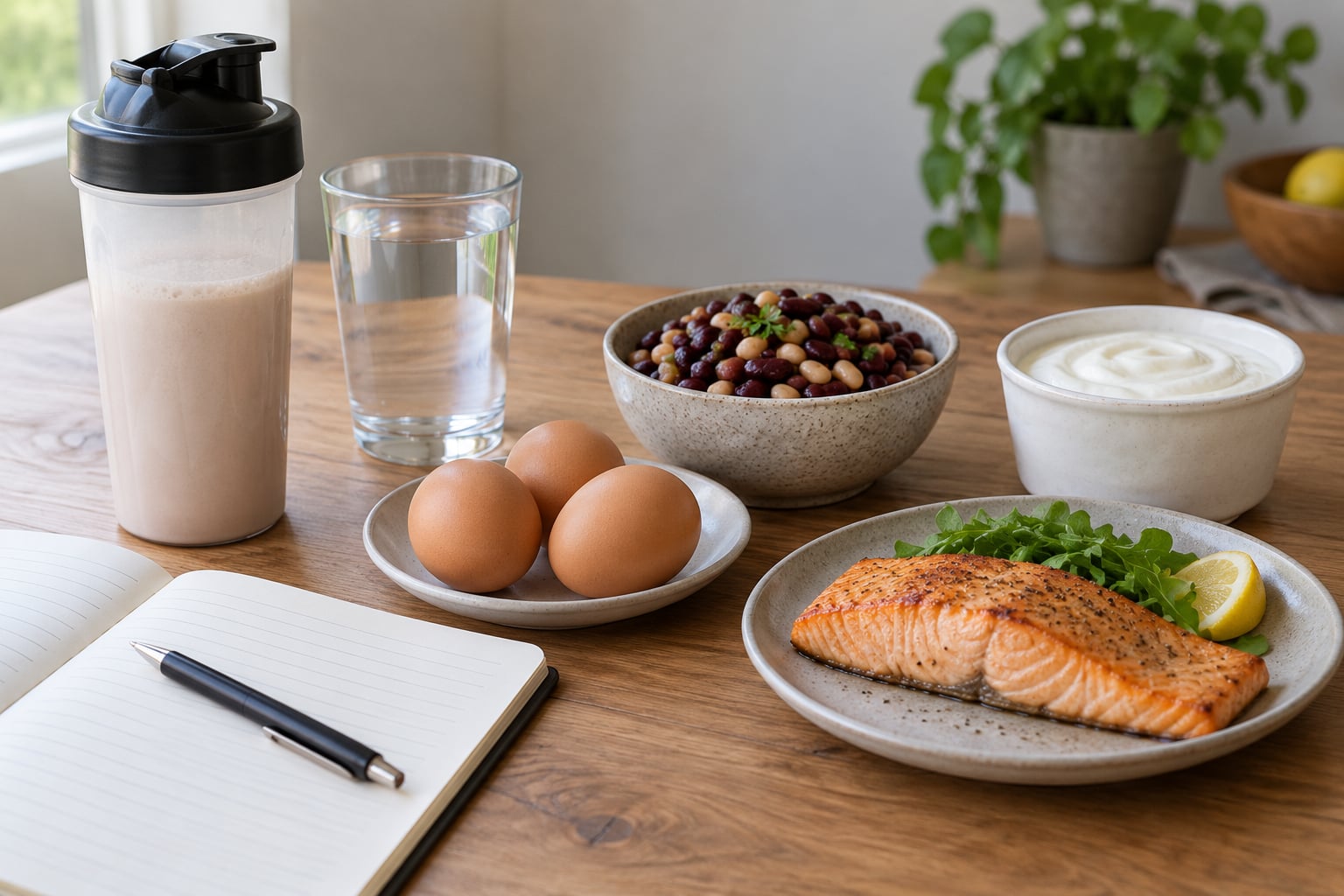
- A palm-sized piece of chicken, fish or lean meat: roughly 25-30g
- Three eggs: roughly 18g
- A cup of Greek yogurt: roughly 20g, a cup of regular yogurt less
- A cup of cooked beans or lentils: roughly 15-18g
- A slice of cheese or a scoop of cottage cheese: roughly 10-15g
Step three, compare. Take a person weighing 80kg who eats a normal varied diet. Meals probably supply 90-110g without any effort. One 25g shake brings the day to 115-135g, which covers the 0.8g per kilogram baseline comfortably and sits inside the 1.4-2.0g per kilogram range often cited for active adults. That person does not need a second shake, and adding one mostly adds another 120-200 calories of liquid.
Step four, look at what the shakes are replacing. If a shake has quietly become lunch, that is a bigger issue than the protein number. Check whether fibre, vegetables, fruit and a source of healthy fat still make it onto the plate.
For orientation rather than a prescription: the recommended dietary allowance baseline is 0.8g per kilogram of body weight, around 1.4-2.0g per kilogram is commonly cited for active adults, and muscle-building gains tend to level off somewhere near 1.6g per kilogram. Research has explored totals as high as 3.5g per kilogram as a tolerable upper limit, but supplement users rarely approach that on purpose.
One more detail worth knowing: most guidance suggests splitting protein across the day, roughly 20-40g per meal, spread every three to four hours, rather than front-loading everything into one large shake.
Food Protein and Protein Shakes: What Should Replace What?

Neither is better in the abstract. Food carries fibre, micronutrients, phytochemicals and a texture that makes you feel full, and those things do work a shake cannot do. A shake carries convenience, portability and a number on the label, which matters when you are genuinely short on protein.
| Consideration | Whole food protein | Protein shake |
|---|---|---|
| Fibre | Present in beans, grains, vegetables, nuts | Almost none unless the powder adds prebiotic fibre |
| Micronutrients | Iron, zinc, vitamin B12, vitamin D vary by source | Minimal; often fortified with a narrow set |
| Satiety | High, especially with fibre and fat | Low to moderate; liquid calories are easy to under-count |
| Calories per serving | Varies widely | Often 120-250 per scoop, easy to stack |
| Convenience | Requires cooking or planning | Ready in a minute, portable |
| Cost per gram of protein | Usually lower with eggs, beans, chicken, canned fish | Higher per gram, and it compounds with multiple scoops |
Cost is where the maths stops flattering scoops. Eggs, dried beans, canned tuna and bulk chicken breast usually deliver protein more cheaply than powder does. A four-scoop-a-day habit is where the gap becomes obvious, and plenty of people report that swapping two shakes for higher-protein whole foods closed the gap without changing anything else.
So use a shake where food genuinely fails you: a 6am start with no appetite, a long travel day, a training session you cannot eat around, or a phase where eating volume has to stay low. Use food for everything else.
Who May Need Extra Caution With Protein Shakes?
Some readers should not use a general article as their guide. If any of the following applies, ask a doctor or registered dietitian before changing how much protein you eat.
- Kidney disease or reduced kidney function. Protein intake and kidney workload are directly linked, and the right amount depends on your specific diagnosis and stage.
- Liver problems. Protein metabolism changes, and advice that suits a healthy adult may not suit you.
- Allergies or intolerances. Dairy, soy, gluten and nuts are all common bases for shakes, and ingredient lists vary by brand.
- A history of disordered eating. Supplement-based eating patterns can reinforce restrictive patterns, and a professional can help you build a safer structure.
- Pregnancy or breastfeeding. Requirements shift, and extra protein should be planned rather than guessed.
- Being under 18. Growth changes what protein means, and energy needs usually come first.
- Blood thinners or other prescribed medicines. Some products contain ingredients worth checking against your medication list.
General warning signs that deserve a conversation with a clinician include persistent nausea, ongoing bloating or gas, constipation that does not settle, unexplained weight change, unusual thirst or frequent urination, or a general feeling of sluggishness that started when you increased shakes.
This is general information about a nutrition question, not medical advice. It does not diagnose anything or replace advice tailored to you, and protein needs can be genuinely individual. If you have a health condition, are taking medication, or are simply unsure, a registered dietitian can look at your actual meals and tell you what you really need.
Frequently Asked Questions
Is 2 protein shakes a day too many?
No, not for most adults. Two shakes usually add 40-60g of protein, which fits plenty of people’s daily needs on training days. The question is whether your meals already cover that gap. If they do, a second shake is extra calories and extra powder rather than extra benefit. If they don’t, two is a normal amount.
Is 3 protein shakes a day too many?
Three is about the practical ceiling for supplement users, roughly 60-90g of protein depending on the powder. It suits strength athletes with high protein targets and light food intake. Space them across the day rather than drinking them together, and keep meals in place, because the shake total matters less than whether your diet is still varied.
Is it safe to drink 4 protein shakes a day?
For a healthy adult it is unlikely to be dangerous, but four is where powder stops earning its place. You are usually stacking 80g or more of protein on top of meals that already supplied enough, paying for it, and skipping fibre, vegetables and healthy fats. If four feels necessary, a dietitian can show you where the real gap is.
What happens if you drink two protein shakes a day?
Most people feel nothing beyond the convenience of an extra 40-60g of protein. Others notice fullness, mild bloating or more gas in the stomach, particularly with large doses or sugar alcohols in the powder. Spacing them and using lactose-free or plant options tends to help. Persistent discomfort is a reason to stop and talk to a professional.
What are the first signs of too much protein?
Bloating and gas are usually first, then constipation, nausea after drinking, frequent urination and feeling thirsty. Bad breath and acid reflux show up for some people too. The pattern matters more than any single symptom: if these started when you added shakes and ease off when you cut back, the shakes are the likely reason.
Is it okay to drink protein shakes every day?
Yes, daily use is normal for people who rely on it to hit a protein target. The daily part is rarely the issue; the quantity and whether shakes are replacing balanced meals is. If you train one day and not the next, keep the daily protein total steady and adjust shakes rather than assuming extra shakes on training days are wasted.
What to Do First
Start with the label. Read the protein per serving, multiply by your real scoop count, and write the number down. That single figure tells you whether you are at zero shakes, one, or already past what your meals covered.
Then keep shakes as a top-up rather than a meal. If a shake is standing in for lunch or dinner, put a proper meal back in and let the shake go back to being a snack or a post-workout drink.
If you want to cut back, taper rather than stop: drop one shake and replace those grams with eggs, Greek yogurt, beans or canned fish, which usually cost less and bring fibre and micronutrients with them. Anyone who has kidney or liver disease, an allergy, an eating-disorder history, is pregnant, or is under 18 should make those changes with a doctor or registered dietitian rather than from a checklist.