If plain water makes you grimace, the fix is not more willpower. It is temperature, texture, flavor and timing: choose a temperature you actually enjoy, add a small amount of real fruit or herb, and attach a glass to a moment you already have, like breakfast or your commute. Most people who follow that sequence drink noticeably more within a couple of weeks.
I spent years avoiding water and reaching for juice instead, then testing the boring variables first. Cold versus room temperature mattered far more to me than any fruit. That is the part almost every guide skips: if you build on a drink you dislike, nothing else works.
Table of Contents
- What You Need
- Step-by-Step: How to Drink More Water When You Hate the Taste
- Start With a Baseline You Can Actually Finish
- Add Flavor Without Turning Water Into Dessert
- Change the Texture So Each Serving Is Easier
- Attach Water to Cues You Already Have
- Common Mistakes That Keep People Stuck
- Tips for Keeping Water Appealing
- Frequently Asked Questions
- Why do I hate the taste of water?
- What can I drink instead of water if I hate it?
- Does sparkling water hydrate you as well as still water?
- How much water should I drink in a day?
- How can I tell if I am dehydrated?
- What is the 10 gulp rule?
What You Need
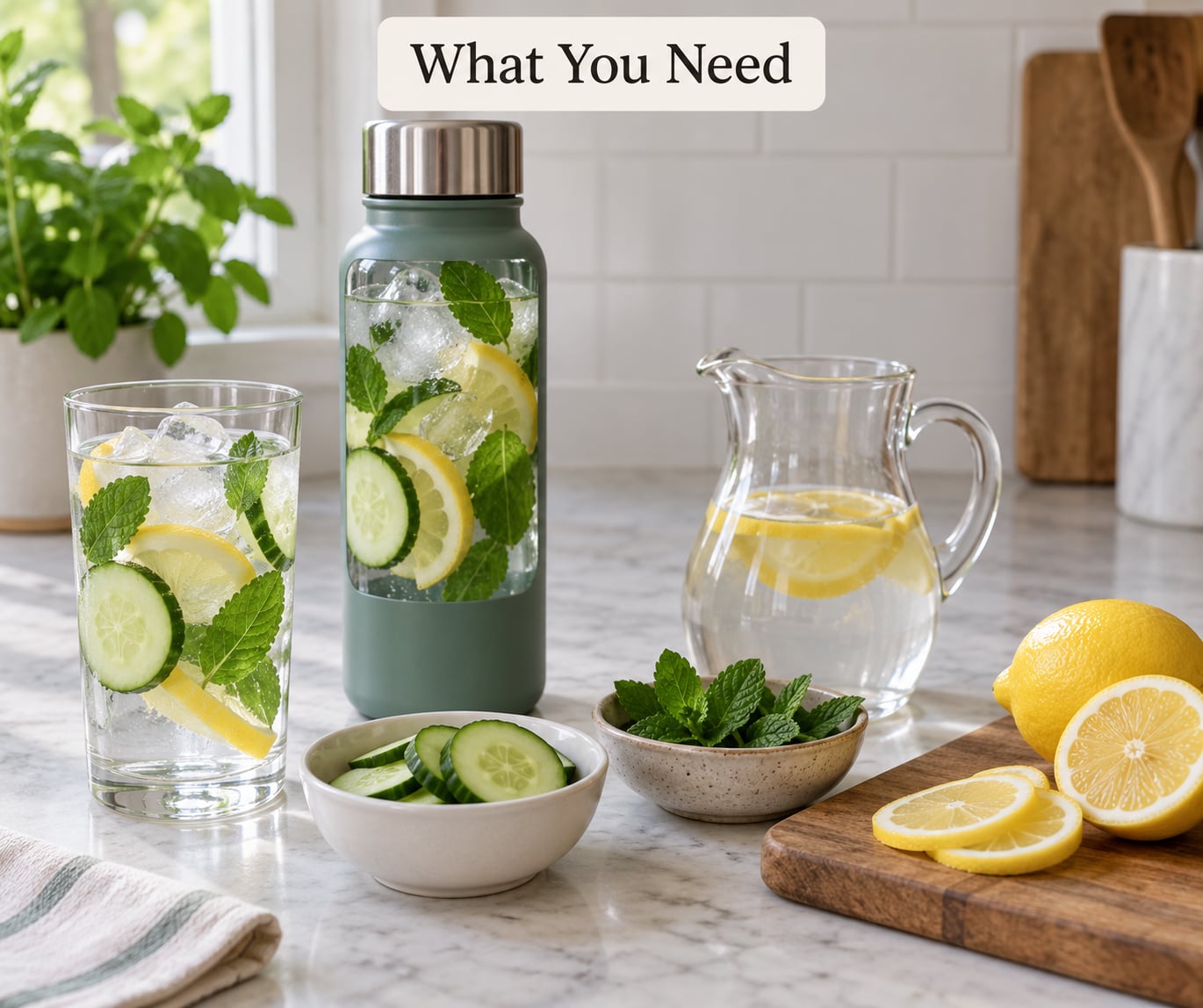
None of this is expensive and none of it is required. It is the short list of things that remove the specific reason a glass goes unfinished.
- A vessel you like holding. A wide-mouth glass, a straw bottle, or an insulated bottle with a lid that seals well. The material matters too, because plastic left in a warm car can lend an odor to water.
- Ice. It changes the whole experience and costs nothing.
- Citrus, berries, cucumber, mint, ginger or a sprig of an herb. Fresh is stronger than frozen for herbs, frozen is stronger for fruit.
- A small pitcher or a large bottle. So you can mix a batch instead of squeezing a lemon over a single glass at midnight.
- Optional: a filter pitcher or bottle. Worth trying if the problem is your tap water specifically.
- Optional: an electrolyte powder or tablet. Useful during heat, illness or long workouts, not a daily requirement for most people.
Step-by-Step: How to Drink More Water When You Hate the Taste
The order below matters. Each step builds a drink you can finish, and the next one adds volume once finishing is no longer a problem.
Start With a Baseline You Can Actually Finish
Begin with one extra serving at a moment that already exists, not with a target of eight glasses. Waking up, sitting down to lunch, and starting a workout are reliable cues because they happen whether or not you feel thirsty.
Then settle the temperature question, since it is the one people skip. Some people only tolerate water straight from the refrigerator. Others find cold water makes them feel uncomfortable and prefer room temperature, and warm water with lemon is genuinely pleasant to a lot of those people. On the Reddit thread about not liking water, temperature was the single most repeated complaint, with plenty of people unable to drink anything except genuinely cold water.
How do you know the baseline is working? You finish the glass without negotiating with yourself, and you notice you are not thirsty at the next usual interval. If you are still pouring half of it away, fix the temperature or the vessel before adding anything else.
Add Flavor Without Turning Water Into Dessert
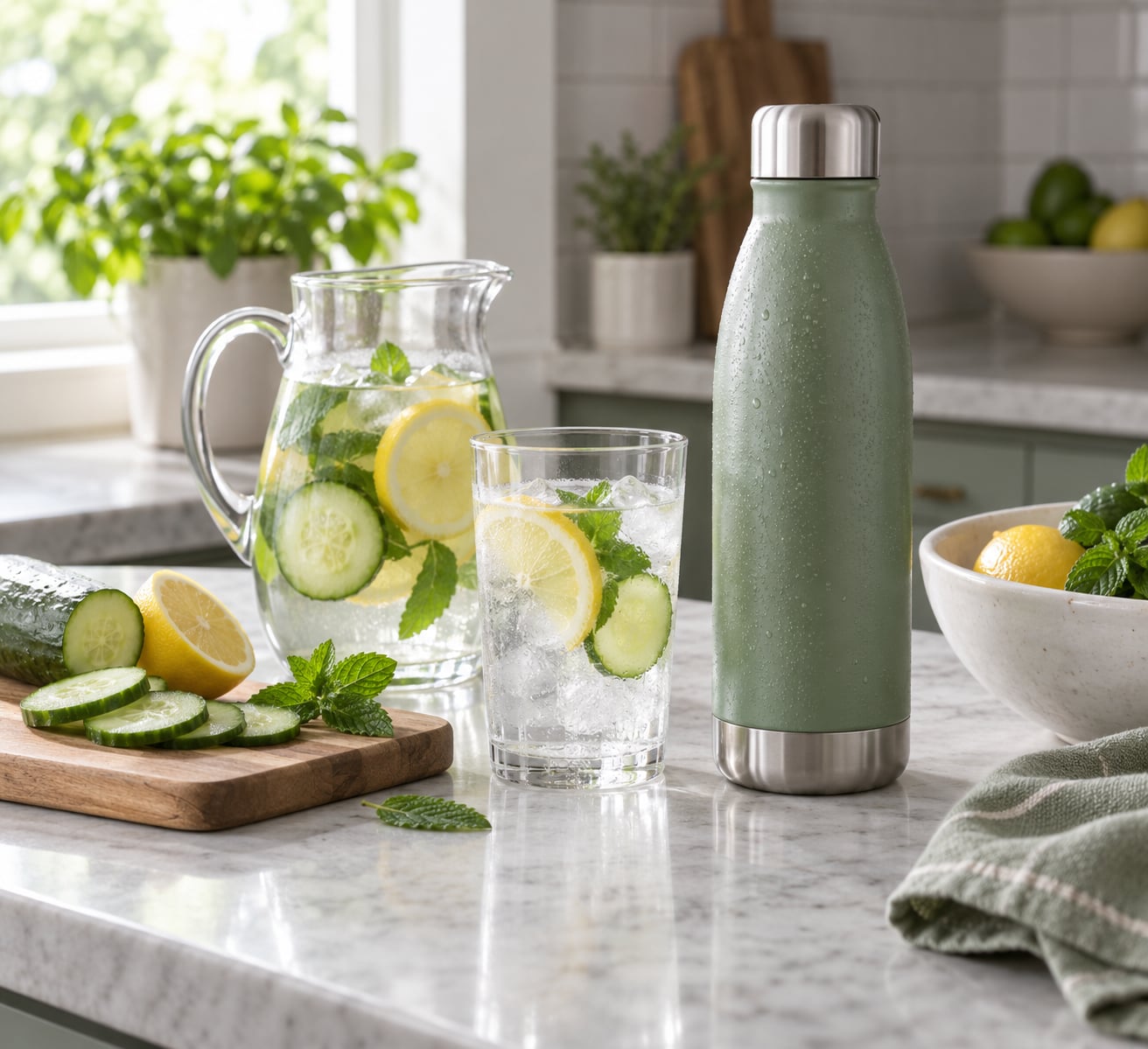
Infused water is the middle path: real ingredients, almost no sugar, and flavor you can vary. It sits between plain water and juice, which is exactly where most people trying to move off sweet drinks need to land.
Combinations that work well and take about ten minutes of prep:
- Lime and cucumber. Mild, clean, the least sweet of the group.
- Strawberry and basil. Sweet-smelling, very little actual sugar.
- Lemon and mint. Add the mint and keep the lid off for an hour or two so it does not turn bitter.
- Ginger and lime. Prickly, sharp, good cold.
- Orange or grapefruit peel. Peel only, pith removed, since pith turns bitter fast.
- Frozen berries. They release flavor as they thaw, which makes cold water interesting rather than flat.
Two cautions. Let fruit sit in the fridge rather than on the counter for hours, because a room-temperature infusion is a hospitable place for bacteria. And if you buy anything prepared, check the label for added sugar, because a flavored water with 12 grams of sugar per bottle is a soft drink with better branding.
How do you know it worked? If you find yourself looking forward to the glass instead of putting it down, this step is doing its job.
Change the Texture So Each Serving Is Easier
Some people are not rejecting flavor so much as flatness. That is a texture problem, and it has four easy answers: more ice, carbonation, glass shape, and a straw.
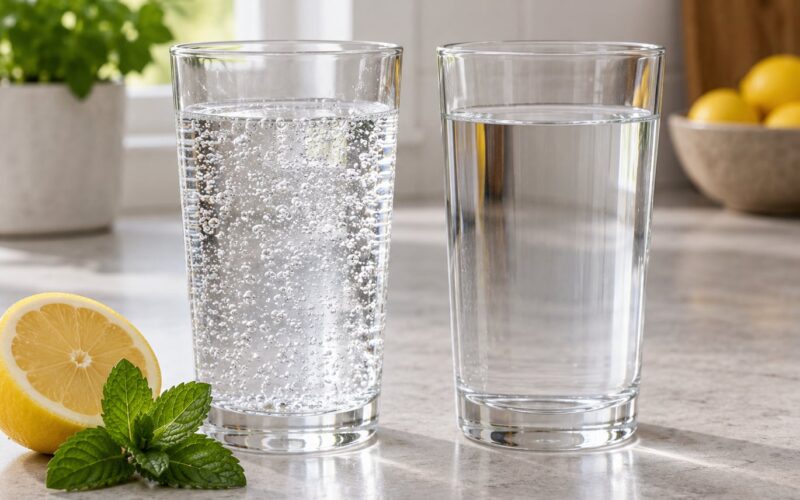
Carbonation is the strongest of the four. Plain sparkling water hydrates the same way still water does, and the bubbles make it feel like a drink rather than a chore. Add a wedge of lime or a few drops of bitters and it covers the sweet-tooth gap for a while.
A wide glass makes a small amount look like more and goes down easier than a narrow one. A bottle with a built-in straw slows you down and gives your mouth something to do. And freezing fruit, herbs or a splash of juice into ice cubes keeps a glass interesting for longer than a single cube melting in the corner.
How do you know it worked? You stop noticing that you are drinking. That is the point at which adding volume becomes easy.
Attach Water to Cues You Already Have
This is where the habit actually forms, and it is why so many attempts fail. Water sitting on a desk unopened is decoration. Water tied to an existing routine is a habit.
Pick four cues and put a bottle at each one: bedside, kitchen counter, work bag, car door pocket. Refill on the walk to the bathroom, on every break, at every refill of the coffee machine. People who drink this way usually report the same thing, that the water gets drunk without being remembered.
If remembering is the problem, external prompts help. A bottle that holds the volume you want makes the goal visible without a number on a screen. A recurring phone reminder every ninety minutes during waking hours works for some, and for others, mainly those who find remembering steps hard, a physical cue beats a digital one because it does not require deciding to notice it.
How do you know it worked? You look back after a few days and realize you drank four or five glasses without once having to decide to drink. That is the goal.
Common Mistakes That Keep People Stuck
Forcing a volume too fast. Trying to hit eight glasses in a day when you currently manage two creates a fight you lose. Add one serving a week for the first fortnight. The habit you keep beats the number you hit once and abandon.
Replacing sugary drinks with nothing. Cutting soda and juice to plain water in one step usually fails. Keep the sweet drink, dilute it with more water each week, and add a second glass of flavored water alongside it. Most people land on a permanent mix of both.
Not refilling the bottle. A bottle that is empty at noon is a missed afternoon. Refill every time you walk past a tap or a dispenser, which is why carrying one everywhere beats sitting at a desk.
Reading urine color as a scoreboard. It is a rough indicator and it is affected by vitamins, medication and food. Very pale urine all day is a reason to stop drinking, not a trophy. Very dark in the morning is common and usually means overnight.
Chasing a magic number. Needs differ with body size, climate, activity, pregnancy and illness, and general guidance counts fluid from food and other drinks, not water alone. A fixed target that ignores all of that is not useful, and more is not automatically better.
Ignoring the tap water itself. If your water smells like chlorine, chlorine is a sign of pipes rather than a taste to mask. A filter pitcher costs less than a month of bottled water and usually fixes the problem outright.
Tips for Keeping Water Appealing
If cold is the only temperature that works: commit to it, keep two bottles in the fridge, and refill on the way past. Ice-cold water is fine.
If plain water feels empty: sparkling water solves the same problem as fruit and requires no prep. It works at every meal.
If you dislike the texture of fruit in your glass: use an infuser bottle, or steep fruit in a pitcher and pour it off, so the liquid carries the flavor and not the pulp.
If strong flavor is what you are used to: you can be the person who wants squash that is quite strong, not diluted. Keep the flavor honest, but expect to build up over a few weeks rather than overnight.
If food is easier than drinks: watery fruit and vegetables, soups, yogurt, milk and fruit all count toward fluid intake. Drinking is not the only route, and it is a real one on days when drinking is impossible.
If you want structure without obsessing: a bottle sized for your day does more than an app. Fill it, empty it, refill it. Urine color, thirst and a simple record are enough. Anything more elaborate than that usually loses to the first busy week.
If you are managing a medical condition, are pregnant, are recovering from illness, or have been told to change fluid intake, ask your doctor, pharmacist or a registered dietitian what your own needs are before changing anything. The same goes for warning signs such as dizziness, confusion, very dark urine that does not clear, or inability to keep fluids down, which warrant medical attention rather than a better flavor trick.
Frequently Asked Questions
Why do I hate the taste of water?
Water itself is nearly flavorless, so the taste you notice comes from minerals, chlorine, temperature and whatever the water sat in. Some people pick up trace minerals or chlorination products more keenly than others. Others have a genuine sensory or aversive response to a neutral taste, or an association with water that tasted bad in the past. That is a preference, not a defect, and it can usually be worked around with temperature, carbonation and light infusion.
What can I drink instead of water if I hate it?
Sparkling water, herbal or fruit teas, milk, diluted juice, flavored water with little added sugar, and soups all contribute fluid. Electrolyte drinks are useful during heat, illness or long exercise. For everyday drinking, options that are mostly water are easiest to increase, because you can drink much more of them without a heavy sugar load. General guidance counts fluid from all sources, not water alone.
Does sparkling water hydrate you as well as still water?
Yes. Carbonated water hydrates the same way still water does, and the fizz is a texture change rather than a change in what the fluid does. A few people find carbonation uncomfortable with reflux or a full stomach, so it is not ideal during large meals or right before lying down. If it works for you, it is an easy switch because plain sparkling tastes like a drink rather than a chore.
How much water should I drink in a day?
There is no single right amount for everyone. Needs rise with body size, heat, activity, pregnancy, illness and medication, and food supplies a large share of fluid. General guidance typically counts most drinks and water-rich foods, not water alone, so a rigid glass count can be misleading. Build up gradually from your current intake and let thirst and urine color act as rough checks rather than a score.
How can I tell if I am dehydrated?
Thirst, headache, tiredness, dizziness, dry mouth and darker-than-usual urine are common signs, and they overlap with a lot of other things. Urine color is a rough guide rather than a measurement, and vitamins and medication can change it. If you are unwell, unable to keep fluids down, or showing signs that worry you, seek medical advice rather than trying to correct it with a drink.
What is the 10 gulp rule?
The 10 gulp rule is a prompt to take about ten small sips of water at once instead of one large glass. It is a trick from sports science for getting fluid in quickly during or after exercise, and many people find it easier than drinking 300 millilitres in one go. It is not a daily target and not a rule to follow if drinking that fast makes you uncomfortable.
Pick one temperature, one flavor combination and one existing routine tomorrow, then repeat them for a week. Bottles in the fridge, a glass at every meal and a bottle in the car will do more than any amount of forcing, and once water stops being a chore the volume takes care of itself. Updated for 2026.