Fifty dollars buys a full week of real food for one person, or a comfortable week for two if you plan meals and cook at home. It does not feed a family of four, and pretending otherwise is the first mistake most budget guides make.
Below is an itemized healthy grocery list under 50 dollars, priced aisle by aisle with a running total, plus a seven-day meal plan that uses those exact items and swaps for when the produce aisle is expensive that week. All figures are typical US ranges in 2026 dollars and they shift by region, season and store, so treat them as a working ceiling rather than a promise.
Table of Contents
- Healthy Grocery List Under 50 Dollars at a Glance
- What 50 Dollars of Groceries Can Buy
- The complete 50 dollar cart, aisle by aisle
- The seven-day plan that uses exactly these items
- Low-Cost Foods by Grocery Category
- How to build a healthy grocery list under 50 dollars
- Produce
- Protein
- Dairy and fortified alternatives
- Grains and pantry foods
- What Affects the Price
- Ways to Save
- Buy frozen and canned more often
- Make beans and eggs the default
- Switch to store brands selectively
- Plan meals before you shop
- Check the unit price
- Skip coupons unless you would have shopped anyway
- Use a swap table for over-budget weeks
- What the 5 4 3 2 1 grocery shopping rule means
- Frequently Asked Questions
- How can I make a healthy grocery list under 50 dollars?
- Is 50 dollars enough to buy groceries for a family?
- What are the cheapest healthy foods at the grocery store?
- Are frozen fruits and vegetables as healthy as fresh?
- Can a 50 dollar grocery budget support weight loss?
- Conclusion
Healthy Grocery List Under 50 Dollars at a Glance
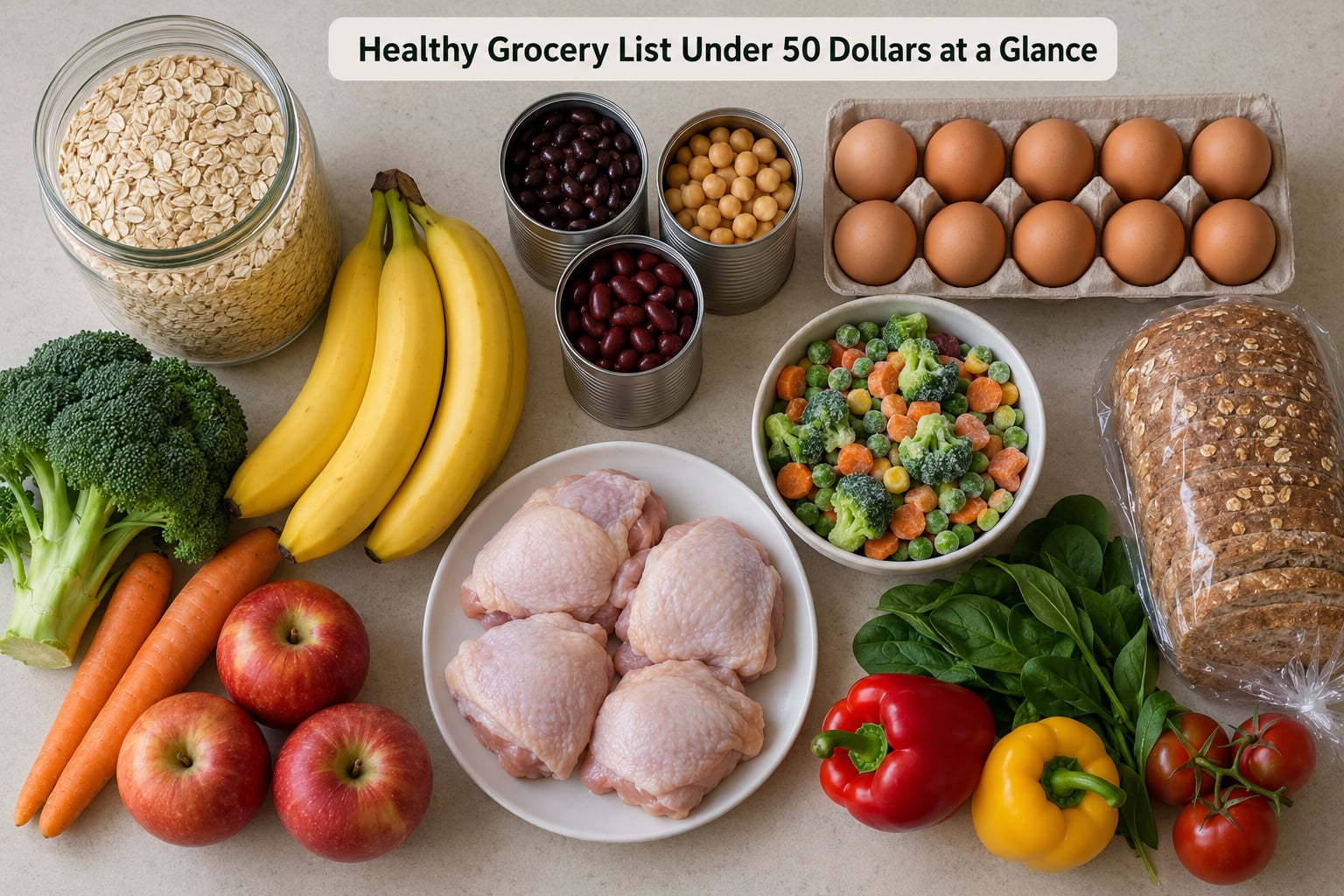
The table below shows what a typical weekly food budget looks like at three levels for one person. A lean week lands near 35 dollars, the practical target here is 50 dollars, and a higher-cost week with more variety runs around 75 dollars.
| Scenario | What it covers | Typical weekly total (one person) |
|---|---|---|
| Lean week | Oats, eggs, beans, rice, frozen vegetables, bananas, milk | $34 to $39 |
| Practical target | Everything in the cart below, with chicken, yogurt and fresh fruit added | $45 to $50 |
| Higher-cost week | More fresh produce, deli meat, specialty items and a wider snack range | $70 to $80 |
For context, the USDA publishes monthly national food cost plans by household size, and the thrifty plan for one adult lands well below this 50 dollar target. That gap is the useful part: a well-built list usually comes in under budget, which means produce and protein can be increased rather than trimmed.
What 50 Dollars of Groceries Can Buy
Split the money into six buckets and give each one a ceiling before you walk in the door. Produce, protein and grains take priority, and flexible extras absorb the difference.
The complete 50 dollar cart, aisle by aisle
| Category | Item and quantity | Typical price |
|---|---|---|
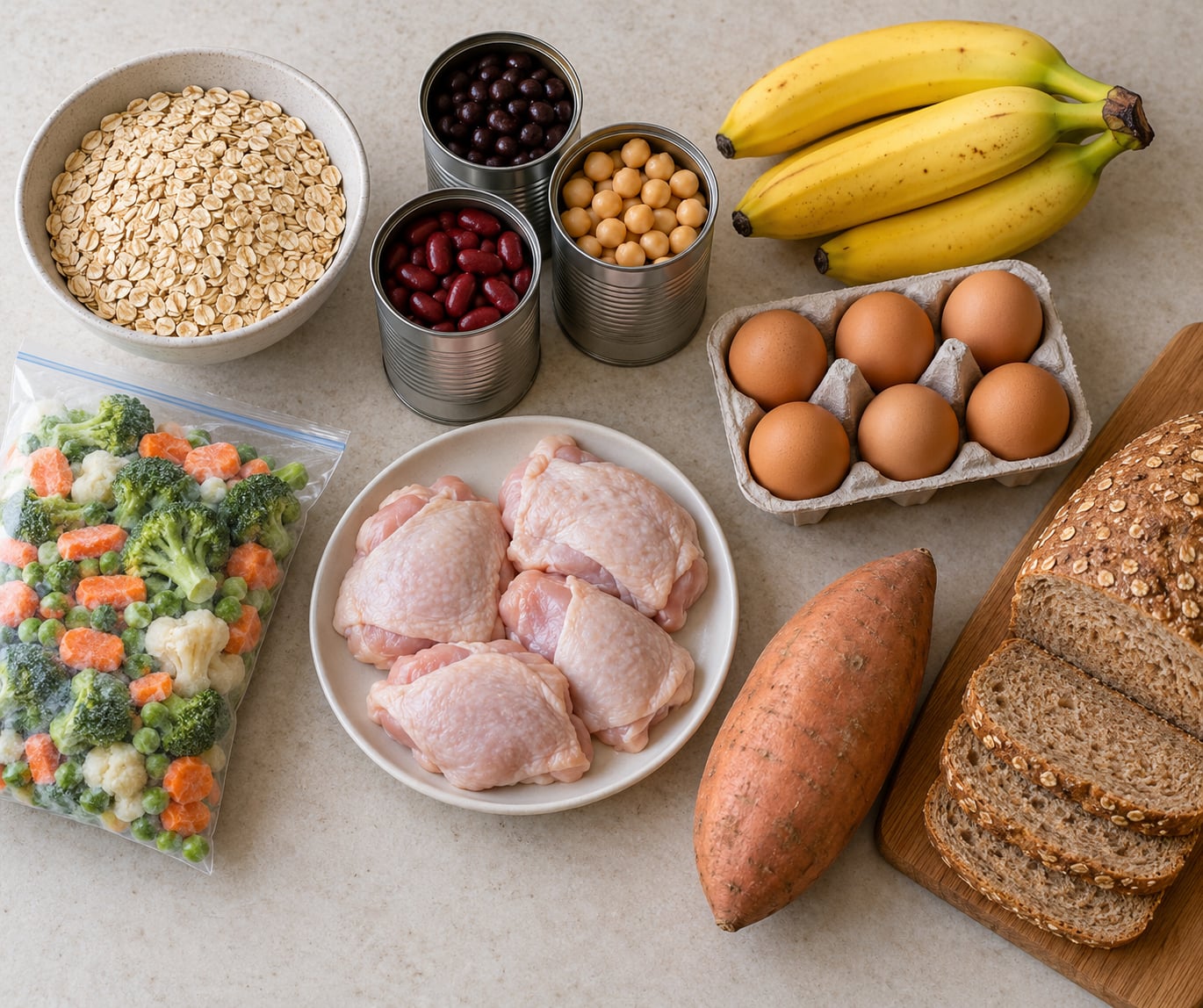
| Produce ($14.30) | Bananas, 2 lb | $1.58 |
| Yellow onions, 3 lb | $2.97 | |
| Sweet potatoes, 2 lb | $2.19 | |
| Frozen mixed vegetables, 2 lb | $3.78 | |
| Frozen broccoli, 12 oz | $1.49 | |
| Apples, 2 lb | $2.29 | |
| Protein ($14.23) | Eggs, 18 count | $3.79 |
| Boneless chicken thighs, 1.5 lb | $4.79 | |
| Black beans, 3 cans | $3.27 | |
| Chickpeas, 2 cans | $2.38 | |
| Dairy and fortified ($6.98) | Milk, half gallon | $3.49 |
| Plain Greek yogurt, 32 oz | $3.49 | |
| Grains ($8.27) | Old-fashioned oats, 42 oz | $3.79 |
| Brown rice, 2 lb | $2.79 | |
| Whole wheat pasta, 16 oz | $1.69 | |
| Pantry extras ($4.77) | Peanut butter, 16 oz | $2.59 |
| Diced tomatoes, 2 cans | $2.18 | |
| Total | Weekly shop | $48.55 |
That cart assumes salt, pepper, garlic, cinnamon, soy sauce and cooking oil are already in the pantry. A one-time pantry run for those basics is separate from the weekly 50 dollars, and buying them twice a week is one of the quietest ways budgets leak.
The seven-day plan that uses exactly these items
| Day | Breakfast | Lunch | Dinner |
|---|---|---|---|
| 1 | Oatmeal with banana and peanut butter | Greek yogurt with apple | Chicken and vegetable sheet pan, rice on the side |
| 2 | Eggs and leftover rice | Peanut butter apple toast | Black bean and onion soup over brown rice |
| 3 | Oatmeal with diced tomato and egg scramble | Leftover soup | Whole wheat pasta with tomato sauce and chickpeas |
| 4 | Greek yogurt with banana | Leftover pasta | Sweet potato and black bean bowl |
| 5 | Eggs with leftover vegetables | Leftover bowl, packed twice | Chicken and broccoli stir-fry over rice |
| 6 | Oatmeal with apple | Leftover stir-fry | Chickpea and vegetable curry over rice |
| 7 | Eggs, toast-equivalent rice bowl | Pantry soup from canned items | Roasted sweet potato, broccoli and chickpeas |
Cook chicken and the sheet-pan vegetables once on day one, then serve half that night and half on day five. The same beans appear four times in different forms, which is the whole trick: one can of chickpeas is not one meal, it is four.
For food safety, cook poultry to 165 F (74 C) and let it rest before slicing, refrigerate cooked food within two hours, and use refrigerated extra portions within three to four days. Freeze anything you will not eat in that window.
Low-Cost Foods by Grocery Category
How to build a healthy grocery list under 50 dollars
Start from the nutritional job each food does, then pick the cheapest item that does it well. Frozen and canned versions often win on price per serving and lose almost nothing nutritionally.
Produce
Bananas, onions, apples and sweet potatoes are the budget backbone because they keep for days, work in both sweet and savory dishes, and rarely spike in price. Frozen vegetables are picked and frozen within hours of harvest, so their vitamin content holds up well and the unit price per pound is usually lower than fresh. Fresh is worth paying for on leafy greens and tomatoes, where texture and flavor matter more and the price gap is smaller.
Protein
Beans and chickpeas deliver more protein per dollar than any meat in the cart, plus fiber that keeps you full longer. Eggs are the cheapest animal protein and cook in under ten minutes, which matters on weeknights. Boneless skinless chicken thighs usually cost less per pound than breast and are harder to overcook, so they forgive a beginner cook.
Dairy and fortified alternatives
Plain Greek yogurt gives more protein per serving than regular yogurt and needs no added sugar to taste good. Milk costs about the same per gallon as fortified soy or almond alternatives, and only fortified plant milks supply comparable vitamin D and calcium, so check the label before switching. If you avoid dairy, canned sardines, tofu and fortified plant milk cover the same ground.
Grains and pantry foods
Oats, brown rice and whole wheat pasta each cost a few dollars and stretch across several meals. Choose bread labeled whole wheat as the first ingredient, since many wheat breads are refined flour with a little whole grain for color. Peanut butter, canned tomatoes, olive oil and spices are buy-once items that flavor the whole week.
What Affects the Price
The same list costs noticeably different amounts depending on where and how you shop. This table shows which factors push the bill up and which pull it down.
| Factor | Effect on the total | What to do |
|---|---|---|
| Household size | Rises sharply per person beyond two | Scale quantities, not the list structure |
| Region and store type | Warehouse clubs cut unit price; small urban stores raise it | Compare unit prices, not sticker prices |
| Brand choice | Store brand typically runs 20 to 30 percent below national brands | Switch pantry and dairy items first |
| Seasonality | In-season produce is cheaper; out-of-season is not | Buy frozen when fresh is priced high |
| Freshness requirements | Pre-cut and organic add cost for little nutritional gain | Skip precut produce, keep frozen and canned |
| Dietary restrictions | Specialty items can double a category’s cost | Base the list on beans, rice and oats, then adjust |
| Shopping trips | Each unplanned visit adds impulse spending | Shop once a week with a list |
Household size is the one factor worth stating plainly. Fifty dollars a week comfortably covers one person, works for two with careful portions, and falls well short for a family of four, who typically need something in the range of 150 dollars or more depending on where they shop and how much they cook from scratch.
Ways to Save
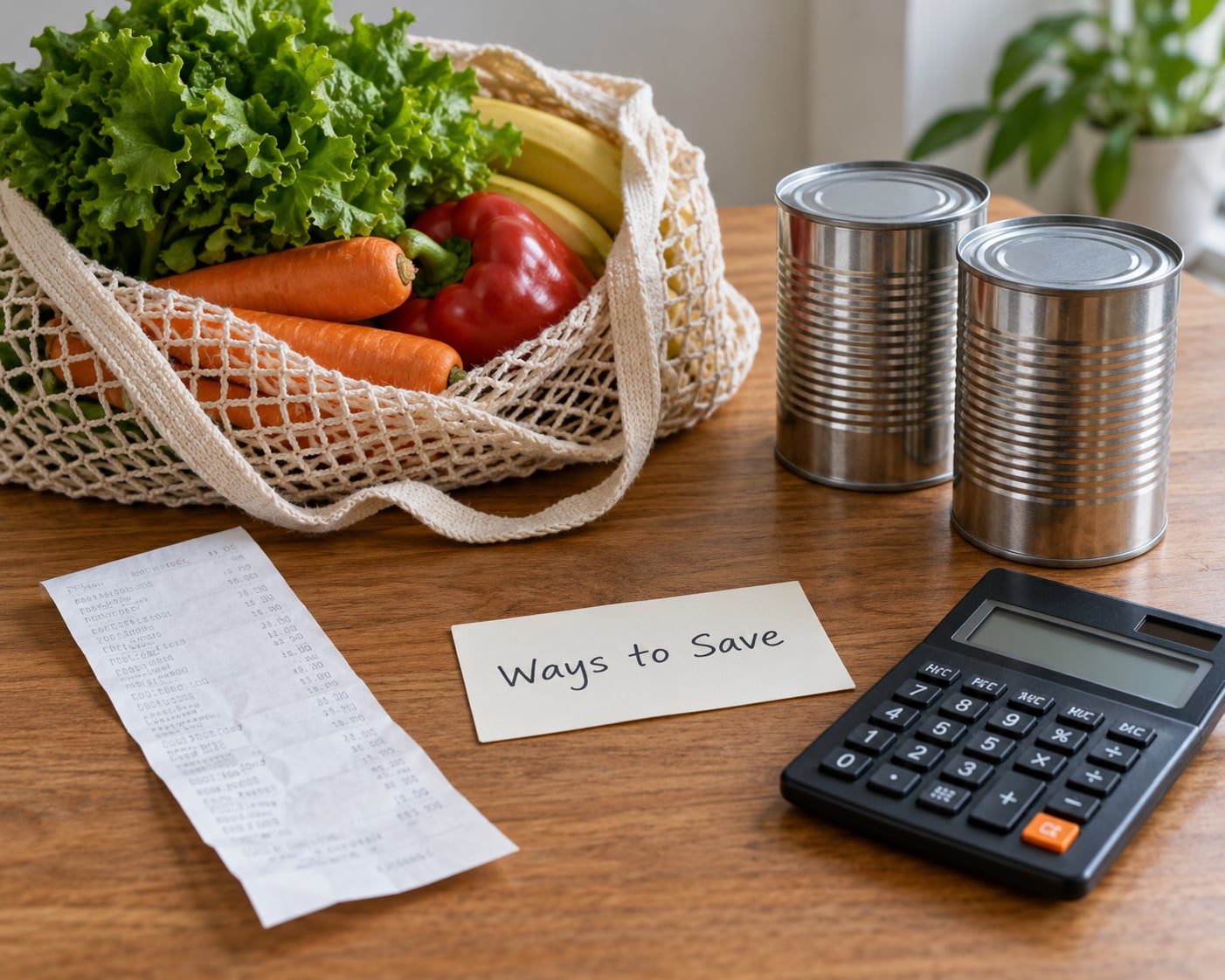
Buy frozen and canned more often
Frozen vegetables, canned beans and canned tomatoes keep for months, so one trip covers several weeks and nothing spoils in the back of the fridge. Compare the shelf tag against the per-pound price of fresh and the frozen bag usually wins.
Make beans and eggs the default
A can of beans costs about a dollar and becomes soup, tacos, a rice bowl or a pasta sauce. Eggs become breakfast, a fried dinner topping and a binding agent for leftover vegetables. Plan meals around what is already in the pantry and on sale rather than the other way around.
Switch to store brands selectively
Store brands save the most on pantry goods, dairy, eggs and frozen items, where the recipe is standardized anyway. Keep the branded version for anything you genuinely taste a difference in, like coffee or olive oil.
Plan meals before you shop
Write down seven dinners and seven breakfasts first, then buy only what those meals need. It is the single biggest difference between people who stay under budget and people who blow through it in aisle five.
Check the unit price
Compare shelf tags by price per pound or per ounce, not by the number on the front. A large package that looks like a deal is frequently more expensive per unit than the smaller one, especially on spices and nuts.
Skip coupons unless you would have shopped anyway
Coupons only save money on items you were already buying. Buying an extra box of crackers to use a coupon is spending more, not less.
Use a swap table for over-budget weeks
| When this costs too much | Swap for | Why it works |
|---|---|---|
| Fresh berries | Frozen berries | Comparable nutrition, lower price per cup |
| Chicken breast | Extra can of beans | More protein per dollar, longer storage |
| Greek yogurt | Extra eggs plus milk | Similar protein, cheaper per serving |
| Organic greens | Conventional kale or frozen spinach | Nutrient difference is small, price gap is not |
| Avocados | Apples or bananas | Similar fruit servings, far cheaper and longer lasting |
What the 5 4 3 2 1 grocery shopping rule means
The 5 4 3 2 1 rule is a planning framework, not an official nutrition standard. For each week, aim for five servings of vegetables, four servings of fruit, three servings of protein, two servings of grains or starches and one treat or flexible item. It works well for a 50 dollar list because it caps indulgence at one item and forces produce to the front of the cart before snacks do.
Adjust the numbers to your own goals, but keep the structure. A weekly list built to a fixed serving pattern breaks down far less often than a list built around whatever looked good in the store.
Frequently Asked Questions
How can I make a healthy grocery list under 50 dollars?
Plan your meals first, then check what you already have in the pantry before buying anything. Give produce, protein and grains a fixed dollar ceiling each, keep frozen and canned items for the weeks fresh produce is expensive, and switch to store brands on pantry goods and dairy. Shop once a week and read unit prices rather than front-of-pack prices.
Is 50 dollars enough to buy groceries for a family?
Fifty dollars comfortably covers one person for a week, and works for two if you plan meals, use canned and frozen foods and limit eating out. A family of four generally needs closer to 150 dollars or more per week, depending on region and how much you cook from scratch. For a larger household, the list structure still works, but the quantities and the total both scale up.
What are the cheapest healthy foods at the grocery store?
Beans, chickpeas, eggs, oats, brown rice, whole wheat pasta, frozen vegetables, bananas, onions and sweet potatoes consistently deliver the most nutrition per dollar. Canned fish, plain yogurt and frozen fruit round out the list cheaply. These foods keep for months in the freezer or pantry, so a single purchase covers several weeks of meals without spoiling.
Are frozen fruits and vegetables as healthy as fresh?
Usually yes. Frozen produce is picked and frozen within hours of harvest, and freezing stops the vitamin loss that happens during long storage and transport. Fresh produce can carry more vitamin C when it is truly fresh, but the difference is small for most vegetables. Frozen also avoids the food waste that happens when fresh items sit in the crisper until they turn.
Can a 50 dollar grocery budget support weight loss?
It can support weight loss, though it takes planning rather than restriction. Fill most of the cart with high-fiber, low-calorie-dense foods like vegetables, beans, fruit, oats and lean protein, and measure the higher-calorie items like peanut butter, oil and rice. For individual guidance on calories, portions or any medical condition, talk to a doctor or a registered dietitian.
Conclusion
Start by writing your seven dinners on paper, then open the pantry and cross off anything you already own. Take the aisle table above as your ceiling, shop once with the list in hand, and keep the flexible extras line for whatever is cheapest that week.
That is the whole method behind a healthy grocery list under 50 dollars: a fixed plan, honest serving math and no unplanned trips. Prices shift with the season and the region, so adjust the quantities rather than the structure when your store is expensive.