For most healthy adults, yes — you can get more probiotics from food than from a daily capsule, and the food brings extra nutrients and a wider mix of strains with it. The practical answer is to build a small set of fermented foods into meals you already eat, spread across the day, rather than hunting for a superfood.
This guide covers what probiotics actually are, which foods carry the most live cultures, how to read a label without a magnifying glass, and how to add these foods without wrecking your digestion. It also covers the cases where a pill is genuinely the smarter call.
Table of Contents
- What Are Probiotics, and Can You Get Them From Food?
- How to Get More Probiotics From Food Instead of Pills
- How to get more probiotics from food without a new shopping list
- Which Foods Contain the Most Probiotics?
- Live-culture dairy options
- Fermented vegetables
- Soy foods
- Other fermented foods
- How to Build a Daily Probiotic-Rich Meal Plan
- What to Look for on Food Labels
- How to Add Probiotic Foods Without Disrupting Your Digestion
- Are Probiotic Foods Better Than Pills?
- Who Should Ask a Doctor or Registered Dietitian First?
- Frequently Asked Questions
- Is yogurt the best food source of probiotics?
- Can I get enough probiotics from food without taking a supplement?
- Does cooking or heating destroy probiotics in food?
- Are fermented foods such as kimchi and sauerkraut always high in probiotics?
- How long should I eat probiotic foods before noticing a difference?
- Should people with a weakened immune system try probiotic foods?
- Conclusion
What Are Probiotics, and Can You Get Them From Food?
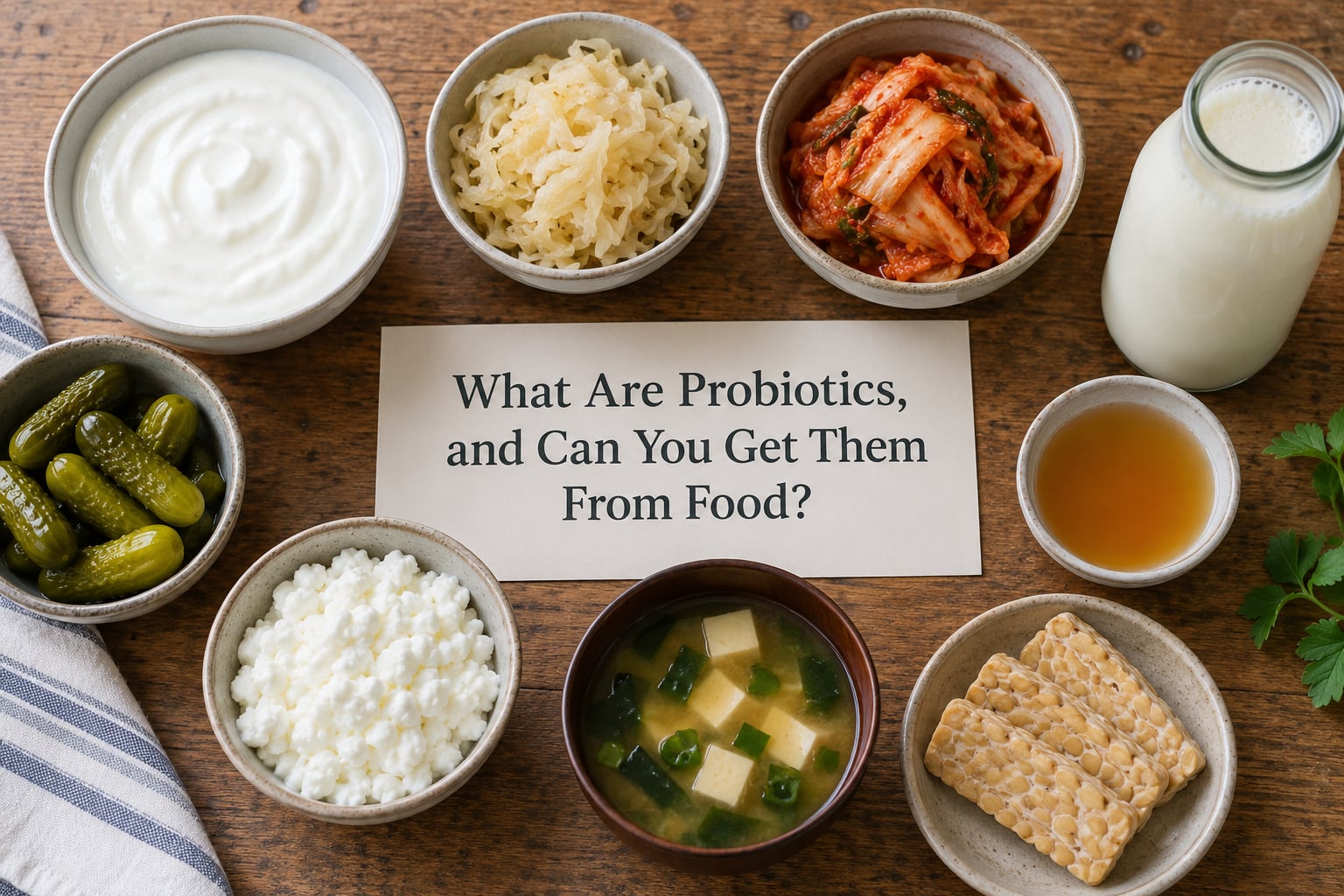
Probiotics are living bacteria and yeasts that pass through your food and briefly support the balance of organisms in your gut. The two families you will see most often on labels are Lactobacillus and Bifidobacterium, though yeast-based strains exist too. Strains are named like this for a reason: benefits are strain-specific, so two products carrying the same species can behave very differently.
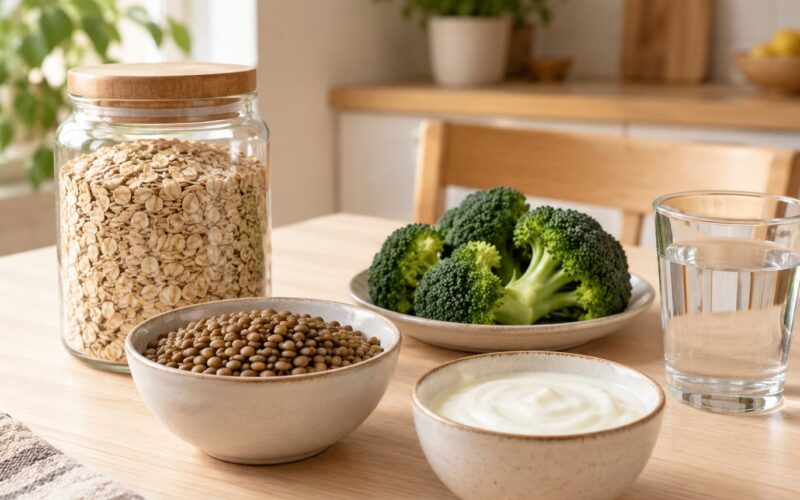
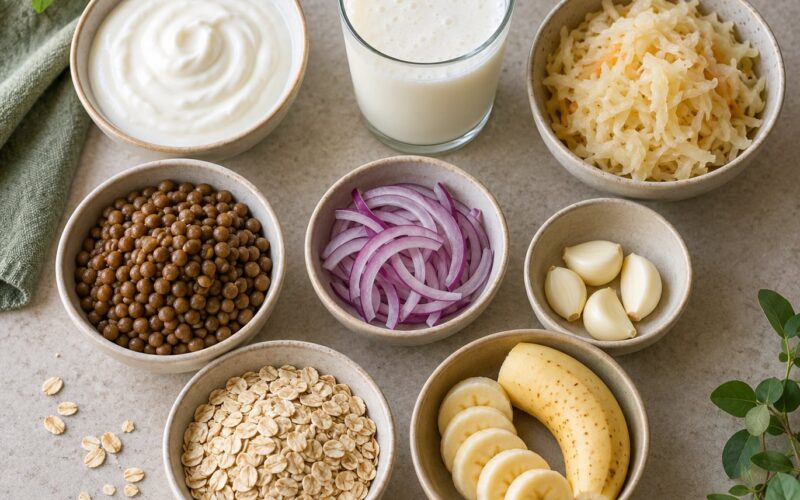
Four words get mixed up constantly, so here is the clean version. Probiotics are the living organisms. Prebiotics are the fibers those organisms eat — garlic, onions, leeks, asparagus, bananas, oats and chicory root. Fermented food describes the process, not a guarantee; a food can be fermented and contain no live cultures left. Synbiotic just means a food or product that carries both.
CFU means colony forming units, the label’s shorthand for how many organisms are in the serving, and it is the number people fixate on. It is also the number that matters least on its own, because a huge count of one strain is not the same as a modest count of twelve.
Can food replace a pill? For most people, the food route is the easier one to sustain, and it is what registered dietitians tend to suggest first. Food is not automatically better — I will get into that honestly further down — but it is a very reasonable starting point.
How to Get More Probiotics From Food Instead of Pills

The whole method is boring: pick three or four foods from the list below, attach each one to a meal you already eat, and add them one at a time over about two weeks. Variety is the point. Community gut-health forums repeat it constantly — a range of fermented foods beats a single strain every time.
| Food | Main cultures | Best slot in the day | Watch out for |
|---|---|---|---|
| Kefir | Bacteria and yeast, dozens of strains | Breakfast drink or smoothie base | Strong tang, higher lactose than most tolerate |
| Plain yogurt | Lactobacillus, Bifidobacterium, Streptococcus | Breakfast, snack | Added sugar, live cultures killed by heat |
| Sauerkraut | Lactobacillus, Leuconostoc | Lunch side, grain bowl topping | Sodium, histamine in sensitive people |
| Kimchi | Lactobacillus kimchii and friends | Lunch, dinner, with rice | Sodium, spice level |
| Tempeh | Bacillus, Lactobacillus, Rhizopus mould | Dinner protein swap | Must be uncooked to keep cultures |
| Miso | Aspergillus oryzae, Lactobacillus, yeasts | Lunch, dinner, soup base | High sodium; boiling destroys live cultures |
| Kombucha | Acetobacter, Saccharomyces, lactic bacteria | Midday drink | Very acidic, often sugary, rare infection risk |
| Natto | Bacillus subtilis | Breakfast with rice | Strong smell, very sticky texture, hard to source |
| Cheese (cheddar, gouda, Swiss) | Propionibacterium and others | Snack, alongside a meal | Heated melt cheese has fewer live cultures |
| Lacto-fermented pickles | Lactobacillus | Lunch side, sandwich filler | Vinegar-pickled versions have none |
| Coconut or soy kefir | Strains added during fermentation | Breakfast, dairy-free households | Check the label for live cultures, not just “fermented” |
| Traditional buttermilk | Lactobacillus and Lactococcus | Baking, drinks, on cereal | US supermarket buttermilk is cultured, not fermented |
How to get more probiotics from food without a new shopping list
Start with what you already buy. If yogurt is in your fridge, keep it and skip the sweet flavored versions, which often carry more sugar than cultures. If you cook with soy sauce, swapping in a spoon of miso costs nothing extra and adds live organisms you are boiling anyway — except that you add the miso off the heat, which I will explain under labels.
Next, add one fermented vegetable. A small serving of sauerkraut with lunch is the least effort item on this entire list: you open a jar, spoon some onto a bowl, done. It also travels reasonably in a sealed container if you pack lunch.
Then layer the prebiotic side. Fermented food arrives with fiber that keeps the organisms fed in the gut. Garlic, leeks, asparagus, cooked onions, oats and bananas do the job, and pairing them with the fermented food in the same meal is the simple version of a synbiotic approach.
Spread the intake across the day rather than cramming it into dinner. Fermented food at two or three meals gives you more of what you want than the same food once, and it keeps your kitchen routine from feeling like a prescription.
Which Foods Contain the Most Probiotics?
There is no universal ranking, and any article that hands you one is simplifying past the point of usefulness. Culture counts vary by batch, by starting temperature, by how long the food fermented, and by what happened between the factory and your table. Kefir is generally the richest in raw number and strain variety; fermented vegetables often carry fewer organisms but more diversity of types.
Live-culture dairy options
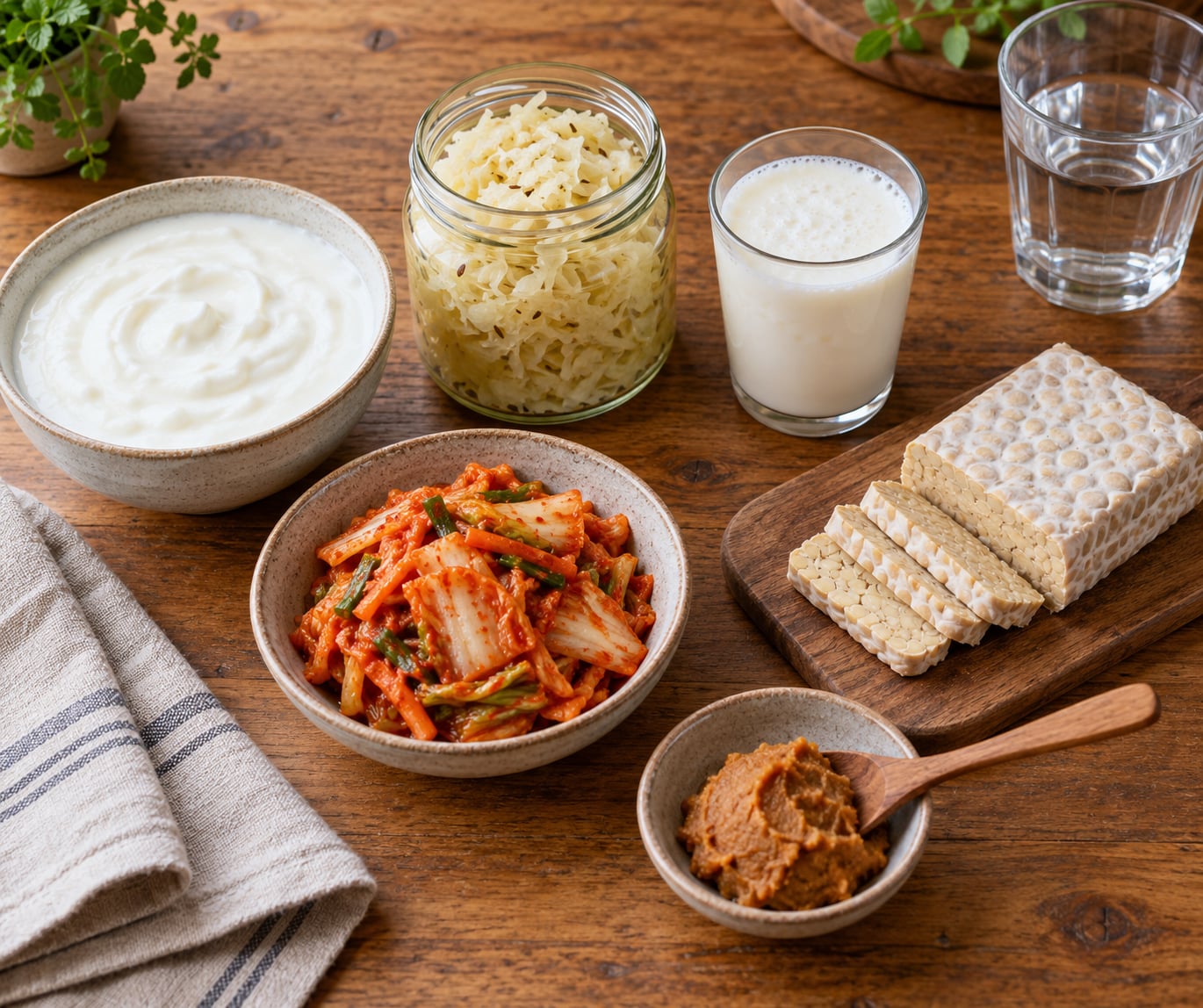
Yogurt, kefir and aged cheese are the most familiar live-culture foods. Kefir usually wins on diversity, because kefir grains are a symbiotic community of bacteria and yeast rather than a single inoculated culture. Plain yogurt labeled “live and active cultures” is the reliable version; anything heated after culturing is decoration.
Fermented vegetables
Sauerkraut, kimchi, lacto-fermented pickles and garnishes such as pickled ginger all qualify, with one catch. Lacto-fermentation uses salt and time. Vinegar pickling uses acid, and vinegar does not leave live cultures behind in a jar of cucumbers. If the label says “pickled in vinegar” rather than “fermented,” you are eating a crunchy vegetable, not a probiotic one.
Soy foods
Unpasteurized tempeh, miso and natto all carry living organisms, and tempeh’s mould-based fermentation also reduces phytic acid, which improves the absorption of the iron and zinc in the beans. Raw tempeh keeps its cultures; cooking it thoroughly does not.
Other fermented foods
Kombucha, natto, sourdough starter, some cheese, and traditional buttermilk round out the list. Variety here is genuinely useful rather than a slogan, which is why threads on ketogenic and whole-food forums keep landing on the same advice: several different foods each week, not one food every day.
How to Build a Daily Probiotic-Rich Meal Plan
The easiest plans are the ones that attach a fermented food to an existing meal rather than adding a new one.
- Breakfast. Plain yogurt with berries and a spoon of oats, or a small glass of kefir if dairy in liquid form suits you better. Natto over rice works if you already like Japanese food.
- Lunch. A grain bowl with sauerkraut or kimchi, cooked onions and garlic on the side. The vegetables are the prebiotic, the kraut is the culture, and the bowl is already a normal lunch.
- Dinner. Tempeh cubed and sautéed, or a serving of miso added to soup after the pot comes off the heat. Both count as dinner, not as an extra supplement.
- Snacks. A slice of aged cheese with apple, a few lacto-fermented pickles, or a small glass of kombucha between meals if you already drink it.
Here is a seven-day starter shape. The goal is variety and repetition, not perfection.
| Day | Breakfast | Lunch | Dinner |
|---|---|---|---|
| 1 | Plain yogurt with berries | Nothing new | Miso soup |
| 2 | Yogurt with oats and banana | Sauerkraut with grain bowl | Cooked tempeh |
| 3 | Small glass of kefir | Kimchi fried rice | Soup with miso added off heat |
| 4 | Yogurt with nuts | Lunch with lacto-fermented pickles | Tofu and vegetable stir-fry with kimchi |
| 5 | Natto over rice, or yogurt | Sauerkraut on a sandwich | Aged cheese, fruit, soup |
| 6 | Coconut kefir with fruit | Kombucha with lunch | Miso-glazed vegetables |
| 7 | Plain yogurt with berries | Kimchi with rice and egg | Tempeh or yogurt-based marinade |
Notice what is missing: no special shop, no separate equipment, no pills. Everything on this list sits in a normal grocery store, most of it in the refrigerated section.
What to Look for on Food Labels
Label reading is where food-based probiotics get sorted from marketing, so here are the checkpoints in the order I read them.
- “Live and active cultures” on the front. This phrasing is the clearest signal for yogurt. In Europe, equivalent wording appears on live yoghurt labels.
- Named strains. Lactobacillus acidophilus, Bifidobacterium lactis, Lactobacillus kimchii, Bacillus subtilis. Specific names tell you what is actually in the jar.
- Refrigerated and sold raw. Cold storage is the simplest protection for live organisms. Shelf-stable options are usually heat-treated at some point, which means the cultures are gone.
- “Unpasteurized” or “made with raw milk.” Pasteurization is designed to kill organisms, including the good ones.
- Added sugar and sodium. Flavored yogurts can carry a surprising amount of sugar, and fermented vegetables can be salty enough to matter if you eat several servings a day.
Heat deserves its own line because it catches people constantly. Probiotics are heat-sensitive: boiling miso for ten minutes turns it into a salty seasoning rather than a probiotic food. Add miso after cooking, cook tempeh lightly if you care about the cultures, and eat your yogurt cold.
One trap deserves naming: packaged snacks claiming probiotic fortification, from granola bars to crackers to gummies. The organisms have to survive the extrusion, baking or shelf life to do anything, and dietitians writing about this topic tend to treat those claims as marketing rather than a real source.
How to Add Probiotic Foods Without Disrupting Your Digestion
The honest warning: fermented foods contain fermentable carbohydrates, and if your gut is sensitive, a large serving can produce gas, cramping or bloating that people often blame on the food and misattribute to “detox.” The fix is volume and pacing, not quitting.
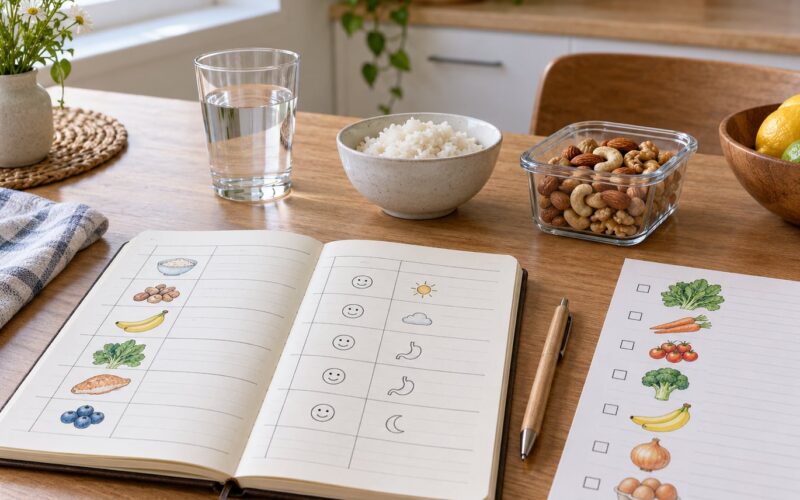
Add one new food per week rather than five at once. A tablespoon of sauerkraut is a perfectly reasonable starting portion, and it counts. If it sits comfortably, double it. Keep a glass of water nearby and drink it, since increasing fiber intake without fluids tends to create its own problems.
Watch sodium. Sauerkraut and kimchi can run high, and people with blood pressure or kidney conditions are usually told to limit them. Rinse canned or jarred fermented vegetables under water and drain, which pulls off a good share of the salt.
If a strong flavor is the blocker, miso in soup is nearly impossible to notice, and sauerkraut in a grain bowl disappears completely. Fermented foods are seasoning as much as they are supplements, so hiding them inside a dish you already like is not cheating.
People who react badly to fermented foods sometimes have a histamine sensitivity rather than a probiotic problem, and fermented foods are among the highest-histamine foods in the diet. Persistent pain, not occasional bubbling, deserves a conversation with a clinician rather than another adjustment.
Are Probiotic Foods Better Than Pills?
Neither one wins outright. Food wins on variety and on the nutrients that come with it; capsules win on consistency, portability and on being able to deliver a specific strain at a known dose.
| Factor | Probiotic foods | Probiotic capsules |
|---|---|---|
| Strain variety | Often wide, especially kefir and sauerkraut | Usually one to a few named strains |
| Amount per serving | Varies by batch and preparation | Standardised count printed on the label |
| Extra nutrients | Protein, calcium, vitamins, fiber | Very little besides the capsule material |
| Storage | Refrigeration for most live options | Some need refrigeration; heat degrades others |
| Travel | Awkward; needs a cold chain for the live versions | Genuinely convenient |
| Consistency | Depends on the batch and how fresh it is | Dose is the same every time |
| Best use case | Everyday maintenance and diversity | Targeted needs, travel, clinician-guided plans |
Two honest caveats on the pill side. First, the count on the label is a count at manufacture, and viability drops over time, especially in heat and humidity, so a capsule that sat in a warm car for a month is not delivering what the box promised. Second, supplements are not reviewed the way medicines are before sale, which is a fair question for anyone taking them long-term.
One piece of research gets quoted constantly and deserves careful framing. A Stanford trial published in Cell in 2021 found that a fermented-food diet increased microbiome diversity and lowered markers of inflammation over ten weeks, while a high-fiber diet did not produce the same effect. That is encouraging, but it was one small trial in adults who were not being treated for a condition, so treat it as a reason to eat more fermented food rather than as proof about any individual outcome.
Who Should Ask a Doctor or Registered Dietitian First?
General information has limits, and this is one of the areas where it matters. Talk to a clinician before changing how you eat, or before starting or stopping any supplement, if you fall into any of these groups.
- You have a weakened immune system, or you are living with a condition that affects immunity.
- You are pregnant or breastfeeding, particularly with kombucha or unpasteurized products.
- You are preparing for or recovering from surgery, or you have a central venous catheter.
- You have kidney disease, or you are on a restricted-sodium diet.
- You have been prescribed a specific probiotic as part of a treatment plan, which is not a swap.
- You are dealing with ongoing symptoms such as persistent pain, blood in stool, unexplained weight loss or symptoms lasting more than a few weeks.
Antibiotics deserve their own note. If you have just finished a course, food-first is still reasonable for general support, but if your clinician recommended a specific strain, follow their plan rather than swapping in yogurt.
None of this is medical advice, and none of it replaces a conversation with someone who knows your history. If something feels wrong, that conversation is the right next step.
Frequently Asked Questions
Is yogurt the best food source of probiotics?
Yogurt is the easiest entry point, not the strongest. Plain yogurt with live and active cultures gives you a dependable daily serving, but kefir usually contains more organisms and a wider mix of strains because kefir grains are a community of bacteria and yeast rather than a single culture. If you dislike yogurt or are lactose intolerant, sauerkraut, kimchi, miso and tempeh deliver live cultures with no dairy at all.
Can I get enough probiotics from food without taking a supplement?
For most healthy adults, yes. A varied diet with fermented food at two or three meals a day gives you more strain diversity than a typical capsule, along with protein, fiber and minerals the capsule does not contain. A supplement is the better call when you need a specific strain at a known dose, when you are travelling without refrigeration, or when a clinician has recommended one.
Does cooking or heating destroy probiotics in food?
Yes, heat is the main threat to live cultures. Boiling miso for ten minutes turns it into salty seasoning rather than a probiotic food, and fully cooked tempeh has lost much of what an uncooked piece keeps. Add miso after the pot comes off the heat, keep tempeh lightly cooked, eat yogurt cold, and skip the grilled kefir idea. This is also why most shelf-stable probiotic drinks have no live organisms left.
Are fermented foods such as kimchi and sauerkraut always high in probiotics?
Not always. Kimchi and sauerkraut made by lacto-fermentation with salt and time carry live cultures, while vegetables pickled in vinegar do not, because the acid does the work instead. Unpasteurized versions are the ones to look for, and fresh is better than old. Heat-treated shelf-stable jars lose their cultures entirely, so read the label rather than assuming.
How long should I eat probiotic foods before noticing a difference?
There is no fixed timeline, and claims about a specific number of days are not something anyone can promise. Some people report changes in digestion within two to three weeks of consistent daily intake, and others notice nothing at all. Fermented food is worth eating for variety and nutrition regardless, and a change you expected but never felt is not proof the food failed to work.
Should people with a weakened immune system try probiotic foods?
Ask your doctor or registered dietitian first rather than starting on your own. Live organisms from unpasteurized fermented food can pose a risk to people whose immune systems are weakened, and that includes some people on immune-suppressing medication. Unpasteurized products also matter during pregnancy. A clinician who knows your situation can tell you which options are appropriate and which to avoid.
Conclusion
If you take one thing from this, make it small. Choose one reliable live-culture food for breakfast — plain yogurt or a small glass of kefir — and add a fermented vegetable at lunch, sauerkraut or kimchi, in a portion you will actually repeat. Build from there over two weeks rather than in one dramatic weekend.
If you are already on a supplement and want to step away from it, the sensible route is to add the food sources first, keep them steady for a few weeks, and only then reduce anything you were taking — and to do that with your pharmacist or doctor if the supplement was ever prescribed. And if you fall into any of the groups above, bring the plan to a doctor or registered dietitian before you start. More variety, less fuss, and food you genuinely enjoy eating tends to last longer than anything that tastes like a chore.