The best cooking oils for high heat cooking are refined avocado oil and refined canola oil, both of which hold their structure past 450°F (232°C) without smoking. Searing a steak at 450°F (232°C), stir-frying in a 550°F (287°C) wok, or deep frying at 350°F (177°C) puts far more stress on fat than drizzling olive oil over a salad does. Pick the oil that matches your hottest pan, not the bottle with the biggest number on the label.
Most home cooks have two or three oils in the cabinet and use them for everything, which usually works until a thin layer of oil starts smoking over a screaming skillet. Smoke is the signal that the fat is breaking down, and past that point the flavor turns bitter and the oil degrades.
Most of the oils below turn up in my own kitchen rotation, and the pattern that surprised me was how little the big smoke point numbers actually told me. Each entry below gets a smoke point, a flavor description, and a straight verdict on where it earns its place in a beginner’s kitchen.
Table of Contents
- Best Cooking Oils for High Heat Cooking at a Glance
- How to Read the Best Cooking Oils for High Heat Cooking Comparison
- 1. Avocado Oil
- 2. Refined Canola Oil
- 3. Peanut Oil
- 4. Refined Sunflower Oil
- 5. Refined Safflower Oil
- 6. Rice Bran Oil
- 7. Refined Sesame Oil
- 8. Refined Soybean Oil
- 9. Corn Oil
- 10. Grapeseed Oil
- Frequently Asked Questions
- What is the best oil for high heat cooking?
- What is the healthiest oil for high-heat cooking?
- Can I use extra virgin olive oil for high heat cooking?
- Is refined or cold-pressed oil better for frying?
- How do I know when cooking oil has gone bad?
- Conclusion
Best Cooking Oils for High Heat Cooking at a Glance
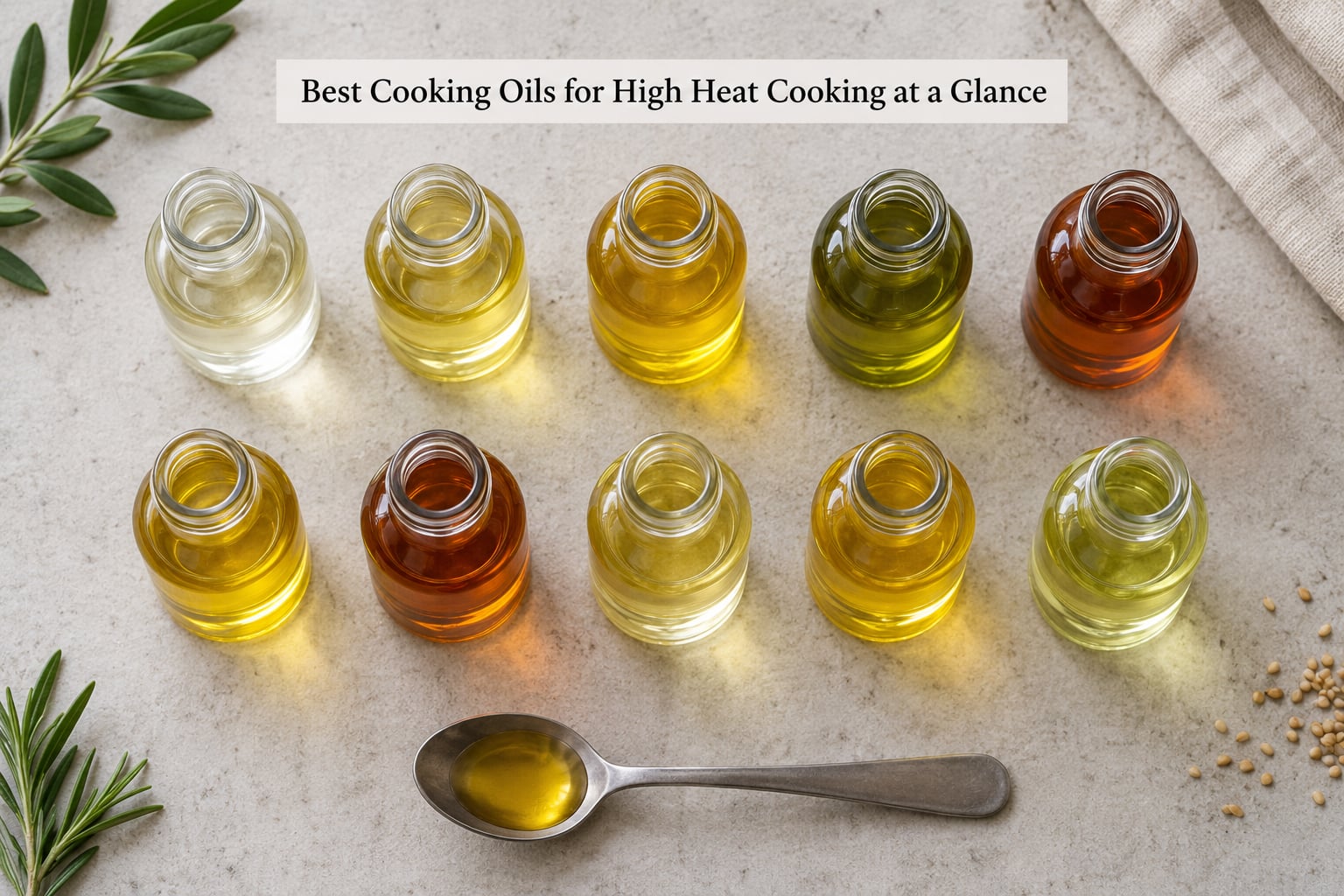
Smoke points below are typical figures for refined versions of each oil. Labels vary by brand, crop and refining method, so treat them as a range and always read your specific bottle.
| Oil | Smoke point | Flavor | Best for | Watch out for |
|---|---|---|---|---|
| Refined avocado oil | 480–520°F (249–271°C) | Neutral, buttery undertone | Searing, frying, finishing | Check the bottle says refined |
| Refined canola oil | 450°F (232°C) | Neutral | Frying, stir-frying, baking | Cold-pressed canola smokes sooner |
| Peanut oil | 450°F (232°C) | Mild, nutty | Deep frying, stir-fries | Peanut allergy |
| Refined sunflower oil | 450–480°F (232–249°C) | Mild | Frying, roasting, air frying | Cold-pressed version is less stable |
| Refined safflower oil | 480–520°F (249–271°C) | Very light | Frying, quick sautéing | Blends vary by brand |
| Rice bran oil | 490–520°F (254–271°C) | Mild, slightly nutty | Stir-frying, frying, dressings | Some are blends |
| Refined sesame oil | 410–470°F (210–232°C) | Nutty, mild | Stir-frying, frying | Toasted sesame oil is a finisher |
| Refined soybean oil | 460°F (238°C) | Neutral | Frying, baking, roasting | Often blended or labeled vegetable oil |
| Corn oil | 450°F (232°C) | Mild corn aroma | Frying, sautéing | Aroma varies by brand |
| Grapeseed oil | 480°F (249°C) | Very light | Sautéing, frying, finishing | Costs more, stores poorly if warm |
How to Read the Best Cooking Oils for High Heat Cooking Comparison
A smoke point is simply the temperature at which an oil stops looking like food and starts looking like a chemistry problem. Below it, the fat stays chemically intact. Above it, the oil degrades, gives off acrolein and other volatile compounds, and produces the sharp, acrid smell that means you should turn the heat down or the oil out.
The bigger trap is assuming a higher number makes for a better oil. Refined safflower oil tops the chart at 520°F (271°C), but so does refined avocado, and the two behave very differently in the pan because of how much monounsaturated fat each contains and how the fatty acids are arranged. Higher smoke point is about temperature tolerance. It says nothing about taste or nutrition.
For a beginner I would score any oil on five things: does it survive your highest heat, does it taste like anything, what kind of fat is it, how much does a bottle cost, and what are you actually making. An oil that ticks four out of five is a better buy than one that ticks all five and ruins the dish.
1. Avocado Oil
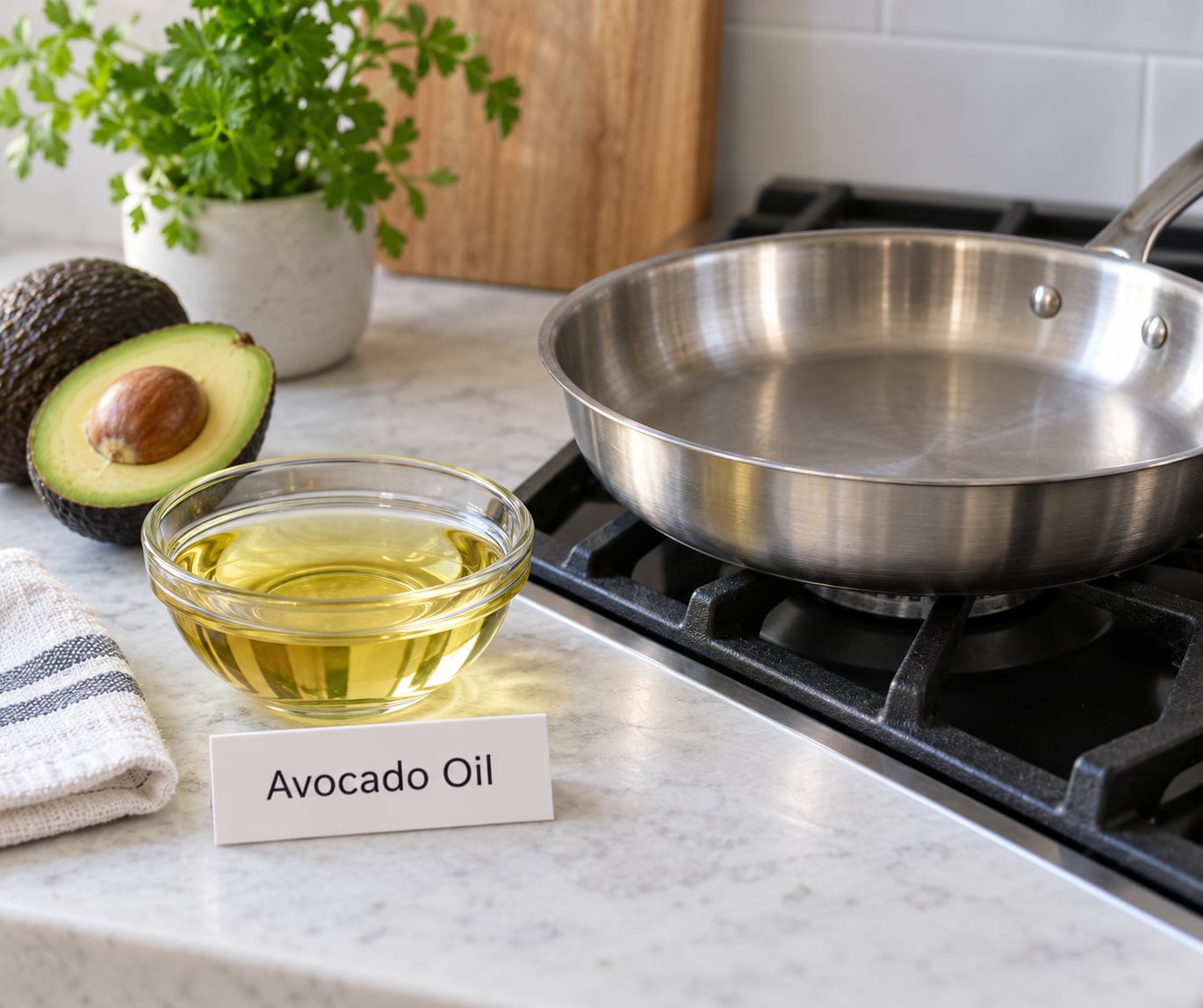
Refined avocado oil is the most forgiving oil on this list. Its smoke point usually lands somewhere between 480°F (249°C) and 520°F (271°C), the flavor is neutral with a faint buttery note, and it is largely monounsaturated fat, which is why it holds up under repeated heat better than most seed oils.
It handles everything: a hard sear on a cast iron skillet, deep frying at 375°F (190°C), vegetables in a 425°F (218°C) oven, and a drizzle over a finished dish. Because the flavor is quiet, it does not fight with delicate fish or with the char you want on a steak.
The one thing to get right is the type. Extra virgin avocado oil is cold-pressed, keeps some green color and flavor, and smokes at a much lower temperature. For high heat, look for a bottle labeled refined. That is also the version most likely to be genuinely avocado, since refining washes out most of the flavor that adulterated blends are missing.
2. Refined Canola Oil
Refined canola oil sits at roughly 450°F (232°C), which covers almost everything a home kitchen does: frying at 350°F (177°C), searing meat, stir-frying, and baking. The flavor is genuinely neutral, so it disappears into whatever you are making.
Canola is the oil most people already own, and it is usually the most affordable refined oil on the shelf. It also holds up well to baking, where a neutral fat matters more than anything else.
The label matters here. Cold-pressed canola oil, sometimes sold as non-GMO or expeller-pressed canola, keeps more of the grassy flavor and has a lower smoke point. It is fine in a dressing. For a smoking-hot skillet, pick the refined version and let the pan do the seasoning work.
3. Peanut Oil
Peanut oil is a deep-frying oil that happens to smell good. Its smoke point sits near 450°F (232°C) and it holds that point for a long stretch, which is why it is a standard choice for large batches of fried food and for stir-fries where you want a nutty aroma without the nuttiness of sesame.
The flavor is mild and rounds out nicely. A tablespoon in a stir-fry sauce seasons the whole dish, and it works just as well for fried chicken, fries, or a sear on a thin skirt steak.
The catch is allergies. Peanut oil is a genuine allergen, and refining does not remove the protein, so if anyone at the table reacts to peanuts, keep it out of the kitchen entirely. For people without an allergy, it is one of the best-performing deep-frying fats you can buy.
4. Refined Sunflower Oil
Refined sunflower oil has a smoke point around 450°F to 480°F (232–249°C) and a flavor most people describe as mild with almost nothing to it. It is a good everyday choice for roasting, pan-frying, and air frying, where you want the browning to come from the food.
Regular sunflower is higher in omega-6 polyunsaturated fat than oils like avocado or canola, which means it oxidizes a little faster in a very hot pan. High-oleic sunflower, bred for a higher smoke point and longer shelf life, closes most of that gap. If the bottle lists oleic acid content, that is the one to prefer.
Cold-pressed sunflower oil is a different product entirely. It tastes like sunflower seeds and smokes earlier. Keep it for dressings and finishing, not for a 500°F (260°C) griddle.
5. Refined Safflower Oil
Refined safflower oil is about as light and neutral as an oil gets. Its smoke point runs from 480°F to 520°F (249–271°C), which puts it at the top of this list alongside refined avocado.
Because it carries no flavor of its own, it disappears into fried chicken, fries, roasted vegetables, and quick sautés. It is also one of the highest monounsaturated fats among the common seed oils, which is part of why it is on most lists of heart-friendly frying fats.
Safflower comes in two varieties, and only one is appropriate for high heat. High-oleic safflower is the near-pure monounsaturated version. Traditional safflower is high in omega-6 linoleic acid and oxidizes sooner. Again, read the label for oleic acid content and follow the manufacturer’s stated use rather than a generic chart.
6. Rice Bran Oil
Rice bran oil is the sleeper option, with a smoke point around 490°F to 520°F (254–271°C) and a profile that sits in the middle: mostly monounsaturated and polyunsaturated fat with a small amount of saturated fat for stability.
The flavor is mild, sometimes a touch nutty, and it carries a faint aroma that suits stir-fries and fried rice. It is also genuinely pleasant cold, which means the same bottle can make a dressing, a marinade, and a stir-fry without you needing a second oil.
It gets left out of American kitchens because it is expensive relative to canola. The practical thing to watch is the bottle. Some rice bran oils sold in the US are blends with cheaper seed oils, so check whether it says single-origin or lists additional oils in the ingredients.
7. Refined Sesame Oil
Two sesame oils share nearly the same shelf and behave nothing alike. Refined sesame oil has a smoke point around 410°F to 470°F (210–232°C) and a mild flavor that can take heat. Toasted sesame oil has a much lower smoke point and a deep, nutty aroma, and it is used as a finishing oil after the cooking is done.
Confusing the two is the most common sesame mistake. The dark bottle with the toasted flavor that smells amazing over noodles will smoke and turn bitter the second it hits a hot wok. The pale refined oil goes into the pan and the toasted oil goes on top at the end.
For a real stir-fry, refined sesame oil handles the heat and toasted sesame oil finishes the dish. That pairing is worth learning because it separates good stir-fry from decent stir-fry.
8. Refined Soybean Oil
Refined soybean oil has a smoke point near 460°F (238°C), a completely neutral flavor, and a fat profile that is roughly two-thirds monounsaturated and one-third polyunsaturated. It handles frying, roasting, and baking without complaint.
Its real weakness is labeling. A lot of what sits in the store as soybean oil is blended, and a bottle that just says vegetable oil is very often a soybean and canola blend with a smaller smoke point than either pure oil. That is fine for most cooking, but if you are planning a hard sear, buy a single oil rather than a blend.
Follow the product label rather than a generic smoke point claim. Brands that sell soybean oil for commercial fryers print their recommended temperature on the bottle, and that number is the one that reflects what is actually in it.
9. Corn Oil
Corn oil has a smoke point around 450°F (232°C) and a mild sweetness that reads as a light corn aroma. It is a solid performer for frying, sautéing, and baking, especially anything that wants a rounded, savory background.
The flavor varies quite a bit between brands. Some are nearly odorless, others taste distinctly of sweet corn, and that difference is worth checking before committing to it for a dish where you want no aroma at all.
If you are cooking something delicate like a fillet of fish or a green vegetable, corn oil’s aroma can be noticeable. In that case a refined canola or avocado is the better pick. For fried chicken, corn oil is genuinely hard to beat.
10. Grapeseed Oil
Grapeseed oil has a smoke point around 480°F (249°C) and the lightest flavor of any oil here. It is rich in polyunsaturated fat, mostly omega-6 and omega-9, and it is the standard oil in fine dining kitchens for exactly one reason: it does not taste like anything.
It works well for sautéing delicate vegetables, frying, and finishing a plate where a garnish oil needs to disappear. It also holds up in high-heat baking.
Two drawbacks keep it out of most home kitchens. It costs more per bottle than canola or corn oil, and because it is polyunsaturated it starts oxidizing faster, which means it turns bitter sooner if it is stored somewhere warm. If you buy it, keep it somewhere cool and dark, and use it within a year.
Frequently Asked Questions
What is the best oil for high heat cooking?
For most home kitchens, refined avocado oil is the best all-round pick, holding around 480-520 F (249-271 C) with a neutral flavor and high monounsaturated fat content. Refined canola oil is a close second at roughly 450 F (232 C) and costs less. For deep frying with no allergy concerns, peanut oil performs well too. The right answer depends mostly on how hot your pan actually gets.
What is the healthiest oil for high-heat cooking?
Healthfulness depends on more than smoke point. Look at the fat type: oils higher in monounsaturated fat, such as refined avocado, canola, and high-oleic safflower, tend to be more stable and lower in saturated fat than oils high in omega-6 polyunsaturated fat. The American Heart Association recommends keeping saturated fat low, so oils with under 1 gram per tablespoon are the ones to look for on the label.
Can I use extra virgin olive oil for high heat cooking?
Extra virgin olive oil is graded for flavor, and most varieties start smoking between 375 F and 405 F (191 C and 207 C). That is below the temperature of a good sear or stir-fry. For high heat, refined olive oil or olive pomace oil handle it fine. That said, many home cooks sear with extra virgin anyway, and the flavor is good enough that the smoke point is less important to them.
Is refined or cold-pressed oil better for frying?
Refined oil is better for frying. Refining bleaches out most of the polyunsaturated fatty acids that break down first, so refined oils tolerate and hold a much higher smoke point. Cold-pressed oils keep flavor and nutrients but smoke earlier. The trade-off is flavor, not health: once an oil is heated repeatedly, the compounds that make a cold-pressed oil worth eating are mostly gone anyway.
How do I know when cooking oil has gone bad?
Smell it. Fresh oil tastes neutral and smells like nothing much, while rancid oil gives off a stale, waxy, or pencil-shaving smell. Oxidized oils also thicken and can look cloudy or hazy when they should be clear. Store bottles away from the stove and out of sunlight, and replace any oil you have kept more than a year without using, especially polyunsaturated ones.
Conclusion
There is no single best cooking oil for high heat cooking, because the best oil depends on what you are cooking and how hot your pan gets.
For neutral everyday cooking, refined canola oil covers the most ground for the least money. For searing and anything where flavor matters, refined avocado oil is the pick. For deep frying, peanut oil or rice bran oil hold heat well. For a flavor-driven dish, reach for a nuttier oil rather than a neutral one.
Before you buy, check three things: the oil type on the bottle (refined for high heat), the flavor profile you actually want, and the storage instructions. Then buy a size you will finish before it goes rancid.