To cook with coconut oil the right way, match the oil to the heat you need: unrefined or cold-pressed coconut oil for sautéing, stir-frying, roasting and baking, and refined coconut oil when the pan needs to be properly hot for searing or frying. Measure a modest amount, melt it before the food goes in, and watch the pan from the moment it starts to shimmer.
Nearly all the frustration people have with coconut oil comes down to two habits: pushing unrefined oil on a screaming-hot burner, and treating the solid texture in the jar as a fault instead of a feature. Both are easy to fix, and both are fixable in one afternoon.
There is a practical reason to care about getting this right. Cooking past an oil’s smoke point oxidises it, which is where bitter flavours and off smells come from, and plenty of the advice floating around in 2026 search results was written before anyone was measuring temperatures properly. This guide is general cooking information, not medical or nutrition advice.
Table of Contents
- What You Need
- Step-by-Step: How to Cook with Coconut Oil the Right Way
- 1. Choose the Right Coconut Oil for the Dish
- 2. Measure the Oil Before Heating
- 3. Heat It Gradually and Choose the Right Method
- 4. Cook the Food and Watch for Readiness Cues
- 5. Cool and Store Coconut Oil Correctly
- Common Mistakes
- Frequently Asked Questions
- Is coconut oil safe to cook with every day?
- Why does my coconut oil smoke, and how can I stop it?
- Can I use coconut oil instead of olive oil or butter?
- Is coconut oil good for high-heat cooking?
- How do I know when coconut oil has gone bad?
- A Simple Starting Point
What You Need
Coconut oil is one of the few ingredients you can genuinely cook with using a spoon and a decent pan. A handful of things make it easier, and none of them are expensive.
- Two kinds of coconut oil. One unrefined or cold-pressed jar for medium heat and flavour, one refined jar for high-heat work. Having both covers everything below.
- A neutral oil for the hottest jobs. Grapeseed, avocado or canola oil handles wok work and hard searing if you would rather not push coconut oil past its comfortable range.
- Cookware that holds heat. A heavy skillet or carbon steel pan for sautéing and searing, a sheet pan for roasting, a wide pan for stir-frying so nothing piles up.
- A thermometer, or good eyes. An instant-read thermometer takes the guesswork out of oil temperature. Without one, an even shimmer across the whole pan and a faint sweet smell are your cues.
- A small bowl and a silicone spatula. Melting the oil in a bowl first makes measurement far more accurate than a cold scoop.
- A way to scoop it when it is solid. Below roughly 76°F (24°C) coconut oil goes hard as a rock. Stand the jar in a bowl of hot water for a few minutes, or run a hot knife around the inside rim to release the edge before you scoop.
If the jar has liquefied and re-solidified since you opened it, that is normal. Warm kitchens do this repeatedly and the texture resets on its own.
Step-by-Step: How to Cook with Coconut Oil the Right Way
Five steps, and they hold whether you are sautéing onions or mixing cookie batter. Skip one — usually the second — and the food tells you about it within a minute.
1. Choose the Right Coconut Oil for the Dish
Unrefined coconut oil has a smoke point of roughly 350°F (177°C) and a genuine coconut aroma. It belongs in curries, stir-fries, roasted vegetables, dressings, smoothies and baking.
Refined coconut oil is filtered and deodorized, which pushes it to about 400°F to 450°F (204°C to 232°C) and takes the scent away. That is the one for searing meat, frying, and any dish where coconut flavour would be out of place.
| Oil | Approximate smoke point | Best used for |
|---|---|---|
| Unrefined / cold-pressed coconut oil | 350°F (177°C) | Sautéing, stir-frying, roasting, baking, dressings |
| Refined coconut oil | 400°F to 450°F (204°C to 232°C) | Searing, deep frying, high-heat sautéing |
| Extra virgin olive oil | Around 405°F (207°C) | Medium-heat cooking, finishing, dressings |
| Avocado oil | Around 480°F (249°C) | Very high heat, searing, stir-frying |
| Canola oil | Around 400°F to 450°F (204°C to 232°C) | Neutral everyday frying and baking |
| Ghee | Around 400°F to 480°F (204°C to 249°C) | High-heat cooking, popping, tempering spices |
Labels vary more than people expect. Cold-pressed and expeller-pressed are both unrefined categories, and a jar labelled extra virgin is still unrefined, still around 350°F. When the wording confuses you, the smell settles it: if it smells like coconut, keep it at medium heat or below.
2. Measure the Oil Before Heating
Coconut oil is dense — about 13 grams per tablespoon — and easy to overpour because a heaping spoon looks smaller in the pan than it did in the bowl. Use measuring spoons instead of tipping the jar.
For a medium skillet, one to two tablespoons is usually right. More fat is the single most common reason people call a coconut oil dish greasy, and the extra oil does not evaporate. It soaks into the food and pools underneath it.
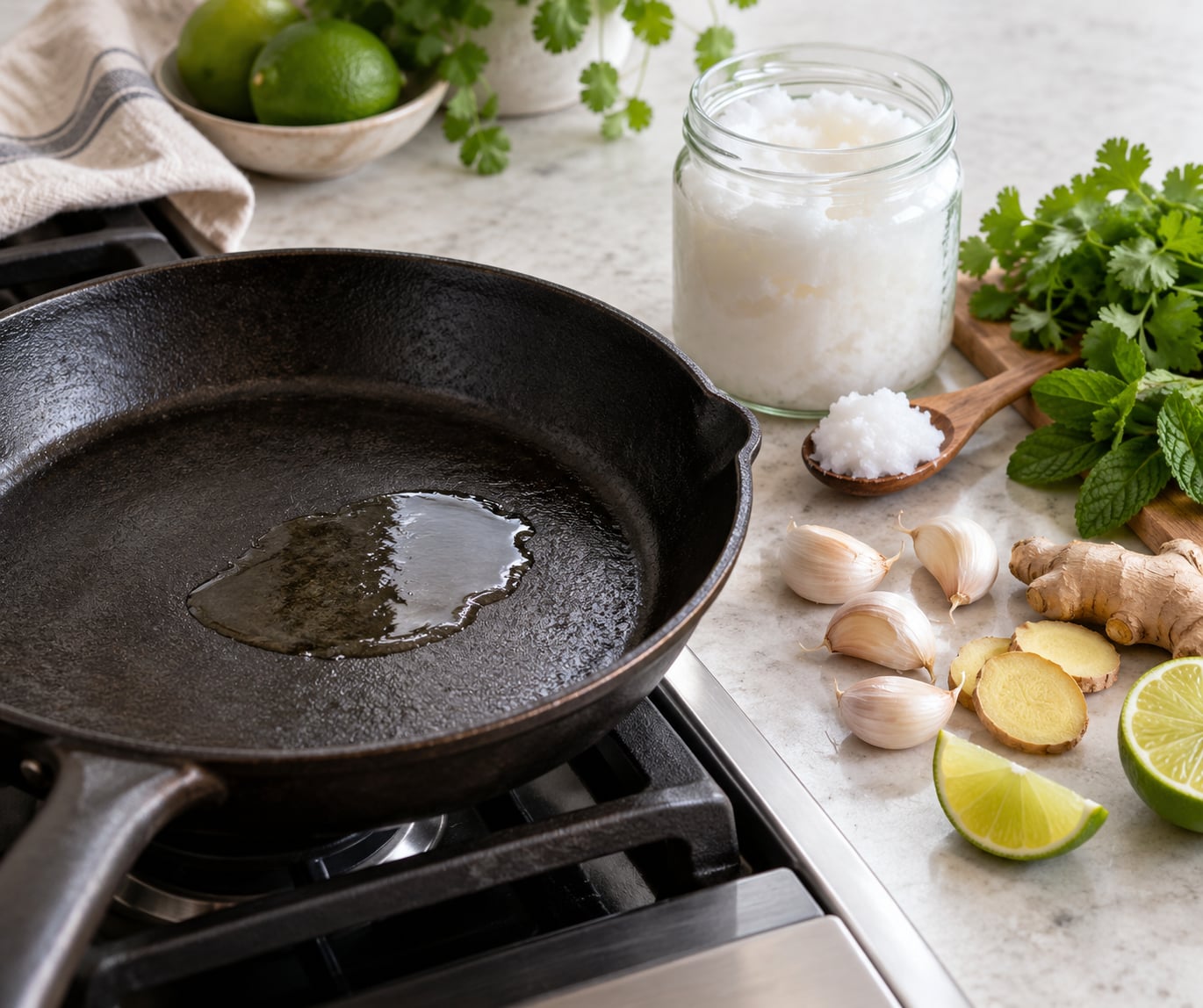
Melt the measured oil in a small bowl for 20 to 30 seconds in the microwave, or set the bowl in a warm pan until it turns liquid. Liquid oil measures far more accurately than a cold scoop, and it spreads across the pan in a thin even layer instead of sitting in one spot and scorching there first.
3. Heat It Gradually and Choose the Right Method
Put the oil in the pan first, then bring the heat up. That is the opposite of olive oil poured into a screaming-hot pan, and it is the step that prevents most of the smoking people complain about.
Watch for a shimmer across the entire surface, not a ripple in one corner. That is your signal to add the food. The instant you see a thin blue-grey wisp, turn the heat down or lift the pan off the burner — that wisp is the oil breaking down, not the food browning.
Then match the method to the oil you chose:
- Sautéing and stir-frying, medium to medium-high: unrefined works well here, one to two tablespoons is plenty.
- Searing, high heat: refined coconut oil, or the neutral oil you trust more at that temperature.
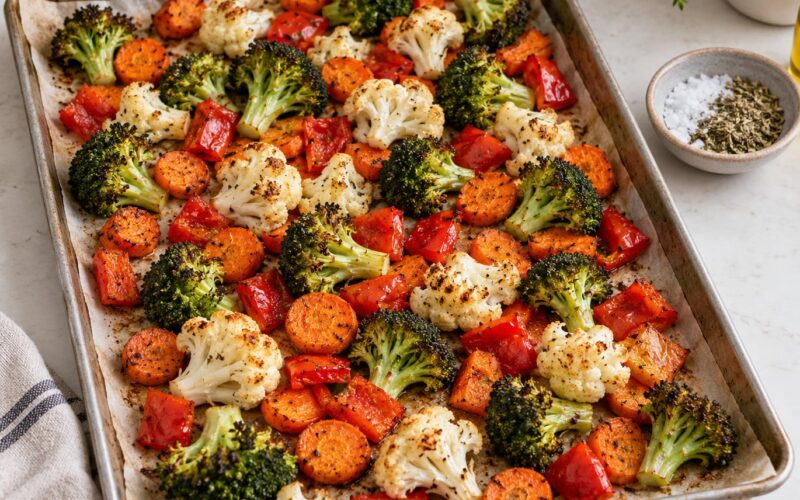
- Roasting vegetables, 200°F to 425°F (93°C to 218°C) oven: either type works. Drizzle it over the vegetables rather than pouring it in the hot tray, where it can scorch before the food cooks through.
- Baking, 325°F to 375°F (163°C to 190°C): either type, but melt it first if you are creaming it with sugar.
- Deep frying, 350°F (177°C): refined only, and change the oil between batches the way you would with any frying oil.
Do not crowd the pan. A crowded pan drops the temperature, the food steams instead of searing, and you end up with pale food sitting in a puddle of oil that never got hot enough to crisp anything.
4. Cook the Food and Watch for Readiness Cues
Your eyes do most of the work early on. Vegetables should colour at the edges and soften within a few minutes, protein should release from the pan without tearing, and a spatula dragged across the bottom should leave a clean line rather than a sticky one.
Then confirm doneness with a thermometer instead of trusting appearance. Poultry reaches 165°F (74°C) at the thickest part, ground meat 160°F (71°C), and whole cuts of beef, pork, lamb and fish 145°F (63°C). Fish is done when it flakes easily and has lost its translucent sheen.
Take the food out as soon as it hits those numbers. Coconut oil browns quickly because of its fat content, and carry it a couple of minutes past done and the crust turns bitter before you notice what happened.
5. Cool and Store Coconut Oil Correctly
Move cooked food off the pan and onto a plate or into a shallow container, so residual heat does not keep cooking the underside while you clear up. Never park a hot pan on a warm burner to cool.
Refrigerate perishable food within two hours, and use shallow airtight containers so it cools quickly all the way through. Cooked food keeps three to four days in the fridge; freeze anything you will not eat inside that window.
The oil itself goes back in a cool, dark cupboard with the lid screwed down tight. Most jars are stable at room temperature for months, so refrigeration is optional rather than necessary. Skip it if you prefer, and keep the jar away from the stove. Water, crumbs and repeated dipping are what turn good oil rancid, not the pantry temperature.
Common Mistakes
- Adding too much oil. One to two tablespoons per skillet is usually enough. Measure it, and remember the oil stays in the dish instead of evaporating.
- Heating unrefined oil on high. Above about 350°F (177°C) it smokes, turns bitter, and the coconut flavour turns harsh. Drop to medium, or switch to refined.
- Reading smoke as browning. Browning is colour on the food. Smoke is a wisp rising off the oil itself, often with a sharp or acrid smell. If you see the wisp, the pan comes off the heat.
- Cooking with oil that already smells off. Crayon, old butter or a stale nuttiness means the oil has oxidised. It will not improve with cooking, and no amount of heat fixes it.
- Crowding the pan. Cook in batches. Steaming in a crowded pan gives you grey food and greasy results, which is exactly the complaint people bring to coconut oil in the first place.
- Storing it badly. Tight lid, cool cupboard, out of the light. Do not leave a wet spoon in the jar.
- Using it where coconut clashes. It is excellent with curries, greens, sweet potato, pineapple, eggs and roasted vegetables, and a poor match for tomato-based sauces, mushrooms, and delicate seafood where a clean, neutral flavour is the whole point.
- Expecting butter-like texture in baking. Coconut oil is solid at room temperature, so it sets structure and gives you chewier cookies and brownies. That is a feature in a cookie and a surprise in a cake. For cakes, or anything you want light and crumbly, use about three-quarters of the butter the recipe calls for and check the batter.
A few substitutions worth keeping in your back pocket: coconut oil replaces butter one-to-one by volume in cookies, brownies and frostings, and add a small pinch of salt when you swap out salted butter. It also works as a one-for-one swap for shortening in pie crusts. In coffee, smoothies and oatmeal, a teaspoon stirred in after the hot liquid is in gives you a rounded flavour that the oil carries better than it does in a pan.
Frequently Asked Questions
Is coconut oil safe to cook with every day?
It is a legitimate cooking fat and most people can use it as part of an ordinary diet. It is very high in saturated fat, close to butter, and current dietary guidance advises keeping saturated fat low overall. If you have heart or cholesterol concerns, or a clinician has given you a specific limit, follow their advice rather than a general cooking guide. Cooking with it occasionally instead of another fat is an easy place to start.
Why does my coconut oil smoke, and how can I stop it?
Unrefined coconut oil smokes at roughly 350°F (177°C), so pushing a pan to a hard sear on it is the usual culprit. Put the oil in the pan before turning the heat up, watch for an even shimmer, and keep the heat at medium or medium-high. If you need a genuinely hot pan, use refined coconut oil or a neutral oil such as avocado or canola instead.
Can I use coconut oil instead of olive oil or butter?
For sautéing, roasting and baking, yes, and it swaps one-to-one with butter by volume. For finishing salads or drizzling over cooked food, olive oil wins on flavour. For a hard sear, neither unrefined coconut oil nor butter is the right tool, since both burn before they brown properly. Refined coconut oil or a high-smoke-point neutral oil handles that job instead.
Is coconut oil good for high-heat cooking?
It depends entirely on the type. Refined coconut oil is filtered and deodorized and holds up around 400°F to 450°F (204°C to 232°C), which makes it fine for searing and deep frying. Unrefined coconut oil sits near 350°F (177°C), so keep it to medium and medium-high heat. Avocado oil goes higher still, near 480°F (249°C), if you need serious heat.
How do I know when coconut oil has gone bad?
Smell it first. Good coconut oil smells sweet or faintly nutty, and refined oil is close to odourless. Anything that smells like crayons, old butter, stale nuts or a burned pan has oxidised and should be thrown out. Thick, sticky or separated oil that does not return to normal when warmed is another sign. Storage is what matters: a tight lid in a cool, dark cupboard keeps it well for months.
A Simple Starting Point
Pick a modest amount of the right oil, heat it gently in the pan, and cook your food to a temperature you have checked rather than guessed. That is the whole method, and it works the first time.
On coconut oil and health specifically, treat this article as general information. Saturated fat, cholesterol and heart risk are real questions with individual answers, so talk to a doctor or registered dietitian about your own situation rather than taking a cooking guide’s word for it.