Reducing oil in your cooking without losing flavor comes down to one idea: fat does three jobs in a dish, and only one of them is the fat itself. You can cut the oil in most recipes by about a third and still eat something that tastes good, as long as you replace the other two with proper heat, acid, umami, herbs and crunch. Measure the oil you already use, keep a small amount where it earns its place, then build flavor around it. None of it adds cooking time.
The mistake most people make is cutting oil and then tasting a dish that has nothing compensating for it. What follows is the order I actually cook in, and it works the same on a Tuesday-night stir-fry and on a roast that feeds six.
Table of Contents
- What You Need
- Step-by-Step: How to Reduce Oil in Your Cooking Without Losing Flavor
- 1. Measure the oil your recipe already uses
- 2. Use a smaller amount of a fat that tastes like something
- 3. Cook the aromatics in a little broth instead
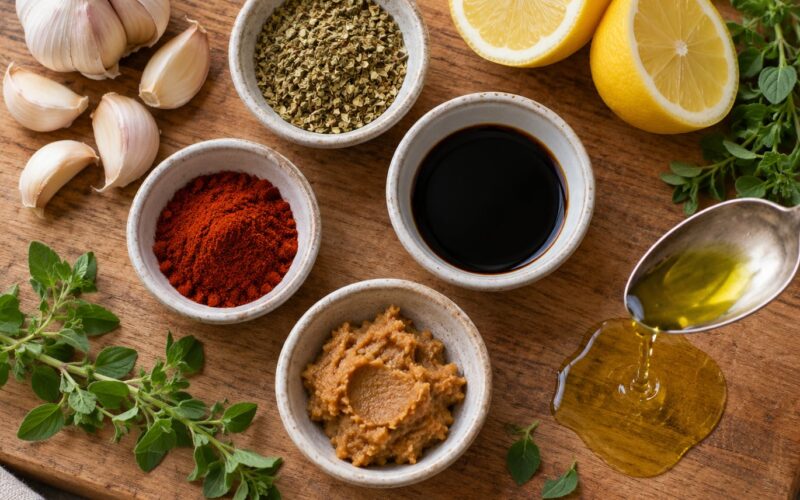
- 4. Add acid, herbs, spices and umami
- 5. Control the pan temperature
- 6. Put texture and aroma back after cooking
- 7. Taste and adjust in small increments
- Common Mistakes
- Frequently Asked Questions
- Can I cook without oil and still get good flavor?
- What is the best oil to use when reducing oil in cooking?
- How can I reduce oil in a stir-fry without making it bland?
- Does nonstick cookware really require less oil?
- How do I keep vegetables flavorful when I use less oil?
- Should I add lemon juice or vinegar before or after cooking?
- Conclusion: Start With One Small Swap
What You Need
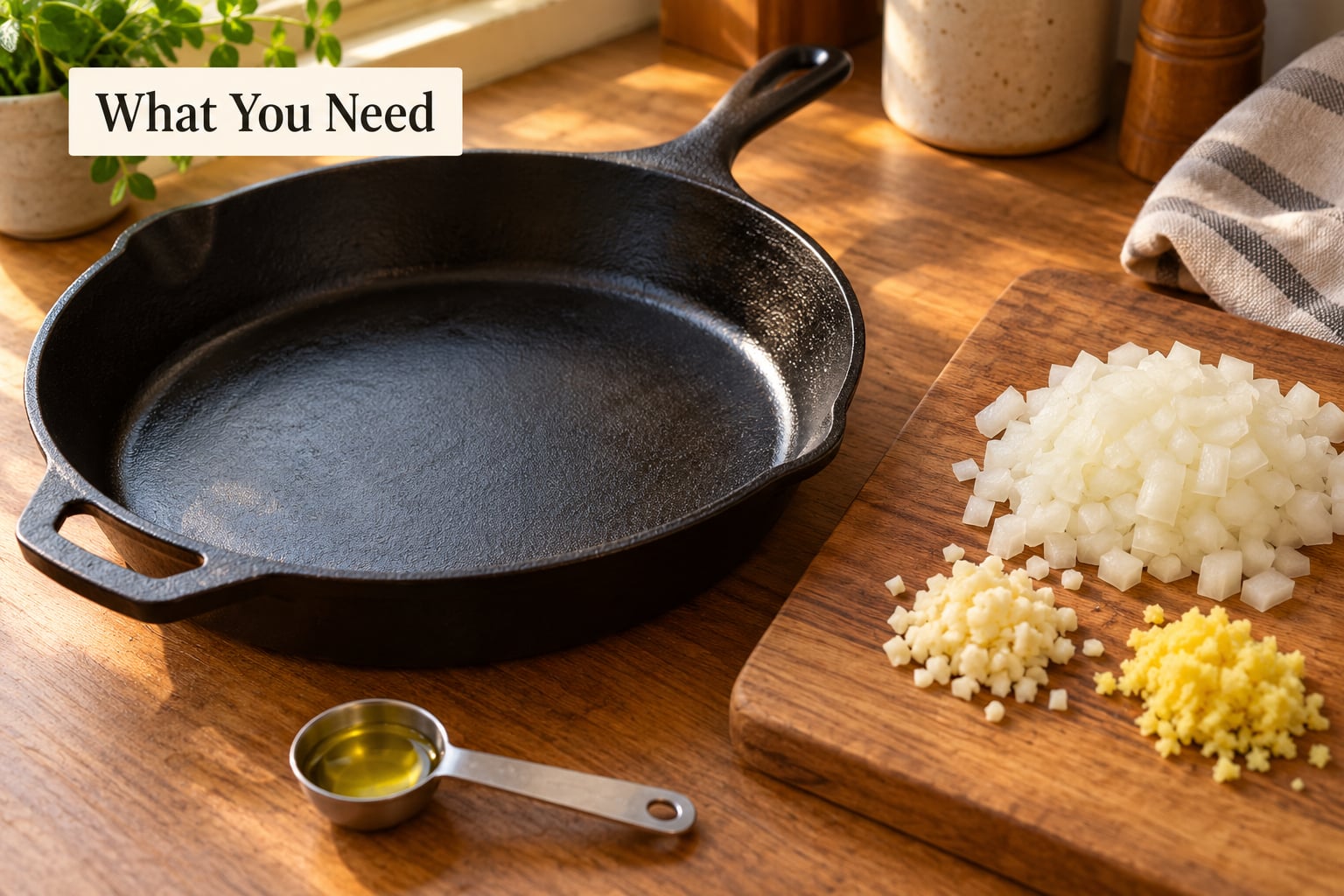
None of this needs new equipment. What you need is the ability to measure small amounts and a few flavor ingredients you probably already own.
- A measuring spoon. A tablespoon and teaspoon set lets you cut an amount precisely instead of guessing.
- A wide, heavy skillet. More surface area means the food browns instead of steams. Crowding is what makes people reach for more oil.
- Aromatics. Onion, garlic, ginger, celery, peppers, scallions. This is where most of the aroma in a dish comes from anyway.
- An acid. Lemon juice, red wine vinegar, rice vinegar, sherry vinegar, or a squeeze of lime.
- Umami boosters. Tomato paste, miso paste, mushrooms, anchovies, parmesan, nutritional yeast, soy sauce.
- Herbs and spices. Fresh for finishing, toasted and ground for cooking, salt for adjusting.
- Something crunchy. Toasted nuts, seeds, breadcrumbs, fried shallots. Texture reads as richness.
- Stock, water or tomato liquid. For softening aromatics in place of oil, and for deglazing a pan.
A spray bottle or silicone brush is worth having if you cook mostly on nonstick. Both put down an even thin film instead of the thick puddle that happens when oil hits the pan cold. Neither is a substitute for fat when you are searing.
Step-by-Step: How to Reduce Oil in Your Cooking Without Losing Flavor
1. Measure the oil your recipe already uses
Pour the oil into a spoon instead of straight from the bottle. That single habit is where most households lose a third of what they think they are using, and it is the easiest place to start when you want to know how to reduce oil in your cooking without losing flavor.
Total the oil across the entire recipe, not just the pan. That includes oil brushed on vegetables, oil in a dressing, oil used to finish a dish, and any oil the recipe lists in two separate steps. Then cut the total by about a third on the first attempt.
A stir-fry calling for 2 tablespoons becomes 1 tablespoon plus 1 teaspoon. Going straight to zero almost never works, and going straight to a quarter of the original usually tastes thin for a few weeks. A third is the drop most people stop noticing.
2. Use a smaller amount of a fat that tastes like something
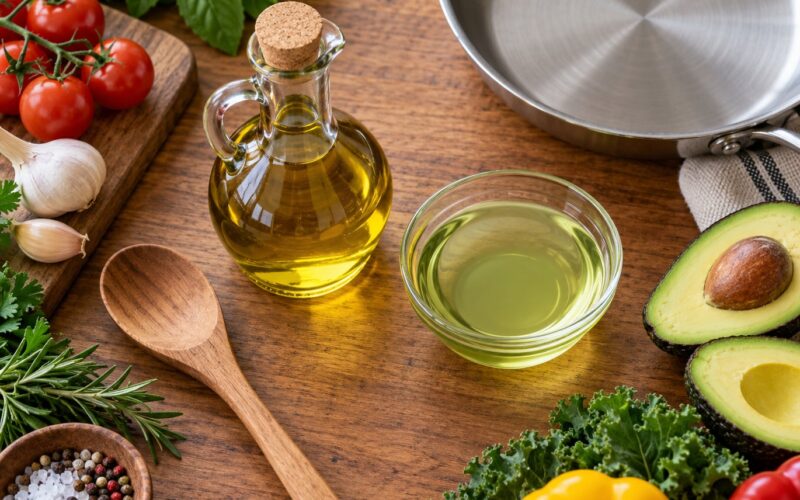
Not all fats are silent. A neutral oil contributes fat and nothing else, while extra virgin olive oil, toasted sesame oil, and chili crisp bring their own flavor to the same spoonful. Choosing a flavored fat lets a smaller amount do more work.
Use the table below as a rough swap guide. The right question is not which oil is healthiest, it is which oil tastes good in this dish and can take the heat.
| Instead of | Try | Why it works |
|---|---|---|
| Full measure of neutral oil | Two-thirds measure of extra virgin olive oil | Less oil overall, plus a flavor you can actually taste |
| Neutral oil for stir-fry | A neutral high-heat oil plus a spoon of toasted sesame at the end | Sesame oil is for aroma, not heat, so a teaspoon is plenty |
| Oil for sautéing | Stock or water for aromatics, then 1 teaspoon of oil | The aromatics soften without frying, the oil seasons them |
| Oil for pan sauce | Deglaze with broth, wine or vinegar | You lift the browned bits with liquid instead of more fat |
| A drizzle at the table | Flaky salt, citrus zest, fresh herbs, chili crisp | Punch without adding a layer of grease |
Some food genuinely needs a film of oil. Meat searing into a crust, potatoes going into a hot oven, and dough that needs fat all rely on it. Keep the oil in those places and cut it everywhere else.
3. Cook the aromatics in a little broth instead
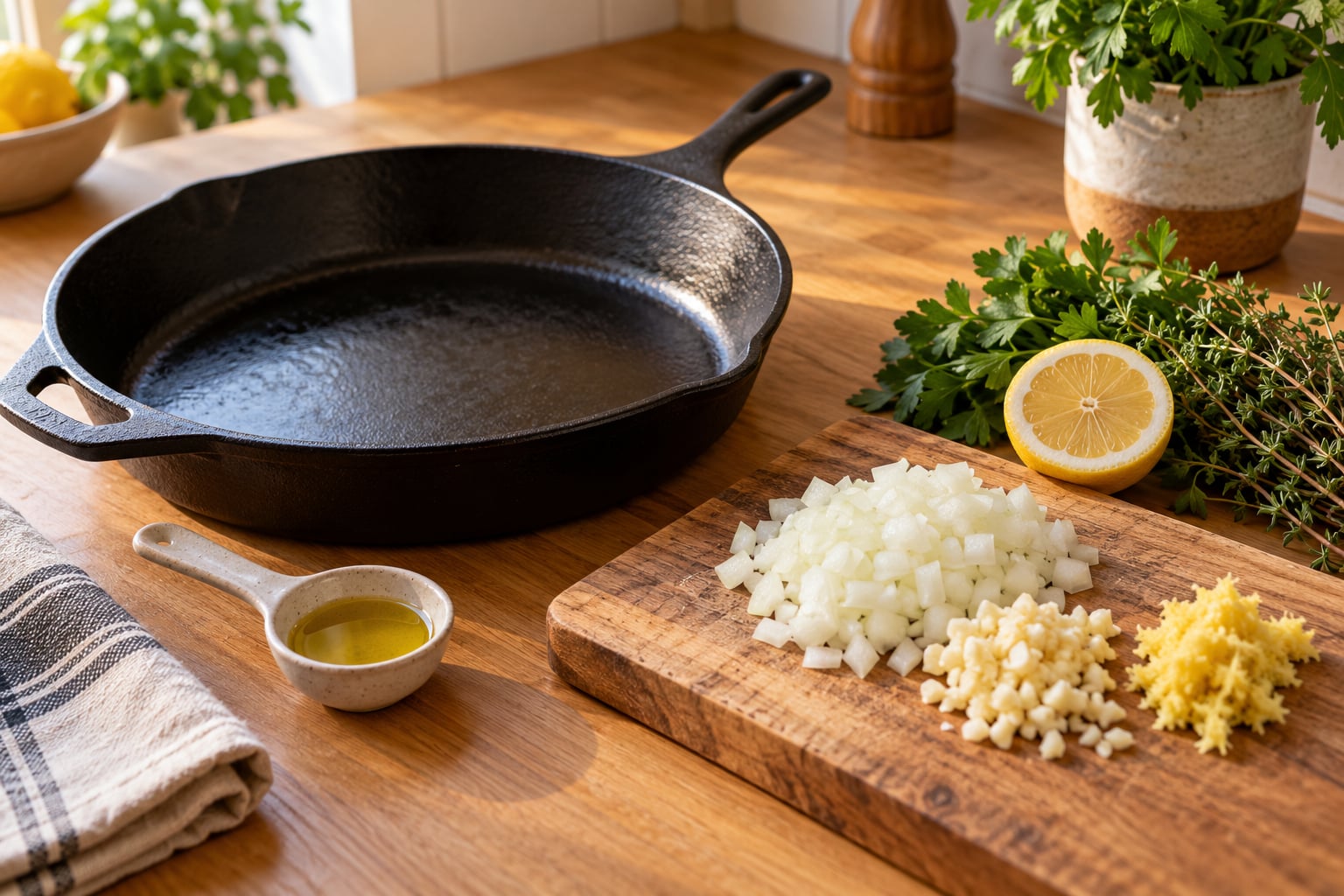
Most home cooking over-oils onions because a dry pan makes people nervous. Put a quarter cup of broth, water, or tomato liquid in the pan first, add your chopped onion, garlic and ginger, and let them soften over medium heat.
This works well for soups, curries, sauces, braises, and anything that gets liquid later. It does not work well for searing meat or for getting a hard caramelized edge, both of which need dry heat and real fat.
Watch for the moment the liquid cooks away. Add the measured oil at that point and the aromatics pick it up instead of sitting in it, which is the same flavor at a fraction of the oil.
4. Add acid, herbs, spices and umami
This is the step that replaces richness. Fat signals fullness and carries aroma; acid, salt, and savory depth signal the same satisfaction to most people.
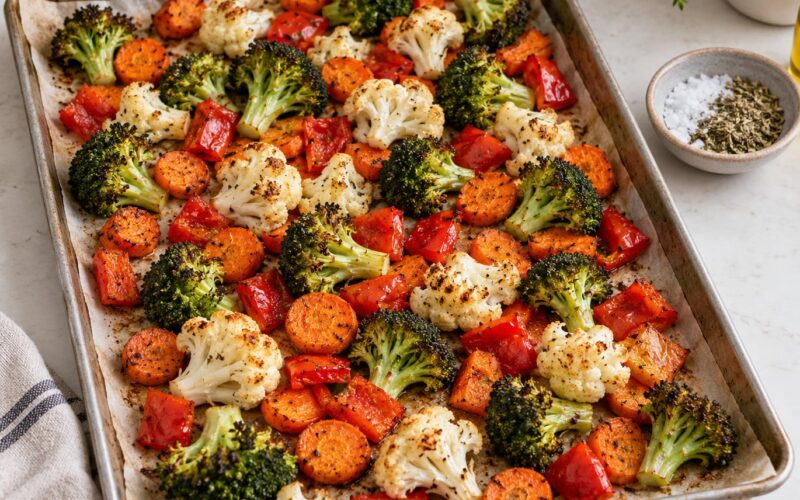
- Vegetables: roasted broccoli with a tablespoon of oil becomes roasted broccoli with a teaspoon of oil, lemon juice, toasted garlic, and a spoon of parmesan.
- Grains: cooked rice or quinoa mixed with a spoonful of miso, a squeeze of lime, and chopped cilantro.
- Proteins: a teaspoon of toasted sesame oil and a splash of rice vinegar over chicken, or one anchovy dissolved into a tomato sauce for a deep savory note with no added oil.
- Soups: a spoon of tomato paste cooked into the broth for body, plus a final splash of vinegar off the heat.
Miso, tomato paste, mushrooms, soy sauce, and parmesan all bring umami, which is the closest thing to fat you can add by spoonful. If a lean dish tastes thin, this is usually the missing piece, not more oil.
5. Control the pan temperature
Hot pan, roomy surface, and food spaced apart is what lets a teaspoon behave like a tablespoon. Give the skillet a couple of minutes to heat before anything goes in, then add oil and let it shimmer rather than immediately pouring food into cold oil.
The signs of a ready pan are visual. A drop of water skitters and evaporates, or the oil moves freely across the pan instead of sitting in a thick pool. Food that sizzles on contact and sits still for a few minutes is browning. Food that hisses softly and steams is cooking in its own water, and more oil will not fix it.
Give poultry a safe minimum internal temperature of 165 F (74 C), ground meat 160 F (71 C), and whole cuts and fish 145 F (63 C). Use a thermometer, and let the pieces rest before cutting so the juices stay in the pan rather than on the board.
6. Put texture and aroma back after cooking
Food loses interest when it is uniformly soft. Toasted nuts, seeds, breadcrumbs, fried shallots, or a crumb of salty cheese give the mouth something to do, and people read that crunch as a richer dish.
Add fresh herbs off the heat so they do not wilt: parsley, cilantro, dill, basil, mint. Citrus zest, cracked pepper, and flaky salt go on at the table. If you keep a finishing oil at all, hold it to about half a teaspoon per serving, poured over the food rather than pooled beside it.
7. Taste and adjust in small increments
Taste before serving, then change one thing at a time. Small additions you can back out are better than a large one you cannot.
- Tastes light: add acid first, a squeeze of lemon at the table, then salt, then a small amount of umami.
- Tastes flat: the aromatics were probably undercooked. Brown them properly next time, and add toasted spices now.
- Tastes dry: a splash of broth or a spoonful of sauce, plus a finishing oil drizzle.
- Tastes greasy: stop there. Skim the surface fat, deglaze the pan with a splash of vinegar or broth to lift the browned bits, and serve with acid and crunch on top.
Common Mistakes
Cutting the oil all at once. Removing it entirely removes browning, aroma carrier, and mouthfeel in one move. Cutting a third at a time keeps the dish recognizable while your palate adjusts.
Weak heat. Food cooked at a lazy simmer releases water instead of browning, which reads as boiled and slightly greasy even when you used almost no oil. Heat the pan properly and give the food space.
Crowding the pan. A pile of vegetables steams in its own liquid. Cook in batches instead of reaching for oil, which is what pooling in a crowded pan usually leads to.
Adding acid too early. Vinegar and lemon added at the start lose their brightness over a long cook. Add most of it near the end, with a little at the table.
Seasoning with salt alone. Salt alone sharpens a dish and does not fix a missing savory note. Reach for acid and umami too, and taste between each.
Using a finishing drizzle as the shortcut. Pouring oil over food that was cooked without any leaves a slick coating that reads as greasier than the original recipe. Drizzling works as an accent of about half a teaspoon, not as a rescue.
Frequently Asked Questions
Can I cook without oil and still get good flavor?
Yes, for most methods, and the flavor comes from browning, seasoning, and char instead of fat. Roast vegetables on a hot sheet pan, saute aromatics in a little broth or water, and finish with acid, umami, and herbs. Keep a little oil for searing meat and for anything that needs a crisp crust, since those genuinely depend on it.
What is the best oil to use when reducing oil in cooking?
Extra virgin olive oil works well because it carries flavor, so a smaller spoonful still registers. For high heat, choose a neutral refined oil such as avocado or canola, and add a teaspoon of toasted sesame oil or chili crisp off the heat for aroma. The best choice is the one whose flavor you enjoy and whose smoke point suits the pan temperature.
How can I reduce oil in a stir-fry without making it bland?
Use a tablespoon instead of two, add a tablespoon or two of broth to the hot wok, and let the vegetables sit undisturbed in batches so they sear. Season with soy sauce or miso for savory depth, and finish with a splash of rice vinegar and a teaspoon of toasted sesame oil off the heat. A pinch of sugar or a spoon of oyster-style sauce rounds it out.
Does nonstick cookware really require less oil?
Yes, noticeably. Nonstick surfaces release food more easily, so a thin film is usually enough for eggs, fish, and stir-fry vegetables. It does not help much for searing meat or browning, where you need heat and some fat for the Maillard reaction. You can use a spray bottle or a silicone brush to apply a measured thin layer evenly.
How do I keep vegetables flavorful when I use less oil?
Cook them hot and give them room so they brown rather than steam, since browning is most of the vegetable flavor. Use broth or water to soften onions and garlic first, then a teaspoon of oil. Finish off the heat with lemon juice, vinegar, toasted nuts or seeds, grated parmesan, chili crisp, and fresh herbs.
Should I add lemon juice or vinegar before or after cooking?
Add most of it near the end of cooking, or after, because heat and long simmering flatten the brightness you are adding. Lemon juice in a pan sauce goes in off the heat, and a final squeeze goes on at the table. Acid early is useful in one case: when braising tough greens, where it helps them soften.
Conclusion: Start With One Small Swap
Pick the next recipe you cook and do three things. Measure the oil instead of pouring it, cut that number by a third, and make sure something sour and something savory are in the dish. Then taste before you add anything back.
That is the whole method, and it is why reducing oil in your cooking without losing flavor is a seasoning problem before it is a fat problem. Over a few weeks the one-third cut stops registering as less, and if you do overshoot into greasy territory, you now know what to reach for instead of more oil.