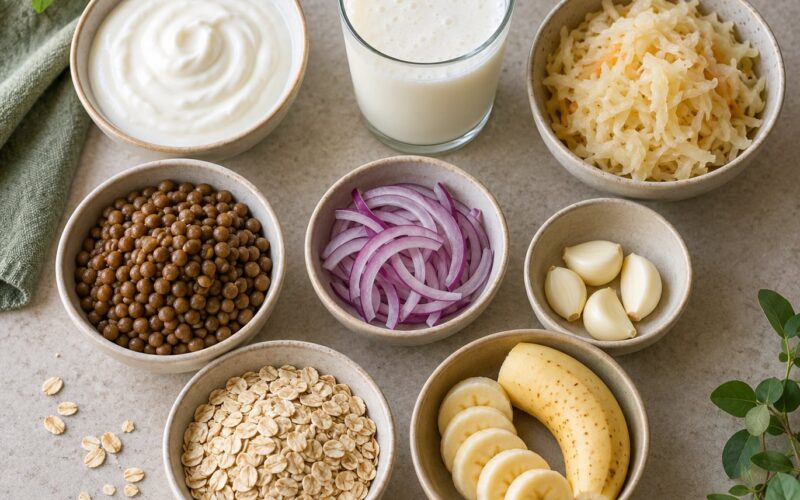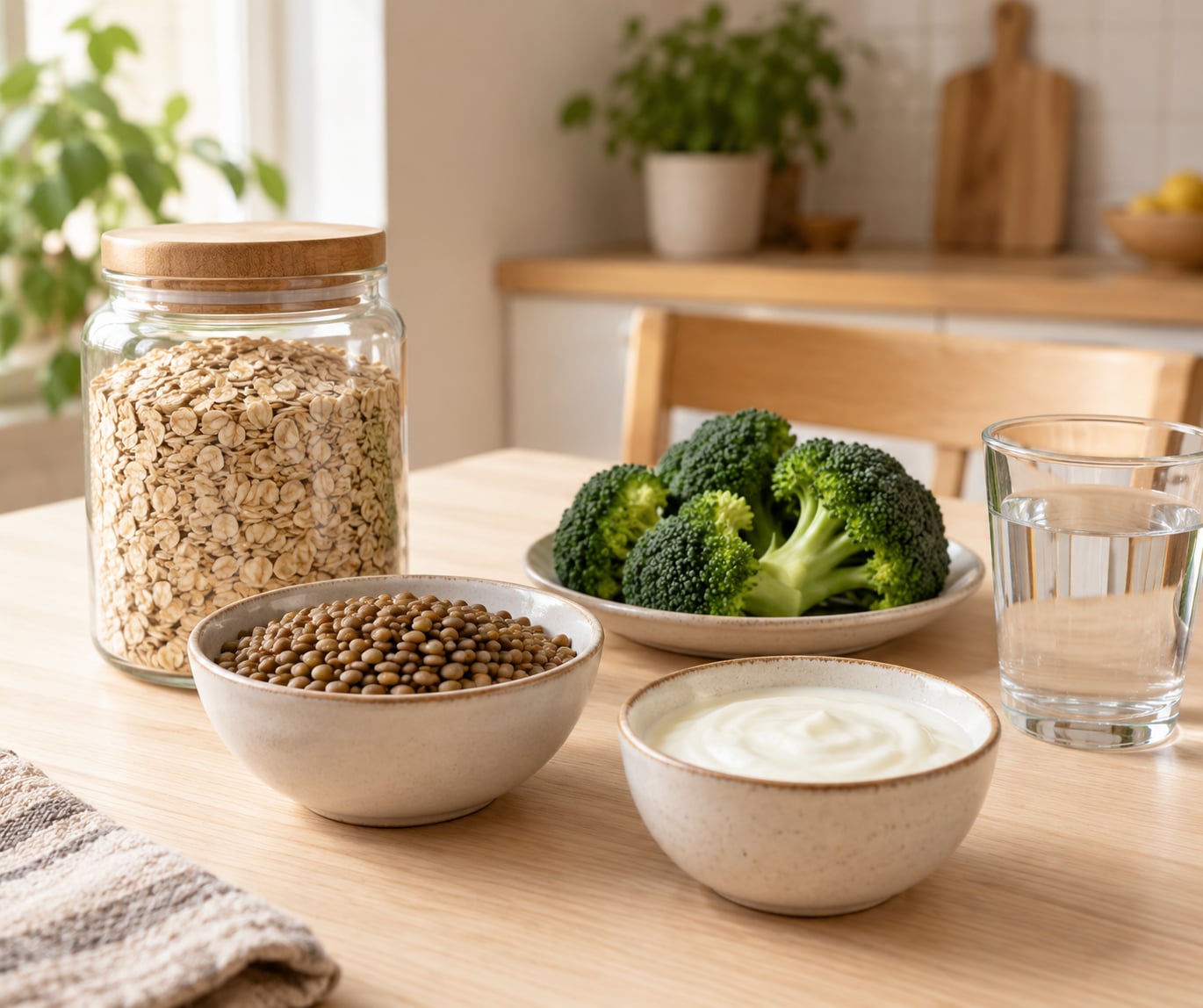
The trillions of microbes living in your gut affect body weight by changing how many calories you pull out of food, how hungry you feel afterwards, and how your body handles blood sugar and inflammation. Fixing your gut is not a shortcut to weight loss, but it changes the conditions under which every other effort works.
Here is the honest version, including the parts most articles skip: what the research actually supports, what it does not, and when your weight change has nothing to do with your gut at all.
Table of Contents
- What Does Gut Health Mean?
- How Does the Gut Help Control Weight?
- 1. Energy extraction from food
- 2. Appetite and fullness signals
- 3. Blood sugar and insulin
- 4. Inflammation and gut barrier function
- The Gut Microbiome and Weight: What the Research Shows
- Can Gut Health Affect Weight Loss?
- Foods and Habits That Support Gut Health
- Build fibre up slowly
- Eat more kinds of plants
- Include fermented foods in ordinary portions
- Cut back on what disrupts the gut
- Move, sleep and eat attentively
- How to Support Your Gut While Working Toward a Healthy Weight
- What to Do If Digestion or Weight Changes Are Concerning
- Frequently Asked Questions
- Does a healthy gut automatically cause weight loss?
- How much fiber should I eat for gut health?
- Are probiotics useful for losing weight?
- Can bloating mean that food is being absorbed incorrectly?
- Should I take a gut microbiome test?
- When should unexplained weight changes or digestive symptoms see a doctor?
- Conclusion
What Does Gut Health Mean?
Gut health describes how well your digestive system works and how balanced the community of organisms living inside it is. That community, called the gut microbiome, includes bacteria, viruses and fungi, and researchers estimate there are roughly 39 trillion of them in an adult body.
These organisms are not passengers. They break down fibre your own enzymes cannot touch, produce vitamins, train your immune system, and talk to your brain through the vagus nerve, the long nerve linking gut and brain.
A gut with a wide range of species and plenty of fibre is usually a gut that handles food well. When that variety shrinks, a state researchers call dysbiosis, gas, bloating, irregular stools and food sensitivities become more common.
It helps to separate everyday discomfort from a medical condition. Occasional bloating after a large meal is normal. Pain that recurs, blood in the stool, vomiting, difficulty swallowing or ongoing changes in bowel habit are symptoms worth discussing with a doctor.
How Does the Gut Help Control Weight?
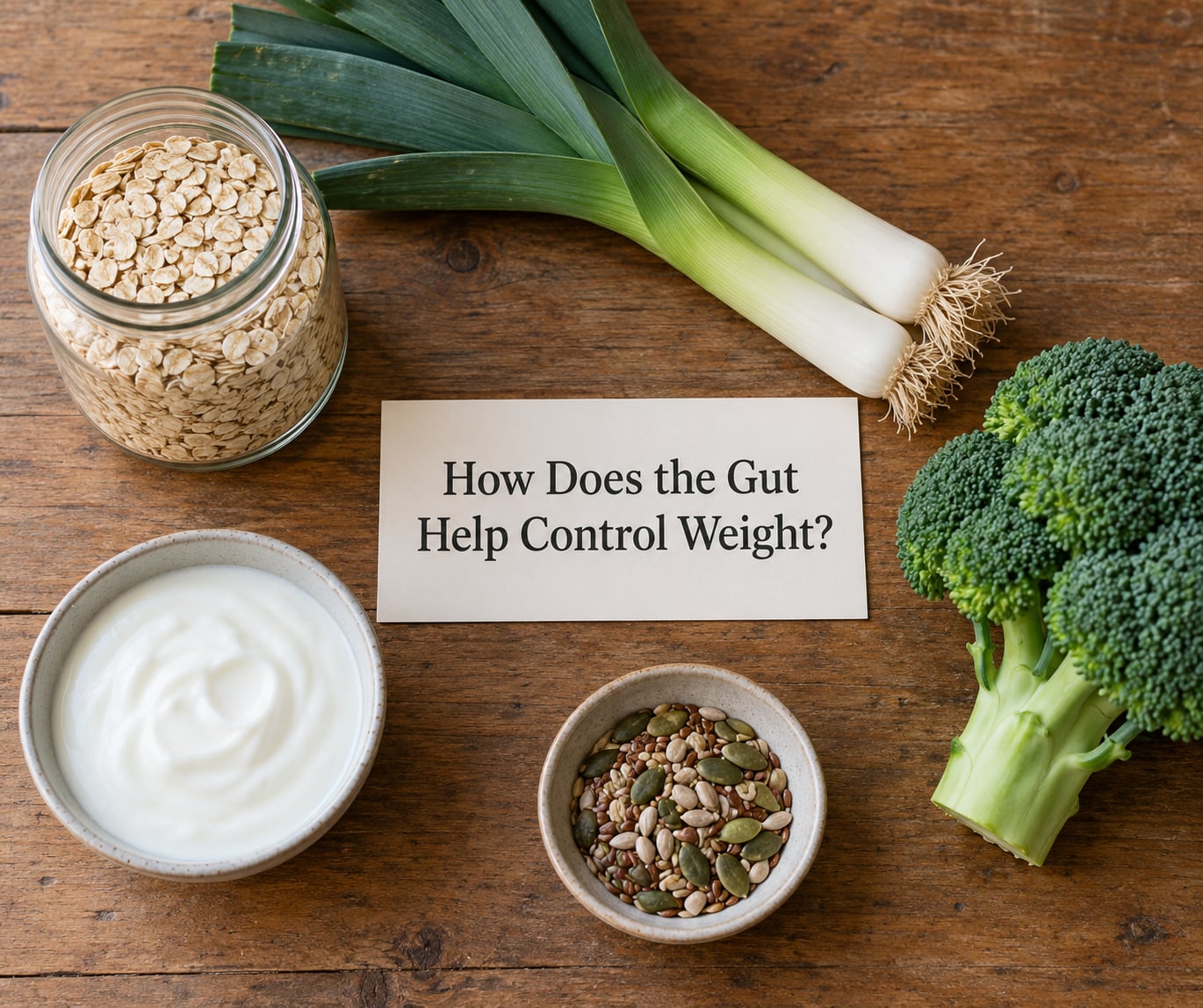
Four mechanisms explain most of what researchers have found. None of them works alone, and none of them overrides basic energy balance, but together they decide how your body handles the food you eat. If you take one line away about how gut health affects weight, it is this: the gut sets the conditions, and your choices still do most of the work.
| Mechanism | What happens in the body | Effect on weight | How to support it |
|---|---|---|---|
| Energy extraction | Microbes ferment fibre into short-chain fatty acids, including a small amount of extra calories | Calorie harvest varies between people by a modest margin | Aim for about 30 g of fibre a day |
| Appetite signalling | Gut cells release GLP-1 after eating and relay ghrelin and leptin signals to the brain | Fullness arrives sooner, cravings get quieter | Fibre, protein and fermented foods |
| Blood sugar handling | Slowed digestion and SCFAs improve insulin sensitivity | Fewer sharp spikes and drops, easier to hold weight | Movement, sleep, less refined carbohydrate |
| Inflammation | A leaky gut barrier lets bacterial fragments cross into the bloodstream | Low-grade inflammation is linked with insulin resistance | Reduce ultra-processed food, manage stress |
1. Energy extraction from food
Digestible carbohydrate is not the only source of energy available to you. When bacteria ferment fibre that your small intestine cannot digest, they release short-chain fatty acids: acetate, propionate and butyrate.
Butyrate is the fuel your colon cells actually use, and the by-product these fermentations produce adds a modest number of calories per day. Researchers have found that the efficiency of this harvest varies between individuals, which is one reason two people eating identical meals do not get identical results. That difference is real, and it is also far smaller than most online claims suggest.
2. Appetite and fullness signals
This is where the gut has the most direct influence. When food reaches the intestine, gut cells release GLP-1, a hormone that tells the brain you have eaten and slows emptying so nutrients arrive steadily instead of all at once.
Ghrelin, the hunger hormone, and leptin, the satiety hormone, also pass back and forth between gut and brain along that same nerve. On the other side, bacterial metabolites such as propionate bind to receptors involved in these pathways, and research suggests they can nudge fullness upward.
The gut-brain axis runs in both directions, which is why a stressful week can send someone straight to the cupboard and why an irregular gut can make cravings feel louder.
3. Blood sugar and insulin
Fermented fibres support the cells lining the colon and improve how the body responds to insulin. Better insulin sensitivity usually means glucose is cleared more efficiently after a meal instead of spiking and crashing.
That steadiness matters for weight because the crashes tend to bring hunger with them, and insulin resistance over time is closely linked with visceral fat, the fat around the organs.
4. Inflammation and gut barrier function
The gut lining is one of the body’s largest interfaces with the outside world. When its tight junctions loosen, called intestinal permeability or leaky gut, fragments of bacterial cell walls can enter the bloodstream and trigger a low-grade inflammatory response.
That chronic, quiet inflammation is associated with insulin resistance and weight gain. It is also why gut health is a whole-body subject rather than a digestion-only one.
The Gut Microbiome and Weight: What the Research Shows
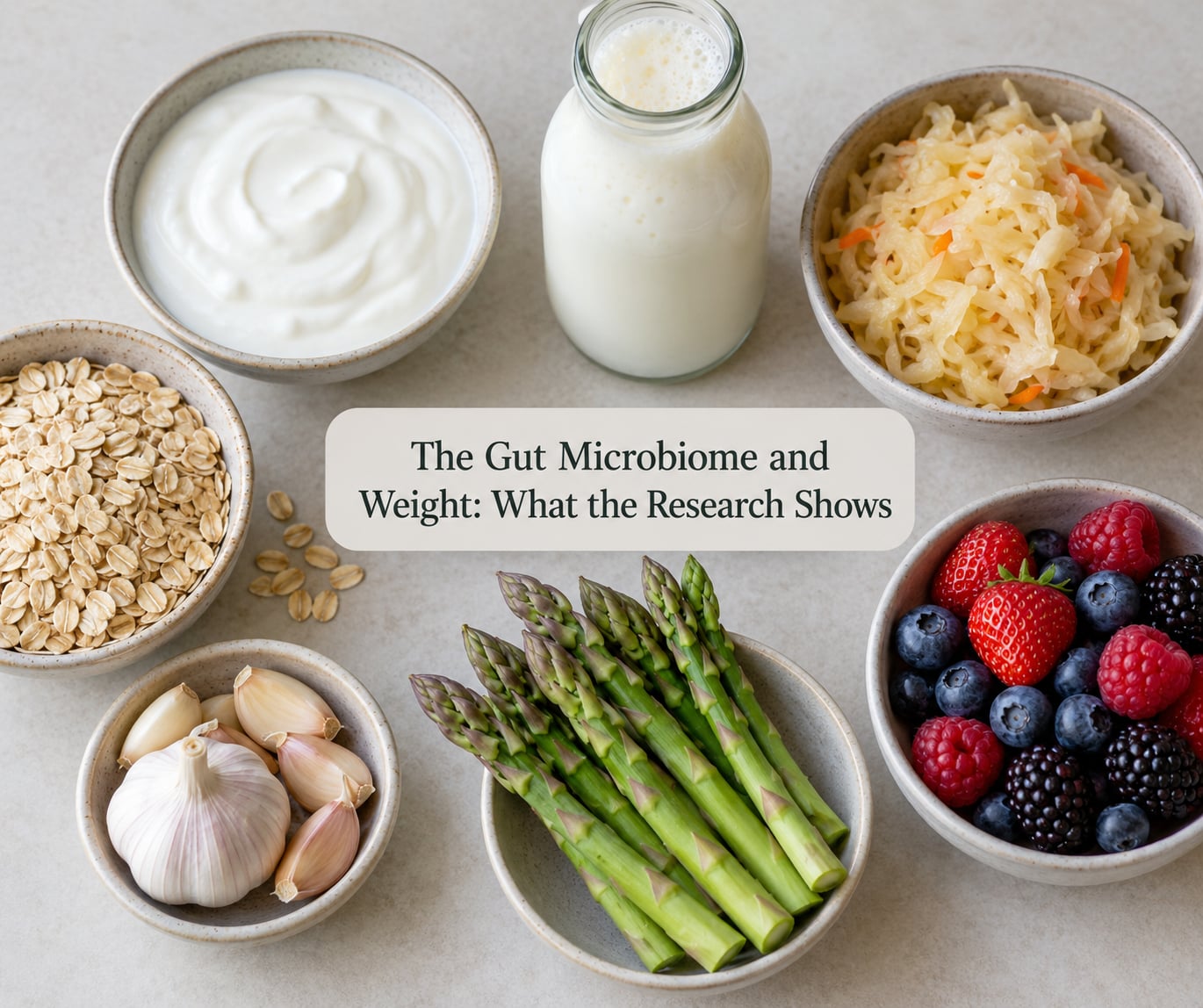
Studies have consistently found differences in microbiome composition between people living with obesity and people at a healthy weight, and the often-quoted detail is a higher ratio of Firmicutes to Bacteroidetes in the higher-weight group.
What this does not say is that one kind of bacteria causes obesity. The ratio turned out to be far less reliable as a diagnostic marker than early papers suggested, and it does not reliably predict weight change in an individual.
The stronger evidence comes from a famous experiment in mice: transferring gut microbes from lean donors into germ-free mice transferred much of the lean phenotype, including better insulin sensitivity and lower body fat. Human studies of faecal microbiota transplantation have produced modest, mixed metabolic changes, which is not the same thing as a treatment for obesity.
The reason correlation keeps turning into causation debates is ordering. Diet, sleep, stress, medications and activity all shape the microbiome, and the microbiome shapes some of those things back. Both directions are happening at once.
Commercial microbiome testing deserves a caution. Most consumer tests return a snapshot from a single sample, and a snapshot from one sample on one day tells you very little. There is no widely accepted clinical standard for acting on the result, and repeat testing can read differently without anything having changed.
Can Gut Health Affect Weight Loss?
It can help, and it can also get in the way. Poor gut health often leads to discomfort after meals, which turns eating into something to dread rather than enjoy, and people naturally cut back or change what they eat without being in a structured plan.
Constipation and bloating also change how much you weigh on the day, without any change in body fat. Plenty of people write this off as fat gain when it is mostly contents and gas.
This is the confusion that comes up again and again in discussions on Reddit’s r/SIBO and r/Gastritis threads: weight falling on the scale while the abdomen still looks and feels distended. Those are two different measurements. Commenters are usually right to keep them separate rather than treating a bloated day as a failed week.
One more thing worth separating out. The common belief that nothing will work until the gut is fixed is not supported by evidence, and it can become an excuse to put off everything. Medical conditions such as IBS, coeliac disease or small intestinal bacterial overgrowth need diagnosis and treatment, not patience.
Reasonable timelines help here. Bowel habits and bloating often shift within days to a few weeks of changing what you eat. Meaningful metabolic change takes months, if it comes at all, and that is normal for something this gradual.
Foods and Habits That Support Gut Health
There is no single gut health food, and any product promising a flat stomach in a week is selling you something. What works is a pattern, applied consistently, and most of it is cheap.
| Habit | What to aim for | Why it helps |
|---|---|---|
| Fibre | About 30 g a day, increased gradually | Feeds resident bacteria and improves regularity |
| Plant variety | Around 30 different plant foods a week | Variety feeds a wider range of species than any one food |
| Fermented foods | A few portions a day of yogurt, kefir, kimchi or sauerkraut | Adds live microbes and improves stool frequency |
| Fluid | Enough that urine stays pale; more when fibre rises | Fibre without fluid worsens constipation |
| Movement | Regular walking counts | Supports motility and insulin sensitivity |
| Sleep | 7 to 9 hours, kept fairly consistent | Short sleep raises appetite and disrupts metabolism |
| Eating rhythm | Regular meals, eaten sitting down | Distraction eating often becomes overeating |
Build fibre up slowly
This is the most common self-inflicted problem. People who want to fix digestion often quadruple their fibre at once, then conclude that fibre is the problem. Add a few grams every few days instead, drink more water, and give your gut a fortnight to adjust at each step.
Eat more kinds of plants
The 30 plants a week target is about variety, not volume. Beans, lentils, oats, apples, berries, nuts, seeds, whole grains, onions, garlic and herbs all count as one each, and spices count too. Nothing needs to be exotic or expensive.
Include fermented foods in ordinary portions
Trials on fermented food diets have found increases in microbiome diversity and reductions in inflammatory markers after a few weeks of eating several portions daily. That is a reason to try it, not a reason to assume it changes your weight on its own.
Store-bought sauererkraut and kimchi often contain added salt, and heavily sweetened kombucha is closer to a soft drink than a gut food. Plain yogurt, kefir and unpasteurised versions of fermented vegetables are the easier picks.
Cut back on what disrupts the gut
The items most often linked to poorer microbiome diversity are ultra-processed food, emulsifiers such as carboxymethylcellulose and polysorbate 80, artificial sweeteners, and alcohol. Two drinks a week is a very different proposition from most weekends.
Antibiotics and chronic stress belong on this list too. Antibiotics are essential medicine and you should never stop a course on your own, but it is reasonable to ask whether a repeat prescription is necessary and to rebuild afterwards with fibre and fermented foods.
Move, sleep and eat attentively
Gentle daily movement is the intervention people on forums recommend most often for trapped-gas bloating, alongside walking and stretching. No equipment, no class, and it happens to help insulin sensitivity at the same time.
Eating while distracted is its own problem, and often a bigger one than any single food. Sitting down, chewing properly and noticing when you are full costs nothing and changes how much you eat.
How to Support Your Gut While Working Toward a Healthy Weight
A workable approach is slow and boring, which is exactly why it holds up.
- Pick one fibre source to add this week. A spoon of ground flax in oats, or a portion of lentils in a meal you already eat.
- Increase it gradually, and drink more water than you currently do.
- Add one fermented food you genuinely enjoy, in a portion you can repeat.
- Track plants for a week in your phone notes and see how many distinct ones you reach.
- Keep a short food and symptom diary for two weeks, noting meals, stool, bloating and mood.
- Walk daily and protect your sleep window.
That diary matters more than most advice given away for free. It is the only way to connect a pattern to your own body instead of guessing from a list of symptoms, and it gives a doctor something concrete if you end up needing one.
Restriction is worth avoiding too. Cutting whole food groups usually removes fibre and plant variety at the same time, which works against the goal. Calorie control matters, but there is no reason to pursue it by gutting the diet that feeds your microbiome.
What to Do If Digestion or Weight Changes Are Concerning
Some changes are worth a medical appointment rather than another food experiment. Book a doctor visit if you notice ongoing abdominal pain, vomiting, blood in your stool or black stools, difficulty or pain swallowing, unexplained weight loss or gain, ongoing diarrhoea or constipation, or signs of dehydration such as dizziness and very dark urine.
Unexplained weight change is the one people most often put off. A change of several kilograms without trying, in either direction, over a few months, deserves a check-up rather than a new eating plan.
Medical causes are also worth ruling out before blaming the gut, including underactive thyroid, PCOS, iron or vitamin B12 deficiency, vitamin D deficiency, insulin resistance and medication side effects. A doctor or registered dietitian can work through these with you.
A GP may also refer you for blood tests or to a gastroenterologist. Nothing here replaces that, and this guide is general information rather than personal medical advice.
Frequently Asked Questions
Does a healthy gut automatically cause weight loss?
No. A healthier gut can help, but it does not override energy balance, and many people change nothing on the scale while their digestion improves. Gut bacteria influence appetite signalling, energy extraction and inflammation, which shapes how easily weight is lost or held. Treat it as making other efforts work better, not as a shortcut on its own.
How much fiber should I eat for gut health?
Roughly 30 g a day is the common adult target, and most people eat well under it. Raise it in steps of a few grams every few days and drink extra water, because a sudden jump tends to cause gas and bloating rather than improvement. Sources include oats, beans, lentils, vegetables, fruit, nuts and seeds.
Are probiotics useful for losing weight?
Evidence is limited and strain-specific. Trials suggest some modest effects on body weight or belly fat for particular strains, with results that are inconsistent and often small. Probiotics are better established for certain digestive complaints than for weight loss. Food-first habits, especially fibre and plant variety, have a stronger evidence base behind them.
Can bloating mean that food is being absorbed incorrectly?
Bloating is usually trapped gas and fermentation rather than poor absorption, which is why it can happen on a meal you have eaten before without trouble. Small intestinal bacterial overgrowth, food intolerances and irritable bowel syndrome can all cause persistent bloating, and each needs proper diagnosis. Persistent or painful bloating deserves a doctor’s appointment rather than guesswork.
Should I take a gut microbiome test?
For most people, no. Consumer tests sample once, results vary between samples, and there is no agreed clinical standard for acting on them. Testing can make sense when a doctor suspects a specific condition, such as small intestinal bacterial overgrowth or a recurrent infection. In general, spending the money on fibre, varied plants and fermented food produces more benefit.
When should unexplained weight changes or digestive symptoms see a doctor?
See a doctor for unexplained weight loss or gain, ongoing abdominal pain, vomiting, blood in your stool, difficulty swallowing, persistent diarrhoea or constipation, or signs of dehydration. Thyroid problems, PCOS, anaemia, vitamin deficiencies and medication side effects can all look like a gut problem. A doctor or registered dietitian can check these properly before you change your diet.
Conclusion
How gut health affects weight comes down to four mechanisms: how much energy microbes extract from food, how they signal fullness to your brain, how they shape insulin handling, and how much inflammation they keep switched on.
Start with one change this week. Add a fibre source you like, keep a two-week food and symptom diary, or walk for twenty minutes after dinner.
And if your weight or digestion has changed without explanation, see a doctor first. Rule out the medical causes before spending months on a food plan that was never the problem.