You can lower the odds of loose skin while losing weight, but no routine removes the risk completely. If you want to know how to avoid loose skin while losing weight, the single biggest lever is pace: skin that loses fat slowly has time to retract, and skin that loses fat fast often does not. Muscle, protein, sun protection and honest expectations handle the rest.
This guide covers what you can control, what you cannot, and what to do in each of the six stages that matter most. Everything here follows standard nutrition and skin guidance, plus what people in weight-loss communities actually report from their own 2026 attempts.
Table of Contents
- What You Need
- How to Avoid Loose Skin While Losing Weight: What Actually Helps
- How much weight loss causes loose skin
- Step-by-Step
- Lose Weight Gradually Instead of Using Crash Diets
- Preserve Muscle With Safe Strength Training
- Eat Enough Protein and Follow a Balanced Plan
- Stay Hydrated and Support Your Skin
- Treat Stretch Marks and Skin Changes With Care
- Be Patient While Your Body Recovers
- Common Mistakes
- Frequently Asked Questions
- Will losing 20 lbs cause loose skin?
- Will losing 50 lbs leave loose skin?
- Is it possible to lose 100 pounds and not have saggy skin?
- How long does loose skin take to tighten after weight loss?
- Do collagen peptides help loose skin?
- Does strength training remove loose skin?
What You Need
Skin appearance after weight loss depends on more than the number on the scale. Age, genetics, how long you carried extra weight, how fast you lost it, whether you smoke, your sun exposure and the muscle mass underneath all shape the result.
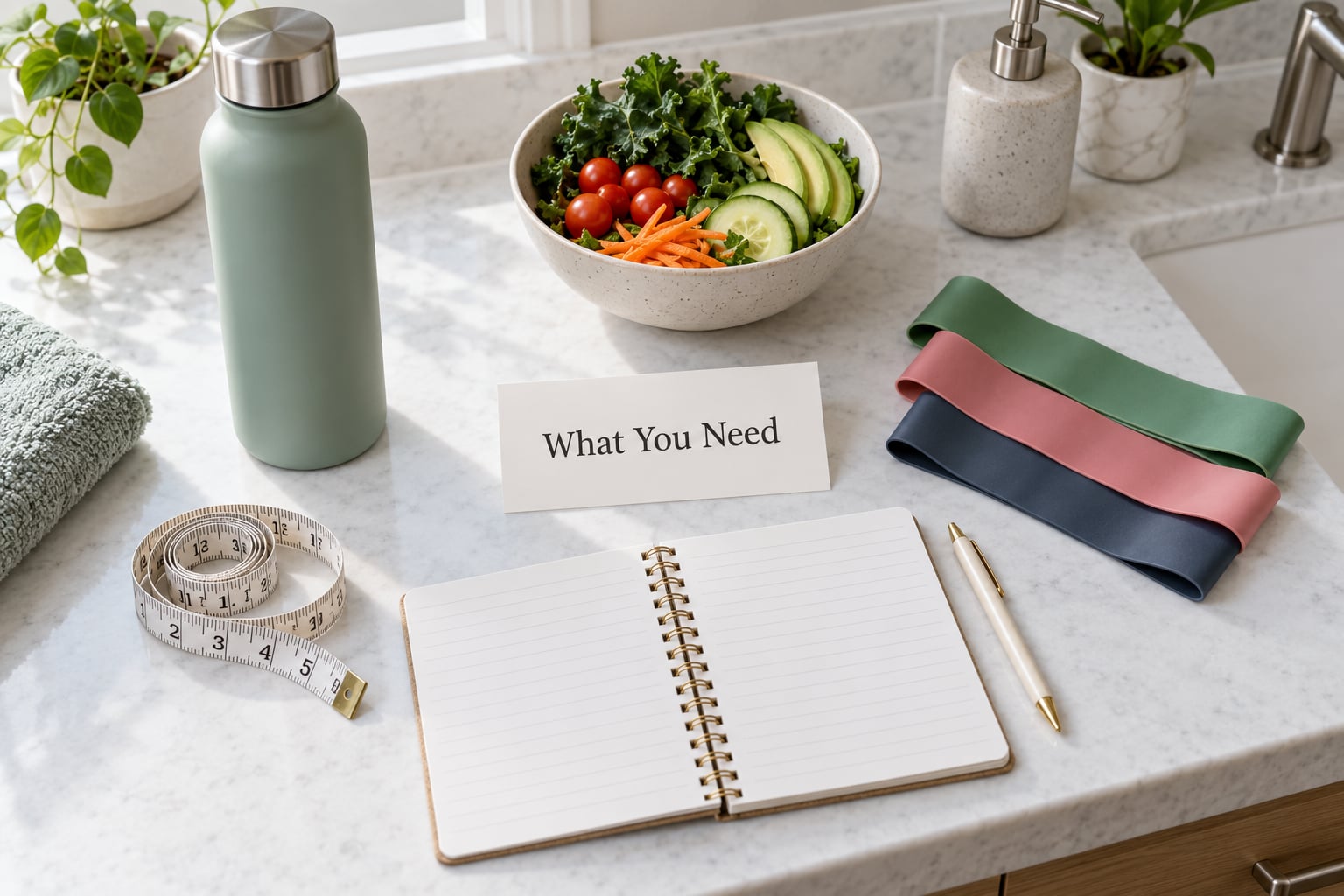
What you actually need is modest and unglamorous: a calorie deficit you can hold for months, a balanced eating plan with enough protein, a realistic weekly target, and a strength routine you can train twice a week. You do not need tightening creams, collagen powder, dry brushes or a detox programme.
- A sustainable calorie deficit rather than a crash diet
- A weekly loss target of roughly 0.5 to 1 kg (1 to 2 lb)
- Two or three full-body strength sessions a week
- Enough protein and a varied diet
- Daily water, daily sunscreen, no smoking
How to Avoid Loose Skin While Losing Weight: What Actually Helps
Gradual fat loss, preserved muscle, adequate protein, steady hydration and low sun exposure reduce both the likelihood and the severity of sagging skin. None of them prevents it outright, because skin has to stretch first to cover stored fat, and the collagen and elastin fibres that give it spring can lose shape during that stretch.
It helps to separate two things people mix up. Temporary change includes crepey texture after weight drops quickly, bloating, dryness and mild deflation that often settles within months. True laxity is skin that stays slack and folded months after the weight has been stable, and it responds much less to habits.
A rough pinch test tells you which you have. Pinch a fold of skin on your abdomen or thigh and let go. A quick rebound usually points to normal skin over fat. If it stays tented, stays folded, or hangs when you lie down, that is structural laxity rather than leftover fat.
How much weight loss causes loose skin
Amount matters, but it is not a switch. Here is the general pattern clinicians and people report, and it depends far more on age, history and pace than on the number itself.
| Weight lost | Likelihood of noticeable laxity | What decides it |
|---|---|---|
| Under 20 lb (9 kg) | Low for most adults | Age, whether you were heavier for years, skin quality |
| 20 to 40 lb (9 to 18 kg) | Low to moderate | Pace of loss, muscle retained, smoking, sun exposure |
| 50 to 80 lb (23 to 36 kg) | Moderate, common in adults over 40 | Years spent at a higher weight, prior weight cycling |
| 100 lb (45 kg) or more | Common, though not universal | Duration of obesity, rapid or surgical loss, skin stretched over a large area |
Losing a large amount and keeping tight skin is genuinely possible. Plenty of people in weight-loss communities report no loose skin after 30 lb, and a smaller number after 100 lb or more. What tends to separate them is a slow pace, a lifting habit that started early, and no history of repeated rapid gain-and-loss cycles.
Step-by-Step
Lose Weight Gradually Instead of Using Crash Diets
Most of what gets called loose skin follows a fast drop rather than a large one. When fat leaves quickly, the skin is asked to retract faster than its collagen and elastin fibres reorganise, so it stays slack. Slow loss gives those fibres time.
A general target of 0.5 to 1 kg (1 to 2 lb) per week works for many adults, which is roughly 2 to 8 lb a month. Anything faster is worth slowing down, especially early on. Very high body fat, and weight loss after bariatric surgery or on GLP-1 medication, often moves faster than this, and those readers need a strength focus and medical guidance more than anyone else.
How do you know it is too fast? Your clothes, a waist measurement or a weekly average on the scale tells you. If the trend runs well past a kilo a week, or if you are losing strength in the gym, eat a little more and add a session. A registered dietitian can adjust this properly if you are managing a medical condition.
Preserve Muscle With Safe Strength Training
Muscle is the structure that fills the space fat leaves behind. Keep some and skin looks firmer; lose all of it and the same skin reads as baggy, which is why crash dieters often end up looking flabbier at a lower weight.
Two to three full-body sessions a week cover it: squats or leg presses, rows or pull-ups, presses, hinges, carries. Add weight or a few reps over time rather than jumping to failure every session. Beginners get most of the benefit in the first six to eight weeks.
Stop and speak to a clinician if you feel pain, dizziness or anything unusual during a session. Progressing slowly protects both the muscle you are building and the training habit you want to keep for years.
Eat Enough Protein and Follow a Balanced Plan
Protein supports recovery and helps you hold muscle while you are in a deficit. Eating too little of it while cutting weight is the combination that wrecks body composition fastest, and it leaves skin with nothing underneath.
Build meals around protein, vegetables, fruit, whole grains and unsaturated fats. Vitamin C matters because collagen cannot be made without it, and vitamin C comes from peppers, citrus, berries, potatoes and tomatoes. Vitamin A, vitamin E, zinc, selenium and omega-3 fats all play roles in skin repair, and they come from eggs, oily fish, nuts, seeds, leafy greens and shellfish.
There is no single right number for everyone, and very high intakes are not right for people with kidney disease. If you have a condition, take a pregnancy, or are over 40, ask a doctor or registered dietitian before changing how you eat.
Stay Hydrated and Support Your Skin
Water keeps skin and everything else functioning, but it will not tighten a fold of loose skin on its own. Treat hydration as support for the plan, not as the plan.
Drink regularly through the day and drink more in hot weather or long sessions. Thirst and the colour of your urine are good everyday guides, more reliable than a fixed glass count. If you lose weight rapidly and skip fluids, you are also losing water that your body needs, which leaves you looking flatter for reasons that have nothing to do with fat.
Treat Stretch Marks and Skin Changes With Care
Stretch marks are tears in the dermis, not loose skin, and they fade rather than disappear. Moisturise if skin feels dry, skip harsh scrubs and fragranced products, and patch-test anything new that touches your skin.
No cream rebuilds collagen deep enough to remove laxity, and no oil prevents stretching. Anything claiming to lift skin overnight is selling you hope. See a doctor rather than a clinic if you notice sudden, severe, painful or rapidly changing skin, because infections, swelling and medication effects all need a real look.
Be Patient While Your Body Recovers
Skin looks different at different stages. Many people report the most visible tightening in the first six months after the weight settles, with slower changes after that. Some looseness never fully returns to where it was, and that is normal.
Check progress on a monthly scale rather than daily in the mirror. Photography at the same time of day, in the same light, is far more honest than a bathroom look at 7am. If laxity genuinely affects comfort, chafing or movement, a clinician or a qualified plastic surgeon can walk you through what is realistically available, including non-surgical options like radiofrequency or ultrasound for milder cases.
Common Mistakes
Most disappointing results come from a handful of repeatable mistakes, each with a simple fix.
Crash dieting. Very low intake strips fat and muscle at once and asks skin to retract fast. Replace it with a smaller, steady deficit and 0.5 to 1 kg a week.
Cardio only. Long sessions burn calories but do nothing for the tissue under the skin. Replace most of them with two or three full-body lifting sessions and keep cardio as you enjoy it.
Skipping meals or cutting protein. The muscle goes first, and muscle is what fills the space. Replace the skipped meal with a protein-rich one rather than a smaller version of the same plate.
Trusting tightening products. Firming creams, body brushes and massage tools show no evidence of removing laxity. Replace the shopping basket with a weekly lifting appointment and enough protein, both of which cost nothing.
Training without recovery. Overtraining with no rest builds muscle slowly and wrecks consistency. Replace missed recovery with a planned rest day, and stop if symptoms appear.
Expecting creams to do the work. Moisturiser helps dryness and comfort, nothing more. Replace the hope with realistic expectations: habits lower severity, and they cannot delete existing excess skin.
One last correction. Many people repeat that the weight loss is what damages skin. People who have lost weight often say the opposite, that the years of gain were the stretch that mattered. Both can be true at once, which is another reason to lose the last few pounds slowly.
Frequently Asked Questions
Will losing 20 lbs cause loose skin?
Usually not. At that level of loss, most adults see skin rebound with no lasting change, especially if the weight came off gradually and some muscle stayed. Risk climbs with age, with years spent at a heavier weight, and with fast loss, smoking and years of sun exposure. Genetics set the ceiling on elasticity, so a realistic plan beats a crash diet every time.
Will losing 50 lbs leave loose skin?
It is possible, and it is also fairly common. Fifty pounds is where the risk starts rising visibly, particularly for adults over 40 or anyone who was heavier for many years. Slow the loss to about 1 to 2 lb a week, lift two or three times a week, and eat enough protein. Those three habits reduce the severity even when some laxity appears.
Is it possible to lose 100 pounds and not have saggy skin?
Yes, though fewer people manage it than expect. Large losses usually produce some degree of laxity, and skin stretched over fat for years has been changed permanently. The people who avoid the worst outcome lose weight slowly, start strength training early and consistently, and avoid repeated rapid gain-and-loss cycles. A plastic surgeon can reshape what habits cannot.
How long does loose skin take to tighten after weight loss?
There is no fixed timeline, and anybody who promises one is guessing. The most commonly reported pattern is that most visible tightening happens in the first six months after the weight settles, with smaller continued changes after that. Skin quality, age and how much was lost change everything. Judge progress on monthly photos rather than how the skin looks on a given day.
Do collagen peptides help loose skin?
The evidence is thin and mostly about hydration and skin barrier function rather than lifting sagging skin. Small short-term studies of hydrolyzed collagen show modest improvements in skin moisture and elasticity, not removal of laxity, and larger long-term trials are missing. Eating protein from real food gets you the same amino acids without the spend. Check with a doctor before adding any supplement.
Does strength training remove loose skin?
No, and this is the biggest myth in the space. Lifting fills the space left by fat with muscle, so skin looks firmer and smoother, but it does not remove skin. It is still the most effective thing you can do for appearance. Anyone promising otherwise is overselling. If skin affects comfort or movement, a clinician or qualified plastic surgeon can discuss real options.
Start with pace, because it costs nothing and everything else builds on it. Pick a target of 1 to 2 lb a week, book two full-body lifting sessions before you change anything else, and set your protein and water habits at the same time. Everything else in how to avoid loose skin while losing weight is a detail compared with those three.
This is general information about skin and weight loss, not medical advice. If you have a health condition, take medication, are pregnant, or have had bariatric surgery, talk to your doctor or a registered dietitian before changing your eating or training plan.