Loose skin after weight loss improves most when you give it time, build muscle underneath it, and stop damaging the barrier you have left. Strength training, steady protein intake, daily sunscreen and a weight that stays put are the levers you control, and no cream rebuilds lost elasticity. That is the honest version of how to firm up loose skin after weight loss, step by step.
Everything below is general information, not medical advice. If you have a skin condition, are pregnant or breastfeeding, or have had bariatric surgery or GLP-1 medication, talk to your doctor or pharmacist before changing anything you apply or eat.
Here is the short version most searchers need:
- Strength training: lift 3 to 4 times a week so muscle refills the volume that fat used to occupy, which is the single biggest visible change.
- Protein and steady habits: protein supports muscle repair and tissue recovery, while water, sleep and a stable weight give skin the conditions it needs to settle.
- Skin protection: sunscreen and a plain moisturizer defend the barrier so what firmness you have does not fade.
- Medical options: mild laxity sometimes responds to in-clinic tightening, and significant excess skin can only be removed by a surgeon. That is a conversation for later, not week one.
Table of Contents
- What You Need Before You Start Firming Loose Skin
- Step-by-Step: How to Firm Up Loose Skin After Weight Loss
- 1. Protect your skin barrier with gradual, boring skin care
- 2. Build the muscle underneath with resistance training
- 3. Feed your skin and recovery with adequate protein
- 4. Build activity gradually and avoid yo-yo dieting
- 5. Track changes without chasing quick fixes
- 6. Know when to ask about professional options
- Common Mistakes and How to Fix Them
- Frequently Asked Questions
- How long does loose skin take to tighten after weight loss?
- Does age affect how quickly loose skin firms up?
- Are loose skin creams or tightening lotions effective?
- Can strength training help tighten loose skin after weight loss?
- When is loose skin after weight loss considered severe enough for surgery?
- Conclusion
What You Need Before You Start Firming Loose Skin
Results depend on four things you cannot change and three you can, so set expectations before you buy anything. Your age, genetics, how much you lost, how fast you lost it, and years of sun exposure decide most of your starting point. Your weight stability, training habits and skin care decide how much of the remaining potential you actually collect.
Before starting, get these in place:
- A stable weight. Stay at your goal weight for roughly six months before you judge any change. Skin keeps adapting during that window, and skin removal surgery is usually deferred until weight is stable.
- Protein-focused meals. Plan three meals and one or two snacks with a protein source in each. A registered dietitian can set an amount that suits your body and your medical history.
- Resistance equipment. A set of adjustable dumbbells or two resistance bands and a sturdy chair covers every movement you need to start. No gym membership required.
- A body moisturizer. Fragrance-free, plain, and cheap. The drugstore tub is fine.
- Daily sunscreen. Broad-spectrum, SPF 30 or higher, on exposed skin every day you go outside.
- Progress photos. Same spot, same light, same time of day, once a month. Skin memory is bad; photos are not.
One honest note before you go further. Loose skin is a normal consequence of major weight loss, not a personal failure and not a sign that the effort was wasted. The health benefits you gained did not evaporate.
Step-by-Step: How to Firm Up Loose Skin After Weight Loss
1. Protect your skin barrier with gradual, boring skin care
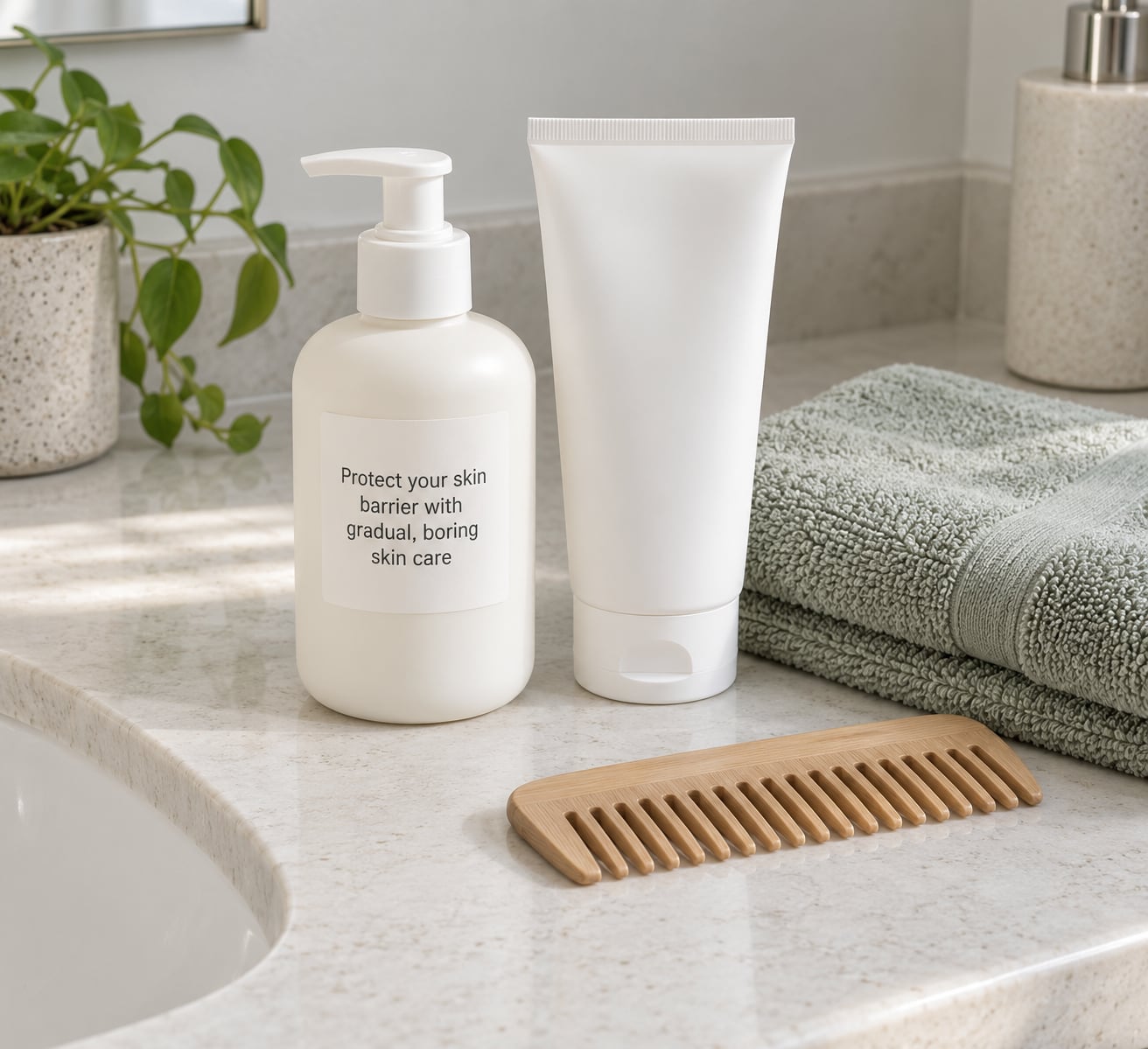
Start with the least dramatic step, because it protects everything else. Wash gently with lukewarm water and a mild cleanser, pat dry while the skin is still slightly damp, and apply a fragrance-free moisturizer while it is still slightly damp to lock water in.
Sunscreen matters more than any cream you will ever buy. UV damage breaks down collagen and elastin, the two proteins that give skin firmness and its ability to snap back, so unprotected sun exposure works directly against the improvement you are trying to make.
Retinoids such as retinol or tretinoin can improve texture and crepey skin over months, and a dermatologist can tell you whether they suit your skin. Check with a doctor or pharmacist first, especially if you are pregnant, breastfeeding, or dealing with eczema or rosacea. No cream can rebuild the dermis or remove existing laxity, whatever the label claims.
2. Build the muscle underneath with resistance training
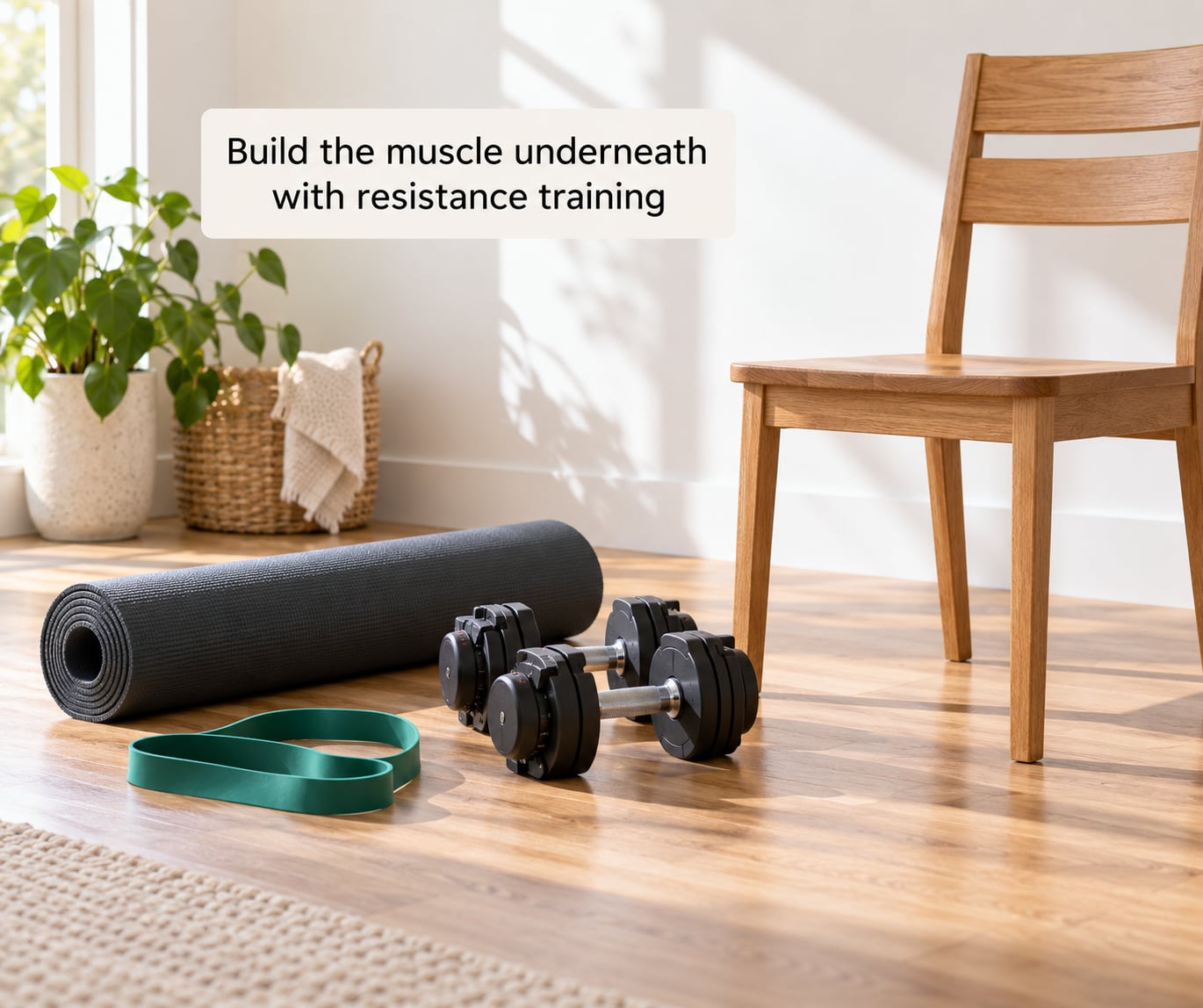
Gradual full-body resistance training is the most useful thing you can do, because muscle regrowth fills in some of the volume that fat used to occupy, and skin that has something to sit against looks noticeably better.
Start with bodyweight basics, two or three sets of 8 to 12 controlled repetitions:
- Squats to a chair
- Wall or counter push-ups
- Banded rows, seated or standing
- Bridges with feet flat on the floor
- Overhead presses with light dumbbells or a band
Two or three sessions a week with a day or two between them is enough at the start. Progress by adding one repetition per set, then a second set, then more load, rather than by adding movements every week.
Stop if you feel sharp pain, and stop and sit down if you feel dizzy. Breath-holding on every rep is the most common beginner mistake I see, and it is easy to fix by exhaling on the effort.
People who have lost a lot of weight often skip this part, because exercising feels harder with loose skin. It matters anyway. Muscle under slack skin changes the silhouette far more than any topical ever has, and it is the change other people notice first.
3. Feed your skin and recovery with adequate protein
Protein is the raw material for muscle repair, and muscle repair is what fills out the area under your skin. Without enough of it, your training sessions produce less change than they should.
Practical meals that do the job without fuss:
- Greek yogurt with berries and oats at breakfast
- A palm-sized portion of chicken, fish, tofu or tempeh at lunch
- Eggs, cottage cheese or edamame as an afternoon snack
- Protein plus vegetables at dinner, which keeps the meal filling
Individual protein needs vary a lot with body size, activity level, age and kidney health, so treat any number you read online as a starting point for a conversation, not a prescription. A registered dietitian is the right person for an actual target, and for any restrictive plan.
Fatty fish twice a week, nuts and seeds add omega-3 fatty acids, and colorful vegetables supply vitamin C, which the body needs to make collagen. Eating enough matters more than any supplement bottle, and food beats powders almost every time.
4. Build activity gradually and avoid yo-yo dieting
Walking regularly and adding cardio a little at a time supports circulation and recovery, and it costs nothing to start. Ten or fifteen minutes after two of your strength days is plenty at first, built up over weeks.
Rapid weight swings are the one thing that reliably makes loose skin look worse. Each additional cycle of loss and regain stretches skin that has already partly retracted, and people describe the result as worse than if they had simply stayed at a higher weight the whole time.
If your weight shifts unexpectedly, or you feel exhausted, weak or light-headed while eating less, treat that as a medical question rather than a motivation problem. Your doctor can check whether something beyond dieting is going on.
5. Track changes without chasing quick fixes
Progress here is slow, and that is the part that trips people up. A monthly photo and a tape measure will show you what a daily weighing never could, because they capture the skin that a scale ignores.
Keep three records: a photo from the same spot and lighting, a waist or thigh measurement, and your strength numbers from the gym. Look at them monthly. Improvement typically unfolds over months, and how much you get depends heavily on age, genetics, sun exposure, smoking history, and how much you lost in the first place.
Skip anything that promises tightening in seven days. Those products sell on urgency, and urgency is a poor fit for tissue that works on a timescale of months.
6. Know when to ask about professional options
If your weight has been stable for about six months, you have trained consistently, and you are still unhappy with the laxity, that is the moment to talk to someone qualified. A board-certified plastic surgeon or a dermatologist can assess whether what you are seeing is loose skin, residual fat, or both, and the two need different treatments.
In broad categories, clinics offer non-invasive tightening approaches such as radiofrequency, ultrasound or laser treatments for mild to moderate laxity, and surgical procedures such as an abdominoplasty, a panniculectomy, an arm lift or a lower body lift for significant excess skin.
Surgery removes skin permanently, and that is its advantage and its limit. It carries real risks, a significant financial cost that insurance usually does not cover, visible scars, and weeks of recovery, and it does not replace a stable weight. Ask about the surgeon, the exact procedure, the scar location, and the full recovery timeline before deciding anything.
Common Mistakes and How to Fix Them
Crash dieting to lose the last stretch. It produces faster laxity and undoes your stability. Fix: hold your weight steady for about six months and treat this phase as maintenance, not a deadline.
Starting intense exercise immediately. Your joints, tendons and skin have been carrying unfamiliar loads. Fix: two or three sets of controlled bodyweight work at least twice a week, then add load slowly.
Expecting creams to rebuild skin. Moisturizer helps the barrier feel better. Nothing in a bottle replaces lost collagen. Fix: spend your attention on sunscreen, training and protein, and let a dermatologist advise on actives.
Buying supplements on a promise. Fix: eat varied meals with a real protein source in each, and ask your doctor before adding anything, especially if you take medication or have a medical condition.
Skipping sunscreen because you are indoors most of the day. Fix: apply it on exposed skin before you go out, and reapply every couple of hours if you are outdoors.
Comparing your month two with someone else’s month eighteen. Age, genetics and how much you lost set your pace. Fix: compare this month’s photo only with your own last month’s photo.
Two practical items deserve their own note. Skin folds in moist areas such as under the arms, between the thighs and under the belly chafe, and irritated skin can get infected. Keep those folds clean and dry, change out of damp clothing after workouts, and see a doctor for a rash, spreading redness, weeping skin, pain or fever.
Frequently Asked Questions
How long does loose skin take to tighten after weight loss?
Most visible tightening happens gradually over 6 to 12 months, and some people see continued change for up to two years. The first few months are usually the least satisfying because muscle is still small and the skin is still settling. Hold your weight steady, train consistently, and judge progress on monthly photos rather than weekly ones.
Does age affect how quickly loose skin firms up?
Yes, and it is usually the biggest factor you cannot control. Skin produced less collagen and elastin as you age and recovers from stretching more slowly, so two people who lose the same amount of weight can end up with very different results. Younger readers often see more retraction, which is normal rather than a personal failing.
Are loose skin creams or tightening lotions effective?
Moisturizers genuinely help a dry, tight barrier feel more comfortable, and daily sunscreen slows collagen breakdown. But no cream removes skin laxity or rebuilds the dermis, and products promising instant tightening are marketing rather than science. Retinoids may improve texture slowly, though a dermatologist should advise you first, especially during pregnancy or breastfeeding.
Can strength training help tighten loose skin after weight loss?
It helps, and it is the most useful thing within your control, but call it what it is. Training regrows muscle under the skin, which refills volume and changes the shape of the area; it cannot pull existing laxity back. Start with two or three sets of 8 to 12 controlled repetitions of squats to a chair, wall push-ups, banded rows and bridges, two or three times a week.
When is loose skin after weight loss considered severe enough for surgery?
Surgery becomes worth discussing when laxity interferes with clothing, causes chafing or infections, or bothers you despite several months of consistent training, and your weight has been stable for roughly six months. Only a surgeon can assess whether you are a candidate. Procedures such as an abdominoplasty or a lower body lift remove excess skin permanently, with scarring, recovery and cost involved.
Conclusion
Loose skin after weight loss usually improves gradually, and the first move is unglamorous: hold your weight steady for about six months, then build a routine you can keep, with protein in most meals, resistance training twice or three times a week, a fragrance-free moisturizer and sunscreen every day you go out.
Give that routine six to twelve months and judge it on photos, not feelings. If you are still dissatisfied after several months of real consistency, book a consultation with a board-certified plastic surgeon or dermatologist and ask what your options really involve. Loose skin is not a verdict on what you achieved. It is a tissue question, and tissue questions usually have an honest answer.